
The Butterfly Life Cycle: An Enchanting Journey for Young Learners
Butterflies are some of nature's most enchanting creatures, captivating both children and adults with their delicate wings and vibrant colors. Exploring the butterfly life cycle offers a rewarding educational experience for young learners, allowing them to witness the magical transformation from egg to butterfly. In this comprehensive guide, we’ll delve into the four stages of the butterfly life cycle and provide effective teaching strategies to engage your students.
Understanding the Four Stages of the Butterfly Life Cycle
Egg Stage
Introduce the first stage of the butterfly life cycle—butterfly eggs. Butterflies lay their eggs on specific host plants, ensuring the caterpillars have a food source upon hatching. Discuss the various shapes, sizes, and colors of butterfly eggs, along with their protective features.Larvae (Caterpillar) Stage
Next, explore the larval stage, commonly known as the caterpillar. Explain how caterpillars hatch from eggs and voraciously feed on leaves, growing in size and shedding their skin multiple times. This stage is crucial for their development.Pupa (Chrysalis) Stage
Describe the fascinating process of metamorphosis, where the caterpillar transforms into a chrysalis or pupa. Discuss the physical changes that occur during this stage and emphasize the importance of finding a safe location for pupation.Adult Butterfly Stage
Finally, explore the emergence of the adult butterfly from the chrysalis. Highlight the intricate details of a butterfly's wings, its ability to fly, and its vital role in pollination. This stage completes the butterfly life cycle and showcases their beauty.
Engaging Teaching Methods for the Butterfly Life Cycle
Visual Aids: Use diagrams, charts, or illustrations to represent the different stages of the butterfly life cycle. Encourage students to create their own drawings or models as a hands-on activity, fostering creativity.
Storytelling: Narrate a captivating story about a butterfly's journey, emphasizing each life cycle stage. This narrative approach can engage young learners and make the experience more memorable.
Field Trips: Plan a field trip to a local butterfly garden or nature reserve, where students can observe butterflies in their natural habitat. Encourage them to document their observations and participate in discussions afterward.
Worksheets: Utilize worksheets to reinforce learning about the butterfly life cycle. Activities can include labeling stages, matching pictures to the correct stage, or completing a butterfly life cycle diagram.
Additional Learning Opportunities Related to the Butterfly Life Cycle
Gardening: Teach students the importance of host plants for butterflies by encouraging them to create a butterfly-friendly garden. This hands-on approach allows students to witness the life cycle firsthand and attract butterflies to their environment.
Research Projects: Assign individual or group projects where students can explore different butterfly species, their habitats, and the unique characteristics of their life cycles. This fosters independent learning and critical thinking skills.
Cross-Curricular Integration: Integrate the butterfly life cycle into other subjects, such as art (drawing or painting butterflies), mathematics (graphing butterfly populations), or language arts (writing a butterfly-themed story or poem).
Conclusion: Nurturing Curiosity Through the Butterfly Life Cycle
The butterfly life cycle is a captivating topic that provides excellent opportunities for education and exploration. By utilizing engaging teaching methods and incorporating hands-on activities, students can develop a deep understanding and appreciation for these remarkable creatures. The worksheets provided offer valuable resources to reinforce learning and encourage independent exploration. As you embark on this educational journey, remember to create a safe and nurturing environment for your students to observe, learn, and appreciate the wonders of the butterfly life cycle.

Embark on a captivating educational journey with our Butterfly Life Cycle Worksheets Bundle, a comprehensive resource designed to engage, educate, and entertain. Perfect for teachers, homeschooling parents, and curious learners, this bundle covers all aspects of the butterfly's mesmerizing transformation from egg to adult.
Key Features:
Debate Worksheets: Stimulate critical thinking and foster lively discussions with debate prompts on the butterfly life cycle. Perfect for developing communication and reasoning skills.
Assignments: Explore 10 diverse assignments that encourage deeper understanding and practical application of knowledge about butterflies and their life cycle.
Experiment Worksheets: Bring science to life with hands-on experiments. Observe caterpillars, track their growth, and witness the transformation from pupa to butterfly. Ideal for experiential learning.
Reading Comprehension Passages: Engage with carefully crafted passages that enhance reading skills while providing valuable information about the butterfly life cycle.
Writing Prompts: Boost creativity with 10 writing prompts focused on the butterfly life cycle, suitable for building narrative and descriptive writing skills.
Fill-in-the-Blanks Worksheets: Reinforce knowledge with fill-in-the-blank exercises, covering stages, terms, and characteristics of the butterfly's development.
Multiple Choice Worksheets: Test comprehension with multiple-choice questions that assess knowledge of key concepts related to butterfly metamorphosis.
Questions and Answers Worksheets: Delve into the intricacies of butterfly behavior, adaptations, and stages of metamorphosis with thought-provoking Q&A worksheets.
45-Minute Test: Evaluate overall comprehension and identify areas for improvement with a comprehensive 45-minute test covering a broad range of topics.
Matching Worksheets: Strengthen cognitive skills by matching stages, structures, and behaviors of butterflies, promoting critical thinking and visual recognition.
True or False Worksheets: Challenge understanding with true or false statements, perfect for developing analytical thinking and knowledge retention.
How to Use It:
Introduce Concepts: Start with reading comprehension passages and discussion-based debate worksheets to introduce the butterfly life cycle.
Engage with Experiments: Use the experiment worksheets to provide a hands-on learning experience, observing real-life examples of metamorphosis.
Reinforce Learning: Apply the fill-in-the-blanks, matching, and multiple-choice worksheets to reinforce understanding and retention of key concepts.
Assess Knowledge: Utilize the 45-minute test to assess comprehension and track progress.
Encourage Critical Thinking: Integrate debate and Q&A worksheets to promote critical thinking and deeper exploration of topics.
Creative Expression: Use writing prompts for creative expression and to consolidate learning.
Order your Butterfly Life Cycle Worksheets Bundle today and unlock a world of discovery! Perfect for classrooms, homeschooling, or individual exploration, this bundle offers a dynamic and comprehensive approach to understanding the beauty and complexity of butterfly metamorphosis.
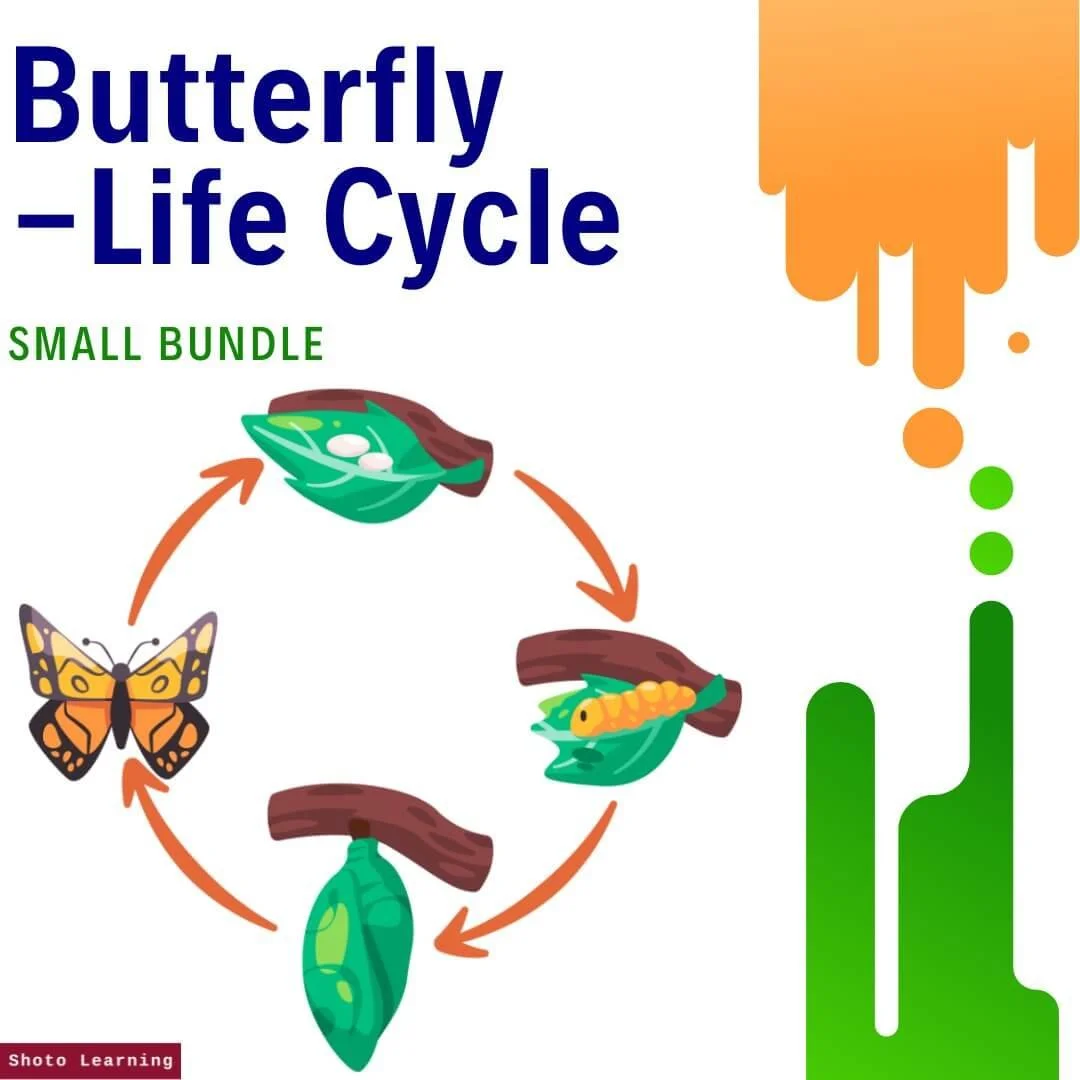
Embark on a captivating journey through the stages of metamorphosis with our comprehensive Butterfly Life Cycle Bundle. This meticulously curated collection of educational resources is designed to engage learners of all ages, providing a deep understanding of the miraculous transformation from egg to butterfly.
Inside this enchanting bundle, you'll discover an array of interactive tools and activities:
PowerPoint Presentation: Dive into the mesmerizing world of butterfly life cycles with our visually stunning and informative PowerPoint presentation.
Test (45 Minutes): Assess comprehension and retention with a thoughtfully designed test, covering key stages and concepts in the butterfly life cycle.
Lesson Plan: Dive deep with our detailed lesson plan, complete with engaging activities and discussion topics.
Reading Comprehension: Sharpen reading skills with engaging passages, perfect for students and educators alike.
Bingo: Make learning fun and interactive with our Butterfly Life Cycle Bingo game, perfect for reinforcing terminology and stages in a lively classroom setting.
Crossword: Challenge your knowledge and expand your vocabulary with our Butterfly Life Cycle Crossword puzzle, offering an entertaining way to reinforce understanding.
Word Search: Sharpen your observation skills while hunting for butterfly life cycle-related terms in our engaging Word Search activity.
Cryptogram: Decode the secrets of metamorphosis with our Cryptogram puzzle, offering a stimulating twist on learning essential concepts.
True or False: Test your understanding of butterfly life cycle principles with our True or False activity, designed to challenge misconceptions and solidify knowledge.
Matching: Strengthen connections between stages and descriptions with our Matching activity, fostering a deeper understanding of metamorphosis.
Missing Letters: Fill in the blanks and complete butterfly life cycle-related terms with our Missing Letters exercise, perfect for reinforcing spelling and vocabulary.
Scramble: Unscramble jumbled phrases related to butterfly life cycles with our engaging Scramble activity, promoting quick thinking and problem-solving skills.
Plus, enjoy these valuable bonuses included for free:
Free ABC Order: Practice alphabetizing butterfly life cycle terms with our convenient ABC Order activity.
Free Cut and Paste: Enhance understanding of the butterfly life cycle stages with our hands-on Cut and Paste activity, perfect for kinesthetic learners.
With answers provided for all activities, this comprehensive bundle is your ultimate companion for exploring the wonder of butterfly metamorphosis. Inspire curiosity and discovery in your classroom today!
Don't miss out, order yours today!

Introducing the Butterfly Life Cycle Game Bundle, a comprehensive collection of educational games that will take your learning experience to new heights! Dive into the captivating world of butterflies and explore their remarkable life cycle through a series of engaging and interactive activities. With eight exciting games included, this bundle guarantees hours of fun while enhancing your knowledge of the butterfly life cycle.
ABC Order: Test your alphabet skills as you arrange butterfly-related words in alphabetical order. Sharpen your cognitive abilities and improve your vocabulary with this challenging yet entertaining game.
Bingo: Embark on an adventure to fill your Bingo card with various stages of the butterfly life cycle. Get ready to learn interesting facts about butterflies while enjoying the thrill of this classic game.
Crossword: Solve fascinating puzzles by answering clues related to the butterfly life cycle. Expand your knowledge of key terms and concepts as you unravel the mysteries hidden within these captivating crosswords.
Cryptogram: Decode encrypted messages about butterflies and their life cycle. Sharpen your problem-solving skills while unraveling secrets and unlocking the fascinating world of butterflies.
Matching: Test your memory and observation skills by matching different stages of the butterfly life cycle. Immerse yourself in beautiful visuals as you uncover the metamorphosis from caterpillar to butterfly.
Scramble: Unscramble jumbled letters to form words associated with the butterfly life cycle. Enhance your spelling abilities while having a blast trying to crack the code and reveal hidden words.
Word Search: Seek and find words related to the butterfly life cycle hidden within a grid. Train your attention to detail and expand your vocabulary as you embark on an exciting word hunting adventure.
Wheel: Spin the wheel and answer questions about the butterfly life cycle to earn points. Challenge yourself with trivia questions and watch your knowledge of butterflies grow as you compete against friends or family.
Each game in the Butterfly Life Cycle Game Bundle is designed to be informative, engaging, and visually stunning. Whether you are a student, a teacher, or an enthusiast of the natural world, this bundle offers a captivating learning experience that will leave you enchanted with the wonders of butterflies. Embark on an educational journey like no other and discover the extraordinary transformation of these enchanting creatures with the Butterfly Life Cycle Game Bundle. Get ready to spread your wings and explore the magic of the butterfly life cycle!
39 pages
Order your copy today!

Introducing our engaging and educational product, "Life Cycle of a Butterfly Worksheets on ABC Order"!
Teaching children about the captivating transformation of butterflies has never been more fun and interactive. Our carefully designed worksheets are specifically crafted to help young learners understand the life cycle of a butterfly while enhancing their alphabetization skills.
Each worksheet features a delightful assortment of activities that revolve around organizing butterfly-related words in alphabetical order. Children will be captivated by the colorful illustrations and charming butterfly-themed designs, creating an immersive learning experience.
With these worksheets, children will not only grasp the concept of the butterfly life cycle but also develop important language skills such as alphabetical order. By arranging words starting from A to Z, they will enhance their letter recognition, alphabetical sequencing, and cognitive abilities.
The worksheets offer a wide range of activities that cater to various learning preferences and skill levels. From simple word lists to more challenging puzzles and word scrambles, children will have an opportunity to reinforce their understanding of the butterfly life cycle while having a blast.
These worksheets are an excellent resource for parents, teachers, and homeschoolers alike. They can be easily incorporated into lesson plans, used as independent study materials, or enjoyed during quiet learning time at home. The worksheets are designed to be engaging, educational, and visually appealing, keeping children motivated and eager to learn.
By exploring the life cycle of a butterfly and practicing alphabetical order simultaneously, children will gain a comprehensive understanding of two important subjects in a fun and interactive way. Get ready to watch their knowledge and confidence soar as they complete these delightful worksheets on the ABC order of the butterfly life cycle!
Order your copy today!

Engage young learners in an interactive and educational activity with our free Butterfly Life Cycle Cut and Paste Worksheet! This hands-on worksheet is designed to spark curiosity and reinforce understanding of the captivating stages of a butterfly's life cycle.
Through the cut and paste format, students will have a blast as they actively participate in assembling and sequencing the different stages, from egg to adult butterfly. They will develop fine motor skills while learning about the remarkable transformation that butterflies undergo.
With colorful illustrations and clear instructions, this free worksheet provides an engaging and accessible learning experience for primary school students. The interactive nature of the activity encourages students to actively explore and discover the progression of the butterfly's life cycle.
This worksheet serves as a valuable resource for both educators and parents, whether used in the classroom, in a homeschooling environment, or as a fun activity during science lessons. It offers an opportunity to integrate hands-on learning into the curriculum, fostering a deeper understanding of the natural world.
The free Butterfly Life Cycle Cut and Paste Worksheet is not only an entertaining activity but also a tool for knowledge retention. As students arrange the stages in the correct order, they reinforce their understanding of the sequence and key characteristics of each stage.
Download our free Butterfly Life Cycle Cut and Paste Worksheet today and provide your students with an enjoyable, interactive, and educational experience. Watch as their excitement and knowledge about butterflies soar to new heights!
Note: The product is available as a downloadable PDF file, ready to be printed and used for educational purposes.
Order your copy today!

Introducing our captivating "Butterfly Life Cycle PowerPoint Presentation"! This visually stunning and informative presentation is designed to engage and educate learners of all ages about the mesmerizing journey of butterflies from egg to adult.
Key Features:
Engaging Visuals: Immerse your audience in the enchanting world of butterflies with captivating visuals, including high-quality images, illustrations, and animations. The vibrant and colorful slides bring the butterfly life cycle to life, sparking curiosity and fostering a deeper understanding.
Comprehensive Content: Take your audience on a comprehensive exploration of the butterfly life cycle, covering each stage in detail. From the miraculous hatching of eggs to the remarkable transformation within the chrysalis and the emergence of a magnificent adult butterfly, every step is explained with clarity and precision.
Interactive Elements: Keep your audience actively engaged with interactive elements, such as quizzes, discussions, and reflection points. These features encourage participation, reinforce learning, and allow for a dynamic learning experience.
Educational Information: Provide a wealth of educational information, including key terms, interesting facts, and explanations of the various adaptations and behaviors exhibited by butterflies throughout their life cycle. Enhance the audience's understanding of this natural phenomenon and inspire a sense of wonder.
Customizable and Easy to Use: The PowerPoint presentation is fully customizable, allowing you to adapt it to your specific teaching or presentation needs. Add or modify slides, incorporate additional content, or rearrange the sequence effortlessly. The user-friendly interface makes navigation and presentation smooth and hassle-free.
Suitable for Various Settings: Whether you're an educator looking to enhance classroom instruction, a homeschooling parent seeking an engaging resource, or a nature enthusiast presenting at a science fair, this PowerPoint presentation is an ideal tool for conveying the beauty and science behind the butterfly life cycle.
Enhances Visual and Verbal Learning: The combination of visually appealing slides and informative text provides a balanced approach to learning, catering to both visual and verbal learners. This comprehensive presentation ensures that diverse learning styles are accommodated and the information is effectively communicated.
Time-Saving Resource: With our meticulously crafted PowerPoint presentation, you can save valuable time in lesson planning or presentation preparation. The comprehensive content, stunning visuals, and interactive elements are all professionally designed and ready to captivate your audience.
Bring the wonder of the butterfly life cycle to your audience with our "Butterfly Life Cycle PowerPoint Presentation." Perfect for classrooms, homeschooling, science fairs, or nature-themed events, this versatile resource will inspire, educate, and leave a lasting impression.
View on Youtube
includes: PowerPoint and Speech
Order now and watch as your audience embarks on a mesmerizing journey through the fascinating transformation of butterflies!

Dive into the fascinating world of butterflies with these creative writing prompts focused on the butterfly life cycle. Perfect for elementary students, this set of 10 engaging prompts encourages young writers to explore each stage of a butterfly's transformation from egg to adult. These prompts not only boost creative thinking and writing skills but also reinforce key science concepts in a fun and imaginative way. Ideal for classroom use, homeschool activities, or creative writing centers, this resource will spark curiosity and inspire students to learn more about nature.
Features:
10 unique writing prompts covering each stage of the butterfly life cycle.
Suitable for elementary students, grades 2-5.
Promotes creativity, critical thinking, and understanding of scientific concepts.
Can be used for individual, group, or whole-class activities.
High-quality PDF format for easy printing and use in the classroom or at home.
How to Use It:
Select a Prompt: Choose a prompt that fits your lesson plan or the learning objectives.
Introduce the Topic: Briefly review the butterfly life cycle stages to provide context.
Writing Time: Set a time limit (e.g., 20-30 minutes) and let students write their responses.
Share and Discuss: Allow students to share their writing with the class and discuss their ideas.
Extend the Learning: Use the writing pieces for further discussions, science lessons, or creative projects.
This resource makes learning about nature exciting while building essential writing and comprehension skills!
Order your copy today!

Designed to engage and educate young learners, this worksheet is a delightful way to reinforce vocabulary and understanding of the fascinating butterfly life cycle. With 24 carefully scrambled words related to the different stages, features, and processes of the butterfly life cycle, this worksheet provides an interactive challenge that will inspire critical thinking and problem-solving skills.
Key Features:
Engaging Scramble Word Format: The worksheet presents a mix of scrambled letters for each word, challenging students to unscramble them and correctly identify the corresponding term related to the butterfly life cycle.
Comprehensive Coverage: The 24 scrambled words encompass a wide range of concepts, including egg, caterpillar, chrysalis, metamorphosis, proboscis, host plant, and more. By unscrambling these words, students will strengthen their vocabulary and gain a deeper understanding of the various aspects of the butterfly life cycle.
Vibrant and Visually Appealing Design: The worksheet features captivating illustrations and a colorful layout, enhancing the learning experience and keeping young learners engaged and motivated.
Skill Development: Unscrambling words requires analytical thinking, concentration, and problem-solving skills. This worksheet provides an opportunity for students to enhance these skills while learning about the butterfly life cycle.
Perfect for Classroom or Home Use: Whether used as a class activity, homework assignment, or homeschooling resource, the Butterfly Life Cycle Scramble Word Worksheet is a versatile tool that can easily be integrated into any curriculum.
Answer Key Included: An answer key is provided, allowing teachers, parents, or guardians to quickly check and review students' answers, ensuring accurate assessment and learning progress.
How to Use This Worksheet:
Read the Instructions: Review the scrambled words in the worksheet. Each word is mixed up and needs to be rearranged correctly.
Find the Key Answer: Use the word box to help you find the correct spelling of each scrambled word.
Unscramble the Words: Write the unscrambled words next to their corresponding scrambled version.
Check Your Answers: Compare your answers with the key provided to ensure accuracy.
Optional Challenge: Make it a game by setting a timer for added excitement. See how quickly you can unscramble all the words!
Feel free to adjust the timer based on your skill level or the difficulty of the worksheet. Enjoy the challenge!
Immerse young learners in the captivating world of the butterfly life cycle as they unscramble words and unravel hidden vocabulary. This worksheet serves as a valuable resource for educators and parents alike, fostering an appreciation for nature and enhancing language skills engagingly and interactively.
Unleash the joy of learning and challenge young minds with our Butterfly Life Cycle Scramble Word Worksheet.
Order now and watch as students unlock the mysteries of the butterfly's remarkable journey of transformation!

This engaging reading comprehension worksheet introduces students to the incredible journey of transformation in the butterfly life cycle. This resource explains each stage of a butterfly’s life—from egg to caterpillar, pupa, and adult butterfly. Students will learn about the fascinating process of metamorphosis and the ecological importance of butterflies as pollinators. Perfect for science lessons, homework, or study sessions, this worksheet encourages a deeper understanding of life cycles and the role of insects in ecosystems.
Key Features:
Informative Passage: Explores the four stages of the butterfly life cycle (egg, larva, pupa, adult) and details the process of metamorphosis.
5 Comprehension Questions: Thought-provoking questions to test students’ understanding of the reading and reinforce learning.
Answer Key Included: Complete answers provided for each question to support guided learning and self-assessment.
Focus on Key Concepts: Covers essential topics such as the transformation stages, feeding habits, metamorphosis, and the ecological role of butterflies.
Versatile Use: Suitable for elementary and middle school students, this worksheet can be used for classroom activities, homework assignments, or exam preparation.
How to Use It:
In-Class Activity: Use the worksheet during a lesson on life cycles or insects. Have students read the passage and answer the questions individually or in pairs to reinforce their understanding.
Homework Assignment: Assign the worksheet as homework to allow students to review the butterfly life cycle and reflect on the information at their own pace.
Study Aid: Provide the worksheet as a study tool for science quizzes or exams, allowing students to review the stages of metamorphosis and the ecological significance of butterflies.
Help your students discover the wonders of the butterfly life cycle with this educational and interactive reading comprehension worksheet!
Order your copy today!

Embark on an enchanting journey into the world of butterflies with our engaging lesson plan, "Budding Entomologists: Butterfly Life Cycle Exploration." Designed for elementary school students, this resource offers a captivating exploration of the stages of the butterfly life cycle, from egg to adult, and the importance of butterflies in ecosystems.
Key Features:
Visual Learning Aids: Dive into the butterfly life cycle with colorful visual aids, including pictures, diagrams, and storybooks, that bring each stage to life and enhance comprehension.
Hands-On Activities: Engage students in hands-on activities where they create crafts representing each stage of the butterfly life cycle, fostering creativity and reinforcing learning.
Interactive Discussion: Stimulate curiosity and critical thinking through interactive discussions about the characteristics and significance of each stage of the butterfly life cycle, encouraging students to ask questions and share observations.
Environmental Awareness: Explore the role of butterflies as pollinators and indicators of environmental health, inspiring students to appreciate and protect these delicate creatures and their habitats.
Extension Opportunities: Provide extension activities such as field trips to butterfly gardens or research projects on specific butterfly species, allowing students to deepen their understanding and curiosity about butterflies and their life cycle.
How to Use This Lesson Plan:
Review Objectives: Begin by reviewing the lesson objectives and outcomes to understand the focus and goals.
Prepare Materials: Gather all required materials, including handouts, worksheets, and any multimedia resources.
Introduce Topic: Start with a brief introduction to the topic to engage students and set the context.
Follow the Steps: Teach each section as outlined, incorporating suggested activities, discussions, and questions.
Monitor and Adapt: Observe student engagement and understanding; adapt the lesson pace and methods as needed.
Assess Understanding: Use the provided assessment tools to evaluate student comprehension and provide feedback.
Wrap-Up: Summarize key points and provide closure with a reflective activity or homework assignment.
Ignite a passion for entomology and environmental stewardship with "Budding Entomologists: Butterfly Life Cycle Exploration." Empower students to become curious explorers of the natural world and champions for butterfly conservation.
Order your copy today!

Dive into the fascinating world of butterflies with our "Butterfly Life Cycle Experiments" guide! This one-page resource provides five engaging, hands-on experiments designed to be conducted at home. Students will explore every stage of a butterfly's life—from egg to adult—through observation, crafting, and real-life interactions. Ideal for homeschooling, science classes, or anyone passionate about biology and nature.
Key Features:
Five Engaging Experiments: Explore the butterfly life cycle through hands-on activities, from observing eggs and caterpillars to crafting a life cycle timeline.
Easy-to-Follow Instructions: Step-by-step guidance for each experiment ensures clear understanding and smooth execution.
Minimal Materials Needed: Utilize simple materials commonly found at home or in nature.
Learning Outcomes Included: Each experiment has specific educational outcomes to enhance learning and understanding.
Suitable for Various Age Groups: Adaptable for younger and older students, promoting curiosity and scientific inquiry.
How to Use It:
Gather Materials: Collect the simple materials listed for each experiment. Most are readily available at home or in your local environment.
Follow Instructions: Read the step-by-step instructions carefully for each activity. Ensure safety and adult supervision where needed.
Observe and Document: Encourage students to observe changes closely, take notes, and draw sketches of each life stage.
Discuss Findings: Review the results together, discussing observations, surprising findings, and questions that arise.
Extend Learning: Use the included learning outcomes to further explore the fascinating life cycle of butterflies and their role in ecosystems.
This product provides a comprehensive yet concise approach to understanding the butterfly life cycle, perfect for educators and parents looking to inspire a love for nature and science in young learners.
Order your copy today!

Unlock the fascinating world of butterflies with our "Butterfly Life Cycle: 10 Comprehensive Assignments" resource! This carefully crafted set includes ten thought-provoking assignments that dive deep into the stages of a butterfly's life cycle, from egg to adult. With detailed answers provided, these assignments are designed to enhance students' understanding of metamorphosis, growth stages, ecological roles, and the factors that influence butterfly development. Perfect for students, teachers, and nature enthusiasts alike, this resource encourages critical thinking and reinforces learning through a structured, engaging approach.
Key Features:
Detailed Exploration: Ten assignments cover each stage of the butterfly life cycle, ensuring a comprehensive understanding.
Answer Key Included: Provides clear and concise answers for self-assessment and deeper learning.
Varied Question Types: Mix of short-answer, descriptive, and multiple-choice questions to enhance engagement.
Ecological Insights: Learn about butterflies' roles as pollinators and indicators of ecosystem health.
Suitable for All Levels: Perfect for middle school to high school students or anyone interested in entomology and life sciences.
How to Use It:
Review the Assignments: Start by going through each of the 10 assignments to understand key topics related to the butterfly life cycle.
Complete the Questions: Answer the questions to test your knowledge about the stages of metamorphosis, feeding habits, environmental factors, and more.
Check Your Answers: Use the provided answer key to check your responses and clarify any misunderstandings.
Classroom Discussion: Encourage discussions on butterfly biology, ecological importance, and conservation efforts to deepen understanding.
Apply Knowledge: Use insights gained from these assignments to connect theoretical learning to practical conservation activities and field studies.
This resource is an excellent tool for reinforcing knowledge, stimulating curiosity, and fostering a love for biology and the natural world!
Order your copy today!

BUTTERFLY LIFE CYCLE - Your students will love learning about the different growth stages of a butterfly, with this simple creative wheel. There are 2 different wheels to chose from, one where the student only needs to cut out the wheel and pin it together, or the second wheel where the student needs to locate each stage on the wheel. Each of these stages comes in color or black and white (the student can color in). The student can show their own style and creativity by giving them the freedom to color, cut, and create their very own wheel.
The finished product will be a great review or assessment tool. They will love to share with others!
Includes:
2 - Black and white creative wheels.
2 - Color creative wheels.
2 - Worksheet (color or black and white) cut and paste.
Order your copy today!

Engage and educate your primary school students with our "True or False: Butterfly Life Cycle Quiz!" This comprehensive quiz is designed to test students' knowledge of the captivating butterfly life cycle in a fun and interactive way. With 20 true or false questions accompanied by clear and concise answers, this quiz is a valuable resource for both educators and parents.
Through this quiz, students will discover fascinating facts about butterflies, their stages of development, and their role in the ecosystem. Each question is thoughtfully crafted to challenge students' understanding while providing an opportunity for reinforcement and learning.
Covering topics such as butterfly eggs, caterpillars, chrysalises, adult butterflies, and their behaviors, this quiz offers a comprehensive assessment of the student's knowledge. Whether used in the classroom, homeschooling environment or as an engaging activity during science lessons, this quiz is a fantastic tool to promote critical thinking and reinforce learning.
The true or false format allows students to test their understanding quickly and provides immediate feedback, fostering a deeper understanding of the butterfly life cycle. Additionally, the included answer key enables educators and parents to assess students' performance, provide guidance, and facilitate meaningful discussions.
With our "True or False: Butterfly Life Cycle Quiz," students will not only expand their knowledge of butterflies but also develop their reasoning and decision-making skills. Make learning exciting and interactive by incorporating this engaging quiz into your curriculum or study materials.
Empower your primary school students to become butterfly experts with our educational and entertaining quiz. Download it today and embark on a captivating journey through the remarkable world of butterfly metamorphosis!
Please note that the provided product description is purely fictional and serves as an example based on the given information.
Includes
20 True or False Questions and Answers
Order your copy today!

Looking for an engaging and educational way to assess your students' knowledge of the butterfly life cycle? Our Butterfly Life Cycle Test is the perfect resource for primary school kids! This comprehensive 45-minute test is designed to evaluate understanding and retention of key concepts related to the fascinating transformation of butterflies.
The test consists of four sections, carefully crafted to cater to different learning styles and assess various aspects of the butterfly life cycle. Students will encounter multiple-choice questions, fill-in-the-blank exercises, true or false statements, and short-answer questions, providing a well-rounded evaluation of their knowledge.
With a total of 18 thought-provoking questions, students will showcase their understanding of the different stages in the butterfly life cycle, from the egg to the adult butterfly. The multiple-choice questions will challenge students to identify the correct sequence of stages and the unique characteristics of each. Fill-in-the-blank exercises will test their recall and reinforce key terminology.
The true or false section will assess their comprehension of important facts about butterflies, while the short-answer questions will encourage critical thinking and allow students to demonstrate their understanding in their own words.
Included with the test is a comprehensive answer key, providing educators with the necessary tools to efficiently grade and provide feedback to students. The answer key offers clear explanations and additional insights, making it an invaluable resource for educators.
Our Butterfly Life Cycle Test is not only an assessment tool but also a valuable teaching resource. It allows educators to identify areas where students may need additional support or further instruction. It can also be used as a study guide or review material prior to the test.
Engage your students in a fun and informative assessment of their knowledge with our Butterfly Life Cycle Test. Spark curiosity, foster learning, and encourage a deeper understanding of the amazing transformation that takes place within the world of butterflies. Get your copy today and witness your students' growth and success in their understanding of the butterfly life cycle!
Note: The product includes a downloadable PDF version of the test and an answer key.
Includes
45 Minute Test (3 Pages)
Answers (3 Pages)
Order your copy today!
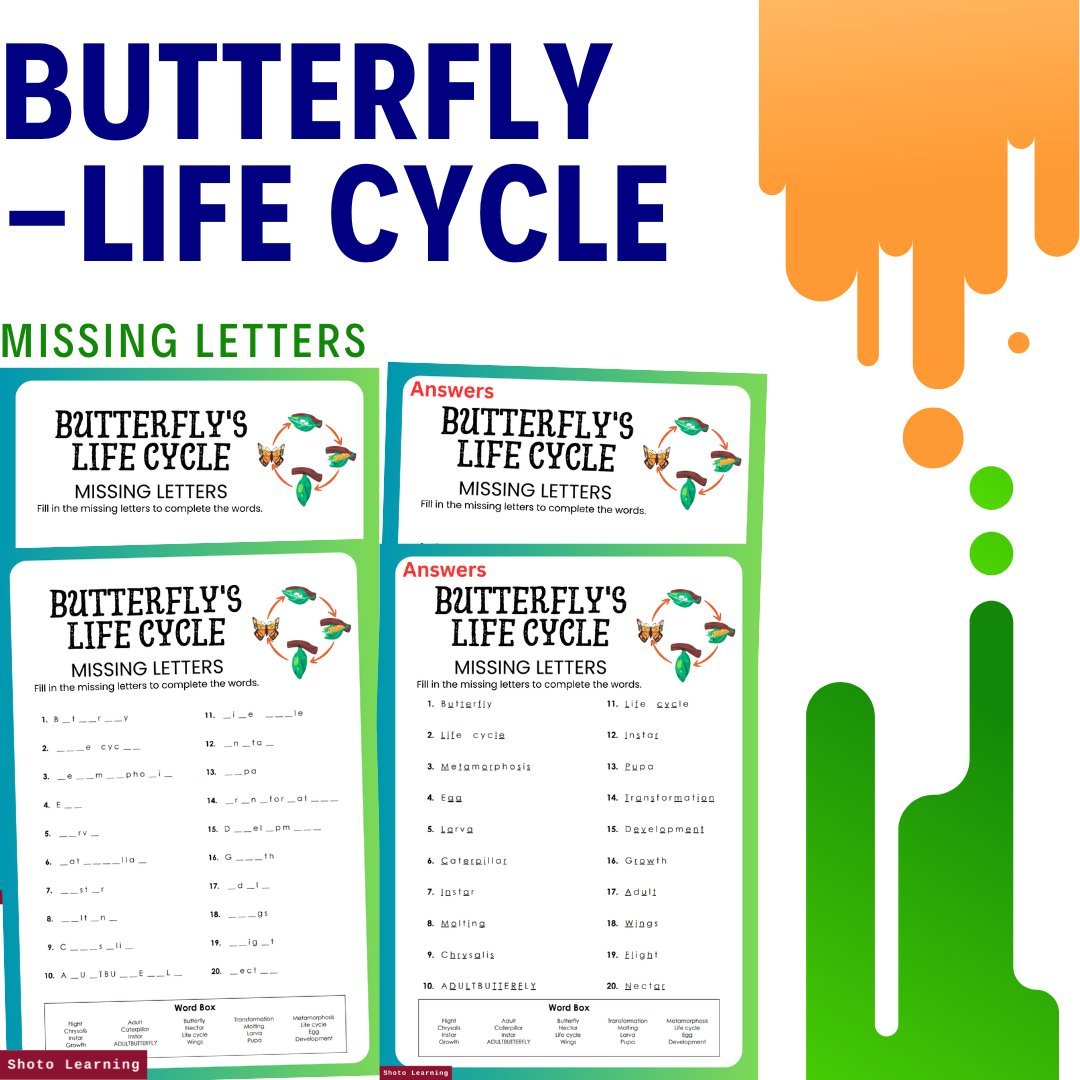
Introducing our "Butterfly Life Cycle Missing Letter Worksheets"! These captivating and educational worksheets are designed to help primary school students reinforce their understanding of the butterfly life cycle while enhancing their spelling and vocabulary skills.
Our set includes two versions of the worksheets: one with hints and one without hints, allowing for differentiated learning experiences based on individual needs and skill levels.
Key Features:
Comprehensive Coverage: The worksheets cover various aspects of the butterfly life cycle, including stages, key terms, and related vocabulary.
Engaging Format: Each worksheet presents a series of sentences related to the butterfly life cycle, with missing letters in key words. Students are challenged to fill in the correct letters to complete the words and sentences accurately.
Differentiated Learning: The two versions of the worksheets provide options for students. The version with hints offers additional support by providing clues for the missing letters, while the version without hints encourages independent thinking and problem-solving.
Spelling and Vocabulary Building: By completing the missing letters, students reinforce their spelling skills and expand their vocabulary related to the butterfly life cycle.
Interactive and Self-Assessment: These worksheets promote active engagement as students actively participate in the learning process. They can check their answers independently, fostering a sense of accomplishment and self-assessment.
Stimulates Critical Thinking: The missing letter format encourages students to think critically and apply their knowledge of the butterfly life cycle to complete the words and sentences correctly.
Suitable for Classroom and Homeschooling: Whether used in a classroom setting or for homeschooling, these worksheets are a valuable resource for teachers and parents seeking to enhance their students' understanding of the butterfly life cycle.
By using our "Butterfly Life Cycle Missing Letter Worksheets," students will not only reinforce their knowledge of the butterfly life cycle but also sharpen their spelling and vocabulary skills. Watch their confidence and understanding take flight as they actively engage in these interactive and educational activities.
Ignite their curiosity about the natural world with our engaging missing letter worksheets on the butterfly life cycle.
Order your copy today!

Embark on an enchanting educational adventure with "Wings of Discovery: Butterfly Life Cycle Experiment Worksheets"! This captivating kit is designed to ignite the curiosity of primary school kids as they delve into the mesmerizing world of butterflies.
With a collection of ten captivating experiments, children will have the opportunity to observe, learn, and discover the incredible stages of a butterfly's life cycle. Each experiment is thoughtfully crafted to engage young minds and promote hands-on learning.
Explore the experiments included in this extraordinary kit:
Observing Butterfly Eggs: Witness the beginning of a butterfly's life as you observe their tiny eggs.
Raising Caterpillars: Experience the thrill of raising caterpillars and witnessing their growth and transformation.
From Chrysalis to Butterfly: Observe the magical metamorphosis of a chrysalis into a beautiful butterfly.
Butterfly Colors: Dive into the vibrant world of butterfly colors and patterns through creative coloring activities.
Butterfly Wingspan: Measure and compare the wingspans of different butterflies, discovering their unique sizes.
Butterfly Feeding Preferences: Investigate which flowers butterflies prefer for feeding, sparking discussions on their diet.
Butterfly Habitat Exploration: Venture into the outdoors to explore various habitats where butterflies thrive.
Butterfly Camouflage: Discover how butterflies use camouflage to protect themselves from predators.
Butterfly Flight Patterns: Observe and analyze the flight behaviors and patterns of these graceful creatures.
Butterfly Migration: Uncover the wonders of butterfly migration, highlighting their epic journeys.
Each experiment comes with clear instructions, materials, and space for children to record their observations and findings. Additionally, for select experiments, a suggested conclusion is provided, while others allow children the opportunity to formulate and write their own conclusions, encouraging critical thinking skills.
"Fluttering Explorations" is an educational tool that fosters a deeper understanding of the butterfly life cycle while promoting scientific inquiry and observation skills. Let your little ones embark on this enthralling journey of discovery, sparking a lifelong love for nature and the wonders of the natural world.
Includes
10x Experiment with one version with and one without a conclusion.
Order your copy today!

Introducing "Fluttering Knowledge: Interactive Butterfly Life Cycle Fill-in-the-Blanks Activity Set"! This captivating and educational kit is designed to engage and challenge primary school students as they reinforce their understanding of the fascinating butterfly life cycle.
With a series of carefully crafted fill-in-the-blank questions, this interactive activity set encourages students to actively participate and test their knowledge about the different stages and characteristics of the butterfly life cycle. Each question presents an incomplete sentence related to butterflies, and students are tasked with filling in the missing word to complete the sentence correctly.
Explore the features of this engaging activity set:
Educational and Engaging: Designed for primary school students, this activity set combines learning with fun, providing an interactive way to reinforce knowledge about the butterfly life cycle.
Comprehensive Coverage: With a wide range of fill-in-the-blank questions, students will deepen their understanding of various aspects, including the stages, characteristics, and behaviors of butterflies.
Reinforcement of Key Concepts: By completing the missing words, students actively recall and reinforce important information about the butterfly life cycle, fostering a solid foundation of knowledge.
Encourages Critical Thinking: The fill-in-the-blank format stimulates critical thinking skills as students apply their understanding to complete the sentences accurately.
Ideal for Individual or Group Learning: Whether used independently or in a classroom setting, this activity set accommodates various learning styles and encourages collaborative discussions among students.
Promotes Confidence and Retention: As students successfully fill in the blanks, they gain a sense of accomplishment, boosting their confidence while enhancing long-term retention of the butterfly life cycle concepts.
Colorful and Engaging Design: The visually appealing illustrations and engaging layout of the activity set make learning about butterflies an enjoyable experience.
"Fluttering Knowledge: Interactive Butterfly Life Cycle Fill-in-the-Blanks Activity Set" is a valuable educational resource that combines entertainment with learning. Encourage your students to immerse themselves in the captivating world of butterflies as they reinforce their understanding of this captivating life cycle. Watch their knowledge take flight as they become butterfly lifecycle experts!
Includes
2 pages fill-in-the-blank
2 pages of fill-in-the-blank answers
Order your copy today!

Introducing "Life Cycle of a Butterfly" Word Search Worksheets!
Embark on an exciting educational journey with our "Life Cycle of a Butterfly" Word Search Worksheets. Designed to engage young learners, this captivating resource combines the joy of solving word puzzles with the fascinating world of butterflies and their remarkable life cycle.
Each worksheet is meticulously crafted to provide an enriching experience while promoting learning and critical thinking skills. Featuring a variety of age-appropriate word search puzzles, this set guarantees hours of entertainment and knowledge exploration.
Discover the magical stages of a butterfly's transformation from a tiny egg to a magnificent flying creature. Children will eagerly dive into the captivating world of metamorphosis as they search for hidden words related to each stage: egg, larva, caterpillar, instar, chrysalis, and adult. They'll become familiar with key terms like molting, wings, flight, nectar, pollination, mating, and reproduction.
With visually appealing designs and carefully chosen word lists, these worksheets provide an excellent opportunity for children to enhance their vocabulary, improve spelling, and reinforce their understanding of butterfly life cycles. Each puzzle offers a challenging and engaging experience, making learning fun and exciting.
Whether used in classrooms, homeschooling environments, or as a fun activity at home, "Life Cycle of a Butterfly" Word Search Worksheets captivate young minds and foster a deep appreciation for the wonders of nature. These worksheets make an ideal addition to science lessons, nature-themed units, or simply as a delightful pastime during leisure hours.
Get ready to embark on a captivating word search adventure and unravel the mysteries of a butterfly's incredible journey. Watch as your children's enthusiasm soars while they develop valuable skills and expand their knowledge about these enchanting creatures.
Order "Life Cycle of a Butterfly" Word Search Worksheets today and let the learning take flight!

Introducing "Life Cycle of a Butterfly" Cryptogram Puzzle - an engaging and challenging game that combines the mystery of cryptograms with the fascinating journey of a butterfly's transformation. This unique puzzle set offers three different types of decoding, providing hours of brain-teasing fun for puzzle enthusiasts of all ages.
Decode the secrets of the butterfly life cycle using three distinct decoding methods: symbol to letters, letters to letters, and numbers to letters. Each method presents a delightful twist, ensuring that you never experience a dull moment while unraveling the hidden phrase. The best part? Regardless of the decoding type, the phrase remains the same, allowing you to focus on cracking the code and unveiling the captivating message.
The "Life Cycle of a Butterfly" Cryptogram Puzzle features a beautifully designed puzzle grid adorned with a variety of symbols, letters, and numbers. With precision and careful deduction, you'll gradually piece together the puzzle, replacing the encoded characters with their correct counterparts. As you progress, a story of metamorphosis and wonder unfolds before your eyes, capturing the essence of the butterfly's remarkable journey.
Challenge yourself and exercise your problem-solving skills as you decipher the cryptic clues. Sharpen your logical thinking and expand your vocabulary while exploring the enchanting world of butterflies. Whether you prefer the visual challenge of symbol-to-letter decoding, the linguistic puzzle of letter-to-letter decoding, or the numerical intrigue of number-to-letter decoding, this puzzle set offers a diverse range of mental exercises to keep you engaged and entertained.
Includes
3 decoding worksheets: symbols to letters, letters to letters, and numbers to letters
Answers included.
Order your copy today!

10 Debate Questions and Answers Worksheets on the Life Cycle of a Butterfly
Introducing our engaging and educational set of 10 Debate Questions and Answers Worksheets on the Life Cycle of a Butterfly! Designed specifically for primary school kids, these worksheets provide an interactive and thought-provoking way to learn about the fascinating transformation of butterflies.
Key Features:
Informative Content: Each worksheet contains a well-crafted debate question related to the life cycle of a butterfly, accompanied by a clear and concise answer. The questions are carefully tailored to spark curiosity and encourage critical thinking among young learners.
Comprehensive Coverage: The worksheets cover all the essential stages of a butterfly's life cycle, including the egg, caterpillar, pupa, and butterfly stages. They provide a holistic understanding of this remarkable transformation and enable children to grasp the concept easily.
Age-Appropriate Language: The questions and answers are written using simple language suitable for primary school kids. The content is presented in a friendly and engaging manner, ensuring that children find the worksheets enjoyable and easy to comprehend.
Visual Elements: The worksheets feature appealing illustrations and diagrams that vividly depict the different stages of a butterfly's life cycle. These visual aids help students visualize the concepts and enhance their understanding of the topic.
Promotes Debate and Discussion: Each worksheet is designed to encourage group discussions and debates among students. By presenting thought-provoking questions, these worksheets foster active participation, critical thinking, and the development of communication skills.
Interactive Format: The worksheets provide ample space for students to write their answers and engage in activities. This interactive format allows children to actively reflect on the questions and express their thoughts and ideas.
Suitable for Classroom and Home Use: These worksheets are ideal for both classroom settings and homeschooling environments. Teachers can incorporate them into lesson plans, while parents can use them as supplemental materials for at-home learning.
Teacher and Parent-Friendly: The worksheets are easy to implement, with clear instructions and answer keys provided. Teachers and parents can monitor the progress of the children and guide them through the discussions effectively.
Educational and Fun: By combining educational content with engaging debate questions, these worksheets make learning about the life cycle of a butterfly a fun and memorable experience. Students will enjoy the interactive nature of the activities and develop a deeper understanding of the topic.
Printable and Reusable: The worksheets are available in a printable format, making it convenient for teachers and parents to reproduce them for multiple uses. They can be used repeatedly to reinforce learning and for revision purposes.
Immerse young learners in the captivating world of butterflies and foster their curiosity with our 10 Debate Questions and Answers Worksheets on the Life Cycle of a Butterfly.
Order now and provide your students or children with an interactive and enriching educational experience that will inspire a love for learning!

Introducing "Life Cycle of a Butterfly" Bingo Game - an exciting and educational way to explore the fascinating journey of a butterfly's transformation! With this game, up to 24 players can embark on a captivating adventure through the stages of a butterfly's life cycle.
Get ready to witness the miracle of metamorphosis right before your eyes! This bingo game includes beautifully illustrated bingo cards featuring the four stages of a butterfly's life cycle: eggs, larvae, pupae, and adult butterflies. Each card is thoughtfully designed to engage players of all ages and ignite their curiosity about the natural world.
The game set includes 24 unique bingo cards, ensuring that each player has a chance to participate and learn. Along with the cards, you will find a set of calling cards featuring vivid images and informative descriptions of each life cycle stage. These calling cards serve as a valuable educational resource, allowing players to deepen their understanding of the butterfly's journey.
Hosting a game is a breeze! Simply shuffle the calling cards and randomly draw one at a time, announcing the stage depicted on the card. Players will eagerly search their bingo cards for a matching image, marking it off with a marker or a token. The first player to complete a row, column, or diagonal of marked images yells "Butterfly Bingo!" to claim victory!
Not only is "Life Cycle of a Butterfly" Bingo Game incredibly fun, but it also promotes learning and discovery. As players engage in friendly competition, they absorb valuable knowledge about the miraculous transformation butterflies undergo. This game is an excellent educational tool for schools, nature clubs, homeschooling, or even family game nights.
Ignite your imagination, foster a love for nature, and experience the magic of the butterfly life cycle with this engaging bingo game. Gather your friends, family, or classmates, and let the journey unfold before your eyes. The "Life Cycle of a Butterfly" Bingo Game guarantees hours of entertainment, laughter, and educational exploration. Get ready to spread your wings and delve into the extraordinary world of butterflies!
Includes
1 Instruction and word page
24 Bingo cards, 2 cards per page (12 Pages)
Order your copy today!

Introducing "Life Cycle of a Butterfly" Crossword Worksheet!
Are you ready to take a fascinating journey into the world of butterflies? Our "Life Cycle of a Butterfly" crossword worksheet is designed to entertain and educate puzzle enthusiasts of all ages. This engaging activity offers two options: one with hints to guide you through the puzzle, and another without hints for an extra challenge. Plus, we've included the answer key to help you check your progress or provide a helping hand if needed.
This crossword worksheet serves a dual purpose: entertainment and education. It enhances your cognitive skills, vocabulary, and problem-solving abilities, all while imparting valuable knowledge about the captivating life cycle of butterflies. Whether you're a nature lover, a student studying biology, or simply seeking a delightful brain teaser, this crossword is a perfect choice.
The "Life Cycle of a Butterfly" crossword worksheet is expertly crafted to ensure an enjoyable and seamless experience. The layout is clear and easy to read, ensuring you won't miss a clue. The hints, if chosen, provide helpful guidance, making it suitable for puzzle enthusiasts of varying skill levels. The answer key allows you to check your answers and celebrate your crossword conquest.
So, embark on this enchanting adventure with our "Life Cycle of a Butterfly" crossword worksheet. Unravel the secrets of nature's most captivating transformation and have a blast while doing it. Get your copy today and let the puzzling begin!
Includes
1x crossword with hints
1x crossword without hints
1x crossword with answers
Order your copy today!

Introducing "Butterfly Life Cycle Explorer: Educational Flash Cards Set"! This engaging and informative flash card set is designed to take young learners on an exciting journey through the captivating world of butterfly life cycles.
With beautifully illustrated cards, each featuring a key term related to the butterfly life cycle, this educational set provides a fun and interactive way for children to explore and understand the different stages and concepts involved.
Key features of the Butterfly Life Cycle Explorer Flash Cards Set:
Comprehensive Coverage: The set includes a wide range of essential terms and concepts, such as eggs, caterpillars, chrysalis, metamorphosis, and adult butterflies, ensuring a thorough understanding of the butterfly life cycle.
Clear Definitions: Each flash card provides a concise and child-friendly definition of the featured term, making it easy for young learners to grasp and remember the key concepts.
Vibrant Illustrations: The visually appealing and colorful illustrations on each flashcard bring the butterfly life cycle to life, capturing the imagination of children and sparking their curiosity.
Durable and Portable: Made from high-quality materials, these flashcards are built to withstand the enthusiastic hands of young learners. The portable design allows for easy use at home, in classrooms, or on-the-go learning.
Interactive Learning Experience: These flash cards encourage active participation and engagement. Children can quiz themselves, play memory matching games, or even use them to create their own stories about the butterfly life cycle.
Educational and Fun: The Butterfly Life Cycle Explorer Flash Cards Set strikes the perfect balance between education and entertainment, making learning about butterflies an enjoyable and enriching experience for children.
Suitable for Various Learning Settings: Whether used for individual study, group activities, or classroom instruction, these flashcards cater to different learning styles and can be adapted to fit various educational settings.
Ignite a love for nature and exploration with the Butterfly Life Cycle Explorer Flash Cards Set. Watch as young learners develop a deep understanding of the remarkable journey of butterflies, fostering their curiosity and appreciation for the wonders of the natural world. Get ready to embark on an educational adventure they won't forget!
Includes
20 Flashcards
Order your copy today!

Introducing "Fluttering Match-Up: Butterfly Life Cycle Matching Worksheets"! This comprehensive and engaging worksheet set is designed to provide primary school students with an interactive learning experience as they explore the fascinating world of the butterfly life cycle.
This product includes two types of matching worksheets that cater to different learning styles and preferences:
Question and Answer Matching Worksheet: This worksheet challenges students to match the given questions related to the butterfly life cycle with their corresponding answers. It encourages critical thinking and reinforces key concepts while assessing students' understanding of the topic.
Picture and Word Matching Worksheet: The second worksheet incorporates visual elements, featuring colorful illustrations of different stages of the butterfly life cycle alongside corresponding words. Students are tasked with matching the correct words to the corresponding images, strengthening their visual recognition and vocabulary skills.
Key features of the Fluttering Match-Up: Butterfly Life Cycle Matching Worksheets:
Comprehensive Coverage: Both worksheets cover the essential components of the butterfly life cycle, including stages, processes, body parts, and related vocabulary.
Interactive Learning: These matching worksheets provide an interactive learning experience, allowing students to actively engage with the material and develop critical thinking skills.
Visual and Textual Reinforcement: The worksheets combine visual illustrations and written text, providing a multi-modal approach to reinforce understanding and vocabulary acquisition.
Varied Learning Styles: The question and answer matching worksheet emphasizes comprehension and recall, while the picture and word matching worksheet caters to visual learners by enhancing their ability to connect images with corresponding terms.
Progress Tracking: These worksheets offer educators and parents a convenient way to track students' progress and assess their grasp of the butterfly life cycle concepts.
Ideal for Independent or Group Learning: Whether used as individual assignments or group activities, these matching worksheets can be easily incorporated into lesson plans, homeschooling curricula, or educational enrichment activities.
"Fluttering Match-Up: Butterfly Life Cycle Matching Worksheets" provides an effective and engaging resource for primary school students to deepen their understanding of the butterfly life cycle. Encourage young learners to spread their wings of knowledge as they match questions with answers and pictures with words. Watch their confidence soar as they become butterfly life cycle experts!
Order your copy today!
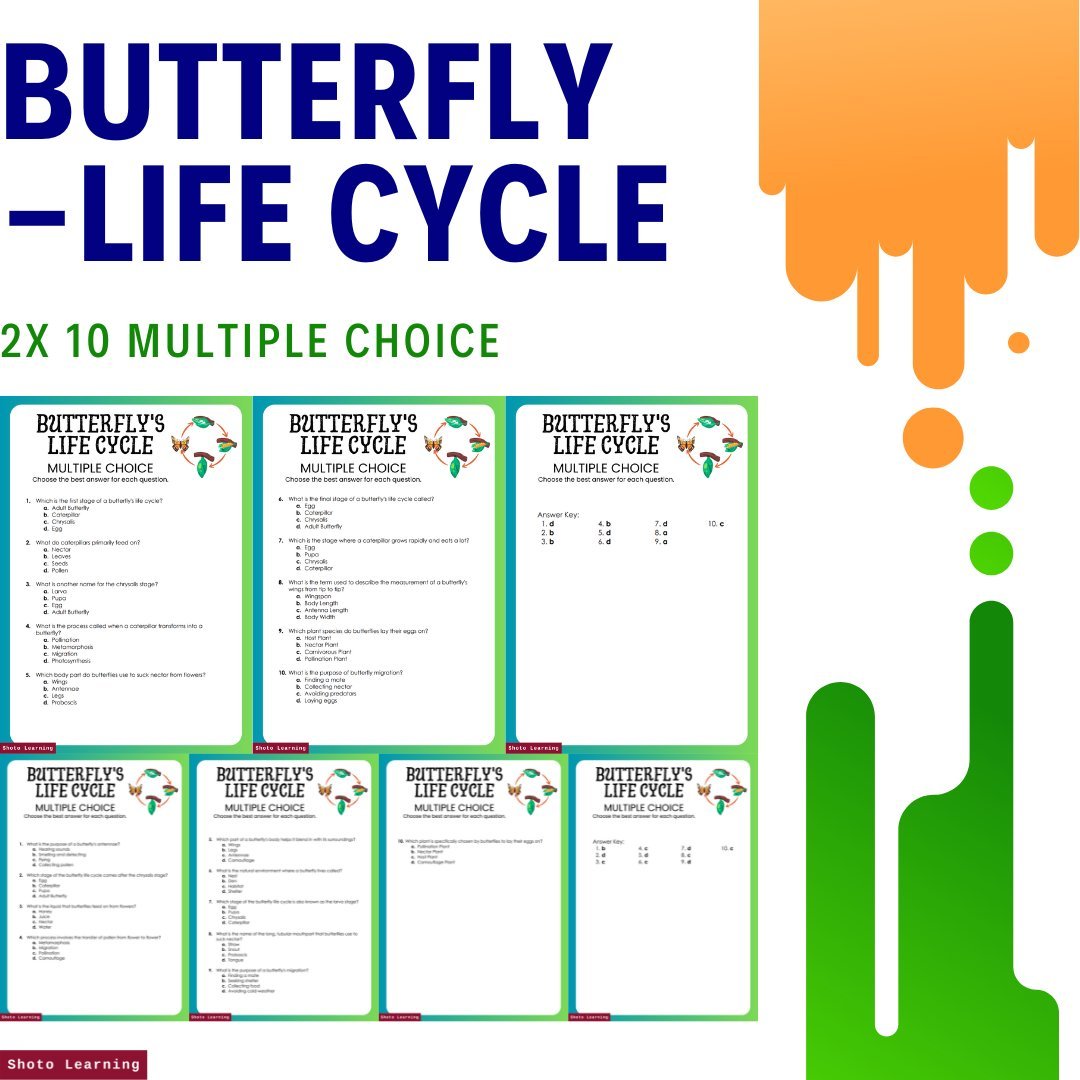
Introducing our "Butterfly Life Cycle Multiple Choice Worksheets" set! Designed specifically for primary school students, this comprehensive collection includes two sets of ten engaging worksheets each, providing an interactive and educational way to learn about the captivating world of butterfly life cycles.
Key Features:
Multiple Choice Format: Each worksheet presents students with multiple-choice questions related to the butterfly life cycle. This format encourages critical thinking skills and allows students to test their knowledge and understanding.
Comprehensive Coverage: The two sets of worksheets cover a wide range of topics, including the stages of the butterfly life cycle, key terms and concepts, body parts, and processes involved. This comprehensive coverage ensures a well-rounded understanding of the subject matter.
Comprehensive Coverage: Engaging and Colorful Design: The worksheets feature vibrant illustrations and appealing designs, making the learning experience visually stimulating and captivating for young learners.
Knowledge Reinforcement: The multiple-choice format prompts students to carefully consider each option before selecting their answer. This process reinforces their understanding of the butterfly life cycle, helping to solidify knowledge and improve retention.
Varied Difficulty Levels: The worksheets are thoughtfully designed with varying levels of difficulty, allowing students to progress at their own pace and challenge themselves as they advance through the set.
Answer Key Included: Each set of worksheets comes with an answer key, providing convenience for educators, parents, or guardians to check and review the students' answers, ensuring accurate assessment and learning progress.
Ideal for Classroom and Homeschooling: These multiple-choice worksheets are suitable for both classroom instruction and homeschooling environments. They can be seamlessly integrated into lesson plans or used as standalone practice exercises to reinforce learning.
By incorporating our "Butterfly Life Cycle Multiple Choice Worksheets" into your teaching or learning materials, you provide an engaging and effective tool for primary school students to expand their knowledge, develop critical thinking skills, and enhance their understanding of the captivating transformation of butterflies.
Watch as young learners embark on an educational journey, answering thought-provoking questions and gaining a deeper appreciation for the wonders of nature.
Includes
2 x 10 Multiple Choice Questions
Answers Included
Order our "Butterfly Life Cycle Multiple Choice Worksheets" today and inspire a love for learning in an interactive and enjoyable way!
Dive into the mesmerizing transformation of butterflies with our all-inclusive Butterfly Life Cycle Worksheets Bundle! Packed with engaging activities and resources, this bundle is tailored to captivate and educate primary school students.
Key Features:
Variety of Activities: Engage students with a wide range of interactive activities, including ABC order, assignments, bingo, crosswords, cryptograms, debates, experiments, PowerPoint presentations, fill-in-the-blank exercises, flashcards, matching, missing letters, multiple choice, Q&A, reading comprehension, scrambles, tests, true or false, word searches, and writing prompts.
Primary School Focus: Activities are specifically designed for primary school students, ensuring age-appropriate content that enhances understanding and retention of butterfly life cycle concepts.
Detailed Lesson Plan: A comprehensive lesson plan provides structured learning with engaging activities and discussion topics to foster a deeper understanding of the butterfly life cycle.
Multifaceted Learning: Activities reinforce vocabulary, spelling, critical thinking, problem-solving, memory retention, and knowledge reinforcement, ensuring a holistic learning experience.
Immersive PowerPoint: A visually engaging PowerPoint presentation offers a complete overview of the butterfly life cycle, featuring captivating images and informative slides suitable for classroom instruction or individual review.
Flexible Usage: Perfect for traditional classrooms, homeschooling, or science units, this bundle adapts to various educational settings and needs.
Assessment Tools: Evaluate student progress with tests, true or false activities, and more, while promoting critical thinking and class discussions through debates and Q&A worksheets.
How to Use It:
Introduce the Topic: Start with the PowerPoint presentation to give an overview of the butterfly life cycle.
Engage with Activities: Choose from a variety of activities such as crosswords, flashcards, and reading comprehension to reinforce key concepts.
Encourage Critical Thinking: Use debates and Q&A worksheets to promote discussion and deeper understanding.
Assess Understanding: Conduct tests, true or false activities, and scrambles to evaluate student retention and comprehension.
Supplement Learning: Utilize writing prompts and assignments to encourage further exploration and creativity.
Fuel curiosity, spark imagination, and deepen understanding with our Butterfly Life Cycle Worksheets Bundle. Empower students to embark on a captivating educational journey that will leave a lasting impact on their knowledge and appreciation of these remarkable creatures.
Download the Butterfly Life Cycle Worksheets Bundle today and inspire a love for learning in your students!