
Understanding the Cardiovascular System: A Comprehensive Guide for Educators
The Cardiovascular System: Essential Teaching Tips and Strategies
The cardiovascular system plays a vital role in sustaining life by circulating blood throughout the body, delivering oxygen and nutrients, and removing waste. As a teacher, breaking down this complex topic can help students understand its importance. Here’s a step-by-step guide to make the topic engaging and approachable.
1. Start with the Basics
Before diving into the cardiovascular system, ensure students have a solid foundation in the human body’s organs and systems. A quick review of the heart, lungs, and the circulatory system sets the stage for deeper exploration. Focus on how these components work together to sustain life.
2. Incorporate Visual Learning
Visual aids are essential for grasping the intricate structure of the cardiovascular system. Use detailed diagrams, charts, or 3D models to illustrate how blood flows through the heart, veins, and arteries. A well-constructed bulletin board or classroom display can reinforce daily learning.
3. Explore the Heart’s Anatomy
The heart, being the core of the cardiovascular system, deserves extra attention. Break down its chambers, valves, and pathways. Diagrams of the heart can visually depict how blood circulates through it. Encourage students to label parts or trace the flow of blood to solidify understanding.
4. Teach Blood Vessels and Their Functions
Blood vessels serve as highways for blood. Dive into the three primary types—arteries, veins, and capillaries. Use clear examples to show how each vessel type supports circulation. Comparisons between their structure and function help students distinguish between them.
5. Discuss the Components of Blood
Blood isn’t just a red liquid; it's a mixture of cells and substances. Teach students about red and white blood cells, platelets, and plasma, highlighting the role each plays in maintaining health. This deeper dive adds context to the circulatory system's overall function.
6. Address Cardiovascular Diseases
Heart disease, stroke, and other cardiovascular issues are global health concerns. Explain their causes, symptoms, and prevention methods. This section offers a real-world connection, helping students understand why a healthy cardiovascular system is vital.
7. Use Real-World Connections
Make the cardiovascular system relatable by incorporating real-life examples. Discuss how exercise strengthens the heart, or how poor diet can lead to artery blockages. These examples bring textbook concepts to life and emphasize the importance of cardiovascular health.
8. Hands-On Learning with Experiments
Experiments are a powerful tool for helping students grasp cardiovascular concepts. Explore heart rate variations during exercise, or demonstrate how blood pressure works. These interactive activities foster curiosity and make learning memorable.
Conclusion
Teaching the cardiovascular system doesn’t have to be overwhelming. By breaking down the topic into manageable sections and incorporating visual aids, real-world connections, and hands-on experiments, students will develop a clear understanding of this vital system. Implementing a variety of teaching strategies ensures every student can grasp the importance of heart health and the body’s circulatory processes.

This comprehensive bundle of worksheets is perfect for teaching students about the cardiovascular system. The worksheets cover a wide range of topics, including the structure and function of the heart, the different types of blood vessels, and the role of the cardiovascular system in transporting oxygen and nutrients throughout the body.
The worksheets are designed to be engaging and interactive, and they include various activities to help students learn and retain the information. These activities include:
Assignments: Embark on 10 stimulating assignments covering diverse topics, encouraging critical thinking and practical application of knowledge.
Debate: Students will debate the pros and cons of different cardiovascular health interventions.
Fill in the blank: Students will fill in the blanks in a series of sentences about the cardiovascular system.
Free ABC Order: Put the parts of the cardiovascular system in alphabetical order.
Free cut and paste: Students will cut and paste the names of different parts of the cardiovascular system to create a model of the heart.
Free poster: A poster that illustrates the different parts of the cardiovascular system.
Matching: Students will match different parts of the cardiovascular system to their functions.
Multiple choice: Students will answer multiple choice questions about the cardiovascular system.
Questions and answers: Students will answer questions about the cardiovascular system.
Reading Comprehension: Sharpen reading skills with engaging passages, perfect for students and educators alike.
Test (45 minutes): A 45-minute test that assesses students' knowledge of the cardiovascular system.
True or false: Students will identify true or false statements about the cardiovascular system.
Writing prompts: Students will write about different aspects of the cardiovascular system.
The Cardiovascular System Worksheet Bundle is a valuable resource for teachers and students alike. It is a comprehensive and engaging way to learn about the cardiovascular system, and it is sure to help students retain the information.
Features:
Comprehensive coverage of the cardiovascular system
Engaging and interactive activities
A variety of activities to help students learn and retain the information
45-minute test
Answer keys for all worksheets
Benefits:
It helps students learn about the cardiovascular system
It helps students retain the information
Makes learning about the cardiovascular system fun and engaging
Provides a variety of activities to meet the needs of all learners
Who is this product for?
This product is for teachers and students learning about the cardiovascular system. It is a valuable resource for anyone who wants to learn more about this important system of the body.
71 pages
Order your copy today!

Embark on an enlightening journey through the intricate pathways of the cardiovascular system with our comprehensive Cardiovascular System Essentials Bundle. Designed to illuminate the wonders of the heart and circulatory system, this bundle offers a wealth of resources to engage learners and deepen understanding.
Dive into the bundle's rich assortment of educational tools:
PowerPoint Presentation: Explore the anatomy, physiology, and functions of the cardiovascular system with our visually compelling and informative PowerPoint presentation.
Test (45 Minutes): Assess comprehension and mastery of cardiovascular system concepts with our meticulously crafted test, covering essential topics in a comprehensive manner.
Lesson Plan: Dive deep with our detailed lesson plan, complete with engaging activities and discussion topics.
Reading Comprehension: Sharpen reading skills with engaging passages, perfect for students and educators alike.
Bingo: Make learning interactive and enjoyable with our Cardiovascular System Bingo game, perfect for reinforcing key terms and concepts in a lively classroom setting.
Crossword: Challenge your knowledge and expand your vocabulary with our Cardiovascular System Crossword puzzle, offering an entertaining way to reinforce understanding.
Word Search: Sharpen your observation skills while hunting for cardiovascular system-related terms in our engaging Word Search activity, designed to reinforce terminology.
Cryptogram: Decode the secrets of cardiovascular health with our Cryptogram puzzle, offering a stimulating twist on learning fundamental concepts.
True or False: Test your understanding of cardiovascular system principles with our True or False activity, designed to challenge misconceptions and solidify knowledge.
Matching: Strengthen connections between cardiovascular system components with our Matching activity, fostering a deeper understanding of structure and function.
Missing Letters: Fill in the blanks and complete cardiovascular system-related terms with our Missing Letters exercise, perfect for reinforcing spelling and vocabulary.
Scramble: Unscramble jumbled phrases related to the cardiovascular system with our engaging Scramble activity, promoting quick thinking and problem-solving skills.
Plus, enjoy these valuable bonuses included for free:
Free ABC Order: Practice alphabetizing cardiovascular system terms with our convenient ABC Order activity.
Free Cut and Paste: Enhance your understanding of cardiovascular system anatomy with our interactive Cut and Paste activity.
Free Poster: Reinforce learning and decorate your learning space with our informative and visually appealing Cardiovascular System Poster.
With answers provided for all activities, this comprehensive bundle equips learners with the tools needed to unravel the mysteries of the cardiovascular system. Illuminate the heart of health today!
71 pages
Don't miss out, order yours today!

Learn about the cardiovascular system in a fun and interactive way with this game bundle!
This bundle includes 8 different games that will help you learn about the different parts of the cardiovascular system, how it works, and why it's important. The games include:
ABC Order: Put the parts of the cardiovascular system in alphabetical order.
Bingo: Mark the square when the names are called out, and shout "BINGO!" when you get a full line.
Crossword: Fill in the crossword puzzle with the names of the parts of the cardiovascular system.
Cryptogram: Decode the cryptogram to reveal the names of the parts of the cardiovascular system.
Free Cut and Paste: Cut out the names of the parts of the cardiovascular system and paste them on the picture.
Free PowerPoint: Present a PowerPoint presentation about the cardiovascular system.
Free Poster: A poster about the cardiovascular system.
Matching: Match the names of the parts of the cardiovascular system to their functions.
Missing Letters: Fill in the missing letters to reveal the names
Scramble: Scramble the letters of the names of the parts of the cardiovascular system and unscramble them to reveal the correct names.
Word Search: Find the names of the parts of the cardiovascular system in the word search puzzle.
This game bundle is perfect for students of all ages who are learning about the cardiovascular system. It's a fun and interactive way to learn about this important part of the body.
Features:
8 different games to help you learn about the cardiovascular system
Free cut and paste, PowerPoint, and poster templates
Easy to use and fun for all ages
Benefits:
Improve your understanding of the cardiovascular system
Learn about the different parts of the cardiovascular system and how they work
Have fun while you learn
41 pages
Order your copy today and start learning about the cardiovascular system in a fun and interactive way!

ABC Order Worksheet on Cardiovascular System
This worksheet is a fun and interactive way to learn about the cardiovascular system. It is designed to help students organize their knowledge of the system in alphabetical order.
The worksheet includes a list of 21 terms related to the cardiovascular system, from Arteries to Veins. Students are asked to cut and paste each term in alphabetical order. The worksheet is a great way to help students learn the vocabulary associated with the cardiovascular system.
Features:
21 terms related to the cardiovascular system
Alphabetical order
Fun and interactive
Benefits:
Helps students organize their knowledge of the cardiovascular system
Improves students' vocabulary skills
Provides a review tool
Who is this product for?
This product is for students of all ages who are learning about the cardiovascular system. It is a great resource for teachers, parents, and tutors who are looking for a fun and interactive way to help students learn about this important system.
How to use this product:
The worksheet can be used as a stand-alone activity, or as part of a larger unit on the cardiovascular system.
Students can work on the worksheet individually, in pairs, or in small groups.
The worksheet can be used as a review tool or as a way to assess students' understanding of the system.
This worksheet is a great resource for students who are learning about the cardiovascular system. Order your copy today and help your students learn in a fun and interactive way!
Order your copy today!

Cardiovascular System Poster
This free poster is a great way to learn about the cardiovascular system. It shows a detailed diagram of the heart, including the superior vena cava, aorta, pulmonary artery, left atrium, pulmonary vein, left ventricle, right ventricle, and right atrium.
Features:
A detailed diagram of the heart
Labeled with all the major parts
Free to download and print
Can be used as a learning tool or as a decorative piece
Benefits:
It helps you learn about the cardiovascular system
Provides a visual reference for understanding how the heart works
Can be used as a learning tool for students of all ages
Can be used as a decorative piece in your home or classroom
Here are some additional benefits of using this poster:
It can help you visualize the different parts of the cardiovascular system.
It can help you understand how the different parts of the cardiovascular system work together.
It can help you develop your problem-solving skills.
It can be used as a formative assessment tool to measure your understanding of the cardiovascular system.
Download your FREE copy today and start learning about the cardiovascular system!

Free Cut and Paste on the Heart of the Cardiovascular System
This free cut and paste activity is a fun and interactive way for students to learn about the heart and the cardiovascular system. The activity includes a diagram of the heart with the names of the major parts labeled. Students can cut out the name labels and glue them in the correct places on the diagram.
The activity can be used in a variety of ways. You can print out a copy for each student, or you can use it as an interactive tool for the lesson by laminating it like a poster and putting velcro tape at the back of each name label.
The activity includes the following parts of the heart:
Superior vena cava
Aorta
Pulmonary artery
Left atrium
Pulmonary vein
Left ventricle
Right ventricle
Right atrium
How to Use
Print out the activity sheet.
Cut out the name labels.
Glue the name labels in the correct places on the diagram.
If you are using the activity as an interactive tool, laminate the diagram and put velcro tape on the back of each name label.
Benefits
This activity helps students learn about the heart and the cardiovascular system.
The activity is fun and interactive, which helps students stay engaged.
The activity can be used in a variety of ways, which makes it flexible and adaptable.
Download Your Free Copy Today!

PowerPoint Lecture on the Cardiovascular System
This PowerPoint lecture provides an overview of the cardiovascular system, including the heart, blood vessels, and blood. It covers the following topics:
The anatomy of the heart
The function of the heart
The different types of blood vessels
The composition of blood
The circulation of blood
The lecture is designed for students, healthcare professionals, and anyone who wants to learn more about the cardiovascular system.
Features:
16 slides covering the essential topics of the cardiovascular system
Clear and concise explanations
High-quality diagrams and illustrations
Benefits:
Gain a better understanding of the cardiovascular system
Learn about the function of the heart, blood vessels, and blood
Improve your knowledge of the cardiovascular system for your studies or work
Here are some additional details about the lecture:
The lecture is approximately 4.50 minutes long.
The slides are designed to be used in a presentation, but they can also be used for individual study.
The lecture is available in PDF format.
View on Youtube
Includes: PowerPoint and Speech
Download your copy today!

Enhance your students' understanding of the cardiovascular system with this comprehensive reading comprehension worksheet. This resource provides an in-depth passage that explains the structure and function of the heart, blood vessels, and the overall circulatory system. It also covers key concepts such as pulmonary and systemic circulation, the roles of different blood vessels, and tips for maintaining cardiovascular health. Ideal for use in science classes, homework assignments, or as a study aid, this worksheet will help students grasp the essentials of the cardiovascular system and its importance to human health.
Key Features:
Informative Passage: A detailed explanation of the cardiovascular system, including the heart's anatomy, types of blood vessels, circulation processes, and factors influencing cardiovascular health.
5 Comprehension Questions: Engaging questions that test students’ understanding of key concepts, reinforce learning, and encourage critical thinking.
Answer Key Included: Provides complete answers for each question to facilitate self-assessment and guided learning.
Focus on Core Concepts: Covers essential topics such as the difference between pulmonary and systemic circulation, the roles of arteries, veins, and capillaries, and lifestyle tips for cardiovascular health.
Versatile Use: Suitable for middle and high school students, the worksheet can be used in the classroom, for homework, or as a revision tool.
How to Use It:
In-Class Activity: Incorporate the worksheet into lessons on human biology or the circulatory system. Have students read the passage and answer the questions individually or in small groups to reinforce key concepts.
Homework Assignment: Assign the worksheet as homework to help students review and reflect on cardiovascular system concepts at their own pace.
Study Aid: Provide the worksheet as a study resource for exams or quizzes on human biology, allowing students to review essential information and test their comprehension.
Empower your students with a solid understanding of the cardiovascular system through this engaging and educational reading comprehension worksheet!
Order your copy today!

Embark on an enlightening journey into the intricate world of the cardiovascular system with our comprehensive lesson plan, "Cardiovascular Explorations: Understanding the Heart and Blood Circulation." Tailored for high school biology classes, this resource offers a deep dive into the structure, function, and importance of the heart, blood vessels, and blood circulation.
Key Features:
Comprehensive Coverage: Delve into the anatomy of the cardiovascular system, exploring the structure and function of the heart, arteries, veins, and capillaries.
Interactive Learning: Engage students with visual aids, diagrams, and hands-on activities that bring complex cardiovascular concepts to life, fostering a deeper understanding and appreciation for the cardiovascular system.
Real-World Relevance: Connect cardiovascular health to everyday life and current research, empowering students to understand the significance of maintaining a healthy cardiovascular system for overall well-being.
Holistic Approach: Explore the importance of cardiovascular health through discussions on lifestyle habits, risk factors for cardiovascular diseases, and strategies for promoting heart health.
Practical Application: Provide opportunities for students to apply their knowledge of the cardiovascular system to real-world scenarios, encouraging critical thinking and problem-solving skills.
How to Use This Lesson Plan:
Review Objectives: Begin by reviewing the lesson objectives and outcomes to understand the focus and goals.
Prepare Materials: Gather all required materials, including handouts, worksheets, and any multimedia resources.
Introduce Topic: Start with a brief introduction to the topic to engage students and set the context.
Follow the Steps: Teach each section as outlined, incorporating suggested activities, discussions, and questions.
Monitor and Adapt: Observe student engagement and understanding; adapt the lesson pace and methods as needed.
Assess Understanding: Use the provided assessment tools to evaluate student comprehension and provide feedback.
Wrap-Up: Summarize key points and provide closure with a reflective activity or homework assignment.
Ignite curiosity, inspire exploration, and instill a lifelong appreciation for the wonders of the cardiovascular system with "Cardiovascular Explorations: Understanding the Heart and Blood Circulation." Equip your students with the knowledge and tools to navigate the intricacies of cardiovascular health and wellness.
Order your copy today!

Dive into the fascinating world of the human cardiovascular system with this concise, two-page guide featuring five easy-to-do experiments. Perfect for students, educators, and curious minds, these hands-on activities provide a deeper understanding of heart rate, blood flow, and how the cardiovascular system responds to different stimuli. With simple materials found at home, these experiments are designed to be engaging, educational, and fun, making the study of biology accessible for all ages.
Key Features:
Simple Setup: Experiments use easily available materials like water, tubing, a stopwatch, and household items.
Engaging Activities: Includes five hands-on experiments to explore heart rate, blood flow, oxygen levels, and temperature regulation.
Educational Insights: Each experiment is paired with a brief explanation of the underlying biological principles.
Flexible Learning: Suitable for a variety of educational settings—homeschooling, classrooms, or independent study.
Two-Page Format: Easy to print and use with concise instructions and clear illustrations.
How to Use It:
Gather Materials: Collect all necessary items from the list provided in the guide to set up each experiment.
Follow Instructions: Carefully read and follow the step-by-step instructions for each experiment to ensure proper execution and safety.
Observe and Record: Pay attention to changes in heart rate, blood flow, and other variables. Record your observations and compare them with the explanations provided.
Discuss and Analyze: Use the results to spark discussions about the cardiovascular system's functions and responses to different activities and conditions.
This guide is an excellent resource for enhancing your understanding of human biology through practical and interactive learning experiences.
Order your copy today!

Dive deep into the world of the cardiovascular system with this comprehensive set of 10 assignments designed to enhance understanding and retention of key concepts related to heart function, blood flow, and overall circulatory health. These assignments cover essential topics, including the anatomy of the heart, blood vessel types, blood pressure regulation, the role of the SA node, and the impact of diseases like atherosclerosis. Ideal for middle school, high school, or introductory college-level biology students, these assignments challenge learners to apply critical thinking, explore physiological processes, and connect theory to real-world scenarios.
Key Features:
Diverse Question Formats: Engaging assignments with a mix of short-answer, multiple-choice, and scenario-based questions.
Detailed Explanations: In-depth answers are provided to facilitate learning and self-assessment.
Comprehensive Coverage: Covers fundamental topics such as blood flow, heart anatomy, blood pressure, and the nervous system's influence on heart rate.
Real-World Application: Questions that encourage critical thinking and practical application of cardiovascular knowledge.
Customizable for Lessons: Perfect for homework, classroom discussions, quizzes, or group work.
Digital and Printable: Available in formats suitable for both digital and print use.
How to Use It:
Review Assignments: Start by going through each of the 10 assignments to understand the core topics related to the cardiovascular system.
Complete the Questions: Work through each question, ranging from basic concepts to more advanced applications, to test your understanding.
Check Answers: After completing the assignments, refer to the provided answer key to verify your answers and learn from any mistakes.
Engage in Discussions: Use the assignments as a basis for class discussions, group projects, or further research on cardiovascular health and diseases.
Reinforce Learning: Encourage students to reflect on what they've learned by connecting theoretical knowledge to practical health scenarios, such as maintaining heart health.
Equip your students or yourself with a thorough understanding of the cardiovascular system using these dynamic assignments, perfect for enhancing both knowledge and critical thinking skills in biology.
Order your copy today!

Cardiovascular System Word Search
This word search is a fun and educational way to learn about the cardiovascular system. It includes 20 terms related to the heart, blood vessels, and circulation. The words are hidden in a grid of letters, and students can use the answer key to find them.
This word search can be used as a homework assignment, a classroom activity, or a review for a test. It is also a fun way for students to learn about the cardiovascular system and how it works.
Features:
20 terms related to the cardiovascular system
Answer key included
Fun and educational
Benefits:
Helps students learn about the cardiovascular system
Improves vocabulary skills
Promotes critical thinking skills
Provides a fun and engaging learning experience
Order your copy today and start learning about the cardiovascular system!
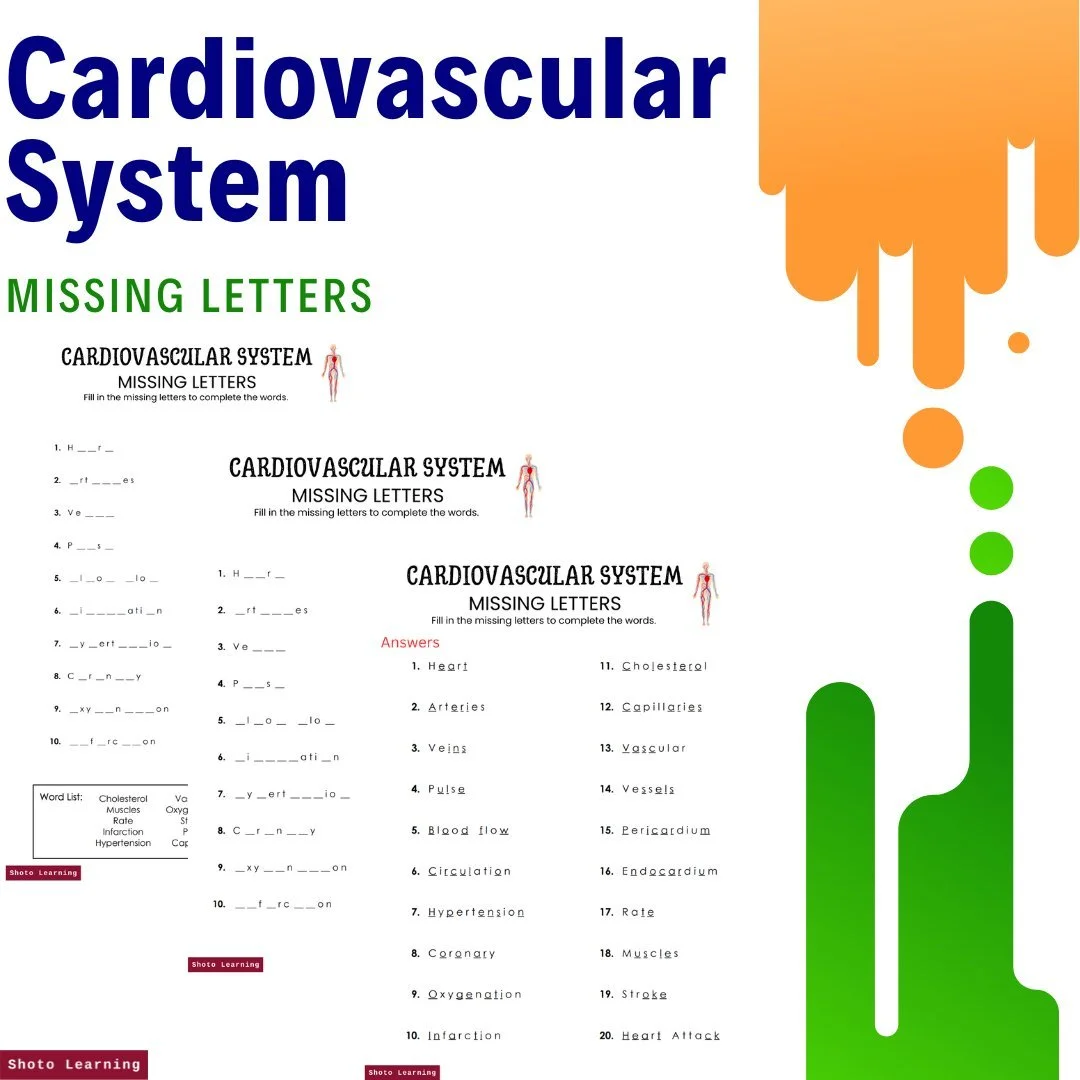
Cardiovascular System Missing Letter Worksheet
This worksheet is a fun and educational way to learn about the cardiovascular system. It includes 20 words related to the heart, blood vessels, and circulation. The words have missing letters, and students must fill in the missing letter to complete the word.
One worksheet includes a word list (hint) to help students, while the other worksheet does not. This allows students to choose the level of challenge that is right for them.
This worksheet can be used as a homework assignment, a classroom activity, or a review for a test. It is also a fun way for students to learn about the cardiovascular system and how it works.
Features:
20 words related to the cardiovascular system
Missing letter prompts
Fun and educational
Benefits:
Helps students learn about the cardiovascular system
Improves vocabulary skills
Promotes critical thinking skills
Provides a fun and engaging learning experience
Order your copy today and start learning about the cardiovascular system!

Cardiovascular System Word Scramble Worksheet
This word scramble worksheet is a fun and educational way to learn about the cardiovascular system. It includes 24 terms related to the heart, blood vessels, and circulation. The words are scrambled, and students must unscramble them to reveal the correct terms.
This worksheet can be used as a homework assignment, a classroom activity, or a review for a test. It is also a fun way for students to learn about the cardiovascular system and how it works.
Features:
24 terms related to the cardiovascular system
Scrambled words
Answer key included
Fun and educational
Benefits:
Helps students learn about the cardiovascular system
Improves vocabulary skills
Promotes critical thinking skills
Provides a fun and engaging learning experience
Order your copy today and start learning about the cardiovascular system!

Cardiovascular System Crossword Puzzle
This crossword puzzle is a fun and educational way to learn about the cardiovascular system. It includes 12 questions related to the heart, blood vessels, and circulation. The answers to the questions are hidden in the puzzle grid.
This crossword can be used as a homework assignment, a classroom activity, or a review for a test. It is also a fun way for students to learn about the cardiovascular system and how it works.
Features:
12 questions related to the cardiovascular system
The answers are hidden in the puzzle grid
Word bank included (optional)
Fun and educational
Benefits:
Helps students learn about the cardiovascular system
Improves vocabulary skills
Promotes critical thinking skills
Provides a fun and engaging learning experience
Here are some additional benefits of using this crossword puzzle:
It can help students visualize the different parts of the cardiovascular system.
It can help students understand how the different parts of the cardiovascular system work together.
It can help students develop their problem-solving skills.
It can be used as a formative assessment tool to measure students' understanding of the cardiovascular system.
Order your copy today and start learning about the cardiovascular system!

Cardiovascular System Cryptogram
This cryptogram is a fun and educational way to learn about the cardiovascular system. It includes 3 types of cryptograms: letter-to-letter, symbol-to-letter, and number-to-letter.
The letter-to-letter cryptogram uses a simple substitution cipher to encode the words. The symbol-to-letter cryptogram uses symbols to represent letters. The number-to-letter cryptogram uses numbers to represent letters.
The cryptograms include terms related to the heart, blood vessels, and circulation. The answers are included, so you can check your work.
Features:
3 types of cryptograms: letter-to-letter, symbol-to-letter, and number-to-letter
Terms related to the cardiovascular system
Answers included
Fun and educational
Great for all ages
Benefits:
Helps you learn about the cardiovascular system
Improves your vocabulary skills
Promotes critical thinking skills
Provides a fun and challenging learning experience
Here are some additional benefits of using this cryptogram:
It can help you visualize the different parts of the cardiovascular system.
It can help you understand how the different parts of the cardiovascular system work together.
It can help you develop your problem-solving skills.
Order your copy today and start learning about the cardiovascular system!

Cardiovascular System Fill-in-the-Blanks Activity
This fill-in-the-blank activity is a fun and educational way to learn about the cardiovascular system. It includes 20 blanks, each of which is a term related to the heart, blood vessels, and circulation. There are two versions of the worksheet: one with a word box (hint) and one without.
Features:
20 fill-in-the-blanks
Terms related to the cardiovascular system
Two versions: with and without word box
Fun and educational
Great for all ages
Benefits:
Helps you learn about the cardiovascular system
Improves your vocabulary skills
Promotes critical thinking skills
Provides a fun and challenging learning experience
Order your copy today and start learning about the cardiovascular system!
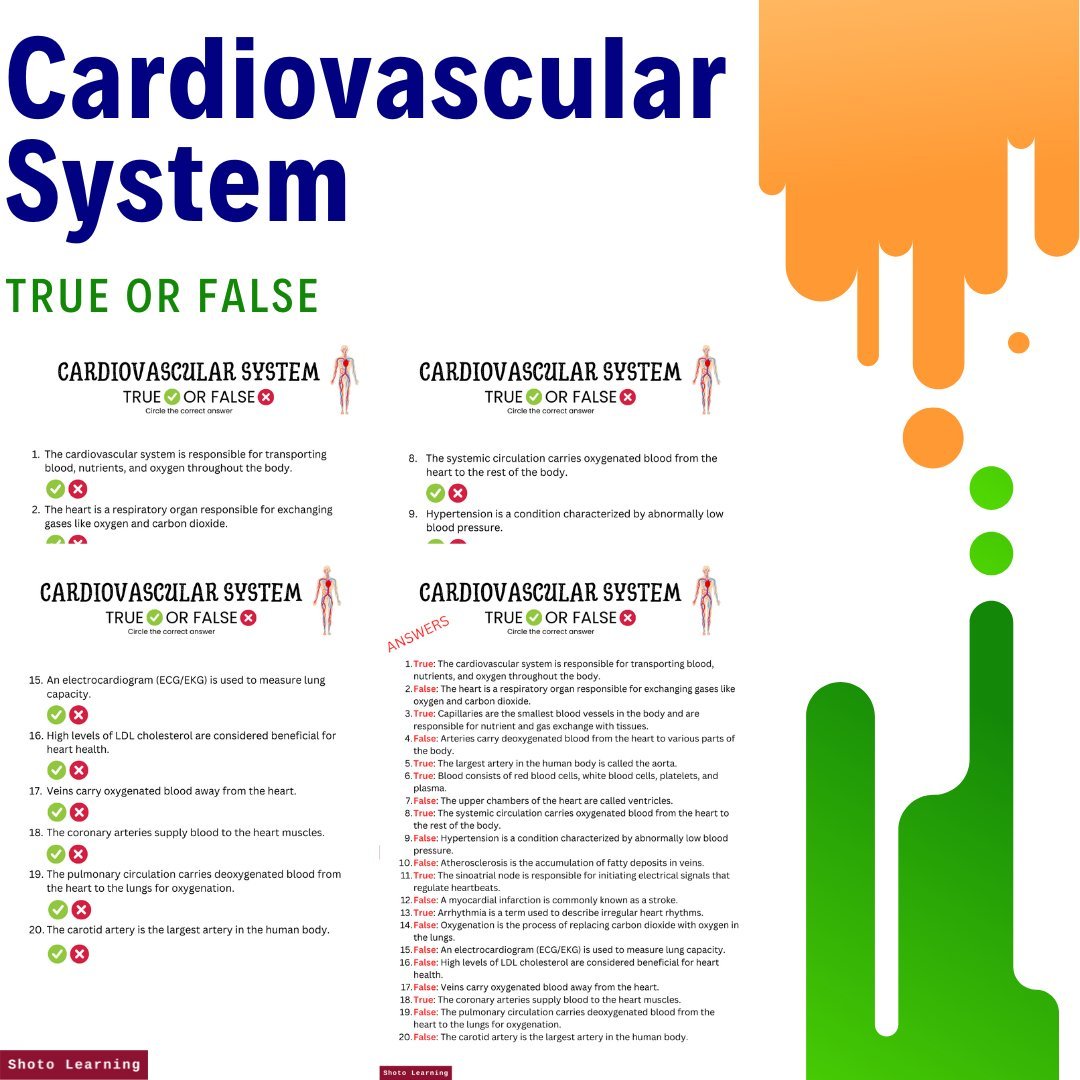
20 True or False Questions and Answers on the Cardiovascular System
This set of 20 true or false questions and answers is a fun and interactive way to test your knowledge of the cardiovascular system. The questions cover a variety of topics, including the heart, blood vessels, blood, and circulation.
The questions are suitable for students in grades 4-8, but they can also be used by adults who want to brush up on their cardiovascular knowledge.
How to Use
Print out the question sheet.
Read each question and decide whether you think the answer is true or false.
Circle the correct answer to each question.
Check your answers at the end of the sheet.
Benefits
This activity helps you learn about the cardiovascular system.
The activity is fun and interactive, which helps you stay engaged.
The activity can be used in a variety of ways, which makes it flexible and adaptable.
Download Your Copy Today!

This fun and educational bingo game is a great way to learn about the cardiovascular system. The game includes 30 bingo cards, each with a different set of terms related to the heart, blood vessels, and circulation. As the caller randomly calls out terms, players mark off the corresponding terms on their cards. The first player to mark off a row, column, or diagonal wins the game!
Features:
30 bingo cards with different sets of terms
Caller sheet with 25 terms to call out
Instructions for playing the game
Benefits:
Learn about the cardiovascular system in a fun and interactive way
Reinforce vocabulary and understanding of cardiovascular anatomy and physiology
Promote teamwork and cooperation
Have a fun and educational game
Age Range:
12 years and up
Playing Time:
15-30 minutes
Instructions:
Each player chooses a bingo card.
The caller randomly calls out terms from the caller sheet.
Players mark off the corresponding terms on their cards.
The first player to mark off a row, column, or diagonal wins the game!
Package Contents:
30 bingo cards
1 caller sheet
Instructions
Order your copy today and start learning about the cardiovascular system in a fun and interactive way!

10 Debate Questions and Answers on the Cardiovascular System
This product is a set of 10 debate questions and answers on the cardiovascular system. The questions are designed to stimulate critical thinking and discussion about the heart, blood vessels, and circulation.
The questions are divided into two categories:
Fact-based questions: These questions ask for factual information about the cardiovascular system.
Opinion-based questions: These questions ask students to express their own opinions about the cardiovascular system.
The answers to the questions are also included, so students can check their work.
Features:
10 debate questions and answers
Fact-based and opinion-based questions
Answers included
Fun and educational
Great for all ages
Benefits:
Helps students learn about the cardiovascular system
Improves critical thinking skills
Promotes discussion and debate
Provides a fun and challenging learning experience
Order your copy today and start learning about the cardiovascular system!

Cardiovascular System Flash Cards
These flashcards are a fun and educational way to learn about the cardiovascular system. They include 20 terms related to the heart, blood vessels, and circulation.
Features:
20 terms related to the cardiovascular system
Definitions or explanations on each card
Fun and educational
Great for all ages
Benefits:
Helps you learn about the cardiovascular system
Improves your vocabulary skills
Promotes critical thinking skills
Provides a fun and engaging learning experience
Here are some additional benefits of using these flashcards:
They can help you understand how the different parts of the cardiovascular system work together.
They can help you develop your problem-solving skills.
They can be used as a formative assessment tool to measure your understanding of the cardiovascular system.
Here are some examples of the terms included in these flashcards:
Aorta
Arteries
Blood
Blood cot
Capillaries
Heart
Ventricles
Circulatory system
Oxygenation
Order your copy today and start learning about the cardiovascular system!

Cardiovascular System Matching Worksheet
This matching worksheet is a fun and educational way to learn about the cardiovascular system. It includes 10 terms and their definitions related to the heart, blood vessels, and circulation. Students must match the terms to their definitions.
This worksheet can be used as a homework assignment, a classroom activity, or a review for a test. It is also a fun way for students to learn about the cardiovascular system and how it works.
Features:
10 terms and definitions related to the cardiovascular system
Matching activity
Answer key included
Fun and educational
Benefits:
Helps students learn about the cardiovascular system
Improves vocabulary skills
Promotes critical thinking skills
Provides a fun and engaging learning experience
Here are some additional benefits of using this worksheet:
It can help students visualize the different parts of the cardiovascular system.
It can help students understand how the different parts of the cardiovascular system work together.
It can help students develop their problem-solving skills.
It can be used as a formative assessment tool to measure students' understanding of the cardiovascular system.
Order your copy today and start learning about the cardiovascular system!

Cardiovascular System Multiple Choice Activity
This multiple choice activity is a fun and educational way to learn about the cardiovascular system. It includes 20 questions, each of which has four answer choices. The answers are all related to the heart, blood vessels, and circulation.
Features:
20 multiple choice questions
Terms related to the cardiovascular system
Four answer choices per question
Fun and educational
Great for all ages
Benefits:
Helps you learn about the cardiovascular system
Improves your critical thinking skills
Promotes problem-solving skills
Provides a fun and challenging learning experience
Here are some additional benefits of using this multiple choice activity:
It can help you visualize the different parts of the cardiovascular system.
It can help you understand how the different parts of the cardiovascular system work together.
It can help you develop your problem-solving skills.
It can be used as a formative assessment tool to measure your understanding of the cardiovascular system.
Order your copy today and start learning about the cardiovascular system!

Cardiovascular System Questions and Answers Activity
This questions and answers activity is a fun and educational way to learn about the cardiovascular system. It includes 20 questions, each term related to the heart, blood vessels, and circulation. The answers are included, so you can check your work.
Features:
20 questions and answers
Terms related to the cardiovascular system
Answers included
Fun and educational
Great for all ages
Benefits:
It helps you learn about the cardiovascular system
Improves your vocabulary skills
Promotes critical thinking skills
Provides a fun and challenging learning experience
Here are some examples of the questions included in this product:
What is the main function of the cardiovascular system?
What is the heart, and what does it do?
Which blood vessels carry oxygenated blood away from the heart?
Here are some additional benefits of using this questions and answers activity:
It can help you understand how the different parts of the cardiovascular system work together.
It can help you develop your problem-solving skills.
It can be used as a formative assessment tool to measure your understanding of the cardiovascular system.
Order your copy today and start learning about the cardiovascular system!

This 45-minute test is a great way to assess your knowledge of the cardiovascular system. It includes 10 multiple choice questions, 5 true or false questions, 2 short answer questions, and 3 matching questions. The answers are included, so you can check your work.
Features:
10 multiple choice questions
5 true or false questions
2 short answer questions
3 matching questions
Answers included
45 minutes
Benefits:
Assesses your knowledge of the cardiovascular system
It helps you identify areas where you need more study
Provides a challenge to test your understanding
Fun and educational
Order your copy today and start testing your knowledge of the cardiovascular system!
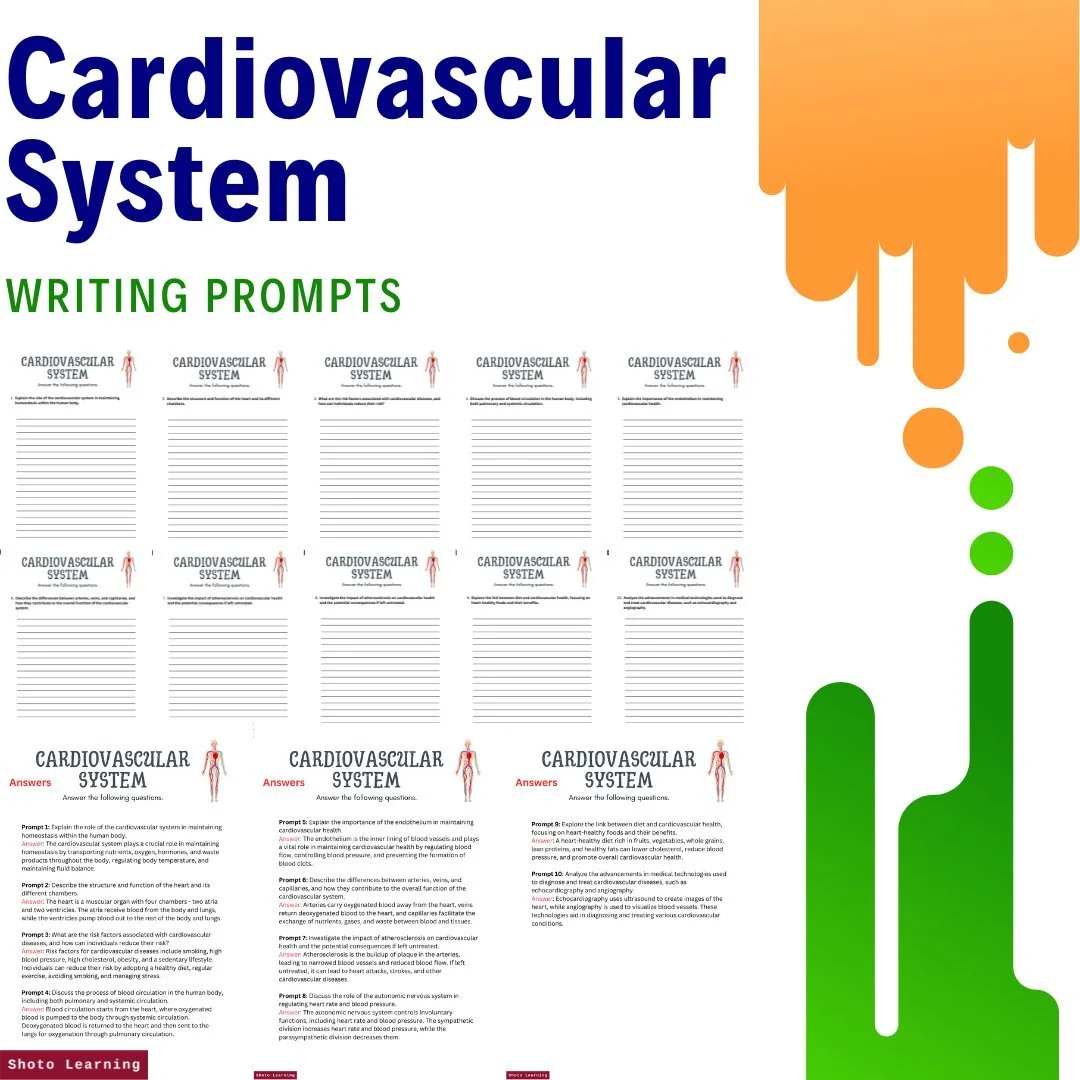
10 Writing Prompts and Answers on the Cardiovascular System
This is a set of 10 writing prompts and answers on the cardiovascular system. The prompts are designed to help students learn about the heart and the cardiovascular system in a fun and interactive way.
The prompts cover a variety of topics, including:
The anatomy of the heart
The function of the heart
The different types of blood vessels
The diseases that affect the cardiovascular system
Each prompt includes a short answer that provides students with some basic information on the topic. The answers are also designed to spark further discussion and exploration.
The prompts can be used as a supplement to a science lesson on the cardiovascular system or as a standalone activity.
How to Use
The prompts can be used in a variety of ways. You can:
Give students the prompts and have them write their answers.
Use the prompts as a discussion starter in class.
Have students work in groups to research the answers to the prompts.
Benefits
This activity helps students learn about the heart and the cardiovascular system.
The activity is fun and interactive, which helps students stay engaged.
The activity can be used in a variety of ways, which makes it flexible and adaptable.
It's a great way to help your students learn about the cardiovascular system and develop their writing skills!
Download Your Copy Today!
This comprehensive bundle includes everything you need to learn about the cardiovascular system in a fun and engaging way. With 20 different activities, you'll be able to test your knowledge of the heart, blood vessels, and circulation.
Activities included:
Assignments
Bingo
Crossword
Cryptogram
Debate
Experiments
Fill in the blank
Flashcards
Free ABC Order
Free Cut and Paste
Free Poster
Lesson Plan
Matching
Missing letters
Multiple choice
Powerpoint
Questions and answers
Reading Comprehension
Scramble
Test (45 minutes)
True or false
Word search
Writing prompts
Why you'll love this bundle:
It's comprehensive. This bundle covers all the major aspects of the cardiovascular system, from the heart to the blood vessels.
It's engaging. The activities are designed to be fun and challenging, so you'll stay engaged while you learn.
It's interactive. The activities allow you to interact with the material, which helps you learn more effectively.
It's affordable. This bundle is a great value for the price.
Get started today and learn about the cardiovascular system in a fun and engaging way!
Here are some additional benefits of this bundle:
It's self-paced. You can work through the activities at your own pace, so you can learn at your level.
It's portable. You can take the activities with you wherever you go, so you can learn on the go.
It's printable. You can print out the activities so you can work on them offline.
This bundle is perfect for:
Students of all ages
Teachers
Homeschoolers
Anyone who wants to learn about the cardiovascular system
134 pages
Order your copy today and start learning about the cardiovascular system in a fun and engaging way!