
A Comprehensive Guide to Teaching Halloween in the Classroom
Halloween is one of the most exciting times of the year for students and teachers alike. The festive season provides a unique opportunity to incorporate fun, creativity, and education into lessons. With a bit of planning, you can use Halloween as a theme to enhance students' engagement across various subjects. Here's a step-by-step guide to teaching Halloween using diverse resources, including assignments, games, and interactive activities.
Why Teach Halloween?
Teaching Halloween goes beyond costumes and candy. It provides an excellent opportunity to explore:
History and Culture: Students can learn about the origins of Halloween, its traditions, and how it is celebrated in different countries.
Creative Expression: Activities like writing prompts, crafts, and role-playing encourage creativity.
Critical Thinking: Games and puzzles like crosswords and cryptograms foster problem-solving skills.
Subject Integration: Halloween-themed lessons can be seamlessly woven into subjects like science, English, and math.
Halloween is also a great way to teach students about cultural diversity and foster an appreciation for global traditions. By connecting the holiday to history, mythology, and storytelling, teachers can create a truly enriching experience for their students. For instance, delving into the Celtic festival of Samhain or comparing Halloween with Dia de los Muertos introduces students to the broader context of seasonal celebrations worldwide.
Planning Your Halloween Lessons
To make Halloween lessons effective, consider the following:
Know Your Audience: Tailor activities to your students' age, grade level, and interests.
Set Learning Objectives: Define what you want students to learn from each activity.
Create a Balanced Approach: Combine fun and education to ensure students remain engaged.
Make sure to plan your lessons well in advance, as the excitement of Halloween can easily derail an unstructured classroom. Consider building up to Halloween day with themed activities spread across the week or even the month. You can also use Halloween as an opportunity to introduce new concepts in an approachable and festive way, such as teaching young students about light and shadows through pumpkin carving or storytelling.
Engaging Halloween Activities
1. Assignments
Use Halloween-themed assignments to assess understanding and encourage research. Examples include:
Write a short essay on the history of Halloween.
Research Halloween traditions in different cultures and compare them.
Create a spooky story using vocabulary words from the week's lesson.
Design your own Halloween costume and write a paragraph explaining the inspiration behind it.
Analyze a Halloween poem for literary devices such as imagery, similes, and metaphors.
These assignments encourage students to think critically and engage deeply with the subject matter, blending creativity with analytical skills.
2. Bingo
Turn vocabulary building into a fun game with Halloween Bingo:
Create cards with Halloween-related terms such as "ghost," "witch," and "haunted house."
Call out definitions, and students must match them with the correct word.
Consider adding a twist by incorporating sound effects or images during the Bingo game to make it even more engaging. This activity can also be adapted for various subjects. For example, in a science class, use terms like "spider," "skeleton," and "owl" to discuss nocturnal animals and their roles in ecosystems.
3. Crossword Puzzles
Use Halloween crosswords to reinforce vocabulary and reading comprehension. Provide clues like:
"A black animal often associated with witches" (Answer: Cat).
"The holiday celebrated on October 31st" (Answer: Halloween).
You can also ask students to create their own crosswords using Halloween-related words and phrases, promoting creativity and problem-solving skills. This activity can be extended by having students exchange puzzles and solve them as a collaborative exercise.
4. Cryptograms
Challenge students with Halloween-themed cryptograms. Encode fun phrases like "Trick or Treat" or "Pumpkin Patch" for students to decode.
For older students, you can introduce simple ciphers and discuss the history of cryptography, tying the activity to lessons in math or history. Cryptograms also help improve logical reasoning and attention to detail, making them both entertaining and educational.
5. Debates
Host a classroom debate on Halloween-related topics:
"Are scary costumes appropriate for school?"
"Should candy be replaced with healthier treats?"
"Is Halloween only for kids?"
This activity enhances critical thinking and public speaking skills. Students can also practice writing persuasive essays as part of the preparation. Debates encourage students to consider multiple perspectives and articulate their thoughts clearly, fostering essential life skills.
6. Experiments
Integrate science into your Halloween lessons:
Pumpkin Volcano Experiment: Use baking soda and vinegar to create a "volcanic" reaction inside a carved pumpkin.
Glow-in-the-Dark Slime: Teach chemistry concepts with a fun and interactive activity.
Spider Web Strength Test: Explore the physics of tension and material strength by creating and testing "spider webs" made of string or other materials.
Candy Chromatography: Analyze the dyes in Halloween candies to explore chromatography techniques.
These experiments can spark curiosity and a love for science while keeping students engaged in hands-on learning.
7. Fill-in-the-Blank Exercises
Design sentences with missing words related to Halloween. For example:
"The _____ is a common Halloween decoration." (Answer: Jack-o'-lantern).
"People go _____ on Halloween night." (Answer: Trick-or-treating).
"A _____ is a mythical creature that drinks blood." (Answer: Vampire).
Fill-in-the-blank exercises are versatile and can be tailored for different subjects, such as using math problems with Halloween themes.
8. Flashcards
Use Halloween-themed flashcards for vocabulary building or quiz preparation. Include words like "bat," "skeleton," and "cauldron."
Flashcards can also be used for storytelling games where students draw cards and incorporate the terms into a spooky tale. This not only builds vocabulary but also enhances narrative skills and creativity.
9. Lesson Plans
Create detailed lesson plans around Halloween themes. For example:
English Lesson: Write a scary story using a predefined set of vocabulary words.
Math Lesson: Solve word problems involving Halloween candies and decorations.
Science Lesson: Study the life cycle of pumpkins or conduct experiments with dry ice to explore states of matter.
Art Lesson: Create Halloween masks or decorations.
These lesson plans ensure that students gain subject-specific knowledge while enjoying the festive atmosphere.
10. Matching Games
Use Halloween-themed matching activities:
Match Halloween terms with their definitions.
Match pictures of Halloween objects to their names.
Create "Who Am I?" cards where students match descriptions to Halloween characters or symbols.
These activities are particularly effective for younger students and help reinforce memory and comprehension.
11. Missing Letters
Create worksheets where students fill in the missing letters in Halloween-related words, such as "_ o _ s t" (Answer: Ghost).
Add a challenge by including less common Halloween-related words, like "cauldron" or "apparition." For advanced learners, consider using phrases instead of single words.
12. Multiple-Choice Questions
Design a Halloween quiz with questions like:
What is the traditional color of pumpkins? (a) Red (b) Orange (c) Blue
Halloween originated from which ancient festival? (a) Samhain (b) Easter (c) Diwali
What do bats use to navigate in the dark? (a) Vision (b) Echolocation (c) Smell
Multiple-choice quizzes are a fun and quick way to assess students' understanding of the material.
13. PowerPoint Presentations
Use PowerPoint slides to present:
The history of Halloween.
Famous Halloween symbols and their meanings.
Safety tips for trick-or-treating.
Fun facts about pumpkins, bats, and other Halloween icons.
Encourage students to create their own presentations to share with the class. This activity helps build research and presentation skills while allowing students to explore their interests.
14. Questions & Answers
Conduct a Q&A session where students can ask about Halloween. This encourages curiosity and research.
You can also turn the session into a quiz show format with teams competing to answer questions for points. This fosters teamwork and healthy competition.
15. Reading Comprehension
Provide Halloween-themed passages for students to read and analyze. For example:
A short story about a haunted house.
An informational text on the origins of Halloween.
A poem describing the sights and sounds of Halloween night.
Follow up with discussion questions to deepen understanding. Reading comprehension activities enhance critical thinking and interpretive skills.
16. Scramble Games
Challenge students to unscramble Halloween words. For example:
"NUTPIMPK" (Answer: Pumpkin).
"ETRWICH" (Answer: Witch).
"RGHTIN" (Answer: Night).
These games are fun, competitive, and an excellent way to reinforce vocabulary.
17. Tests
Assess students' understanding with Halloween-themed tests that include multiple-choice, short-answer, and essay questions.
Include a creative section where students draw or describe their ideal Halloween celebration. This adds an element of fun while allowing students to demonstrate their learning.
18. True or False
Create a list of Halloween facts and myths. Students must determine if statements are true or false:
"Pumpkins are fruits." (Answer: True).
"Halloween originated in Italy." (Answer: False).
"Bats are blind." (Answer: False).
True-or-false activities are quick to implement and great for sparking discussions.
19. Word Searches
Design a word search with Halloween-related words hidden in a grid. Words to include: "spider," "witch," "ghost," and "candy."
Make it a competition to see who can find all the words the fastest. Word searches improve focus and pattern recognition.
20. Writing Prompts
Inspire creativity with Halloween-themed prompts:
"Write about a mysterious Halloween night."
"If you were a Halloween character, who would you be and why?"
"Describe the scariest dream you’ve ever had."
"Invent a new Halloween tradition and explain how it’s celebrated."
Writing prompts allow students to explore their imaginations while practicing their writing skills.
Tips for a Successful Halloween Classroom Experience
Decorate the Classroom: Use Halloween decorations to create an immersive learning environment.
Incorporate Technology: Use online tools for interactive games and quizzes.
Celebrate Safely: Ensure all activities are inclusive and appropriate for your students.
Encourage Participation: Allow students to share their costumes, stories, or artwork.
Plan a Halloween Party: End your lessons with a fun classroom celebration that includes themed games and snacks.
Conclusion
Teaching Halloween in the classroom is an exciting way to combine education and festivity. With a variety of activities like bingo, experiments, and writing prompts, you can cater to different learning styles and make lessons memorable. By focusing on creativity, history, and interdisciplinary learning, Halloween can become a valuable part of your teaching toolkit. Start planning now, and let the Halloween fun begin!
Halloween provides a chance to connect with students in a meaningful and enjoyable way. Whether through storytelling, hands-on experiments, or engaging games, the possibilities are endless. This comprehensive guide is just the beginning—adapt these ideas to fit your classroom’s unique needs and make this Halloween unforgettable for your students.



A Spooky Collection of Activities for Kids
This Halloween worksheet bundle is a great way to keep kids entertained and engaged during the Halloween season. The bundle includes a variety of activities, including:
Assignments
Bingo
Crossword
Cryptogram
Debate
Experiments
Fill in the blank
Flashcards
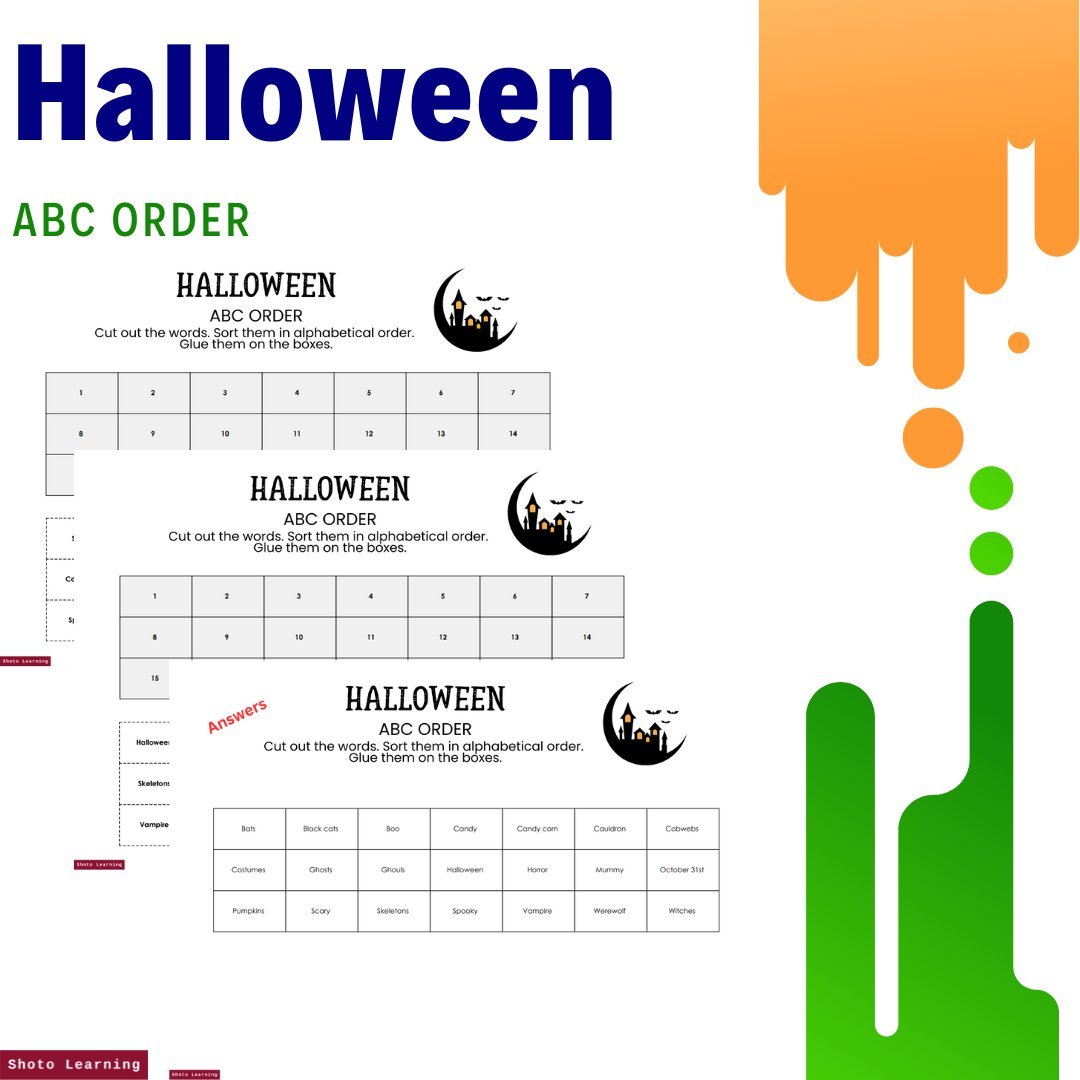
Free ABC Order
Free drawing and coloring
Free poster
Free puzzles and coloring
Idioms gap-fill
Lesson Plan
Matching
Maze
Missing letters
Multiple choice
PowerPoint
Questions and answers
Reading Comprehension
Scramble
Test (45 minutes)
True or false
Word search
Writing prompts
All of the worksheets are themed around Halloween, so they're sure to get kids in the spooky spirit.
The bundle also includes a variety of different types of activities, so there's something for everyone. Whether your kids are into puzzles, word searches, or coloring, they're sure to find something they enjoy in this bundle.
The Halloween worksheet bundle is also an excellent technique to assist children in learning. The worksheets cover a wide range of topics. They are an excellent technique for children to strengthen their problem-solving abilities as well as their fine motor skills.
The Halloween worksheet bundle is perfect for kids of all ages. There are worksheets for younger kids, as well as worksheets for older kids. So whether your kids are just starting to learn or they're already pros, they're sure to find something they can enjoy in this bundle.
The Halloween worksheet bundle is also a great value. For just a few dollars, you get a bundle of worksheets that will keep your kids entertained for hours. So what are you waiting for? Order your Halloween worksheet bundle today!
Features:
A variety of activities, including puzzles, word searches, and coloring
All activities are themed around Halloween
Worksheets for kids of all ages
Great value for money
Benefits:
Keeps kids entertained and engaged
Helps kids learn
Improves kids' problem-solving skills
Improves kids' fine motor skills
Download your copy today, and let the fun begin!