
How to Teach Science Through Music: Exploring Sound, Acoustics, and More
Introduction to Music and Science Integration
Music is a powerful tool for teaching science concepts, making lessons more engaging and memorable. By incorporating music into your classroom, you can help students experience scientific principles firsthand through interactive experiments. This blog will dive into how music connects with key science concepts like sound waves, pitch, acoustics, and more, providing you with activities to enhance student learning.
1. Understanding Sound Waves and Vibrations
Sound waves and vibrations form the foundation of music science. Teaching students how sound travels requires an understanding of sound waves’ properties—frequency, amplitude, and wavelength.
Engaging Activity: Have students create simple musical instruments using materials like rubber bands, straws, or cups. They can then experiment with different materials to see how sound waves move through them. This hands-on approach helps solidify their understanding of sound transmission.
2. Exploring Pitch and Frequency
Pitch, or the highness and lowness of a sound, is determined by the frequency of the sound wave. Students can explore how variations in frequency create different pitches by working with tuning forks or creating instruments like homemade guitars or drums.
3. Teaching Acoustics: How Sound Behaves
Acoustics is the study of how sound interacts with various environments. By experimenting with different materials and spaces, students can learn how sound is absorbed, reflected, or refracted.
Hands-On Activity: Have students create different acoustic environments using cardboard, foam, or fabric and measure sound levels in various conditions. This helps them understand how sound behaves in real-world situations.
4. The Science of Musical Instruments
Musical instruments offer a fantastic opportunity to explore the science of sound production. From understanding how a guitar string vibrates to how a piano amplifies sound, students can discover the physics behind music.
Creative Activity: Encourage students to design their own musical instruments. You can also have them research how different instruments have evolved and explore the science behind their construction.
5. Music and the Brain: Enhancing Cognitive Function
Music has been scientifically proven to affect the brain in fascinating ways, from boosting cognitive function to reducing stress. Teaching students about the science behind music’s impact on the brain can offer both scientific and practical insights.
Classroom Experiment: Have students explore how different types of music affect their mood or concentration. You can also introduce them to music therapy and its applications in treating various conditions like autism and dementia.
Conclusion
Integrating music into your science lessons can create a dynamic learning environment, making scientific principles more accessible and enjoyable. Whether through sound waves, pitch, acoustics, or brain science, music provides endless opportunities for hands-on exploration and experimentation in your classroom. Start incorporating these activities today to make your science lessons resonate with your students!
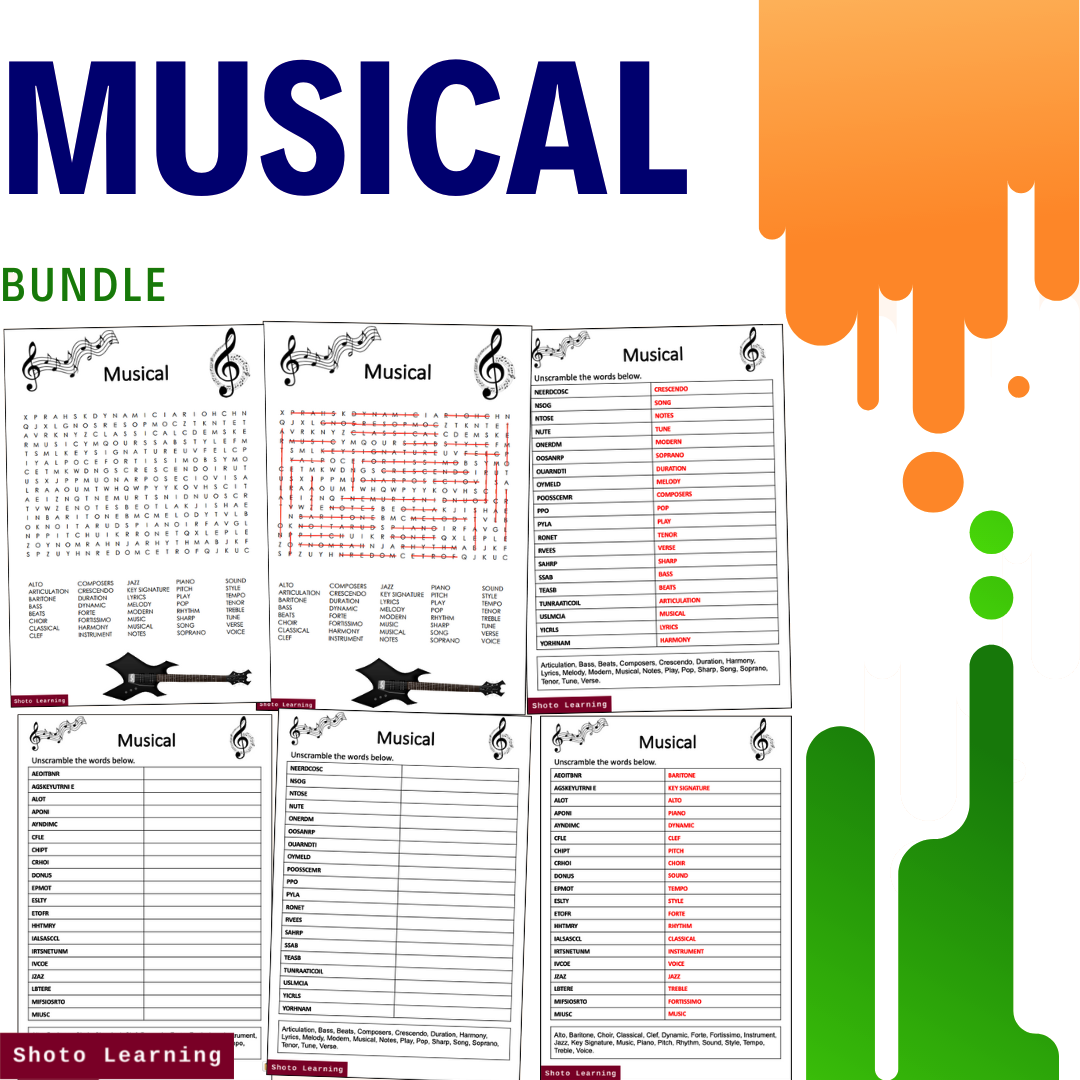
This musical science activity bundle provides a fun and educational way for kids to learn about music and science. The bundle includes two games: word find and scramble words, both of which combine music and science to help children learn important skills. Kids will search for words related to music and science, and then use the letters from the word find to unscramble words. These activities keep children engaged and entertained while they explore the fascinating worlds of music and science through puzzles and activities to solve. This musical science activity bundle is an excellent way to pique children's interest in and excitement about music and science.
MUSICAL - WORD FIND & UNSCRAMBLE
Worksheet for a Science Game with Music Words. To find and unscramble the 40 hidden words.
When teaching a music unit, this is a great resource for early finishers or as a take-home game.
The vocabulary words covered include:
Alto, Articulation, Baritone, Bass, Beats, Choir, Classical, Clef, Composers, Crescendo, Duration, Dynamic, Forte, Fortissimo, Harmony, Instrument, Jazz, Key Signature, Lyrics, Melody, Modern, Music, Musical, Notes, Piano, Pitch, Play, Pop, Rhythm, Sharp, Song, Soprano, Sound, Style, Tempo, Tenor, Treble, Tune, Verse, Voice.
Solution included.
Let’s be friends!
Blog ★ Pinterest ★ Facebook ★ Instagram ★ YouTube
Happy teaching!

Are you looking for a great way to teach music, science, and words to your students? Then try the “Music Words Science Activity - Bundle Word Find and Scramble Words”. This bundle of activities provides an engaging and fun way to teach musical terms and scientific principles to students. The activities are designed to help children understand both music and science concepts in an interactive way, allowing them to develop a deeper understanding of both subjects. With the “Music Words Science Activity - Bundle Word Find and Scramble Words”, your students will have a great time learning about both music and science.
MUSIC WORDS - WORD FIND & UNSCRAMBLE
Worksheet puzzle science game with music words. To find the 33 hidden words and unscramble them.
When teaching a music unit, this is a great resource for early finishers or as a take-home game.
The vocabulary words covered include:
Bass, Beat, Chorus, Clef, Composer, Conductor, Crescendo, Decrescendo, Dynamics, Flat, Forte, Harmony, High, Key, Lines, Low, Melody, Music, Natural, Note, Orchestra, Piano, Pitch, Recorder, Rest, Rhythm, Song, Spaces, Staff, Symphony, Tempo, Treble, Verse.
Solution included.
Let’s be friends!
Blog ★ Pinterest ★ Facebook ★ Instagram ★ YouTube
Happy teaching!