
Teaching Patterns to Kindergarten Students: A Comprehensive Guide
Introduction
Teaching patterns to kindergarten students is a crucial aspect of early childhood education. Mastering patterns not only lays a strong foundation for mathematical skills but also enhances critical thinking and problem-solving abilities. A pattern is defined as a repeated design or sequence of events occurring in an organized manner. In this guide, we’ll explore effective strategies to teach patterns to young learners.
1. Start with Simple Patterns
Begin your pattern lessons with simple sequences such as ABAB or ABBABB. Utilize tangible examples like colored blocks, shapes, or different textures. For instance, have students create a pattern using blocks: blue, red, blue, red. Starting with simple patterns helps children grasp the concept without feeling overwhelmed.
2. Incorporate Visual Aids
Visual aids are instrumental in helping students understand patterns more effectively. Use pictures, charts, and graphs to illustrate various patterns. Additionally, incorporate patterns into classroom decor or even clothing to provide real-world examples that reinforce learning.
3. Engage Students Creatively
Engagement is key when teaching patterns. Encourage students to create their own patterns through interactive worksheets, art projects, or games. This hands-on approach fosters creativity and allows children to express their understanding of patterns in a fun way.
4. Build on Existing Knowledge
Children often have prior knowledge of patterns from everyday life, such as the sequence of days in a week or months in a year. Utilize this existing knowledge as a springboard to introduce more complex patterns. Relating new concepts to familiar ones enhances comprehension and retention.
5. Use Real-Life Examples
Real-life examples help students connect patterns to their everyday experiences. For instance, use patterns to explain the sequence of events in a story or the steps in a recipe. These practical applications make learning relevant and exciting for young learners.
6. Maintain Consistency in Teaching
Consistency is essential when teaching patterns. Reinforce the concept throughout the day across various subjects such as math, reading, and art. This repetition helps solidify students’ understanding and recognition of patterns in different contexts.
7. Provide Ample Practice Opportunities
Practice makes perfect! Offer numerous opportunities for students to identify and create patterns. Utilize games, worksheets, and hands-on activities to ensure students can apply what they’ve learned in various scenarios.
Conclusion
Teaching patterns to kindergarten students requires patience, creativity, and consistency. By implementing these strategies, educators can help young learners build a robust foundation in pattern recognition, which will be invaluable as they progress through their academic journey. Start today and watch your students thrive as they explore the exciting world of patterns!

Introduce young learners to the world of patterns with this Pre-K Pattern Worksheet Pack! Designed for preschool and kindergarten students, this engaging resource covers color, shape, and size patterns through a variety of fun activities.
Key Features:
8 Printable Worksheets focused on different types of patterns
Activities include coloring, tracing, cut & paste, circling, and drawing
Encourages critical thinking, fine motor skills, and early math confidence
Clear, age-appropriate instructions for independent or guided use
Perfect for classroom use, homeschooling, or learning centers
What's Inside:
Color Pattern – Color the shapes
Color Pattern – Identify patterns with fun images
Size Pattern – Cut and paste matching sizes
Size Pattern – Circle the correct size pattern
Shape Pattern – Draw the missing shape
Shape Pattern – Cut and paste the next shape
What Comes Next? – Circle the right image
What Comes Next? – Cut and paste to complete the pattern
How to Use: Simply print and hand out the pages. Let students use crayons, markers, or scissors as they follow the instructions to complete each activity. These worksheets are excellent for centers, morning work, early finishers, or home learning.
Make math meaningful and fun—perfect for building a strong foundation in early math!
Related products:
Complete Pre-K Bundle – 212 Pages
Also Available
Complete Pre-K Bundle – 212 Pages
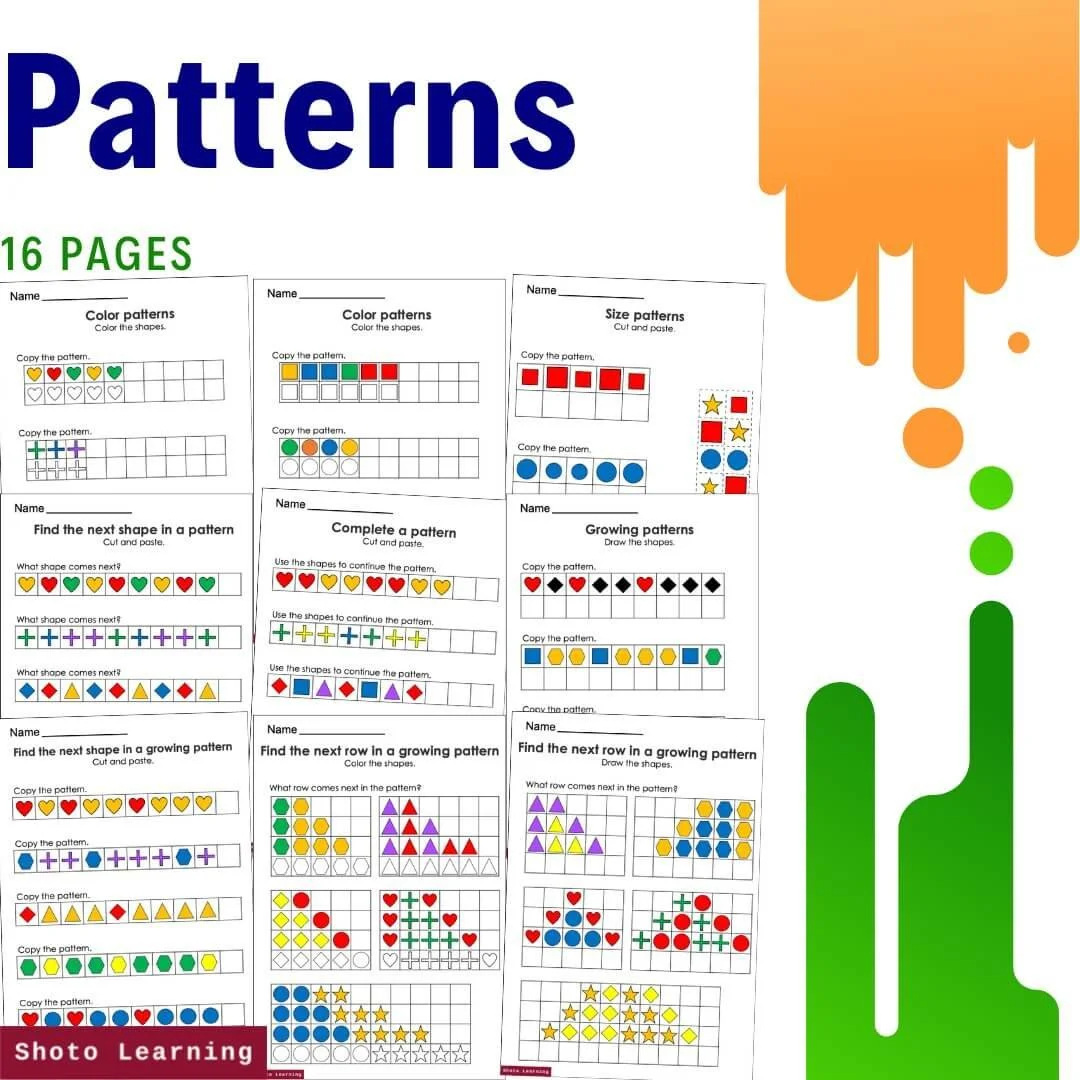
This set of kindergarten and first grade math worksheets introduces children to basic patterns involving color, size, shapes, and growth. Through guided practice, children will be able to identify and create patterns as they learn foundational math skills such as counting, measuring, and graphing. Throughout the worksheets, visuals are used to ensure that children can easily connect the patterns with the numbers, shapes, and colors they see. With these worksheets, teachers and parents can easily aid children in growing their math skills, while having fun at the same time.
Patterns - Color, Size, Shapes, and Growing.
Straightforward and simple for beginners! Perfect for identifying patterns through various activities.
Package
Page 1 - Color patterns
Page 2 - Color patterns
Page 3 - Size patterns
Page 4 - Size patterns
Page 5 - Shape patterns
Page 6 - Shape patterns
Page 7 - Find the next shape in a pattern
Page 8 - Find the next shape in a pattern
Pages 9 - Complete a pattern
Pages 10 - Complete a pattern
Page 11 - Growing patterns
Page 12 - Growing patterns
Page 13 - Find the next shape in a growing pattern
Page 14 - Find the next shape in a growing pattern
Page 15 - Find the next row in a growing pattern
Page 16 - Find the next row in a growing pattern