
Exploring the Fascinating World of Sound Science: Engaging Activities for the Classroom
Introduction to Sound Science
Teaching sound science can be an exciting adventure for students. Sound is a captivating phenomenon that can be explored through various hands-on activities and engaging experiments. In this blog, we will share effective tips and innovative ideas for teaching sound science in the classroom, making it enjoyable and educational.
What Is Sound?
Begin your sound science lesson by explaining that sound is produced by vibrations that travel through air (or other mediums) and can be perceived by our ears. Use relatable examples to illustrate this concept, such as clapping hands, ringing bells, or playing musical instruments. This foundational knowledge helps students understand the nature of sound.
Experiment with Pitch: Understanding High and Low Sounds
Pitch refers to the highness or lowness of a sound. Introduce pitch by playing different musical notes on a keyboard or instrument. Challenge students to identify the pitch of each note and sort them from highest to lowest. This hands-on activity reinforces auditory discrimination and understanding of musical concepts.
Investigate Volume: Loudness and Softness of Sound
Volume measures the loudness or softness of sound. Provide students with various objects of different sizes and densities (such as cups or blocks) to experiment with tapping them using a spoon. Encourage students to explore how these objects produce different volume levels, and invite them to describe their observations. This activity promotes critical thinking and sensory awareness.
Explore Sound Waves: Visualizing Vibrations
Sound waves are the vibrations that propagate through the air and create sound. Use a slinky or a rope to visually demonstrate sound wave motion. Have students observe how sound waves travel through different mediums, such as air and water, illustrating how sound can vary based on the environment.
Sound in Nature: A Listening Adventure
Take your students on a nature walk to explore the sounds in their environment. Encourage them to listen carefully and identify different sounds they hear. Have them describe the source of each sound, fostering an appreciation for the acoustic world around us. This activity reinforces the idea that sound is present everywhere, even if we can't always see it.
Create Your Own Musical Instruments
Inspire creativity by providing students with materials to make their own musical instruments, such as empty water bottles, cardboard tubes, or rubber bands. Encourage them to experiment with different shapes and materials to produce unique sounds. This hands-on project enhances creativity and understanding of sound production.
Engaging Sound Science Experiments
Incorporate fun science experiments to deepen understanding of sound. One classic activity is creating a string telephone. Simply thread a piece of string through the bottom of a paper cup and tie a knot on the inside. Repeat with a second cup and string. Have students hold the cups to their ears and talk into one end while a partner listens at the other end. This experiment illustrates how sound travels through solid objects and fosters curiosity about sound transmission.
Recommended Reading: Sound Science Books for Kids
Supplement your lessons with engaging literature about sound science. Some great titles to consider include:
"What is Sound?" by Mark Weakland
"The Magic School Bus Hops Home" by Joanna Cole
These books reinforce concepts and keep students engaged in the learning process.
Conclusion
Teaching sound science can be a dynamic and enjoyable experience for students. By incorporating hands-on experiments, nature walks, and engaging reading materials, you can help your students develop a deeper understanding of sound and its significance in our world. Embrace the excitement of sound science and inspire your students to explore this fascinating topic!

This "Sounds Science Activity - Bundle Word Find and Scramble Words" is perfect for sparking kids' creativity and learning. This bundle contains two activities that teach and engage kids in exploring science. In the Word Find Activity, kids will search for science terms in the jumbled letters, while in the Scramble Words Activity, they'll unscramble science-related vocabulary to find the right answers. With a focus on learning and having fun, this activity bundle provides hours of meaningful entertainment. This engaging activity is designed to challenge kids while providing them with an entertaining and educational experience that's sure to captivate them.
SOUNDS - WORD FIND & UNSCRAMBLE WORDS
Worksheet for a Science Game containing sound science words. To find the 32 hidden words and unscramble them.
When teaching a unit on sound, this is a great resource for early finishers or as a take-home game.
The vocabulary words covered include:
Back, Beeps, Decibels, Ear, Echo, Energy, Faint, Forth, Hard, Hearing, High, Honks, Instrument, Listening, Louder, Low, Noise, Pitch, Quieter, Ringing, Scrape, Silence, Sirens, Soft, Sound, Speed, Tap, Travels, Vibrate, Vibration, Volume, Wave.
Solution included.
Let’s be friends!
Blog ★ Pinterest ★ Facebook ★ Instagram ★ YouTube
Happy teaching!

Are you looking for a fun way to learn and practice science vocabulary? Look no further than the SOUNDS Science Activity Word Find Search Finder Game Vocabulary Worksheet Puzzle! This challenging yet fun game will have you searching for science terms and mastering new vocabulary in no time.
SOUNDS - WORD FIND Science Game Worksheet with sound vocabulary words. Puzzlers must look in all directions, including backward and diagonally, to find the 32 hidden words.
When teaching a unit on sound, this is a good resource for early finishers or as a take-home game.
The vocabulary words that are covered are:
Back, Beeps, Decibels, Ear, Echo, Energy, Faint, Forth, Hard, Hearing, High, Honks, Instrument, Listening, Louder, Low, Noise, Pitch, Quieter, Ringing, Scrape, Silence, Sirens, Soft, Sound, Speed, Tap, Travels, Vibrate, Vibration, Volume, Wave.
Solution included.
Let’s be friends!
Blog ★ Pinterest ★ Facebook ★ Instagram ★ YouTube
Happy teaching!

This Sound Words Science Activity Bundle is the perfect way to bring fun and learning together in one package! Featuring both a Word Find and Scramble Words activity, it encourages children to explore the concepts of word building and sounding out letters to make new words. With the help of colorful illustrations, children will enjoy the challenge of finding the hidden words while building their phonemic awareness skills. Educators will appreciate the teaching potential of this bundle, as well as its suitability for a range of grade levels. Whether used as a teaching aid or just for fun, this bundle is sure to please.
SOUND WORDS - WORD FIND & UNSCRAMBLE WORDS
Worksheet for a Science Game that includes sound words. To find the 23 hidden words and unscramble them.
When teaching a unit on sound, this is a great resource for early finishers or as a take-home game.
The vocabulary words covered include:
Amplify, Anvil, Auricle, Canal, Ear, Eardrum, Earwax, Hammer, Inner, Loud, Middle, Outer, Pinna, Pitch, Pressure, Soft, Sound, Stirrup, Tubes, Vibrate, Volume, Waves, Windpipe.
Solution included.
Let’s be friends!
Blog ★ Pinterest ★ Facebook ★ Instagram ★ YouTube
Happy teaching!

Looking for a fun and engaging educational activity for your students? Check out our Word Search Finder game! Through this game, your students will use vocabulary words to complete the word search. As they work to solve the puzzles, they will gain valuable knowledge of science-related words. Your students will have a blast as they learn new concepts and boost their science vocabulary!
SOUND WORD - WORD FIND
Worksheet with sound word vocabulary words for science. Puzzlers must look in all directions, including backward and diagonally, to find the 23 hidden words.
When teaching a unit on sound words, this is a great resource for early finishers or as a take-home game.
The vocabulary words covered include:
Amplify, Anvil, Auricle, Canal, Ear, Eardrum, Earwax, Hammer, Inner, Loud, Middle, Outer, Pinna, Pitch, Pressure, Soft, Sound, Stirrup, Tubes, Vibrate, Volume, Waves, Windpipe.
Solution included.

Looking for a fun and engaging way to learn about sound waves? This exciting science activity is a great way for kids to practice their reading, writing, and critical thinking skills. We’ve provided a scramble of sound words, and it’s up to your kids to unscramble them correctly. They’ll be able to learn and review keywords and concepts related to sound waves and vibrations while having fun in the process. Perfect for the classroom or homeschooling!
SOUND WORDS - UNSCRAMBLE WORDS
Unscrambling words allows students to rearrange or unjumble scrambled letters to form a meaningful word. Students will benefit from this game by rearranging letters.
23 Words included:
Amplify, Anvil, Auricle, Canal, Ear, Eardrum, Earwax, Hammer, Inner, Loud, Middle, Outer, Pinna, Pitch, Pressure, Soft, Sound, Stirrup, Tubes, Vibrate, Volume, Waves, Windpipe.
Solution included.
* Other puzzles are also available in the store.

If you're looking for an educational and fun activity for your students, then the “Science and Sound Activity - Bundle Word Find and Scramble Words” is perfect for you. This engaging activity encourages critical thinking, problem solving, and science exploration. Students will learn all about sound wave physics, while they search for science terms and unscramble words. As they complete these two activities, they will gain a better understanding of the basics of sound. With this bundle, your students will be able to practice their reading, writing, and problem-solving skills, as well as learn about sound waves. They'll have fun and gain a valuable education at the same time.
SCIENCE AND SOUND - WORD FIND & UNSCRAMBLE WORDS
Worksheet Game featuring science sound words. To find the 24 hidden words and unscramble them.
When teaching a unit on science and sound, this is a great resource for early finishers or as a take-home game.
The vocabulary words covered include:
Amplify, Bark, Blow, Decibel, Ears, Echo, Far, Howl, Listen, Loud, Near, Pitch, Pluck, Quiet, Radio, Recorder, Rhythm, Sing, Soft, Sound Wave, Television, Vibration, Voice, Whistle.
Solution included.
Let’s be friends!
Blog ★ Pinterest ★ Facebook ★ Instagram ★ YouTube
Happy teaching!

Are you ready to explore the world of science and sound with a thrilling word find search finder game? In this stimulating worksheet game, challenge your knowledge of science and sound and test your vocabulary skills by finding all the hidden words. Find the mysterious words hiding in the grid and see if you can discover them all!
SCIENCE AND SOUND - WORD FIND
Worksheet Game featuring word search science sound vocabulary words. Puzzlers must look in all directions, including backward and diagonally, to find the 24 hidden words.
A good resource for early finishers or as a take-home game when teaching a unit on science sound.
The vocabulary words that are covered are:
Amplify, Bark, Blow, Decibel, Ears, Echo, Far, Howl, Listen, Loud, Near, Pitch, Pluck, Quiet, Radio, Recorder, Rhythm, Sing, Soft, Sound Wave, Television, Vibration, Voice, Whistle.
Solution included.
Let’s be friends!
Blog ★ Pinterest ★ Facebook ★ Instagram ★ YouTube
Happy teaching!

If you're looking for a fun and educational way to help your child learn more about the fascinating world of science and sound, then the Science and Sound Activity - Scramble Words Unscramble Vocabulary Word Worksheet is the perfect activity! Your child will enjoy unscrambling words and learning about the science behind sound, all while having loads of fun!
SCIENCE AND SOUND - UNSCRAMBLE WORDS
Unscrambling words allows students to rearrange or unjumble scrambled letters to form a meaningful word. Students will benefit from this game by rearranging letters.
24 Words included:
Amplify, Bark, Blow, Decibel, Ears, Echo, Far, Howl, Listen, Loud, Near, Pitch, Pluck, Quiet, Radio, Recorder, Rhythm, Sing, Soft, Sound Wave, Television, Vibration, Voice, Whistle.
Solution included.
* Other puzzles are also available in the store.
Let’s be friends!
Blog ★ Pinterest ★ Facebook ★ Instagram ★ YouTube
Happy teaching!

This Science and Sound Activity - Bundle Word Find and Scramble Words offers an exciting way to pair science and sound. With this bundle, children will have the opportunity to explore both science and sound concepts while they search for words, unscramble them, and create their own fun word search puzzles. Utilizing a game-based approach, this bundle encourages science searches and challenges, introduces sound, and encourages creativity. While having fun and exploring science and sound, children will be helping to strengthen their problem solving and language arts skills. This bundle is perfect to use in classrooms or at home, making it a great learning tool for kids of all ages.
SCIENCE & SOUND - WORD FIND & UNSCRAMBLE
Worksheet Game featuring science sound words. To word find the 24 hidden and scrambled words.
When teaching a unit on science and sound, this is a great resource for early finishers or as a take-home game.
The vocabulary words covered include:
Amplify, Baritone, Bird Song, Blow, Ear, Energy, Gas, High-Pitched, Liquid, Low-Pitched, Man-Made Sound, Natural Sounds, Pitch, Pluck, Sing, Solid, Soundwave, Transmit, Trumpet, Tuba, Vibration, Voice, Volume, Whistle.
Solution included.
Let’s be friends!
Blog ★ Pinterest ★ Facebook ★ Instagram ★ YouTube
Happy teaching!
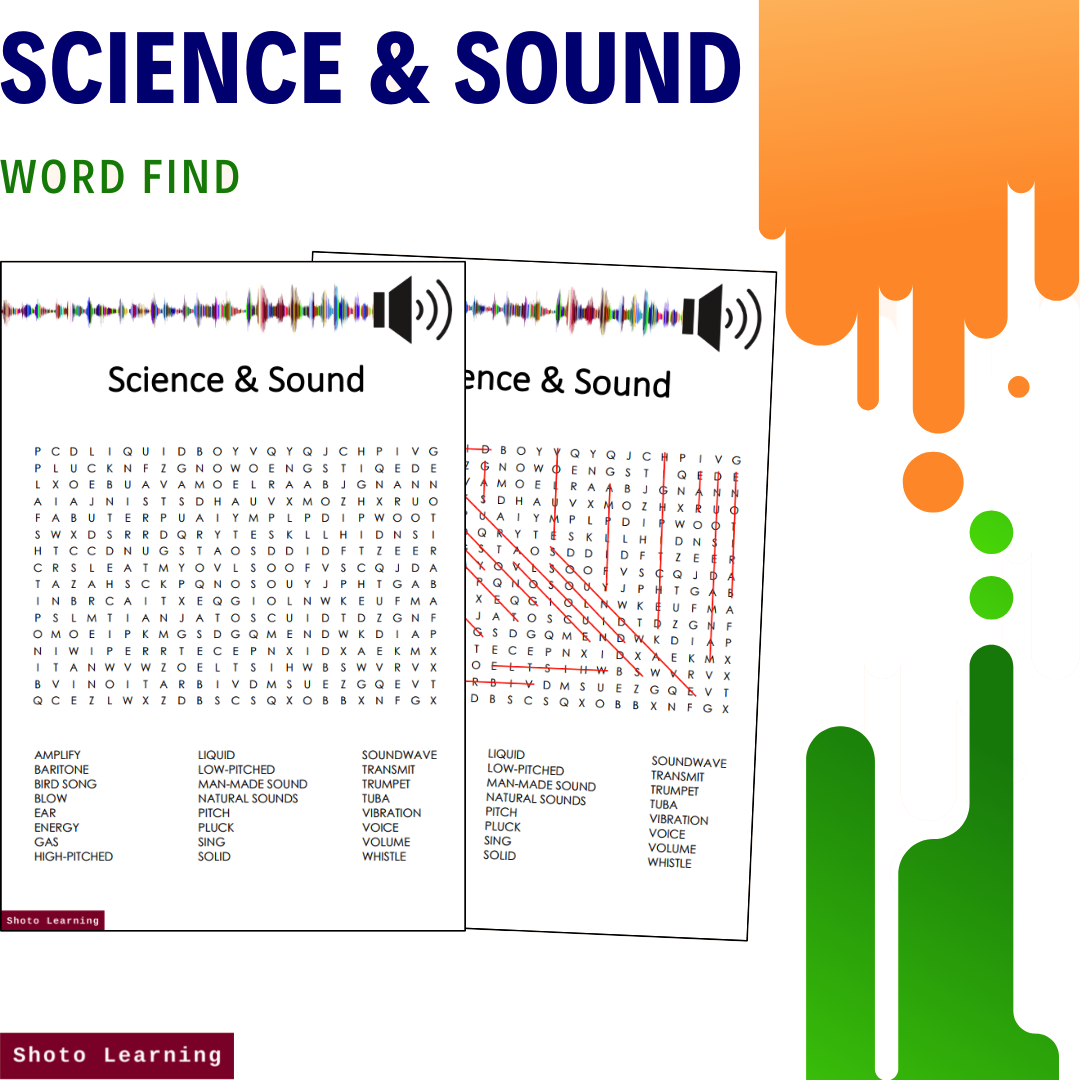
Are you ready to test your knowledge of science and sound? This Word Find Search Finder Game Vocabulary Words Puzzle is designed to challenge your knowledge of science and sound through an entertaining and educational puzzle game. Get ready to flex your mental muscles and explore the world of science while having some fun!
SCIENCE & SOUND - WORD FIND
Game Puzzle Worksheet with science-related vocabulary words. Puzzlers must look in all directions, including backward and diagonally, to find the 24 hidden words.
When teaching a unit on science sounds, this is a good resource for early finishers or as a take-home game.
The vocabulary words covered include:
Amplify, Baritone, Bird Song, Blow, Ear, Energy, Gas, High-Pitched, Liquid, Low-Pitched, Man-Made Sound, Natural Sounds, Pitch, Pluck, Sing, Solid, Soundwave, Transmit, Trumpet, Tuba, Vibration, Voice, Volume, Whistle.
Solution included.
Let’s be friends!
Blog ★ Pinterest ★ Facebook ★ Instagram ★ YouTube
Happy teaching!

Are you ready to test your knowledge of science and sound? Put your skills to the test with this challenging activity! Unscramble science- and sound-related words in order to complete a vocabulary worksheet. Get ready for a fun and educational experience as you scramble and unscramble your way through this exciting activity!
SCIENCE & SOUND - UNSCRAMBLE WORDS
Unscramble words allows students to rearrange or unjumble scrambled letters to form a meaningful word. Students will benefit from this game by rearranging letters.
24 Words included:
Amplify, Baritone, Bird Song, Blow, Ear, Energy, Gas, High-Pitched, Liquid, Low-Pitched, Man-Made Sound, Natural Sounds, Pitch, Pluck, Sing, Solid, Soundwave, Transmit, Trumpet, Tuba, Vibration, Voice, Volume, Whistle.
Solution included.
* Other puzzles are also available in the store.
Let’s be friends!
Blog ★ Pinterest ★ Facebook ★ Instagram ★ YouTube
Happy teaching!
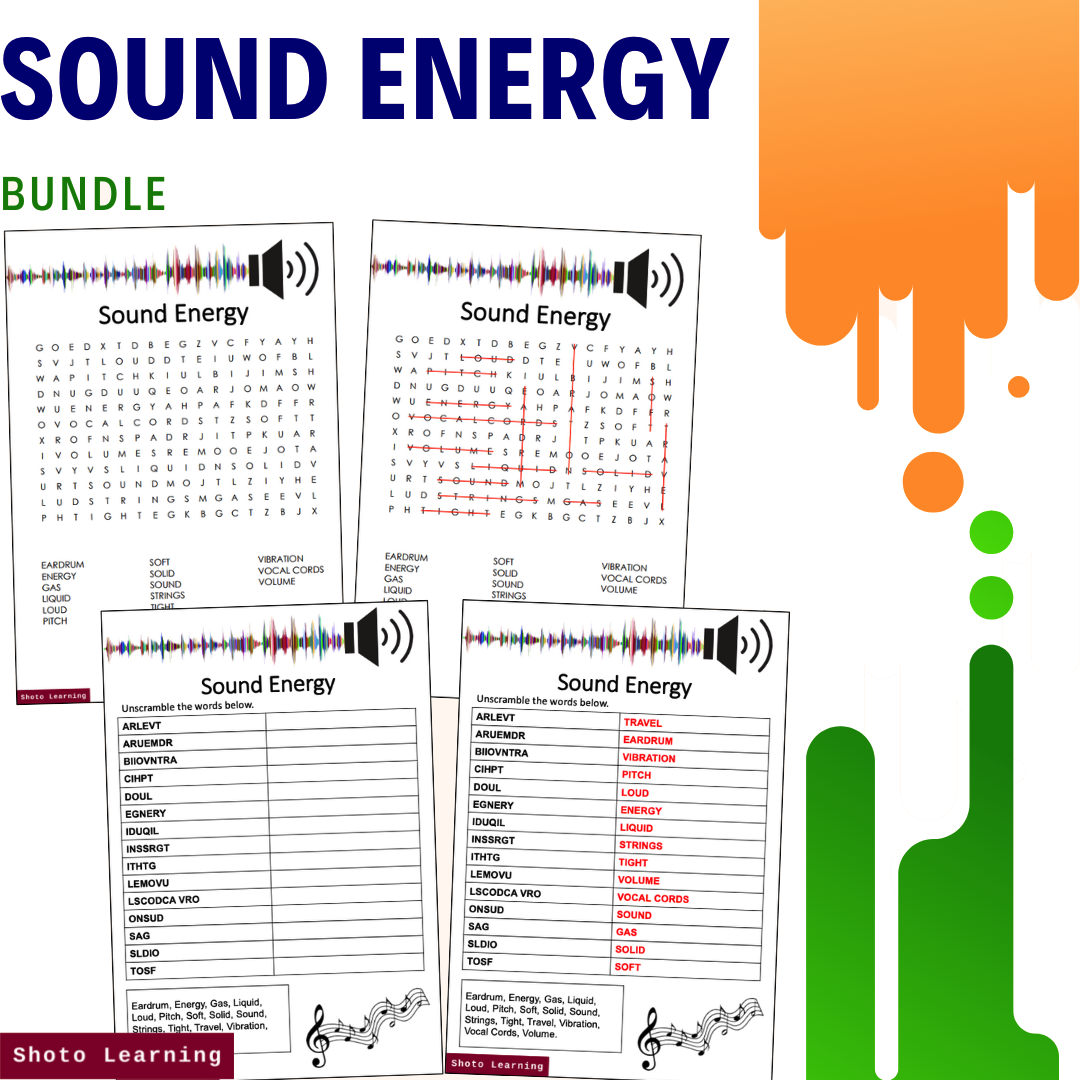
This educational bundle is the perfect way for children to learn about sound energy through a fun and engaging activity. The bundle includes a Word Find and Scramble Words game, which encourages kids to use their knowledge of sound energy to build words from a set of jumbled letters. The puzzle-style games are designed to strengthen problem-solving and critical thinking skills as children challenge themselves to assemble words related to sound energy. With this bundle, children can have fun learning about this important concept in a way that is both entertaining and educational.
SOUND ENERGY - WORD FIND & UNSCRAMBLE WORDS
Worksheet featuring sound energy words from Science Games. Find the 15 hidden words and unscramble them.
When teaching a unit on sound energy, this is a good resource for early finishers or as a take-home game.
The vocabulary words covered include:
Eardrum, Energy, Gas, Liquid, Loud, Pitch, Soft, Solid, Sound, Strings, Tight, Travel, Vibration, Vocal Cords, Volume.
Solution included.
Let’s be friends!
Blog ★ Pinterest ★ Facebook ★ Instagram ★ YouTube
Happy teaching!

Are you looking for an entertaining and educational experience? Look no further than the SOUNDS ENERGY SCIENCE ACTIVITY - WORD FIND SEARCH FINDER GAME VOCABULARY WORDS! With this game, you can search for words and learn more about the science of sound and energy. Put your knowledge to the test with increasingly challenging levels and fun, educational activities. Download now and start your journey to becoming a sound & energy expert!
SOUNDS ENERGY - WORD FIND
Worksheet game with sound energy vocabulary words. Puzzlers must look in all directions, including backward and diagonally, to find the 15 hidden words.
When teaching a unit on sound energy, this is a good resource for early finishers or as a take-home game.
The vocabulary words covered include:
Eardrum, Energy, Gas, Liquid, Loud, Pitch, Soft, Solid, Sound, Strings, Tight, Travel, Vibration, Vocal Cords, Volume.
Solution included.
Let’s be friends!
Blog ★ Pinterest ★ Facebook ★ Instagram ★ YouTube
Happy teaching!

Challenge your little scientist to a fun and educational experience with this Sound Energy Science Activity – Scramble Words Sounds Vocabulary Worksheet Game! Through exploring the world of sounds, your curious learner will experiment with the science of energy transfer while puzzling through the playful scramble of words, sounds and vocabulary. Get ready for a winning combination of learning and entertainment!
SOUND ENERGY - UNSCRAMBLE WORDS
Unscrambling words allows students to rearrange or unjumble scrambled letters to form a meaningful word. Students will benefit from this game by rearranging letters
15 Words included:
Eardrum, Energy, Gas, Liquid, Loud, Pitch, Soft, Solid, Sound, Strings, Tight, Travel, Vibration, Vocal Cords, Volume.
Solution included.
* Other puzzles are also available in the store.
Let’s be friends!
Blog ★ Pinterest ★ Facebook ★ Instagram ★ YouTube
Happy teaching!