
The Ultimate Guide to Teaching Addition 0–20: Mastering Strategies for Success
Teaching young learners the basics of addition can be both rewarding and challenging. Addition forms the foundation for many aspects of math. Providing effective strategies to teach children how to add numbers from 0 to 20 can make all the difference. These methods not only improve counting but also enhance overall number sense.
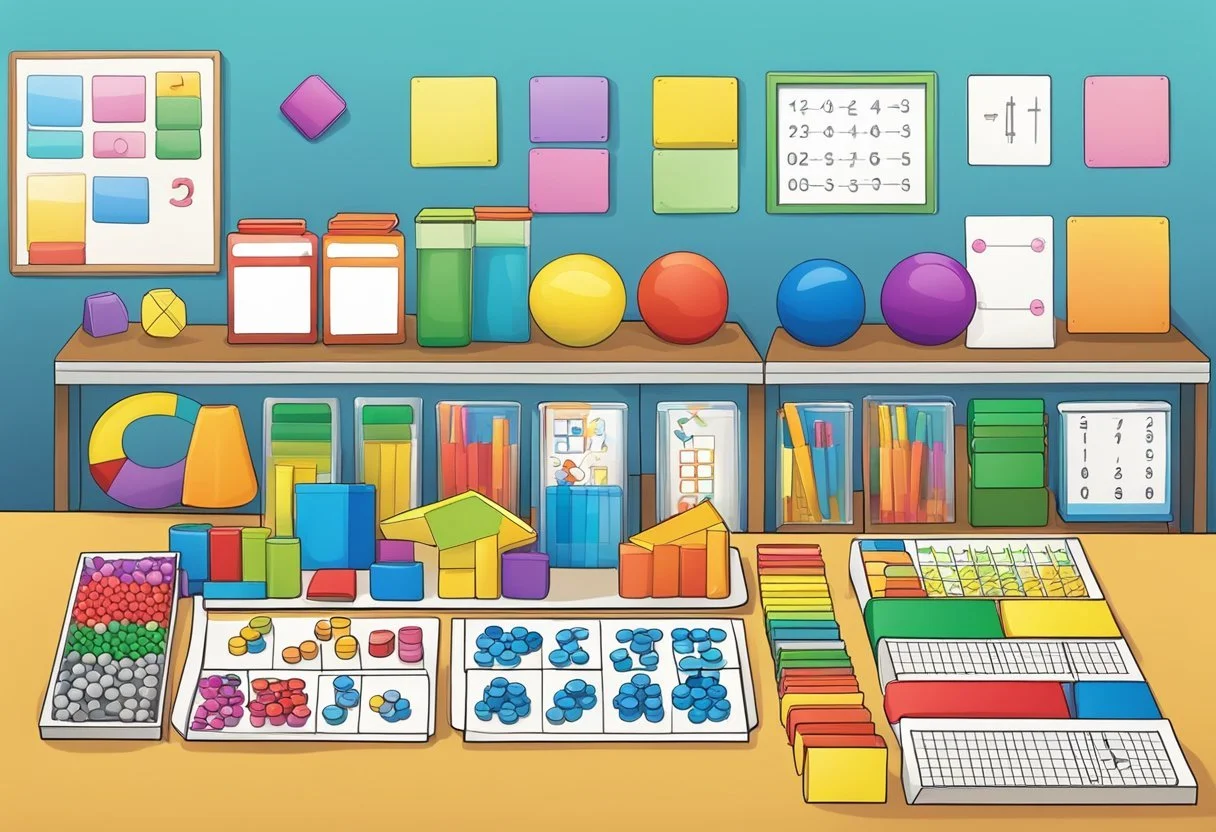
Making addition engaging is key. Teachers can use games and interactive activities to help students grasp concepts more easily. This approach encourages students to enjoy the learning process while gaining confidence in math.
Mental math techniques can further build skills in young learners. By practicing these strategies, children develop a stronger ability to solve addition problems quickly and accurately.
Key Takeaways
Teach addition using engaging strategies to build number sense.
Use interactive activities and games to enhance learning.
Improve skills with mental math techniques.
Understanding the Basics of Addition
Addition is a key skill in math that students use in both daily life and future math concepts. Grasping how to add requires a strong number sense and understanding of place value. Building these skills helps students work with numbers confidently.
Defining Addition and Its Importance
Addition means putting numbers together to find a total. It starts with whole numbers from 0 to 20, forming the foundation for advanced math. For example, adding 2 and 3 gives 5, showing how two amounts combine.
Children begin by counting objects like blocks or apples. This hands-on approach helps them see how parts make a whole. Mastery of basic addition facts makes it easier to tackle bigger numbers later. Practice and repetition are key.
Addition is not just limited to math classes. It pops up when shopping, cooking, or planning events. A clear understanding can make everyday tasks easier. Engaging activities like games or flashcards keep practice enjoyable, reinforcing skills in a fun way.
Number Sense and Place Value Fundamentals
Number sense refers to an intuitive understanding of numbers and their relationships. It starts with recognizing numbers up to 20 and realizing how they connect. Understanding place value builds on number sense, breaking numbers into tens and ones.
For instance, the number 15 is made up of 1 ten and 5 ones. This helps with larger calculations later on. Visual aids like number lines or charts can help students grasp these concepts better.
Students need practice with various activities such as grouping objects or using visual aids. This solidifies their knowledge of addition. Strong number sense and place value understanding are crucial for confident math skills, making complex operations more approachable.
Developing Effective Teaching Strategies
Teaching addition from 0 to 20 effectively involves using clear methods and engaging tools. Proven strategies include incorporating manipulatives and employing the number line as a visual aid. These tools provide hands-on learning and help in visualizing mathematical concepts like number and algebra.
Incorporating Manipulatives for Engagement
Manipulatives are tools that help students understand math concepts by touching and exploring them physically. Using objects like blocks, counters, or beads can support learning addition in engaging ways.
Students can easily arrange the manipulatives to see how numbers combine. This hands-on approach builds understanding of numbers and helps them grasp place value.
A simple exercise for teaching addition with manipulatives could involve grouping objects. For example, if a student adds 4 and 3, they can group four blocks and then add three more. This shows the sum visually.
Manipulatives can also be used in games to make learning fun. These could include counting games, like adding the numbers on dice. Activities like this can enhance understanding and retention while making math exciting.
Using the Number Line as a Visual Aid
A number line is a powerful visual tool for teaching addition. Students can use it to see how numbers are spaced and how they progress. Number lines help students jump visually to find sums, which improves their computational skills.
In using a number line, students start at one number and then count forward to add the next. This helps them visually grasp increasing quantities. For instance, showing how to add 5 + 3 involves starting at 5 and counting up three places.
Teachers can incorporate varied activities with a number line. Tasks, like moving a marker along a number path, reinforce number sense and build confidence in math skills. Interactive number lines on smart boards can also engage learners, making addition practice more dynamic and visual.
Leveraging Mental Math Techniques
Using mental math to teach addition from 0 to 20 involves employing strategies like doubles and tens complements. Practice sharpens these mental calculations, helping students solve problems quickly and accurately.
Building on Mental Strategies for Addition
Teaching students mental strategies for adding numbers involves understanding concepts like doubles. Doubles are when a number is added to itself, like 4 + 4. Knowing these helps students recognize patterns and add quickly. Practicing doubles makes these patterns become second nature.
Tens complements are another useful tool. These involve pairs of numbers that add up to 10, like 3 + 7 or 6 + 4. Recognizing tens complements enables quicker mental additions as students learn to break numbers down and regroup efficiently.
These mental strategies reduce the load on memory, making calculations faster and boosting confidence.
Enhancing Mental Calculations Through Practice
Practice is key to mastering mental addition. Regular drills, such as quick mental calculations, help students gain speed and accuracy. Games and activities that focus on doubles and tens complements make learning fun and engaging.
Visual aids, like numbers charts, can assist students in seeing relationships between numbers. Incorporating these tools in everyday scenarios, like counting items during a shopping trip, also strengthens skills.
Continual practice ensures that students gradually improve and gain the math confidence needed to tackle more complex problems.
Advancing to Addition of Whole Numbers
Advancing in addition involves learning more complex skills. As students progress, they can explore regrouping with two-digit numbers and practice addition with multi-digit numbers.
Using Regrouping with Two-Digit Numbers
Regrouping, also known as carrying, is a key skill for adding two-digit numbers. It helps when the sum of a column is more than ten. For example, in adding 27 and 36, students add the units first. 7 + 6 = 13. Here, 3 stays in the units place, and 1 is carried to the tens place.
Steps for Adding Two-Digit Numbers:
Add the Units: Combine the units and write the result below.
Regroup if Needed: If the sum is more than ten, carry the extra to the tens place.
Add the Tens: Include the number carried from the units.
Using this method helps students understand the concept of regrouping and enhances their skills in addition of whole numbers.
Practicing Addition with Multi-Digit Numbers
Practicing addition with multi-digit numbers strengthens understanding. This involves the standard algorithm, which is a step-by-step process.
Steps:
Align the Numbers by Place Value: Ensure digits are in the correct columns.
Add Starting from the Rightmost Column: Like adding two-digit numbers, begin with the right.
Regroup if Necessary: Carry over extra from each column to the next.
Example of Adding 456 and 789:
Add the units: 6 + 9 = 15. Write 5, carry 1.
Add the tens: 5 + 8 + 1 = 14. Write 4, carry 1.
Add the hundreds: 4 + 7 + 1 = 12.
Practicing these steps encourages accuracy and confidence in handling larger numbers.
Effective Approaches to Addition Word Problems
Teaching students how to tackle addition word problems involves breaking down questions and applying strategies. Focus on making problem-solving less daunting and more engaging for first grade students.
Teaching Strategies for Solving Word Problems
Breaking down a word problem can help students understand what is being asked. Encourage them to underline or highlight key information. Teaching them to identify words such as "total" or "sum" helps pinpoint the operation needed.
Use real-life scenarios to make problems relatable. Consider using small objects like blocks or counters to represent numbers visually. Visual aids can make abstract concepts more tangible.
Incorporation of simple word problems in everyday activities can reinforce learning. Keeping language simple and numbers small ensures young learners are not overwhelmed.
Improving Problem-Solving Skills in Addition
Encourage students to read problems out loud. This can sharpen their listening and comprehension skills. Pairing them with peers for discussions encourages them to articulate thoughts and learn from each other.
Deploy games that are centered on solving word problems to build interest. These can be interactive online games or simple card games.
Regular practice is vital. Mix easy and challenging problems to steadily build confidence. Instant feedback from teachers can steer students toward the correct methods, reinforcing problem-solving skills.
Creative Classroom Activities and Games
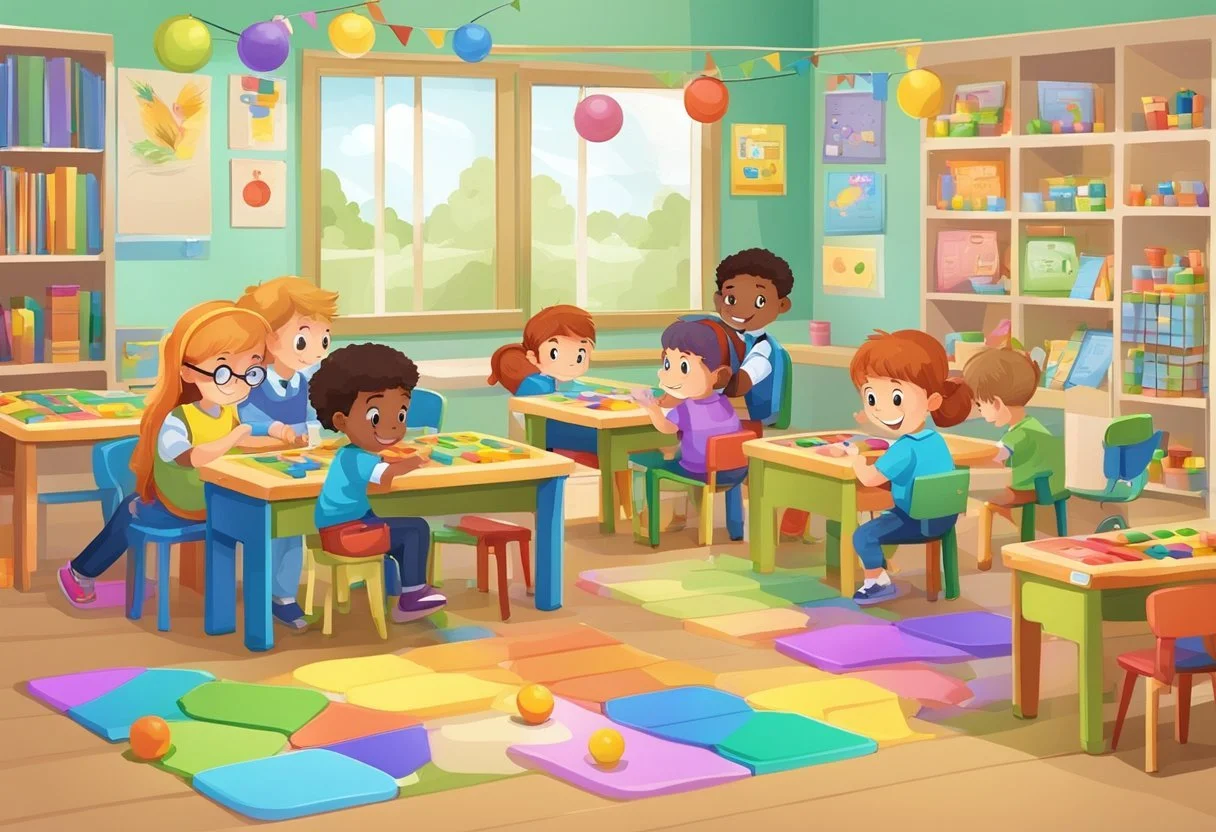
Teaching addition can be enhanced by using fun and creative activities. These engaging methods can make learning more enjoyable and effective for young students. Effective strategies include using interactive activities and games.
Engaging Students with Interactive Activities
Interactive activities help students grasp addition by involving them directly. Number lines are a great tool for visual learning. Students can jump forward and backward to understand adding and subtracting numbers.
Ten frames help in visualizing numbers up to ten, improving their comprehension of addition up to twenty. Using tally marks integrates movement with counting, reinforcing learning through physical action.
Teachers can also use small group work to encourage participation. Group tasks where students solve addition problems together foster teamwork and problem-solving skills.
Learning Addition Through Play and Games
Games bring excitement to learning addition. Board games involving rolling dice and moving pieces can strengthen basic arithmetic as students add the number shown on dice to their current position.
Flashcards are another quick game where students race to solve addition problems, promoting speed and accuracy.
Outdoor games incorporating number sequences can also work well. Simple relay races where students run to pick cards and add numbers can make learning dynamic.
Digital learning games offer interactive challenges, combining technology with education. These games often involve solving problems within a story, keeping students engaged with the task at hand.
Assessment Techniques for Measuring Progress
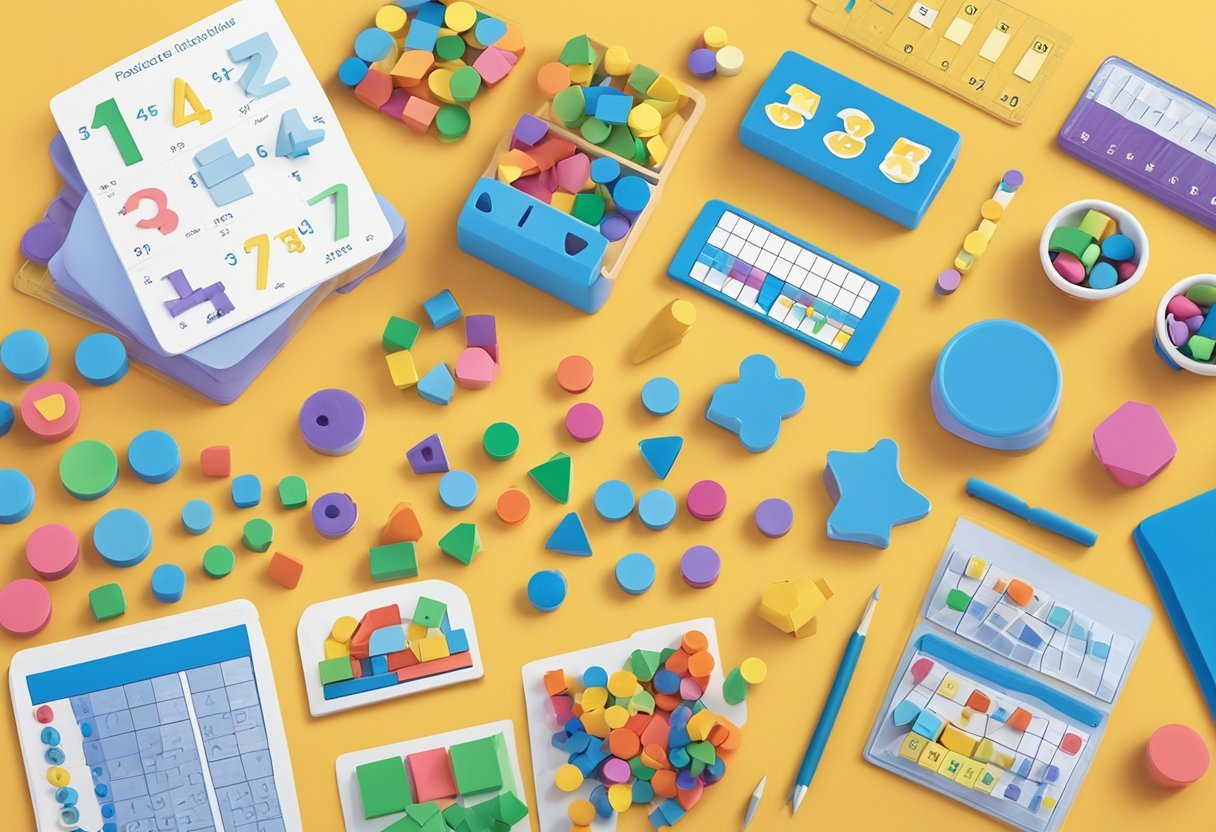
Accurate assessment lets teachers improve mathematics education effectively. This involves both keeping an eye on ongoing progress and evaluating overall understanding. These approaches help with strategies like learning sums and comparing numbers.
Utilizing Formative Assessments Effectively
Formative assessments give quick insights into students’ ongoing progress. This type of assessment includes quizzes, observations, and student discussions. They let teachers catch misunderstandings early. Teachers make notes daily to track skills like adding numbers up to 20 with ease.
Peer reviews and self-assessments help students reflect on their abilities. Students work in pairs to solve problems. This improves their own learning and comprehension. Teachers can then adjust lessons to fit student needs, fostering a strong foundation in mathematics.
Summative Assessments and Feedback Strategies
Summative assessments evaluate learning at the end of a unit. Traditional tests and ongoing projects are common forms. Using these helps teachers see how well students grasp addition concepts over time. These tests check if students can perform sums and compare numbers effectively.
Feedback after these assessments is vital. It should be clear and constructive. Teachers can use rubrics to guide student improvement. Discussing specific strengths and areas needing growth makes a big difference. This approach supports students in mastering key concepts, enhancing their overall math skills.
Resources for Continuous Learning

Educators and students can both benefit from additional resources to enhance their learning experiences. Engaging activities and continued development opportunities can strengthen skills, especially when teaching place value and addition.
Supplementary Materials for Students
Providing students with diverse resources can improve their grasp of addition 0–20. Worksheets and math games offer practice and reinforcement. Using tools like flashcards helps students memorize facts.
Interactive apps are engaging ways for students to learn. Many apps focus on place value activities, allowing students to explore numbers hands-on. Teachers can use math manipulatives, like counters or base ten blocks, to visually demonstrate addition concepts. This hands-on approach supports learning.
Incorporating books with math themes into reading time also encourages a holistic understanding. Look for books with engaging stories that incorporate math challenges for young learners.
Professional Development for Educators
Teachers can enhance their strategies through regular training and workshops. Online courses and webinars offer flexible options for skills improvement. Topics might include effective teaching techniques or the latest educational technologies.
Mentoring programs also provide valuable insights. By collaborating with experienced colleagues, educators can gain new strategies for teaching place value. Participating in peer coaching sessions or joining professional organizations can lead to new ideas and resources.
Conferences and education-themed podcasts keep teachers updated. These platforms share insights on classroom management and innovative teaching methods. Investing in professional growth supports educators' ability to effectively guide students.
Frequently Asked Questions
Teaching addition in the 0-20 number range involves different strategies for various age groups. Educators use engaging activities and tailored approaches for first graders and beyond.
What are effective strategies for teaching addition within the 0-20 number range?
Conceptual tools like number lines and counting objects can help. Emphasizing mental math skills is important. Teachers often use interactive games to engage students. Repeated practice and using manipulatives can strengthen understanding.
How can educators incorporate activities into addition lessons for first graders?
Hands-on activities, like using counters or blocks, make learning fun. Simple addition games that involve real-world scenarios can boost interest. Stories and songs about addition can be helpful too.
What are the recommended addition teaching methods for second and third graders?
Introducing more complex problems prepares them for future math challenges. Group activities and math puzzles encourage collaboration. Visualization techniques and story problems are also beneficial.
How does the Montessori method approach addition instruction for young learners?
The Montessori method focuses on using physical materials. This hands-on approach promotes self-paced learning and allows children to discover math concepts independently. It encourages exploration and fosters a deep understanding of numbers.
What techniques can be used to make addition and subtraction engaging for grade 1 students?
Active learning techniques, like flashcards and educational apps, are popular. Incorporating these tools helps maintain student interest. Story-based problems and creative arts integration can turn practice into fun experiences.
What are the differences in teaching addition strategies between grades 1 and 4?
Grade 1 focuses more on understanding basic addition concepts. By grade 4, students move toward solving multi-step problems. The complexity increases and students are expected to apply critical thinking. They use more abstract methods and less concrete tools.


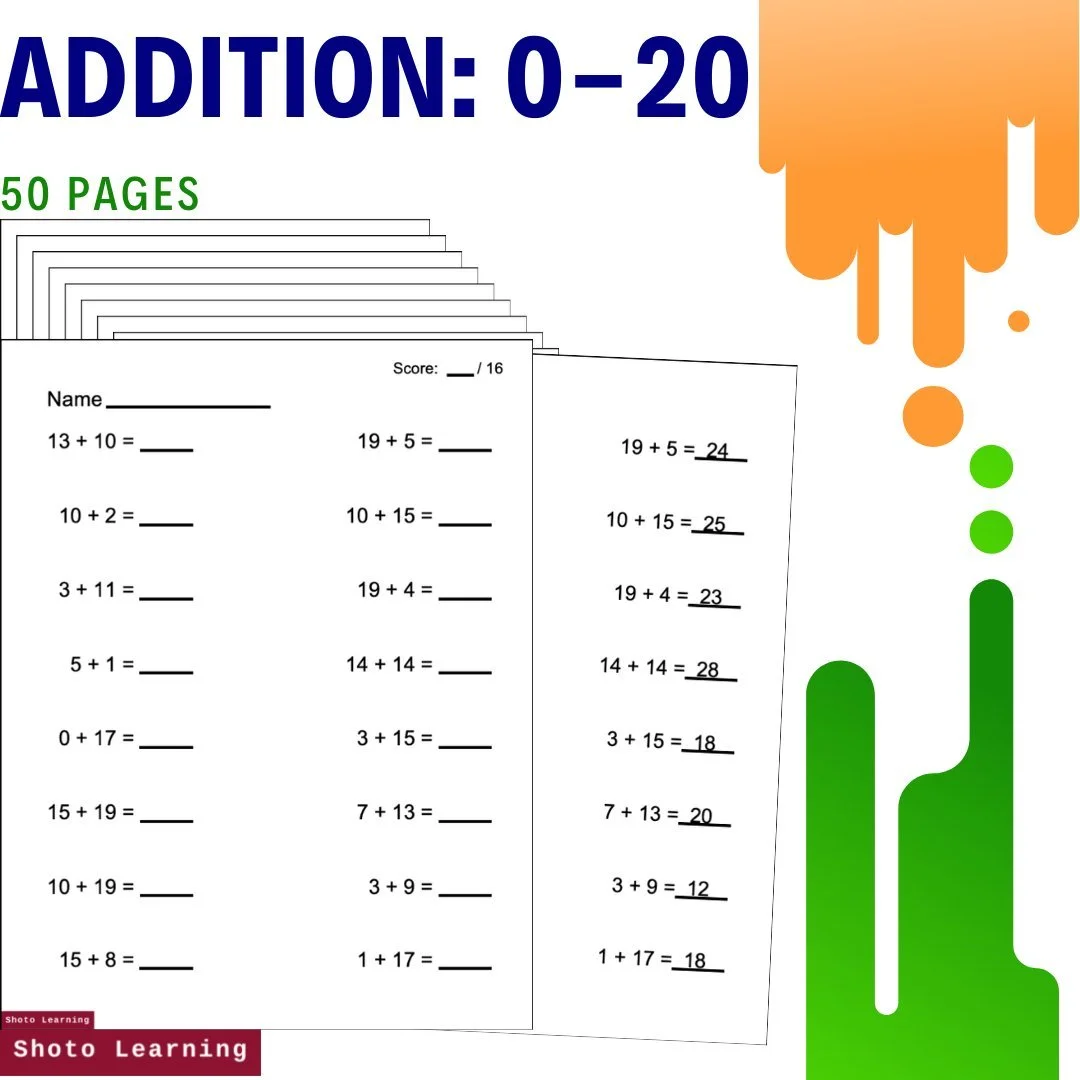

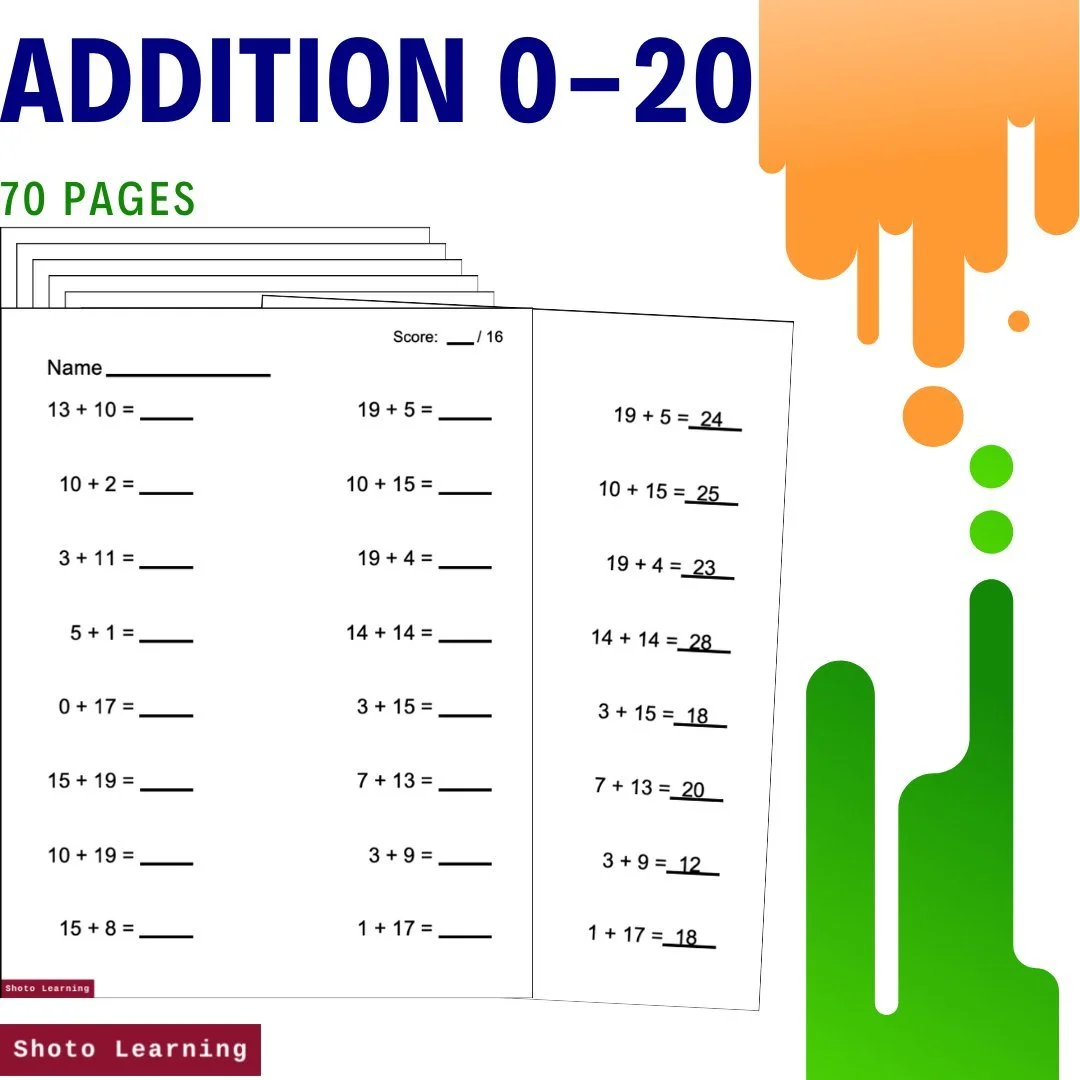
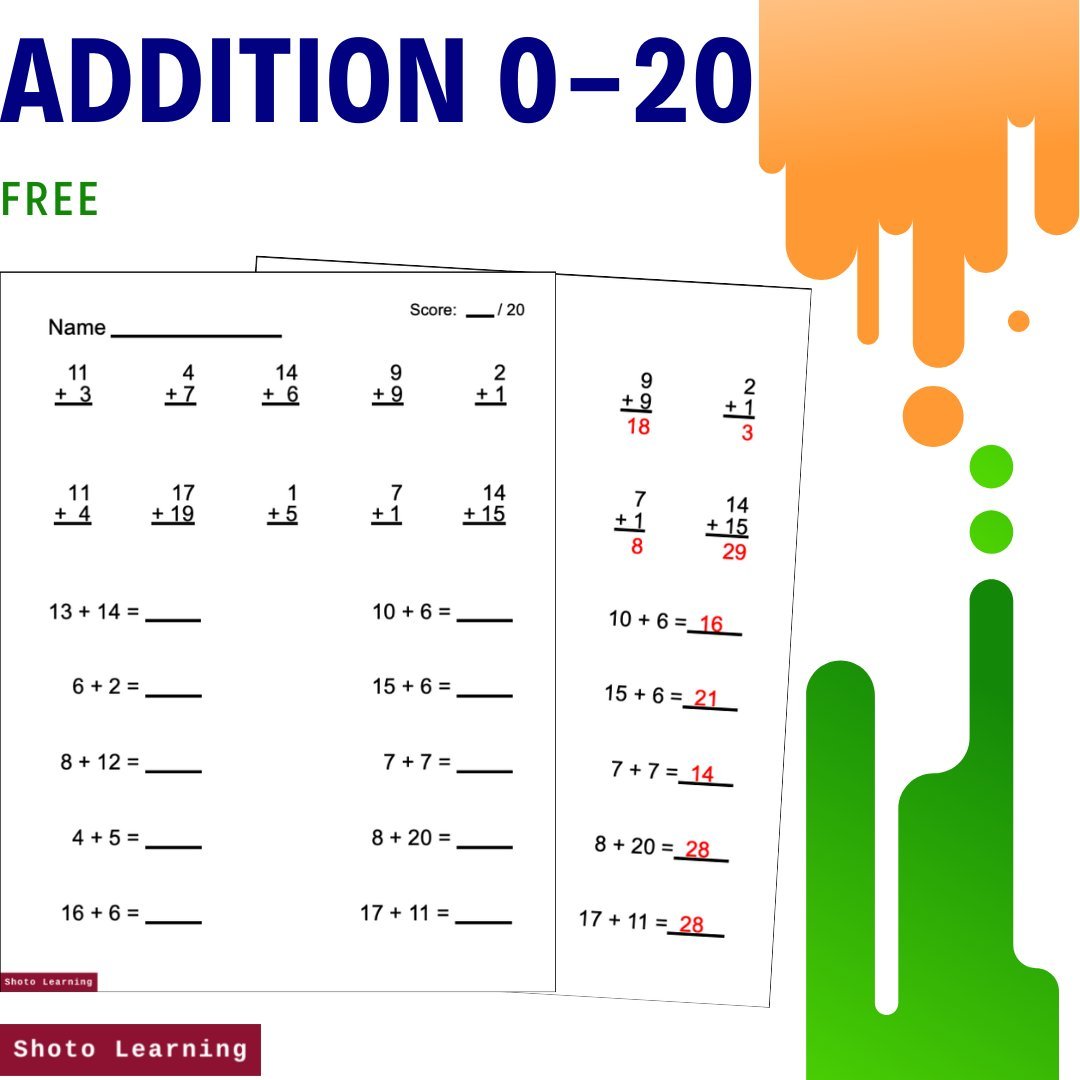
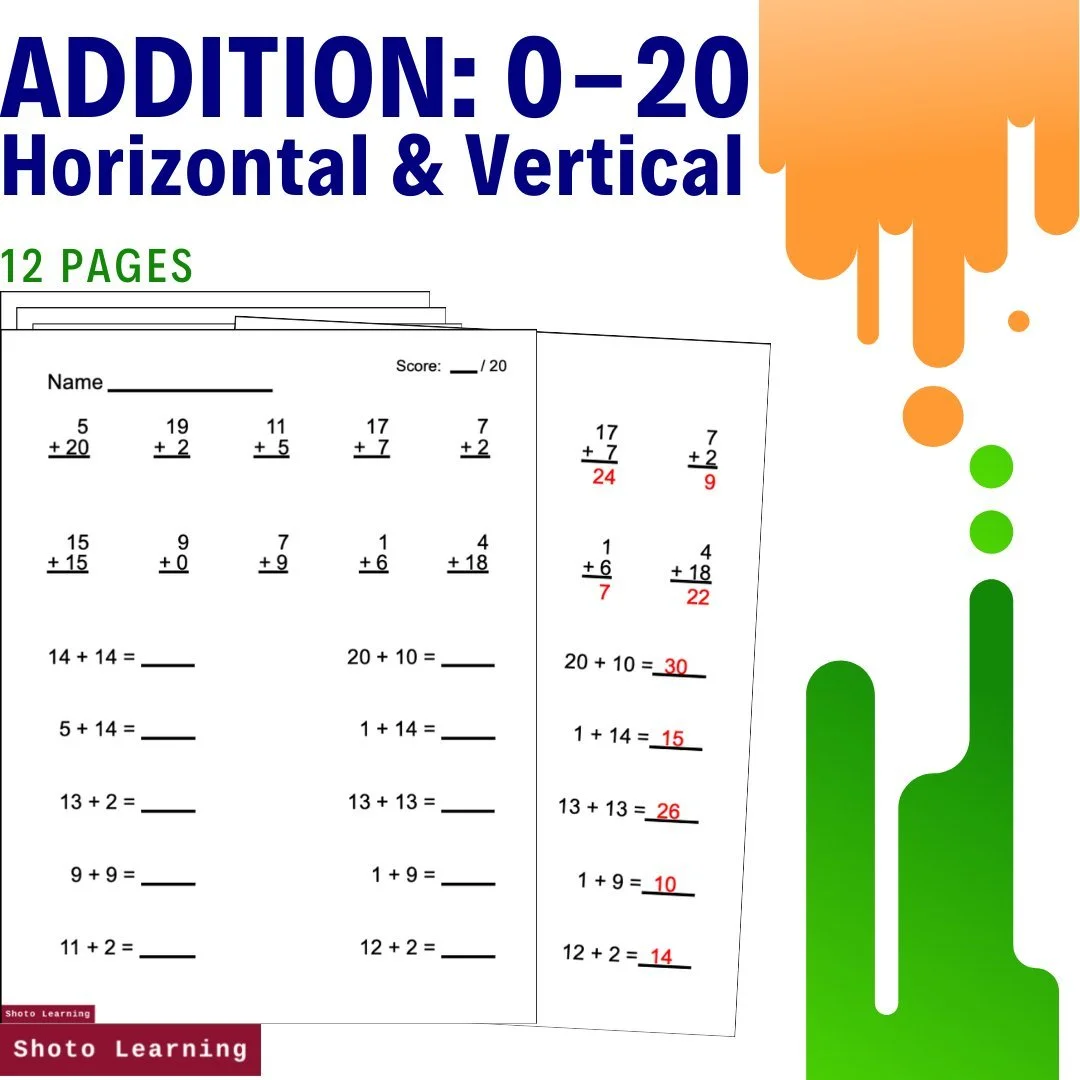


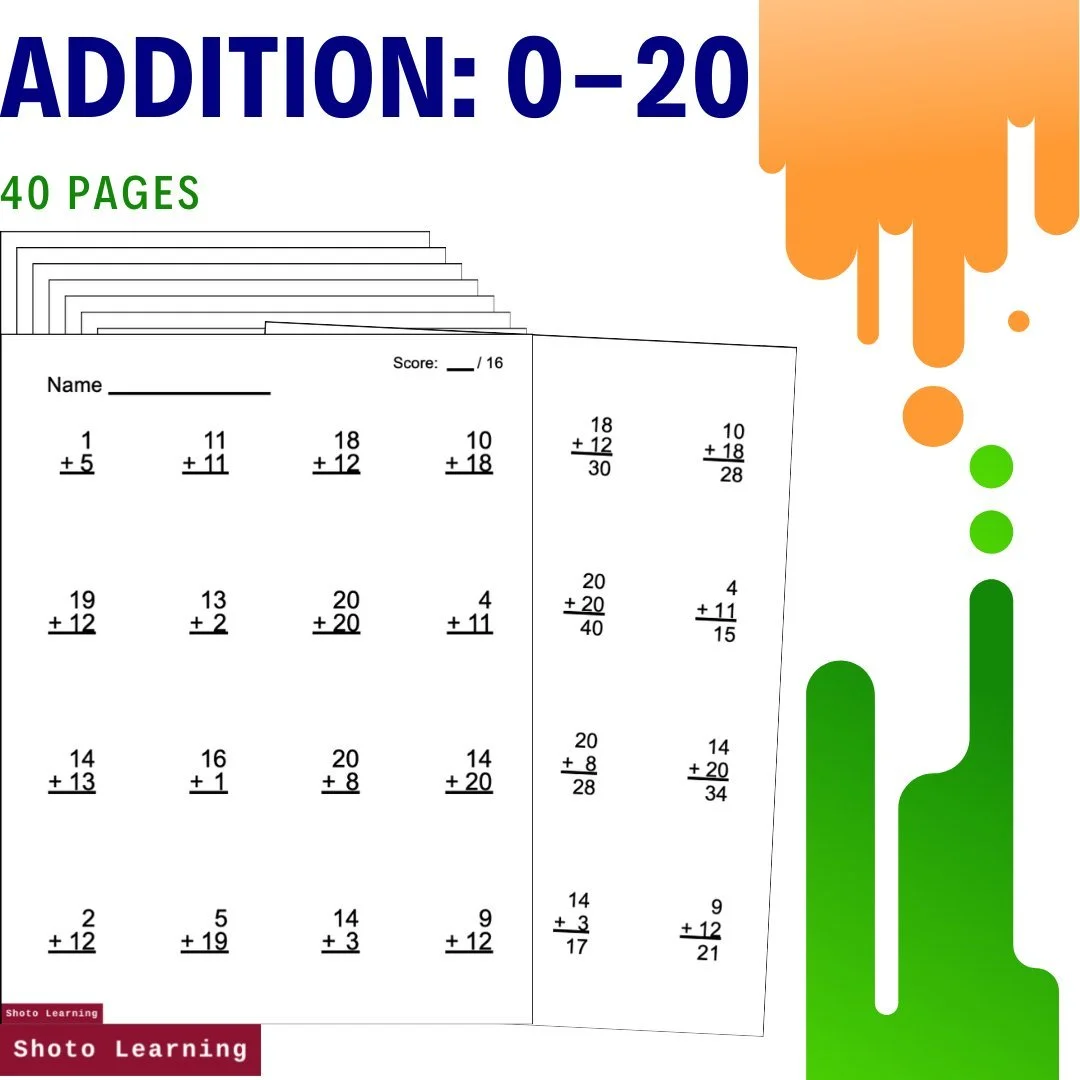


These free addition worksheets are designed for young learners working on mastering addition facts between 0 and 20. With a clean, easy-to-follow layout, they’re ideal for use in the classroom or at home. Whether you're looking for a quick check-in, morning work, homework, or extra support at your math center, this no-prep resource is perfect for reinforcing basic addition skills.
What’s Included:
1 Printable worksheet
16 horizontal addition problems per page
Numbers added together are between 0 and 20
Sums are all under 40
Answer key included
How to Use:
Print and distribute for independent practice
Use as a warm-up or exit ticket
Add to your math center or workstation rotation
Assign as homework or for early finishers
Use for informal assessments or review
This worksheet is a helpful, no-stress way to support foundational math fluency and boost confidence with addition!