
Effective Strategies for Teaching the Cell Cycle: Practical Tips and Engaging Hands-On Activities
Many students find the cell cycle challenging to understand, but with the right strategies and activities, teachers can make this topic much easier and more interesting. Teachers can use simple explanations and hands-on projects to help students see how cells grow, divide, and work to keep living things healthy. Learning these basics gives students a strong foundation for understanding biology and other science topics.
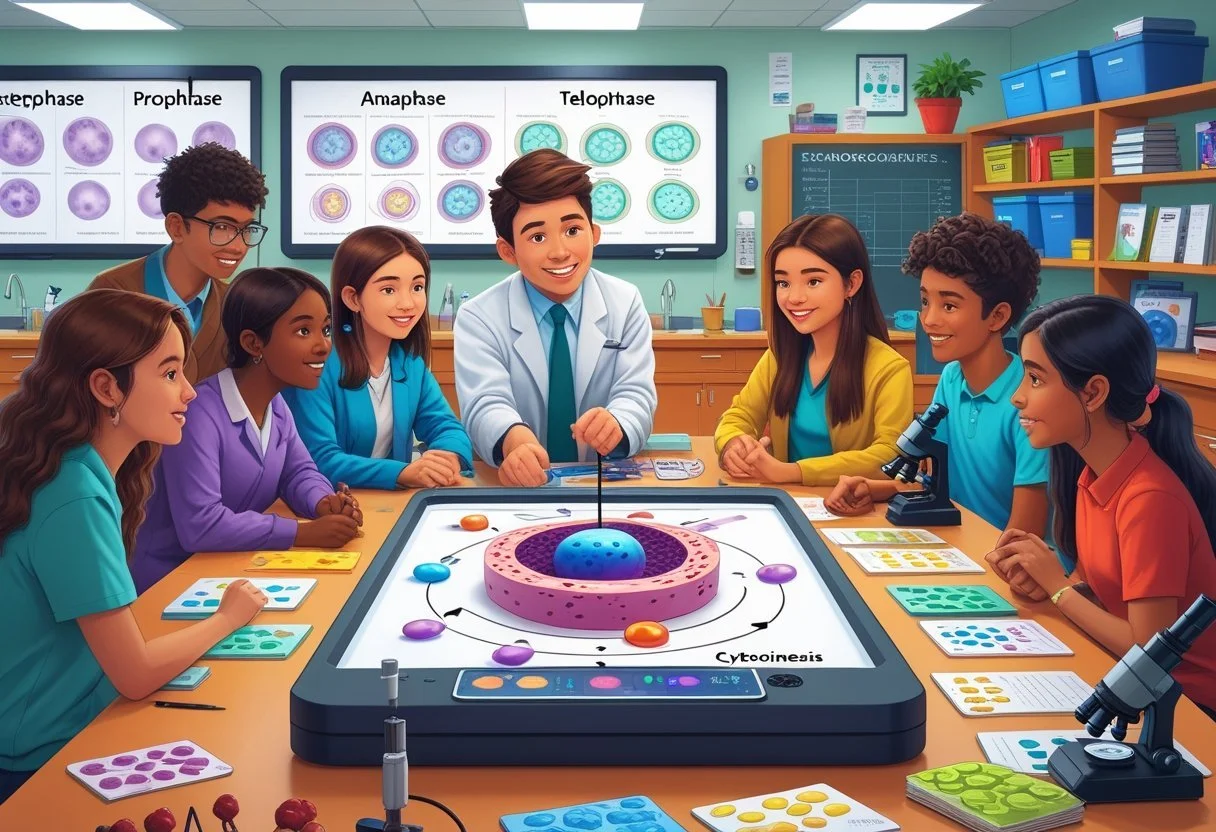
Active lessons, like using models and fun experiments, keep students involved and help them remember the main ideas. When teachers mix up their teaching methods and focus on clear examples, more students stay interested and do better in class.
Key Takeaways
Use clear explanations and hands-on activities to teach the cell cycle.
Mix different teaching methods to keep students engaged.
Simple, active lessons help students understand and remember cell division.
Fundamentals of the Cell Cycle
The cell cycle is how cells grow, copy their DNA, and divide. Understanding the main phases, the role of chromosomes, and the importance of interphase helps students learn the basics of cell biology.
Key Phases and Processes
The cell cycle is split into different phases that happen in a set order. The steps include Interphase (which includes G1, S, and G2 phases), Mitosis, and Cytokinesis.
G1 phase: The cell grows and does its normal jobs.
S phase: The cell copies its DNA.
G2 phase: The cell gets ready to divide.
Mitosis is when the cell’s nucleus splits, and cytokinesis is when the cell’s cytoplasm divides to form two new cells. These steps help make sure each new cell has the same amount of DNA as the original cell.
Role of Chromosomes
Chromosomes carry genetic information needed for cell function. Each human cell usually has 46 chromosomes.
During the S phase of interphase, DNA in the chromosomes is copied. When mitosis happens, the chromosomes line up and get pulled apart. This process makes sure each new cell gets a full set of chromosomes.
Mistakes in handling chromosomes can lead to problems like extra or missing chromosomes. These errors may cause diseases, so accurate chromosome separation is important for healthy growth and development.
Interphase and Its Importance
Interphase is the longest part of the cell cycle. It includes G1, S, and G2 phases. Most cells spend about 90% of their cycle in interphase.
In this stage, the cell increases in size and copies its DNA. The cell also checks for mistakes before it divides.
Interphase allows cells to get ready for division. It ensures cells only divide when conditions are right. Without a proper interphase, cells may not grow or copy their DNA correctly, which can lead to cell damage or death.
Cell Division: Mitosis and Meiosis
Cell division is how living things grow, heal, and pass on traits to their offspring. The two main types are mitosis, which creates identical cells, and meiosis, which leads to variety in offspring.
Detailed Steps of Mitosis
Mitosis is the process where a single cell divides to make two identical cells. This is key for growth and repair in multicellular organisms like humans and plants.
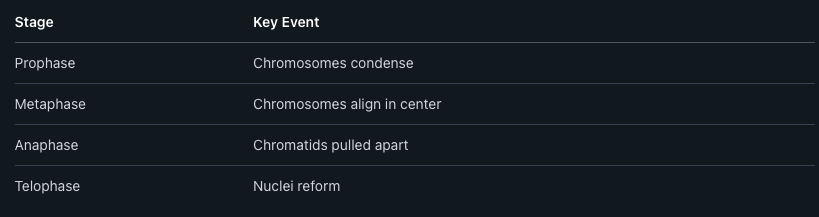
There are four main steps:
Prophase: Chromosomes become visible, and the nuclear membrane breaks down.
Metaphase: Chromosomes line up in the center of the cell.
Anaphase: Chromosome copies move to opposite sides.
Telophase: New nuclei form around each set.
A simple chart can help students remember each stage:
Using colored beads or string to model each stage lets students see how the genome splits evenly.
Understanding Cytokinesis
Cytokinesis is the final step after mitosis. It divides the cell’s cytoplasm and finishes making two separate cells. This ensures each new cell has a full set of cell parts.
In animal cells, the membrane pinches in. In plant cells, a new wall forms between the two cells. It’s important students know this is a separate step from mitosis but still part of cell division.
Teachers can show this with models using clay or by drawing diagrams. Comparing plant and animal cells side by side helps students see the difference in cytokinesis.
Introducing Meiosis in the Curriculum
Meiosis is taught after mitosis since it is more complex. It creates gametes, or sex cells, with half the normal number of chromosomes. This is what leads to heredity and variation in offspring.
Meiosis has two rounds of division: meiosis I and meiosis II. This results in four cells that are all a bit different. These differences in the genome lead to variation between siblings.
Activities can include using colored blocks to model chromosome shuffling or simulating how combining two gametes forms a new offspring. This helps students understand why no two siblings look exactly the same.
Effective Instructional Strategies
Using well-planned instructional strategies helps teachers meet learning goals and support every student. Students benefit most from lessons that follow curriculum guidelines, address common misunderstandings, and use research-backed methods.
Aligning with Science Curriculum
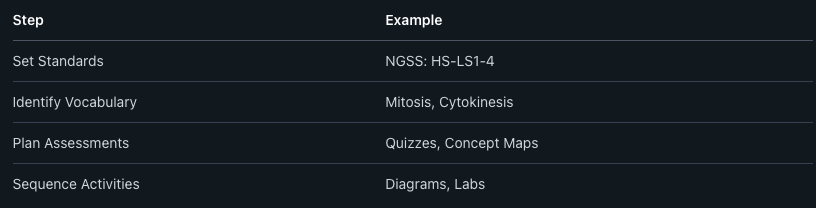
Effective science curriculum alignment starts with setting clear objectives based on national or state biology education standards. Teachers should reference standards such as Next Generation Science Standards (NGSS) to ensure all required cell cycle concepts are taught.
Lesson plans should include the cell cycle’s phases—interphase, mitosis, and cytokinesis—along with key vocabulary. Checklists can help teachers make sure important steps are covered. Teachers may use pacing guides to keep instruction on track.
Table: Key Elements for Curriculum Alignment
Connecting lessons to real-world examples, such as cancer research or plant growth, gives context. Clear objectives and formative assessments help monitor student progress.
Addressing Common Misconceptions
Many students struggle with cell cycle concepts, such as believing cells divide all at once or confusing mitosis with meiosis. Teachers should identify these misconceptions early by using pre-assessments or class discussions.
Strategies to address misunderstandings include:
Peer teaching: Students learn by explaining cell cycle stages to classmates.
Visual aids: Use diagrams, models, and animations to show each phase.
Hands-on labs: Microscopy activities allow observation of real cell division.
A focus on precise language is important. For example, teachers should stress that mitosis is just one part of the cell cycle, not the whole process. Regular questioning and feedback can help clear up confusion.
Incorporating Educational Research
Educational research shows that active learning improves science outcomes. Teachers can use strategies like think-pair-share, group investigations, or concept mapping to boost understanding.
Research also supports the value of scaffolding, where teachers break down the cell cycle into smaller topics before putting it all together. Formative assessment—quick, low-stakes checks on learning—guides lesson pacing and reteaching.
Science education reform highlights hands-on inquiry and student-led experiments. These methods help students form their own explanations, reflect, and fix mistakes as they learn.
Best-practice tips:
Use data from classroom studies to adjust teaching methods.
Apply research-based resources, such as interactive simulations.
Provide clear instructions and background knowledge before activities begin.
Hands-On Activities and Experiential Learning
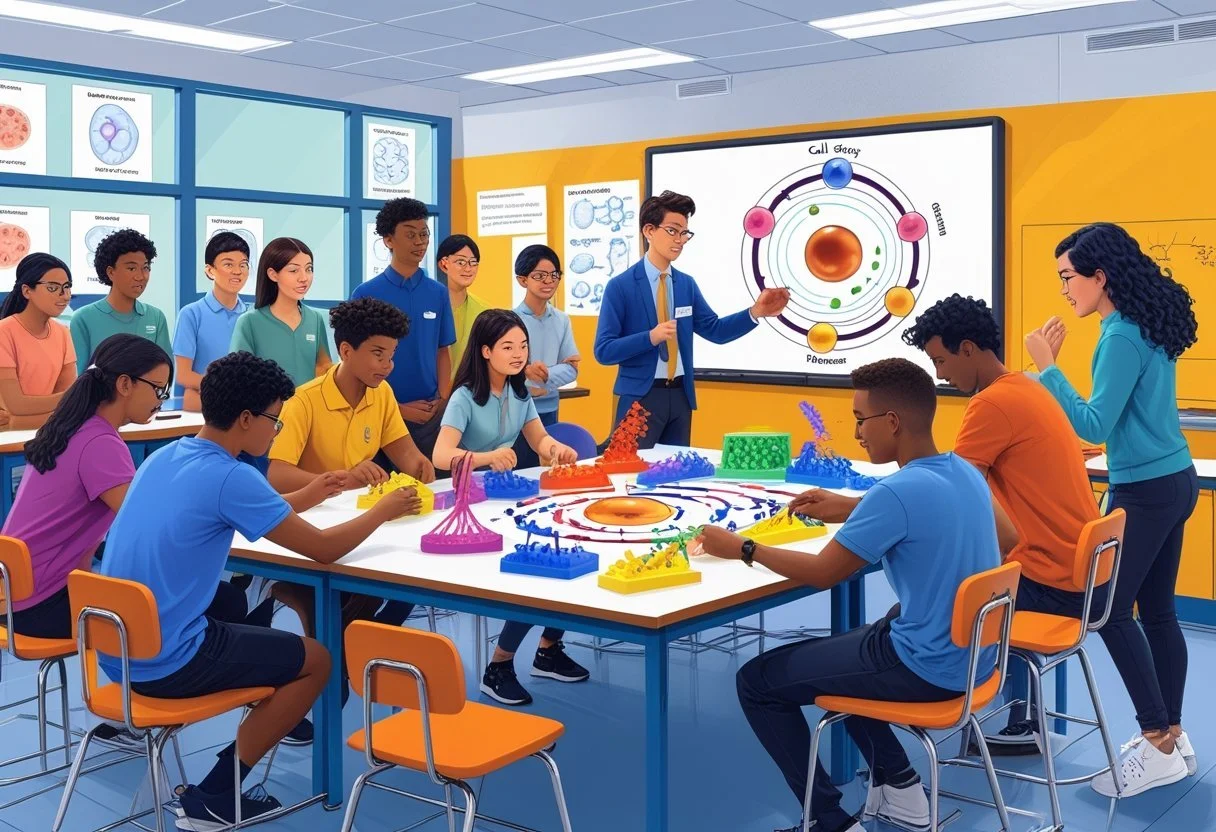
Hands-on learning helps students actively understand the cell cycle. These activities engage students with materials and direct observation, improving learning through experience.
Using Microscopes to Observe Cells
Microscopes allow students to directly observe cell stages. Teachers can prepare slides of onion root tips or whitefish blastula, both of which show cells at different phases. Under the microscope, students can see the distinct shapes of chromosomes during mitosis.
Teachers might guide students to identify and draw each phase, such as prophase, metaphase, anaphase, and telophase. This process builds observation and problem-solving skills, as students must match structure to stage based on visible evidence. Labeling diagrams and organizing findings into tables can help reinforce cell cycle concepts.
Many students find using real microscopes engaging since they perform tasks scientists do every day. As a result, students better connect textbook diagrams to real biological samples.
Modeling Chromosome Behavior
Modeling chromosome movement makes abstract concepts clearer. Simple tools, like colored pipe cleaners or string, can represent chromosomes. Students manipulate these materials to show chromosomes condensing, lining up, and separating during mitosis and meiosis.
This activity uses physical movement to model the changes happening in the nucleus. By moving “chromosomes” through each stage, students see the sequence and understand patterns such as sister chromatids separating at anaphase. This hands-on experience gives a concrete way to remember steps.
Teachers can encourage students to work in small groups and discuss each step. This process supports collaboration and critical thinking, which are important science skills.
Index Cards, Glue, and Classroom Materials
Common classroom supplies like index cards and glue can create low-cost, effective models of the cell cycle. Students can draw or print images of the key phases and arrange the cards in order. Adding descriptions or important features to the cards helps reinforce learning.
Another idea is to glue macaroni, beads, or string onto the cards as models of organelles or chromosomes. This builds a three-dimensional cell cycle display. Hands-on experiences like this strengthen understanding, especially for visual and tactile learners.
Teachers may have students create their own posters or flipbooks using these materials. These projects offer a creative way to review the stages, vocabulary, and structures of the cell cycle.
Engaging Students in the Classroom
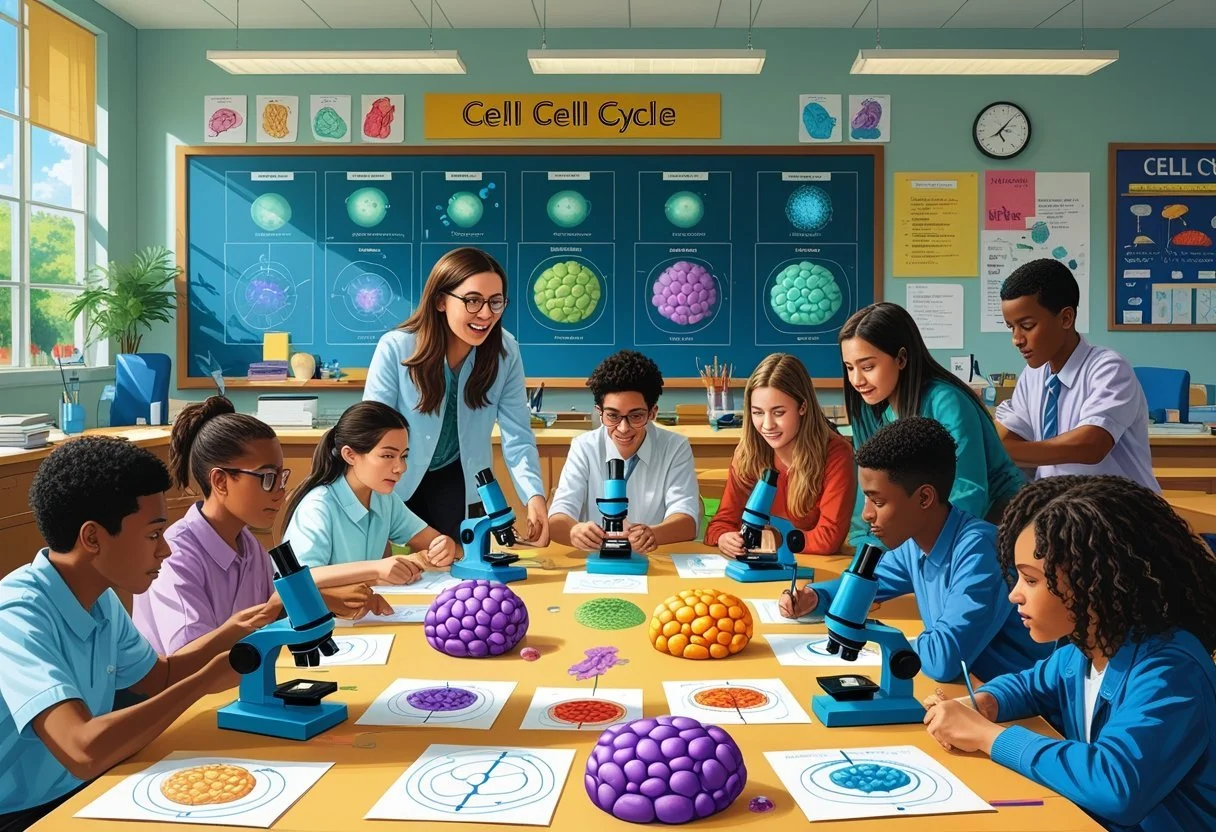
Effective cell cycle lessons use teamwork, real-life connections, and movement to boost understanding. By combining these strategies, teachers can help students stay interested and remember key ideas longer.
Collaborative Team-Based Approaches
Teachers can organize students into small groups for activities such as cell cycle board games, model building, or role-play. Working as a team helps students talk about concepts, compare answers, and solve problems together.
Group tasks may include:
Dividing cell cycle phases among team members for short presentations
Creating posters showing each stage and its main events
Answering quiz questions as a group to encourage discussion
Teachers can give each student a role within the team—like "Phase Expert" or "Time Keeper." This helps everyone take part. Teams can also set goals like finishing a model or correctly sorting cell cycle cards. Teamwork encourages responsibility and communication.
Connecting to Everyday Life and Adaptation
Linking the cell cycle to daily life helps students see its value beyond biology class. Teachers can give examples such as sports injuries (showing cell repair and growth) or hair and skin renewal.
A simple classroom discussion could be:
“What happens when you get a paper cut?”
“Why do athletes heal faster from some injuries?”
Teachers can talk about adaptation and how the cell cycle supports healing, growth, and adaptation in both humans and animals. Real-world examples show the importance of cell cycles in health and everyday challenges. Highlighting these connections encourages questions and deeper thinking.
Integrating Physical Activity and Movement
Bringing movement into lessons makes science active and engaging. Teachers can set up stations for each cell cycle phase, then have students rotate between them to act out or draw what happens at each stage.
Movement-based activities may include:
Students forming a "mitosis line" with classmates, each showing a phase
Relay games where students must quickly pair cell cycle terms and their meanings
Using colored arm-bands, students can play out the stages and “pass” the cell through the cycle
Physical activity gives students a break from sitting, helps them remember positions and steps, and can appeal to those who do best with hands-on learning. Combining science with movement connects ideas to real actions, making the class more memorable.
Assessment and Evaluation of Student Understanding
Measuring student understanding of the cell cycle involves checking both knowledge and skills. Using a mix of assessment types and focusing on student growth can help in science teaching and reduce stress.
Formative and Summative Assessment Strategies
Teachers can use formative assessment during lessons to guide students’ learning. Examples include exit slips, quick quizzes, or asking students to draw and label the cell cycle.
Formative tools allow quick feedback and make it easier to spot misunderstandings. Group discussions and using diagrams help check if students understand each phase, such as mitosis and interphase.
Summative assessment takes place at the end of a unit. These include written tests, concept maps, or hands-on labs where students must explain each stage. Teachers can use a simple rubric:
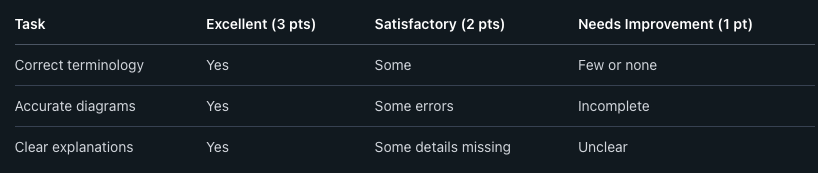
This mix supports both problem solving and memory.
Addressing Pressure and Encouraging Growth
Science teaching can create pressure, especially when students feel judged by their test results. Teachers can help by focusing on student progress rather than just grades.
Offering low-stakes practice, such as ungraded quizzes or group work, gives students a chance to learn without fear. It also helps them build confidence in their problem solving strategies.
Feedback should be clear and specific. For example, instead of saying “good job,” a teacher might write, “Your diagram clearly shows telophase, but check how you labeled metaphase.” This approach encourages growth and helps students learn from mistakes.
Allowing retakes, revisions, and self-evaluation can shift the focus from pressure to improvement. These strategies support a calm classroom and help develop scientific thinking.
Integrating Broader Scientific Concepts
Linking the cell cycle to other science ideas helps students see why it matters. By connecting these lessons to the scientific method, other biology themes, and genetics, teachers allow students to build a complete picture of how cells influence living things.
Incorporating Scientific Methods
Teaching the cell cycle works best when using the scientific method. Instructors can start by having students ask questions about cell division—like why cells sometimes fail to divide or how cancer cells behave.
Students can then test simple hypotheses through hands-on lab activities. For example, students might observe root tip cells under a microscope and record the number of cells in each stage of mitosis. Use a table to organize findings:
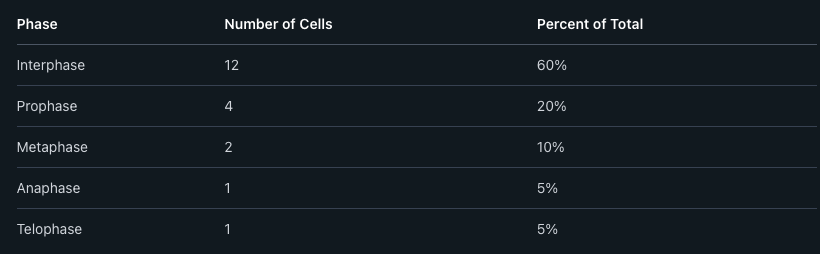
Encouraging students to analyze results and draw conclusions builds critical thinking skills and reinforces how real science is done.
Relating to Broader Biology Topics
The cell cycle connects to core biology concepts like growth, repair, and adaptation. Teachers can discuss how organisms grow by making new cells or how injuries are repaired thanks to cell division.
During lessons, relate the cell cycle to adaptation by showing how some species adapt to harsh environments through changes in how their cells divide. For example, skin cells divide faster after injury or sunburn, which helps an organism protect itself.
Linking these topics builds context and lets students see how one process (the cell cycle) is important for many life functions. Teachers should use real-life cases and simple diagrams to break down these ideas.
Clarifying the Role of Genetics and Genetic Disorders
The cell cycle's link to genetics is critical for understanding health and disease. Teachers can explain how DNA must be copied exactly during cell division to avoid mistakes.
Mistakes in cell cycle control can cause genetic disorders, such as Down syndrome, which is caused by an extra chromosome due to improper cell division. Teachers might show a short list of disorders connected to cell cycle errors:
Down syndrome
Turner syndrome
Cancer (as uncontrolled division)
By discussing these examples, students see how the cell cycle influences both normal growth and serious medical conditions. Clear explanations and case studies help highlight why accuracy in the cycle is so important for living things.
Adapting Content for Middle School Learners
Middle school classrooms require lessons that meet students where they are. Teachers should break down science ideas into manageable steps and use different methods to support all learners.
Simplifying Complex Concepts
The cell cycle can involve confusing vocabulary and detailed steps. Teachers should use simple language and compare the process to events students already know, like repeating school routines or growing plants.
Visuals are helpful. Diagrams, labeled pictures, and color-coded charts can make the stages clear. For example, a table showing each cell cycle phase alongside its description:
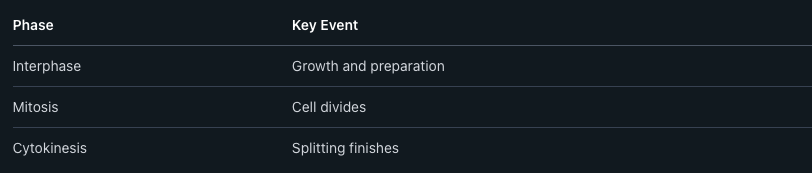
Hands-on models, such as using beads or clay, allow students to build each cell cycle stage. Short, direct explanations paired with these visuals and activities help middle school students absorb information without overload.
Supporting Diverse Learning Needs
Not all middle school students learn the same way, so lessons should use different strategies. Written steps, spoken instructions, and visual supports reach more learners.
Group work helps students explain ideas to each other using their own words. Providing extra time and clear, step-by-step worksheets supports students who need it.
Teachers can also offer choice in projects—drawing, acting, or building models—so students show understanding in ways that work for them. Checking in regularly and giving feedback helps everyone stay on track and adapt as needed.
Avoiding Common Pitfalls in Teaching the Cell Cycle
Many teachers struggle with fads and misconceptions in biology lessons. Teachers must separate fact from myth to help students build a true understanding of the cell cycle.
Recognizing Unproven Fads
Some teaching fads may look helpful but do not improve understanding of the cell cycle. Examples include using random games with no link to the science concepts, or giving simple coloring sheets as the main learning tool. These methods may seem fun, but they often fail to explain important ideas like mitosis or DNA replication.
When choosing activities, look for those that make students think deeply, ask questions, or solve real problems. Hands-on models of cell division or labs with microscopes let students see cells at different stages. Teachers should be careful with new products or online resources that promise quick results but lack scientific proof.
Below is a quick checklist to avoid fads:

Clarifying Misleading Analogies
Analogies help students make sense of new ideas, but some analogies lead to misunderstandings. For example, saying the cell cycle is “like a washing machine cycle” might make students think the process has no checks or control points. In reality, the cell cycle includes important checkpoints and phases that must be followed in order.
Common misconceptions appear when analogies are too simple. For instance, calling mitosis “cell splitting” leaves out steps like chromosome alignment and cytokinesis. Teachers should clearly explain each stage and use diagrams to show the process.
It is helpful to review common analogies in class and point out where they work and where they do not. Encourage students to ask questions if something about an analogy seems confusing or leaves out important details. Using clear images, simple labeling, and step-by-step demonstrations prevents errors caused by misleading comparisons.
Frequently Asked Questions
Teachers benefit from using hands-on activities, clear visuals, and real-world examples when teaching the cell cycle. Group work and simple games can also make these lessons more memorable and practical for students.
How can educators make learning about the cell cycle engaging through hands-on activities?
Educators can use models, like colored beads or clay, to show cell stages. They may also use microscope slides so students can see real cells dividing. Building diagrams or acting out steps helps make learning both active and clear.
What are effective methodologies for teaching mitosis and meiosis in high school science classes?
Using step-by-step visuals, such as drawing each phase on the board, helps students follow the process. Teachers can let students arrange cards showing cell division steps. Guided lab activities where students observe onion root tips are another helpful method.
What are some innovative lesson plan strategies that focus on the different phases of the cell cycle?
Teachers can assign students roles for each phase and have them recreate the cell cycle as a skit. Digital simulations let students explore the cell cycle at their own pace. Creating simple comic strips or posters about each phase also supports creativity and recall.
How can visualization tools be incorporated to enhance student understanding of the cell cycle?
Time-lapse videos of actual cells dividing let students see each phase in action. Teachers use models, animations, or interactive apps so students can review complex steps visually. Labeled diagrams with clear color coding improve comprehension.
In what ways can the cell cycle be related to practical, real-life applications in the curriculum?
Relating cell division to how cuts heal or how plants grow makes the topic relevant. Discussing medical topics, like cancer, helps students see why cell cycle errors matter. Teachers can connect the cell cycle to genetics to show how traits are passed on.
What are some creative group activities or games that help students grasp the concepts of cell division?
Students can work together to build large cell cycle models with craft supplies. Board games where players match cell cycle stages with descriptions add a fun, competitive element. Charades or relay races using cell cycle vocabulary can help build teamwork and reinforce terms.


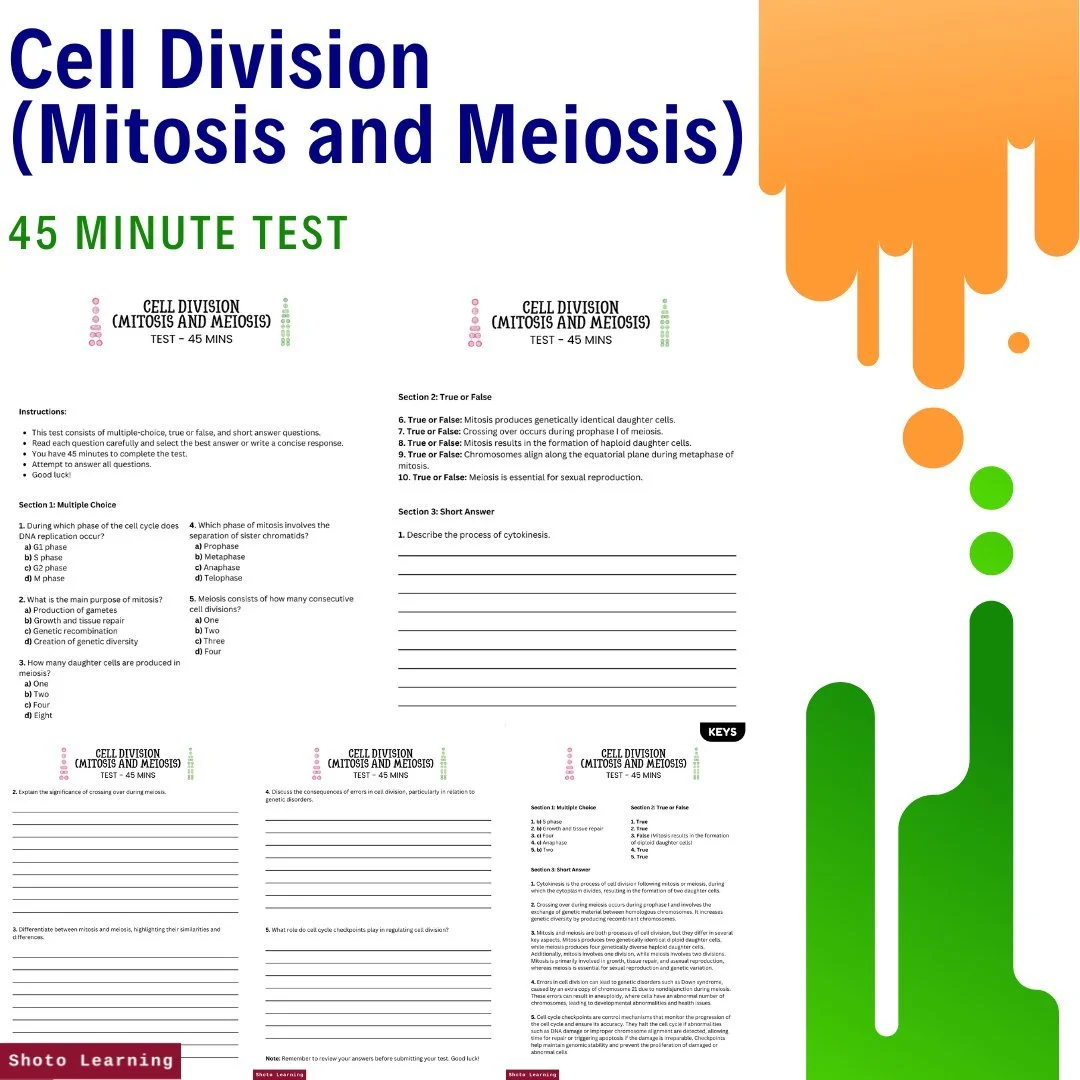


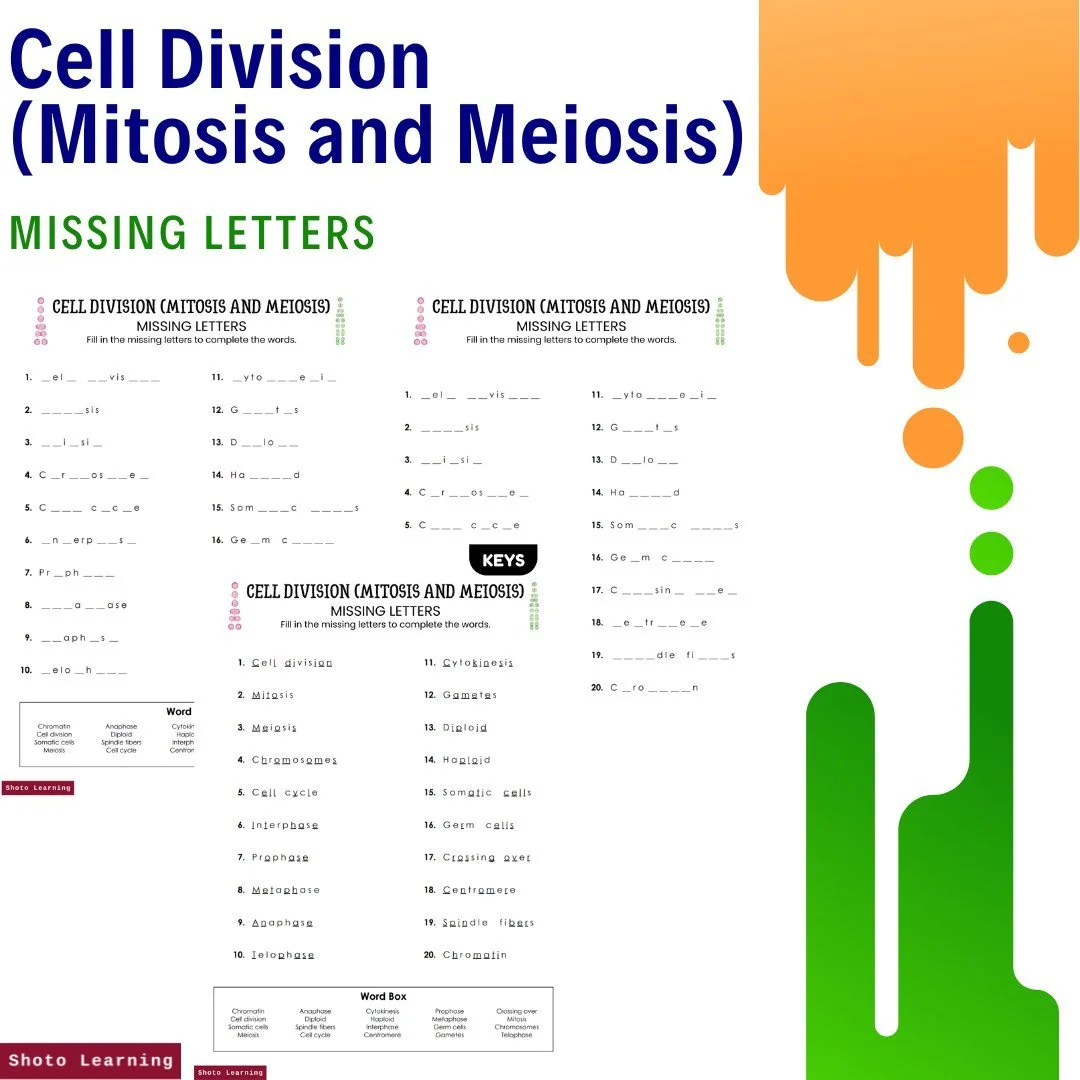


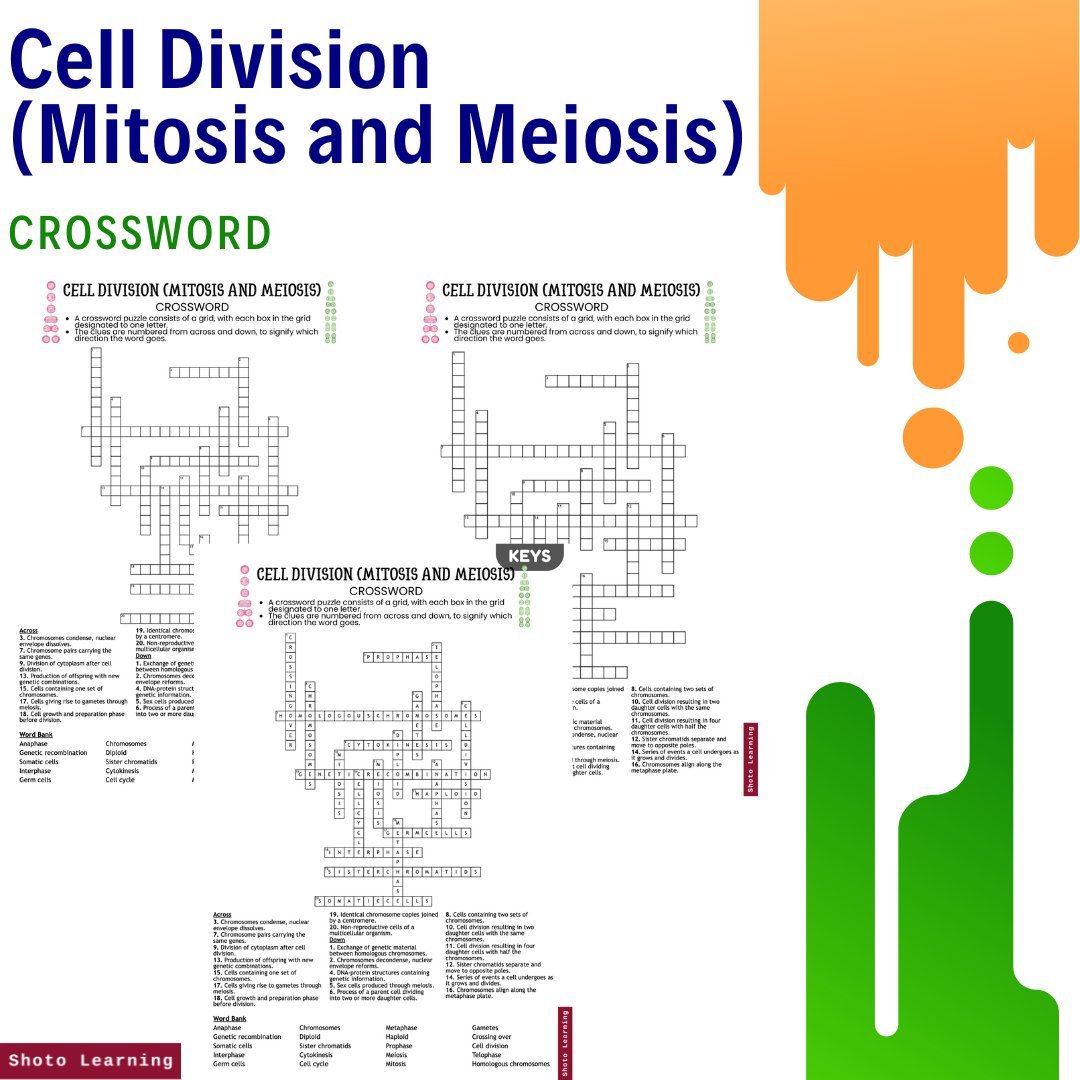


Unlock the mysteries of cellular reproduction and master the concepts of mitosis and meiosis with our Cell Division Mastery Bundle. This comprehensive collection of educational resources provides a wealth of engaging materials to enhance learning and understanding of cell division.
Key Features:
Assignments: Embark on 10 stimulating assignments covering diverse topics, encouraging critical thinking and practical application of knowledge.
Bingo - 30 Bingo Cards: Make learning fun with our interactive bingo game, featuring 30 cards filled with key terms and concepts related to cell division.
Crossword: Challenge your knowledge with a crossword puzzle that tests your understanding of mitosis and meiosis terminology.
Cryptogram: Decode secret messages related to cell division with our cryptogram activity, adding an element of mystery to your learning experience.
Debate: Engage in lively discussions and debates on cell division topics, fostering critical thinking and analytical skills.
Experiments: Explore hands-on experiments illustrating fundamental principles across various disciplines, fostering deeper understanding and engagement.
Fill in the Blank: Reinforce your understanding of cell division concepts with fill-in-the-blank exercises that provide practice and review.
Flashcards: Study on the go with our flashcards, featuring essential terms and definitions related to mitosis and meiosis.
Free ABC Order: Practice organizing key terms alphabetically with our free ABC Order worksheet, reinforcing vocabulary skills.
Free Story Book: Dive into the world of cellular reproduction with our free storybook, offering an engaging narrative on the processes of mitosis and meiosis.
Free Poster: Decorate your learning space with our free poster, providing a visual overview of cell division processes and stages.
Lesson Plan: Dive deep with our detailed lesson plan, complete with engaging activities and discussion topics.
Matching: Test your knowledge of cell division terminology with our matching activity, pairing terms with their corresponding definitions.
Missing Letters: Challenge yourself with our missing letters worksheet, filling in the blanks to complete cell division-related words.
Multiple Choice: Assess your understanding of cell division concepts with multiple-choice questions that cover a range of topics.
PowerPoint: Explore the intricacies of mitosis and meiosis with our informative PowerPoint presentation, featuring detailed explanations and visual aids.
Questions and Answers: Test your knowledge with a set of questions and answers that cover key concepts in cell division.
Reading Comprehension: Sharpen reading skills with engaging passages, perfect for students and educators alike.
Scramble: Unscramble cell division-related words with our scramble worksheet, sharpening your vocabulary and spelling skills.
Test (45 Minutes): Evaluate your understanding of mitosis and meiosis with a 45-minute test that covers essential topics in cellular reproduction.
True or False: Determine the accuracy of statements related to cell division with our true or false activity.
Word Search: Have fun while reinforcing vocabulary with our word search puzzle, featuring cell division-related terms hidden within.
Writing Prompts: Stimulate critical thinking and creativity with a set of writing prompts that explore various aspects of cell division.
Embark on a journey of discovery and mastery with our Cell Division Mastery Bundle. Whether you're a student, educator, or lifelong learner, these engaging resources provide valuable tools and insights to deepen your understanding of mitosis and meiosis.
Pages: 135 pages
Order your copy today!