
Understanding the Digestive System: Importance and Teaching Strategies
The digestive system is a vital part of our body, responsible for processing and breaking down food into essential nutrients. These nutrients provide the energy necessary for growth, repair, and overall health. In this blog, we’ll explore the importance of the digestive system and effective strategies for teaching this complex yet fascinating subject to students.
The Importance of the Digestive System
The digestive system plays a key role in maintaining our health and well-being. It not only breaks down food but also:
Absorbs Nutrients: Essential for bodily functions.
Eliminates Waste: Removes indigestible parts of food.
Supports Immune Function: Aids in the body’s defense against pathogens.
Understanding how the digestive system works can help students appreciate the significance of nutrition and healthy eating habits.
Tips for Teaching the Digestive System Effectively
Teaching the digestive system can be challenging, but with the right strategies, it can become an engaging and enjoyable experience for students. Here are some effective methods:
1. Use Visual Aids
Incorporate diagrams, models, and videos to help students visualize the components of the digestive system and their functions. Visual aids make complex processes more accessible and can enhance understanding.
2. Break It Down into Manageable Parts
The digestive system is intricate, so break it down into smaller sections:
Overview of the digestive system
Detailed study of each organ: Mouth, esophagus, stomach, intestines, etc.
Digestive processes: Ingestion, digestion, absorption, and excretion.
This approach simplifies the learning process and helps students grasp each part's role.
3. Relate to Real-Life Examples
Connecting the digestive system to real-life scenarios makes learning relevant. Discuss how different foods provide various nutrients and how those nutrients affect the body. This real-world application helps students make informed dietary choices.
4. Engage in Hands-On Activities
Incorporate hands-on activities to create an interactive learning environment. Ideas include:
Building a model of the digestive system.
Conducting simple experiments to demonstrate digestion.
Creating food models to represent various nutrients.
These activities foster engagement and reinforce learning through experience.
5. Emphasize Good Digestive Health
Teach students the importance of maintaining good digestive health. Discuss healthy habits such as:
Drinking enough water.
Consuming a fiber-rich diet.
Avoiding excessive processed foods.
Understanding these concepts encourages students to adopt healthier lifestyles.
6. Connect to Other Subjects
Highlight how the digestive system relates to various subjects, including:
Science: Understanding chemical reactions in digestion.
Math: Measuring food portions and nutrients.
Health: Discussing the impact of diet on overall health.
This interdisciplinary approach enhances learning and encourages critical thinking.
Conclusion
Teaching the digestive system can be both fascinating and challenging. By utilizing visual aids, breaking down complex topics, relating to real-life examples, engaging in hands-on activities, emphasizing good digestive health, and connecting to other subjects, educators can create an enriching learning experience. Helping students understand and appreciate the importance of the digestive system sets the foundation for a lifetime of healthy choices.

This comprehensive bundle of worksheets is perfect for students who are learning about the digestive system. The worksheets cover all aspects of the digestive system, from the mouth to the anus, and include a variety of activities to keep students engaged.
Activities included:
Assignments: Embark on 10 stimulating assignments covering diverse topics, encouraging critical thinking and practical application of knowledge.
Debate: Students will debate the pros and cons of different foods for the digestive system.
Fill in the blank: Students will fill in the blanks to complete sentences about the digestive system.
Free ABC Order: Students will order the different parts of the digestive system in alphabetical order.
Free Cut and Paste: Students will cut out and paste the different parts of the digestive system in the correct order.
Free Poster: A poster that illustrates the different parts of the digestive system.
Matching: Students will match the names of the different parts of the digestive system to their functions.
Multiple choice: Students will answer multiple choice questions about the digestive system.
Questions and answers: Students will answer questions about the digestive system.
Reading Comprehension: Sharpen reading skills with engaging passages, perfect for students and educators alike.
Test (45 minutes): Students will take a 45-minute test to assess their knowledge of the digestive system.
True or false: Students will identify true or false statements about the digestive system.
Writing prompts: Students will write about different aspects of the digestive system.
This bundle also includes:
Teacher answer keys for all worksheets
A unit plan with suggested activities and assessments
A list of resources for further learning
The Digestive System Worksheet Bundle is a great resource for teachers who are looking for a comprehensive and engaging way to teach their students about the digestive system.
The bundle is available for immediate download, so you can start using it today!
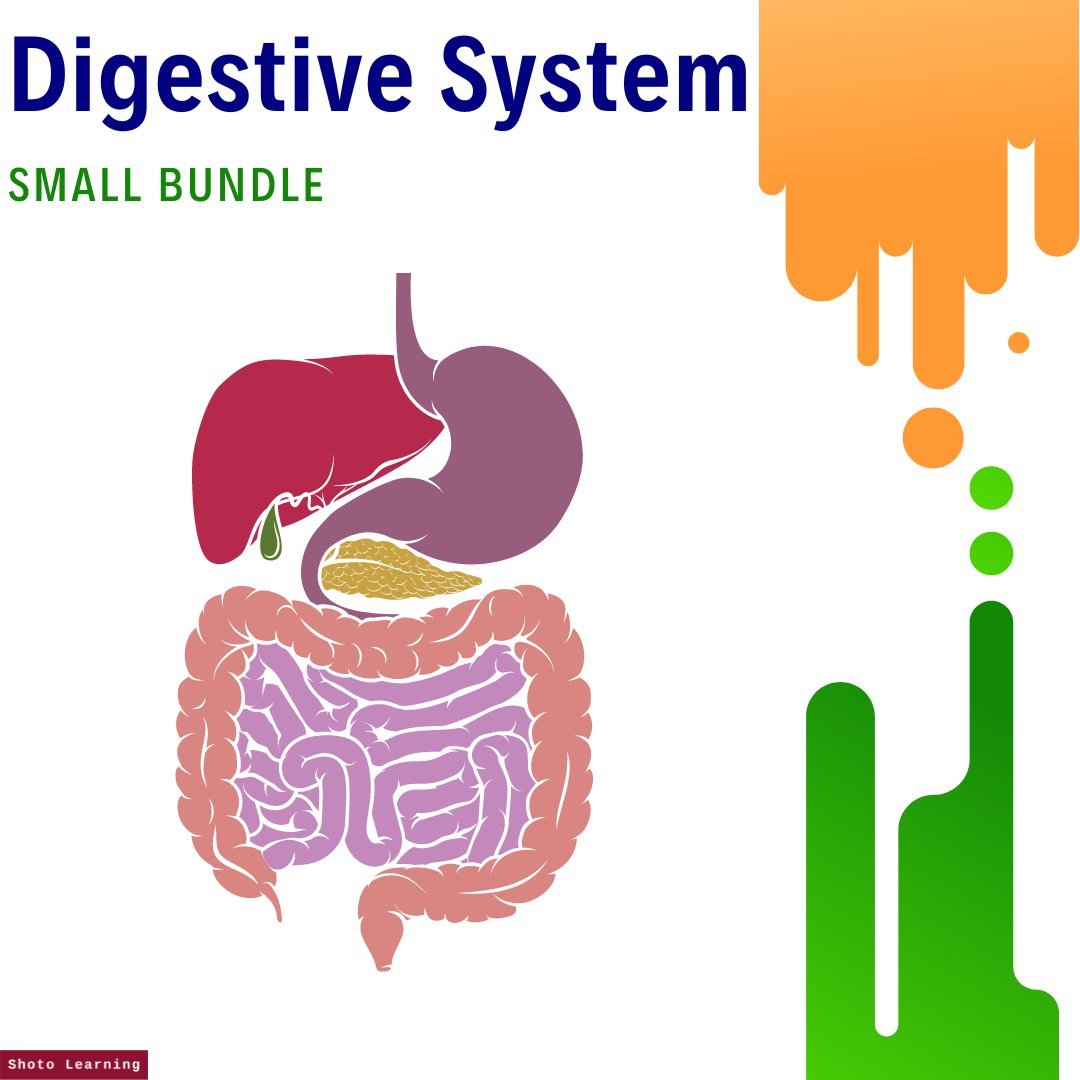
Embark on a journey through the intricate pathways of the digestive system with our comprehensive Digestive System Essentials Bundle. Designed to facilitate engaging and interactive learning experiences, this bundle equips educators and students alike with a wealth of resources to master the complexities of digestion.
Key Features:
PowerPoint Presentation: Dive deep into the inner workings of the digestive system with our visually stimulating PowerPoint presentation, offering comprehensive coverage of anatomy, processes, and functions.
Test (45 Minutes): Assess understanding and retention of digestive system concepts with our meticulously crafted test, designed to challenge students' knowledge and comprehension.
Lesson Plan: Dive deep with our detailed lesson plan, complete with engaging activities and discussion topics.
Reading Comprehension: Sharpen reading skills with engaging passages, perfect for students and educators alike.
Bingo: Make learning fun and interactive with our Digestive System Bingo game, perfect for reinforcing terminology and processes in an engaging classroom environment.
Crossword: Expand vocabulary and reinforce key concepts with our Digestive System Crossword puzzle, providing an entertaining way to review important terms and functions.
Word Search: Sharpen observational skills while uncovering digestive system-related terms in our engaging Word Search activity, designed to reinforce terminology.
Cryptogram: Decode the mysteries of digestion with our Cryptogram puzzle, offering a stimulating twist on learning essential concepts.
True or False: Test knowledge and challenge misconceptions with our True or False activity, designed to reinforce understanding of digestive system principles.
Matching: Strengthen connections between digestive system components with our Matching activity, fostering a deeper understanding of anatomy and function.
Missing Letters: Fill in the blanks and complete digestive system-related terms with our Missing Letters exercise, perfect for reinforcing spelling and vocabulary.
Scramble: Unscramble jumbled phrases related to digestion with our engaging Scramble activity, promoting quick thinking and problem-solving skills.
Bonus Resources Included for Free:
Free ABC Order: Practice alphabetizing digestive system terms with our convenient ABC Order activity.
Free Cut and Paste: Reinforce learning with hands-on activities using our Cut and Paste worksheet.
Free Poster: Decorate your classroom and reinforce key concepts with our informative Digestive System Poster.
With answers provided for all activities, this comprehensive bundle empowers learners to unravel the mysteries of digestion with confidence and clarity. Enhance understanding, foster engagement, and embark on a journey of discovery through the digestive system today!
Don't miss out; order yours today!

Digestive System Game Bundle
This comprehensive bundle of 9 games is perfect for teaching kids about the digestive system in a fun and engaging way.
The games include:
ABC Order: Students will order the different parts of the digestive system in alphabetical order.
Bingo: Students will match the different parts of the digestive system to their corresponding labels.
Crossword: Students will fill in a crossword puzzle with words related to the digestive system.
Cryptogram: Students will unscramble words related to the digestive system.
Free Cut and Paste: Students will cut out and paste the different parts of the digestive system in the correct order.
Free PowerPoint: A PowerPoint presentation that teaches students about the digestive system.
Free Poster: A poster that illustrates the different parts of the digestive system.
Matching: Students will match the different parts of the digestive system to their functions.
Missing Letters: Students will fill in the missing letters in words related to the digestive system.
Scramble: Students will unscramble words related to the digestive system.
Spin Wheel: Students will spin a wheel and answer questions about the digestive system.
Word Search: Students will find words related to the digestive system in a word search puzzle.
This bundle is a great way to help kids learn about the digestive system in a fun and interactive way. It is also a great resource for teachers who are looking for engaging activities to supplement their lessons.
40 pages
Order your copy today!

These free cut-and-paste worksheets are a fun and interactive way for kids to learn about the digestive system. The worksheets include a circle with 10 different organs, and kids can cut out the organs and paste them in the correct spot on the circle. The second worksheet has a description of each organ in a box.
These worksheets are perfect for kids, and they can be used as part of a science unit on the digestive system or as a fun activity to do at home.
Benefits of Using These Worksheets
Learn about the different parts of the digestive system
Improve fine motor skills
Develop visual-spatial skills
Promote critical thinking and problem-solving skills
Have fun!
How to Use These Worksheets
Print out the worksheets.
Cut out the organs.
Paste the organs in the correct spot on the circle.
Read the description of each organ in the second worksheet.
Have fun!
Thank you for downloading these free cut-and-paste worksheets on the digestive system!

Learn about the human digestive system with this free poster!
This poster features a detailed illustration of the digestive system, including all of the major organs and their functions. The poster is also labeled with clear and concise text, making it easy to understand even for young learners.
The digestive system is responsible for breaking down food into nutrients that the body can absorb. It is a complex system that includes the mouth, esophagus, stomach, small intestine, large intestine, and rectum.
This poster is a great way to learn about the digestive system and how it works. It is also a helpful resource for teachers and students who are studying human anatomy.
Features:
A detailed illustration of the digestive system
Clear and concise labeling
Free to download and print
Benefits:
Learn about the digestive system and how it works
A helpful resource for teachers and students
Free to download and print
Download your free poster today!
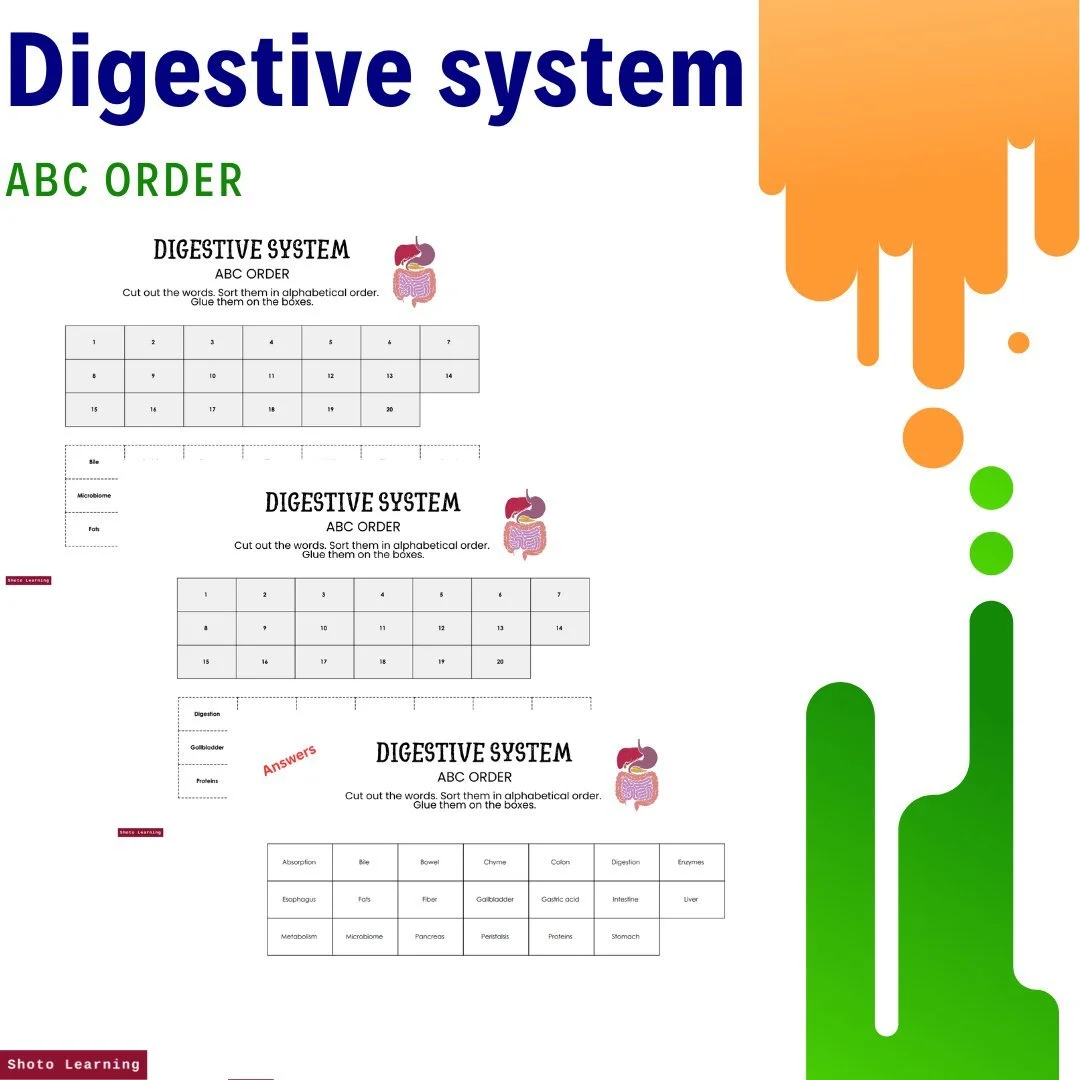
This ABC Order Worksheet on the Digestive System is a fun and educational activity that helps students learn about the different parts of the digestive system in alphabetical order. The worksheet includes two different word lists, each with 21 words related to the digestive system. Students must put the words in alphabetical order, and then they can check their answers with the provided answer key.
This worksheet is a great way for students to review the different parts of the digestive system and practice their alphabetical ordering skills. It is also a great way to introduce the digestive system to younger students.
Features:
Two different word lists, each with 21 words related to the digestive system
Answer key included
Fun and educational activity
Promotes alphabetical ordering skills
Introduces the digestive system to younger students
Benefits:
Students learn about the different parts of the digestive system
Students practice their alphabetical ordering skills
Students are introduced to the digestive system
How to use this product:
Give students the worksheet and the answer key.
Have the students put the words in alphabetical order.
Students can check their answers with the answer key.
Discuss the different parts of the digestive system with students.
Order your copy today!

This PDF PowerPoint lecture provides a comprehensive overview of the human digestive system. The lecture covers all of the major organs and structures of the digestive system, as well as the functions of each organ. The lecture also discusses common digestive disorders and how to improve digestive health.
The lecture is divided into 16 slides, including:
Introduction
Overview of the Digestive System
The Mouth and Salivary Glands
The Esophagus and Peristalsis
The Stomach and Gastric Acid
The Small Intestine and Nutrient Absorption
The Large Intestine and Water Absorption
The Liver and Gallbladder
The Pancreas and Digestive Enzymes
The Role of the Gut Microbiome
Common Digestive Disorders
Factors Affecting Digestive Health
The Importance of Probiotics
Conclusion
The lecture is presented in a clear and concise manner, and it is packed with information. It is an excellent resource for anyone who wants to learn more about the digestive system.
Benefits:
Learn about the anatomy and physiology of the digestive system
Understand the functions of the major organs and structures of the digestive system
Learn about common digestive disorders and how to improve digestive health
Download the lecture as a PDF
View on Youtube
Includes: PowerPoint and Speech
Order your copy today!

Audience: This PowerPoint presentation is intended for middle school and high school students, as well as adults who are interested in learning more about the digestive system.
Overview: This presentation provides an overview of the digestive system, including the different organs and their functions. It also explains the process of digestion, from the time food enters the mouth to the time it is eliminated from the body.
Features:
Colorful and informative slides
Clear and concise explanations
Diagrams and illustrations to help explain complex concepts
Benefits:
Students will learn about the different parts of the digestive system and how they work together to break down food.
They will also learn about the different types of digestion, including mechanical and chemical digestion.
Students will be able to apply their knowledge of the digestive system to their own health and well-being.
View on Youtube
Includes: PowerPoint and Speech
Order your copy today!

Enhance your students' understanding of human biology with this detailed reading comprehension worksheet on the digestive system. This resource offers a clear and engaging passage that covers the essential functions and processes of the digestive system, from the mouth to the anus. Perfect for reinforcing classroom learning or for homework assignments, this worksheet will help students grasp how food is processed, nutrients are absorbed, and waste is eliminated.
Key Features:
Informative Passage: An educational passage explaining the key components and functions of the digestive system, including the mouth, esophagus, stomach, small intestine, and large intestine.
5 Comprehension Questions: Thoughtfully crafted questions that test students' understanding of the passage and encourage critical thinking about digestive processes.
Detailed Answers Provided: Comprehensive answers for each question to assist with self-assessment or guided review.
Focus on Key Concepts: Covers essential topics such as the role of saliva, peristalsis, chyme formation, nutrient absorption, and waste elimination.
Versatile Use: Suitable for middle and high school students, this worksheet can be used in the classroom, for homework, or as a study aid.
How to Use It:
In-Class Activity: Integrate the worksheet into a lesson on the digestive system. Students can read the passage and answer the questions individually or in small groups, which helps solidify their understanding of the digestive process and related concepts.
Homework Assignment: Assign the worksheet as homework to allow students to review and reflect on the digestive system concepts at their own pace, reinforcing their classroom learning.
Study Aid: Use the worksheet as a study resource for students preparing for exams or quizzes on the digestive system. It aids in reviewing key concepts and testing their comprehension in a focused and engaging way.
Equip your students with a thorough understanding of the digestive system through this informative and interactive reading comprehension worksheet!
Order your copy today!

This 20-question multiple choice worksheet is a great way to assess your students' understanding of the digestive system. The questions cover a variety of topics, including the different parts of the digestive system, the functions of the digestive system, and the digestion process.
The worksheet is designed to be self-grading, so you can quickly and easily assess your student's progress. The answers are provided at the bottom of the worksheet, so students can check their work.
This worksheet is a great way to review the digestive system or assess student learning after a unit on the digestive system. It can also be used as a homework assignment or a quiz.
Features:
20 multiple choice questions
Answers are provided at the bottom of the worksheet
Self-grading
Great for review or assessment
Benefits:
Helps students assess their understanding of the digestive system
Provides a quick and easy way to grade student work
Can be used as a review or as a quiz
How to Use This Worksheet
Read Each Question Carefully: Ensure you understand what is being asked.
Select the Best Answer: Circle or highlight the letter (A, B, C, or D) that corresponds to the correct choice.
Check Your Answers: If provided, use the answer key to review your responses.
Review Mistakes: Understand any incorrect answers by reviewing the relevant material.
Discuss: Use this worksheet to spark discussion in groups or class for a deeper understanding.
This worksheet is a great resource for teachers of biology, health, and other science classes. It is also a great resource for parents who want to help their children learn about the digestive system.
Don't miss out, order yours today!

Embark on an exciting expedition into the human body with our comprehensive lesson plan, "Digestive Adventures: Journey Through the Digestive System." Designed for middle school science classes, this resource provides students with a captivating exploration of the structure, function, and importance of the digestive system.
Key Features:
Engaging Exploration: Take students on a journey through the digestive system, unraveling the mysteries of digestion and nutrient absorption.
Interactive Learning: Utilize visual aids, diagrams, and hands-on activities to make complex concepts more accessible and engaging for students.
Comprehensive Coverage: Explore the anatomy of the digestive system, including the organs involved in digestion, their functions, and the process of digestion from start to finish.
Lesson Plan: Dive deep with our detailed lesson plan, complete with engaging activities and discussion topics.
Practical Application: Provide opportunities for students to apply their knowledge of the digestive system through activities such as labeling diagrams and simulating the digestive process.
Health and Wellness: Emphasize the importance of a balanced diet, hydration, and fiber intake for maintaining digestive health and overall well-being.
How to Use This Lesson Plan:
Review Objectives: Begin by reviewing the lesson objectives and outcomes to understand the focus and goals.
Prepare Materials: Gather all required materials, including handouts, worksheets, and any multimedia resources.
Introduce Topic: Start with a brief introduction to the topic to engage students and set the context.
Follow the Steps: Teach each section as outlined, incorporating suggested activities, discussions, and questions.
Monitor and Adapt: Observe student engagement and understanding; adapt the lesson pace and methods as needed.
Assess Understanding: Use the provided assessment tools to evaluate student comprehension and provide feedback.
Wrap-Up: Summarize key points and provide closure with a reflective activity or homework assignment.
Empower your students to become explorers of their bodies and champions of digestive health with "Digestive Adventures: Journey Through the Digestive System." Ignite curiosity, inspire exploration, and instill a lifelong appreciation for the wonders of the human body.
Order your copy today!

Explore the fascinating journey of digestion with our "Digestive System At-Home Experiments: 2-Page Guide." This concise and informative guide offers step-by-step instructions for five engaging experiments that illustrate key processes within the digestive system, including stomach acid stimulation, enzyme activity, and nutrient absorption. Perfect for students and educators, this guide makes complex biological concepts easy to understand through hands-on learning at home.
Key Features:
Interactive Learning: Five easy-to-follow experiments that demonstrate essential functions of the digestive system using common household materials.
Clear Instructions: Concise, step-by-step guidance ensures that each experiment is accessible and educational for all ages.
Compact Format: A two-page guide packed with valuable content, ideal for quick learning and reference.
Educational Focus: Encourages a deeper understanding of the digestive system's workings, enhancing comprehension through practical experimentation.
How to Use It:
Gather Materials: Collect all items listed for each experiment.
Follow Instructions: Perform the experiments using the provided step-by-step directions.
Observe and Record: Document your observations and results.
Discuss Results: Analyze and discuss the findings based on the guide’s explanations.
Discover the wonders of the digestive system with this engaging and educational guide, perfect for home-based learning and exploration.
Order your copy today!

Enhance your knowledge of human digestion with our "Comprehensive Digestive System Assignments." This resource features 10 in-depth assignments that explore the digestive system's anatomy, functions, and processes. Perfect for students and educators, these assignments are designed to reinforce critical concepts and promote a deep understanding of how the digestive system works.
Key Features:
Detailed Exploration: Each assignment covers fundamental aspects of the digestive system, from nutrient absorption to enzyme function, offering a well-rounded understanding.
Critical Thinking: Thought-provoking questions encourage students to apply their knowledge and develop analytical skills.
Hands-On Learning: Assignments are structured to foster both theoretical knowledge and practical understanding of digestive processes.
Versatile Use: Ideal for classroom activities, homework, or independent study, making it a valuable tool for a variety of educational settings.
Comprehensive Answers: Includes clear and concise answers, providing detailed explanations that support learning and comprehension.
How to Use It:
Review the Assignments: Read through the 10 assignments to familiarize yourself with key digestive system concepts.
Complete the Questions: Answer the questions to assess and apply your knowledge of the digestive system.
Check Answers: Use the provided answers to verify your responses and deepen your understanding.
Discuss and Reflect: Discuss findings with peers or write reflections to solidify your grasp of the material.
Apply Knowledge: Relate the learned concepts to practical situations, such as digestive health and dietary choices.
This resource is crafted to provide a thorough understanding of the digestive system through interactive and insightful assignments.
Order your copy today!

This crossword puzzle is a fun and engaging way to learn about the digestive system. It includes 2 worksheets, one with a word list (hint) and one without. The puzzle features 10 clues, all related to the different parts of the digestive system.
The answer sheet is included, so you can check your answers as you go. This puzzle is a great way to test your knowledge of the digestive system or to learn about it for the first time. It's also a fun activity for students of all ages.
Features:
10 challenging clues
Answer sheet included
2 worksheets: one with a word list (hint) and one without
Fun and engaging way to learn about the digestive system
Benefits:
Improves knowledge of the digestive system
Promotes critical thinking skills
Encourages problem-solving skills
Provides a fun and engaging learning experience
Who is this product for?
This product is for anyone who wants to learn more about the digestive system. It's a great resource for students, teachers, and anyone who is interested in human anatomy.
How to use this product:
Read the clues and fill in the crossword puzzle.
Check your answers against the answer sheet.
If you get stuck, use the word list (hint) on the worksheet.
Order your copy today!

These cryptogram worksheets are a fun and engaging way for students to learn about the digestive system. The worksheets contain a cryptogram puzzle that is based on different aspects of the digestive system, such as the organs, functions, or process of digestion. The three key types are symbol to letter, letter to letter, and number to letter. Answers are included for each key type.
Benefits:
Cryptograms are a great way to improve students' decoding skills.
They also help students learn about the digestive system in a fun and engaging way.
The different key types provide a variety of challenges for students of all levels.
How to Use:
Students can work on the cryptogram puzzles independently or in small groups.
The answer keys can be used to check students' work.
The worksheets can be used as part of a unit on the digestive system or as a standalone activity.
Why You Should Buy:
These cryptogram worksheets are a great way to help your students learn about the digestive system in a fun and engaging way. They are also a great way to improve students' decoding skills.
Order your copy today!

Learn about the digestive system with this fun and educational fill-in-the-blank worksheet!
This worksheet contains 10 questions about the digestive system, with blanks for students to fill in the answers. The questions cover a variety of topics, including the different parts of the digestive system, how food is broken down, and where nutrients are absorbed.
This worksheet is a great way for students to learn about the digestive system in a fun and interactive way. It can be used as a supplement to classroom instruction or as a homework assignment.
Features:
10 fill-in-the-blank questions about the digestive system
Clear and concise language
Engaging and educational
Perfect for students of all ages
Benefits:
Learn about the digestive system
Improve your understanding of how food is broken down
Develop your critical thinking skills
Have fun while learning!
Order your fill-in-the-blank worksheet today and start learning about the digestive system!

Missing Letter Worksheets on Digestive System
These two missing letter worksheets are a fun and interactive way for kids to learn about the digestive system. The first worksheet has a word list to help kids identify the missing letters, while the second worksheet does not have a word list, so kids will have to rely on their knowledge of the digestive system to fill in the blanks.
These worksheets are a great way for kids to learn about the different parts of the digestive system and how they work together to break down food and absorb nutrients. They are also a fun way to challenge kids' knowledge of the digestive system and their spelling skills.
Features:
Two worksheets, one with a word list and one without
Fun and interactive way to learn about the digestive system
Challenges kids' knowledge of the digestive system and their spelling skills
Key Answers
Benefits:
Learn about the different parts of the digestive system
How the digestive system works together to break down food and absorb nutrients
Challenge kids' knowledge of the digestive system and their spelling skills
Order your Missing Letter Worksheets on the Digestive System today and start learning about the amazing digestion process!

This word scramble worksheet is a fun and engaging way for students to learn about the digestive system. The worksheet includes two versions: one with a word list and one without. The word list version is a great way for students to review the vocabulary words before they start the scramble. The version without the word list is a more challenging option that will help students really think about the meaning of the words.
The worksheet includes 23 vocabulary words related to the digestive system, such as absorption, chyme, enzymes, esophagus, gall bladder, large intestine, liver, pancreas, peristalsis, rectum, salivary glands, small intestine, stomach, and villi. The words are scrambled in a random order, and students must unscramble them to form the correct words.
The worksheet also includes a comprehensive list of key facts about the digestive system. These facts will help students deepen their understanding of how the digestive system works.
Answers Included
The worksheet includes answers, so students can check their work. This is a great way for students to learn from their mistakes and improve their understanding of the material.
Benefits of Using This Worksheet
This word scramble worksheet offers a number of benefits for students, including:
It helps students learn and review vocabulary words related to the digestive system.
It helps students develop their problem-solving skills.
It helps students think critically about the meaning of the words.
It helps students deepen their understanding of how the digestive system works.
How to Use This Worksheet
This worksheet can be used in a variety of ways, including:
As a homework assignment
As a classwork assignment
As a review activity
As a diagnostic tool
Order your copy today!

These two worksheets are fun and interactive for kids to learn about the digestive system. The first worksheet has cut-and-paste activities, where kids can match the names of the digestive organs to the corresponding pictures.
In the second worksheet, kids can cut out and paste the circles to create their spin wheel. All of the organs and pictures are already labeled, so kids can focus on learning about the digestive system without having to worry about drawing or labeling.
These worksheets are a great way to supplement classroom learning or independent study. The worksheets are also a fun way for kids to review what they have learned about the digestive system.
Features:
Two worksheets: cut-and-paste and already labeled wheel
A fun and interactive way to learn about the digestive system
Benefits:
Helps kids learn about the different parts of the digestive system
Improves fine motor skills
Encourages critical thinking skills
Makes learning about the digestive system fun and engaging
Order your copy today and help your child learn about the digestive system in a fun and interactive way!

This 20-question true or false quiz is a fun and engaging way to learn about the digestive system. The questions cover a variety of topics, including the different parts of the digestive system, how food is digested, and the role of the digestive system in overall health. The quiz is suitable for students of all ages, and it can be used as a review tool or as a way to introduce new concepts.
Benefits:
Learn about the digestive system in a fun and engaging way
Test your knowledge of the digestive system
Improve your understanding of how food is digested
How to Use:
Take the quiz
Check your answers at the end of the quiz
Learn from your mistakes and improve your score
Features:
20 challenging true or false questions
A variety of topics covered
Suitable for students of all ages
Fun and engaging
Order your copy today!

This word search is a fun and educational way to learn about the different parts of the digestive system. It features 29 words related to the digestive system, including the bile, esophagus, stomach, small intestine, large intestine, and absorption. The words are hidden in a grid of letters, and students can use their knowledge of the digestive system to find them.
This word search is a great resource for students of all ages. It can be used as a homework assignment, a classroom activity, or a fun way to learn about the digestive system at home. The word search also includes an answer key, so students can check their answers and see how well they did.
Features:
29 words related to the digestive system
Easy-to-read grid of letters
Answer key included
Fun and educational activity for students of all ages
Benefits:
Helps students learn about the different parts of the digestive system
Improves vocabulary skills
Promotes critical thinking skills
Provides a fun and engaging way to learn about the human body
Order your copy today and start learning about the digestive system with this fun and educational word search!

Learn about the digestive system with this fun and educational bingo game!
This set includes 30 bingo cards, each with a unique arrangement of 25 terms related to the digestive system. The cards include a variety of terms, from organs and structures to processes and functions. There is also a "FREE" space in the middle of each card.
To play, simply call out a term related to the digestive system. The first player to mark that term on their bingo card wins! You can play with as few as two players or as many as 30.
This game is a great way to learn about the digestive system in a fun and interactive way. It is perfect for students of all ages, from elementary school to high school. It can also be used as a review game for teachers.
Included in this set:
30 bingo cards
1 calling card
Instructions
Benefits:
Learn about the digestive system
Improve vocabulary
Increase knowledge of body systems
Promote teamwork and cooperation
Have fun!
Order your copy of Digestive System Bingo today and start learning about the digestive system in a fun and interactive way!

Do you want to learn more about the digestive system? Are you interested in debating the latest research and trends in digestive health? Then you need this set of 10 debate worksheets!
These worksheets cover a wide range of topics, including the anatomy of the digestive system, the role of bacteria in digestion, and the latest advances in digestive health research. Each worksheet includes a prompt for debate, as well as an answer key to help you learn more about the topic.
Whether you're a student, a teacher, or a healthcare professional, these worksheets are a great way to learn more about the digestive system and to engage in critical thinking about the latest research.
Features:
10 debate worksheets on a variety of digestive health topics
Answer key included for each worksheet
Clear and concise language
Engaging and thought-provoking prompts
Perfect for students, teachers, and healthcare professionals
Benefits:
Learn more about the digestive system
Engage in critical thinking about digestive health research
Develop your debate skills
Improve your understanding of the latest trends in digestive health
Order your set of 10 debate worksheets today and start learning more about the digestive system!

Learn about the human digestive system with these 20 colorful and informative flashcards. The cards feature clear and concise descriptions of the major organs and processes of digestion, as well as colorful illustrations. The cards also include the option to cut and paste pictures of the digestive organs, making them a great tool for hands-on learning.
Features:
20 flashcards with clear and concise descriptions of the digestive system
Colorful illustrations of the digestive organs
Option to cut and paste pictures of the digestive organs
Perfect for students of all ages
Benefits:
Helps students learn about the digestive system in a fun and engaging way
Promotes understanding of the different parts of the digestive system and how they work together
Encourages hands-on learning
Makes a great addition to any science curriculum
Order your set of Digestive System Flashcards today and start learning about the amazing digestion process!

This matching worksheet is a fun and interactive way to learn about the different organs of the digestive system and their functions. Students will match 10 organs of the digestive system with their corresponding functions. The worksheet can be used as a review activity or as a formative assessment.
Features:
10 matching pairs of organs and functions
Answer key included
Printable PDF file
Benefits:
Helps students learn about the different organs of the digestive system
Reinforces understanding of the functions of the digestive system
Provides a fun and interactive way to learn
How to use:
Have students match the organs with their corresponding functions.
Check students' answers using the answer key.
This product is perfect for:
Teachers of science
Parents who want to help their children learn about the digestive system
Students who are interested in learning about the human body
Order your copy today and start learning about the digestive system!

20 Questions and Answers on the Digestive System
Do you want to learn more about your digestive system? This 20-question quiz will test your knowledge of the different parts of the digestive system, how food is broken down, and how nutrients are absorbed.
The quiz covers a wide range of topics, including:
The different parts of the digestive system
The role of enzymes in digestion
The absorption of nutrients
Common digestive disorders
Each question includes a detailed answer, so you can learn more about the topic. The quiz is a great way to test your knowledge or to learn something new about your digestive system.
Features:
20 questions covering a wide range of topics
Detailed answers to each question
Fun and educational way to learn about the digestive system
Benefits:
Improve your knowledge of the digestive system
Learn more about how food is broken down and nutrients are absorbed
Identify common digestive disorders
Who is this product for?
This product is for anyone who wants to learn more about their digestive system. It is a great resource for students, teachers, and anyone who is interested in health and wellness.
Order your copy of 20 Questions and Answers on the Digestive System today!
This bundle is a great way to learn about the digestive system and reinforce language skills at the same time. The activities are all arranged in alphabetical order, which helps students systematically learn the vocabulary terms.
The activities included in the bundle are:
Assignments
Bingo
Crossword
Cryptogram
Debate
Experiments
Fill in the blank
Flashcards
Free ABC Order
Free Cut and Paste
Free poster
Lesson Plan
Matching
Missing letters
Multiple choice
PowerPoint
Questions and answers
Reading Comprehension
Scramble
Spin wheel
Test (45 minutes)
True or false
Word search
Writing prompts
The bundle also includes a teacher answer key, so you can easily assess student progress.
Whether you're a teacher, homeschooler, or parent, this bundle is a great resource for learning about the digestive system. Order your copy today!
Here are some of the benefits of using this bundle:
Students will learn about the digestive system in a fun and interactive way.
The activities are arranged in alphabetical order, which helps students systematically learn the vocabulary terms.
The activities reinforce language skills, such as spelling, vocabulary, and comprehension.
The bundle includes a teacher answer key, so you can easily assess student progress.
This bundle is perfect for:
Teachers
Homeschoolers
Parents
Anyone who wants to learn about the digestive system in a fun and interactive way.
138 pages
Order your copy today!