
What is Genetics?
Genetics is the branch of biology that studies heredity—how traits are passed from one generation to the next. Understanding genetics is essential for comprehending how organisms develop, evolve, and function. Teaching genetics can be daunting due to its complex concepts and terminology, but with the right strategies, educators can effectively convey the fundamental principles of genetics to their students.
Key Terminology in Genetics
Start by introducing essential genetics terminology, such as:
Genes: The basic units of heredity, composed of DNA.
Alleles: Different versions of a gene that determine specific traits.
Chromosomes: Structures within cells that contain DNA and genetic information.
DNA (Deoxyribonucleic Acid): The molecule that carries genetic instructions.
Using visual aids, such as diagrams and models, can significantly enhance students' understanding of DNA structure and its role in heredity.
Relatable Real-Life Examples
To make genetics more engaging, incorporate real-life examples that resonate with students. Discuss how genetics influences various aspects of daily life, including:
Inherited Traits: Physical characteristics like eye color and height.
Genetic Disorders: Conditions such as cystic fibrosis and sickle cell anemia.
Genetic Engineering: Applications in agriculture and medicine, such as genetically modified organisms (GMOs) and gene therapy.
By highlighting these connections, students can appreciate the relevance of genetics in their lives.
Engaging Hands-On Activities
Hands-on activities are a powerful way to help students grasp genetic concepts. Consider these engaging methods:
Punnett Squares: Teach students how to use Punnett squares to predict the inheritance of traits.
DNA Extraction: Guide students through a simple experiment to extract DNA from strawberries using household items like dish soap and salt.
These interactive experiences can enhance understanding and retention of genetic principles.
Interdisciplinary Connections
Genetics intersects with various subjects, making it an ideal topic for interdisciplinary teaching. Explore these connections:
History of Genetics: Discuss key figures like Gregor Mendel, known as the father of genetics, and Charles Darwin, who contributed to the understanding of evolution.
Ethical Implications: Engage students in discussions about the ethical considerations of genetic engineering, genetic testing, and the role of genetics in medicine and forensics.
By linking genetics to history and ethics, students gain a more holistic understanding of the subject.
Leveraging Technology in Genetics Education
Utilize technology to enhance the teaching of genetics. Consider incorporating:
Simulations and Virtual Labs: Use online tools to visualize complex genetic concepts and processes.
Interactive Quizzes and Activities: Reinforce learning and assess comprehension with digital quizzes and games.
These resources can make learning genetics more dynamic and engaging for students.
Conclusion: Making Genetics Engaging
Teaching genetics may be challenging, but it is a vital subject that equips students with knowledge about the basic building blocks of life. By using relatable examples, engaging hands-on activities, and modern technology, educators can foster a deeper understanding of genetics. With the right approach, genetics can become a fascinating and captivating subject for students of all ages.
Dive into the fascinating world of genetics with our comprehensive Genetics Essentials Bundle, packed with essential resources to illuminate the mysteries of heredity and genetic inheritance. Whether you're a seasoned educator or a curious student, this bundle provides the tools you need to navigate the complexities of genetic principles with confidence and clarity.
Inside this comprehensive bundle, you'll find a treasure trove of educational materials:
PowerPoint Presentation: Explore the fundamental concepts of genetics with our visually engaging and informative PowerPoint presentation, designed to captivate learners and facilitate understanding.
Test (45 Minutes): Assess comprehension and mastery of genetic principles with our meticulously crafted test, covering key topics in a comprehensive manner.
Lesson Plan: Dive deep with our detailed lesson plan, complete with engaging activities and discussion topics.
Reading Comprehension: Sharpen reading skills with engaging passages, perfect for students and educators alike.
Bingo: Make learning interactive and enjoyable with our Genetics Bingo game, perfect for reinforcing terminology and concepts in a dynamic classroom environment.
Crossword: Challenge your knowledge and expand your vocabulary with our Genetics Crossword puzzle, offering an entertaining way to reinforce understanding.
Word Search: Sharpen your observation skills while hunting for genetic terms in our engaging Word Search activity, designed to reinforce terminology and concepts.
Cryptogram: Decode the secrets of genetic inheritance with our Cryptogram puzzle, offering a stimulating twist on learning essential concepts.
True or False: Test your understanding of genetic principles with our True or False activity, designed to challenge misconceptions and solidify knowledge.
Matching: Strengthen connections between genetic terms and concepts with our Matching activity, fostering a deeper understanding of inheritance patterns.
Missing Letters: Fill in the blanks and complete genetic terms with our Missing Letters exercise, perfect for reinforcing spelling and vocabulary.
Scramble: Unscramble jumbled phrases related to genetics with our engaging Scramble activity, promoting quick thinking and problem-solving skills.
As a bonus, enjoy these additional resources included for free:
Free ABC Order: Practice alphabetizing genetic terms with our convenient ABC Order activity.
Free Matching Flashcards: Reinforce learning with our printable matching flashcards, perfect for independent study or review sessions.
Free Poster: Reinforce learning and decorate your learning space with our informative and visually appealing Genetics Poster.
With answers provided for all activities, this comprehensive bundle equips you with the tools needed to master the intricate world of genetics. Unlock the secrets of heredity and genetic inheritance today!
72 pages
Don't miss out, order yours today!

Genetics Worksheet Bundle: The Complete Learning Package!
This comprehensive bundle includes everything you need to learn about genetics in a fun and engaging way. With 10 different worksheets and resources, you can master the basics of genetics, from chromosomes to DNA to mutations.
The bundle includes:
Debate: Test your critical thinking and argumentation skills with this fun and challenging activity.
Fill in the blank: Improve your understanding of genetics by filling in the blanks.
Free ABC Order activity: Learn the order of the letters in the genetic alphabet
Free matching flashcards: A fun and easy way to learn about genetics.
Free poster: A colorful and informative poster you can hang in your classroom or study area.
Matching: Match the terms to their definitions.
Multiple choice: Test your knowledge of genetics with these multiple-choice questions.
Questions and answers: Learn about genetics by answering these questions.
Reading Comprehension: Sharpen reading skills with engaging passages, perfect for students and educators alike.
Test (45 minutes): Challenge yourself with this comprehensive test of your genetic knowledge.
True or false: Test your knowledge of genetics with these true or false questions.
Writing prompts: Use your creativity to write about genetics in a variety of ways.
This bundle is perfect for students, teachers, and anyone else who is interested in learning about genetics. It's a great way to learn the basics of genetics in a fun and engaging way, and it's also a great way to test your knowledge and improve your understanding of the subject.
Order your Genetics Worksheet Bundle today and start learning about the science of heredity!
59 pages
Don't miss out, order yours today!

Genetics Game Bundle: Learn About Genetics with Fun and Educational Games!
This bundle includes a variety of games that will help you learn about the basics of genetics in a fun and engaging way. Whether you're a student, a teacher, or just someone interested in learning more about genetics, this bundle has something for you.
The games included in the bundle are:
ABC Order: Learn the order of the letters in the genetic alphabet.
Bingo: Test your knowledge of genetic terms and concepts.
Crossword puzzle: Challenge your brain with this fun and challenging puzzle.
Cryptogram: Decode the hidden message to learn about genetics.
Free matching flashcards: A fun and easy way to learn about genetics.
Free PowerPoint presentation: A visual guide to the science of genetics.
Free poster: A colorful and informative poster that you can hang in your classroom or study area.
Matching: Match the terms to their definitions.
Missing letters: Identify the missing letters in genetics terms.
Scramble: Scramble the letters of genetics terms and then unscramble them.
Word search: Find the hidden genetics terms in this word search puzzle.
In addition to the games, the bundle also includes a free set of matching flashcards, a free PowerPoint presentation, and a free poster. These resources will help you learn even more about genetics and solidify your understanding of the subject.
The Genetics Game Bundle is a great way to learn about genetics for students, teachers, and anyone else who is interested in the subject. It's a fun and engaging way to learn, and it's also a great way to test your knowledge and improve your understanding of genetics.
44 pages
Order your Genetics Game Bundle today and start learning about the science of heredity!

Free Genetics Matching Flashcards: A Fun and Educational Way to Learn About Genetics!
These free matching flashcards are a great way to learn about genetics. They feature a variety of genetic terms and their definitions, and they are a fun and engaging way to practice your matching skills. The flashcards are free to download and print, so anyone can learn about genetics at no cost.
Here are some of the features of the flashcards:
A variety of genetic terms and their definitions
A fun and engaging way to practice matching skills
Free to download and print
Answers included
Perfect for students, teachers, and anyone else who is interested in learning about genetics
Here are some of the benefits of using flashcards:
Learn about genetic vocabulary
Practice your matching skills
Have fun while learning about genetics
Enhance your knowledge of genetics
Order your free Genetics Matching Flashcards today and start learning about genetics in a fun and educational way!

This worksheet is a fun and engaging way for students to learn about genetics in alphabetical order. The worksheet features a variety of genetic terms, and students will need to sort the terms into alphabetical order.
This worksheet is perfect for students who are just beginning to learn about genetics. It is a great way to help students learn the basics of genetic vocabulary, and it also helps them develop their alphabetical ordering skills. The worksheet is also self-paced, so students can work at their own speed.
Features:
A variety of genetic terms in alphabetical order
Self-paced learning
Fun and engaging format
Benefits:
Helps students learn about genetic vocabulary
Develops alphabetical ordering skills
Fun and engaging format
Target Audience:
Anyone interested in learning about genetics
Order your ABC Order Genetics Worksheet today and start learning about genetics in a fun and engaging way!

Free Genetics Poster: A Visual Guide to the Science of Heredity
Delve into the fascinating world of genetics with our captivating and informative free poster. This beautifully designed visual resource is your gateway to understanding the fundamental principles that shape life itself.
The poster is perfect for students, teachers, and anyone else who is interested in learning about genetics. It is also free to download and print, so anyone can learn about genetics at no cost.
Here are some of the features of the poster:
Visually appealing design that makes it easy to understand the key concepts of genetics
Free to download and print
Perfect for students, teachers, and anyone else who is interested in learning about genetics
Here are some of the benefits of using the poster:
Learn about the science of genetics in a visual and engaging way
Understand the key concepts of genetics
See diagrams of genetic structures
Learn about genetic disorders
Enhance your knowledge of genetics
Order your free Genetics Poster today and start learning about the science of heredity!
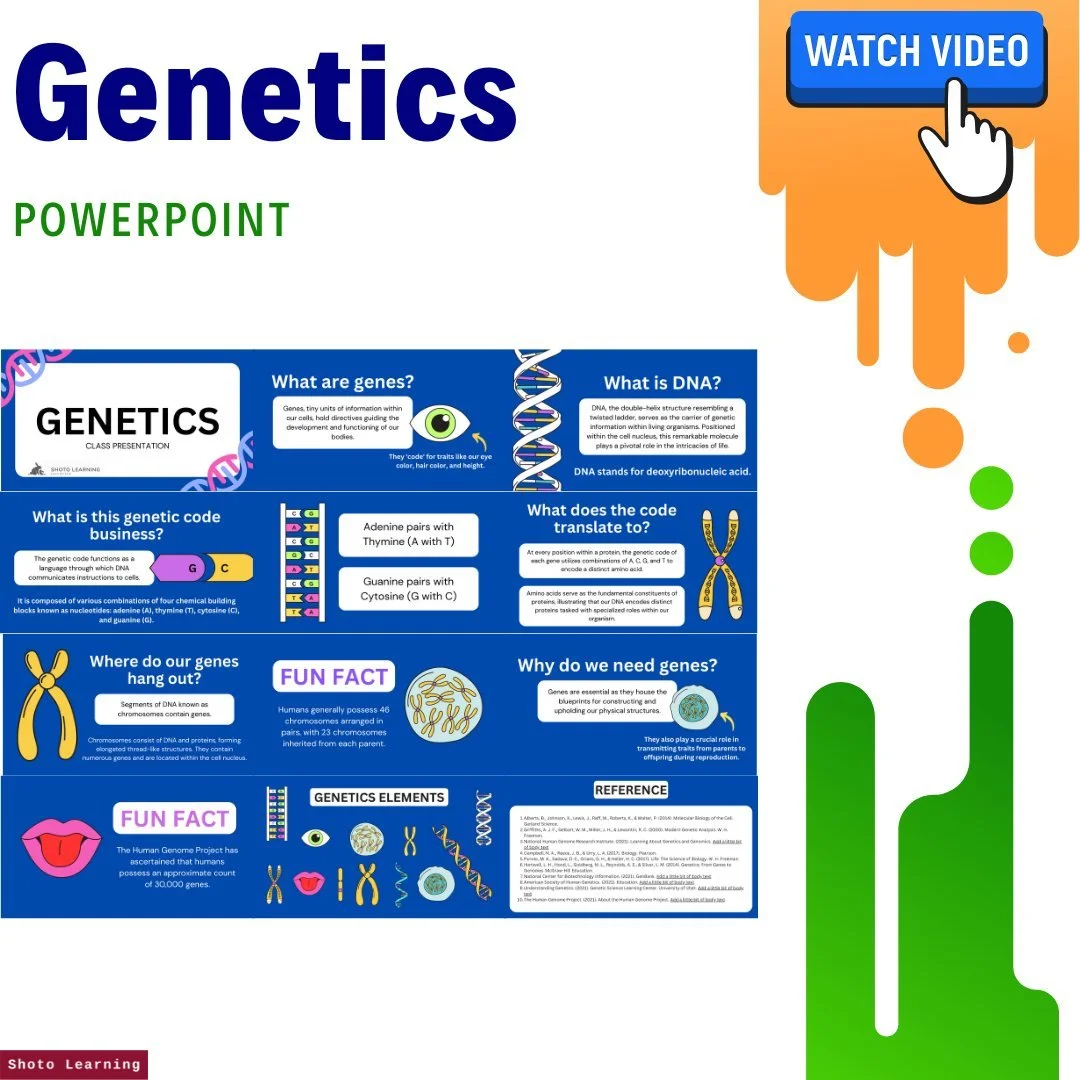
Unlock the Mysteries of Genetics: Comprehensive PowerPoint Presentation
Delve into the captivating world of genetics with our meticulously crafted PowerPoint presentation. Whether you're an educator seeking to engage your students or an enthusiast eager to unravel the secrets of DNA, this comprehensive resource is your key to unlocking the wonders of genetic science.
Explore Genetic Marvels: Embark on a visual journey through the fascinating realm of genetics. From the structure of DNA to the intricacies of inheritance, our PowerPoint presentation covers various topics, providing clear explanations and captivating visuals.
In-Depth Genetic Concepts: Dive deep into the core concepts of genetics, including genes, DNA, heredity, mutations, genetic engineering, and more. Each slide is carefully designed to demystify complex ideas and make them accessible to learners of all levels.
Perfect for Education: Whether you're a teacher planning a genetics lesson or a student looking to enhance your understanding, our PowerPoint presentation is a versatile educational tool. Use it for classroom lectures, seminars, workshops, or self-study to grasp genetics with confidence.
Visual Learning Aid: Our presentation is enriched with vivid diagrams, illustrations, and animations that visually elucidate key genetic principles. These visuals provide a dynamic and engaging learning experience, helping you grasp concepts more effectively.
Instant Access: Upon purchase, you'll gain immediate access to the downloadable PowerPoint file. This means you can start exploring the captivating world of genetics right away, at your own pace and convenience.
Embark on an enlightening genetic odyssey with our Comprehensive PowerPoint Presentation. Unravel the mysteries that lie within our DNA, discover the mechanisms of inheritance, and gain insights into the cutting-edge developments that shape our understanding of genetics. Elevate your knowledge and captivate your audience with a presentation that brings the wonders of genetics to life.
View on Youtube
Includes: PowerPoint and Speech
Download now and embark on your journey to genetic enlightenment!

Dive into the fascinating world of genetics with this comprehensive reading comprehension worksheet designed for students. This resource provides a clear and engaging introduction to genetics, covering essential concepts such as heredity, the role of genes, the contributions of Gregor Mendel, and the basics of genetic mutations and engineering. Perfect for reinforcing classroom learning or for homework assignments, this worksheet will help students grasp the foundational principles of genetics.
Key Features:
Informative Passage: A well-structured passage that explains key genetic concepts in an easy-to-understand manner.
5 Comprehension Questions: Carefully crafted questions that encourage critical thinking and ensure students grasp the material.
Detailed Answers Provided: Comprehensive answers to each question are provided to facilitate self-assessment or guided review sessions.
Educational Focus: Covers important topics including heredity, gene function, Mendelian genetics, mutations, and genetic engineering.
Versatile Use: Ideal for middle and high school students, this resource can be used in the classroom, for homework, or as a study guide.
How to Use It:
In-Class Activity: Incorporate the worksheet into a genetics lesson. Have students read the passage and answer the questions individually or in small groups to deepen their understanding of genetic concepts and processes.
Homework Assignment: Assign the worksheet for homework to allow students to review and reflect on key genetics topics at their own pace, reinforcing what they’ve learned in class.
Study Aid: Use the worksheet as a study resource for students preparing for exams or quizzes on genetics. It will help them review critical concepts and test their comprehension effectively.
Empower your students with a strong grasp of genetics with this informative and engaging reading comprehension worksheet!
Order your copy today!

Embark on an enlightening journey into genetics with our comprehensive lesson plan, "Genetics 101: Introduction to Genetics." Tailored for high school biology classes, this resource provides students with a solid foundation in the fundamental principles of genetics, including DNA structure, inheritance patterns, and genetic variation.
Key Features:
Foundational Understanding: Explore the basic principles of genetics, unraveling the mysteries of heredity, and genetic variation.
Interactive Learning: Engage students with visual aids, hands-on activities, and problem-solving exercises that bring genetic concepts to life and deepen understanding.
Comprehensive Coverage: Delve into the structure and function of DNA, genetic inheritance patterns, and the role of genetics in shaping living organisms.
Practical Application: Apply genetic concepts to real-world scenarios through problem-solving activities and discussions, fostering critical thinking and analytical skills.
Holistic Approach: Take a holistic approach to genetics education, integrating scientific concepts with ethical considerations and the societal implications of genetic research.
How to Use This Lesson Plan:
Review Objectives: Begin by reviewing the lesson objectives and outcomes to understand the focus and goals.
Prepare Materials: Gather all required materials, including handouts, worksheets, and any multimedia resources.
Introduce Topic: Start with a brief introduction to the topic to engage students and set the context.
Follow the Steps: Teach each section as outlined, incorporating suggested activities, discussions, and questions.
Monitor and Adapt: Observe student engagement and understanding; adapt the lesson pace and methods as needed.
Assess Understanding: Use the provided assessment tools to evaluate student comprehension and provide feedback.
Wrap-Up: Summarize key points and provide closure with a reflective activity or homework assignment.
Empower your students to unlock the secrets of their genetic inheritance and appreciate the profound impact of genetics on life's diversity and complexity. "Genetics 101: Introduction to Genetics" ignites curiosity, fosters exploration, and inspires a lifelong passion for genetic science.
Order your copy today!

Discover the world of genetics with our "Genetics At-Home Experiments: A 2-Page Guide." This compact resource includes five engaging experiments that explore fundamental genetic concepts through simple, hands-on activities. Designed for home-based learning or classroom enrichment, this guide offers easy-to-follow instructions and explanations to make complex genetic principles accessible and fun.
Key Features:
Interactive Experiments: Five hands-on activities that cover key genetic concepts, including inheritance, DNA extraction, and genetic variation.
Clear Instructions: Step-by-step guidance on setting up and conducting each experiment, making it easy to execute at home.
Compact Format: A concise, two-page format that provides all the essential information for effective learning and experimentation.
Educational Value: Helps students and enthusiasts understand fundamental genetic concepts through practical application.
How to Use It:
Gather Materials: Collect all items listed for each experiment.
Follow Instructions: Perform the experiments using the provided step-by-step directions.
Observe and Record: Document your observations and results.
Discuss Results: Analyze and discuss the findings based on the guide’s explanations.
Enhance your understanding of genetics with this practical and engaging experiment guide, perfect for exploring genetic principles and fostering a deeper interest in biology.
Order your copy today!

Unlock the complexities of genetics with our "Genetics Mastery" assignment set! This resource offers 10 thoughtfully crafted questions and answers that delve into the essential concepts of genetics, including gene inheritance, genotype vs. phenotype, Mendelian laws, genetic mutations, and more.
Key Features:
In-Depth Exploration: Each question is designed to challenge and deepen understanding, covering core genetic topics such as genetic linkage, polygenic inheritance, and co-dominance.
Detailed Explanations: The answers provide clear, concise explanations, helping students grasp the intricate details of genetic processes and their implications.
Versatile Learning Tool: Ideal for homework, classroom discussions, or exam preparation, these assignments cater to various learning styles and academic levels.
Critical Thinking: Encourage analytical thinking and problem-solving with questions that push beyond memorization to real-world applications of genetic concepts.
Engaging Format: The assignments are structured to maintain interest and motivation, ensuring a thorough and enjoyable learning experience.
How to Use It:
Review the Assignments: Begin by reading through the 10 assignments to familiarize yourself with key concepts in genetics.
Complete the Questions: Answer the questions to test and apply your knowledge of genetics, from DNA structure to inheritance patterns.
Check Answers: Use the provided answers to review your responses and understand any complex topics better.
Discuss and Reflect: Discuss the assignments with peers or reflect on the content to deepen your understanding of genetic principles.
Apply Knowledge: Connect the learned concepts to real-world examples or further research in genetics.
This resource is designed to enhance your grasp of genetics through engaging assignments and comprehensive answers.
Order your copy today!

Genetics Writing Prompt Worksheet: Inspire Your Creativity with Genetics!
This writing prompt worksheet is a fun and engaging way to inspire your creativity with genetics. The worksheet features 10 writing prompts about genetics, with answers included. This makes it a great way to learn more about genetics and to express your own ideas about the subject.
The worksheet is perfect for students and is also a great way for adults to explore their creativity and learn more about genetics.
Here are some of the features of the worksheet:
10 writing prompts about genetics
Answers included
Perfect for students
Also great for adults
Here are some of the benefits of using the worksheet:
Inspire your creativity
Learn more about genetics
Express your ideas
Explore the ethical implications of genetic engineering
Order your Genetics Writing Prompt Worksheet today and start inspiring your creativity!

Genetics Word Search Worksheet
This word search worksheet is a fun and engaging way for students to learn about genetics. The worksheet features a variety of genetics terms, such as genes, chromosomes, DNA, and mutations. Students will need to find the hidden terms in the word search puzzle.
This worksheet is perfect for students who are just beginning to learn about genetics. It is a great way to help students learn the basics of genetics vocabulary, and it also helps them to develop their problem-solving skills. The worksheet is also self-paced, so students can work at their own speed.
Features:
30 genetics terms
Fun and engaging format
Self-paced learning
Answers included
Benefits:
Helps students learn about genetics vocabulary
Develops problem-solving skills
Provides practice questions to test knowledge
Fun and engaging format
Target Audience:
Students
Anyone interested in learning about genetics
Order your Genetics Word Search Worksheet today and start learning about genetics in a fun and engaging way!

Genetics True or False Worksheet: Challenge Your Knowledge of Genetics!
This true or false worksheet is a fun and engaging way to challenge your knowledge of genetics. The worksheet features 20 true or false questions about genetics, with the answers included. This makes it a great way to test your knowledge of genetics and identify any areas where you need more practice.
The worksheet is perfect for students and is also a great way for adults to brush up on their genetic knowledge.
Here are some of the features of the worksheet:
20 true or false questions about genetics
Answers included
Perfect for students
Also great for adults
Here are some of the benefits of using the worksheet:
Test your knowledge of genetics
Identify areas where you need more practice
Learn about genetics in a fun and engaging way
Enhance your knowledge of genetics
Order your Genetics True or False Worksheet today and start challenging your knowledge of genetics!

This 45-minute test is a fun and engaging way to challenge your knowledge of genetics. The test features 5 multiple choice questions, 5 true or false questions, and 10 short answer questions about genetics, with the answers included. This makes it a great way to test your knowledge of genetics and identify any areas where you need more practice.
The test is perfect for students and is also a great way for adults to brush up on their genetics knowledge.
Here are some of the features of the test:
5 multiple choice questions
5 true or false questions
10 short answer questions
Answers included
Perfect for students
Also great for adults
Here are some of the benefits of using the test:
Test your knowledge of genetics
Identify areas where you need more practice
Learn about genetics in a fun and engaging way
Enhance your knowledge of genetics
Order your Genetics 45-Minute Test today and start challenging your knowledge of genetics!

Genetics Word Scramble Worksheets
These two worksheets are a fun and engaging way for students to learn about genetics. The first worksheet features a list of genetics terms that have been scrambled. Students will need to unscramble the terms to reveal the correct answers. The second worksheet features the same list of genetics terms but without any hints. Students will need to use their knowledge of genetics to unscramble the terms.
These worksheets are perfect for students who are just beginning to learn about genetics. They are a great way to help students learn the basics of genetic vocabulary, and they also help them develop their problem-solving skills. The worksheets are also self-paced, so students can work at their own speed.
Features:
Two worksheets with a variety of genetic terms
Fun and engaging format
Self-paced learning
Answers included
Benefits:
Helps students learn about genetics vocabulary
Develops problem-solving skills
Provides practice questions to test knowledge
Fun and engaging format
Target Audience:
Anyone interested in learning about genetics
Order your Genetics Word Scramble Worksheets today and start learning about genetics in a fun and engaging way!

Genetics Questions and Answers Worksheet: Challenge Your Knowledge of Genetics!
This questions and answers worksheet is a fun and engaging way to challenge your knowledge of genetics. The worksheet features 20 questions about genetics, with the answers included. This makes it a great way to test your knowledge of genetics and identify any areas where you need more practice.
The worksheet is perfect for students and a great way for adults to brush up on their genetics knowledge.
Here are some of the features of the worksheet:
20 questions about genetics
Answers included
Perfect for students
Also great for adults
Here are some of the benefits of using the worksheet:
Test your knowledge of genetics
Identify areas where you need more practice
Learn about genetics in a fun and engaging way
Enhance your knowledge of genetics
Order your Genetics Questions and Answers Worksheet today and start challenging your knowledge of genetics!

Embark on a Genetics Discovery Journey with Our Comprehensive Multiple Choice Worksheet!
Dive into the captivating world of genetics and elevate your understanding with our meticulously crafted Multiple Choice Worksheet. Whether you're a curious learner, an educator, or simply seeking to expand your genetic knowledge, this engaging resource is your key to unraveling the mysteries of inheritance, DNA, and more.
Explore 20 Thought-Provoking Questions: Challenge yourself with a collection of 20 carefully designed multiple-choice questions that span the spectrum of genetics. From the structure of DNA to inheritance patterns, each question offers an opportunity to test and reinforce your grasp of genetic concepts.
Inclusive Learning: Our worksheet is tailor-made for learners of all levels, whether you're just starting your genetic journey or seeking to deepen your existing knowledge. Each question is accompanied by clear and concise answer choices, ensuring a seamless and insightful learning experience.
Comprehensive Answers Included: Effortlessly validate your understanding with the included answers for every question.
Perfect for Self-Study or Classroom Use: Whether you're studying solo or in a group setting, our multiple-choice worksheet is a versatile tool. Enhance your self-assessment, test preparation, or classroom discussions with this comprehensive genetics resource.
Broaden Your Genetic Horizons: Uncover the secrets of genetic variation, Mendelian genetics, DNA replication, and more. With 20 diverse questions, you'll expand your knowledge across the genetic landscape and gain a well-rounded understanding of this captivating field.
Instant Access: Upon purchase, you'll receive immediate access to the downloadable PDF, allowing you to engage with the content at your own pace and convenience.
Ignite Your Curiosity: Embark on a genetic exploration that stimulates your curiosity, deepens your insights, and brings you closer to the intricate mechanisms that govern life itself.
Get ready to challenge yourself, explore genetic wonders, and elevate your understanding with our Genetics Multiple Choice Worksheet. Unlock a new level of genetic mastery and embark on an enlightening journey of discovery today!
Download now and prepare to uncover the captivating complexities of genetics through a series of insightful multiple-choice questions. Your journey to genetic enlightenment starts here!

These two worksheets are a fun and engaging way for students to learn about genetics. The first worksheet features a list of genetic terms with one letter missing. Students will need to fill in the missing letter to complete the term. The second worksheet features the same list of genetics terms but without any hints. Students will need to use their knowledge of genetics to figure out which letter is missing from each term.
These worksheets are perfect for students who are just beginning to learn about genetics. They are a great way to help students learn the basics of genetic vocabulary, and they also help them develop their problem-solving skills. The worksheets are also self-paced, so students can work at their own speed.
Features:
Two worksheets with a variety of genetics terms
Fun and engaging format
Self-paced learning
Answers included
Benefits:
Helps students learn about genetic vocabulary
Develops problem-solving skills
Provides practice questions to test knowledge
Fun and engaging format
Target Audience:
Anyone interested in learning about genetics
Order your Missing Letter Genetics Worksheets today and start learning about genetics in a fun and engaging way!

This matching worksheet is a fun and engaging way to test your knowledge of genetics. The worksheet features 10 questions about genetics, with the answers included. This makes it a great way to review your knowledge of genetics and identify any areas where you need more practice.
The worksheet is perfect for students and a great way for adults to brush up on their genetic knowledge.
Here are some of the features of the worksheet:
10 questions about genetics
Answers included
Perfect for students
Also great for adults
Here are some of the benefits of using the worksheet:
Test your knowledge of genetics
Identify areas where you need more practice
Learn about genetics in a fun and engaging way
Enhance your knowledge of genetics
Order your Genetics Matching Worksheet today and start testing your knowledge of genetics!

20 Genetics Flashcards: Learn About Genetics with Fun and Interactive Flashcards!
These flashcards are a great way for students to learn about genetics in a fun and interactive way. Each flashcard features a genetic term and a clear and concise definition. The terms are also illustrated with colorful borders, making them more memorable for students.
The flashcards are self-paced, so students can work at their own speed. They are a great way to supplement a genetics unit in the classroom or use them as homework assignments.
Features:
20 flashcards with a variety of genetic terms
Clear and concise definitions
Colorful illustrations
Self-paced learning
Can be used as a game
Benefits:
Learn about genetics
Practice spelling and grammar skills
Improve memory
Have fun
Enhance understanding of genetic concepts
Order your 20 Genetics Flashcards today and start learning about genetics with fun and interactive flashcards!

Genetics Fill in the Blank Worksheets: Learn About Genetics by Filling in the Blanks!
These two worksheets are a great way for students to learn about genetics by filling in the blanks. The first worksheet features a word box with the answers to the fill in the blanks, so students can use it as a hint if they get stuck. The second worksheet does not have a word box, so students will need to use their knowledge of genetics to fill in the blanks.
The worksheets feature a variety of genetic terms, including chromosomes, DNA, genes, and mutations. They are a great way for students to learn about genetic vocabulary and practice their spelling and grammar skills. The worksheets are also self-paced, so students can work at their own speed.
Features:
20 fill in the blank questions and answers
Two worksheets: one with a word box and one without
Answers included
Great for students
Benefits:
Learn about genetics
Practice spelling and grammar skills
Self-paced learning
Perfect for students
Order your Genetics Fill in the Blank Worksheets today and start learning about genetics by filling in the blanks!

10 Genetics Debates Worksheet: Challenge Your Thinking on Genetics and Learn About the Answers!
This worksheet is a great way for students to learn about genetics and develop their critical thinking skills. It provides 10 debates on genetics topics such as gene editing, cloning, and genetic testing. The debates are designed to challenge students' thinking and encourage them to form their own opinions on these controversial issues. The worksheet also includes a space for students to write their own arguments for or against each debate topic, as well as the answers to the debates, so students can check their work.
This worksheet is perfect for students and is a great way to supplement a genetics unit in the classroom or use it as a homework assignment.
Features:
10 debates on genetics topics
Answers included
Space for students to write their own arguments
Great for students
Benefits:
Learn about genetics
Develop critical thinking skills
Challenge your thinking on controversial issues
Practice writing arguments
Order your 10 Genetics Debates Worksheet today and start learning about genetics and developing your critical thinking skills!

Genetics Cryptogram Worksheet
This cryptogram worksheet is a fun and engaging way to learn about genetics. The worksheet features a list of genetics terms that have been encrypted using three different key codes: symbols, numbers, and letters.
This worksheet is perfect for students who are just beginning to learn about genetics. It is a great way to review genetics concepts in a fun and interactive way. The worksheet is also self-paced, so students can work at their own speed.
Features:
Three key codes: symbols, numbers, and letters
Fun and engaging format
Self-paced learning
Answers included
Benefits:
Learn about genetics
Develop problem-solving skills
Provides a fun and interactive way to review genetics
Order your Genetics Cryptogram Worksheet today and start learning about genetics in a fun and engaging way!

These two crossword worksheets are a fun and engaging way to test your knowledge of genetics. The first worksheet features a list of genetics terms with a word box, so students can use it as a hint if they get stuck. The second worksheet features the same list of genetics terms but without any hints. Students will need to use their knowledge of genetics to fill in the blanks.
These worksheets are perfect for students who are just beginning to learn about genetics. They are a great way to review genetic concepts in a fun and interactive way. The worksheets are also self-paced, so students can work at their own speed.
Features:
Two crossword worksheets with a variety of genetic terms
Fun and engaging format
Self-paced learning
Answers included
Benefits:
Tests knowledge of genetics
Provides a fun and interactive way to review genetics
Order your Genetics Crossword Worksheets today and start testing your knowledge of genetics!

30 Genetic Bingo Sheets
This set of 30 bingo sheets is a fun and engaging way to learn about genetics. The bingo sheets feature a variety of genetic terms, from genes and chromosomes to DNA and mutations. Players will need to match the terms on their bingo sheet to the terms that are called out by the caller. The first player to get five in a row wins!
This bingo game is perfect for students, teachers, and anyone who is interested in learning about genetics. It is a great way to review genetic concepts in a fun and interactive way. The bingo sheets are also self-paced, so players can work at their own speed.
Features:
30 bingo sheets with a variety of genetic terms
Fun and engaging format
Self-paced learning
Easy to set up and play
Benefits:
Helps players learn about genetic concepts
Provides a fun and interactive way to review genetics
Can be played by students, teachers, and anyone interested in learning about genetics
Target Audience:
Students
Teachers
Anyone interested in learning about genetics
Order your 30 Genetics Bingo Sheets today and start learning about genetics in a fun and engaging way!
Genetics Bundle: The Complete Learning Package!
This comprehensive bundle includes everything you need to learn about genetics in a fun and engaging way. With 20 different activities and resources, you'll be able to master the basics of genetics, from chromosomes to DNA to mutations.
The bundle includes:
Assignments: Embark on 10 stimulating assignments covering diverse topics, encouraging critical thinking and practical application of knowledge.
Bingo game: Test your knowledge of genetic terms and concepts
Crossword puzzle: Challenge your brain with this fun and challenging puzzle
Cryptogram: Decode the hidden message to learn about genetics
Debate: Test your skills in critical thinking and argumentation
Experiments: Explore hands-on experiments illustrating fundamental principles across various disciplines, fostering deeper understanding and engagement.
Fill in the blank activity: Improve your understanding of genetics by filling in the blanks
Flashcards: A great way to memorize genetic terms and concepts
Free ABC Order activity: Learn the order of the letters in the genetic alphabet
Free matching flashcards: A fun and easy way to learn about genetics
Free poster: A colorful and informative poster that you can hang in your classroom or study area.
Lesson Plan: Dive deep with our detailed lesson plan, complete with engaging activities and discussion topics.
Matching activity: Match the terms to their definitions
Missing letters activity: Identify the missing letters in genetic terms
Multiple choice questions: Test your knowledge of genetics with these multiple choice questions
PowerPoint presentation: A visual guide to the science of genetics
Questions and answers: Learn about genetics by answering these questions
Reading Comprehension: Sharpen reading skills with engaging passages, perfect for students and educators alike.
Scramble activity: Scramble the letters of genetic terms and then unscramble them
45-minute test: Challenge yourself with this comprehensive test of your genetics knowledge
True or false questions: Test your knowledge of genetics with these true or false questions
Word search: Find the hidden genetic terms in this word search puzzle
Writing prompts: Use your creativity to write about genetics in a variety of ways
This bundle is perfect for students, teachers, and anyone else who is interested in learning about genetics. It's a great way to learn the basics of genetics in a fun and engaging way, and it's also a great way to test your knowledge and improve your understanding of the subject.
129 pages
Order your Genetics Bundle today and start learning about the science of heredity!