
Fun and Engaging Ways to Teach About the New Year Holiday in the Classroom: Effective Strategies for Educators
As we approach the New Year, teachers have a wonderful opportunity to create memorable learning experiences. The holiday season brings excitement that can be channeled into educational activities that students will truly enjoy. Teaching about New Year traditions offers a perfect blend of cultural awareness, history, and fun that can engage students while meeting curriculum goals.
The classroom can become a place of discovery where students learn about how different cultures celebrate this universal transition. From Chinese New Year dragons to the Times Square ball drop, these traditions provide rich material for lessons across subjects. Teachers can use these celebrations to spark discussions about time, change, and setting positive goals.
Creating a festive atmosphere doesn't mean sacrificing academic rigor. By incorporating New Year themes into reading, writing, and critical thinking activities, educators can maintain learning momentum while acknowledging this significant cultural milestone. Students will appreciate the break from routine while still developing essential skills.
Key Takeaways
Incorporating New Year celebrations into lessons creates engaging educational experiences that honor cultural diversity.
Holiday-themed activities can strengthen reading comprehension and critical thinking while maintaining student enthusiasm.
Balancing fun traditions with academic content helps students connect classroom learning to real-world cultural practices.
Unveiling the Historical Context
The New Year holiday connects deeply to human history through diverse cultural celebrations developed over millennia. These traditions reflect astronomical observations, agricultural cycles, and spiritual beliefs that vary across civilizations.
The Evolution of New Year's Celebrations
Ancient civilizations based their new year celebrations on astronomical events. Babylonians celebrated the first new moon after the spring equinox, while Egyptians tied their new year to the annual flooding of the Nile River.
The Julian calendar, established by Julius Caesar in 46 BCE, fixed January 1 as the beginning of the year. Many countries continued using various dates until Pope Gregory XIII introduced the Gregorian calendar in 1582.
The December 31 countdown tradition gained popularity in the early 20th century. Times Square's first ball drop occurred in 1907, now attracting over a million spectators annually.
Different cultures maintain unique new year dates. Chinese New Year follows the lunar calendar (January-February). The Islamic New Year shifts through the seasons, while Rosh Hashanah occurs in September.
Cultural Significance of Winter Holidays
Winter holidays represent renewal across cultures. Christmas, celebrated December 25, marks the birth of Jesus in Christian traditions and features gift exchanges and family gatherings.
Kwanzaa, created in 1966, runs December 26-January 1. This African American celebration honors heritage through seven principles including unity, self-determination, and purpose.
Chinese New Year brings vibrant celebrations with red decorations symbolizing good fortune. Families gather for reunion dinners, give red envelopes with money, and watch dragon dances to welcome prosperity.
Vietnamese Tet shares similarities with Chinese New Year but includes unique traditions like ancestral worship and special foods like bánh chưng (sticky rice cake).
The Lunar New Year, celebrated across Asia, marks family reunions and honoring ancestors. House cleaning before the holiday removes bad luck, making way for good fortune.
Integrating Literature and Poetry
Literature and poetry offer rich resources for teaching about New Year traditions and themes of renewal, time passage, and hope.
Exploring 'Stopping by Woods on a Snowy Evening'
Robert Frost's beloved poem creates an excellent starting point for New Year discussions. Students can analyze how the snowy setting reflects winter and year-end themes while exploring the deeper meanings about promises and moving forward.
Ask students to identify instances of personification, such as how the horse "gives his harness bells a shake." This technique brings the winter scene to life and makes the poem more relatable to young readers.
The metaphor of "miles to go before I sleep" connects wonderfully to New Year concepts. Students can discuss how this represents unfinished responsibilities and future goals, similar to making New Year resolutions.
Create a reading circle where students take turns reading stanzas aloud. Follow this with a simple writing activity where students craft their own winter or New Year poems using Frost's rhyme scheme.
For younger students, try a guided illustration activity where they draw scenes from the poem and label the literary devices they identify.
Setting Goals and Resolutions
The New Year holiday provides an excellent opportunity for students to reflect on personal growth and set meaningful goals. Teachers can use this time to help students develop important life skills while connecting to curriculum standards.
New Year's Resolutions and Personal Growth
New Year's resolutions offer students a chance to think about self-improvement in concrete ways. Students can identify areas where they want to grow academically, socially, or personally.
Teachers should introduce the concept of SMART goals (Specific, Measurable, Achievable, Relevant, Time-bound) to help students create meaningful resolutions. For example, instead of "read more books," students might set a goal to "read one chapter book each month."
Small group discussions allow students to share their goals and receive feedback from peers. This builds community while teaching students how to offer constructive suggestions.
Gratitude activities pair well with goal-setting. Students can reflect on what went well in the previous year before looking ahead. This creates a positive mindset for approaching new challenges.
Incorporating Goal Setting into Lesson Plans
Teachers can integrate goal-setting across different subject areas. In math, students might track progress toward academic goals using graphs and charts. This connects data visualization with personal development.
Writing assignments can focus on crafting detailed goal statements and action plans. Students might write reflective pieces about why their goals matter to them.
Visual aids help students remember their goals. Creating vision boards with images and words representing their resolutions makes the process more engaging and concrete.
Regular check-ins throughout the year maintain momentum. Teachers can designate specific days each month for students to assess their progress and adjust strategies as needed.
Goal-setting teaches students valuable life skills like planning, perseverance, and self-assessment that extend far beyond the classroom.
Mastering Literary Devices
Literary devices offer creative ways to teach students about New Year traditions while enhancing their language skills. These tools help students express their thoughts about holiday celebrations with greater impact and imagination.
Identifying Figures of Speech
Figurative language brings New Year lessons to life in the classroom. Students can identify similes in sentences like "The fireworks exploded like colorful flowers in the night sky" or "The countdown was as exciting as the final seconds of a championship game."
Introduce hyperbole through New Year examples: "I waited a million years for midnight" or "This year went by faster than lightning." These exaggerations help students understand emphasis in writing.
Onomatopoeia works well with New Year themes: "boom," "pop," "fizz," and "crackle" describe fireworks and celebrations. Students can create sound word lists related to New Year festivities.
Alliteration activities might include creating phrases like "dazzling displays" or "midnight merriment" to describe New Year traditions.
Applying Literary Techniques in Writing
Students can practice these devices by creating New Year-themed poems or short stories. Assign writing prompts like "Describe your perfect New Year celebration using at least three literary devices."
Create a literary device scavenger hunt using New Year books, articles, or songs. Students identify examples of figurative language and explain how they enhance the meaning.
Hold a "New Year Resolution Simile Contest" where students create comparisons like "My resolution to exercise is like planting a seed that will grow stronger each day."
Group projects work well too. Have teams create New Year advertisements that use alliteration, hyperbole, and other devices to "sell" a cultural tradition or resolution concept.
These activities not only strengthen language skills but also deepen students' understanding of how New Year is celebrated and described across cultures.
Engaging Reading and Writing Activities
Reading and writing activities tied to New Year celebrations can boost literacy skills while keeping students excited about learning. These activities allow students to reflect on the past and set goals for the future through different forms of written expression.
New Year's Activities to Enhance Reading Skills
New Year's Book Selection offers a perfect opportunity to introduce students to stories about new beginnings and different cultural celebrations. Teachers can create a reading corner with books specifically about New Year traditions around the world.
Students can participate in Reading Comprehension Puzzles with New Year themes. These might include word searches containing vocabulary related to celebrations or crosswords featuring New Year traditions.
Reader's Theater activities allow students to act out scripts about New Year celebrations from different cultures. This improves fluency and comprehension skills while teaching cultural awareness.
A Reading Scavenger Hunt challenges students to find specific information about New Year celebrations in reference materials. This develops research skills and builds knowledge about global traditions.
Writing Skills Through New Year Themes
Resolution Journals give students space to write about their goals for the upcoming year. Teachers can provide prompts like "Three things I want to learn this year" or "Ways I can be a better friend."
Opinion Writing activities encourage critical thinking. Students might write about which New Year tradition they find most interesting or whether they think making resolutions is helpful.
For Creative Writing, students can craft stories about a character experiencing New Year in a different time period or culture. This combines imagination with cultural learning.
A New Year Pen Pal Exchange allows students to write letters describing their local New Year celebrations. These can be exchanged with students from different regions or countries.
Creative Expression Through Art and Craft
Art and craft activities help students express their understanding of New Year traditions through hands-on projects that build both creativity and cultural awareness.
Crafting Decorations for Classroom Festivities
Classroom decorations created by students add a personal touch to New Year celebrations while reinforcing learning objectives. Start with simple paper lanterns using construction paper, scissors, and glue. These colorful additions brighten the classroom and connect to traditions from various cultures.
Students can create personalized time capsules using small containers decorated with symbols representing their hopes for the coming year. This activity encourages critical thinking as students reflect on what matters most to them.
Paper plate noise makers offer a fun, practical craft that incorporates reading comprehension skills when students follow written instructions. Teachers can provide short texts about noise maker traditions around the world to enhance cultural understanding.
Resolution stars are another engaging option. Students write their goals on star-shaped cutouts and hang them from the ceiling, creating a visually appealing display that prompts meaningful discussions about setting achievable goals.
For younger students, hand-print calendars serve as both a memorable keepsake and a practical tool for learning about the months of the year.
Utilizing Technology in Celebrations
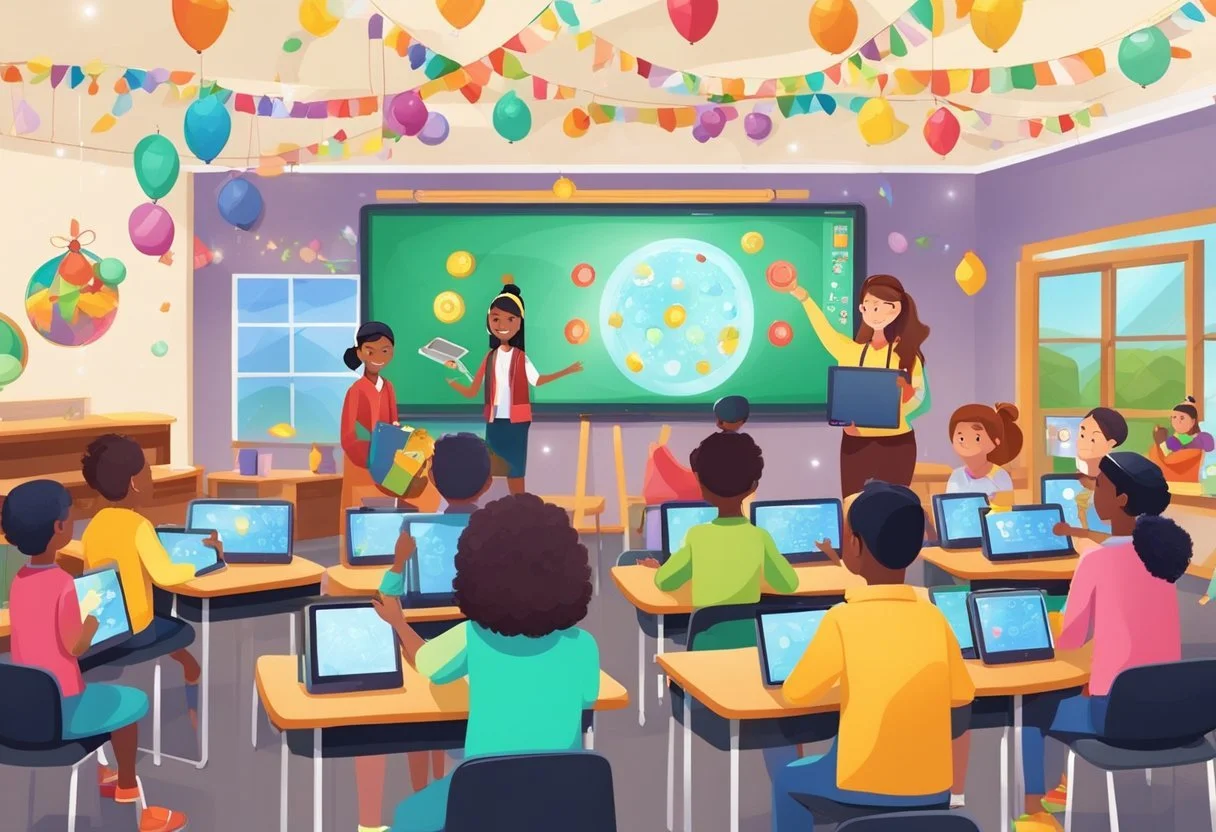
Technology offers powerful tools to enhance New Year celebrations in the classroom. Digital resources can transform traditional activities into interactive experiences that captivate students' attention and deepen their understanding of this global holiday.
Interactive Digital Tools for Engaging Learners
Virtual countdown clocks help students visualize time concepts while building anticipation for the New Year. Teachers can use these timers during class transitions or as motivation for completing activities.
Digital vision boards allow students to create and share their New Year's resolutions. Using platforms like Padlet or Google Jamboard, students can add images, quotes, and goals they hope to achieve. This makes the resolution process more engaging and memorable.
E-books about New Year traditions around the world support reading activities while broadening cultural awareness. Teachers can assign specific passages for comprehension exercises or have students compare celebrations across different cultures.
Video conferencing tools connect classrooms with others around the globe. Students can learn firsthand about diverse New Year customs by speaking with peers in different time zones or countries.
QR code scavenger hunts turn learning into an adventure. Teachers can create codes linking to New Year facts, traditions, or resolution prompts that students discover using tablets or smartphones.
Fostering a Culture of Appreciation
Teaching students to recognize and express appreciation creates a positive classroom environment during New Year celebrations. This foundational skill helps children develop emotional intelligence and strengthens community bonds.
Activities to Teach Gratitude and Reflection
Create a Gratitude Tree where students write things they're thankful for on paper leaves and attach them to a classroom display. This visual reminder grows throughout January as students add new appreciations.
Implement Reflection Jars by having students write weekly reflections about positive moments. Students can share these reflections during morning meetings to start each day with positivity.
A Thank You Note Station with colorful stationery enables students to write notes to people who helped them in the previous year. This activity connects gratitude with actual communication skills.
The "Appreciation Circle" activity involves students sitting in a circle and taking turns sharing something they appreciate about a classmate. This builds community and teaches students to recognize others' positive qualities.
Three Good Things journals ask students to record three positive experiences daily for two weeks. Research shows this simple practice significantly improves outlook and emotional well-being.
Cross-Curricular Connections
The New Year holiday offers excellent opportunities to integrate learning across multiple subject areas while keeping students engaged and excited about the material.
Mathematical Concepts Through Calendar Activities
Students can develop mathematical skills through New Year-themed calendar activities. Have them calculate the number of days until the next New Year or determine how many years have passed since significant historical events.
Creating timelines helps students visualize number lines and practice addition and subtraction. They can measure the time differences between New Year celebrations across time zones, reinforcing concepts of elapsed time.
Children can also analyze New Year attendance data from past years, creating simple graphs and charts. These activities develop their skills in data interpretation and representation.
For younger students, counting down activities reinforce number sequencing. They can create patterns with New Year symbols, enhancing their pattern recognition abilities.
Global Geography and New Year Traditions
New Year celebrations provide a perfect opportunity to explore world geography and cultural diversity. Students can locate countries on maps and learn about how different regions celebrate.
The Chinese New Year and other Lunar New Year celebrations can be plotted on a world map. This helps students understand how cultural traditions spread across continents and vary by region.
Students can calculate distances between celebration locations and identify the geographic factors that influence different traditions. They might explore why some New Year traditions involve water in warmer climates versus fire in colder areas.
Time zone discussions connect geography with math as students learn why the New Year arrives at different times around the world. This reinforces their understanding of Earth's rotation and global positioning.
Classroom Management during the Festive Season
Keeping order in a classroom during holiday excitement requires thoughtful planning and clear expectations. The right strategies help maintain focus while still enjoying seasonal activities.
Maintaining an Effective Learning Environment
Teachers should establish clear boundaries when incorporating New Year celebrations into lessons. Set specific times for festive activities and maintain regular routines for core subjects.
Use visual schedules to help students understand when holiday activities will occur. This provides structure and reduces anxiety about schedule changes.
Create a special signal or chime that brings excited students back to attention quickly. Practice this signal before the holiday season begins.
Consider arranging seats in small groups for holiday projects, then return to the regular arrangement for focused work. This physical change helps students shift between modes.
Balance excitement with quiet reflection activities. Try journal prompts about New Year's resolutions or goals, which promote critical thinking while calming energy levels.
Involve students in establishing holiday behavior expectations. Ask them to suggest reasonable rules that allow for celebration while respecting learning time.
Use positive reinforcement rather than punishment. Recognize students who transition well between activities or help maintain classroom order during exciting moments.
Frequently Asked Questions
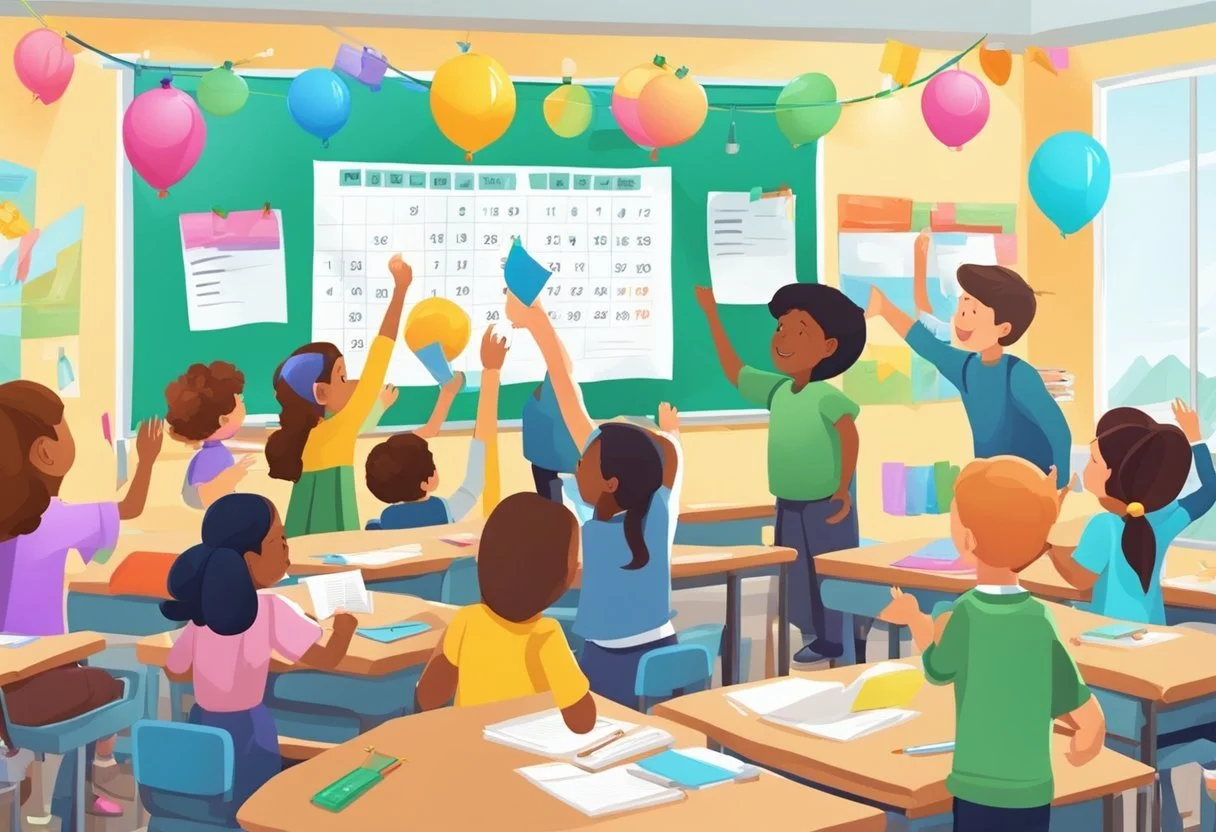
Teaching about New Year celebrations offers many opportunities for creative classroom activities. These questions address common concerns about incorporating diverse traditions, goal-setting exercises, and age-appropriate games into New Year lessons.
What are some innovative activities to teach students about New Year traditions from around the world?
Create a "Passport to New Year" where students receive stamps for learning about different countries' celebrations. This encourages exploration of various customs and traditions.
Set up learning stations representing different countries with photos, artifacts, and short descriptions. Students can rotate through stations and complete a simple worksheet about what they learned.
Host a mini food festival featuring traditional New Year foods from various cultures. Simple items like grapes from Spain or noodles from Japan can introduce students to cultural significance through taste.
How can educators incorporate goal-setting into New Year classroom activities?
Use vision boards where students cut out pictures and words from magazines that represent their academic and personal goals. This visual representation helps them connect emotionally to their aspirations.
Create "Time Capsule Letters" where students write to their future selves about their hopes and goals. These can be opened at the end of the school year to reflect on progress.
Implement "SMART Goal" worksheets that teach students to create Specific, Measurable, Achievable, Relevant, and Time-bound objectives. This framework helps turn vague wishes into concrete plans.
What are effective ways to celebrate the Lunar New Year in a culturally diverse classroom setting?
Invite family members from cultures that celebrate Lunar New Year to share stories and traditions. This personal connection makes learning more meaningful and authentic.
Create simple crafts such as paper lanterns, dragons, or red envelopes. Explaining the significance behind each item helps students understand cultural symbolism.
Teach students about the zodiac animals and their characteristics. Students can discover their own zodiac animal and create artwork or stories featuring these symbolic creatures.
How can teachers design New Year themed group activities that cater to different age groups?
For younger students (K-2), focus on sensory activities like making noise makers or simple crafts. These hands-on projects keep engagement high while teaching basic concepts.
Middle-grade students (3-5) benefit from collaborative projects like creating a class "Year in Review" newspaper. This combines writing skills with reflection on past experiences.
Upper elementary and middle school students can organize a mini cultural fair where small groups research and present different New Year traditions. This develops research and presentation skills.
What approaches can be used to create fun and engaging back-to-school New Year lessons?
Connect the calendar New Year with the "new beginning" of returning to school after winter break. Create a classroom resolution tree where students add their learning goals as leaves.
Design a "Fresh Start" journal where students reflect on what they learned last semester and set intentions for the new term. This bridges past learning with future goals.
Use New Year-themed writing prompts that encourage reflection and forward thinking. Prompts like "My best learning moment last year was..." help students recognize their progress.
What are some interactive classroom games suitable for celebrating the New Year holiday with students?
"Countdown Challenges" involve mini-tasks students complete before a timer runs out. These quick activities can focus on New Year facts, traditions, or vocabulary.
"Resolution Relay" has teams race to match resolutions with strategies to achieve them. This active game reinforces goal-setting while getting students moving.
"Cultural Bingo" uses cards featuring New Year traditions from around the world. As traditions are described or shown, students mark their cards, learning while playing.


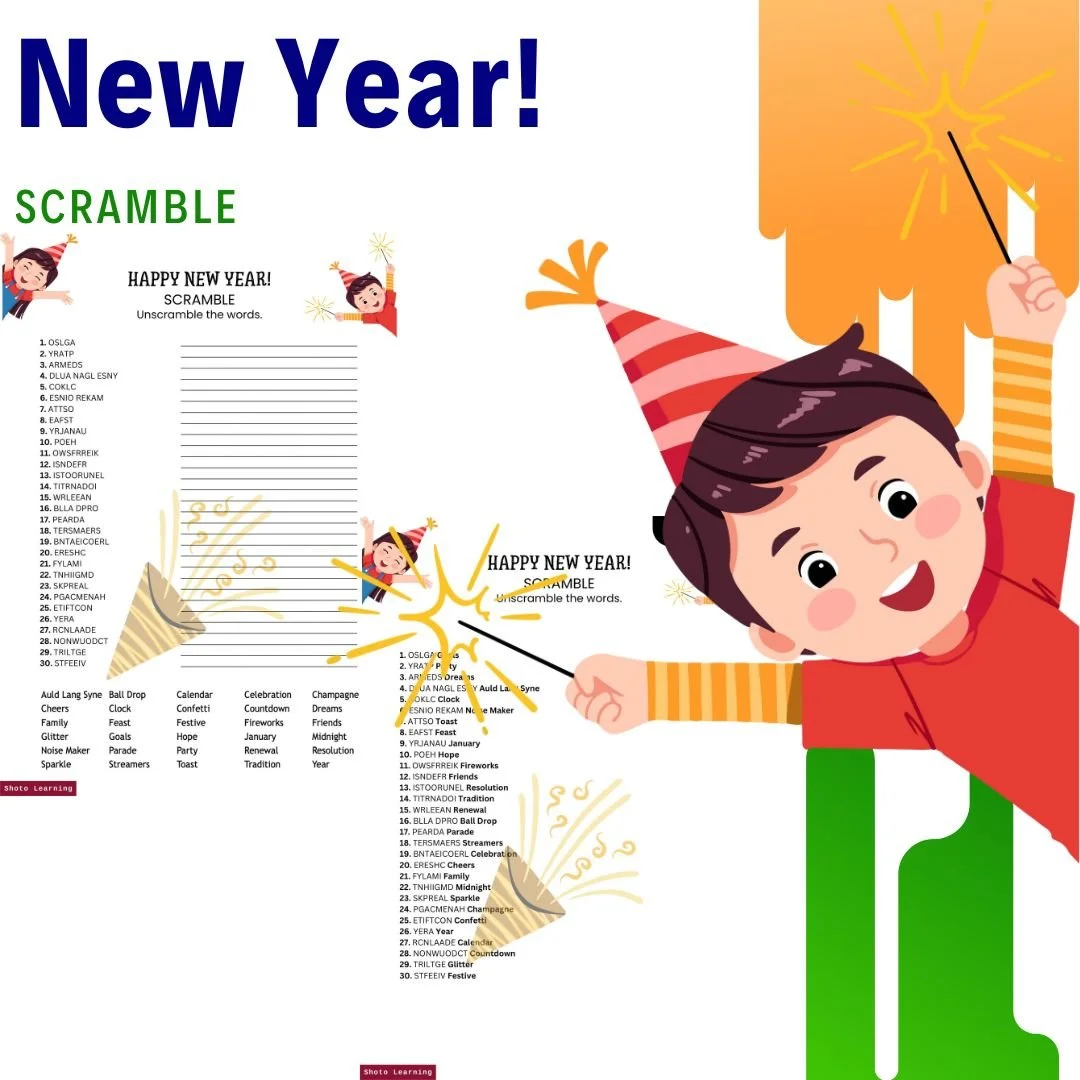
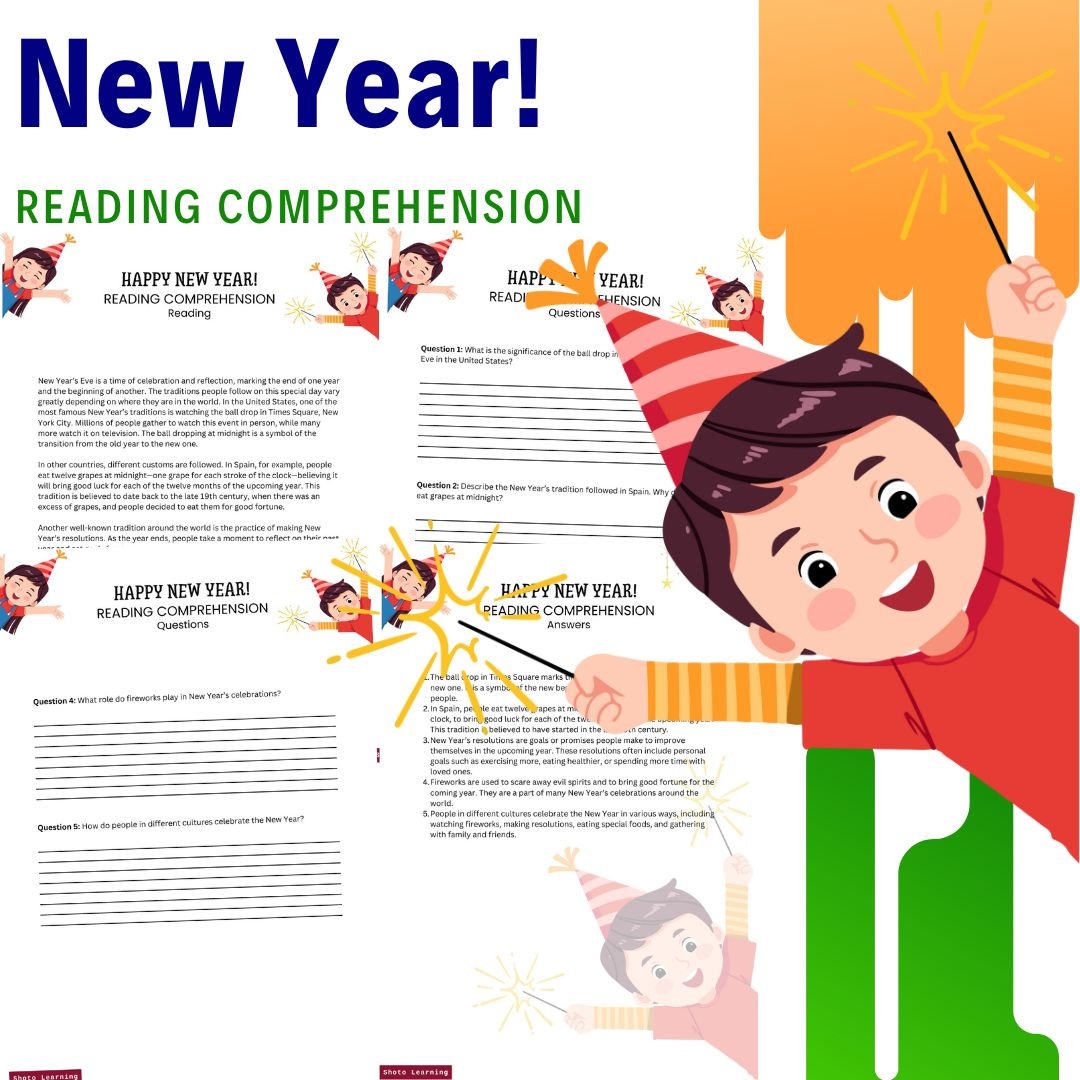


Ring in the New Year with a complete educational package that’s fun, engaging, and educational for students of all ages! This comprehensive bundle includes over 20 high-quality resources designed to help students learn about New Year’s traditions, resolutions, and cultural celebrations while developing important skills in a variety of subjects. From crossword puzzles to hands-on experiments, this bundle offers everything you need for a fun and enriching New Year experience!
This bundle includes a variety of assignments, games, and activities, along with free resources like color-in activities, an ABC order worksheet, and more. Perfect for teachers, parents, and educators looking for engaging content to celebrate the New Year with students!
Key Features:
20+ Resources Included: Activities like crossword puzzles, writing prompts, true/false questions, flashcards, matching worksheets, and more.
Comprehensive Bundle: Includes resources for all learning styles—visual, auditory, and kinesthetic.
Free Resources: Includes free ABC Order, Activity Pack, Color-In Activity, I Spy worksheet, and posters.
Versatile Learning: Engaging activities for classrooms, homeschoolers, and New Year’s events.
Aligned with Learning Goals: Resources designed to improve reading, writing, math, and critical thinking skills.
How to Use:
Choose Your Activity: Select from a wide variety of worksheets and activities (e.g., crossword, debate, test, writing prompts) to suit your student’s learning needs.
Incorporate Free Resources: Use the free ABC Order worksheet, activity pack, I Spy worksheet, and poster for added fun and engagement.
Flexibility for Different Settings: Perfect for classroom lessons, homeschooling, or family celebrations.
Plan with Ease: Utilize the included lesson plan to structure your New Year-themed class or event.
Assess Learning: Use the included tests, quizzes, and comprehension worksheets to evaluate student understanding and progress.
With this complete New Year bundle, you’ll have everything you need to make learning exciting and memorable for your students while celebrating the start of the year. Perfect for educators, parents, and anyone looking to inspire students to start the year with enthusiasm and focus!
Order your copy today!