
Boost Student Math Skills with Subtraction Worksheets: Proven Techniques for Academic Success
Math struggles can make students feel frustrated and fall behind in class. Subtraction worksheets offer a simple yet effective way to build math skills through consistent practice. Regular use of subtraction worksheets helps students develop number sense, mental math abilities, and problem-solving skills that extend beyond the classroom.
These worksheets come in various formats to match different learning needs and skill levels. From basic single-digit problems to complex multi-digit subtraction with borrowing, worksheets provide the repetition needed for mastery. They also serve as valuable assessment tools for teachers and parents to identify areas where students need additional support.
Key Takeaways
Subtraction worksheets build foundational math skills through targeted practice that increases confidence and accuracy.
Students who master subtraction develop stronger problem-solving abilities and number relationships that support advanced math concepts.
Consistent worksheet practice across different formats helps accommodate various learning styles and provides measurable progress in math fluency.
The Foundations of Subtraction
Subtraction forms the cornerstone of elementary mathematics and provides essential skills for more advanced concepts. Students who master subtraction early develop stronger mathematical reasoning and problem-solving abilities.
Understanding Subtraction Concepts
Subtraction represents the process of taking away or finding the difference between two numbers. When we subtract, we determine how much remains after removing a quantity or how much more one number is than another.
The minuend (first number) and subtrahend (second number) combine to find the difference. For example:
8 - 3 = 5 (8 is the minuend, 3 is the subtrahend, 5 is the difference)
Students should understand that subtraction is not commutative. This means 8 - 3 does not equal 3 - 8.
Visual models help children grasp subtraction concepts. Number lines, counters, and drawings allow students to see what happens when quantities are reduced.
Subtraction Facts and Their Importance
Subtraction facts are basic calculations that students should memorize for quick recall. These include differences within 20, such as 15 - 8 = 7.
Knowing basic math facts builds a strong foundation for:
Mental math abilities
Multi-digit subtraction
Algebraic thinking
Problem-solving efficiency
Students who instantly recall these difference values work more confidently with larger numbers. Automatic recall frees up mental energy for complex math tasks.
Regular practice with flashcards, games, and worksheets helps cement these facts in memory. The goal is for students to move beyond counting backward to immediate recognition of differences.
Innovative Teaching Methods for Subtraction
Teachers can transform subtraction lessons from routine to engaging through various creative approaches. These methods help students understand subtraction concepts more deeply while making learning enjoyable.
Using Manipulatives to Teach Subtraction
Manipulatives provide concrete ways for students to visualize subtraction. Base-ten blocks help children understand place value when subtracting larger numbers.
Counting chips or counters allow students to physically remove objects, reinforcing the "taking away" concept of subtraction. Students can arrange the chips in groups, then remove the required amount.
Number lines serve as excellent tools for teaching subtraction as movement. Students can "jump backward" on the line to find differences between numbers.
Fraction bars and circles help illustrate subtraction with fractions, showing how parts are removed from wholes. These are particularly useful when students begin working with unlike denominators.
For younger learners, themed manipulatives like dinosaur counters or fruit-shaped objects can make math practice more appealing and memorable.
Integrating Math Games into Learning
Games transform subtraction practice from tedious to exciting. "Subtraction War" uses playing cards where students compare differences instead of values.
Digital games on tablets or computers offer interactive subtraction practice with immediate feedback. Many educational websites provide free subtraction games sorted by difficulty level.
Board games featuring subtraction problems create low-pressure practice opportunities. Games like "Race to Zero" have students subtract from 100 until reaching zero.
"Around the World" challenges students to quickly solve subtraction problems while moving around the classroom. This combines physical movement with mental math practice.
Dice games develop fluency with basic subtraction facts. Rolling two dice and finding the difference builds automatic recall of number relationships.
The Role of Mental Math in Subtraction
Mental math strategies build number sense and computational fluency. Teaching students to count back helps with simple subtraction problems.
The "make a ten" strategy simplifies calculations by working with friendly numbers. For example, 13-5 becomes 13-3-2, making it easier to solve mentally.
Finding related addition facts turns subtraction into a missing addend problem. For 15-9, students can think "9 plus what equals 15?"
Breaking numbers apart by place value helps with larger problems. For 52-37, students can subtract 30 from 50, then 7 from 22.
Regular practice with mental math improves students' confidence and speed. Quick daily exercises like "number talks" give students opportunities to share different approaches to the same problem.
Addition and Subtraction Strategies
Understanding the relationship between addition and subtraction helps students build a strong mathematical foundation. These complementary operations work together to solve problems in various ways.
Making Connections between Addition and Subtraction
Addition and subtraction are inverse operations. This means they undo each other. When students understand this connection, they can solve problems more efficiently.
Fact families are groups of related math facts using the same numbers. For example, with 7, 5, and 12:
7 + 5 = 12
5 + 7 = 12
12 - 5 = 7
12 - 7 = 5
Using number lines helps visualize both operations. Students can see how addition moves right (increasing) while subtraction moves left (decreasing).
Part-whole thinking teaches students to see numbers as made up of smaller parts. This concept applies to both operations. For instance, 8 can be broken into 5 and 3, or 4 and 4.
Teaching Regrouping and Borrowing
Regrouping and borrowing are essential skills for multi-digit operations. These concepts often challenge students but can be taught through concrete methods.
Base-ten blocks provide a hands-on way to demonstrate regrouping. Students can physically exchange 10 ones for 1 ten, making the concept visible.
The place value chart helps organize numbers during calculations. It shows students exactly when and where regrouping occurs.
For borrowing in subtraction, students need to understand that they can "borrow" a ten from the next column. This becomes clearer with visual aids like:
Place value disks
Grid paper models
Number line jumps
Teaching these concepts progressively moves students from concrete objects to abstract numbers. Start with manipulatives, then pictorial representations, and finally abstract symbols.
Effective Practice Techniques
Mastering subtraction requires consistent practice and the right approach. Students benefit most when using well-designed worksheets, developing independent study habits, and receiving helpful feedback on their work.
Designing Effective Subtraction Worksheets
Good subtraction worksheets should match a student's current skill level. Start with simple problems and gradually increase difficulty as students build confidence.
Include a variety of problem types on each worksheet. Mix borrowing and non-borrowing problems to strengthen different skills. This keeps practice interesting and comprehensive.
Visual elements help: Use number lines, graphics, or grouping symbols for younger students. These visual aids make abstract math concepts more concrete.
Limit each worksheet to 10-15 problems for elementary students. This prevents overwhelm while providing enough practice. For older students, 20-25 problems may be appropriate depending on complexity.
Encouraging Independent Practice
Set a regular math practice schedule of 15-20 minutes daily. Consistency helps build math fluency more effectively than longer, irregular sessions.
Create a distraction-free environment for math work. A quiet space with good lighting and necessary materials helps students focus.
Use these strategies to build independence:
Start with guided practice, then gradually reduce assistance
Teach students to check their own work using inverse operations
Provide reference sheets with examples for self-help
Celebrate small improvements to build confidence
Providing Timely and Constructive Feedback
Review subtraction worksheets promptly. Students learn best when they receive feedback while the process is still fresh in their minds.
Focus on the process, not just the answer. When a student makes an error, identify which step caused the problem. This targeted approach helps correct misunderstandings.
Use positive language when giving feedback. "You lined up the numbers correctly" acknowledges what went right before addressing mistakes.
Create opportunities for students to correct their work. This reinforces learning and shows that mistakes are part of the learning process, not failures.
Track progress over time using a simple chart. This visual record helps students see their improvement and stay motivated.
Fact Fluency and Math Facts Mastery
Fact fluency forms the foundation of mathematical understanding and problem-solving ability. Students who master basic math facts can tackle more complex problems with confidence and accuracy.
Strategies for Achieving Fact Fluency
Developing fact fluency requires consistent practice with addition facts, subtraction facts, multiplication facts, and division facts. Teachers can implement daily math fact warm-ups that take just 5-10 minutes at the beginning of math class.
Flash cards remain an effective tool for building math fact fluency. Students can work independently or with partners to practice facts they find challenging.
Games make fact practice enjoyable. Simple activities like "Around the World" or "Math War" transform repetitive practice into engaging competitions.
Timed exercises help students track their progress. Start with longer time limits and gradually reduce them as skills improve.
Breaking facts into families helps students see patterns. For example, teaching the "fact family" of 3, 4, and 7 (3+4=7, 4+3=7, 7-3=4, 7-4=3) reinforces the relationship between operations.
Using Boom Cards for Math Fact Practice
Boom Cards offer digital, self-checking math fact practice that students find engaging. These interactive digital task cards provide immediate feedback, helping students correct misconceptions quickly.
The adaptive nature of many Boom Card decks adjusts to student performance levels. This customization ensures learners practice at an appropriate difficulty level.
Teachers appreciate the data collection features of Boom Cards. The platform tracks student progress, identifying which math facts require additional attention.
Boom Cards work well for both classroom and remote learning environments. Students can access them on various devices, making them versatile tools for math fact practice.
Many Boom Card decks include audio support. This feature benefits young learners and students who struggle with reading.
Multiplication and Division Facts Relevance
Mastery of multiplication facts directly impacts student success in higher math concepts. Students who automatically recall multiplication facts solve complex problems more efficiently.
Division fact fluency builds from multiplication knowledge. Teaching the inverse relationship between these operations helps students understand both more deeply.
Real-world applications demonstrate the relevance of fact fluency. Examples include calculating tips, doubling recipes, or determining how to share items equally.
Fact mastery reduces cognitive load. When students recall facts automatically, their mental energy focuses on solving the actual problem rather than basic calculations.
Upper elementary and middle school math depends heavily on multiplication and division fact knowledge. Concepts like fractions, decimals, and algebra become more accessible when fact fluency is established.
Supporting Different Learning Styles
Students approach subtraction in different ways based on their learning preferences. Effective teaching incorporates various methods to reach all learners and make math concepts stick.
Helping Visual Learners Master Subtraction
Visual learners thrive when they can see mathematical concepts represented graphically. Number lines provide a clear way to visualize subtraction as distance between points. These learners benefit from color-coded worksheets that highlight minuends and subtrahends differently.
Base-ten blocks and counters help visual learners understand place value during subtraction. When students physically move objects to show "taking away," the concept becomes concrete.
Drawing pictures can transform abstract problems into tangible scenarios. For example, starting with 8 apples and crossing out 3 makes subtraction visible and memorable.
Visual anchor charts displaying subtraction strategies serve as helpful references. These charts might show different approaches like counting back, finding the difference, or using known facts.
Fact Families and Strategy Games
Fact families demonstrate the relationship between addition and subtraction using the same three numbers. For example, 7, 3, and 10 create four related facts: 7+3=10, 3+7=10, 10-3=7, and 10-7=3.
Students reinforce these connections through simple card games. Creating three-card sets of related facts builds fluency and understanding of number relationships.
Strategy games make subtraction practice engaging. "Race to Zero" challenges students to subtract from 100 using dice rolls, encouraging mental math and strategic thinking.
Digital math activities offer immediate feedback while practicing subtraction facts. These games often adapt to student performance, providing appropriate challenges as skills develop.
Board games using number lines help students visualize movement backward as subtraction. This physical representation builds stronger mental models of mathematical operations.
Homework and Real-World Applications
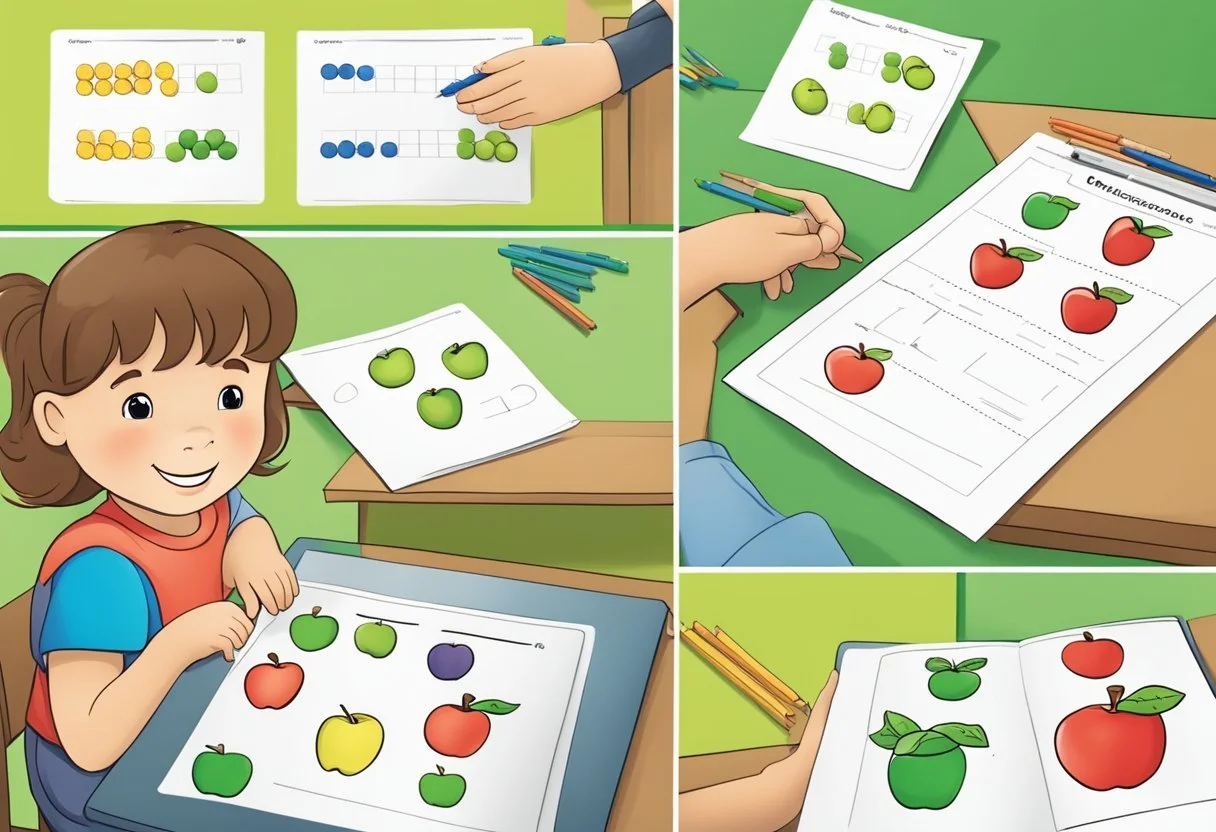
Regular practice through homework and connection to everyday situations strengthens subtraction skills and makes math relevant to students' lives.
Integrating Subtraction into Daily Homework
Effective homework assignments reinforce subtraction concepts learned in class. Teachers should assign 5-10 problems that review the day's lessons rather than overwhelming students with lengthy worksheets.
Varied Problem Types:
Word problems that relate to students' interests
Multi-step problems that combine subtraction with other operations
Self-checking exercises that build confidence
Progress tracking helps students visualize improvement. A simple chart where students record completion times and accuracy percentages motivates continued effort.
Parents can support homework by establishing a consistent routine. A quiet space and regular time for math practice creates structure. When students struggle, parents should guide rather than solve, asking questions like "What strategy could you use here?" to promote independent thinking.
Applying Subtraction Skills in Real-Life Scenarios
Subtraction appears constantly in everyday situations. Recognizing these connections helps students see math's relevance.
Practical Applications:
Calculating change when shopping
Determining time differences (how long until an event)
Measuring ingredient amounts for cooking
Tracking scores in games
Managing allowance money
Teachers can assign projects where students document real-world subtraction. For example, students might keep a weekend math journal noting instances where they used subtraction.
Field trips offer hands-on learning opportunities. Visiting stores to calculate discounts or museums to measure exhibits reinforces practical applications of math skills.
Digital tools like budget apps can engage tech-savvy students. These programs demonstrate how subtraction skills translate to financial literacy and planning.
Frequently Asked Questions
Parents and teachers often have specific questions about teaching subtraction effectively. The following answers address common concerns about age-appropriate strategies, worksheet benefits, supplemental activities, and proven teaching methods.
What are the key strategies for teaching subtraction to Grade 1 students?
For Grade 1 students, concrete objects work best when introducing subtraction. Children can use counters, blocks, or fingers to physically remove items from a group.
Number lines help young learners visualize the "counting back" concept. Students place a finger on the starting number and move backward the required number of spaces.
Story problems create relatable contexts for subtraction. Examples like "Sam had 5 cookies and ate 2" connect math to real-life situations that children understand.
How can subtraction worksheets improve math skills in Grade 2 and 3 students?
Worksheets provide regular practice that builds computational fluency. Daily exposure to subtraction problems helps students develop automatic recall of basic facts.
Progressive difficulty levels in worksheets allow for differentiated learning. Students can advance from single-digit to double-digit subtraction as their skills improve.
Visual models on worksheets, such as number lines and arrays, reinforce conceptual understanding. These representations help students grasp the underlying principles of subtraction.
What hands-on activities can supplement subtraction worksheets for better learning?
Subtraction card games engage students while reinforcing math facts. Games like "Go Fish for Differences" make practice enjoyable rather than tedious.
Manipulative-based activities using counters or base-ten blocks make abstract concepts concrete. Students can physically model the process of taking away.
Math centers with subtraction puzzles and activities allow for independent practice. These stations can include matching games, subtraction dominoes, or number line activities.
What are the five fundamental methods for teaching mathematics, including subtraction?
The Concrete-Pictorial-Abstract (CPA) approach begins with hands-on materials before moving to pictures and finally to symbolic notation. This sequence builds deep understanding of subtraction.
Direct instruction provides clear explanations and modeling of subtraction procedures. Teachers demonstrate steps explicitly before students attempt problems.
Inquiry-based learning encourages students to discover subtraction relationships through exploration. Students might investigate different ways to reach the same difference.
Collaborative learning utilizes peer interactions to strengthen understanding. Students explain their thinking to each other, which reinforces concepts.
Technology-enhanced instruction uses digital tools to provide interactive subtraction practice. Apps and online games offer immediate feedback and adaptive challenges.
How can Grade 4 students' math skills be enhanced through subtraction strategies?
Mental math techniques help Grade 4 students develop computational efficiency. Strategies like "counting up" from the smaller number can speed up calculations.
Estimation skills improve when students round numbers before subtracting. This practice helps them judge whether their exact answers are reasonable.
Applying subtraction to multi-step word problems builds critical thinking. Students learn to identify when subtraction is needed within more complex scenarios.
Which teaching strategy is considered most effective for learning subtraction?
The balanced approach combining conceptual understanding with procedural fluency yields the best results. Students need to understand why subtraction works while also developing speed and accuracy.
Regular spaced practice with increasing difficulty supports long-term retention. Short, frequent practice sessions prove more effective than occasional marathon sessions.
Personalized instruction tailored to students' individual needs shows the greatest impact. Adjusting teaching methods based on diagnostic assessments helps address specific gaps in understanding.
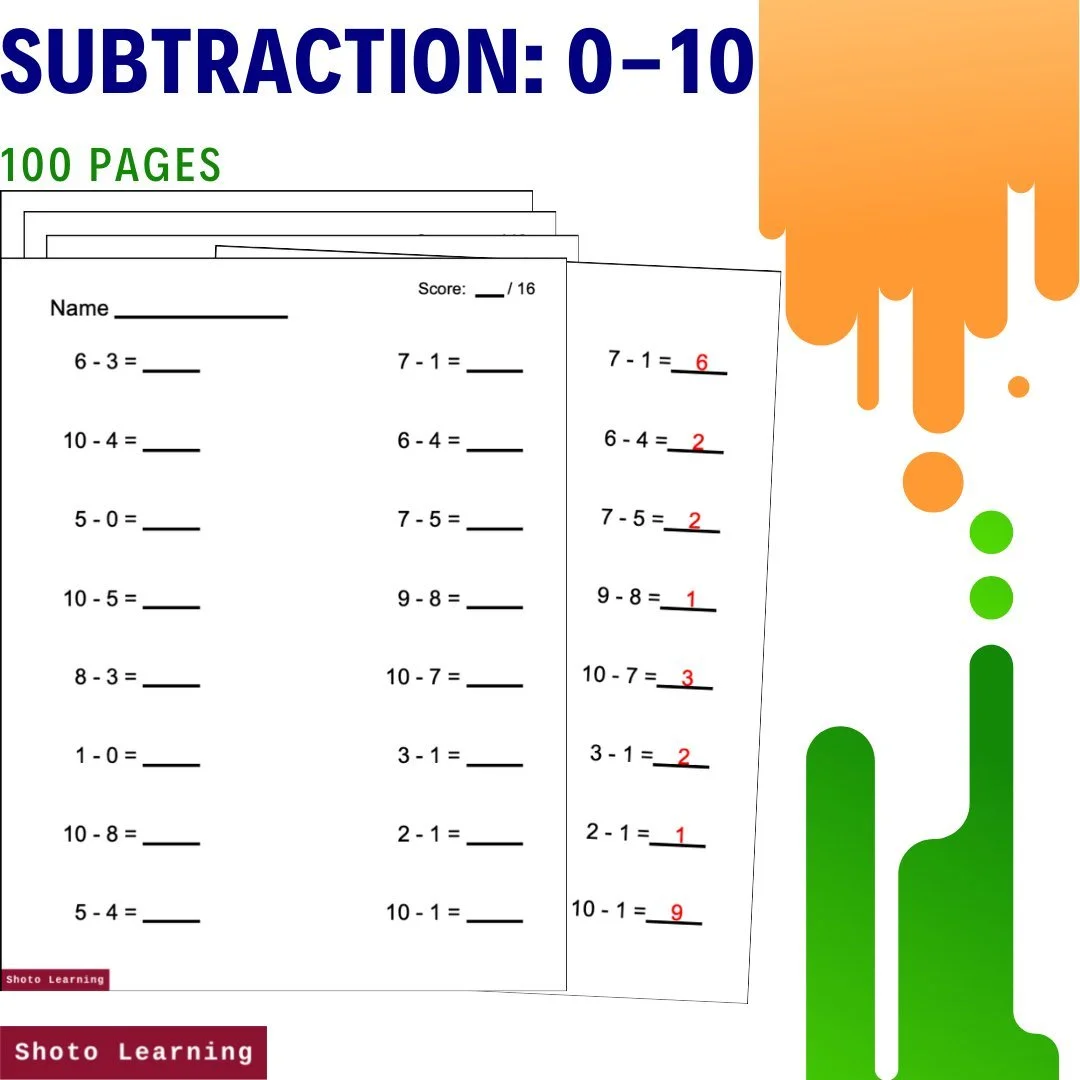


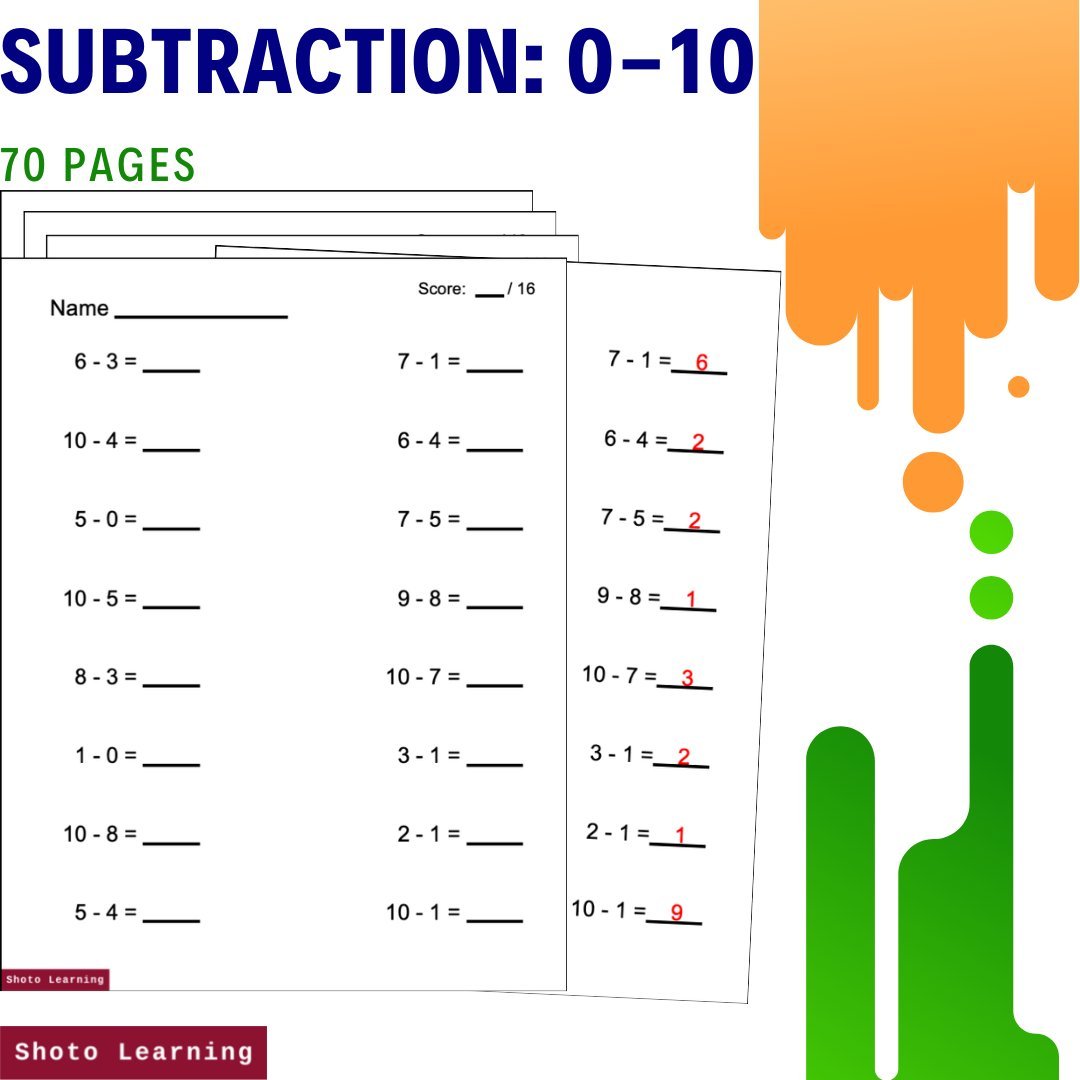

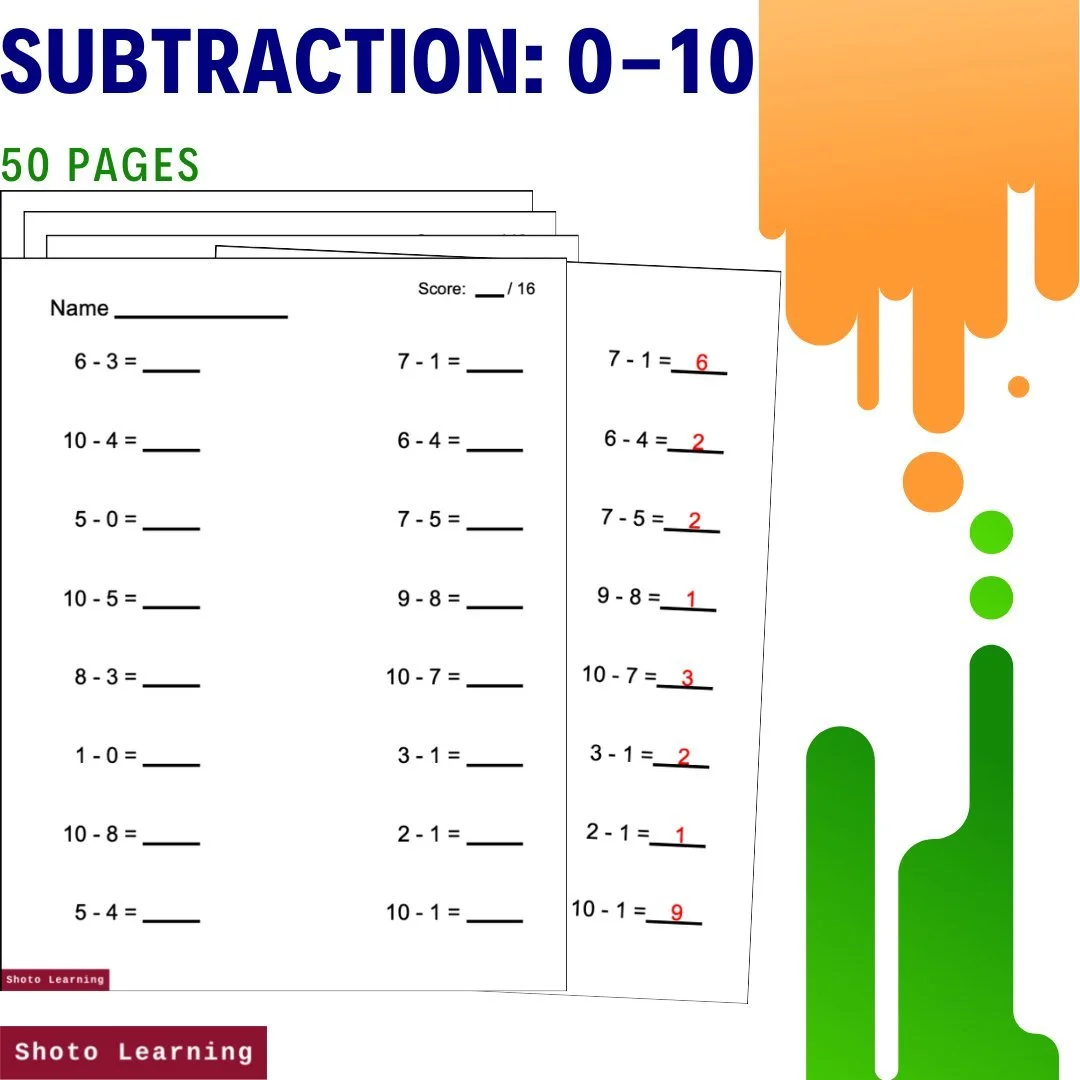


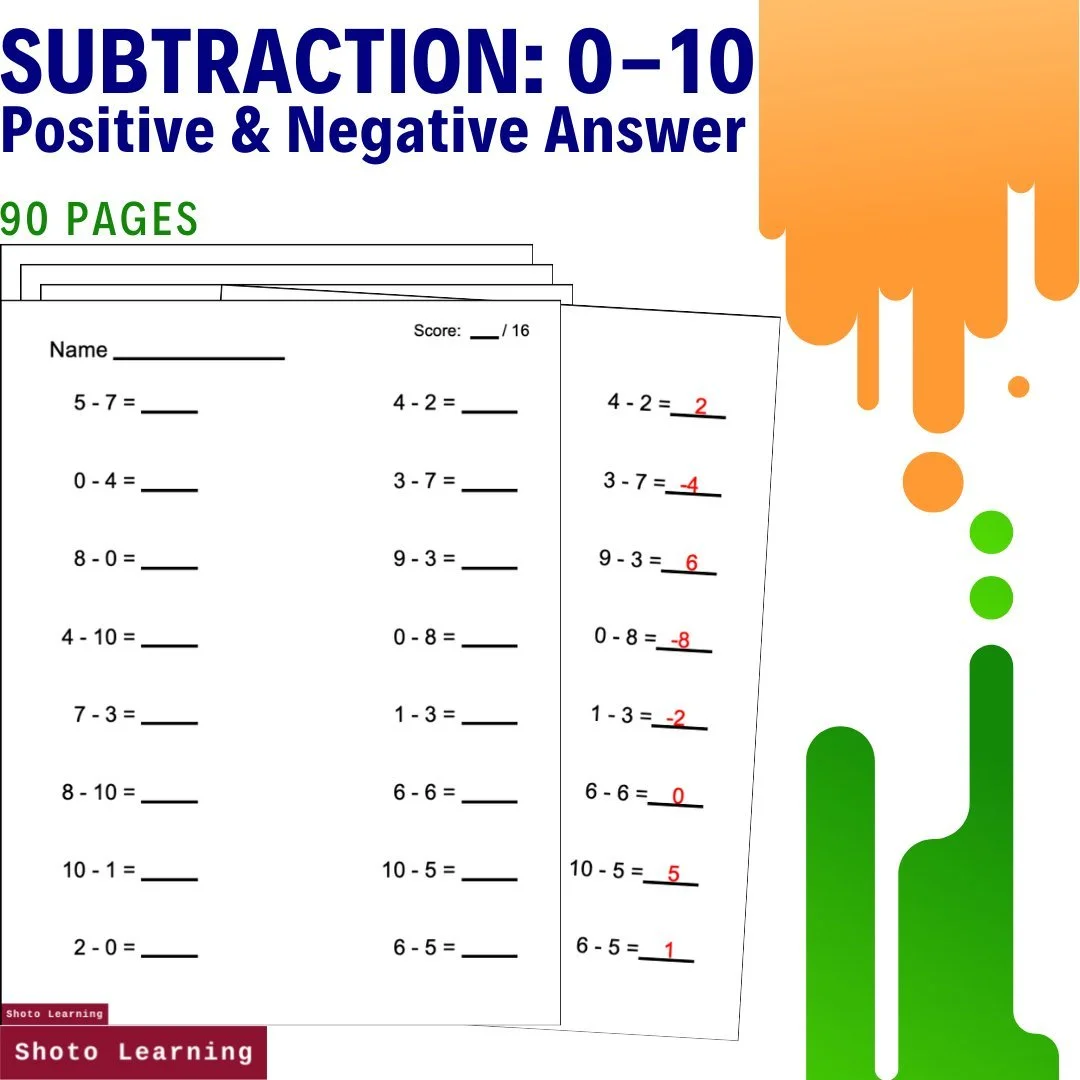


Boost subtraction skills with this free 0-10 worksheet! Designed for beginners, it's great for homework, assessments, or math centers.
16 horizontal subtraction problems
Perfect for beginners & early learners
Ideal for homework, assessments, or math stations
Includes answers (positive numbers) for quick grading
Order your copy today!