
Welcome to our in-depth guide on plant reproduction and growth! This article will explore the essential processes that enable plants to thrive and reproduce. Whether you're an educator seeking teaching resources or a curious individual wanting to expand your knowledge, this comprehensive overview will provide valuable insights. Let’s dive in!
The Importance of Plant Reproduction
Understanding how plants reproduce is crucial for appreciating the biodiversity and beauty of our natural world. Here are some key points:
Survival of Species: Plants reproduce to ensure the survival and continuation of their species in varying environments.
Adaptation and Evolution: Reproduction allows plants to adapt to changing conditions, promoting evolution over time.
a. Sexual Reproduction in Plants
Sexual reproduction involves the fusion of male and female gametes. Here are the key components:
The Role of Flowers: Flowers are essential in sexual reproduction, attracting pollinators and facilitating fertilization. Key parts of a flower include:
Petals: Attract pollinators with their colors and scents.
Sepals: Protect the flower before it blooms.
Pistil: The female reproductive part that contains ovules.
Stamen: The male reproductive part that produces pollen.
Pollination Processes:
Pollination can occur via wind, water, or animals.
Highlight the critical role of pollinators like bees, butterflies, and birds in plant reproduction.
b. Asexual Reproduction in Plants
Asexual reproduction allows plants to reproduce without the fusion of gametes. Common methods include:
Vegetative Propagation: New plants grow from parts of the parent plant (e.g., stems, leaves).
Runners and Bulb Division: Plants like strawberries use runners, while others like onions use bulbs.
Advantages and Disadvantages: Discuss the benefits, such as faster reproduction, and the drawbacks, like reduced genetic diversity.
Understanding Plant Growth
a. Germination Process
Germination is the process that transforms a seed into a new plant. Key points include:
From Dormancy to Emergence: Understand the stages of germination, from seed dormancy to the sprouting of new seedlings.
Environmental Factors: Successful germination requires optimal water, temperature, and light conditions.
b. Key Plant Parts and Their Functions
Plants consist of various parts, each with specific functions:
Roots: Absorb water and nutrients from the soil.
Stems: Provide support and transport nutrients and water.
Leaves: Conduct photosynthesis to produce food.
Flowers and Fruits: Facilitate reproduction and seed dispersal.
c. Factors Influencing Plant Growth
Several factors impact plant growth:
Sunlight: Essential for photosynthesis.
Water Availability: Crucial for nutrient transport and cellular functions.
Soil Quality: Nutrient-rich soil promotes healthy growth.
Temperature: Affects metabolic processes and growth rates.
Nutrients: Essential elements like nitrogen, phosphorus, and potassium are necessary for optimal growth.
Engaging Students with Plant Reproduction and Growth
Teaching plant reproduction and growth can be exciting and interactive:
Hands-On Activities: Introduce experiments to observe plant growth and reproduction.
Educational Worksheets: Utilize our specially designed worksheets to reinforce key concepts.
Visual Aids: Incorporate diagrams and interactive resources to enhance learning.
Conclusion
Plant reproduction and growth are fascinating processes vital for the survival and diversity of plant species. By understanding these processes, we can deepen our appreciation for the interconnectedness of all living organisms. We hope this comprehensive guide has equipped you with valuable insights and resources for teaching and learning about plant reproduction and growth. Don’t forget to explore our products, which can further enhance your educational journey in this captivating field!
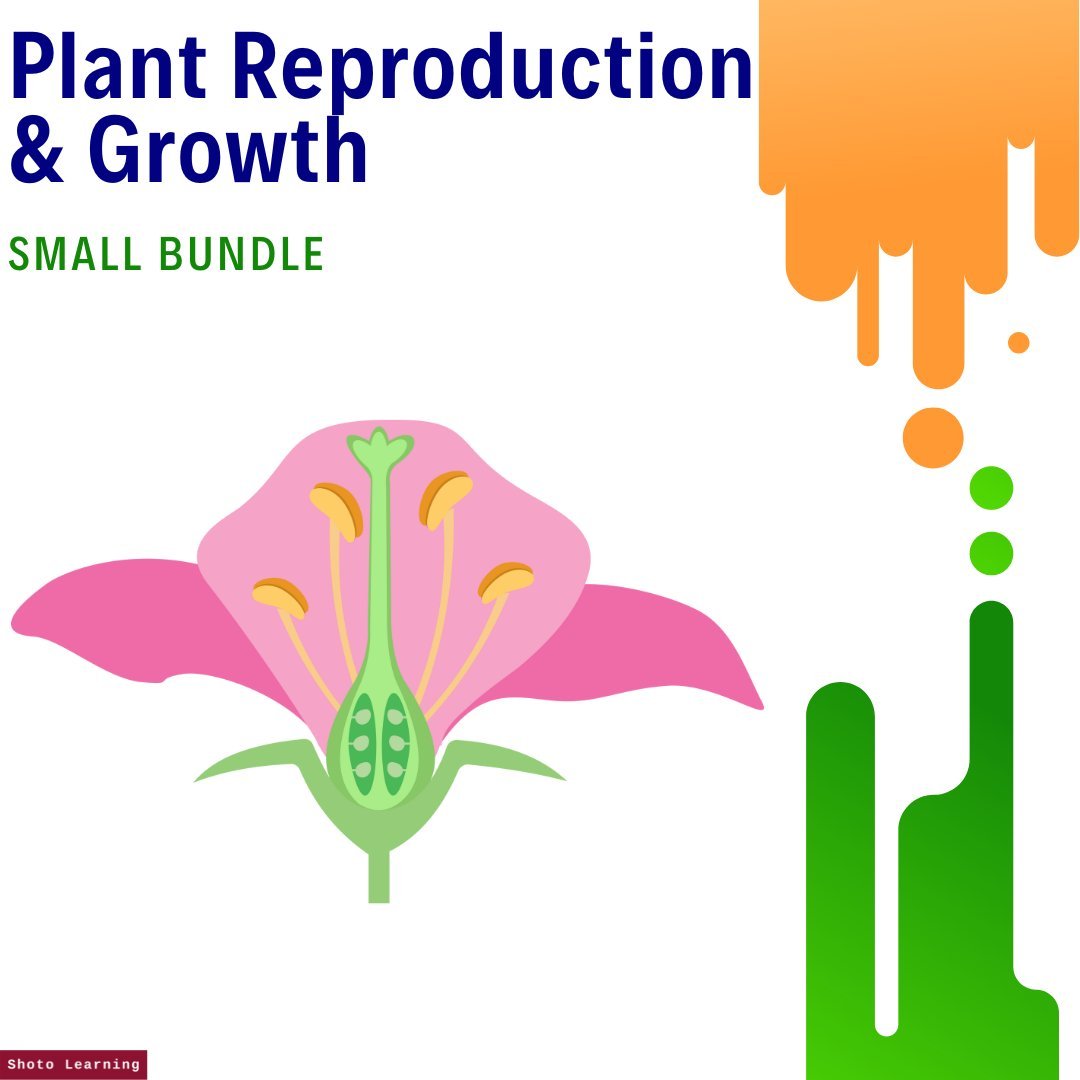
Delve into the captivating world of plant reproduction and growth with our comprehensive bundle designed to nurture understanding and engagement. Whether you're a teacher seeking dynamic resources or a student aiming for botanical brilliance, this bundle provides everything you need for a blooming educational experience.
Included in this meticulously crafted bundle are a variety of educational tools:
Assignments: Embark on 10 stimulating assignments covering diverse topics, encouraging critical thinking and practical application of knowledge.
PowerPoint Presentation: Explore the wonders of plant reproduction and growth with our visually stimulating and informative PowerPoint presentation.
Test (45 Minutes): Assess comprehension and retention with a carefully crafted test covering key concepts in plant biology.
Bingo: Make learning interactive and fun with our Plant Reproduction and Growth Bingo game, perfect for reinforcing terminology and processes in an engaging classroom setting.
Crossword: Challenge your botanical knowledge and expand your vocabulary with our Crossword puzzle, offering an entertaining way to reinforce key terms and concepts.
Word Search: Sharpen your observation skills while uncovering plant reproduction-related terms in our engaging Word Search activity.
Cryptogram: Decode the secrets of plant reproduction with our Cryptogram puzzle, offering a stimulating twist on learning essential concepts.
Lesson Plan: Dive deep with our detailed lesson plan, complete with engaging activities and discussion topics.
True or False: Test your understanding of plant reproduction and growth with our True or False activity, designed to challenge misconceptions and solidify knowledge.
Reading Comprehension: Sharpen reading skills with engaging passages, perfect for students and educators alike.
Matching: Strengthen connections between plant reproduction processes with our Matching activity, fostering a deeper understanding of botanical principles.
Missing Letters: Fill in the blanks and complete plant reproduction-related terms with our Missing Letters exercise, perfect for reinforcing spelling and vocabulary.
Scramble: Unscramble jumbled terms and phrases related to plant biology with our engaging Scramble activity, promoting quick thinking and problem-solving skills.
As a bonus, enjoy these additional resources included for free:
Free ABC Order: Practice alphabetizing plant-related terms with our convenient ABC Order activity.
Free Crossword: Further reinforce botanical vocabulary with an additional Crossword puzzle.
Free Poster: Decorate your classroom with our informative and visually appealing Plant Reproduction and Growth Poster.
Free Worksheet: Extend learning with our supplementary worksheet, offering extra practice and reinforcement.
With answers provided for all activities, this comprehensive bundle is your ultimate companion for cultivating botanical knowledge and appreciation. Watch your understanding of plant biology blossom today!
94 pages
Don't miss out, order yours today!

Introducing the Plant Reproduction and Growth Worksheet Bundle: A Comprehensive Learning Resource!
Our Plant Reproduction and Growth Worksheet Bundle is a comprehensive collection of educational worksheets designed to enhance students' understanding of plant reproduction and growth processes. This bundle includes a diverse range of activities, from debates and experiments to fill in the blank and multiple-choice questions, providing a well-rounded learning experience for students of all levels.
Key Features:
Assignments: Embark on 10 stimulating assignments covering diverse topics, encouraging critical thinking and practical application of knowledge.
Engaging Debates: Encourage critical thinking and lively classroom discussions with debate topics related to plant reproduction and growth. Students will explore different perspectives, develop argumentation skills, and deepen their understanding of complex issues.
Fill in the Blank: Test students' comprehension and reinforce key concepts with fill in the blank worksheets. These activities require students to recall information and demonstrate their understanding of plant reproduction and growth by completing sentences or statements.
Interactive Matching: Engage students in an interactive matching activity that connects plant reproduction and growth terms with their corresponding definitions or illustrations. This activity enhances students' understanding of terminology and reinforces the relationships between different concepts.
Multiple Choice: Assess students' knowledge and understanding with multiple-choice questions that cover various aspects of plant reproduction and growth. These questions challenge students to apply their knowledge, think critically, and make informed choices.
Question and Answers: Engage students in a dynamic question-and-answer session that reinforces their understanding of plant reproduction and growth concepts. This activity encourages active participation, promotes classroom discussions, and addresses students' inquiries.
Comprehensive Assessment: Evaluate students' knowledge and progress with our 45-minute test. This comprehensive assessment covers a wide range of plant reproduction and growth topics, allowing educators to gauge students' understanding and identify areas for further focus.
Reading Comprehension: Sharpen reading skills with engaging passages, perfect for students and educators alike.
True or False: Challenge students' knowledge with true or false statements related to plant reproduction and growth. This activity helps students develop their analytical skills, assess their understanding, and distinguish between accurate and misleading information.
Writing Prompts: Foster creativity and critical thinking with writing prompts that encourage students to delve deeper into plant reproduction and growth topics. These prompts inspire students to articulate their thoughts, develop coherent arguments, and strengthen their writing skills.
Our Plant Reproduction and Growth Worksheet Bundle provides educators with a comprehensive set of resources to engage and assess students' understanding of plant biology. From lively debates to practical experiments, interactive activities to comprehensive assessments, this bundle is a valuable addition to any classroom or homeschooling curriculum.
109 pages
Order now and ignite your student's curiosity about the wonders of plant reproduction and growth!

Our Plant Reproduction and Growth Game Bundle is the ultimate collection of interactive games designed to make learning about plant biology a thrilling adventure. Packed with exciting activities like ABC Order, Bingo, Crossword, Cryptogram, Matching, Missing Letters, Scramble, and Spin Wheels, this bundle is perfect for educators, homeschoolers, and anyone eager to explore the wonders of plant reproduction and growth.
Key Features:
ABC Order: Reinforce plant reproduction and growth vocabulary by organizing terms in alphabetical order. This game boosts vocabulary retention while challenging students to think critically and improve their organizational skills.
Bingo: Turn learning into a fun-filled game of Bingo with a plant reproduction and growth twist. Students will have a blast identifying key concepts, terms, and processes as they strive to complete their Bingo cards. This game promotes active engagement and enhances comprehension.
Crossword: Challenge students' knowledge with a crossword puzzle that tests their understanding of plant reproduction and growth concepts. This game encourages critical thinking, vocabulary recall, and the ability to make connections between different aspects of plant biology.
Cryptogram: Decode secret messages related to plant reproduction and growth, combining critical thinking with vocabulary reinforcement. Students will exercise their problem-solving skills while strengthening their understanding of plant biology terminology.
Matching: Connect plant reproduction and growth terms with their corresponding definitions or illustrations through a captivating matching game. This activity helps students solidify their understanding of key concepts and reinforces their knowledge in a visually stimulating way.
Missing Letters: Practice spelling and reinforce plant reproduction and growth terms by filling in missing letters. This game promotes accuracy, vocabulary retention, and language proficiency, all while exploring the fascinating world of plant biology.
Scramble: Unscramble jumbled words related to plant reproduction and growth to enhance vocabulary retention. Students will enjoy the challenge of rearranging letters to form meaningful words, reinforcing their understanding of key terms and concepts.
Spin Wheels: Spin the wheel to match different concepts related to plant reproduction and growth. This interactive game boosts engagement and encourages students to make connections between different aspects of plant biology dynamically and enjoyably.
With our Plant Reproduction and Growth Game Bundle, learning becomes an exciting adventure. These games foster active participation, critical thinking, vocabulary retention, and a deeper understanding of plant reproduction and growth. Whether used in the classroom, homeschooling environment, or for independent study, this bundle is a must-have for any budding biologist. Order your game bundle today and watch the joy of discovery unfold!
40 pages
Order your copy today!

Introducing the ABC Order Worksheet on Plant Reproduction and Growth!
Our ABC Order Worksheet is an engaging and educational resource designed to help students strengthen their knowledge of plant reproduction and growth while practicing important literacy skills. This worksheet is perfect for teachers, homeschoolers, and parents looking to provide an interactive and comprehensive learning experience for their students.
With this worksheet, students will dive into the fascinating world of plant reproduction and growth as they explore key vocabulary words related to the topic. The main objective of the worksheet is to challenge students to arrange plant-related terms in alphabetical order, enhancing their alphabetical sequencing skills while expanding their understanding of plant science.
The ABC Order Worksheet on Plant Reproduction and Growth offers several benefits for learners. It promotes critical thinking skills as students actively organize and sort words alphabetically. It also reinforces vocabulary acquisition, ensuring students are familiar with essential terms related to plant reproduction and growth.
Our worksheet is designed with colorful visuals and an engaging layout to captivate students' attention and make learning enjoyable. It can be used as a standalone activity, in-class assessment, or homework assignment, providing flexibility for educators and parents to incorporate it into their lesson plans.
By using the ABC Order Worksheet on Plant Reproduction and Growth, students will not only strengthen their literacy skills but also deepen their understanding of how plants reproduce and grow. It's an invaluable tool that combines science education and language development interactively and effectively.
Don't miss out on this exciting learning resource! Order your ABC Order Worksheet on Plant Reproduction and Growth today and watch your students blossom in their knowledge of plant science.
Order your copy today!

Engage your floral curiosity with our captivating "Parts of the Flower" free crossword puzzle! This delightful brain-teaser is an excellent opportunity to unravel the secrets of blossoms while having a blast solving clues. Get ready to immerse yourself in the enchanting world of botany as you navigate through the intricate structures that make up every flower.
Petals: Discover the colorful and alluring outer layers that often attract pollinators.
Sepals: Learn about the protective and supportive green structures that encase the bud before it blooms.
Pistil (Carpel): Unveil the female reproductive part, including the stigma, style, and ovary.
Stamen: Dive into the male reproductive section, consisting of the anther and filament.
Anther: Find out where pollen grains, essential for fertilization, are produced.
Stigma: Learn about the stigma's role in capturing pollen during the pollination process.
Ovary: Understand the vital role of this structure in seed production and fruit development.
This crossword puzzle isn't just a game; it's a chance to deepen your understanding of how flowers function and the critical roles each part plays in the plant life cycle. Whether you're a botany enthusiast, a student, or simply intrigued by nature's marvels, our "Parts of the Flower" crossword is a perfect fit. Download and print it to enjoy a captivating challenge alone or with friends and family. Embark on a journey of discovery and enrichment through the world of flowers – download our free crossword puzzle today and let the petals of knowledge unfold before you!
Order your copy today!

Unearth the wonders of botanical anatomy with our complimentary "Parts of the Plants" worksheets – a fantastic educational resource that transforms learning into an engaging adventure. These carefully crafted worksheets are designed to nurture a deeper understanding of plant structure, offering a hands-on exploration of the essential components that bring plants to life.
Seed Exploration: Dive into the beginning of a plant's journey, unraveling the mysteries of seeds and their growth potential.
Stem Insights: Understand the significance of stems in supporting plants and transporting essential nutrients throughout their structure.
Flower Deconstruction: Embark on a fascinating journey into the world of flowers, where pollination and reproduction come to life in vivid detail.
Root Revelation: Dig beneath the surface to uncover the role of roots in anchoring plants and absorbing crucial water and minerals.
Leaf Lessons: Delve into the world of leaves, where photosynthesis and energy conversion take center stage in the plant's life cycle.
Fruit Discovery: Explore the diverse forms and functions of fruits, from seed dispersal to nourishment and continuation of the species.
Our "Parts of the Plants" worksheets aren't just ordinary educational materials – they're a gateway to nurturing a lifelong appreciation for botany and nature's intricate designs. Whether you're a teacher, a parent, or an avid learner, these worksheets offer a dynamic and interactive way to delve into the science of plants. Download and print them at your convenience, and watch as curiosity blossoms and understanding takes root.
Ignite the spark of discovery in the young and the curious – download our free worksheets today and embark on a captivating journey through the fascinating world of plant anatomy!

Introducing our comprehensive and visually engaging "Parts of the Plants" educational poster – a must-have for all budding botanists and nature enthusiasts! This free poster is a fantastic resource that delves into the intricate world of plants, breaking down their essential components in a clear and captivating manner.
Seed: Discover the very beginning of a plant's life cycle – from tiny seeds to magnificent growth.
Stem: Explore the backbone of plant structure, understanding how stems provide support and transport vital nutrients.
Flower: Immerse yourself in the world of flowers, where reproduction and pollination take center stage in the most vibrant and alluring ways.
Root: Delve beneath the surface and uncover the hidden wonders of roots, responsible for anchoring plants and absorbing essential water and minerals.
Leaf: Unravel the secrets of leaves – the solar powerhouses of plants that harness sunlight for energy through the process of photosynthesis.
Fruit: From seed dispersal to providing nourishment, fruits play a crucial role in the plant life cycle. Learn about their diverse forms and functions.
This poster isn't just a visual treat; it's an educational tool designed to ignite curiosity and deepen your understanding of plant anatomy and biology. Whether you're a student, a teacher, or simply someone with a passion for nature, this free "Parts of the Plants" poster is your gateway to unlocking the mysteries of the botanical world. Download, print, and display it proudly in classrooms, homes, or any space where the wonder of plant life deserves to be celebrated. Embark on a journey through the fascinating universe of plants – get your free poster now and let the learning blossom!
Order your copy today!

Enhance your students' understanding of how plants reproduce and grow with our "Plant Reproduction and Growth Reading Comprehension Worksheet." This educational resource offers an insightful overview of both sexual and asexual reproduction in plants, as well as the factors that influence plant growth. Perfect for classroom use, homework assignments, or supplemental learning, this worksheet includes engaging questions reinforcing key concepts and encouraging critical thinking.
Key Features:
Comprehensive Coverage: Detailed explanations of plant reproduction methods and growth processes, including the roles of pollination, photosynthesis, and environmental factors.
Engaging Questions: Five carefully designed questions that test comprehension and deepen understanding of plant biology.
Versatile Resource: Ideal for use in biology lessons, study sessions, or as a homework assignment to reinforce key topics.
Easy-to-Use Format: A clear and concise layout that makes complex concepts accessible and easy to grasp for learners of all levels.
How to Use It:
In-Class Activity: Incorporate the worksheet into a lesson on plant biology. Have students read the passage and answer the questions individually or in small groups to deepen their understanding of plant reproduction and growth.
Homework Assignment: Assign the worksheet as homework to allow students to review and reflect on plant reproduction and growth concepts at their own pace.
Study Aid: Use the worksheet as a study tool for students preparing for exams or quizzes on plant biology, helping them consolidate their knowledge and test their comprehension.
Provide your students with a clear and engaging resource to master plant reproduction and growth with this educational reading comprehension worksheet!
Order your copy today!

Delve into the fascinating world of plants with our comprehensive lesson plan on Plant Reproduction & Growth. Designed for high school biology classes, this resource offers an in-depth exploration of the processes driving plant reproduction and the factors influencing plant growth.
Key Features:
Thorough Coverage: Explore the intricacies of plant reproduction, including sexual and asexual methods, as well as the stages of plant growth from germination to maturity.
Engaging Visual Aids: Enhance learning with diagrams, models, videos, and animations illustrating plant reproductive structures, growth stages, and environmental interactions.
Interdisciplinary Connections: Connect plant reproduction and growth concepts to broader ecological and agricultural contexts, highlighting their significance in sustaining ecosystems and supporting human life.
Hands-On Activities: Foster active learning with hands-on activities such as seed germination experiments, plant observation, and discussions on real-world applications of plant biology.
Assessment Tools: Assess student understanding with quizzes, worksheets, and discussions, ensuring mastery of plant reproduction and growth concepts.
How to Use This Lesson Plan:
Review Objectives: Begin by reviewing the lesson objectives and outcomes to understand the focus and goals.
Prepare Materials: Gather all required materials, including handouts, worksheets, and any multimedia resources.
Introduce Topic: Start with a brief introduction to the topic to engage students and set the context.
Follow the Steps: Teach each section as outlined, incorporating suggested activities, discussions, and questions.
Monitor and Adapt: Observe student engagement and understanding; adapt the lesson pace and methods as needed.
Assess Understanding: Use the provided assessment tools to evaluate student comprehension and provide feedback.
Wrap-Up: Summarize key points and provide closure with a reflective activity or homework assignment.
Empower students to become botanical experts with our "Botanical Explorations" lesson plan. Inspire curiosity, deepen understanding, and cultivate a deeper appreciation for the vital role plants play in shaping our world and sustaining life.
Order your copy today!

Unlock the secrets of plant life with our Comprehensive Assignments on Plant Reproduction and Growth! This meticulously crafted set of 10 assignments is designed to deepen your understanding of how plants reproduce and grow, covering key concepts such as pollination, seed germination, and the role of plant hormones.
Key Features:
In-Depth Assignments: Dive into essential topics like asexual vs. sexual reproduction, pollination, and the stages of seed germination with thought-provoking questions and detailed answers.
Critical Thinking: Each assignment is designed to challenge your understanding and encourage critical thinking about the intricacies of plant biology.
Versatile Learning Tool: Perfect for classroom use, homeschooling, or self-study, these assignments provide a solid foundation in plant reproduction and growth.
Comprehensive Coverage: Explore the roles of chlorophyll, auxins, root systems, and environmental adaptations in plant development and survival.
Clear Explanations: Detailed answers accompany each question, making complex concepts accessible and easy to grasp.
How to Use It:
Review the Assignments: Begin by reading through the 10 assignments to familiarize yourself with the key concepts of plant reproduction and growth.
Complete the Questions: Tackle each assignment to test and deepen your understanding of plant biology, from pollination to seed development.
Check Answers: After completing the assignments, use the provided answers to verify your responses and enhance your comprehension.
Discuss and Reflect: Participate in discussions or write reflections based on the assignments to further solidify your knowledge.
Apply Knowledge: Use what you've learned to connect theory with practical applications, such as gardening practices or understanding plant life cycles.
This resource is designed to help you grasp the essential aspects of plant reproduction and growth, offering valuable tools for students and enthusiasts alike.
Order your copy today!

Are you searching for a comprehensive and informative resource to teach your students about plant reproduction and growth? Look no further! Our PowerPoint Lecture on Plant Reproduction and Growth is the perfect tool for educators and teachers who want to deliver engaging and knowledge-packed lessons on this fascinating topic.
This PowerPoint lecture is thoughtfully designed to provide a thorough understanding of the processes involved in plant reproduction and growth. It covers essential concepts such as sexual and asexual reproduction, flower structure, pollination, fertilization, seed development, germination, plant hormones, tropisms, and the influence of environmental factors on plant growth.
Each slide of the lecture is carefully crafted to present information in a visually appealing and organized manner. The content is supported by high-quality images, diagrams, and illustrations, making complex concepts easier to grasp. The lecture slides are customizable, allowing you to adapt them to suit your teaching style and classroom needs.
With this PowerPoint lecture, you can effectively engage your students with clear explanations, captivating visuals, and interactive discussions. It provides a solid foundation of knowledge and acts as a springboard for deeper exploration and understanding of plant reproduction and growth.
Whether you are a biology teacher, botany enthusiast, or homeschooling parent, this PowerPoint lecture is a valuable addition to your teaching resources. It can be used for in-class presentations, remote learning, flipped classrooms, or as a study aid for students preparing for exams or assignments.
Invest in your students' learning today with our PowerPoint Lecture on Plant Reproduction and Growth. With its comprehensive coverage, visually appealing design, and flexibility for customization, this resource is sure to enhance your teaching and ignite your students' curiosity about the wonders of plant life.
View on Youtube
Includes: PowerPoint and Speech
Order your copy today!

Enhance your botanical knowledge and challenge your mind with our engaging crossword puzzle on Plant Reproduction and Growth! Designed for nature enthusiasts, students, and puzzle lovers alike, this crossword puzzle is a perfect blend of educational content and brain-teasing fun.
Option 1: Puzzle with Hints This crossword puzzle features a variety of clues related to plant reproduction and growth. Each clue provides a hint to help you fill in the correct word or term. Test your knowledge as you navigate through the grid, uncovering fascinating concepts such as pollination, germination, phototropism, and more. With carefully crafted hints, this puzzle is perfect for beginners and those looking to expand their understanding of plants and their life cycles.
Option 2: Puzzle without Hints For those seeking an extra challenge, we offer a crossword puzzle without hints. Dive into the world of plant reproduction and growth as you rely solely on your knowledge and problem-solving skills to fill in the grid. This option is ideal for individuals who want to put their expertise to the test and showcase their understanding of key concepts such as fertilization, seed dispersal, xylem, and more.
Both puzzles are thoughtfully designed and crafted to ensure an enjoyable and educational experience. The crossword puzzles come with clear instructions and neatly laid out grids, allowing you to easily write your answers. Whether you choose the puzzle with hints or the one without, you'll have a fantastic time challenging yourself while learning about the wonders of plant reproduction and growth.
So, grab a pencil, immerse yourself in the world of plants, and embark on a journey of discovery with our Plant Reproduction and Growth Crossword Puzzle. It's an excellent activity for classrooms, homeschooling, nature clubs, or simply for relaxing and sharpening your botanical knowledge. Order your copy today and get ready to unravel the secrets of the plant kingdom!
Order your copy today!
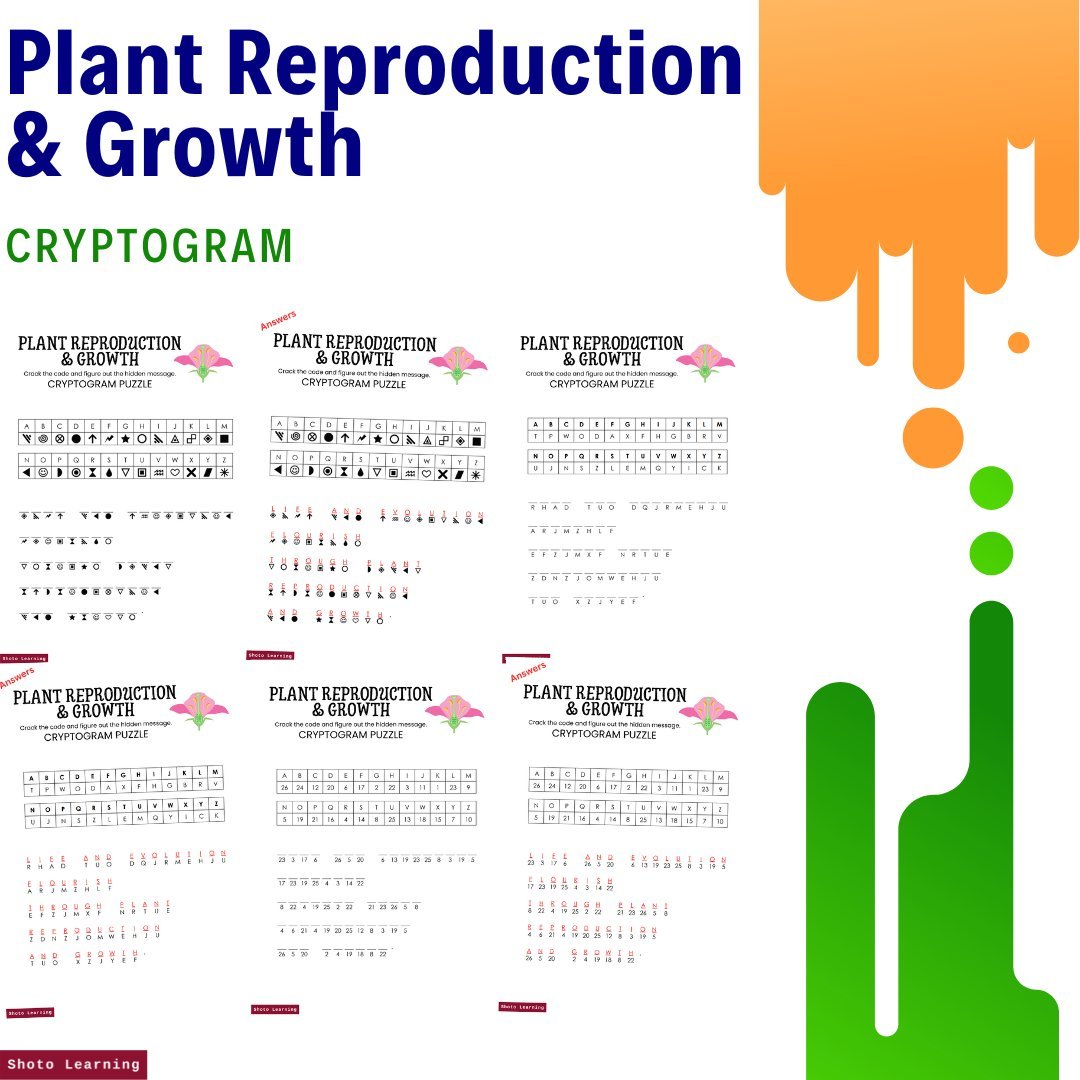
Unlock the secrets of plant reproduction and growth with our captivating Cryptogram puzzle! This unique and intriguing puzzle is designed to engage your problem-solving skills while exploring the fascinating world of plants. With three key types—numbers-to-letters, letters-to-letters, and symbols-to-letters—you'll decipher hidden messages that reveal the wonders of life and evolution flourishing through plant reproduction and growth.
Challenge yourself as you decipher each encoded letter, piece by piece, to unravel the hidden message. As you delve into the intriguing clues and patterns, you'll gain a deeper understanding of the vital processes that drive the survival and diversity of plant life. From the intricate dance of pollination to the remarkable journey of seed dispersal, each step holds a clue to the message waiting to be unveiled.
The Cryptogram on Plant Reproduction and Growth is an ideal activity for nature enthusiasts, puzzle lovers, and anyone eager to delve into the captivating world of plants. With its thoughtfully crafted design and intriguing hidden message, this puzzle will keep you engaged and entertained for hours. It's perfect for solo challenges, educational settings, or as a unique gift for those who appreciate both mystery and the wonders of the natural world.
So, grab your pen or pencil, let your curiosity guide you, and embark on a thrilling journey through the secrets of plant reproduction and growth. Unleash your inner codebreaker and discover the hidden message that celebrates the vitality and evolution found within the botanical realm. Order your Cryptogram puzzle today and embark on an adventure of deciphering and enlightenment!
Includes
Three key types—numbers-to-letters, letters-to-letters, and symbols-to-letters
Answers included
Hidden Message: Life and evolution flourish through plant reproduction and growth.
Order your copy today!

Unlock the fascinating world of plant reproduction and growth with our Plant Reproduction and Growth Experiment Kit. This comprehensive kit includes 10 engaging and hands-on experiments designed to deepen your understanding of the intricate processes that drive plant reproduction and promote healthy growth.
With our experiment kit, you'll have everything you need to conduct exciting investigations in the comfort of your own home or classroom. Each experiment is carefully crafted to provide valuable insights into the fundamental principles of plant reproduction and growth, allowing you to explore key concepts such as pollination, seed germination, nutrient uptake, and more.
From investigating the influence of soil pH on plant nutrient uptake to exploring the effect of different fertilizers on plant growth, our experiment kit covers a wide range of topics, offering a holistic learning experience. Each experiment comes with a detailed guide that includes a title, introduction, method, and conclusion, ensuring you have clear instructions at every step.
The Plant Reproduction and Growth Experiment Kit is perfect for students, educators, and plant enthusiasts of all ages who want to dive deeper into the world of plants. It provides an immersive and hands-on learning experience that fosters curiosity and scientific inquiry.
With our kit, you'll gain a deeper appreciation for the intricate mechanisms behind plant reproduction and growth, and develop a solid foundation of knowledge that can be applied to various fields, including botany, agriculture, and horticulture.
Key Features:
10 engaging and informative experiments on plant reproduction and growth
Detailed experiment guides with clear instructions
Covers a wide range of topics, including pollination, seed germination, nutrient uptake, and more
Suitable for students, educators, and plant enthusiasts of all ages
Promotes hands-on learning, scientific inquiry, and critical thinking skills
Ideal for home, classroom, or educational settings
How to Use It:
Gather Materials: Collect all items listed for each experiment.
Follow Instructions: Perform the experiments using the provided step-by-step directions.
Observe and Record: Document your observations and results.
Discuss Results: Analyze and discuss the findings based on the guide’s explanations.
Unleash your curiosity and embark on an exciting journey into the world of plant reproduction and growth with our Plant Reproduction and Growth Experiment Kit. Experience the joy of discovery as you unravel the secrets of nature and deepen your understanding of how plants thrive and propagate.
Order your kit today and embark on a botanical adventure like no other.

Introducing our Plant Reproduction and Growth Fill-in-the-Blank Worksheet Set!
Are you ready to test your knowledge on plant reproduction and growth? Look no further! Our comprehensive worksheet set is designed to enhance your understanding of these fundamental botanical concepts. With two sets of ten questions and answers each, this resource is perfect for students, educators, and anyone eager to explore the fascinating world of plants.
Key Features:
Educational Content: Dive deep into the realm of plant reproduction and growth with our meticulously crafted questions and answers. Each worksheet is thoughtfully designed to cover essential topics, ensuring a well-rounded learning experience.
Comprehensive Coverage: Our worksheet set covers various aspects of plant reproduction and growth, including flower anatomy, pollination, seed development, germination, photosynthesis, tropisms, and vegetative propagation. Gain a solid foundation in these crucial areas of botany.
Fill-in-the-Blank Format: Challenge yourself by completing the blanks with the most suitable answers. This format encourages active recall, reinforcing your understanding of the subject matter and enhancing long-term retention.
User-Friendly Layout: The worksheets feature a clean and organized layout, allowing you to focus on the content without unnecessary distractions. The fill-in-the-blank sections are clearly labeled, ensuring easy navigation and clarity.
Printable and Portable: Our worksheets are provided in a printable format, enabling you to access them conveniently anytime, anywhere. Whether you prefer working on paper or utilizing digital devices, these resources adapt to your learning preferences.
Suitable for Various Skill Levels: Whether you're a beginner or an advanced learner, our worksheet set caters to a wide range of skill levels. Test your knowledge, reinforce key concepts, or challenge yourself with these engaging exercises.
Ideal Classroom Resource: Educators can incorporate these worksheets into their lesson plans, homework assignments, or revision sessions. Foster active learning and facilitate discussions with these thought-provoking questions.
Independent Study Tool: For self-learners or individuals seeking additional practice, our worksheet set serves as a valuable resource. Gauge your understanding, identify areas for improvement, and enhance your overall comprehension of plant reproduction and growth.
Embark on an educational journey into the fascinating world of plant reproduction and growth with our Fill-in-the-Blank Worksheet Set. Sharpen your botanical knowledge, reinforce key concepts, and develop a deeper appreciation for the wonders of the plant kingdom. Get your hands on this invaluable resource today and watch your understanding bloom!
Includes
2x10 Fill in the blank questions
Answers included.
Order your copy today!

Introducing our Plant Reproduction and Growth Missing Letter Worksheet Set!
Enhance your understanding of plant reproduction and growth with our engaging and educational missing letter worksheets. Designed to test your knowledge and improve your vocabulary in this fascinating field, this set includes two worksheets with 20 questions each. With one worksheet featuring a word box hint and the other without, you'll have two unique learning experiences to choose from.
Key Features:
Comprehensive Content: Our worksheets cover a wide range of topics related to plant reproduction and growth. From key terms to important processes, each word was carefully selected to enhance your understanding of this vital subject.
Missing Letter Format: Challenge yourself by filling in the missing letters to complete the words related to plant reproduction and growth. This format tests your knowledge while improving your spelling and retention of important terms.
Word Box Hint (Worksheet 1): The first worksheet provides a word box hint, offering a helpful resource to guide you in completing the missing letters. Use the provided word bank to support your answers and reinforce your understanding.
Word Box-Free (Worksheet 2): The second worksheet takes your learning to the next level by removing the word box hint. This version offers a more challenging experience, allowing you to test your knowledge without external assistance.
Varied Difficulty Levels: Our worksheets cater to learners of different skill levels, from beginners to advanced. Whether you're just starting to explore plant reproduction and growth or seeking to expand your knowledge, these worksheets provide the right balance of challenge and support.
Clear and Legible Layout: The worksheets are thoughtfully designed with clear fonts and ample spacing, ensuring easy readability. This layout promotes a smooth learning experience without distractions.
Ideal for Self-Study or Classroom Use: Our worksheet set is versatile and can be used for self-study, homework assignments, or as classroom resources. Maximize your learning by completing the worksheets independently or incorporating them into group activities for collaborative learning experiences.
Printable and Portable: The worksheets are conveniently printable, allowing you to take them anywhere you go. Study on the move, at home, or during study sessions with classmates or friends.
Track Your Progress: Use these worksheets to assess your understanding and track your progress. Identify areas that require further attention, and witness your growth as you successfully complete the missing letters.
Embark on an exciting journey through the world of plant reproduction and growth with our Plant Reproduction and Growth Missing Letter Worksheet Set. Challenge yourself, expand your vocabulary, and deepen your knowledge of the fascinating processes that drive plant life. Acquire this valuable resource today and watch your botanical understanding flourish!
Includes
2x20 missing letter word worksheet with hints
2x20 missing letter word worksheet without hints
Answers included
6 Pages
Order your copy today!

Are you looking for a fun and educational activity to engage your students while learning about plant reproduction and growth? Look no further! Our Plant Reproduction and Growth Word Scramble is the perfect resource to challenge and entertain your students.
This product includes two sets of word scrambles, each focusing on plant reproduction and growth concepts. The first set features a hint word box, providing a helpful clue for each scrambled word. This option is ideal for students who may need some assistance or for younger learners who are still developing their vocabulary.
The second set does not include a hint word box, allowing students to test their knowledge and problem-solving skills without any prompts. This version is great for more advanced learners or as a follow-up activity to reinforce understanding.
Both sets of word scrambles feature carefully selected vocabulary related to plant reproduction and growth, including terms like pollination, germination, fertilization, stamen, pistil, and more. The scrambled words will challenge students to unscramble the letters and identify the correct plant-related terms, promoting critical thinking and vocabulary recall.
Our word scramble activity is designed with clear and legible fonts, ensuring readability for all students. The visually appealing layout adds an element of fun to the learning experience.
This word scramble activity can be used in various educational settings, including classrooms, homeschooling, and tutoring sessions. It is an excellent resource for individual work, group activities, or even as a timed challenge to enhance engagement and friendly competition among students.
By incorporating this word scramble into your lesson plans, you will provide an interactive and engaging way for students to reinforce their understanding of plant reproduction and growth. It can also serve as a useful assessment tool to gauge students' comprehension of the subject matter.
Invest in your student's learning journey today with our Plant Reproduction and Growth Word Scramble. With its engaging format, diverse vocabulary, and flexible usage options, this resource is sure to captivate and educate your students while expanding their knowledge of plant reproduction and growth concepts.
Order your copy today!

Are you looking for an entertaining and educational activity to engage your students or plant enthusiasts? Look no further! Our Plant Reproduction and Growth Word Search is the perfect resource for individuals of all ages who want to enhance their knowledge of plant reproduction and growth while having fun.
This word search puzzle is thoughtfully designed to include a variety of plant-related terms, concepts, and vocabulary associated with plant reproduction and growth. With a grid filled with horizontally, vertically, and diagonally placed words, this word search provides an exciting challenge that will keep participants engaged and motivated.
The Plant Reproduction and Growth Word Search covers a wide range of topics, including pollination, fertilization, germination, flower anatomy, seed development, plant hormones, tropisms, and environmental factors affecting plant growth. It serves as an excellent tool to reinforce learning and reinforce key concepts playfully and interactively.
This word search is suitable for various settings, such as classrooms, homeschooling, family game nights, or as a leisurely activity for plant enthusiasts. It can be used as a standalone activity, a supplemental resource, or even as a fun assessment tool to evaluate students' understanding of plant reproduction and growth.
With its clear and easy-to-read format, this word search is visually appealing and user-friendly. It provides hours of entertainment while simultaneously expanding knowledge and vocabulary related to the fascinating world of plants.
Invest in our Plant Reproduction and Growth Word Search today and discover a fun and engaging way to explore the intricate processes that drive the growth and reproduction of plants. Whether you are an educator, a parent, or simply someone passionate about plants, this word search is a delightful addition to your learning resources.
Order your copy today!

Looking for an engaging and educational activity to test your knowledge of plant reproduction and growth? Look no further! Our Plant Reproduction and Growth True or False Quiz is a captivating resource that challenges your understanding of key concepts while providing an enjoyable learning experience.
This quiz features 20 true or false questions, carefully crafted to cover various aspects of plant reproduction and growth. Each question is designed to assess your knowledge and prompt critical thinking about the fascinating world of plants. Whether you're a student, a teacher, or simply someone passionate about plants, this quiz is an excellent tool to assess your understanding and expand your knowledge.
The Plant Reproduction and Growth True or False Quiz covers a wide range of topics, including pollination, fertilization, seed development, germination, asexual reproduction, plant hormones, tropisms, and environmental factors influencing plant growth. By engaging with these questions, you'll deepen your understanding of the intricate processes that drive the life cycles of plants.
The format of true or false questions provides an enjoyable challenge, allowing you to quickly test your knowledge and assess your comprehension. As you progress through the quiz, you'll gain valuable insights into the accuracy of your understanding and identify areas for further exploration.
This quiz is suitable for various settings, including classrooms, homeschooling, study groups, or as a fun activity for plant enthusiasts. It can be used as a self-assessment tool, a classroom activity, or even as an icebreaker to spark discussions and foster a deeper understanding of plant reproduction and growth.
With its concise and clear questions, this quiz is user-friendly and visually appealing. It's a perfect resource to reinforce learning, prepare for exams, or simply satisfy your curiosity about the incredible world of plants.
Invest in our Plant Reproduction and Growth True or False Quiz today and embark on an engaging journey of knowledge and discovery. Challenge yourself, test your understanding, and enhance your appreciation for the fascinating processes that enable plants to reproduce and grow.
Order your copy today!

Are you looking for a comprehensive assessment to evaluate your knowledge of plant reproduction and growth? Our Plant Reproduction and Growth Test is designed to challenge your understanding of key concepts in this fascinating field. Whether you're a student, educator, or plant enthusiast, this test provides a valuable opportunity to assess your knowledge and deepen your understanding.
The Plant Reproduction and Growth Test is carefully crafted to cover various aspects of plant reproduction, including flower anatomy, pollination mechanisms, fertilization, seed development, germination, and the role of plant hormones. It also explores the factors influencing plant growth, such as environmental conditions, tropisms, and nutrient requirements.
This test consists of two sections: Section 1: Multiple Choice Questions - In this section, you'll encounter multiple-choice questions that require you to select the best answer from the options provided. This format allows you to demonstrate your knowledge and critical thinking skills.
Section 2: True or False Questions - The second section presents a series of statements related to plant reproduction and growth. You will indicate whether each statement is true or false, testing your ability to discern accurate information from misconceptions.
The duration of the test is 45 minutes, providing a balanced timeframe to answer all the questions thoroughly. Whether you are an individual seeking to gauge your own understanding or an educator looking for an assessment tool for your students, this test offers an effective evaluation of knowledge retention and comprehension.
This Plant Reproduction and Growth Test serves as an excellent resource for classroom assessments, homework assignments, study guides, or self-assessment. It provides immediate feedback on your understanding and helps identify areas that may require further study or clarification.
Invest in our Plant Reproduction and Growth Test today and put your knowledge to the test. Challenge yourself, explore the intricate processes of plant reproduction and growth, and gain valuable insights into this essential aspect of the plant kingdom. With this test, you can confidently assess your understanding and take your learning to new heights.
Order your copy today!

Introducing our "Plant Reproduction & Growth: 2 x 10 Questions and Answers" bundle!
Are you ready to test your knowledge and deepen your understanding of plant reproduction and growth? Look no further! This comprehensive bundle includes two sets of ten thought-provoking questions and answers, designed to challenge and educate.
Explore the fascinating world of plant reproduction as you delve into topics such as pollination, seed formation, germination, and more. Gain insights into the intricate processes that enable plants to grow and thrive in their environments.
Each set of questions is carefully crafted to cover a wide range of concepts, ensuring a thorough exploration of plant reproduction and growth. Challenge yourself or engage in friendly competitions with friends, classmates, or fellow plant enthusiasts.
Whether you are a student, a teacher, or simply a curious learner, these question and answer sets are perfect for self-study, classroom activities, or group discussions.
Why choose our "Plant Reproduction & Growth: 2 x 10 Questions and Answers" bundle?
Comprehensive Coverage: The questions cover various aspects of plant reproduction and growth, providing a well-rounded understanding of the topic.
Engaging and Thought-Provoking: Get ready to challenge your knowledge and stimulate your critical thinking skills with our carefully crafted questions.
Educational and Informative: The answers accompanying each question provide detailed explanations, enhancing your understanding of plant reproduction and growth.
Flexible Usage: Whether you prefer self-study, classroom activities, or group discussions, these question and answer sets can be easily adapted to suit your learning style.
Ideal for All Learners: Whether you are a student, teacher, or plant enthusiast, this bundle caters to learners of all levels of expertise.
Take your knowledge of plant reproduction and growth to new heights with our "Plant Reproduction & Growth: 2 x 10 Questions and Answers" bundle. Explore the wonders of the plant world and deepen your understanding of these vital processes.
Order now and embark on an exciting journey of learning and discovery!

Product Description: 2x 10 Multiple Choice Worksheet on Plant Reproduction and Growth
Are you looking for an engaging and effective way to assess your students' understanding of plant reproduction and growth? Look no further! Our 2x 10 Multiple Choice Worksheet on Plant Reproduction and Growth is the perfect resource for teachers and educators seeking to evaluate their students' knowledge on this topic.
This comprehensive worksheet set contains two sets of ten multiple-choice questions each, providing a total of twenty thought-provoking questions. The questions have been carefully crafted to cover various aspects of plant reproduction and growth, ensuring a thorough assessment of your students' grasp of the subject matter.
Each multiple-choice question is designed to challenge students and assess their comprehension of key concepts such as pollination, fertilization, germination, plant hormones, tropisms, and plant structures. The questions are presented clearly and concisely, allowing students to focus on the content without any unnecessary distractions.
By utilizing this worksheet set, you can effectively evaluate your students' understanding of plant reproduction and growth while providing them with an opportunity to practice critical thinking and problem-solving skills. The multiple-choice format also enables quick and easy grading, saving you valuable time in assessing your students' performance.
Whether you are a teacher in a classroom setting or a homeschooling parent, this worksheet set is a valuable addition to your teaching resources. It can be used as an in-class activity, a homework assignment, or even as a study tool for students preparing for exams or quizzes.
Invest in your students' learning today with our 2 x 10 Multiple Choice Worksheet on Plant Reproduction and Growth. With its comprehensive coverage, engaging questions, and easy assessment, this resource is sure to enhance your teaching and help your students excel in their understanding of plant reproduction and growth.
Includes
2 x 10 Multiple Choice
Include answers
6 Pages
Order your copy today!

Enhance your understanding of plant reproduction and growth with our comprehensive matching worksheet set. Designed to be interactive and engaging, these worksheets provide an exciting way to test your knowledge and reinforce key concepts. With two sets of matching questions, you'll have ample opportunities to master the fascinating world of plant life.
Key Features:
Educational Content: Our worksheets cover a wide range of plant reproduction and growth topics, including pollination, germination, photosynthesis, tropisms, vegetative propagation, and more. Each question is meticulously crafted to ensure a well-rounded learning experience.
Matching Format: Challenge yourself by matching key terms with their corresponding definitions. This format allows you to connect concepts and reinforce your understanding of the subject matter.
Clear and Concise: The questions and definitions are presented clearly and concisely, making them easy to read and comprehend. This clarity eliminates confusion and promotes efficient learning.
Varied Difficulty Levels: Our worksheet set caters to different skill levels, from beginners to advanced learners. Whether you're just starting your journey or seeking to deepen your knowledge, these worksheets provide a suitable challenge.
Visual Enhancements: To aid in comprehension, our worksheets include relevant visuals, such as diagrams and illustrations. These visuals provide visual cues that support understanding and make the learning experience more engaging.
Comprehensive Coverage: The two sets of matching questions cover a wide array of plant reproduction and growth concepts. By completing both worksheets, you'll develop a solid foundation in this vital area of botany.
Ideal for Self-Study or Classroom Use: These worksheets serve as versatile learning resources. Engage in self-study sessions to reinforce your understanding, or utilize them in the classroom to supplement lessons and promote interactive learning.
Compact and Printable: The worksheets are provided in a compact format, making them easy to print and carry. Study on the go, share with classmates, or keep them for future reference.
Assess and Track Progress: Use these worksheets to assess your knowledge and track your progress over time. Identify areas that require further study, and celebrate your achievements as you successfully match the terms and definitions.
Suitable for All Learners: Whether you're a student, educator, or plant enthusiast, our matching worksheet set offers a valuable learning tool. Discover the wonders of plant reproduction and growth in an accessible and enjoyable way.
Embark on an exciting learning journey through the world of plant reproduction and growth with our Plant Reproduction and Growth Matching Worksheet Set. Challenge yourself, reinforce your knowledge, and develop a deeper appreciation for the incredible processes that sustain plant life. Acquire this invaluable resource today and watch your botanical understanding flourish!
Order your copy today!

Introducing our comprehensive set of Plant Reproduction and Growth Flashcards!
Are you ready to master the intricacies of plant reproduction and growth? Look no further than our carefully crafted flashcard set. Designed to enhance your botanical knowledge, these flashcards cover a wide range of essential concepts in a concise and accessible format. With 20 expertly curated cards, you'll have everything you need to grasp the wonders of plant life.
Key Features:
Comprehensive Coverage: Our flashcards offer a comprehensive overview of plant reproduction and growth, ensuring that you understand the fundamental principles and processes involved.
Concise Information: Each flashcard provides a key term related to plant reproduction and growth, accompanied by a clear and concise definition. This bite-sized information allows for quick comprehension and easy memorization.
Engaging Visuals: Our flashcards feature captivating visuals, including diagrams, illustrations, and photographs, to further enhance your understanding. These visuals provide a visual representation of the concepts, making them more memorable and engaging.
Organized Content: The flashcards are thoughtfully arranged to guide you through various topics, including pollination, fertilization, germination, seed development, photosynthesis, tropisms, and vegetative propagation. This logical structure helps you build a solid foundation of knowledge.
Portable Learning: Our compact flashcards are easy to carry, making them perfect for on-the-go study sessions. Take them with you wherever you go and optimize your learning time, whether you're commuting, waiting in line, or taking a break.
Versatile Learning Tool: These flashcards are suitable for a wide range of learners, including students, educators, and plant enthusiasts. They can be used for self-study, as a classroom resource, or as a study aid for exams and quizzes.
Reinforce Learning: Regular practice with these flashcards reinforces your understanding of plant reproduction and growth concepts. The act of flipping through the cards, reading the terms, and recalling the definitions strengthens your memory and retention.
Interactive Study Sessions: Engage in interactive study sessions with peers, friends, or classmates by using these flashcards. Quiz each other, challenge yourselves, and discuss the concepts together, fostering collaborative and engaging learning experiences.
Durable and High-Quality: Crafted from durable materials, our flashcards are built to withstand frequent use. The high-quality production ensures that the content remains intact and easy to read, even after extended periods of use.
Suitable for All Learning Styles: Whether you're a visual learner, an auditory learner, or a kinesthetic learner, these flashcards cater to various learning styles. The combination of visual cues, concise definitions, and hands-on interaction accommodates different preferences.
Immerse yourself in the fascinating world of plant reproduction and growth with our Plant Reproduction and Growth Flashcards. From pollination to vegetative propagation, these cards offer a comprehensive overview of key concepts in an engaging and accessible manner. Accelerate your learning, reinforce your knowledge, and deepen your appreciation for the incredible processes that shape the plant kingdom. Get your hands on this indispensable study tool today and watch your botanical knowledge blossom!
Includes
20 Flashcards
PDF file
5 Pages
Order your copy today!

Explore the fascinating world of plant reproduction and growth through our comprehensive collection of 2x 10 Debates Questions and Answers on Plant Reproduction and Growth. This thought-provoking resource is perfect for educators, students, and anyone interested in delving deeper into the complexities surrounding plant life cycles and reproductive strategies.
Each set features ten carefully curated debate questions that cover a wide range of topics, from genetic engineering and organic farming to conservation efforts and the ethics of plant manipulation. The accompanying answers provide insightful perspectives, allowing users to explore multiple viewpoints and engage in meaningful discussions.
With these debate questions and answers, users can foster critical thinking, enhance their knowledge, and develop a well-rounded understanding of the various issues related to plant reproduction and growth. Whether used in classrooms, study groups or as a personal learning tool, this resource encourages active engagement and intellectual exploration.
The product is designed to facilitate meaningful debates and discussions. Each question is thoughtfully crafted to provoke diverse viewpoints and encourage deeper analysis. The comprehensive answers provide well-researched and balanced insights, enabling users to explore different perspectives and formulate informed opinions.
Our 2x 10 Debates Questions and Answers on Plant Reproduction and Growth are valuable resources promoting critical thinking, scientific literacy, and informed decision-making. It is suitable for educators seeking to facilitate engaging classroom discussions, students looking to expand their understanding of plant biology, and individuals interested in exploring the complex and evolving field of plant reproduction and growth.
Order your copy today and embark on a journey of intellectual exploration as you navigate the intriguing debates surrounding plant reproduction and growth. Expand your knowledge, challenge your assumptions, and join the discourse on plants' vital role in our world.
Includes
2x 10 Debate questions and answers
25 Pages
Order your copy today!

Introducing "Plant Reproduction and Growth Writing Prompts: Stimulate Learning and Understanding!"
Our "Plant Reproduction and Growth Writing Prompts" is a comprehensive collection of 12 thought-provoking prompts designed to enhance knowledge and deepen understanding of plant reproduction and growth processes. Each prompt is accompanied by a well-crafted answer, providing students with valuable insights and encouraging critical thinking. This product is ideal for educators, homeschoolers, and anyone interested in exploring the fascinating world of plants.
Key Features:
Diverse Prompts: Explore various aspects of plant reproduction and growth, covering topics such as pollination, seed dispersal, hormones, and more. Each prompt offers a unique perspective, ensuring a comprehensive learning experience.
Comprehensive Answers: Each prompt comes with a detailed answer, providing clear explanations and insights into the topic. The answers are carefully crafted to offer in-depth understanding while being concise and accessible.
Critical Thinking Skills: The prompts are designed to stimulate critical thinking and analytical skills. Students are encouraged to analyze and interpret information, make connections, and draw conclusions, fostering a deeper understanding of plant reproductive processes.
Educational Value: The writing prompts are aligned with educational standards, making them suitable for classroom use or independent study. They serve as valuable resources for quizzes, assignments, discussions, or exam preparation.
Engaging and Interactive: The prompts are crafted to engage students and ignite their curiosity about plant reproduction and growth. They encourage active learning and foster a deeper connection with the subject matter.
Suitable for All Levels: The writing prompts are suitable for a wide range of learners, from middle school to high school and beyond. They can be adapted to different levels of complexity, making them versatile resources for educators.
Convenient Format: The product is available in digital format, allowing for easy access and flexibility. The prompts and answers can be printed or shared electronically, providing convenience for both educators and students.
Unlock the wonders of plant reproduction and growth with our "Plant Reproduction and Growth Writing Prompts." Stimulate critical thinking, deepen understanding, and inspire a lifelong love for the botanical world.
Order your copy today and embark on an exciting journey of discovery!
Introducing the Ultimate Plant Reproduction and Growth Worksheet Bundle: Engage, Learn, and Excel!
Our comprehensive Plant Reproduction and Growth Worksheet Bundle is a treasure trove of educational resources designed to immerse students in the fascinating world of plant biology. With a wide range of activities covering vocabulary, games, puzzles, experiments, and assessments, this bundle is a must-have for educators and learners seeking a comprehensive and interactive learning experience.
Key Features:
Diverse Range of Activities: Our bundle includes a variety of worksheets to cater to different learning styles and preferences. From ABC Order to Word Search, Crossword to Matching, and Reading Comprehension, students will enjoy a wide range of activities that reinforce vocabulary, critical thinking, and comprehension skills.
Interactive Games: Make learning enjoyable with engaging activities such as Bingo and Spin Wheels. Students can turn their knowledge into fun-filled games, fostering active participation and friendly competition.
Thought-Provoking Discussions: Debates provide an opportunity for students to engage in insightful discussions on controversial topics in plant reproduction and growth. Encourage critical thinking and enhance communication skills as students explore different perspectives.
Hands-On Experiments: The bundle includes practical experiments that allow students to gain firsthand insights into the processes of plant reproduction and growth. These experiments promote scientific inquiry, observation, and analysis.
Free PowerPoint Presentation: Enhance classroom instruction with a free PowerPoint presentation that covers essential concepts, structures, and processes of plant reproduction and growth. The visually engaging slides and clear explanations make complex topics more accessible and captivating.
Lesson Plan: Dive deep with our detailed lesson plan, complete with engaging activities and discussion topics.
Comprehensive Assessment: Test students' knowledge and understanding with our 45-minute test and assignment, which covers a broad range of plant reproduction and growth topics. Multiple-choice questions and true or false statements provide a comprehensive evaluation of student learning.
Vocabulary Reinforcement: Worksheets like Cryptogram, Fill in the Blank, and Missing Letters promote vocabulary retention and spelling proficiency. Students will enjoy decoding secret messages, completing sentences, and mastering plant reproduction and growth terms.
Writing Prompts: Foster creativity and critical thinking with writing prompts that encourage students to delve deeper into plant reproduction and growth topics. These prompts inspire students to articulate their thoughts, develop coherent arguments, and strengthen their writing skills.
Immerse students in the captivating world of plant reproduction and growth with our comprehensive worksheet bundle. From vocabulary reinforcement to hands-on experiments, engaging games to thought-provoking discussions, this bundle provides endless opportunities for learning, exploration, and growth.
129 pages
Order your copy today and empower your students to excel in plant biology!