
Introducing Newton’s Laws of Motion with Games for Engaging Physics Learning
Discover how to teach Newton’s Laws of Motion through fun, interactive games. These activities simplify force and motion concepts while boosting engagement and retention.

Effective Strategies for Teaching Forces: Engaging Students in Physics
Teaching the concept of forces can be challenging, but engaging strategies can make a significant difference. Start by using real-life examples, such as pushing a shopping cart or riding a bike, to capture students' attention. Incorporate visual aids like diagrams and videos to illustrate complex concepts. Hands-on experiments, such as measuring forces with a spring scale, provide practical understanding, while analogies can simplify abstract ideas. Make learning interactive through role-playing and group discussions, and relate forces to real-world applications like bridge design or roller coaster engineering. By employing these strategies, educators can inspire a love for physics and enhance student comprehension.

Understanding Newton’s Laws of Motion: A Comprehensive Guide for Educators
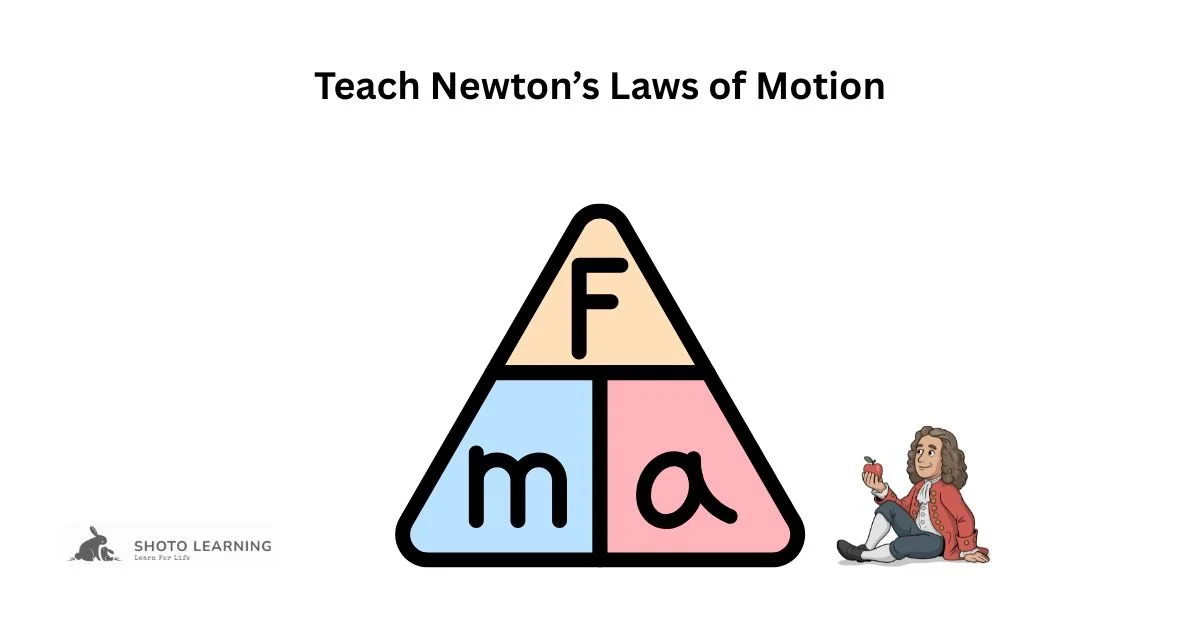
Newton's Laws of Motion are fundamental principles in physics that describe how objects behave in motion. Formulated by Sir Isaac Newton in the 17th century, these laws are essential for understanding the physical world. The First Law, or the Law of Inertia, explains that an object at rest remains at rest unless acted upon by a force. The Second Law establishes the relationship between force, mass, and acceleration, while the Third Law states that for every action, there is an equal and opposite reaction. This guide offers effective strategies for teaching these concepts, including real-life examples, interactive activities, and technology integration, making it easier for educators to engage students in this vital topic.