
Understanding Prokaryotic vs. Eukaryotic Cells Best Analogies for Kids Explained Simply
Cells are the building blocks of all living things, but not all cells are the same. Prokaryotic cells are simple and lack a nucleus, while eukaryotic cells have a nucleus and many specialized parts called organelles. Understanding the difference between these two helps explain how different forms of life function.
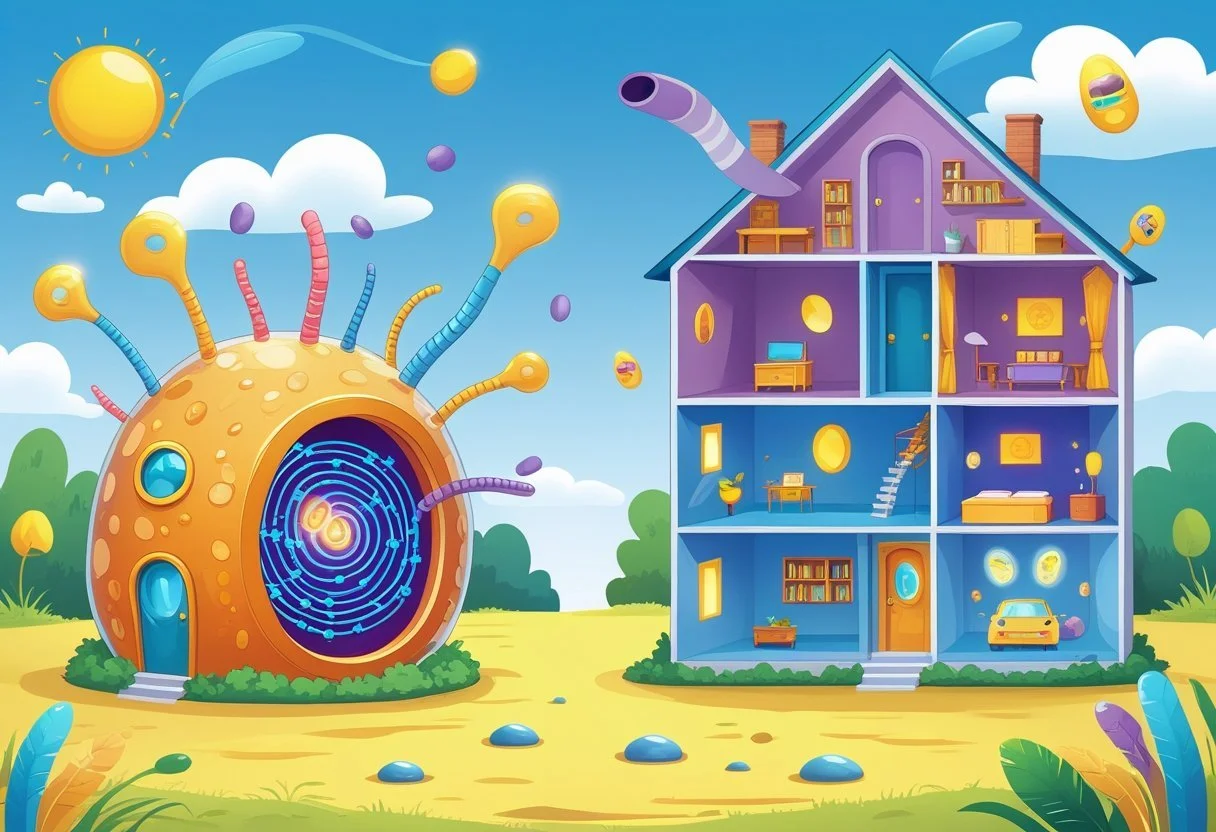
To make this clearer, comparing cells to everyday objects can help kids grasp these ideas easily. For example, prokaryotic cells can be thought of as small studios without separate rooms, while eukaryotic cells are like houses with many rooms, each having a specific job. These analogies make learning about biology more fun and relatable.
Recognizing these differences also shows where these cells live and how they work together in nature. Prokaryotes include bacteria, while eukaryotes include plants, animals, and fungi. Knowing this helps explain why some medicines target certain cells and not others.
Key Takeaways
Cells come in two main types with different structures and functions.
Simple comparisons help make complex cell biology easier for kids.
Knowing cell differences is important for understanding life and medicine.
What Are Prokaryotic and Eukaryotic Cells?
Cells come in two main types: prokaryotic and eukaryotic. Each type has specific features that separate simple organisms from more complex ones. These differences affect where the cells are found and how they work inside living things.
Defining Prokaryotic Cells
Prokaryotic cells are the simplest type of cells. They do not have a nucleus, so their DNA floats freely inside the cell. These cells are generally very small and simple in structure.
Most prokaryotic cells have a cell wall, a cell membrane, cytoplasm, and ribosomes. Some have extra parts like flagella to help them move. Prokaryotes include bacteria and archaea, which are mostly single-celled organisms.
They reproduce quickly and live in many places, from soil to water. Their simple structure lets them survive in extreme conditions.
Defining Eukaryotic Cells
Eukaryotic cells are larger and more complex. They have a nucleus that holds their DNA. This nucleus is surrounded by a membrane, keeping it separate from the rest of the cell.
Eukaryotic cells have many organelles, such as mitochondria for energy and, in plants, chloroplasts for photosynthesis. Animal, plant, fungi, and protist cells are eukaryotic.
The presence of these structures allows them to carry out more complex functions. Eukaryotic cells can also join together to form multicellular organisms.
The Importance of Cell Types
These two cell types shape life on Earth. Prokaryotic cells form the simplest organisms, mainly bacteria and archaea, and can live in almost any environment.
Eukaryotic cells belong to more complex organisms, including humans, animals, plants, and fungi. Their complexity allows for specialized body parts and systems.
Understanding these differences helps explain how life functions and evolves. For example, many medicines target prokaryotic cells without harming eukaryotic cells, which is important in treating infections.
Core Differences Between Prokaryotic and Eukaryotic Cells
Prokaryotic and eukaryotic cells differ mainly in how their DNA is stored, the presence of certain parts inside the cell, and their overall size and complexity. These differences affect how cells function and what roles they play in living things.
Nucleus and DNA Location
One key difference is where the DNA is kept. In eukaryotic cells, DNA is enclosed inside a nucleus, a special membrane-bound compartment. This protects the DNA and controls what happens with it.
Prokaryotic cells do not have a nucleus. Their DNA is found floating freely in the cytoplasm, the gel-like substance inside the cell. This means their genetic material is more exposed, and the cell controls its functions differently.
Presence of Organelles
Eukaryotic cells have many membrane-bound organelles that perform specific jobs. These include mitochondria for energy and the endoplasmic reticulum for making proteins. These organelles keep different cell processes organized.
Prokaryotic cells are simpler. They have ribosomes to make proteins but lack organelles like mitochondria or a nucleus. Their cell functions happen in less separated spaces within the cytoplasm.
Cell Size and Complexity
Eukaryotic cells are usually larger and more complex. Their size allows them to support many organelles and specialized tasks. This complexity supports multicellular life forms like plants and animals.
Prokaryotic cells are smaller and less complex. Their simpler structure makes them more efficient for fast growth and reproduction, which is common in bacteria and archaea. Their small size helps them adapt quickly to different environments.
Drawing Analogies: Simplifying Cells for Kids
Using familiar ideas helps kids understand how prokaryotic and eukaryotic cells work. Comparing cells to everyday objects makes it easier to see their parts and functions. These analogies show key differences between simple prokaryotic cells and more complex eukaryotic cells clearly and simply.
The Factory Analogy
A cell can be compared to a factory where different parts have specific jobs. The nucleus in eukaryotic cells acts like the control center or factory manager, directing activities and storing DNA instructions. Prokaryotic cells do not have a nucleus, so the DNA floats freely, like a factory without a clear manager.
Other parts, like the mitochondria, are the energy generators of the factory. They produce power to keep the cell working. The cell membrane is the security gate, controlling what enters or leaves the factory.
This analogy helps children see how proteins are made in the cell, much like a factory produces products on an assembly line. Ribosomes act as the machine workers, building proteins the cell needs.
The City Analogy
Comparing cells to a city highlights how many parts work together. In eukaryotic cells, the nucleus is the city hall, housing important information and decisions. Prokaryotic cells lack this building, showing their simpler structure.
Mitochondria are like power plants, supplying energy to the city. The cytoplasm is the streets and land where cell parts move and interact. The cell membrane is a city border that controls what can enter or leave.
This analogy also helps explain proteins. Ribosomes are the factories using instructions to build proteins needed for the city to function properly. It shows how both cell types have parts working together, but eukaryotic cells are more organized and complex.
Comparing House Structures
Thinking of cells as different types of houses illustrates their differences clearly. A eukaryotic cell is like a house with many rooms, each room having a specific use, such as the kitchen or bedroom. The nucleus is a locked office where the family keeps important documents.
Prokaryotic cells are like a studio apartment, where everything is in one open room without many walls, reflecting their simpler design. They still have all they need but fewer separate parts.
This analogy helps kids see how proteins are made and used. In a larger house, the process is more organized, while the studio uses fewer steps. Both house types serve as homes, just like both cells keep life running, but with different levels of complexity.
Where Can You Find Prokaryotic and Eukaryotic Cells?
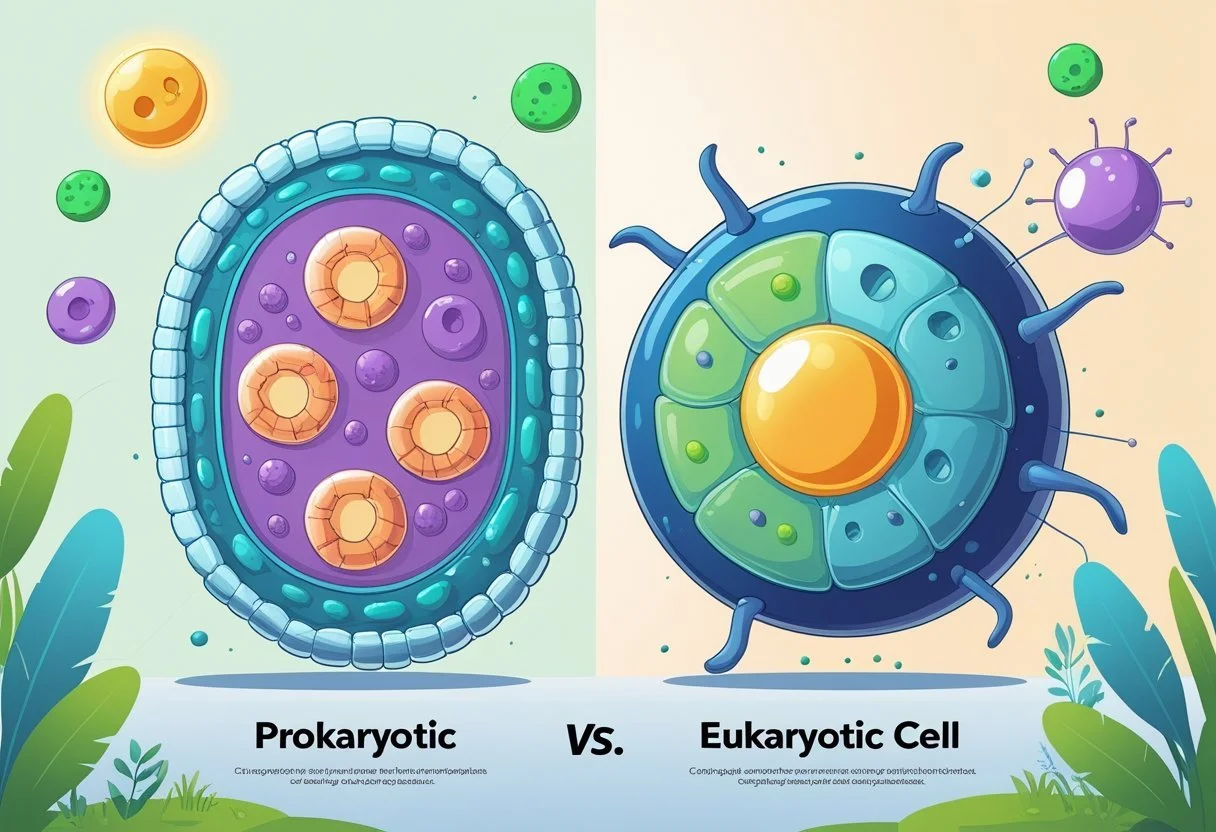
Prokaryotic and eukaryotic cells are found in many living things, from the smallest single-celled organisms to large plants and animals. They differ in where they appear and what types of organisms they make up. Understanding their locations helps explain the diversity of life on Earth.
Examples of Prokaryotes: Bacteria and Archaea
Prokaryotic cells are found in bacteria and archaea. These organisms are mostly unicellular, meaning they consist of one cell. Bacteria live practically everywhere—on skin, in soil, and in water. Some bacteria are helpful, like those in the human gut that aid digestion, while others can cause diseases.
Archaea often live in extreme environments, such as hot springs, salty lakes, or deep ocean vents. They can survive where most other life forms cannot. Both bacteria and archaea lack a nucleus, and their DNA floats in the cell. Prokaryotes generally have simple structures but can adapt to many environments.
Examples of Eukaryotes: Animals, Plants, Fungi, and Protists
Eukaryotic cells make up animals, plants, fungi, and protists. These cells are more complex than prokaryotes because they have a nucleus and other specialized parts called organelles. Most eukaryotes are multicellular, like humans and trees, but some, such as protists, are unicellular.
Animals and plants are easy examples of eukaryotes. Animals have cells without a cell wall, while plant cells have a rigid cell wall and chloroplasts for photosynthesis. Fungi include mushrooms and molds, which break down dead material. Protists are diverse and live mostly in water. They play many roles in ecosystems, from producers to consumers.
Structure and Functions of Key Cell Parts
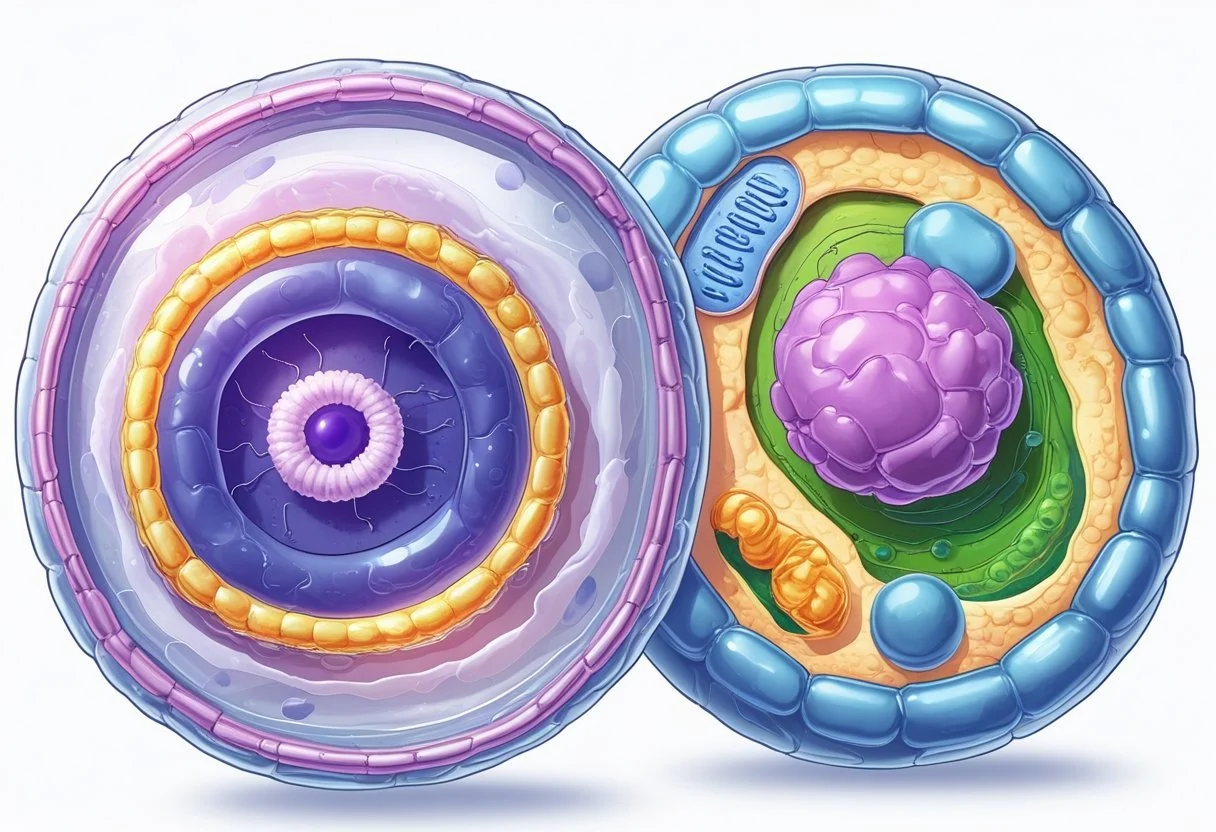
Cells have parts that work together to keep them alive and functioning. Some parts are simple and found in both cell types, while others are more complex and specific to one type. Understanding these parts helps explain how cells grow, repair, and produce energy.
Ribosomes and Protein Making
Ribosomes are tiny structures found in both prokaryotic and eukaryotic cells. They have one main job: making proteins. Proteins are essential for many cell functions, like building cell parts and speeding up chemical reactions.
Ribosomes read genetic instructions from the cell’s DNA and link amino acids to build proteins. In prokaryotic cells, ribosomes float freely in the cytoplasm. In eukaryotes, ribosomes can be free or attached to another cell part called the endoplasmic reticulum.
Despite their small size, ribosomes are crucial because they link the cell’s genetic code to the actual production of molecules needed for life.
Cytoplasm: The Cell’s Fluid
The cytoplasm is the gel-like substance inside the cell that surrounds all cell parts. It is mostly water but also contains salts, enzymes, and other molecules needed for the cell’s activities.
In both cell types, the cytoplasm holds ribosomes and many biochemical reactions happen here. It acts like a cushion to protect the cell’s structures and helps keep everything in place.
The fluid inside, called cytosol, is where nutrients are dissolved and moved. It allows molecules and signals to travel between different parts of the cell, supporting growth and response to the environment.
Cell Wall Differences
The cell wall sits outside the cell membrane in some cells and gives shape and protection. Prokaryotic cells like bacteria have cell walls made of peptidoglycan, a strong but flexible material.
Plant cells, which are eukaryotic, have cell walls made mainly of cellulose, a tough carbohydrate. This difference changes how each cell interacts with its environment and maintains structure.
Not all eukaryotic cells have cell walls, but those that do gain extra support from them, helping prevent damage and keeping the cells rigid.
Membrane-Bound Organelles in Action
Membrane-bound organelles are found only in eukaryotic cells. These structures have membranes that separate their insides from the rest of the cell. This helps cells carry out many tasks at once without mixing them up.
Some important organelles include the nucleus, which holds DNA; mitochondria, which produce energy from food; and the endoplasmic reticulum, which helps make and transport proteins and fats.
Prokaryotes do not have these organelles but carry out all functions within their one main body region. Eukaryotes rely on organelles to perform specialized jobs, making them more complex and able to handle more diverse functions.
How Cell Walls and Antibiotics Work
Cells can have different types of walls that protect and support them. These walls vary in makeup between bacteria and plants. Medicine called antibiotics can target bacteria specifically without harming human or plant cells because these walls are unique.
Cell Wall Materials in Prokaryotes and Eukaryotes
Prokaryotic cells, like bacteria, have a strong cell wall made of peptidoglycan. This substance is a mix of sugars and short protein chains. It helps bacteria keep their shape and protects them from bursting.
In contrast, many eukaryotic cells, such as plant cells, have cell walls made mostly of cellulose, a type of sugar. Animal cells, including humans, do not have a cell wall at all.
Because their cell walls are very different, prokaryotic and eukaryotic cells react differently to various chemicals and drugs. This difference is important for how medicines work safely on infections.
How Antibiotics Target Prokaryotic Cells
Antibiotics often work by attacking the peptidoglycan in bacterial cell walls. Drugs like penicillin block the enzymes bacteria use to build this wall. Without a proper wall, bacteria weaken and burst from pressure.
Human and plant cells are not affected because they do not use peptidoglycan. Instead, antibiotics focus only on bacteria, making them effective for infections without harming the body.
Some antibiotics also stop bacteria from growing or making energy, but targeting the cell wall is a common and powerful method. This selective targeting is why antibiotics can fight bacteria safely.
Why Understanding Cell Types Matters
Cell types reveal how different living things work and survive. Knowing their roles helps explain the diversity of life forms and supports learning science clearly.
Connecting Cell Types to Living Things
Prokaryotic and eukaryotic cells form the basis of all organisms. Prokaryotes, like bacteria, have simple cells without a nucleus. Eukaryotes include animals, plants, fungi, and more complex life forms with cells that contain a nucleus and many organelles.
This difference affects how organisms grow, reproduce, and interact with their environment. For example, bacteria can quickly adapt to changes because their cells are simpler. Larger organisms need more specialized cells to handle complex processes.
Recognizing these cell types helps understand biology better. It explains why some organisms are single-celled, while others have millions or billions of cells working together.
Cells, Life, and Learning Science
Understanding cell types is key to studying biology and all life sciences. Cells are the building blocks of life, so knowing how they differ helps students grasp topics like genetics, disease, and ecology.
When learners explore how cells function, they see how life is organized from small units to complete organisms. This knowledge also connects to practical fields such as medicine, environmental science, and biotechnology.
By focusing on clear differences like the presence of a nucleus or size, students build a foundation for more advanced science topics. This basic understanding supports future learning in biology and beyond.
Frequently Asked Questions
Prokaryotic and eukaryotic cells differ in many ways, especially in their structures and how they work. Explaining these differences can help make clear why some cells are simpler and others are more complex. Understanding their unique parts and examples helps to see how cells perform their roles in living things.
What are the main differences between prokaryotic and eukaryotic cells?
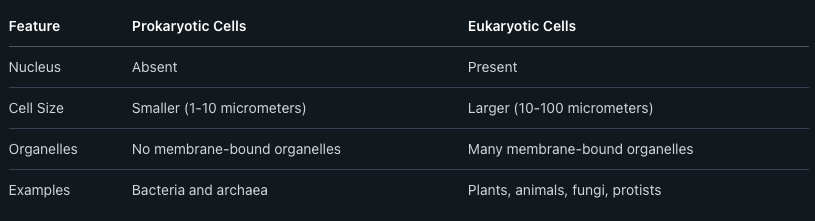
Prokaryotic cells are smaller and simpler. They do not have a nucleus or membrane-bound organelles. Their DNA floats freely inside the cell.
Eukaryotic cells are larger and more complex. They have a nucleus that holds their DNA and many organelles that perform different jobs.
How can you explain the structure of a cell to a child using simple analogies?
A prokaryotic cell can be compared to a small workshop with all tools in one room. A eukaryotic cell is like a big factory with many rooms, each with special machines.
The nucleus is like the control center or office where decisions are made. Organelles are like the different departments that have specific tasks.
What are some examples of prokaryotic and eukaryotic organisms?
Bacteria and archaea are examples of prokaryotic organisms. They are usually single-celled.
Plants, animals, fungi, and protists are eukaryotes. These organisms can be made of one or many cells.
How do the functions of prokaryotic cells compare with those of eukaryotic cells?
Prokaryotic cells carry out all life processes in a simple way. They grow, reproduce, and respond to their environment but with fewer tools.
Eukaryotic cells can do more complex tasks, like creating energy in mitochondria or making proteins in ribosomes, because of their special organelles.
What role do organelles play in eukaryotic cells, and how does that differ from prokaryotes?
Organelles in eukaryotic cells act like tiny organs inside the cell. Each has a specific job, such as energy production or waste removal.
Prokaryotic cells do not have organelles with membranes. Their functions are done in the main cell area without separate compartments.
How do cell division processes differ between prokaryotic and eukaryotic cells?
Prokaryotic cells divide by a simple process called binary fission, where the cell splits into two identical cells.
Eukaryotic cells divide through mitosis or meiosis, which involve more complex steps to ensure DNA is copied and shared properly.


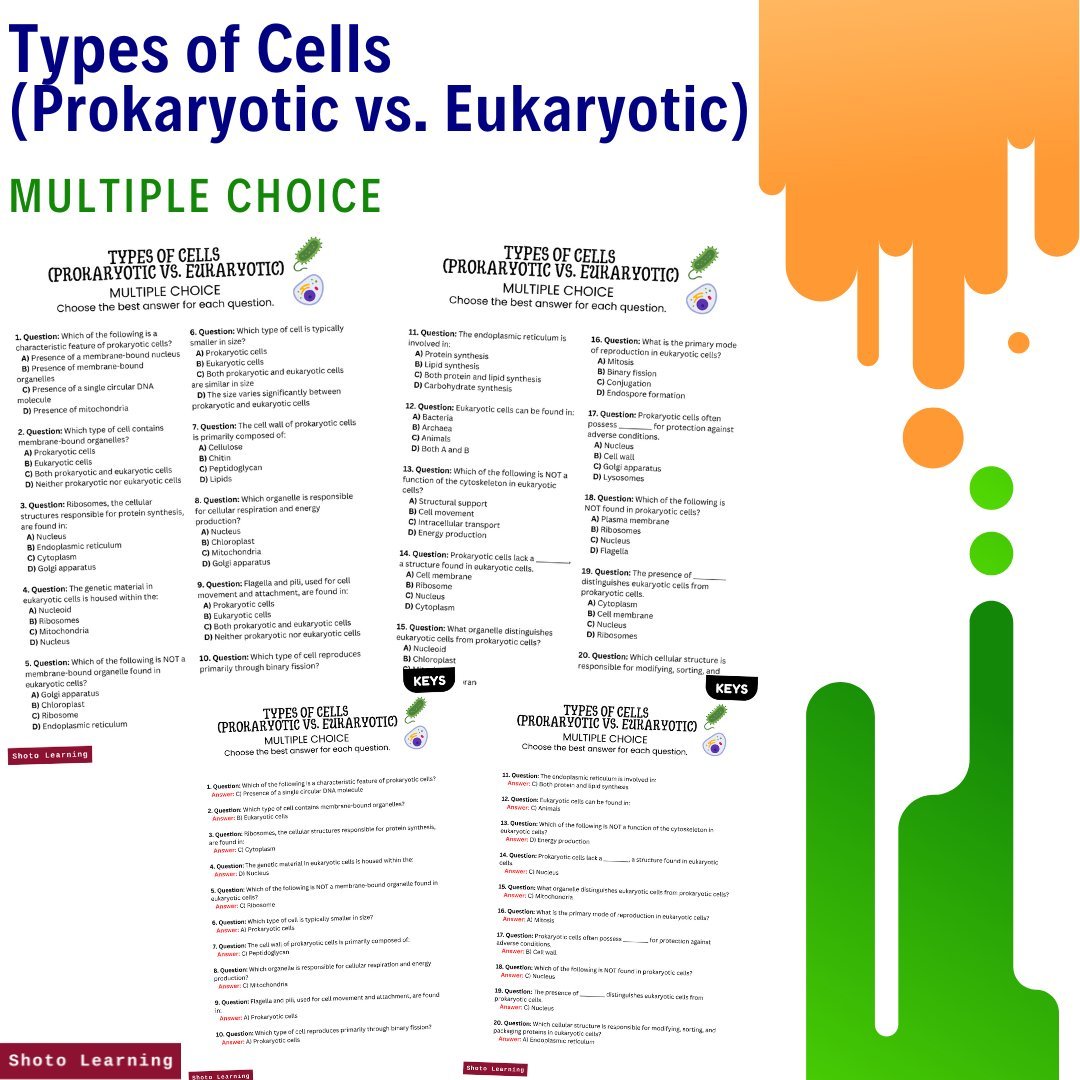


Embark on an exciting journey into the realm of cellular biology with our comprehensive "Cell Biology Activity Bundle," focusing on the comparison between prokaryotic and eukaryotic cells. This bundle features a diverse selection of engaging activities and resources designed to deepen understanding, promote critical thinking, and reinforce key concepts. Whether you're a teacher looking to enhance classroom lessons or a student seeking additional practice, this bundle provides a wealth of educational opportunities. From bingo and crossword puzzles to flashcards and writing prompts, there's something for everyone in this comprehensive bundle.
Bundle Includes:
Assignments: Embark on 10 stimulating assignments covering diverse topics, encouraging critical thinking and practical application of knowledge.
Bingo - 30 Bingo Cards: Enjoy a fun and interactive game of bingo while reinforcing knowledge of prokaryotic and eukaryotic cells. Perfect for classroom activities or study groups.
Crossword Puzzle: Challenge yourself with a crossword puzzle that tests your understanding of cell biology concepts and terminology.
Cryptogram: Decode cryptic messages related to prokaryotic and eukaryotic cells, combining logic and knowledge to unravel hidden meanings.
Debate: Engage in lively debates exploring the differences between prokaryotic and eukaryotic cells, fostering critical thinking and communication skills.
Experiments: Explore hands-on experiments illustrating fundamental principles across various disciplines, fostering deeper understanding and engagement.
Fill in the Blank: Test your knowledge of cell biology with fill-in-the-blank exercises covering various aspects of prokaryotic and eukaryotic cells.
Flash Cards: Reinforce key concepts and terms with flashcards designed for quick review and memorization.
Free ABC Order: Practice alphabetizing cell biology terms with a free ABC order worksheet, promoting vocabulary retention and organization skills.
Free Label the Parts: Identify and label the essential components of prokaryotic and eukaryotic cells with a free labeling worksheet.
Free Poster: Explore intriguing facts about cell biology with a free poster, perfect for classroom display or personal reference.
Lesson Plan: Dive deep with our detailed lesson plan, complete with engaging activities and discussion topics.
Matching: Match descriptions to corresponding cellular structures and functions, reinforcing understanding of key concepts.
Missing Letters: Exercise your problem-solving skills by filling in missing letters to complete words related to cell biology.
Multiple Choice: Test your knowledge with multiple-choice quizzes covering various aspects of prokaryotic and eukaryotic cells.
PowerPoint: Dive into the intricacies of cell biology with a visually engaging PowerPoint presentation, providing a comprehensive overview of prokaryotic and eukaryotic cells.
Questions and Answers: Challenge yourself with thought-provoking questions and check your understanding with comprehensive answer keys.
Reading Comprehension: Sharpen reading skills with engaging passages, perfect for students and educators alike.
Scramble: Unscramble letters to form words related to cell biology, enhancing vocabulary and spelling skills.
Test (45 Minutes): Assess your knowledge and comprehension with a timed test focusing on the similarities and differences between prokaryotic and eukaryotic cells.
True or False: Test your understanding of cell biology concepts with true or false quizzes, providing instant feedback for self-assessment.
Word Search: Have fun while reinforcing knowledge of cell biology concepts with a word search puzzle.
Writing Prompts: Reflect on the significance of prokaryotic and eukaryotic cells and explore their roles in living organisms with engaging writing prompts.
Enhance your understanding of prokaryotic and eukaryotic cells with our "Cell Biology Activity Bundle," offering a wide array of interactive and educational resources for comprehensive learning. Whether you're a student or an educator, these activities provide valuable tools for mastering the fundamentals of cell biology.
Order your copy today!