
Guide to Teaching 1–20 Addition: Effective Strategies for Early Learners
Teaching children how to add numbers from 1 to 20 builds a strong foundation for their future success in math. This guide shows clear and simple ways to teach basic addition, making learning both fun and practical for students. Parents and teachers will find helpful tips to keep children engaged and growing in their math skills.
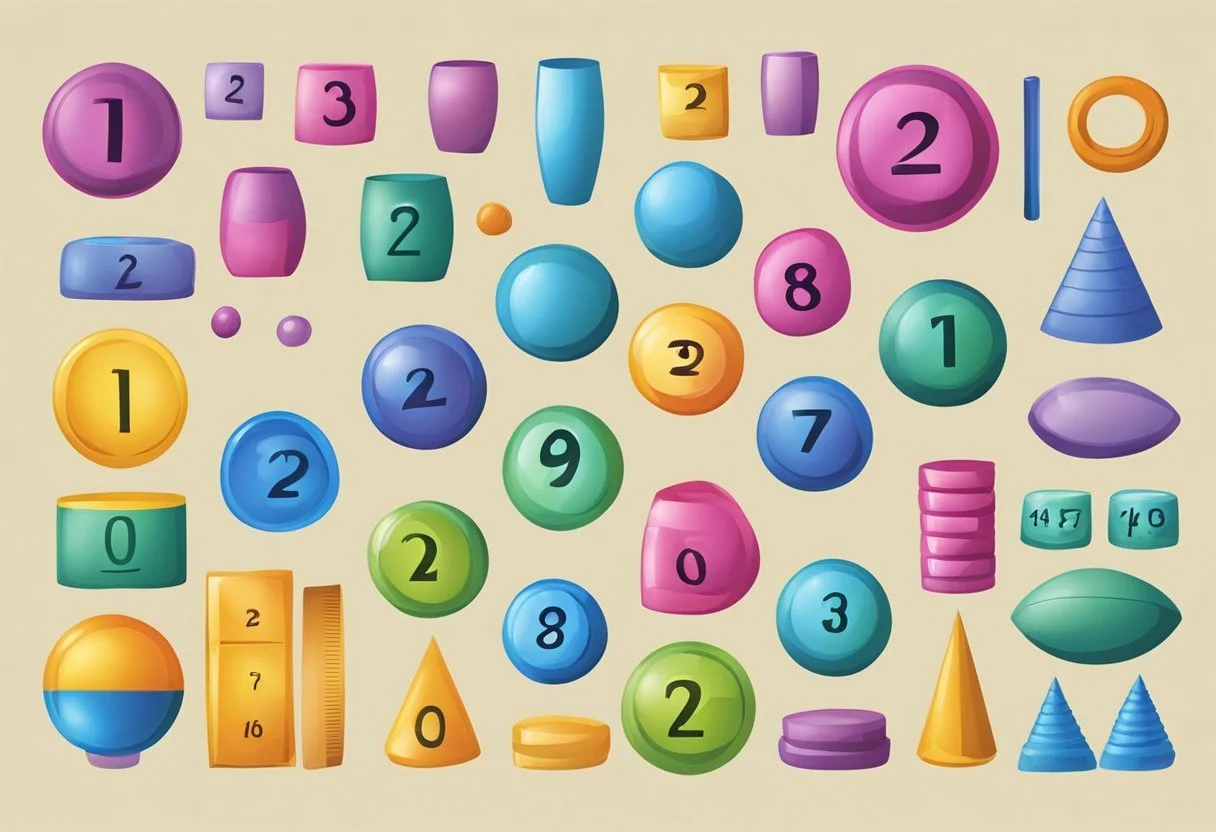
Addition skills help students solve real-life math problems and boost their confidence. With the right tools, kids can learn to add quickly, enjoy math activities, and apply what they learn every day.
Key Takeaways
Clear steps make teaching addition from 1–20 easier.
Fun activities help build strong math skills.
Everyday examples show how addition is useful.
Understanding the Fundamentals of Addition
Learning addition starts by understanding what addition means, how numbers work, and how addition compares to subtraction. These ideas are key for teaching first graders and help build strong basic math skills.
What Is Addition?
Addition is a basic math operation used to join two or more numbers together to get a total or sum. For example, if a student has 4 apples and gets 3 more, addition helps them find they now have 7 apples.
Students in first grade learn to use symbols in addition. The plus sign (+) means to add, and the equals sign (=) shows the result. For example:
3 + 2 = 5
Addition can be shown using real objects, fingers, or pictures. This makes the idea clearer for young learners. Knowing that turning groups into one whole is what addition does is important before moving on to more advanced problems.
The Importance of Counting and Number Sense
Counting is the first step in learning addition. It lets students name and order numbers from 1 to 20 and beyond. Skills like counting aloud, pointing to objects, and recognizing numbers help students start simple addition problems with confidence.
Number sense means understanding what numbers are and how they relate to each other. First graders need to know that 5 is more than 3, but less than 7. Number sense helps students estimate answers and notice patterns, such as that numbers get bigger when you add.
Activities like using number lines, counting blocks, or drawing dots help children see and feel how numbers combine. Strong number sense gives a child the tools needed to solve addition problems accurately and quickly.
Addition vs. Subtraction: Key Differences
Addition and subtraction are two core math operations in first grade math. Addition means putting numbers together to make a bigger number. Subtraction means taking away to find what is left.
These are the main differences:

Knowing the difference between the two helps students avoid mistakes. It also teaches them to look for keywords like in all (for addition) or left (for subtraction) in word problems. Early practice with both operations helps lay the groundwork for understanding more advanced math skills.
Key Concepts in Teaching 1–20 Addition
Understanding how numbers work together, recognizing the importance of place value, and knowing how to use the equal sign are essential for mastering addition up to 20. Students also benefit from simple strategies like counting on and counting forward to find sums accurately and quickly.
Using Place Value and the Tens Place
Place value helps students break down numbers and see the parts that make them up. For example, in the number 14, the "1" stands for 10 and the "4" stands for 4 ones. Knowing that numbers from 10 to 20 all have at least one group of ten makes addition easier.
Teachers may use blocks, drawings, or place value charts. These tools help students line up numbers so they can see how ones and tens add together. Students should practice combining groups of tens first, then add the ones.
For instance, to solve 13 + 6, notice that 13 is made of one ten and three ones. Add the six ones to the three ones to get nine ones, keeping the one ten. They then find the sum is 19. Understanding these steps keeps addition simple and clear.
Understanding the Equal Sign and Equations
Many young students think the equal sign (=) only means "the answer is next." It's important for them to know it actually shows that both sides of an equation are the same value. For example, in the equation 8 + 7 = 15, both sides are equal.
Teachers should show equations in different ways, not just with the sum on the right side. Try writing 15 = 8 + 7 or 10 + 5 = 8 + 7. This helps students see that both sides must balance.
Using number sentences and writing different forms of equations gets students comfortable with the equal sign. They also learn to check their own work by making sure the numbers on both sides of the equal sign are the same.
Counting On and Counting Forward Strategies
Counting on is a method where students start with the bigger number and then count up. For example, for 9 + 5, start with 9 and count up five: "10, 11, 12, 13, 14." This is quicker than starting from one.
Counting forward simply means moving ahead in order. Using fingers, number lines, or counters makes this visual and easy to practice. These strategies help students solve addition up to 20 without needing to memorize every fact.
These methods build number sense and help students see addition as a process instead of only a rule to remember. Teachers should use lots of practice and real examples, so students get comfortable with these skills.
Effective Methods for Addition Instruction
Teaching addition from 1 to 20 is most successful when different methods are used. Strategies like making a 10, regrouping, using visuals, and handling column addition with care help students understand both the steps and reasons behind each answer.
Making a 10 and Regrouping Principles
The “make a ten” strategy lets students turn harder problems into simpler ones. For example, to solve 8 + 6, a student breaks 6 into 2 and 4, then adds 8 + 2 to make 10, and finally 10 + 4 to get 14. This technique builds number sense and helps with mental math later.
Regrouping is when numbers are shifted between the ones and tens place to keep the math correct. This comes up when the result of an addition goes above 9 in any place. For example, 9 + 8 requires regrouping because 9 + 8 = 17; so, 7 stays in the ones, and 1 moves to the tens.
Main steps for regrouping:
Add the ones place
If the sum is 10 or more, keep the ones digit, and move the rest to the tens place
Add the tens
Mastering regrouping supports bigger addition problems and builds readiness for multi-digit addition.
Column Addition and Carry Over
Column addition is the process of lining up numbers vertically by place value and adding each column one at a time. This is especially important when students move to double-digit numbers. Each digit must be written in the correct column to avoid mistakes.
When the sum in a column is 10 or more, carry over is needed. The digit in the ones place stays, while the digit(s) in the tens place carries over to the next column left. For example, with 17 + 8:

Add the ones: 7 + 8 = 15. Write down 5, carry the 1. Add the tens: 1 (from 17) + 1 (carried) = 2. The answer is 25.
Careful alignment and carrying are key steps for accuracy.
Tally Marks, Ten Frames, and Counters
Tally marks are simple lines that help students count visually, usually grouped in sets of five. They are especially useful for keeping track of numbers in real time.
Ten frames show two rows of five boxes each that can be filled with dots or counters. Teachers use them to help students see how numbers relate to ten. For example, 6 is shown as 5 filled plus one more.
Counters are small objects students can move or group to represent quantities. These tools make abstract problems concrete, allowing physical movement, and help students check their own work.
Comparing tools:

Using these aids increases understanding and supports different learning styles.
Engaging Activities and Materials
Adding numbers from 1 to 20 becomes easier with the right tools and creative practice. Young learners benefit from using objects, worksheets, and clear diagrams to build strong addition skills.
Hands-On Materials for Performing Addition
Using real objects helps make addition more concrete. Common materials include counters, cubes, plastic bears, and number tiles. Students can group, count, and move these items to visually perform addition facts, such as 5 + 7 or 13 + 6.
Teachers often use ten frames and number lines. These allow kids to see how numbers combine. Dice, playing cards, and dominoes can also help. For example, rolling two dice lets students add the numbers together in a fun way.
Some classrooms use basic craft supplies. Popsicle sticks, buttons, or beans can be counted out, arranged, and grouped. This hands-on practice helps students connect counting to actual addition.
Worksheets and Digital Resources
Worksheets provide structured practice. Many worksheets focus on completing number sentences, finding missing addends, or matching sums. These can feature visual supports like pictures or number lines, which guide students through each problem.
Digital resources add variety and engagement. Interactive games and educational apps let students solve addition facts by dragging objects or entering answers. Some programs track progress and adapt to the learner’s level, offering hints or extra help when needed.
Teachers may use tables to organize problems or track mastery. For example:

This type of table helps students check their work independently.
Using Tape Diagrams and Visual Aids
Tape diagrams give a clear visual model for addition. A tape diagram is a simple bar divided into parts. Each part represents an addend, and the total length shows the sum. For example, a tape split into 9 and 6 shows that 9 + 6 = 15.
Visual aids also include number bonds, charts, and illustrated stories. By seeing how numbers relate, students better understand addition facts. Colorful diagrams break down tricky problems into simple steps.
Teachers often display these aids on walls or desks. This keeps key addition strategies visible for students during practice. Using diagrams and visuals supports different learning styles and makes abstract ideas concrete.
Building Addition Fact Fluency
Developing addition fact fluency helps students solve math problems quickly and accurately. Mastering these basic facts also aids in understanding subtraction and prepares students for harder math concepts.
Practicing Basic Addition Facts
Students need repeated practice to become fluent in basic addition facts from 1 to 20. Daily drills help children remember sums more easily. Using flashcards, timed worksheets, and oral quizzes offers quick review and reinforces memory.
Teachers can track progress with checklists or simple tables:

Letting students skip facts they already know keeps practice sessions focused. Small, frequent sessions are more useful than longer, less frequent ones.
Comparing Addition and Subtraction Facts
Understanding the relationship between addition and subtraction facts can help students gain better number sense. For example, if a student knows that 7 + 5 = 12, then they can quickly figure out that 12 – 5 = 7 and 12 – 7 = 5. This connection is called a fact family.
Teachers can use number bonds or simple charts to show how numbers fit together. This also helps students check their answers and spot mistakes in their calculations. Practicing with both types of facts together helps build stronger mental math skills.
Games and Activities to Boost Fluency
Games and hands-on activities can make learning addition facts fun and memorable. Board games with addition cards, bingo, or dice games allow students to practice facts in an exciting way.
Interactive online tools often provide immediate feedback, helping students learn and correct errors. Group games encourage friendly competition and teamwork. Simple activities like matching fact cards or "cover the sum" challenges keep students motivated while giving plenty of practice with addition and subtraction facts.
Switching activities regularly can keep students engaged and interested in learning. Using both cooperative and competitive games provides variety and addresses different learning styles.
Applying Addition to Real-World Problems
Students benefit from connecting addition to everyday situations. Using real-life examples helps them understand "add to," "put together," and finding sums with larger numbers.
Solving Word Problems with Addition
Word problems teach students to apply math to daily life. For example, a student might read: "Sarah has 7 apples. She gets 4 more. How many apples does she have now?" This requires students to find the sum of 7 and 4.
They learn to find important numbers, decide what operation to use, and explain their answers. Teachers can encourage students to use drawings, counters, or number lines.
A simple table can help organize information:

By solving word problems, students see how addition is used outside of the classroom.
Add To, Put Together, and Larger Numbers
The "add to" and "put together" situations show different ways to combine amounts. For example, "add to" problems include cases where more items are added, like "Jamal had 6 marbles and got 5 more."
"Put together" problems join groups, such as "There are 8 blue balls and 7 red balls. How many balls are there altogether?" These types of problems still use addition, but the way numbers are joined changes.
Teachers should introduce problems with numbers close to 20 to help students become comfortable with addition and subtraction within 20. Asking students to explain their thinking or solve problems with real items (like coins or toys) helps them see why addition matters in real life. Boldly practicing these types of problems builds both skill and confidence.
Supporting Continued Growth in Math Skills
Building strong math skills in first grade requires solid foundations and daily practice. Success with addition comes from recognizing numbers quickly, connecting math ideas, and using practice plans that keep students challenged and engaged.
Subitizing and Number Recognition
Subitizing is the ability to see a small group of objects and know the number without counting. This skill helps students add numbers quickly and develop number sense. For example, when looking at dice, a child can see five dots and name the amount at a glance.
Practicing subitizing strengthens number recognition, which is needed for learning addition facts up to 20. Teachers and parents can use dot cards, ten frames, and quick image games to encourage fast recognition.
Consistent practice with subitizing lays a key foundation for more complex skills. Students who recognize numbers easily often solve addition problems more confidently.
Connecting Addition to Other Math Concepts
Addition is closely linked to other first grade math topics like subtraction, patterns, and even telling time. Relating addition facts to real situations, such as grouping objects or comparing quantities, helps children see the purpose of addition.
When students learn how addition and subtraction are connected, it deepens their understanding. For example, knowing that 7 + 5 = 12 can help students realize that 12 - 5 = 7. Teachers can use number lines, fact families, and story problems to show these relationships.
Making these connections helps children not only memorize facts but also apply math in real life, such as counting minutes or understanding schedules.
Strategies for Ongoing Practice
Regular, varied practice routines help students keep their addition skills sharp. Short daily activities, such as flashcards, math games, and timed drills, are effective. These activities can be done at home or in the classroom and should focus on both speed and accuracy.
Using games, worksheets, and oral quizzes adds variety and maintains interest. Teachers can also track progress and introduce new challenges to keep students motivated.
A simple table can help organize practice:

Mixing these strategies ensures students are always building on what they know and ready for the next step in math.
Frequently Asked Questions
Teachers often look for practical steps to help students understand addition. Lessons should be hands-on, engaging, and use activities or materials that are suited for young learners.
How do you teach addition step by step?
Start by making sure students can count objects. Move to simple addition stories using real items, like blocks or counters. Show students how to write addition problems and answer them using these objects. Practice together before moving to written problems with just numbers.
What are some effective strategies for teaching addition to first graders?
Use objects like cubes or counting bears to make addition concrete. Number lines and ten frames help students see the numbers. Stories and word problems show how addition works in real life. Visuals and physical movement, like jumping forward on a floor number line, make lessons memorable.
What types of activities can help children learn addition to 20?
Sorting games, card games, and matching pairs are helpful. Simple board games that use dice or spinners let children practice adding numbers. Flashcards, puzzles, and drawing pictures of addition stories are also useful. Group activities, like making groups of objects together, encourage teamwork.
How can addition lesson plans be made fun and engaging for young learners?
Add songs, rhymes, and movement to break up lessons. Use colorful visuals and interactive smartboard activities. Hands-on tasks, such as building towers with blocks or drawing with chalk, keep students interested. Incentives like stickers or “addition stars” motivate students to participate.
What is the best order to introduce addition facts to students?
Start with adding 0 and 1, then teach facts up to a sum of 5. Move to sums up to 10, and later up to 20. Keep practicing familiar facts before adding new ones.
How can teachers use worksheets to reinforce addition skills in early education?
Worksheets can offer practice with both pictures and numbers. Teachers should give worksheets with different types of problems, like drawing objects, circling answers, or filling in blanks. Quick daily worksheets give regular, short practice sessions. Using color or cutting-and-pasting can make worksheets more engaging.


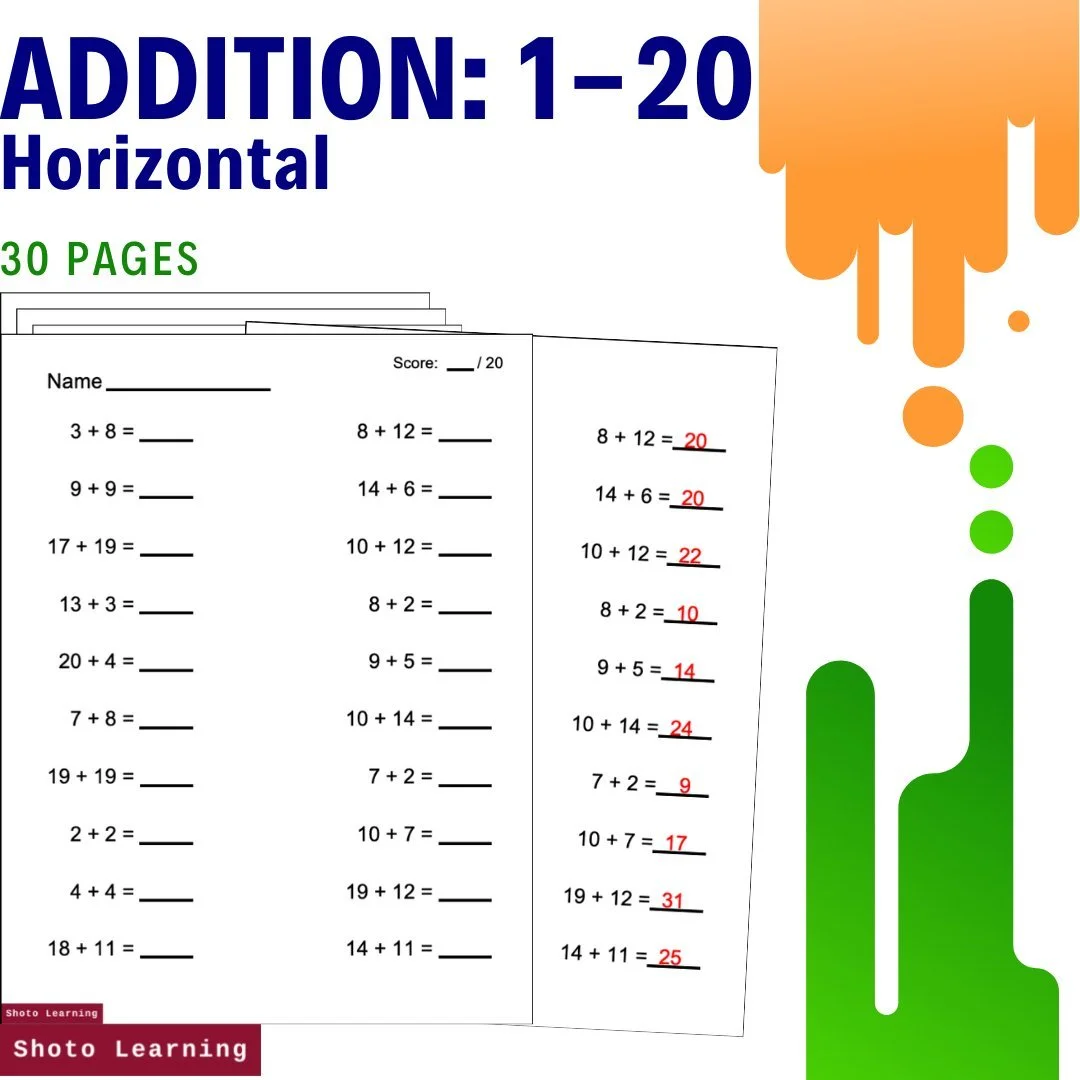

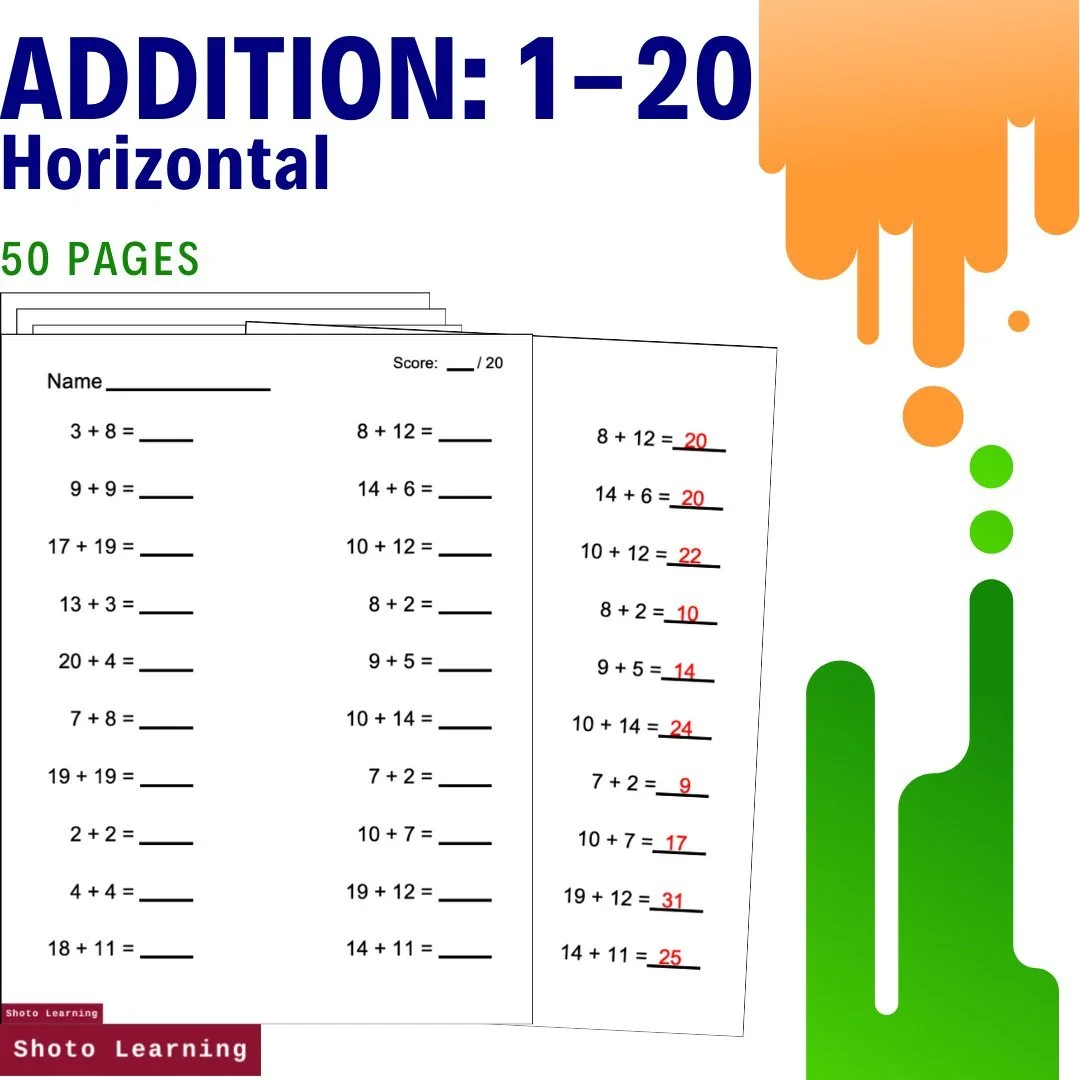


Help students strengthen their basic math skills with this FREE Addition 1–20 Worksheet, designed for early learners and beginner-level practice. This printable page includes 20 horizontal addition problems with sums not exceeding 40, ideal for classrooms, homeschool use, or quick review sessions.
Key Features:
Focuses on addition with numbers between 1–20
Only horizontal problems for simplified layout
One printable worksheet page
20 math problems per page
Answer key included for quick grading
Clean, no-frills design for easy use
Perfect for kindergarten to 2nd-grade students
Ways to Use This Worksheet:
📚 Independent seat work
🧠 Math centers or stations
📝 Quick assessment or quiz
🏠 Homework or take-home practice
🧑🏫 Substitute plans and early finisher tasks
Download, print, and start building addition confidence today—completely free!