
How to Make Skip Counting Fun and Easy: Engaging Strategies for Young Learners
Many kids find math hard, but skip counting can actually be fun and simple with the right approach. Skip counting helps children see patterns in numbers and builds a strong foundation for multiplication and other math skills. By turning skip counting practice into games or challenges, students can learn faster and enjoy the process.
There are many ways to make skip counting part of daily life, like counting steps or using music and visual aids. These strategies keep learners interested and make it easier for them to remember number patterns.
Key Takeaways
Skip counting builds important math skills through pattern recognition.
Fun activities make learning skip counting easier and more enjoyable.
Using skip counting in everyday situations helps reinforce new skills.
Understanding Skip Counting
Skip counting uses regular jumps in numbers to make counting faster and easier. It's a helpful skill for learning about number patterns, finding multiples, and building strong basic math skills.
What Is Skip Counting?
Skip counting is a way of counting numbers by adding the same amount each time. Instead of counting by ones (like 1, 2, 3...), people count by numbers such as twos (2, 4, 6...), fives (5, 10, 15...), or tens (10, 20, 30...).
This method follows a specific counting pattern with equal intervals between numbers. Each jump is called a "step," and the amount added or subtracted is always the same. Skip counting can go forward or backward and helps show how numbers relate to each other.
Common skip counting sequences include:

It is one of the first steps in learning more advanced math.
Why Skip Counting Matters
Skip counting helps children learn number sense, which is the understanding of how numbers work together. Recognizing counting patterns makes mental math quicker and easier.
This skill builds a foundation for multiplication and division. For example, counting by threes (3, 6, 9, 12...) helps students understand what multiplication means. Skip counting also helps in finding multiples and builds flexible math thinking.
Teachers use skip counting as a bridge from simple counting to harder math. Regular practice improves counting skills, helps in solving problems faster, and gives more confidence with numbers.
Fundamental Math Concepts
Skip counting supports the learning of three key math concepts: addition, multiplication, and division. When children skip count, they practice repeated addition. For instance, counting by fours means adding four each time (4 + 4 + 4 ...).
It also introduces multiplication, since skip counting by a number is like multiplying that number by how many times you count. Later, it helps explain division, since students can see how numbers are split into equal groups.
Skip counting connects to finding patterns and multiples in numbers. Practicing these skills gives children a strong foundation in number sense, making future math work easier to understand. Using skip counting in games or real-life activities can make these concepts more clear.
How to Teach Skip Counting Effectively
Teaching skip counting works best when activities are hands-on and lessons match the child’s age and skills. Using real-life examples helps children learn faster and makes lessons more enjoyable.
Teaching Strategies for Children
Teachers and parents can try several approaches for teaching skip counting. Using counting objects such as blocks or beads helps students see groups and patterns. Singing skip counting songs or chanting numbers builds memory.
Games with dice and cards give children a chance to practice skip counting in a fun way. Teachers can make simple charts or number lines. These show children how numbers increase by the same amount each time.
Another idea is to count objects in the classroom, like books or crayons, in groups. This makes practice skip counting feel useful and real. Setting small goals, such as reaching twenty by twos, can give children a sense of accomplishment.
Supporting Number Sense Development
Understanding why skip counting works is key to learning math. Children should look for patterns when they count—like noticing how skip counting by fives always ends in zero or five. This helps them understand how numbers work together.
Teachers can ask students to explain how they got their answers. For example, a teacher might ask, “What number comes next if we keep counting by threes?” This builds confidence and shows if the child really understands.
Use visual tools, such as hundreds charts or number grids, so kids can see the pattern. Writing skip counting sequences on the board and asking students to fill in missing numbers can also help.
Age-Appropriate Approaches
Younger children, such as those in kindergarten, learn best with hands-on activities. Simple songs, finger counting, or jumping games make skip counting more interesting. Use large, colorful visuals or picture books to keep them engaged.
For older students, introduce written exercises and basic multiplication facts as they become ready. Puzzles, skip counting mazes, and flashcards work well. Adjust the difficulty to match each child’s level, making sure no one feels left behind or bored.
Give regular feedback and celebrate improvement. This builds a sense of accomplishment and helps children want to keep practicing skip counting. Keep lessons short and playful, especially for younger learners.
Engaging Skip Counting Activities
Children can learn to skip count more easily when they are active, engaged, and can use different learning styles. Teachers and parents can mix hands-on activities, counting games, and interactive mazes into lessons to make math practice more meaningful.
Hands-On Classroom Ideas
Hands-on classroom ideas help students stay focused with counting activities that use real objects. Using beads, blocks, or coins lets children touch and move items as they count by twos, fives, or tens. This makes skip counting less abstract and more concrete.
Teachers can create skip counting stations where students match numbers or build number lines. Action skip counting can include jumping in place for every count, clapping, or marching. This helps kids connect movement to numbers in a memorable way.
Group activities, such as passing a ball in a circle and saying the next skip count number, foster teamwork and repetition. Teachers can further use skip counting dot to dots, where students connect numbers on worksheets in sequence, revealing a fun shape or picture.
Skip Counting Games for All Ages
Skip counting games make learning feel like play. Board games, card games, and digital apps all provide chances to practice without added pressure. Classic games like Bingo or Memory work well with skip counting cards. For example: replace normal numbers with only multiples of five or ten.
Interactive activities include rolling dice and multiplying the result or creating a race to see who reaches 100 first by only counting by fives. Partner games, where one student says a number and the other keeps the skip counting pattern going, help both practice and listening skills.
Online skip counting games and apps often have timers, sound effects, and colorful visuals. These features keep children interested, and most programs adjust difficulty to match the player’s level. This approach motivates practice for students of different ages and abilities.
Crafting Skip Counting Mazes
Skip counting mazes challenge students to solve puzzles by following a pattern, boosting math and logic skills. These mazes may be worksheets where students start at one number and follow a path by counting by threes, fours, or any multiple, avoiding incorrect routes.
Teachers can also create large floor mazes using sticky notes or paper plates with numbers. Students travel through the maze only stepping on the correct skip counting numbers. This interactive activity adds movement and excitement to math lessons.
Printable skip counting maze sheets are easy to find and customize for different levels. Using mazes keeps students focused as they must pay attention to the count while also thinking ahead to find the right path, making practice less repetitive and more rewarding.
Popular Skip Counting Patterns
Skip counting patterns help students quickly find multiples and recognize number sequences. Each pattern highlights predictable jumps in numbers, making counting faster and supporting mental math skills.
Counting by 2s
Counting by 2s is often one of the first skip counting skills taught. It involves counting numbers by adding 2 each time. This method covers all even numbers: 2, 4, 6, 8, 10, and so on.
Many students use counting by 2s to quickly find totals in objects that are grouped in pairs, such as socks or shoes. Using a number line helps children visualize the pattern. They can also use charts like this:

Games like clapping on every even number or coloring even numbers on a hundreds chart also reinforce this skill.
Counting by 3s
When counting by 3s, students add 3 each time: 3, 6, 9, 12, and so forth. This pattern includes all the multiples of 3. Teachers often use rhythm and songs to help students memorize these numbers.
Skip counting by 3s is important because it builds a base for understanding the multiplication table. For example, knowing how to count by 3s helps with multiplying by 3. Visual aids like filling in every third space on a chart can help children see the repeating pattern.
Activities such as skip-count chants or movement games can make it easier to remember the sequence. Practice helps students quickly recognize and use these multiples in everyday math.
Counting by 6s
Counting by 6s means you add 6 each time: 6, 12, 18, 24, and so on. This sequence can be tricky at first because the numbers get larger quickly. Students may find it hard to keep track without visual support.
One helpful tip is to notice that these numbers are also multiples of both 2 and 3. Using a multiplication chart can show overlapping patterns. Practice writing out the sequence a few times to build confidence.
Teachers sometimes use real-life objects grouped in sixes, such as egg cartons, to show this pattern. Making lists or playing matching games helps reinforce counting by 6s until it becomes more natural.
Counting by 10s
Counting by 10s moves students through numbers like 10, 20, 30, 40, 50, and more. This pattern is the easiest for many students because it only changes the tens place and keeps the ones place at zero.
Skip counting by 10s is useful for counting large groups quickly, such as bundles of sticks or dimes in coins. Here’s a simple pattern table:

Students often use a hundreds chart to color every tenth square. This technique helps them see the skip counting pattern and understand place value better. Practicing with real-life objects makes this skill easier to master.
Visual Aids and Resources for Skip Counting
Visual tools can help children grasp skip counting by showing clear patterns and relationships between numbers. Using charts, lines, and posters makes abstract concepts more concrete for learners of all ages.
Using Number Charts and Hundreds Charts
A number chart lists numbers in sequence, often in rows of ten. This makes it easy to see how numbers increase.
A hundreds chart is a 10 by 10 grid showing numbers 1 to 100. This format helps students see skip counting patterns, like every fifth or tenth square. When students skip count by 2s, 5s, or 10s, they can color the matching numbers to highlight the pattern.
Teachers and parents can use blank charts for practice. Students fill in the numbers as they skip count. Reusable laminated charts work well for repeated use with dry-erase markers.
Comparing highlighted patterns for different skip counts on the same chart helps show how sequences differ. This hands-on approach supports visual memory and understanding.
Number Lines for Visualization
A number line is a straight line marked at even intervals. Each point stands for a number. Number lines can start at 0 and go as high as needed.
Skip counting on a number line means jumping equal spaces—like hopping from 0 to 2, then 2 to 4 for counting by twos. This shows the regularity of skip counting.
Printable number lines allow children to use markers, stickers, or counters to track each jump. For example:

Colored number lines can make it easier to spot patterns. This method is helpful for both early learners and students struggling with abstract math.
Skip Counting Posters
Skip counting posters are visual displays showing skip counting by various numbers. Teachers often hang them in classrooms as reference tools.
These posters usually highlight sequences like 2, 4, 6, 8 or 5, 10, 15, 20. They can use colors, pictures, and bold fonts to make the numbers stand out.
Some posters break down skip counting into steps or show rows of objects grouped in twos, fives, or tens. This visual grouping helps reinforce the idea of counting by sets instead of one-by-one.
Printable posters can be found online or made at home. Displaying these posters near study spaces gives students a helpful reminder. Children can refer to the posters when practicing or when stuck on a skip counting problem.
Incorporating Skip Counting into Daily Life
Skip counting works best when it is part of hands-on activities. Using common items and simple games helps students see how math fits into everyday routines.
Counting Money and Everyday Objects
Skip counting is helpful when handling coins and bills. For example, when counting dimes, a child can skip count by tens (10, 20, 30, etc.). Stacking or grouping five-dollar bills also teaches counting by fives. This makes it easier to add totals quickly.
Many everyday items come in groups. Setting the table involves counting forks or napkins in twos. Organizing crayons by color can use groups of threes or fives. These actions let children practice grouping and counting by different numbers.
A table can help track progress:

Scavenger Hunts and Real-World Applications
Scavenger hunts make skip counting active and engaging. At home or school, adults can hide objects in groups and ask children to find and count them. For example, "Find all the red blocks and count them by twos." This helps students see the purpose of skip counting.
During shopping, children can help count cans of food going into the cart by fives or tens. Counting steps in pairs up stairs is another simple activity. These real-world tasks link math to daily routines.
Here is a simple scavenger hunt list:
Find groups of 3 paper clips.
Gather items in groups of 5 (spoons, leaves, books).
Count steps by twos on the playground.
Creative Uses with Paper Clips and Flashcards
Paper clips can be grouped for skip counting. Children link them into chains of twos, fives, or tens and count each chain. This provides a clear visual of how groups add up. Different colored clips help highlight patterns.
Flashcards are helpful for practice with many skip counting patterns. Homemade sets can show the numbers in each sequence (2, 4, 6, 8...). Teachers or parents can spread them out and ask the child to put the cards in order or skip count aloud.
Another idea is using flashcards in a game. For example, children draw a flashcard and add that number to a building block tower by skip counting. This hands-on game keeps practice short and interesting.
Advanced Skip Counting: Challenges and Variations
Skip counting can be more than just moving forward by twos, fives, or tens. Adding challenges and variety makes practice more interesting and helps deepen number sense.
Counting Backwards and Beyond
Counting backwards by twos, fives, or tens helps students think differently about numbers. It builds mental math skills and helps with subtraction. For example, skip counting backwards from 50 by 5: 50, 45, 40, 35, 30, 25, 20, 15, 10, 5.
Backward counting can also use numbers beyond the basics. Some students can try skipping by threes, sevens, or even elevens. This trains the mind to recognize patterns and find mistakes.
A helpful table for skip counting backwards:

Skip Counting Puzzles and Hopscotch
Puzzles make skip counting more engaging. Number mazes, dot-to-dot games, and fill-in charts all use skip counting. These activities give clues for students to follow and solve problems.
Skip counting hopscotch is a game that mixes movement and math. A teacher draws squares on the ground with numbers in a skip counting sequence, like 3, 6, 9, 12, and so on. Players jump only on the correct numbers, which helps practice and memorize the pattern.
Other ideas include using playing cards, dice, or colored markers as game pieces. Each tool can add a fun twist.
Missing Numbers and Problem Solving
Many skip counting puzzles leave gaps in the sequence. Students fill in missing numbers, such as 12, __, 20, __, 28 when skip counting by fours. This helps check understanding and find errors.
Problem solving comes in when students look for more than just the next number. Sometimes, they answer word problems like, “If you have 5 groups of 6 apples, how many apples do you have in all?” or sort numbers into groups by counting.
Practicing missing numbers and solving problems this way gives real practice for thinking ahead and double-checking work. It also helps connect skip counting to daily life.
Supporting Continued Practice and Mastery
Children need regular skip counting practice to gain confidence and recall numbers quickly. Using printable resources and daily strategies helps make learning routine and comfortable for every student.
Printable Worksheets and Resources
Printable worksheets help reinforce skip counting by offering repeated, structured practice. Many websites offer free worksheets for counting by 2s, 5s, 10s, and other numbers. Worksheets can include fill-in-the-blank tables, number lines, and simple skip counting mazes.
Types of worksheets:
Complete the sequence (fill in missing numbers)
Color by skip counting (color sections using skip counting patterns)
Skip counting charts and number grids
Teachers or parents can print worksheets for use at home or in class. Digital versions can also be used for remote learning. Students repeat practice until they recognize skip counting patterns without help.
Ongoing Reinforcement Strategies
Daily skip counting games and activities help keep skills fresh. For example, singing songs or chanting skip counting sequences while moving can help students remember number patterns. Using everyday examples, like counting steps or coins, keeps practice practical and interesting.
Practice can become part of daily routines:
Skip count aloud while putting away toys
Play quick games, like "Who can count by 5s to 100 the fastest?"
Use flashcards for quick review
Consistent practice makes skip counting more automatic over time. Routine reinforcement helps students use skip counting naturally for bigger math problems.
Frequently Asked Questions
Children learn skip counting best by playing, using hands-on activities, and practicing with simple tools. Using online resources and printables can also help make practice more enjoyable and effective.
What are some engaging skip counting games for children?
Games like "Skip Count Hopscotch" or "Number Line Races" get kids moving while learning number patterns. Card games that use skip counting, such as "Skip Count War," are easy to set up at home or in class.
Dice rolling games can also help. Children can roll two dice, skip count by that number, and race to the end of a game board.
What activities can help first graders master skip counting?
Clapping and chanting together as a group helps first graders remember the numbers. Filling in missing numbers on a chart gives extra practice.
Lining up objects like blocks, buttons, or coins and counting them in groups can make learning hands-on. Colorful number lines placed on a desk or wall support daily practice.
How can second graders practice skip counting in a fun way?
Second graders enjoy skip counting mazes and puzzles where they follow a path of skip-counted numbers. Board games with spaces marked for skip counting, like "Count by Twos and Fives," are popular.
Creating rhythm patterns with drums or tapping pencils helps reinforce patterns in a playful way. Small group challenges to skip count in different voices or speeds can also keep them engaged.
Where can I find online games that teach skip counting?
Websites like ABCya, SplashLearn, and Math Playground offer free skip counting games. These sites have activities that focus on counting by 2s, 5s, 10s, and higher numbers.
Many educational apps, such as Khan Academy Kids, include interactive skip counting practice with audio and visual cues.
Can you recommend any printable resources for learning skip counting?
Teachers Pay Teachers and Twinkl have printable worksheets and activities for different ages. These include skip counting charts, dot-to-dot puzzles, and fill-in-the-blank activities.
Education.com also offers free and paid printables that cover a range of skip counting sequences. Worksheets often feature fun themes or pictures to keep children interested.
What are some free skip counting activities suitable for kindergarteners?
Kindergarteners can color by numbers using skip counting patterns. Simple songs and rhymes about counting by twos or fives make it easy to remember.
Using household objects like spoons or socks, children can count out groups and practice together. Free printable dot marker worksheets found online support both counting and fine motor skills at the same time.


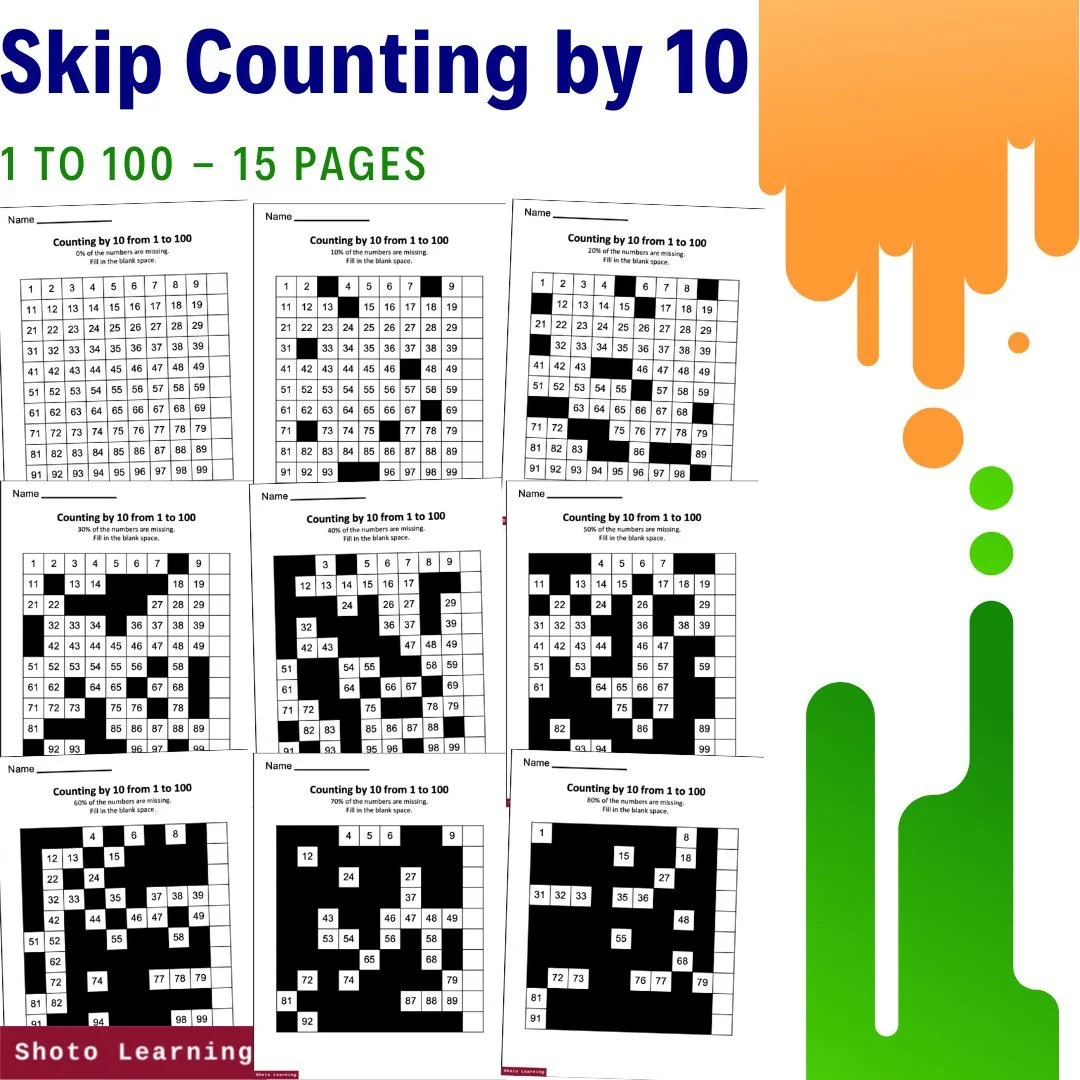


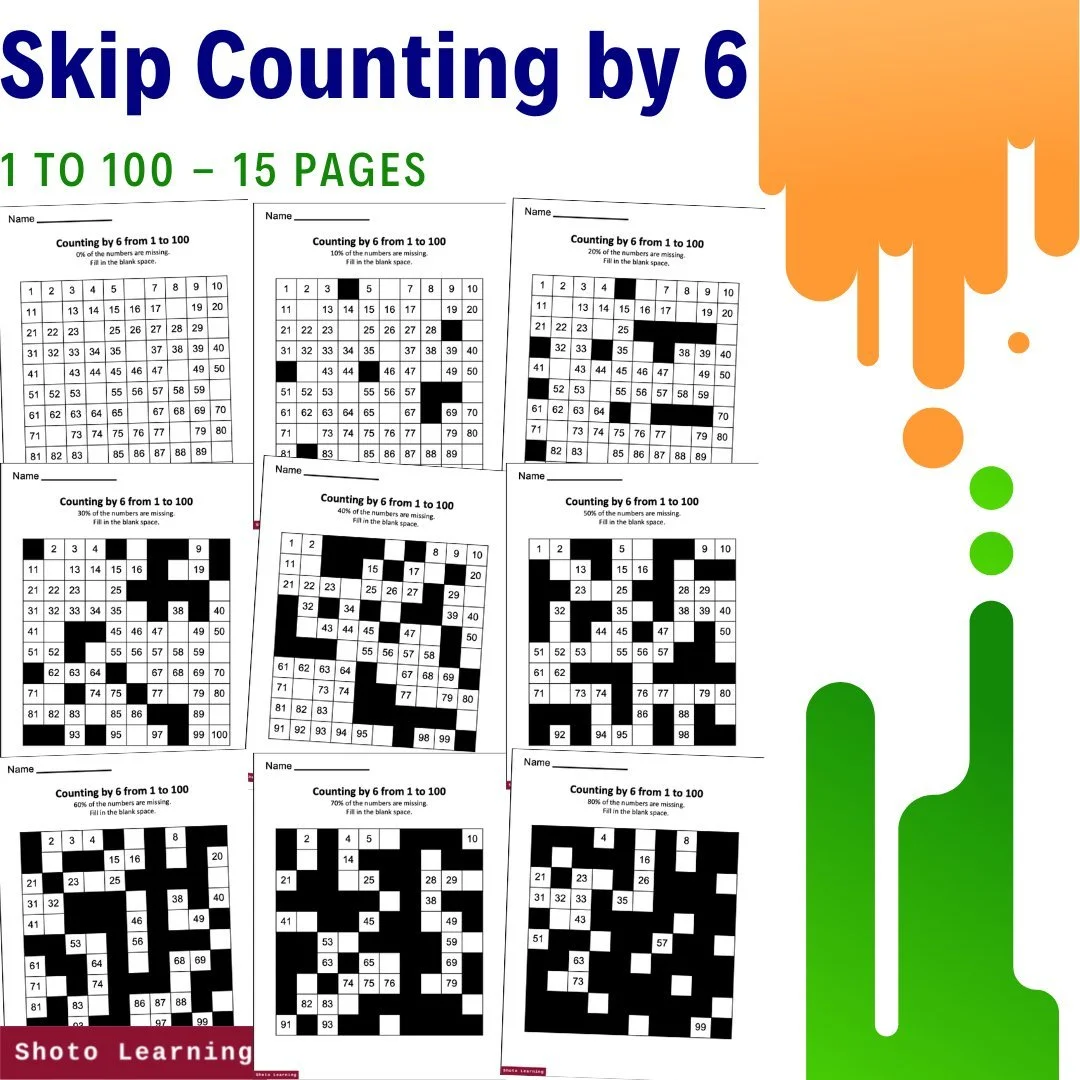


Introduce students to skip counting by 12 with these beginner-friendly worksheets, covering numbers 1 to 100. It is ideal for number identification and practicing skip counting.
Key Features:
Focus on skip counting by 12 from 1 to 100
2-page package:
Page 1: Number Identification Sheet
Page 2: 0% Numbers Missing
Simple design for beginners
How to Use:
Number Identification: Use Page 1 to help students recognize numbers and understand the concept of skip counting by 12.
Practice: Utilize Page 2 for exercises where students fill in missing numbers in the sequence, reinforcing their skip counting skills.
Reinforcement: Repeat exercises to build confidence and proficiency in skip counting by 12.
Download your copy today!