
Teaching Addition 1 to 10 Effective Strategies for Engaging Young Learners
Learning to add numbers from 1 to 10 is an important skill for young students. Teaching addition using simple, clear strategies helps children build strong math foundations. With the right tools, students can learn to add with confidence and enjoy the process.

Teachers and parents often look for new ways to make math engaging. Using objects, pictures, and group activities can help make addition easier for everyone. These methods support understanding and help children remember facts for future math tasks.
Key Takeaways
Using simple strategies supports strong math skills.
Visual tools and group activities make learning addition easier.
Practical techniques help students understand and remember addition facts.
Foundations of Teaching Addition 1 to 10
Teaching addition 1 to 10 starts with building a strong sense of how numbers work. Children learn best when they understand numbers, become familiar with how addends work, and master basic facts.
Building Number Sense
Number sense means understanding what numbers are and how they relate to each other. Teachers can use hands-on activities, like counting objects, to help students see how numbers are made and broken apart.
Number lines, counters, and manipulatives can help students count, combine, and separate groups. Visual models, such as ten frames or dot cards, show students how numbers can be put together in different ways.
Games can help students practice seeing numbers in a group, like recognizing that 2 and 3 make 5. Building number sense lays the groundwork for all future math, especially addition.
Understanding Addends
An addend is a number involved in an addition problem. For example, in 3 + 4 = 7, both 3 and 4 are addends. Students should practice identifying addends in different problems or with real items, like blocks or coins.
A simple table can help students see relationships between addends and sums:

Teachers can use language such as “What can you add to 5 to make 8?” This helps students see not just the answer but how the numbers connect. Understanding addends helps students solve problems more confidently.
Introducing Basic Addition Facts
Basic addition facts are combinations of numbers that students should know quickly, such as 3 + 5 or 2 + 6. Learning these facts helps students solve problems more efficiently and supports higher-level math later.
Flashcards, drill games, and timed activities can help with memorization. Visual tools like number bonds show how numbers are split and joined.
Students should have plenty of practice so facts become easy to recall. They should also understand why the facts work, not just memorize them, which builds mathematical thinking. Mastery of basic facts is key for smooth progress in addition.
Key Addition Strategies for Early Learners
Early learners use different addition strategies to solve problems with numbers 1 to 10. Techniques like counting on, making ten, and using doubles help students break down and understand sums in clear ways.
Counting On and Counting Up
The counting on or count up strategy helps children add numbers by starting with the bigger number and counting forward. For example, in 5 + 3, students start at 5 and count "6, 7, 8" for three more. This method is smoother than starting from one. It builds confidence and helps students move away from counting all objects from scratch.
Teachers often ask students to use their fingers or number lines at first. As students practice, they begin to visualize the numbers in their heads. The main focus is teaching children to start with the biggest number and count on, instead of always starting from one or zero.
Using this method helps with all single-digit sums. It is especially useful for facts where one number is much larger than the other, like 8 + 2 or 9 + 1.
Make a Ten Strategy
The make a ten (or making ten) strategy focuses on combinations that add up to ten, often called "friends of ten." This method teaches students to look for pairs or numbers that together total ten, which makes sums quicker to solve.
For example, to solve 8 + 5, a student can see that 8 needs 2 more to reach 10. So 8 + 2 = 10, and then there are 3 left from the 5. The student then adds 10 + 3 for a quick answer of 13.
Here’s a helpful table of combinations that make ten:
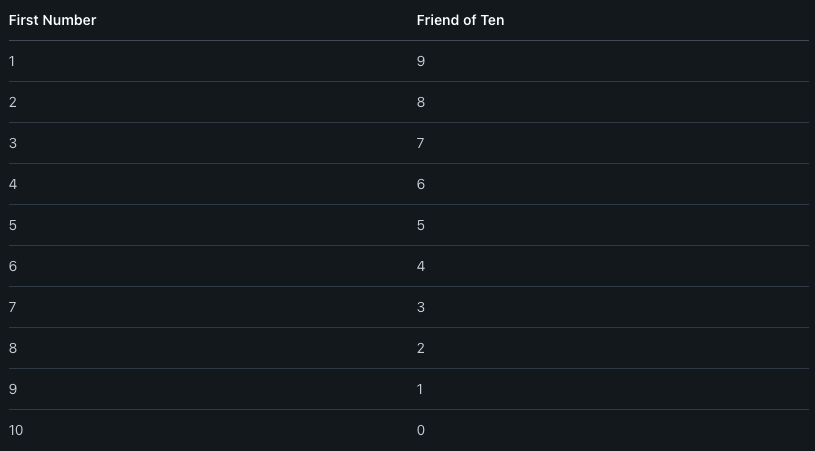
Practice with these pairs helps learners solve harder addition facts.
Using Doubles and Doubles Plus One
Doubles involve adding the same number to itself, like 3 + 3 or 6 + 6. Knowing doubles facts lets students recall certain sums quickly. Teachers usually encourage children to memorize these "easy facts" to speed up mental addition.
Doubles plus one is another useful strategy for numbers that are right next to each other, like 4 + 5. If students know 4 + 4 = 8, then 4 + 5 is just one more: 8 + 1 = 9.
Students should practice both recognizing doubles and using the doubles plus one approach with lots of examples. This builds automaticity and helps them solve more complex problems easily. Using both strategies gives learners multiple ways to approach single-digit addition facts.
Manipulatives and Visual Tools
Hands-on objects and clear visual aids help students see how addition works. These tools make it easier for children to count, group numbers, and understand part-part-whole relationships.
Using Ten Frames and Counters
Ten frames are simple grids with ten squares, usually arranged in two rows of five. Students use small counters to fill the frames. This helps them see numbers up to ten as parts of a whole.
When teaching addition, teachers can ask students to show one number using counters, then add more to solve a problem. For example:

Using ten frames helps children see sums and develop mental images for numbers. It also supports counting on and recognizing when a frame is full, which means ten.
Number Lines in Addition
A number line is a straight line with numbers in order. This tool helps students see how numbers grow as they add.
To use a number line, students find the first number, then make hops forward for the second number. For example, to solve 5 + 2, they start at 5 and hop two spaces to reach 7. Teachers can use physical number lines on desks or have children draw their own.
Number lines make it clear how numbers move and connect. They encourage counting on, rather than starting over each time, and they help students visualize the distance between numbers.
Base Ten Blocks and Unifix Cubes
Base ten blocks and unifix cubes are hands-on math tools for building numbers. Base ten blocks come in ones (small cubes), tens (long rods), and sometimes hundreds (big squares). For learning addition within 1 to 10, students mostly use the small cubes.
Unifix cubes are colored blocks that snap together. Students can connect cubes to create numbers, then join groups to solve addition problems. For example, if a student adds 3 and 4, they build a stack of 3 cubes and a stack of 4, then connect them to see 7 cubes in total.
These manipulatives make abstract numbers feel real. Students can break apart and put together groups, supporting the part-part-whole concept in a clear way.
Fostering Conceptual Understanding and Mastery

Students learn addition best when they know what numbers mean and how they work together. Building a strong base in both place value and number sentence writing helps them reach true mastery.
Developing Place Value Skills
Place value is the idea that where a digit sits in a number changes its value. For example, in the number 13, the "1" means ten, not just one. If students understand this, they won’t just memorize facts; they’ll know why the math works.
Use hands-on tools like base ten blocks or counters to show how numbers can be broken down into tens and ones. Practice grouping and ungrouping objects to visually represent numbers like 8 (eight ones) or 12 (one ten and two ones).
Teachers can help by asking questions such as:
How many tens are in 15?
What happens if you add one more to 19?
By connecting place value to everyday counting, students develop deeper conceptual understanding and prepare for more complex addition.
Regrouping and Number Sentence Formation
Regrouping is needed when adding numbers makes a new ten. For instance, 7 + 6 equals 13, so students learn to write 13 as one ten and three ones. This step links addition skills directly to a clearer understanding of place value.
Teaching number sentence formation helps students record and explain their math thinking. A number sentence looks like this:5 + 4 = 9
or8 + 3 = 11.
Teachers should encourage students to model problems with objects or drawings, then write the matching number sentence.
A simple table can help organize ideas:

By combining regrouping with clear number sentences, students increase accuracy and build confidence toward addition mastery.
Enhancing Addition Fact Fluency and Automaticity
Students need to develop both fluency and automaticity when solving basic addition facts from 1 to 10. This can be achieved through a mix of mental strategies, ongoing practice, and effective assessment to monitor progress.
Mental Math and Fact Fluency
Mental math helps students solve addition facts without using fingers or counting objects. They learn to recall sums like 3 + 7 or 6 + 2 quickly from memory. Teachers can teach doubling facts, counting on, and making ten strategies.
For example, students can remember that 5 + 5 = 10 and use that to solve 5 + 6 by adding one more. Number lines and ten-frames are helpful tools for visualizing these facts. Practicing mental math improves speed and accuracy. Students should practice daily in short sessions, focusing on thinking through the problems without paper or calculators.
Flashcards, Worksheets, and Practice
Flashcards can help students memorize individual addition facts. Regular practice with flashcards, alone or in pairs, promotes fast recall. Worksheets with timed exercises add variety and let students practice sets of facts in a classroom or at home.
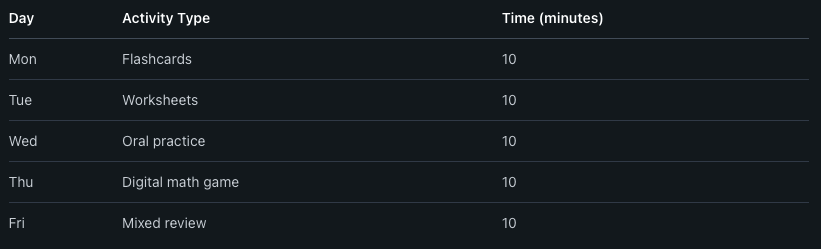
Mixing written and oral practice sessions helps students improve both written and verbal fluency. Games and digital apps can also be used to make practice more interesting. The key is consistent, repeated exposure to the same facts until they become automatic. Teachers and parents can create a practice schedule using the table below:
Assessing Addition Fact Mastery
It is important to check how well students know their addition facts. Quick quizzes or timed drills allow teachers to measure fluency and automaticity. Teachers can observe how fast and accurately students recall facts without struggling or stopping to count.
Tracking progress helps teachers see which facts are strong and where help is needed. Simple charts or graphs can show improvement over time. If a student struggles on certain facts, the teacher can give extra practice just on those. A checklist of basic addition facts helps ensure mastery:
Recalls 1 + X (where X = 1 to 10)
Solves 2 + X
Solves 3 + X
...
Solves 10 + X
By assessing regularly, teachers ensure students develop both confidence and accuracy with basic addition facts 1 to 10.
Engaging Activities and Group Learning
Children often learn addition more effectively when they work together and use hands-on materials. Using group settings, helpful visuals, and interactive games can give students practice and keep them interested in learning numbers 1 to 10.
Small Groups and Math Centers
Teachers often split students into small groups for addition activities. This helps children talk about their ideas and solve problems together. In these groups, everyone gets a chance to share and listen.
Math centers are stations where students rotate between different activities. Some centers may use number cards, counting blocks, or even mini whiteboards. Others may set up simple board games where students move pieces by solving addition problems.
Working with classmates at these stations increases focus. The teacher can also join a group to give extra help or watch who needs more practice. This setup makes it easier to notice who is getting better at addition and who needs more support.
Anchor Charts and Visual Supports
Anchor charts are large posters or papers that show important information. Teachers often hang them on walls so students can see them when solving addition problems. A sample anchor chart might include:

Teachers can point to anchor charts when explaining new ideas. Visual supports such as number lines, ten frames, and pictures help students connect symbols and real objects. These supports make it easier for students to understand and remember addition facts.
Charts and visuals are always visible, so even shy students can use them quietly if they forget a step. Bright colors and pictures can make math feel less challenging and more fun.
Interactive Group Activities
Group activities make addition practice social and active. Teachers might use games like "Addition Bingo," where students cover a number if they solve the matching math fact. Relay races with flashcards let teams race to solve problems one at a time.
Other ideas include using puzzles with pieces that fit together only when the sums are correct. Pair work, like "Turn and Talk," lets students discuss their answers before sharing with the class.
Activities can use dice, spinners, or real-world items like coins to keep things interesting. When students help each other or compete in friendly challenges, they often become more confident in their addition skills.
Applying Addition Skills in Problem Solving
Students improve their addition skills when they solve real-life problems and use numbers to answer questions or explain their thinking. Different types of activities help them build confidence, understand operations, and apply what they have learned beyond simple tasks.
Working with Word Problems
Word problems let students use addition in stories or scenarios that match everyday life. For example, they may see a problem like “James has 3 apples, and his friend gives him 4 more. How many apples does James have now?” Students must find what numbers to add and what the answer means in context.
Breaking down a word problem into key parts helps:
Identify what is being asked.
Find the numbers to add.
Decide what operation to use (addition).
Check the answer to make sure it makes sense.
Practicing many types of word problems meets CCSS (Common Core State Standards) for math by helping children connect numbers to real situations. Teachers often use visual aids like drawings or counters to help students understand.
Connecting Addition and Subtraction
Addition and subtraction are closely linked. If students know that 7 + 3 = 10, they can see that 10 - 3 = 7. This relationship helps them understand that subtraction "undoes" addition. Building this connection supports flexible thinking and lays the groundwork for more advanced math.
A strategy is to practice "fact families." For example, for the numbers 2, 3, and 5:
2 + 3 = 5
3 + 2 = 5
5 - 2 = 3
5 - 3 = 2
Fact families show how numbers are related. Teachers might ask students to write or say all the addition and subtraction facts for a set of numbers. This activity strengthens both skills and meets important curriculum standards.
Addition in Real-World Contexts
Adding numbers from 1 to 10 happens often outside the classroom. Students might count coins, add up points in a game, or find the total number of school supplies. These situations show that math is not just for worksheets.
Teachers can use classroom activities that model real-life tasks. For example, students can use pretend money to “buy” items in a classroom store. This requires them to add small amounts, practice counting on by one, and solve problems where they have to make decisions.
Using real objects and real tasks builds understanding. It also helps students remember and apply their skills. This hands-on approach makes addition more meaningful and practical.
Frequently Asked Questions
Teachers can use hands-on tools, different practice methods, and simple strategies to help students master addition from 1 to 10. Worksheets and games also play a role in keeping learning interesting and clear.
How can educators introduce the concept of addition within the range of 1 to 10?
Educators often start with physical items like counters, blocks, or fingers. This helps students see how numbers combine.
They may use pictures and simple number stories to explain adding two groups together.
What are some effective methods to teach first graders about addition up to 10?
First graders learn well with visual aids and step-by-step examples. Teachers might use flashcards, drawing objects, or group activities.
Partner work and simple board games can also make lessons more engaging.
Which worksheets or activities enhance addition skills for numbers 1-10?
Worksheets with pictures, fill-in-the-blank problems, and matching sums are helpful. Color-by-number pages using addition facts are popular.
Hands-on activities like using dice, dominoes, or playing card games can strengthen skills in a fun way.
What addition strategies can be used for second graders learning to add numbers up to 10?
Second graders may use strategies like counting on, making ten, and memorizing simple sums. Teachers can use number lines and math games for practice.
They might also introduce simple word problems that use numbers within 10.
What role does the 'bridge to 10' strategy play in teaching addition?
The 'bridge to 10' strategy teaches students to break numbers apart to reach 10 first, then add the rest. This helps students see patterns and simplify problems.
For example, when adding 8 + 5, a student can break 5 into 2 and 3. Adding 8 + 2 makes 10, then add 3 to reach 13.
How can the teaching of addition up to 10 be adapted for fourth-grade students?
Fourth graders may already know basic addition. Teachers can give them quicker timed drills or challenge them with missing number puzzles.
They might also connect addition up to 10 with larger math topics, like multi-digit addition and mental math tricks.
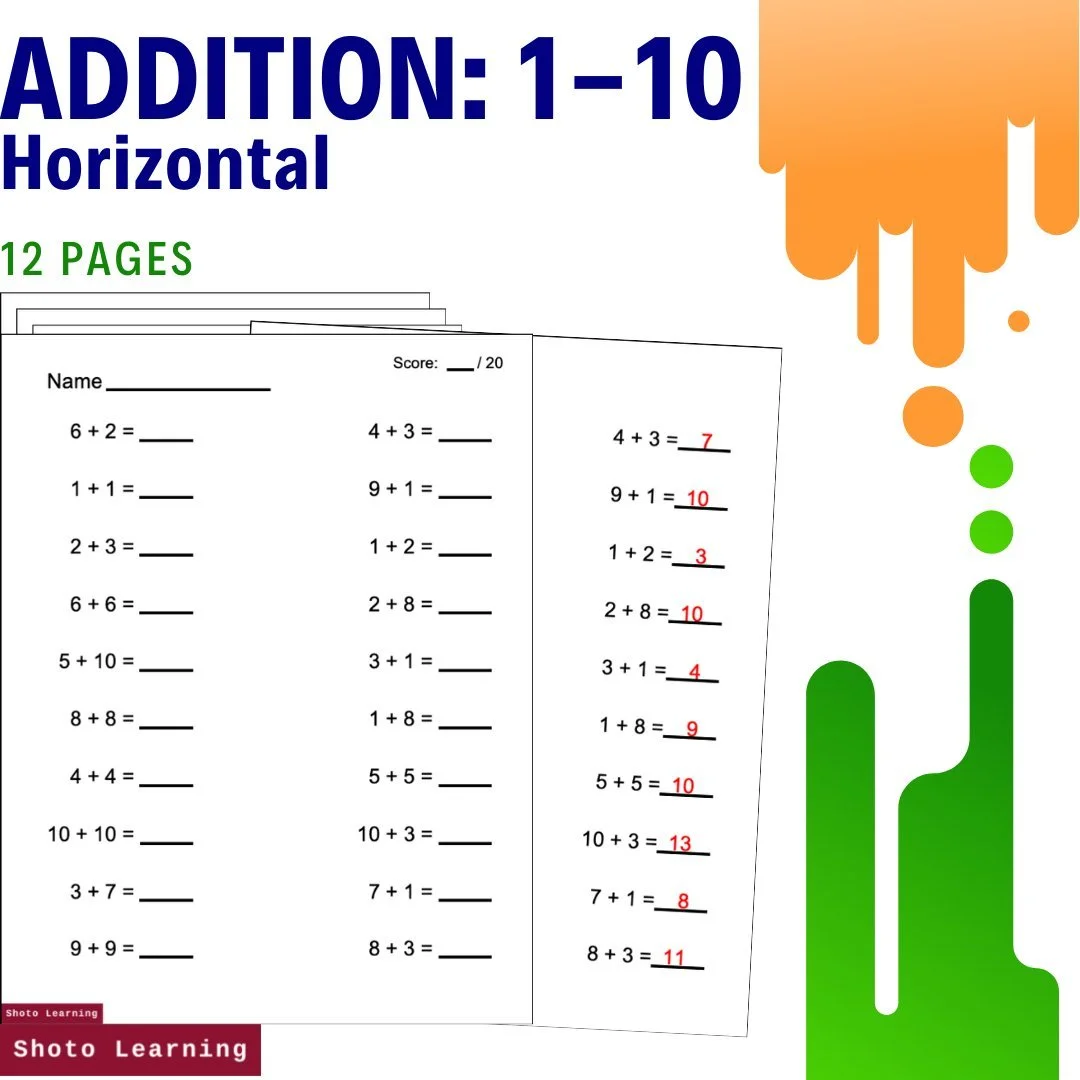


Help your students master basic addition with this FREE Addition 1–10 Worksheet featuring 20 horizontal math practice problems. This resource is perfect for early learners just beginning their math journey.
Whether teaching in the classroom or at home, this worksheet is a quick and effective way to assess addition skills using numbers 1–10. All answers are under 20, making it ideal for reinforcing early math concepts without overwhelming learners.
Key Features:
1 worksheet with 20 horizontal addition problems
Numbers added are between 1 and 10
Answer key included for quick correction
Clean and simple layout to reduce distractions
Printable and ready to use
How to Use:
Use as morning work, homework, or quick assessments
Great for math workstations or group practice
Perfect for kindergarten and first-grade classrooms
Use during math intervention sessions or tutoring
Download now and make math fun and stress-free for your students!
Order your copy today!