
Teaching Achumawi: Embracing Indigenous Language and Culture in Modern Classrooms
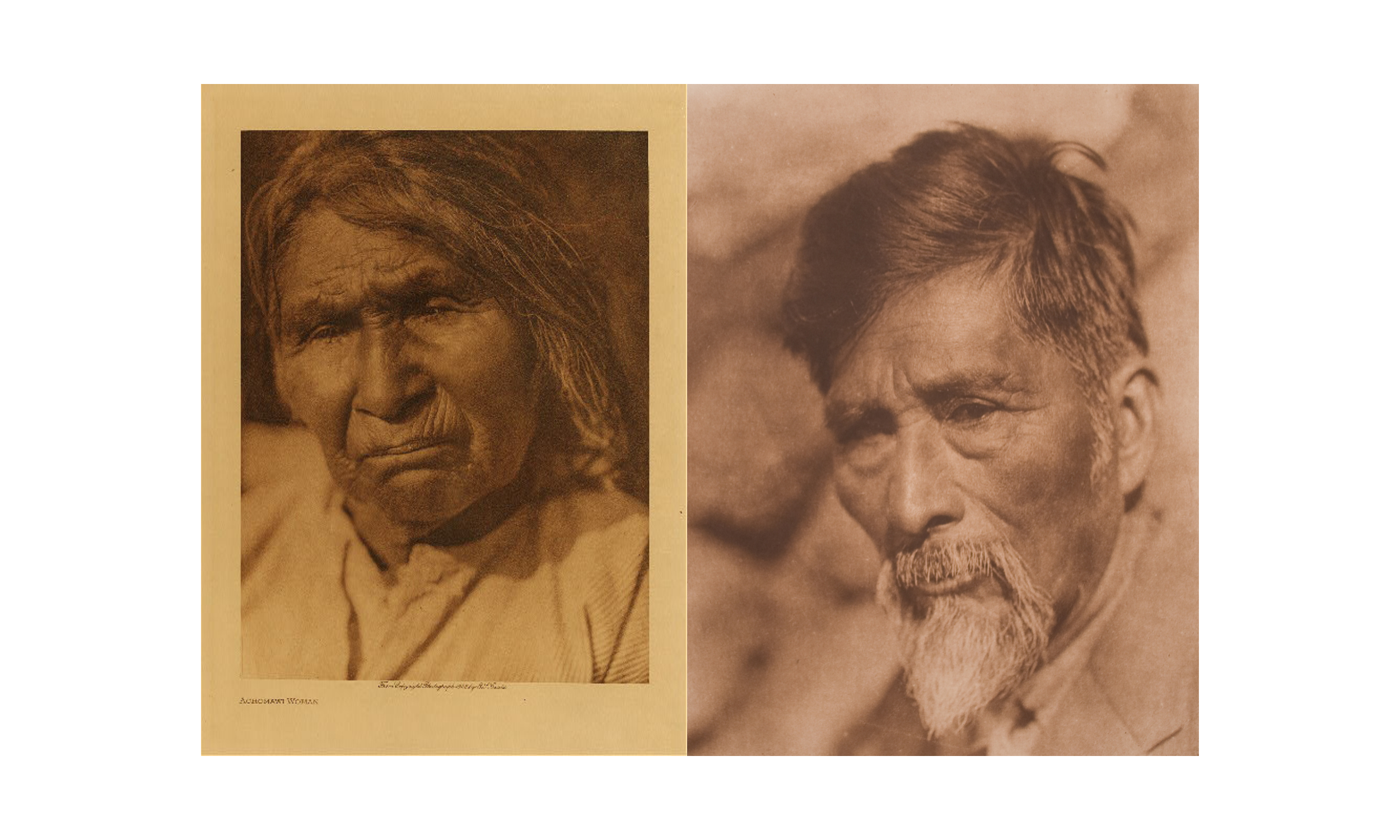
Many Indigenous languages are in danger of disappearing, but teachers and communities are working together to keep them alive. Teaching Achumawi helps share the culture and identity of the Achumawi people with new generations. When students learn Achumawi, they also learn about the deep connections between language, family, and land.
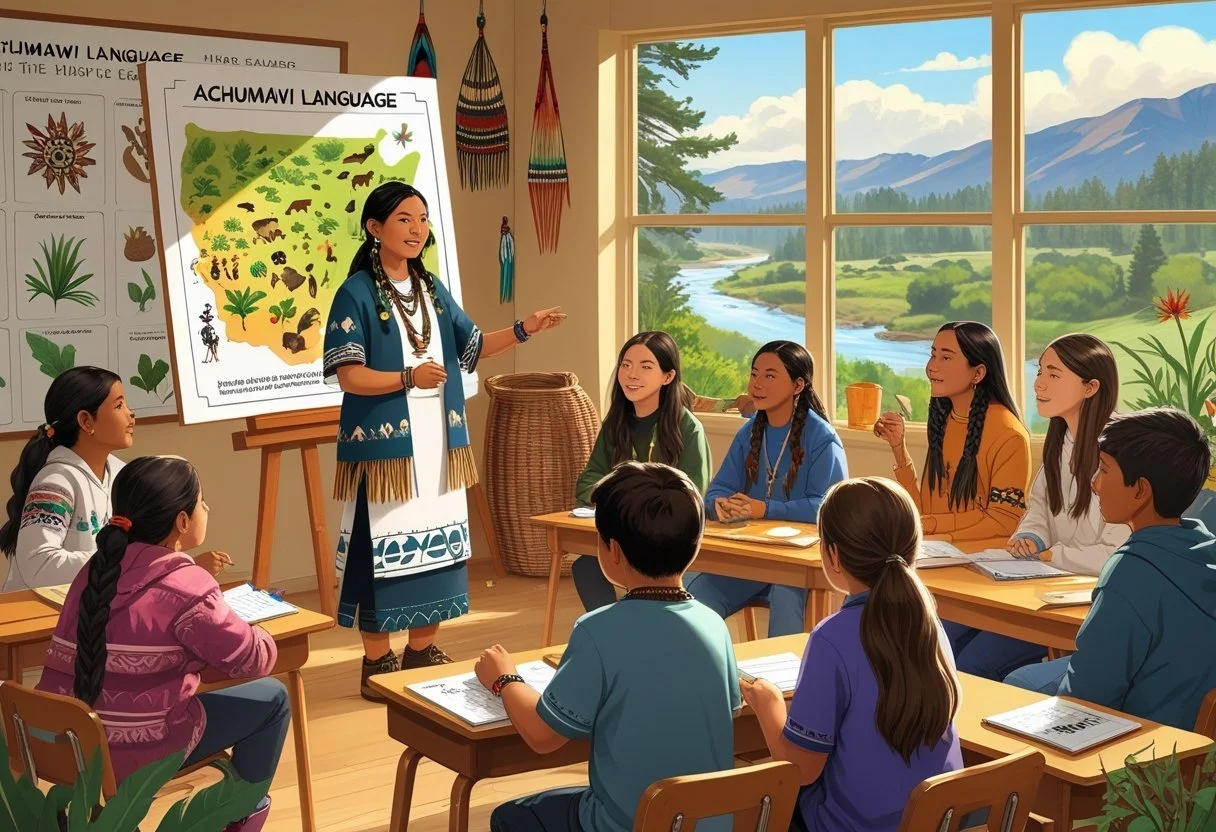
The Achumawi language holds important knowledge, stories, and traditions that cannot be replaced by any other language. By bringing Achumawi into schools, educators support both language skills and cultural understanding. This helps students respect their own heritage and other cultures, too.
Key Takeaways
Achumawi language lessons connect students to culture and tradition.
Teaching the language faces both obstacles and new possibilities.
Sharing Achumawi supports its survival for future generations.
Understanding the Achumawi Language
Achumawi is a unique Native American language once spoken along the Pit River in northeastern California. Today, it faces the threat of extinction, making its study and preservation important for cultural and historical reasons.
Historical Overview and Origins
Achumawi has ancient roots among the Pit River people, whose homeland stretches along the river and its tributaries. The language reflects a long history tied to fishing, hunting, and village life.
Until the 20th century, Achumawi was the main language in the region, used for daily life, ceremonies, and storytelling. Outside influence, such as English-speaking settlers and boarding schools, led to its decline.
Efforts to teach and revitalize Achumawi have increased in recent decades. Local tribes and educators work together to save both the language and its cultural knowledge.
Linguistic Classification and Morphology
Achumawi belongs to the Palaihnihan language family, grouped with Atsugewi. These languages are part of the larger Hokan language stock, a proposed family of American Indian languages found in northern California and parts of the West.
Achumawi uses agglutinative morphology. Words are often made by joining smaller meaningful parts together, like prefixes and suffixes. For example, verbs are built from a base and then add markers for tense, mood, or subject.
While the language does not have a traditional writing system, several transcription methods now exist. These help preserve oral literature and make teaching materials available.
Key Characteristics and Dialects
Achumawi’s sound system uses several distinct consonants and vowels, some of which are not found in English. The language features a rich set of verbs and a flexible word order.
There are at least two main dialects within Achumawi. These include upriver and downriver varieties, each with specific pronunciation and vocabulary differences. A small table helps show some notable differences:

Understanding these variations helps learners appreciate the language's diversity and the identity of different Achumawi communities.
The Role of Achumawi in Indigenous Culture
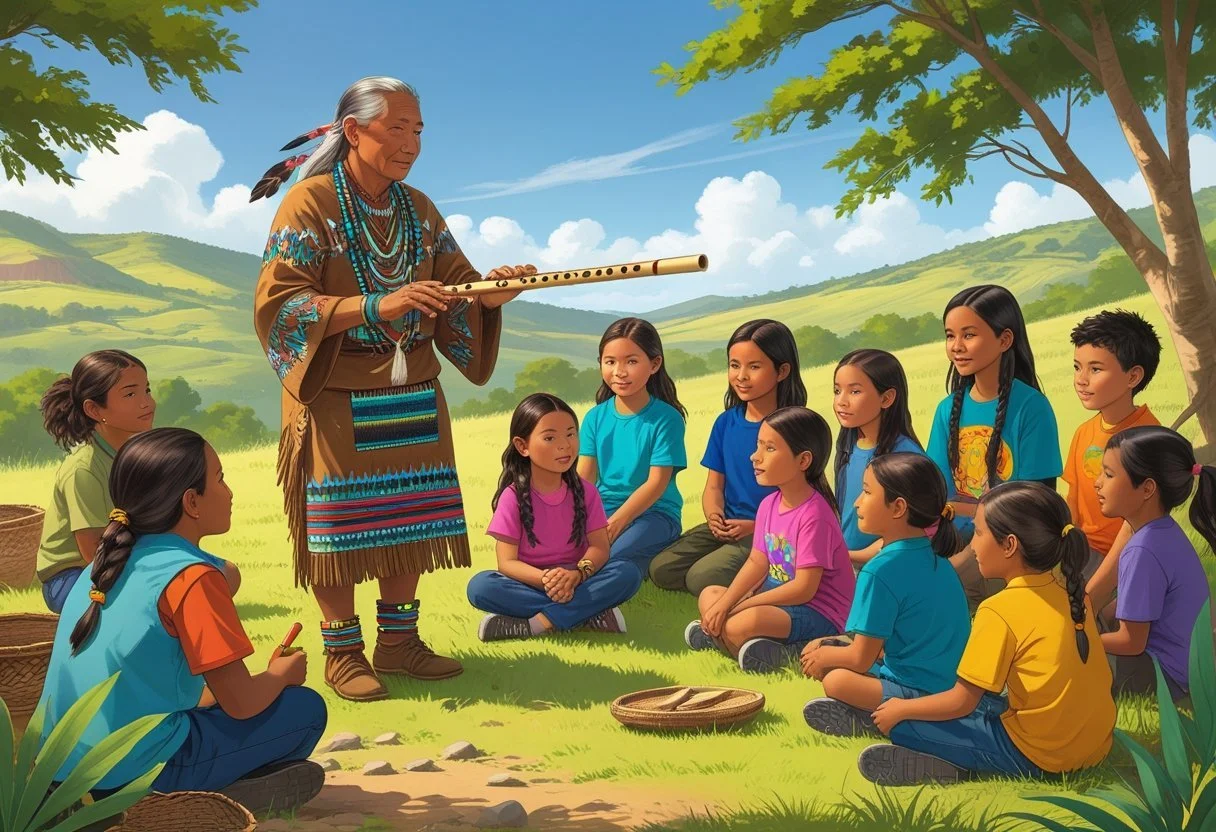
Achumawi is a core part of the community’s way of life. It is linked to daily activities, family values, and the expression of spiritual beliefs.
Cultural Identity and Consciousness
Achumawi gives people a strong sense of who they are. Through the language, young people connect with their roots and learn what it means to be part of their community.
Speaking Achumawi at home or school helps build self-esteem. It also encourages respect for elders and strengthens the group’s shared identity.
Using native language in daily life helps keep the values of aboriginal American culture alive. It protects traditional ways against pressures from outside cultures. Language builds consciousness about what is unique and special in Achumawi heritage.
Traditions and Storytelling
Achumawi is key for keeping traditional stories and teachings alive. Stories told in Achumawi carry lessons about the world, teach right and wrong, and explain natural events or the role of animals.
Many teachings are hard to translate without losing details. For example, certain words hold cultural meanings that can’t be explained fully in English. When elders share stories, they often pass down knowledge about family history, relationships with the land, and what it means to live together.
Storytelling in Achumawi also supports teaching children about daily life and survival, such as how to gather food, respect animals, and deal with nature.
Connection to Native Culture and Spirituality
Speaking Achumawi links people to their spiritual beliefs. The language is often used in prayers, songs, and ceremonies. It expresses respect for manitou, or spiritual power, and helps connect people with the land and animals.
Achumawi words and phrases describe ideas of balance and respect in the world. They explain beliefs about how all things are connected in nature.
Achumawi also shapes how people interact in daily life, guiding actions and choices through beliefs rooted in native culture. By speaking their language, people maintain and honor the traditions of their ancestors.
Challenges and Opportunities in Teaching Achumawi
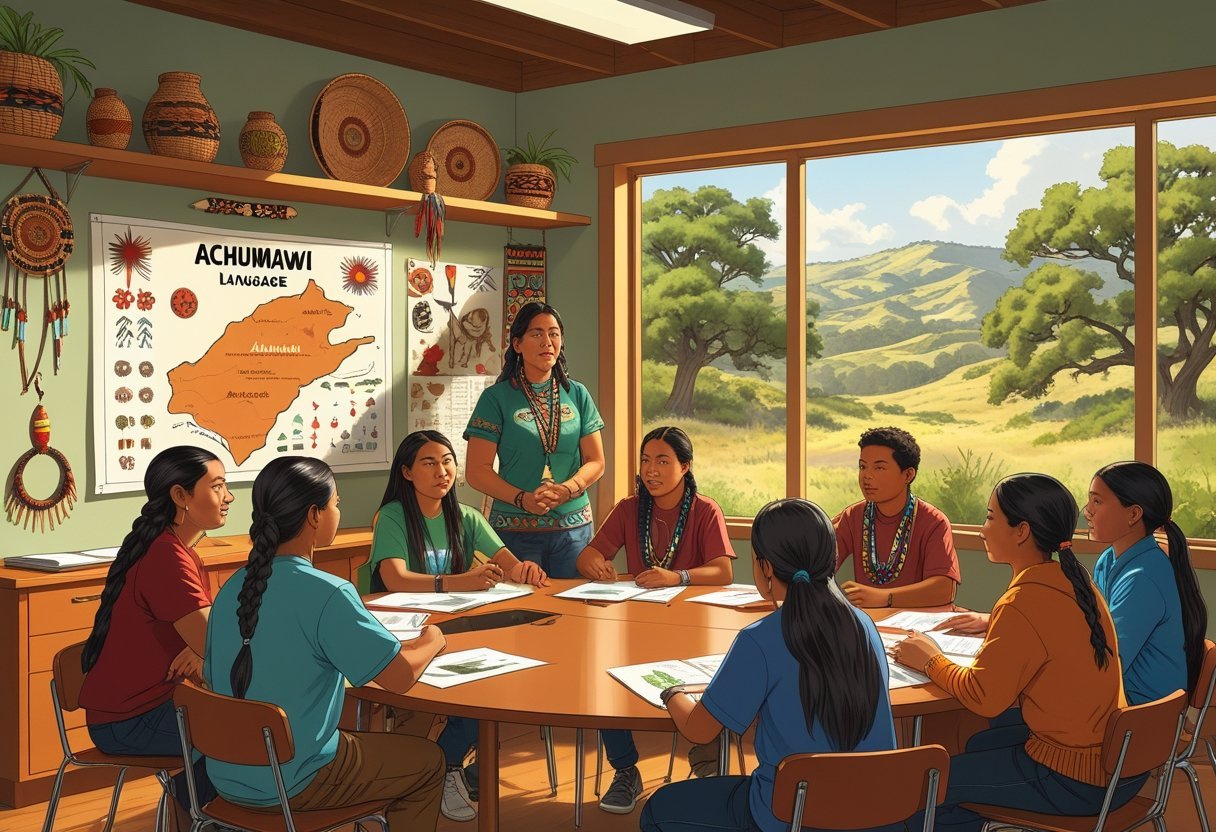
Teaching Achumawi involves complex challenges and promising opportunities. Many efforts rely strongly on local leadership, community partnerships, and respect for Indigenous cultures and independence.
Current Revitalization Efforts
There are programs focused on revitalizing the Achumawi language. Community organizations, including tribal councils, work with elders and fluent speakers to record and document words, stories, and grammar. Some schools offer Achumawi language classes as part of their curriculum.
Language camps and workshops are planned each year. These events give young people and adults the chance to learn from tradition bearers. Digital projects are growing, such as simple Achumawi dictionaries, audio resources, and language apps for smartphones.
Efforts focus on passing the language and knowledge to the next generation. While resources are still limited, partnerships with universities and museums help add new materials and tools for learning.
Barriers to Language Preservation
Preserving Achumawi faces several barriers. The number of fluent speakers is very low, with most being elders. Many younger members of the aboriginal population do not speak Achumawi on a daily basis.
Key barriers include:
Limited teaching materials
Lack of trained teachers
Pressure from dominant civilizations and languages
Historical events, such as forced assimilation in boarding schools, led to cultural loss over many decades. This history means that some families have not experienced native language use at home. Achumawi speakers may feel isolated, especially in non-Indigenous education settings.
Community Involvement and Independence
Community involvement is central to revitalization. Local leaders and elders guide most language projects. They set goals to maintain cultural independence and to strengthen connections within the community.
Examples of involvement:
Community-run language classes
Cultural festivals focusing on Achumawi arts and stories
Intergenerational programs, pairing elders with children
These efforts support self-determination for the Achumawi people. Decisions about language teaching are made independently and with respect for traditional values. This approach creates stronger ties between education, language, and cultural identity.
Curriculum Development for Achumawi Language Education
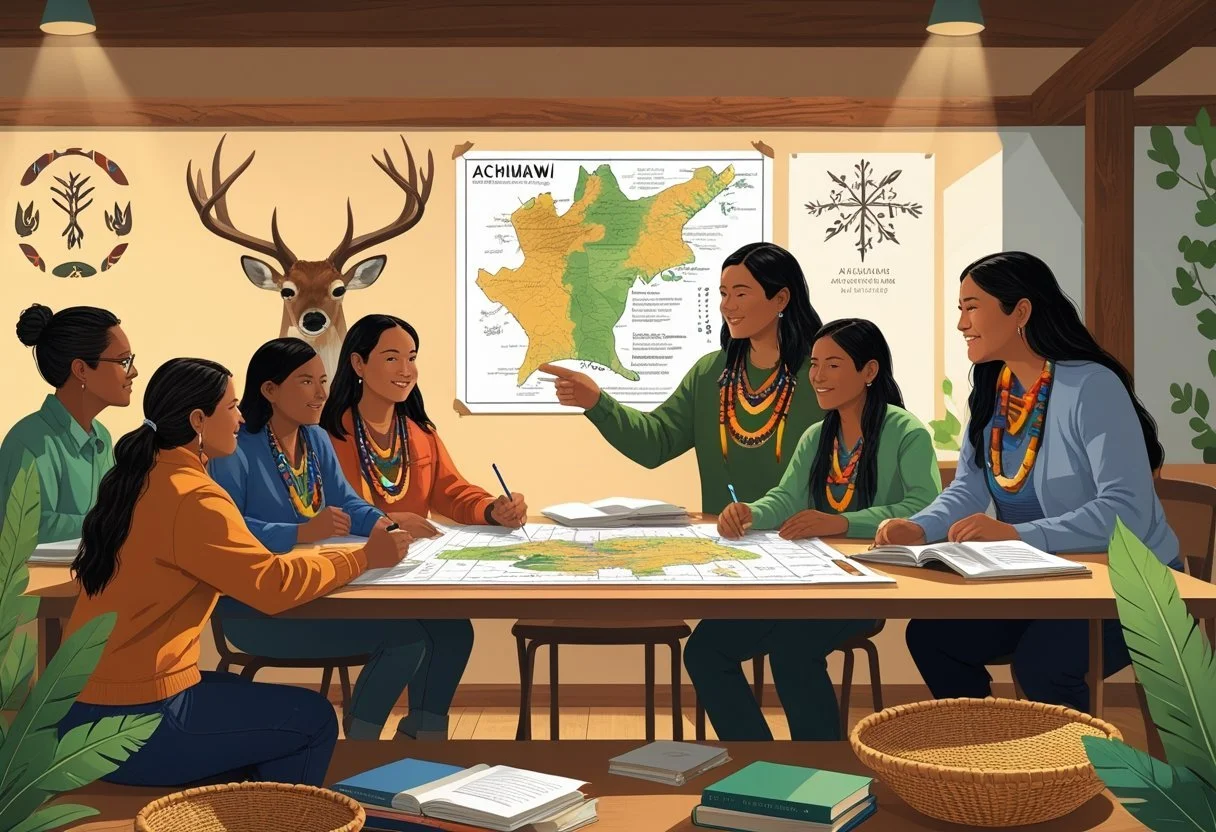
A strong Achumawi language curriculum considers the deep connection between language, local stories, and the region’s archaeological past. Using resources from ethnology and local research helps support cultural accuracy and meaningful learning.
Curricular Frameworks and Ethnology
Effective Achumawi language education begins with a clear curricular framework grounded in ethnology. Ethnology explores how Achumawi people live and how they use language in daily life.
Lesson plans include real-world conversations, kinship terms, and traditional practices. Teachers may use a table format to organize vocabulary by topic:

The Bureau of Ethnology and local tribal scholars can help review teaching materials. This ensures accurate cultural details and terminology. Storytelling is included to keep oral stories alive and teach both language and values.
Integrating Local History and Tribal Names
A strong curriculum uses local history and tribal names to make lessons relevant. For example, place names like Astanahow (Pit River) are taught alongside their meaning and significance.
Maps are helpful tools. Educators add the original Achumawi names for sites and rivers. This practice reconnects students with ancestral lands.
Materials often list notable tribal leaders and elders, along with their stories. Students learn respectful greetings and the meanings of names in Achumawi culture. These names often describe a person’s character, family ties, or natural surroundings.
Incorporating Ethnography and Archaeology
Ethnography and archaeology provide valuable context for language lessons. Ethnography offers personal stories, interviews, and cultural practices collected by researchers and community members.
Teachers bring in archaeological findings like tools, baskets, or village diagrams. Images of artifacts help learners visualize traditional life.
Lessons may also include timelines showing events like village settlements or important changes to the landscape. Students can use a simple list to connect words and artifacts:
toboso (stone tool)
koyum (basket)
wiyi (house)
Using these approaches ties the Achumawi language to real objects, stories, and places, helping students understand both the language and its roots in local culture.
Pedagogical Strategies for Achumawi Instruction
Teaching Achumawi requires careful planning, cultural respect, and effective classroom tools. Focusing on best practices, resources, and adaptable approaches helps support both students and community members.
Best Practices in Indigenous Language Teaching
Effective Achumawi teaching centers on community involvement and cultural context. Elders should participate, sharing stories and leading songs or traditional activities. This supports real-world use of language in ways that are meaningful to students.
Active learning is key. Teachers use games, daily routines, and repetition so students practice hearing and speaking. They also encourage group and partner activities, which allow for authentic conversation and reinforce understanding.
Consistency is important. Teachers provide clear routines and regular practice. Visual aids, gestures, and body language help children connect words with meaning. Involving families outside school reinforces progress and keeps the language alive across generations.
Materials Development and Discourse
Achumawi teachers develop materials like illustrated word lists, audio recordings, and storybooks made with local speakers. These help students hear correct pronunciation and learn vocabulary in context.
Discourse, which includes talking and storytelling, is central. Short dialogues, skits, and guided conversations let students practice with real-life situations. Teachers may use bilingual resources—a chart or table with English and Achumawi side by side—for reference:

Audio and video materials allow students to repeat phrases and listen to elders. Teachers adapt stories or lessons to different age groups or language levels, focusing on building confidence in speaking.
Adapting to Various Educational Settings
Achumawi can be taught in public schools, after-school clubs, or tribal community centers. Lessons may be whole-group, small-group, or one-on-one, based on the needs of the students.
Flexible approaches help meet different learning environments. Online lessons use video calls or pre-recorded content for remote learners. In-person lessons rely on face-to-face interaction and hands-on activities. Some schools blend both, giving students chances to hear and speak Achumawi as much as possible.
Family involvement strengthens results. Sending home simple practice activities or word cards allows parents and caregivers to support learning, even if they are not fluent themselves. Education teams work closely with the wider American Indian community to ensure lessons respect tradition and meet students’ needs.
Broader Contexts: Achumawi and Other Native Languages
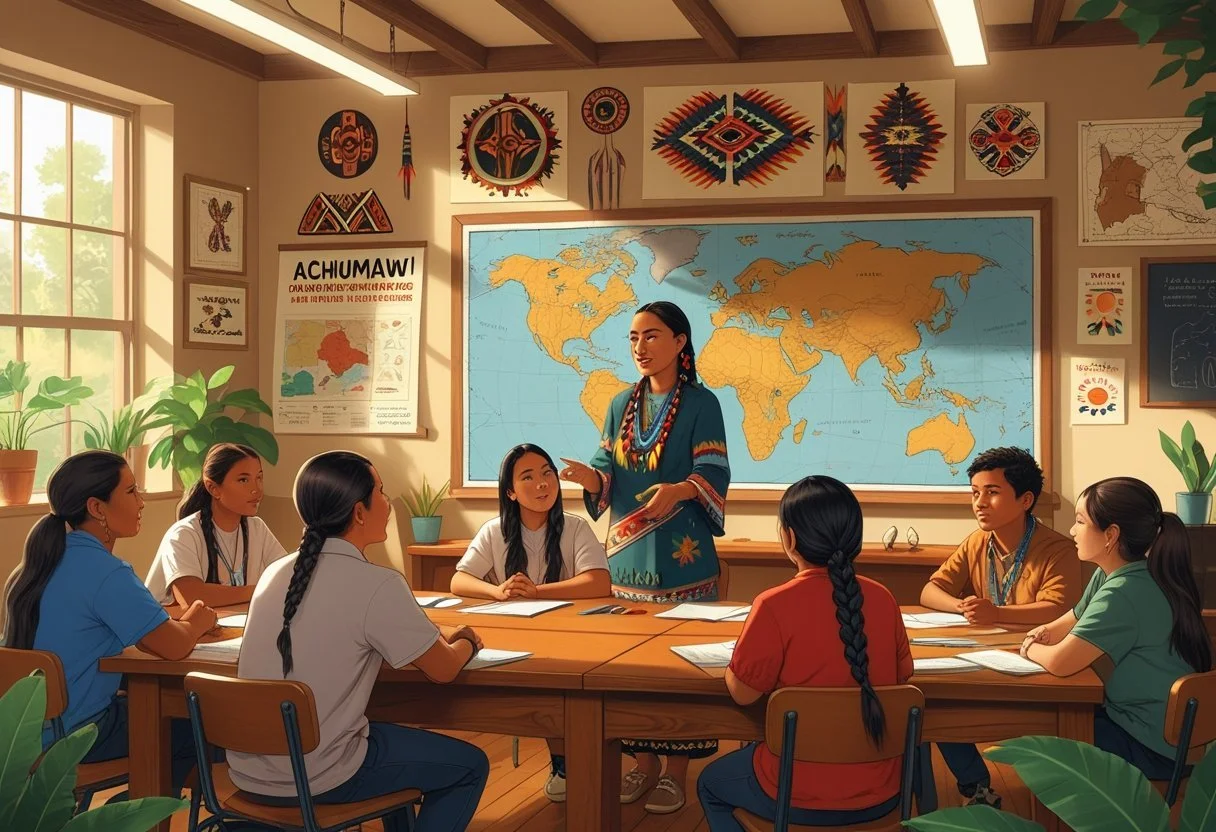
Achumawi is one of many Native languages that developed unique characteristics shaped by geography, history, and contact with other tribes. Comparing Achumawi to other languages, such as Algonquian and Iroquois languages, shows both similarities and important differences.
Comparative Analysis with Algonquian and Iroquois Languages
Achumawi belongs to the Palaihnihan language family in California, while Algonquian languages like Algonquin and Iroquois languages such as Mohawk and Seneca are spoken in the Great Lakes region and eastern North America.
These language groups differ in structure. For example, Algonquian languages often use complex verb forms and animate/inanimate noun distinctions. Iroquois languages are known for their polysynthetic structure, building long words from smaller parts. Achumawi, in contrast, uses suffixes to show tense and possession, but it is less polysynthetic than Iroquois languages.
Table: Key Language Features

These differences highlight the great variety among Native languages in North America.
Influences from Surrounding Tribes and Cultures
Achumawi speakers have lived near other California tribes, like the Atsugewi and members of the broader Penutian speaking groups.
Contact with these tribes often led to cultural and linguistic exchange. They shared words for plants, ceremonies, and tools. It is common to find similar words for fish or weather between Achumawi and neighboring languages.
Trade routes connected Achumawi with both local and more distant Siouan tribes. Sometimes, they borrowed words from each other, especially for goods or traditions not found locally.
These exchanges helped shape the modern form of the Achumawi language.
Diversity and Linguistic Relationships in North America
North America is home to hundreds of Native languages grouped into families such as Algonquian, Iroquois, Siouan, Uto-Aztecan, Athabaskan, and Palaihnihan.
This diversity is seen in vocabulary, grammar, and sound systems. For instance, Siouan languages have different sounds and sentence structures compared to Achumawi or Algonquian languages. Some languages focus on verbs, while others put more weight on nouns.
List of Major Native Language Families:
Palaihnihan (Achumawi)
Algonquian (Algonquin, Ojibwe)
Iroquois (Mohawk, Oneida)
Siouan (Dakota, Crow)
Understanding these relationships gives teachers and students important context about Achumawi’s place among the languages of North America.
Sustaining Achumawi for Future Generations
Keeping the Achumawi language alive depends on family involvement, support from local institutions, and thoughtful long-term planning. Initiatives that involve schools, policy, and community gatherings can make a lasting difference.
Intergenerational Transmission and Community Programs
Passing Achumawi from elders to youth is the main way to keep the language alive. Community-led language nights, traditional storytelling, and immersive camps help children learn by listening, speaking, and participating in cultural activities.
Some families use Achumawi at home, which helps children hear and use the language daily. Local programs organized by tribal councils or language committees often provide resources, like beginner dictionaries or phrasebooks.
Mentor-apprentice programs pair young learners with fluent speakers to increase regular language use. Many of these initiatives celebrate Native heritage through music, crafts, and ceremonies, making language learning part of daily life.
Role of Institutions and Policy
Schools where Achumawi is taught help reinforce language learning beyond the home. Some education programs work with tribal leaders to create teaching guides and classroom tools designed for young learners.
State and local education departments may offer support by including Achumawi language classes or clubs in their curriculum. Congress and state legislatures can provide grants or funding aimed at Native language revitalization.
Institutions such as local museums, libraries, and community centers can also host language workshops and cultural events. These efforts help everyone in the community, not just students, stay connected to Achumawi.
Long-Term Vision and Global Relevance
A long-term plan for sustaining Achumawi includes making digital resources, such as apps and audio guides, so people can learn anywhere. Including Achumawi in online dictionaries and language programs can connect younger generations and those living far from native lands.
Community leaders aim to have Achumawi spoken at home, in school, and at public events. Establishing language policies that protect Achumawi in education and community settings gives lasting support.
Sustaining Achumawi also adds to global efforts to protect Indigenous languages. Sharing strategies and resources with other Native groups worldwide increases Achumawi’s visibility and importance in the global conversation.
Frequently Asked Questions
Teaching the Achumawi language and culture requires practical strategies, hands-on activities, and reliable community support. Many resources come from partnerships with local tribes, linguists, and digital tools designed for language learning.
What methodologies are most effective for teaching Achumawi language to new learners?
Successful methods include immersion, storytelling, and repetition through daily routines. Visual aids and interactive activities help learners remember words and phrases. Peer learning groups and language games also encourage regular practice.
How can educators integrate Achumawi cultural practices into the modern classroom?
Educators can invite tribal elders to share stories, crafts, and songs. They can also include traditional foods, dances, and celebrations in school events. Lessons can connect Achumawi values with subjects like history, art, and science.
What resources are available for creating an Achumawi language curriculum?
Linguists and tribal language programs offer lesson plans, dictionaries, and audio recordings. Some universities and cultural centers provide workshops and training for teachers. Online platforms may include vocabulary lists, grammar guides, and pronunciation videos.
What are the challenges of revitalizing the Achumawi language among younger generations?
Few fluent speakers remain, limiting language exposure for children. Competing interests such as technology and English-language media can reduce motivation. Some families may not have access to language classes or materials at home.
How can technology be used to support the learning and teaching of the Achumawi language?
Mobile apps, online courses, and interactive games can make learning Achumawi more accessible. Video chats with fluent speakers allow real-time practice. Recorded phrases and pronunciation guides help learners review on their own schedule.
What role do tribal elders play in the preservation and teaching of Achumawi culture and language?
Elders share firsthand knowledge of language, traditions, and community history. They provide authentic pronunciation and teach cultural meaning behind words. Many elders lead workshops, assist in curriculum development, and mentor both teachers and students.


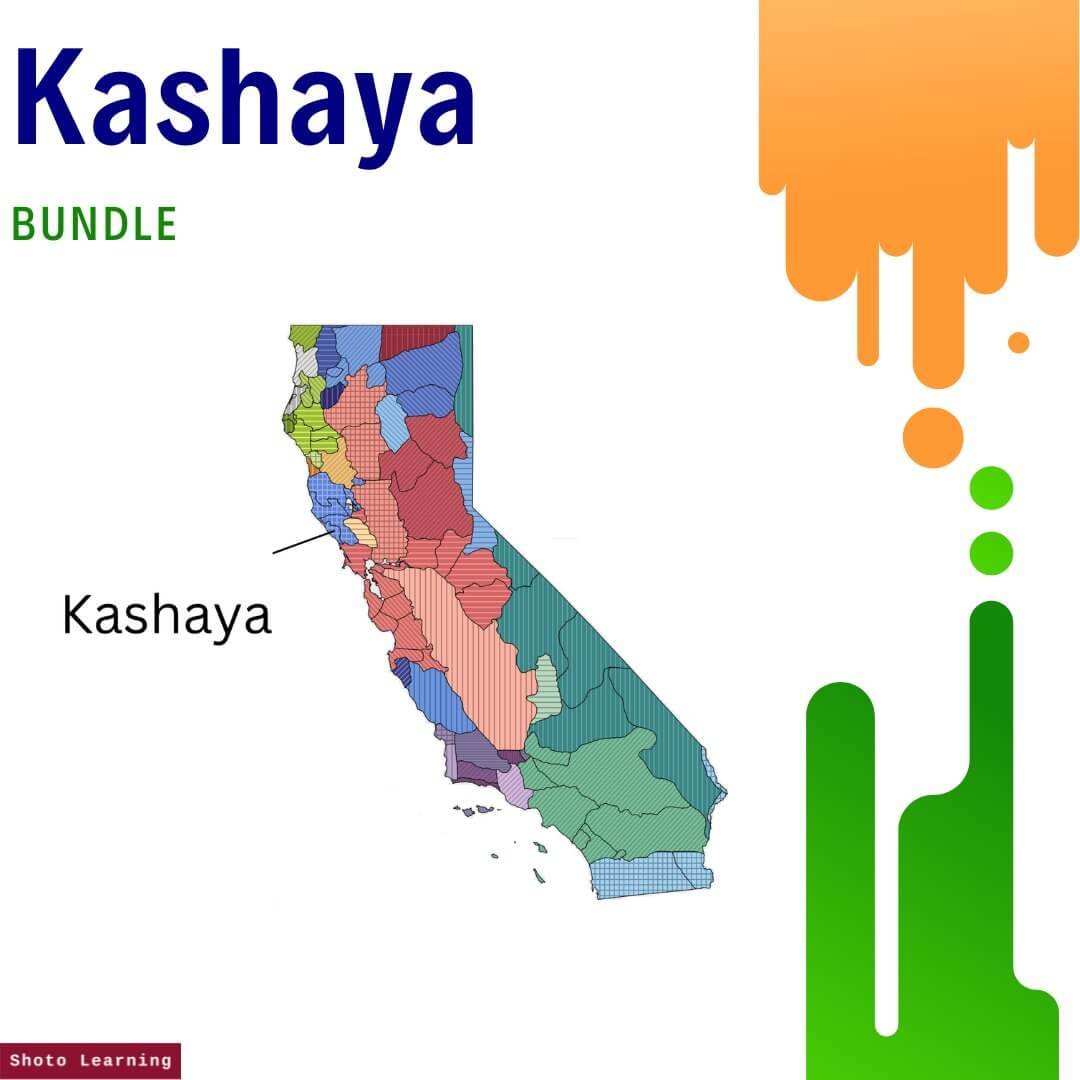





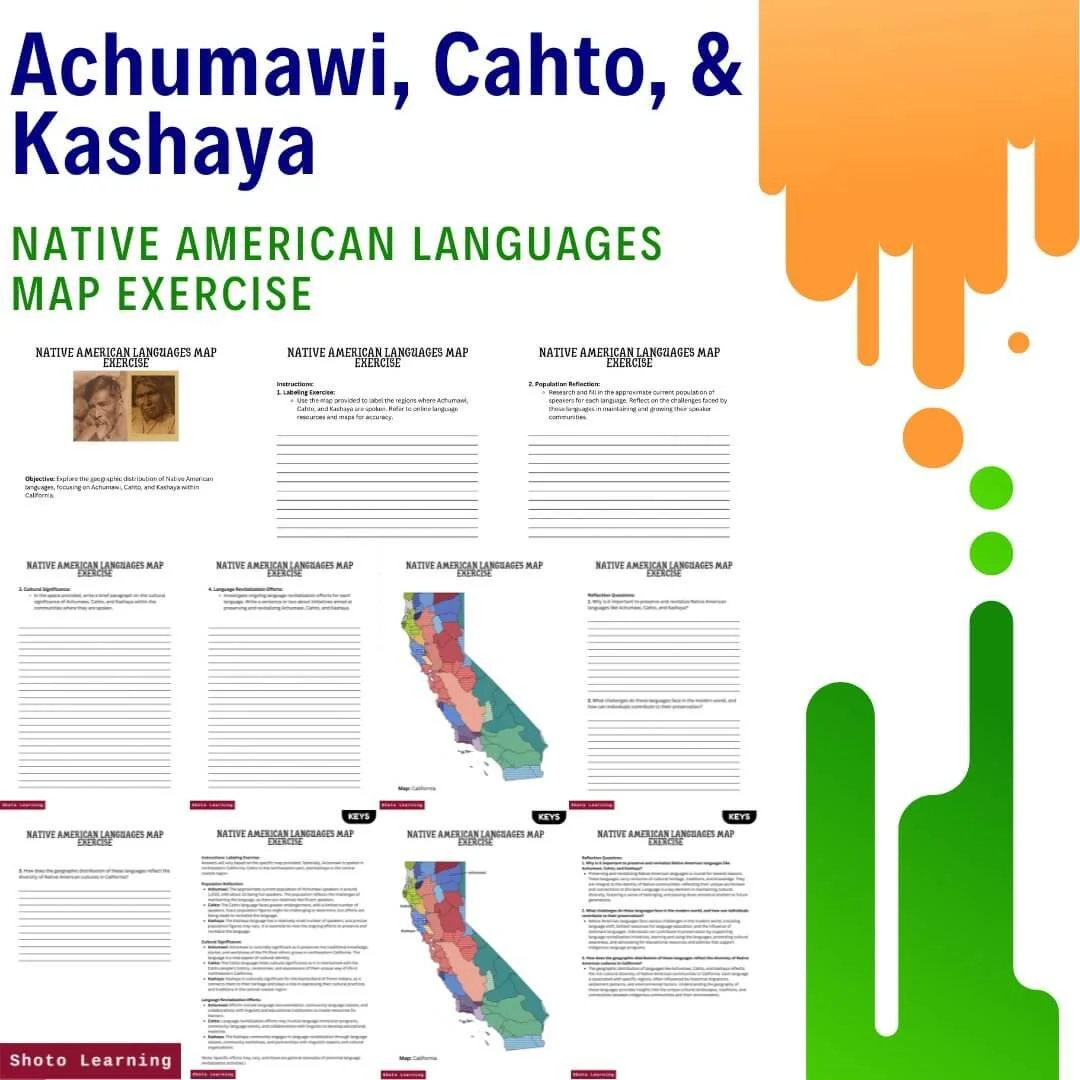


Embark on a linguistic and cultural journey through the rich tapestry of California's indigenous heritage with our exclusive "California Heritage Languages Bundle." This comprehensive package brings together three distinct Native American languages—Achumawi, Cahto, and Kashaya—providing a diverse array of worksheets to deepen your understanding and proficiency in these endangered languages.
Key Features:
1. Achumawi Essentials:
Introduction to Achumawi Vocabulary
Achumawi Numbers
Achumawi Family Terms
Achumawi Clothing Vocabulary
Achumawi and Atsugewi Heritage Language Comparison
2. Cahto Conversations:
Cahto Basic Sentences Practice
Cahto Nouns and Objects Matching
3. Kashaya Kaleidoscope:
Kashaya Food Vocabulary Puzzle
Kashaya Colors and Shapes
4. Achumawi, Cahto, and Kashaya:
Native American Languages Map Exercise
Dive into Linguistic Diversity: Explore the nuances of Achumawi, Cahto, and Kashaya languages through carefully crafted worksheets covering vocabulary, numbers, family terms, clothing, heritage language comparisons, basic sentences, nouns and object matching, food vocabulary, colors, shapes, and a captivating Native American Languages Map Exercise.
Cultural Enrichment: Each worksheet is designed not only to enhance language proficiency but also to provide insights into the cultural context of these indigenous communities. Delve into family dynamics, traditional clothing, culinary traditions, and the rich history preserved in heritage languages.
Holistic Learning Experience: Whether you're an educator, a language enthusiast, or someone passionate about preserving indigenous languages, this bundle offers a holistic learning experience. Engage in diverse activities, from sentence creation to cultural reflections and map exercises, fostering a deep connection to the heritage of California's Native American communities.
Why Choose the California Heritage Languages Bundle?
Comprehensive Curriculum: Covers a wide range of linguistic and cultural topics.
Inclusivity: Represents three distinct Native American languages from California.
Interactive and Engaging: Various exercises cater to different learning styles.
Preservation Support: Contributes to the preservation of endangered languages.
Immerse yourself in the linguistic and cultural richness of Achumawi, Cahto, and Kashaya with our "California Heritage Languages Bundle." This bundle is a valuable resource for educators, learners, and anyone passionate about preserving and celebrating indigenous languages.
52 pages
Order your copy today!