
Creative Ways to Teach Area and Perimeter for Engaging Classroom Lessons
Teaching area and perimeter can be challenging, but using creative methods makes the topic more engaging for students. Incorporating hands-on activities and real-world examples helps students understand area and perimeter better than just using textbooks or worksheets. These approaches turn abstract math concepts into practical skills.
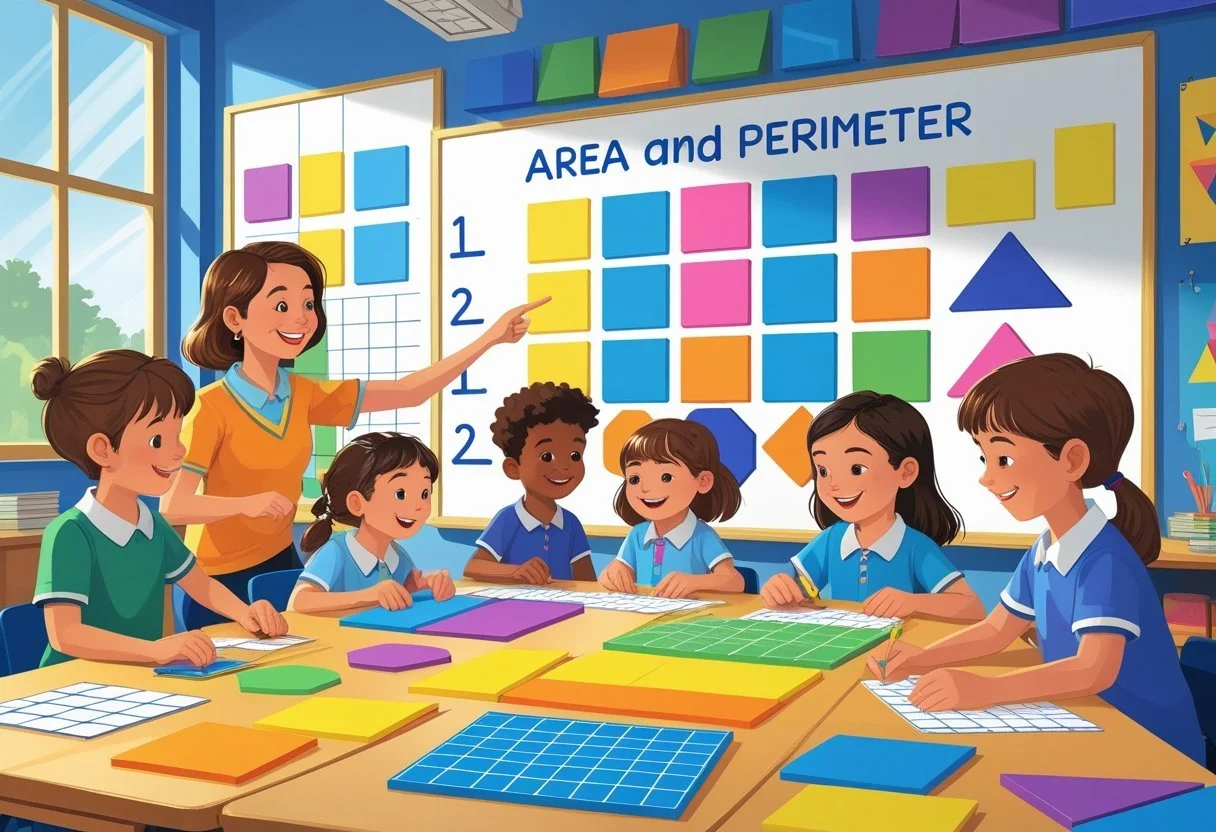
Students often learn more effectively when they can visualize and interact with the material. Activities like making kites, designing floor plans, or using digital task cards offer fun ways to practice calculating area and perimeter. These methods not only keep students interested but also deepen their comprehension through active learning.
Creative teaching strategies give educators a variety of tools to reach different learning styles. By combining games, crafts, and real-life problems, teachers can make area and perimeter lessons memorable and meaningful.
Key Takeways
Hands-on activities boost students’ understanding of area and perimeter.
Real-world examples make math concepts relevant and engaging.
Varied teaching methods support different learning styles effectively.
Fundamental Concepts of Area and Perimeter
Understanding area and perimeter starts with knowing what each measures and how they differ. Many students confuse the two because both relate to the size of shapes but in very different ways. Clear teaching helps students grasp these concepts by breaking them down and using visual tools.
Definitions and Differences
Area is the amount of space inside a two-dimensional shape. It is measured in square units, like square centimeters or square meters. For example, the area of a rectangle is found by multiplying its length by its width.
Perimeter is the total distance around a shape. It is measured in linear units, such as centimeters or meters. To find the perimeter, you add up the lengths of all the sides.
The key difference is that area measures surface, while perimeter measures boundary length. Teaching students to identify whether a problem requires area or perimeter calculations is essential for clear understanding.
Common Misconceptions
Students often confuse area and perimeter because both involve measurement related to shapes. One common mistake is adding the sides of a shape to find area, which actually calculates perimeter.
Another misconception is that a larger perimeter means a larger area. This is not always true; shapes can have the same perimeter but very different areas.
Teachers should emphasize that area counts how much space is inside, while perimeter counts the distance around.
Knowing these differences prevents errors and strengthens students' math skills.
Visualizing Area and Perimeter
Visual aids help students understand area and perimeter better. For example, grid paper can show area by counting the number of squares inside a shape.
Using string or ribbon around a shape can demonstrate perimeter by physically measuring the outline.
Hands-on activities, like building shapes with blocks or tangrams, let students see and touch the difference between the space inside and the edges.
Visualizing helps students remember formulas and apply them correctly during problem-solving.
Essential Tools and Materials for Teaching
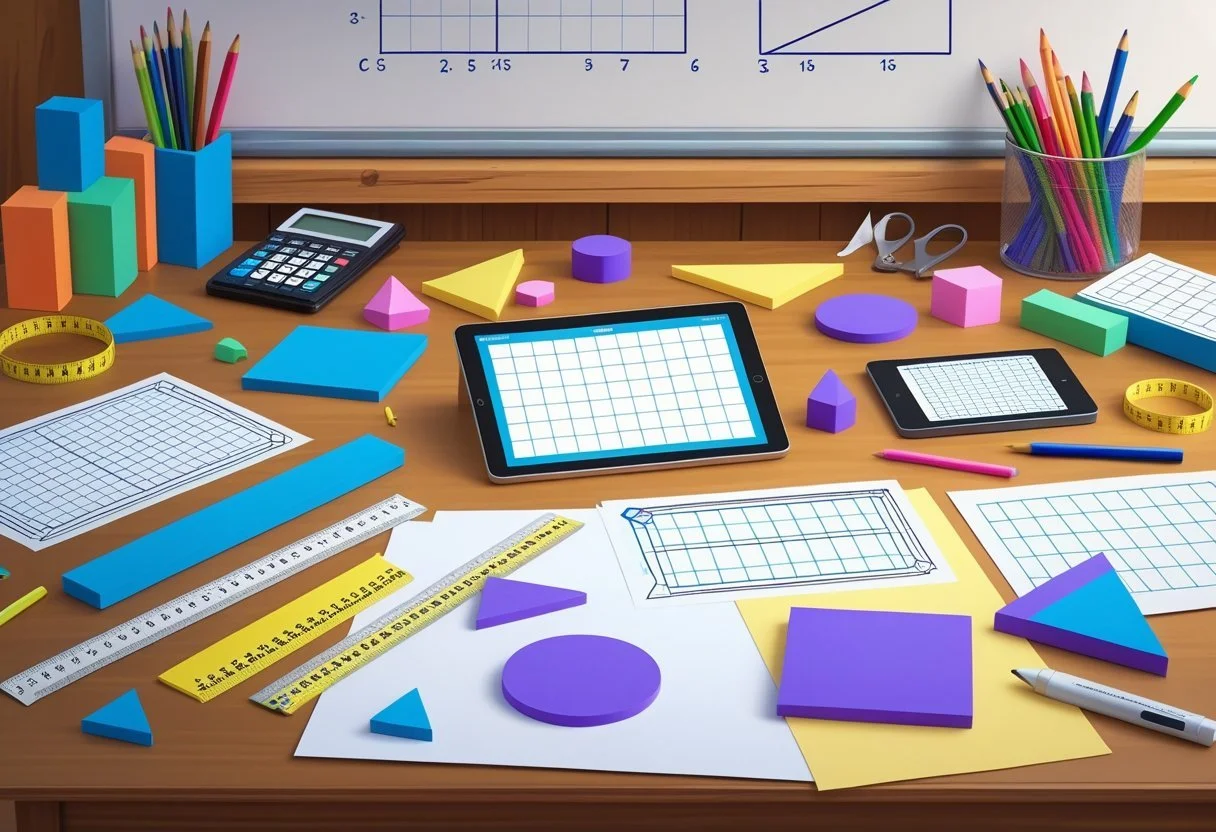
Having the right tools helps students understand area and perimeter more clearly. Materials that allow hands-on practice and visual representation make learning easier and more precise.
Using Graph Paper Effectively
Graph paper is a practical tool for teaching area and perimeter. It helps students visualize shapes and count units instead of relying on abstract numbers.
Using graph paper, students can draw shapes with clear boundaries. They count squares inside the shape to find the area and count the edges for perimeter. This method shows the difference between the two concepts in a concrete way.
Teachers can also assign tasks like creating shapes on graph paper and comparing their areas and perimeters. This practice develops spatial reasoning and measurement skills.
Color coding different parts of the shapes on graph paper can help students track the edges and inside space more easily. This visual aid reduces confusion when calculating.
Manipulatives and Measurement Tools
Physical tools like rulers, tape measures, and even LEGO blocks help students apply math in real-world contexts. Rulers and tape measures teach accuracy in measuring edges, a key skill for calculating perimeter.
Manipulatives such as LEGO blocks or pattern tiles allow students to build shapes. By counting blocks, they find areas and see how changing dimensions affects perimeter.
Using these tools, students can explore irregular shapes, breaking them into smaller parts to calculate area and perimeter step by step.
Including these tools builds hands-on engagement. This approach is important for students who learn better by doing rather than just listening or watching.
Engaging Area and Perimeter Activities
Effective area and perimeter lessons often use hands-on tasks that help students apply math concepts in real ways. These activities include games, art projects, scavenger hunts, and digital simulations. Each method supports learning by making abstract ideas more tangible and encouraging active participation.
Interactive Games and Relays
Games and relays introduce fun challenges that reinforce area and perimeter skills quickly. Teachers can use task cards with problems that students solve in teams or pairs. For example, a relay race where students find the perimeter of classroom objects and tag the next teammate helps with quick thinking and measurement practice.
Board games or card games asking players to calculate area or perimeter boost engagement. These games encourage competition and teamwork. Simple games like “Perimeter Bingo” or “Area Matching” allow students to practice without feeling like traditional tests.
Art and Creative Design Integration
Integrating art with math motivates students to see area and perimeter in new ways. Students can design graph paper “people” or buildings, calculate their shapes’ areas, and then decorate their creations.
Other projects include making mosaics or foam tile patterns, where students measure and calculate total area or perimeter. These tasks connect creativity with math skills, supporting understanding through visual and hands-on learning. It also helps students who learn better through arts.
Classroom and Outdoor Scavenger Hunts
Scavenger hunts make area and perimeter lessons active and explorative. Teachers prepare clues asking students to measure objects’ perimeters or calculate playground areas. This turns math practice into a physical activity.
These hunts can use area and perimeter task cards with questions about different shapes and sizes found inside or outside the classroom. Students record answers, compare results, and discuss differences. This method improves observation, measurement, and teamwork skills.
Digital and Virtual Simulations
Using technology offers interactive ways to practice area and perimeter concepts. Online simulations or apps allow students to drag and reshape figures and see real-time changes in area or perimeter.
Digital games often provide instant feedback, helping learners quickly understand mistakes. Virtual environments may include puzzles or escape rooms with math challenges related to area and perimeter. These formats engage tech-savvy students and add variety to math lessons.
Hands-On Projects for Area and Perimeter
Hands-on projects help students apply math to real tasks. These activities build understanding by linking area and perimeter to practical situations. Students engage by planning spaces and creating models, which deepens their grasp of measurements.
Room and Floor Plan Design
Students can design a room or an entire floor plan using graph paper or digital tools. They calculate perimeter to outline walls and area to measure floor space. This teaches them how sizes affect layout and furniture placement.
Including specific dimensions helps students practice unit conversion and spatial reasoning. They might decide where to put doors, windows, or rugs based on their calculations. Visualizing this makes the abstract ideas of area and perimeter easier to understand.
Building and Construction Projects
Building models from blocks or cardboard encourages students to calculate perimeter and area of walls, floors, and roofs. This hands-on approach connects measurements to actual construction steps and materials.
Students track how much material they need by measuring each part. For example, they figure out the length of baseboards (perimeter) and the amount of flooring (area). This projects real-world skills in budgeting and planning within math lessons.
Real-World Applications of Area and Perimeter
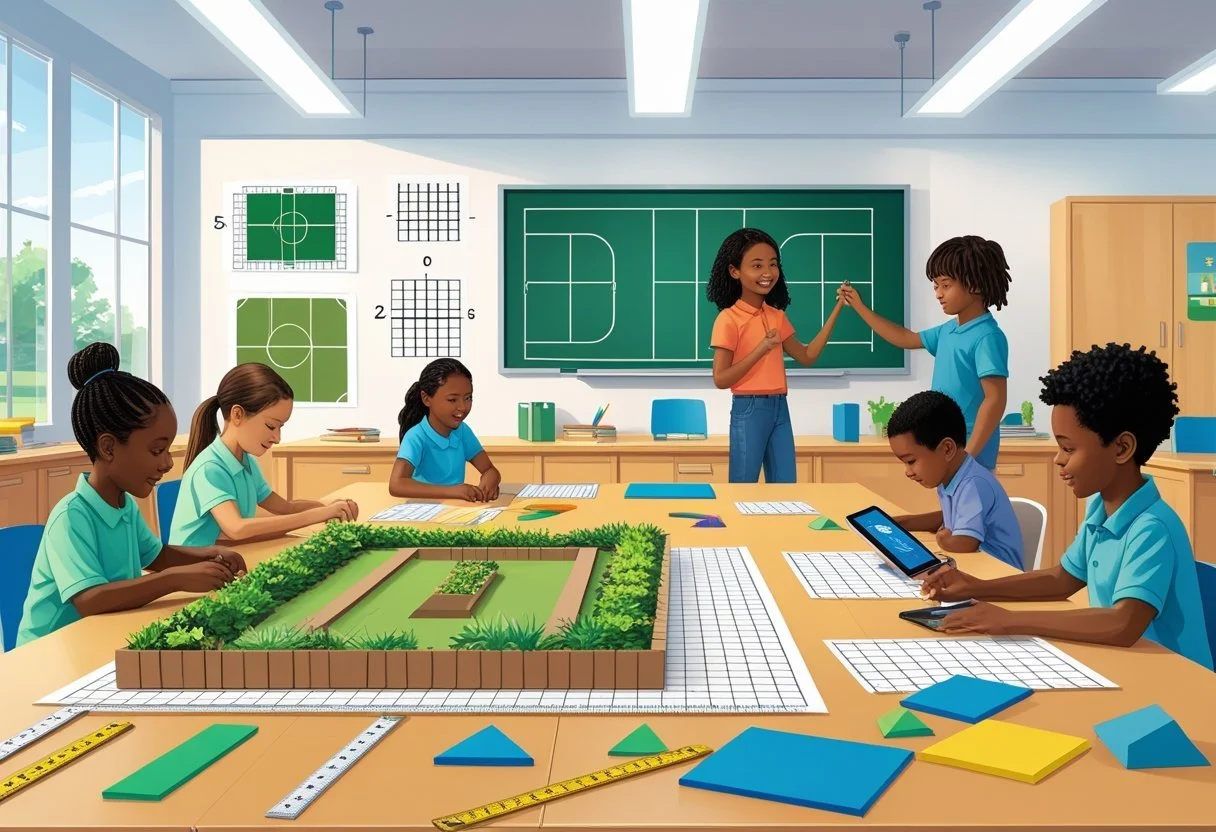
Understanding area and perimeter helps students see how math fits into everyday tasks. It can guide decisions when planning spaces or solving common measurement challenges at home or work. These skills connect classroom learning with practical uses that matter.
Designing Practical Spaces
Area and perimeter are key when arranging rooms, gardens, or even cities. Knowing the area of a space helps decide how much material, like paint or flooring, is needed. Perimeter shows the length of borders, such as fencing or baseboards.
For example, when designing a classroom or playground, measuring perimeter determines how much fencing will be needed to enclose the area. Calculating area ensures there is enough open space or seating. In city planning, students can design buildings and streets, finding the perimeter to plan roads and the area for usable space.
This hands-on use of area and perimeter teaches students how to apply math outside of textbooks and calculators. It builds skills for future jobs in design, construction, or landscaping.
Solving Daily Measurement Problems
Area and perimeter are helpful in everyday tasks like gift wrapping, home projects, or crafting. For instance, wrapping a gift requires calculating the surface area of the box to buy enough paper. Perimeter helps determine the length of ribbon needed to wrap neatly.
People use perimeter to figure out how much trim is needed around a window or how much rope to tie around a garden bed. Area helps when tiling a floor or covering walls with wallpaper.
These examples give students practical reasons to learn about area and perimeter. Showing simple, real-life problems helps them understand why these skills are important for everyday situations.
Assessing Understanding and Mastery
Assessing students’ grasp of area and perimeter involves varied tools that measure both their procedural skills and conceptual knowledge. The methods used should encourage active thinking and allow teachers to identify specific areas where students struggle.
Task Cards and Interactive Worksheets
Task cards are a flexible tool for assessing area and perimeter. They present short, focused questions on individual or mixed concepts. Using task cards allows teachers to quickly check understanding in small groups or one-on-one settings.
Interactive worksheets, often digital, give immediate feedback. They include questions ranging from calculating area and perimeter of simple shapes to composite figures. These worksheets can adapt to different skill levels, boosting student confidence through correct answers and hints.
Both tools support differentiation. Teachers can mix questions testing formula use with those requiring critical thinking about when to apply area or perimeter. This gives a balanced view of student mastery.
Word Problems and Problem-Solving Challenges
Applying area and perimeter skills to word problems checks deeper understanding. These problems require students to interpret real-world situations, decide what measurements are needed, and solve step-by-step.
Problem-solving challenges often include multi-step tasks involving irregular shapes or multiple calculations. These push students to think beyond memorization, fostering problem analysis and strategy choice.
Teachers can use word problems to assess whether students distinguish between linear measurements (perimeter) and surface coverage (area). Clear, contextual problems enhance this skill, helping students apply math accurately outside the classroom.
Tips and Best Practices for Educators
Effective teaching of area and perimeter involves clear explanation of concepts and creating opportunities for students to collaborate and discuss. These strategies help students build true understanding and apply what they learn practically.
Promoting Conceptual Understanding
Teachers should focus on showing the difference between area and perimeter clearly. Using hands-on activities, such as having students measure and calculate dimensions of objects or create shapes with paper or LEGO bricks, helps make the ideas concrete. Visual aids like grids or graph paper can support this work.
Encouraging students to explain their thinking when solving problems also deepens understanding. Using real-world examples, such as finding the area of a garden or the perimeter of a room, makes lessons more relevant.
Frequent practice with a mix of problems supports mastery. Including problems that combine shapes or require students to find missing measurements can challenge their reasoning.
Encouraging Collaboration and Discussion
Group work encourages students to share strategies and check each other's understanding. Teachers can set up paired or small group tasks where students explain how they found area and perimeter.
Class discussions guided by questions like “Why does this shape have this perimeter?” or “How can we double the area?” can spark critical thinking. This also helps students hear different viewpoints and methods.
Using games, scavenger hunts, or interactive digital tools in groups opens space for collaboration while keeping students engaged. Teachers can observe these interactions to identify misconceptions and guide learning.
Frequently Asked Questions
Teaching area and perimeter can be more effective with specific strategies tailored to different ages and learning styles. Using real-world projects, hands-on activities, and age-appropriate lessons helps deepen students’ understanding.
What innovative projects can help high school students understand area and perimeter?
High school students benefit from projects involving irregular shapes and real-world applications. For example, designing a garden layout or creating floor plans helps them calculate and compare areas and perimeters.
Using technology like graphing software or digital design tools can also make these concepts clearer and more relevant.
How can teachers design effective lessons for 5th graders on area and perimeter?
Lessons for 5th graders should include visual aids like grid paper and manipulatives. Teachers can use measurable objects in the classroom for students to calculate area and perimeter.
Story problems with different dimensions encourage them to think about multiple answers and deepen their understanding.
Can you suggest engaging hands-on activities for teaching perimeter concepts?
Hands-on activities include measuring the perimeter of playground equipment or classroom objects with rulers or tape measures. Creating “perimeter hunts” where students find items matching specific perimeter lengths also works well.
Using LEGO bricks or building blocks to make shapes and calculate their perimeters helps make learning interactive.
What are some creative activities for teaching area and perimeter to 6th-grade students?
Sixth graders respond well to challenges involving irregular shapes and word problems that ask for multiple solutions. They can work on projects like designing a mini-golf course or mapping out sports fields.
Incorporating group activities like scavenger hunts based on perimeter or area also keeps them engaged.
How can educators incorporate hands-on learning when teaching area to students?
Hands-on learning can include cutting out shapes from paper and rearranging parts to explore how area changes. Measuring rooms or furniture and calculating surface areas provides practical experience.
Using digital tools that simulate area problems allows students to experiment with different shapes and sizes.
Where can I find interactive games or activities suitable for 3rd graders learning about area and perimeter?
Many educational websites offer age-appropriate games focusing on area and perimeter. Sites like Khan Academy, Math Playground, and ABCya have interactive quizzes and tasks designed for younger learners.
Teachers can also find printable worksheets and hands-on activity guides on various education resource platforms.