
Cell Membranes and Transport: Activities for Engagement to Enhance Student Understanding
Understanding cell membranes and how substances move across them is key to grasping many biological processes. Engaging activities that model these concepts help students better understand both the structure of the membrane and the mechanisms of transport like diffusion, osmosis, and active transport. These hands-on approaches make learning more interactive and memorable.
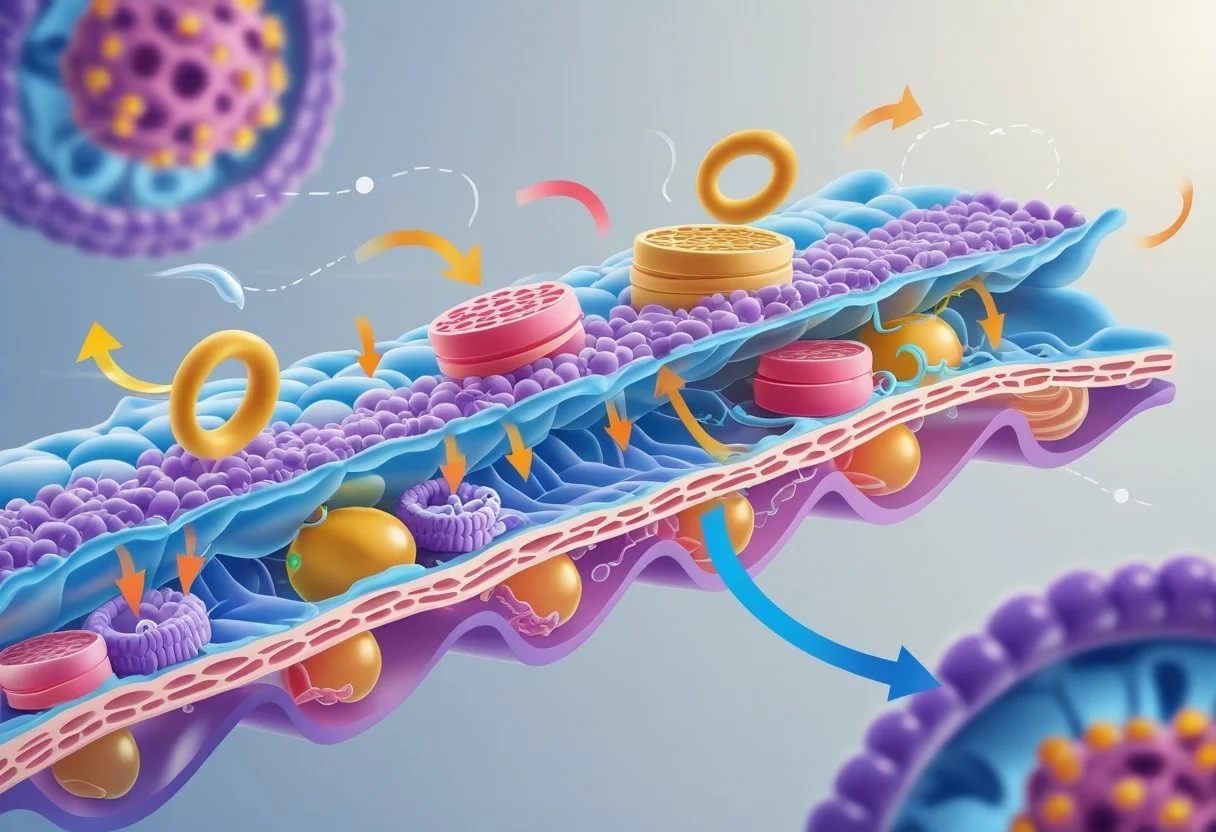
By using games, experiments, and visual tools, students can compare passive and active transport in a clear and practical way. These activities encourage curiosity and allow learners to see how cells control what enters and leaves, connecting science to real-world functions.
Teachers can also include group tasks and role-play to make complex ideas more accessible. Combining these methods creates a well-rounded and dynamic learning experience that improves comprehension and retention.
Key Takeaways
Activities make cell membrane concepts easier to understand.
Hands-on learning helps explain substance movement in cells.
Realistic models and games boost student engagement.
Core Concepts of Cell Membranes
The cell membrane controls what enters and leaves the cell. It has a specific structure made of different molecules that work together. These molecules help the membrane stay flexible, protect the cell, and allow it to communicate with its environment.
Structure and Composition of the Cell Membrane
The cell membrane is mainly made of a double layer of lipids called the phospholipid bilayer. Each phospholipid has a water-attracting (hydrophilic) head and two water-repelling (hydrophobic) tails. This arrangement creates a barrier that separates the cell’s inside from the outside.
Membrane proteins are embedded within this lipid layer. They can move sideways and serve many functions, including transport, signaling, and structural support. Carbohydrates are usually attached to proteins or lipids on the membrane’s outer surface. These sugar chains help cells recognize each other and stick together when needed.
The entire membrane is about 5-10 nanometers thick. Its fluid nature allows it to change shape and repair itself when damaged.
Roles of Lipids, Proteins, and Carbohydrates
Lipids mainly provide the membrane’s structure and flexibility. They keep the membrane fluid over a range of temperatures, which is important for the cell’s survival.
Proteins have many roles. Some form channels or pumps to move substances in and out of the cell. Others act as receptors that detect signals from outside the cell. Some proteins give shape and support to the membrane.
Carbohydrates stick to proteins and lipids, forming glycoproteins and glycolipids. These sugar groups help with cell recognition and immune responses. They also allow cells to bind together to form tissues.
Selective Permeability Fundamentals
Selective permeability means the membrane lets some molecules pass but blocks others. Small, nonpolar molecules like oxygen and carbon dioxide can move freely through the lipid bilayer. Larger or charged molecules, like ions and glucose, need help from transport proteins.
There are two main types of transport: passive and active. Passive transport does not require energy and moves substances from high to low concentration. Active transport uses energy to move substances against their concentration gradient.
This selective movement helps the cell maintain balance and control its internal environment, which is crucial for its proper function.
Principles of Membrane Transport
Cell membranes control what enters and leaves a cell by using different methods of transport. These methods rely on the ability of the membrane to be selectively permeable. The movement of substances depends largely on factors like energy use and the difference in concentration across the membrane.
Types of Membrane Transport
Membrane transport occurs in several ways:
Passive transport requires no energy. Molecules move from a higher to a lower concentration. Examples include simple diffusion and facilitated diffusion, where proteins help substances cross the membrane.
Active transport needs energy, often from ATP, to move molecules against their concentration gradient, from lower to higher concentrations.
Bulk transport moves large particles or volumes into or out of the cell using vesicles, such as endocytosis and exocytosis.
The membrane’s permeability varies for different molecules, allowing only certain substances to pass. Transport proteins often assist substances that cannot cross the membrane alone.
Concentration Gradient and Its Effects
The concentration gradient is the difference in the amount of a substance between two regions. It drives passive transport by pushing molecules to move from high to low concentration.
In active transport, molecules are moved against the gradient, which requires energy. This process helps cells maintain important balances of ions and molecules.
Changes in the gradient impact how fast or slow substances move. A steep concentration gradient speeds up passive movement, while a low gradient slows it. Cells constantly regulate this to keep healthy function.
Passive Transport Activities
Passive transport lets molecules move across cell membranes without using energy. It relies on natural processes like diffusion, osmosis, and facilitated diffusion. These activities show how molecules travel along their concentration gradients and how different factors affect their movement.
Engaging Diffusion Demonstrations
Diffusion involves molecules moving from areas of high concentration to low concentration until balanced. This can be shown using colored dye in water. When dye is added, it slowly spreads out, showing diffusion in action.
Students can observe how temperature or stirring changes the rate of diffusion. Warmer water or stirring speeds up spreading. This helps explain how diffusion depends on conditions affecting molecule movement.
The activity also highlights the role of concentration gradients. The larger the difference in concentration between two areas, the faster molecules move. This basic idea is central to understanding passive transport.
Modeling Osmosis
Osmosis is the movement of water through a semi-permeable membrane from low to high solute concentration. Students can use materials like dialysis tubing or soaked potatoes to model osmosis.
By placing these items in solutions with different salt or sugar concentrations, students watch water move in or out. This causes changes in size or weight, showing osmosis’ effect.
This activity teaches the importance of membrane permeability and concentration gradients. It also clarifies why cells use osmosis to balance water levels and maintain homeostasis.
Facilitated Diffusion Exploration
Facilitated diffusion moves molecules that cannot easily cross membranes by themselves, like ions or sugars. This process uses specific proteins to help molecules cross along the concentration gradient.
Students can model this by simulating molecules needing "transport helpers" to cross barriers. Games or diagrams showing channel or carrier proteins help explain how facilitated diffusion works.
This method shows that passive transport can involve proteins without using cell energy. It also stresses that molecules move from high to low concentration, driven by natural forces but relying on protein assistance.
Active Transport Engagement
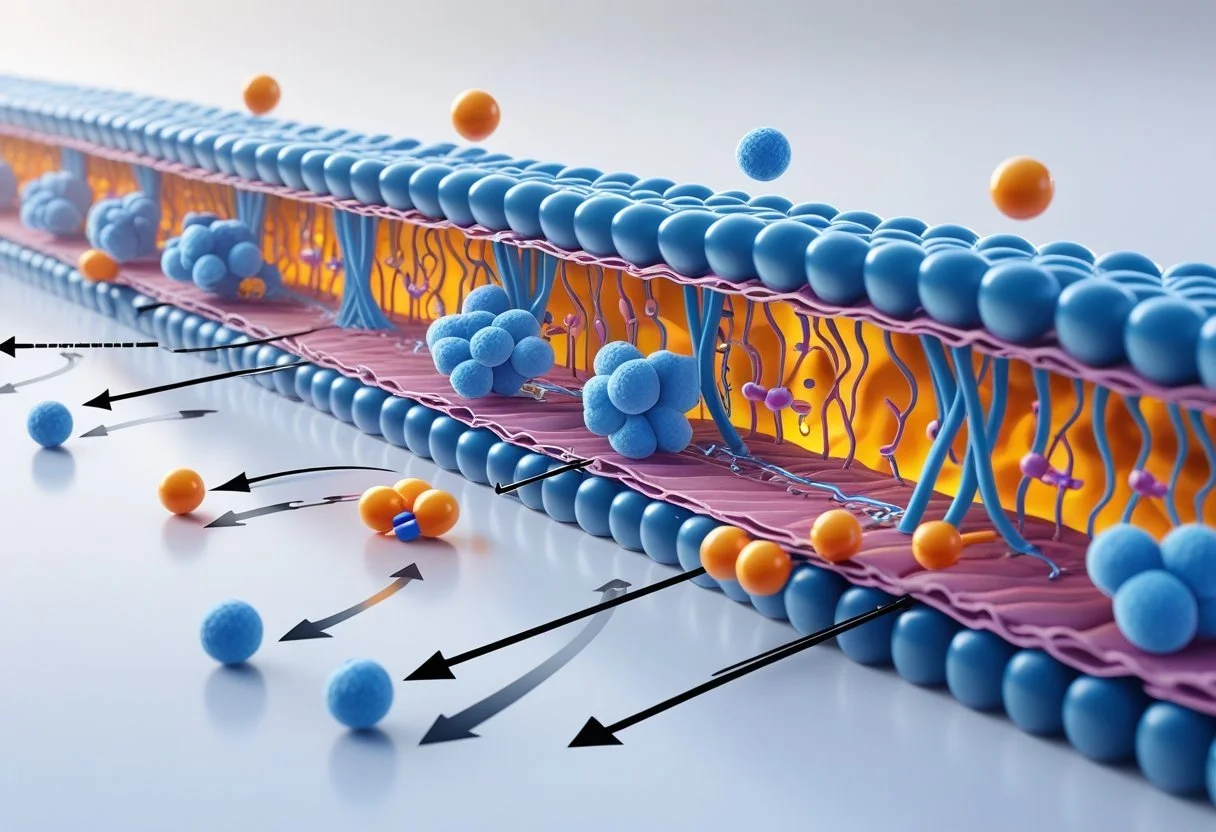
Active transport moves molecules across cell membranes using energy. It requires special proteins that help push substances against their concentration gradient. Understanding how these proteins work and practicing simulations can help grasp this essential cellular process.
Hands-On Active Transport Simulations
Simulations let students model how substances move against their concentration gradient using energy. One common activity involves recreating the movement of ions or molecules across a membrane, showing how cells use energy to keep balance.
These exercises focus on:
Visualizing energy use during transport
Observing the difference between active and passive movement
Understanding concentration gradients and their impact
Simulations help clarify why active transport is necessary when molecules cannot move by diffusion alone. This approach gives learners a clear picture of cellular transport mechanics without complex theory.
Role of Proteins in Active Transport
Proteins embedded in the cell membrane act as pumps during active transport. They bind specific substances and use energy, often from ATP, to carry them into or out of the cell.
There are two main types:
Primary active transport: Proteins directly use energy to move particles against the gradient.
Secondary active transport: Proteins use the energy from one molecule's movement to transport another.
These transport proteins change shape to move molecules. They are crucial because they maintain essential differences in ion and molecule concentrations, supporting cells’ survival and function.
Investigating Permeability
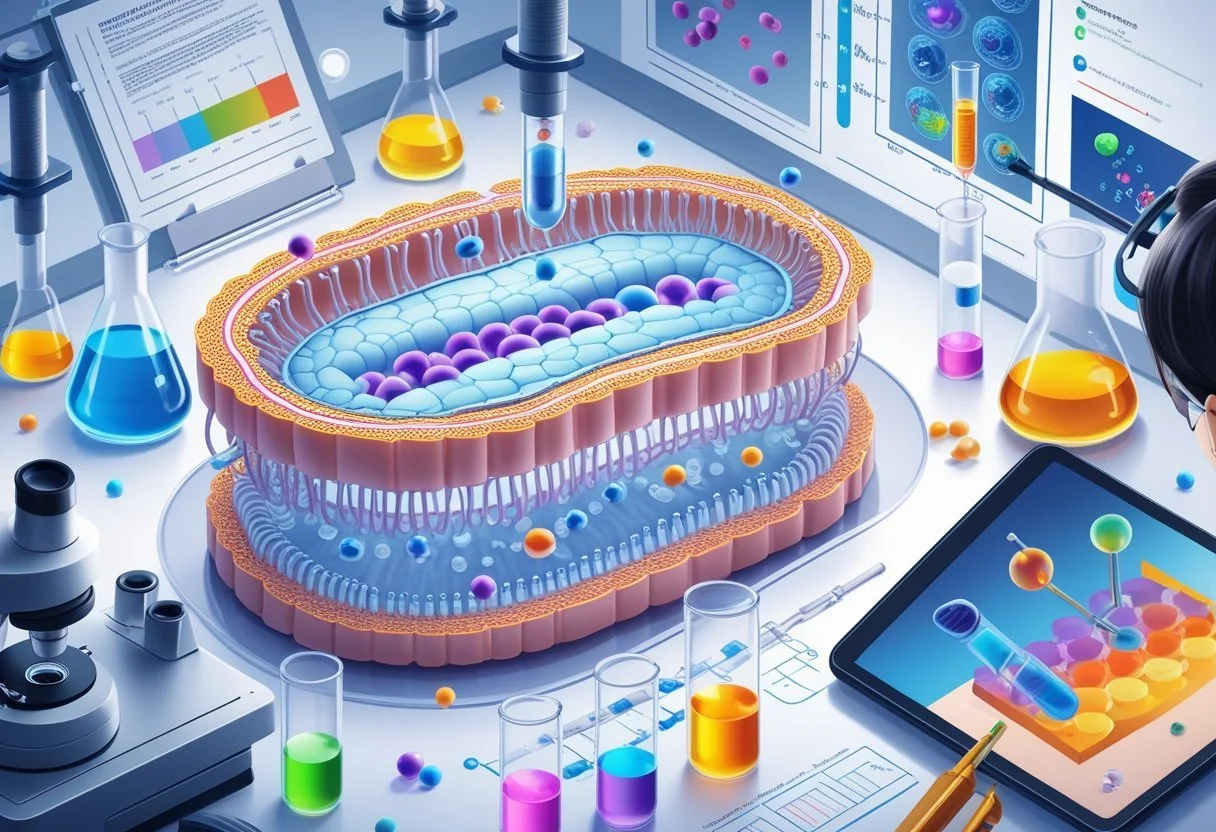
Understanding how substances move across the cell membrane reveals much about cell function and health. Experiments and factors that affect permeability show the role of lipids and proteins in controlling what enters and leaves the cell.
Permeability Testing Labs
Permeability testing labs often use materials like beetroot or shell-less eggs to observe how membranes let substances through. Beetroot cells contain a red pigment sealed inside by the membrane. When the membrane becomes more permeable, the pigment leaks out, causing the surrounding solution to change color. Measuring this color change helps estimate membrane permeability.
Shell-less eggs, surrounded by a selectively permeable membrane, offer another method. Students place eggs in different solutions and note changes in size or weight to observe water and solute movement. This demonstrates diffusion and osmosis through the membrane, emphasizing the selective nature of lipid bilayers.
These lab activities provide clear evidence of membrane function by showing how cells control their internal environment through selective permeability.
Factors Influencing Permeability
Membrane permeability depends on several factors, especially temperature and the makeup of the cell membrane, including lipids. Increasing temperature typically makes the membrane more fluid, allowing substances to pass through more easily. Lower temperatures do the opposite, making the membrane less permeable.
The lipid components of the membrane, mainly phospholipids, form a bilayer that acts as a barrier to many molecules. Changes in lipid composition, such as the amount of cholesterol, can alter membrane fluidity and permeability.
Other factors like pH and solvent presence also affect how substances move across the membrane. These conditions can disrupt membrane structure, increasing permeability. Controlling these factors helps cells maintain homeostasis by regulating what crosses the membrane.
Creative and Collaborative Activities
Hands-on and interactive methods help students understand cell membranes and how substances move through them. These activities focus on teamwork and engagement, making complex ideas easier to grasp.
Building Cell Membrane Models
Students create physical models to explore the cell membrane’s structure. Using materials like beads, clay, or paper, they represent phospholipid bilayers, proteins, and channels. This helps them visualize the membrane as a flexible, semi-permeable barrier.
The activity promotes understanding of how molecules like ions and proteins are arranged. It also demonstrates the fluid mosaic model, showing how components move within the membrane.
Building models encourages discussion about the membrane’s function. Students learn why certain substances can pass through easily, while others require special transport proteins.
Games and Group Challenges
Games simulate the movement of particles through the cell membrane. For example, students play active and passive transport roles, mimicking how molecules move with or against concentration gradients.
Group challenges can include tasks where students sort molecules by size, charge, or polarity to decide which method of transport they need. This builds critical thinking about diffusion, osmosis, and active transport.
These activities make abstract concepts concrete through role-play and competition. They increase engagement, helping students better remember how substances cross the cell membrane.
Real-World Connections and Applications
Cell membrane transport plays a vital role in many natural and everyday processes. Understanding how substances move across membranes can reveal how plants grow and how humans rely on this function in daily health and technology.
Impacts of Transport on Photosynthesis
Membrane transport is critical in photosynthesis. Chloroplasts, the site of photosynthesis, control the movement of molecules like water, carbon dioxide, and oxygen through their membranes.
Water enters the chloroplasts through membrane channels, supporting the chemical reactions that produce glucose. Carbon dioxide moves in while oxygen, a byproduct of photosynthesis, exits through these membranes. Active and passive transport regulate these movements, ensuring that the plant has what it needs for energy production.
This careful balance of membrane transport affects the plant’s ability to grow and make food. Without efficient transport, photosynthesis cannot occur properly, which would impact ecosystems and food chains.
Membrane Transport in Daily Life
Membrane transport is not limited to plants. In humans, cellular transport keeps cells healthy and functioning. For example, the movement of nutrients, ions, and waste products relies on membranes to filter and control what enters and leaves cells.
In medicine, understanding membrane transport helps in drug delivery by targeting how substances enter cells. It also affects treatments for diseases like cystic fibrosis, where faulty transport proteins disrupt cell function.
Everyday activities like absorbing nutrients from food depend on membrane transport too. The small intestine uses this process to move molecules into the bloodstream for the body to use. These real-world examples show how important membrane transport is to life and health.
Frequently Asked Questions
The cell membrane is made mostly of phospholipids and proteins that work together to control what enters and leaves the cell. It manages the flow of water, ions, and other molecules, using different methods that require or do not require energy.
How do phospholipids in the cell membrane determine its fluidity and permeability?
Phospholipids form a bilayer with hydrophilic heads facing out and hydrophobic tails facing in. This arrangement creates a flexible but sturdy barrier.
The types of fatty acids in the phospholipids affect fluidity; unsaturated fatty acids make the membrane more fluid. This fluidity influences how easily molecules pass through the membrane.
What roles do proteins play in the transport mechanisms across cell membranes?
Proteins act as channels, carriers, or pumps that help move substances across the membrane. Channel proteins create openings for ions and small molecules.
Carrier proteins change shape to move molecules in or out. Pumps use energy to move molecules against their concentration gradient.
Can you explain the process and significance of osmosis in cellular function?
Osmosis is the movement of water across a membrane from low to high concentration of solutes. This helps maintain the balance of water inside and outside cells.
Osmosis is crucial for cell survival because it controls water levels needed for processes like nutrient transport and waste removal.
What are the differences between passive and active transport in cells?
Passive transport moves molecules from high to low concentration without using energy. Examples include diffusion and osmosis.
Active transport requires energy to move molecules from low to high concentration. This allows cells to take in nutrients and remove waste even when concentrations are unequal.
How do cells regulate the movement of ions through membrane channels?
Cells use gated ion channels that open or close in response to signals like changes in voltage or binding of molecules.
This regulation ensures ions enter or leave the cell only when needed, helping maintain cellular conditions like electrical balance and volume.
What are the factors that affect the rate of diffusion across a cell membrane?
The rate depends on concentration difference, temperature, membrane surface area, and molecule size.
Higher concentration gradients and temperatures speed up diffusion. Larger molecules and smaller surface areas slow it down.




Dive deep into the world of cell membranes with our comprehensive Cell Membrane Mastery Bundle, designed to provide a holistic learning experience for students, educators, and biology enthusiasts alike. This all-inclusive bundle features a wide array of engaging and interactive resources, each meticulously crafted to enhance understanding and retention of key concepts related to cell membrane structure, function, and significance in cellular biology.
Included in this bundle:
Assignments: Embark on 10 stimulating assignments covering diverse topics, encouraging critical thinking and practical application of knowledge.
Bingo: Challenge your knowledge with 30 bingo cards featuring cell membrane-related terms and concepts.
Crossword: Test your understanding with a crossword puzzle that explores essential terminology and concepts.
Cryptogram: Decode the hidden message while learning about cell membranes in a fun and challenging way.
Debate: Engage in thought-provoking discussions on the role of cell membranes in cellular function and organization.
Experiments: Explore hands-on experiments illustrating fundamental principles across various disciplines, fostering deeper understanding and engagement.
Fill in the Blank: Reinforce your understanding with fill-in-the-blank exercises covering key concepts related to cell membranes.
Flash Cards: Master cell membrane terminology and concepts with a set of 20 flashcards for quick review and study.
Free ABC Order: Practice alphabetizing cell membrane-related terms with this free worksheet.
Free Label the Parts: Identify and label the components of a cell membrane with this free activity.
Free Poster: Decorate your classroom or study space with a visually appealing poster highlighting key aspects of cell membranes.
Lesson Plan: Dive deep with our detailed lesson plan, complete with engaging activities and discussion topics.
Matching: Test your knowledge with a matching activity that pairs cell membrane terms with their definitions.
Missing Letters: Exercise your problem-solving skills with worksheets challenging you to fill in missing letters to complete cell membrane-related words.
Multiple Choice: Assess your understanding with a set of multiple-choice questions covering various aspects of cell membranes.
PowerPoint: Dive into an informative presentation exploring cell membrane structure, function, and significance.
Questions and Answers: Test your knowledge with a series of questions and answers covering cell membrane biology.
Reading Comprehension: Sharpen reading skills with engaging passages, perfect for students and educators alike.
Scramble: Unscramble jumbled words related to cell membranes in this engaging activity.
Test (45 Minutes): Challenge yourself with a timed test covering key concepts related to cell membranes.
True or False: Determine the validity of statements about cell membranes in this true-or-false activity.
Word Search: Search for cell membrane-related terms hidden within a grid of letters.
Writing Prompts: Stimulate critical thinking and creativity with writing prompts related to cell membrane biology.
With this comprehensive bundle, you'll have everything you need to master the complexities of cell membranes and gain a deeper appreciation for their vital role in cellular biology. Unlock the secrets of cellular gatekeepers today!
Pages: 134 pages
Order your copy today!