
Exploring Evolution: Projects and Lesson Plans for Engaging Science Education
Understanding evolution is key to unlocking how life on Earth changes and adapts over time. Exploring evolution through projects and lesson plans allows students to see these processes in action, making complex ideas easier to grasp. Engaging lessons bring evolution to life by connecting big concepts like natural selection and adaptation with hands-on activities and real-world examples.
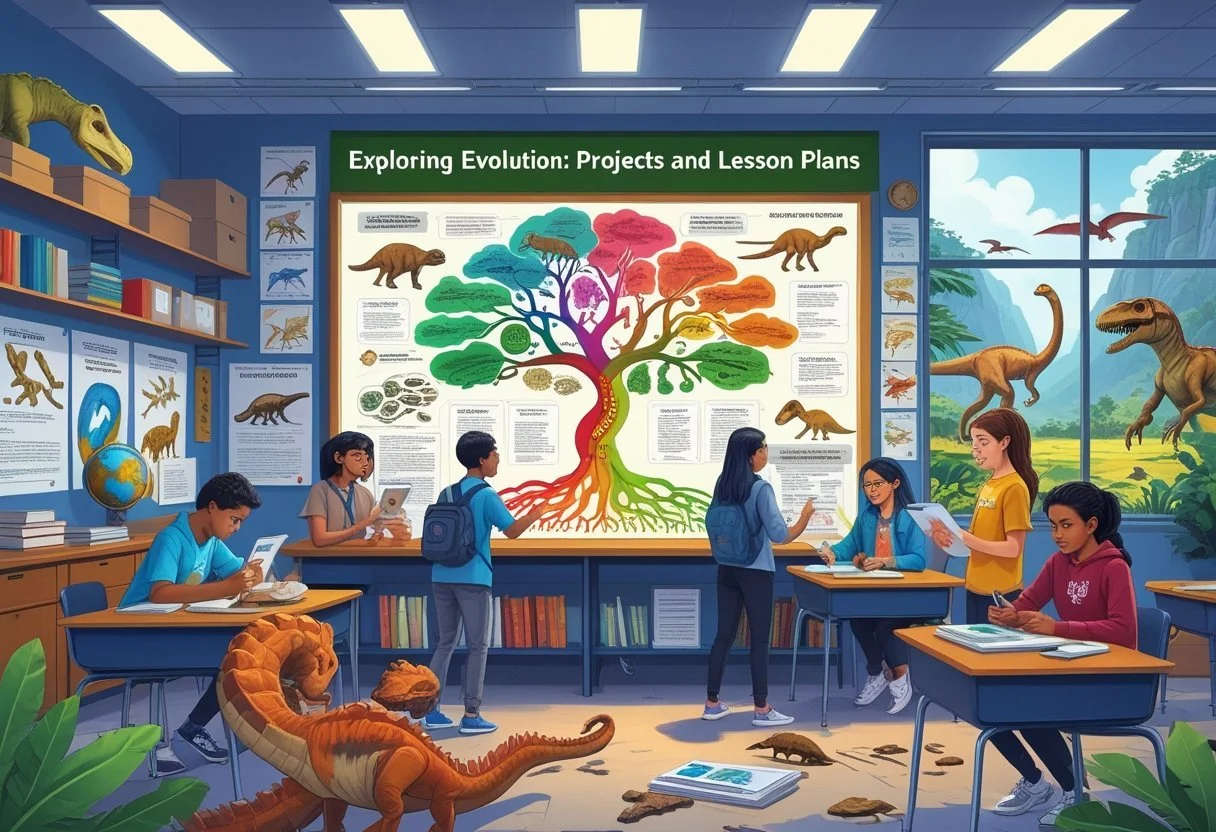
Teachers can use a variety of resources to tailor lessons that fit their classroom needs. From fun experiments to detailed investigations, these projects help students analyze species and biodiversity while building critical thinking about how living things evolve. This approach deepens understanding by linking scientific principles with direct experiences.
With clear lesson plans and interactive projects, educators have the tools to make evolution both accessible and interesting. These activities foster curiosity and encourage learners to explore how evolution shapes the world around them.
Key Takeways
Effective lessons connect key concepts of evolution with hands-on learning.
Projects help students explore biodiversity and species adaptation.
Clear plans support teaching evolution in an engaging, understandable way.
Key Concepts in Evolution Education
Evolution explains how living things change over time through processes that affect their survival and reproduction. It involves changes at the genetic level, leading to differences in traits across populations. Understanding these processes helps clarify why species vary and how new species arise.
Defining Evolution and Its Importance
Evolution is the process by which species change across generations due to inherited traits. It is important because it explains the diversity of life on Earth and how organisms adapt to their environments.
Evolution operates through genetic changes that accumulate over time. These changes can be small or large but affect the traits passed to offspring. Without evolution, species would not be able to respond to changes in their environment, and life would remain static.
Understanding evolution also helps explain common ancestry among different species. This idea shows that all living things share a connection through their evolutionary history.
Natural Selection and Adaptation
Natural selection is the mechanism by which evolution occurs. It works by favoring individuals with traits that make them better suited to survive and reproduce in their environment.
Adaptation is the result of natural selection. When an organism has traits that improve its chances of survival, those traits become more common in future generations.
For example, a plant in a dry area might develop deeper roots to get water better. This adaptation helps it survive droughts, so plants with this trait are more likely to live and reproduce.
Natural selection causes populations to change over time, but it does not work toward a goal. It only favors traits that fit the current conditions.
Speciation and Survival of Organisms
Speciation is the process by which one species splits into two or more new species. This usually happens when populations become separated and evolve differently.
When groups of the same species live in different environments, they face different challenges. Over time, these differences can lead to the formation of new species that cannot interbreed with each other.
Survival of organisms depends on their ability to adapt and compete for resources. Those that survive pass their traits on, shaping future populations.
Speciation increases biodiversity, which helps ecosystems stay strong and balanced. It is a key result of evolutionary changes driven by survival pressures.
Foundations and Influences: Darwin and Beyond
The development of evolutionary theory was shaped by key individuals and important scientific findings. These shaped how we understand species, natural selection, and adaptation today.
Charles Darwin and His Legacy
Charles Darwin is best known for his theory of evolution by natural selection. His observations during the voyage of the HMS Beagle from 1831 to 1836 were crucial. He studied species on the Galapagos Islands and noticed variations that helped them survive.
Darwin’s work linked the idea that species change over long periods due to environmental demands. He showed how these changes improve survival and reproduction. His ideas challenged the view that species were fixed and unchanging.
Darwin's theory became the foundation for modern biology. It introduced concepts like adaptation and common descent, which remain central to studying evolution.
Influential Experiments and Discoveries
Several key experiments and discoveries built on or influenced Darwin’s ideas. Alfred Russel Wallace independently described natural selection, prompting a joint presentation with Darwin in 1858. This confirmed the shared understanding of evolution.
Scientists also found fossils and observed species that supported evidence for gradual change over time. Studies of genetics later added proof of how traits pass from one generation to the next.
Early thinkers like geologist Charles Lyell influenced Darwin by arguing Earth was much older than previously thought. This allowed enough time for slow evolutionary processes to occur.
Together, these findings and ideas created a strong scientific basis for evolution that continues to expand today.
Developing Effective Evolution Lesson Plans
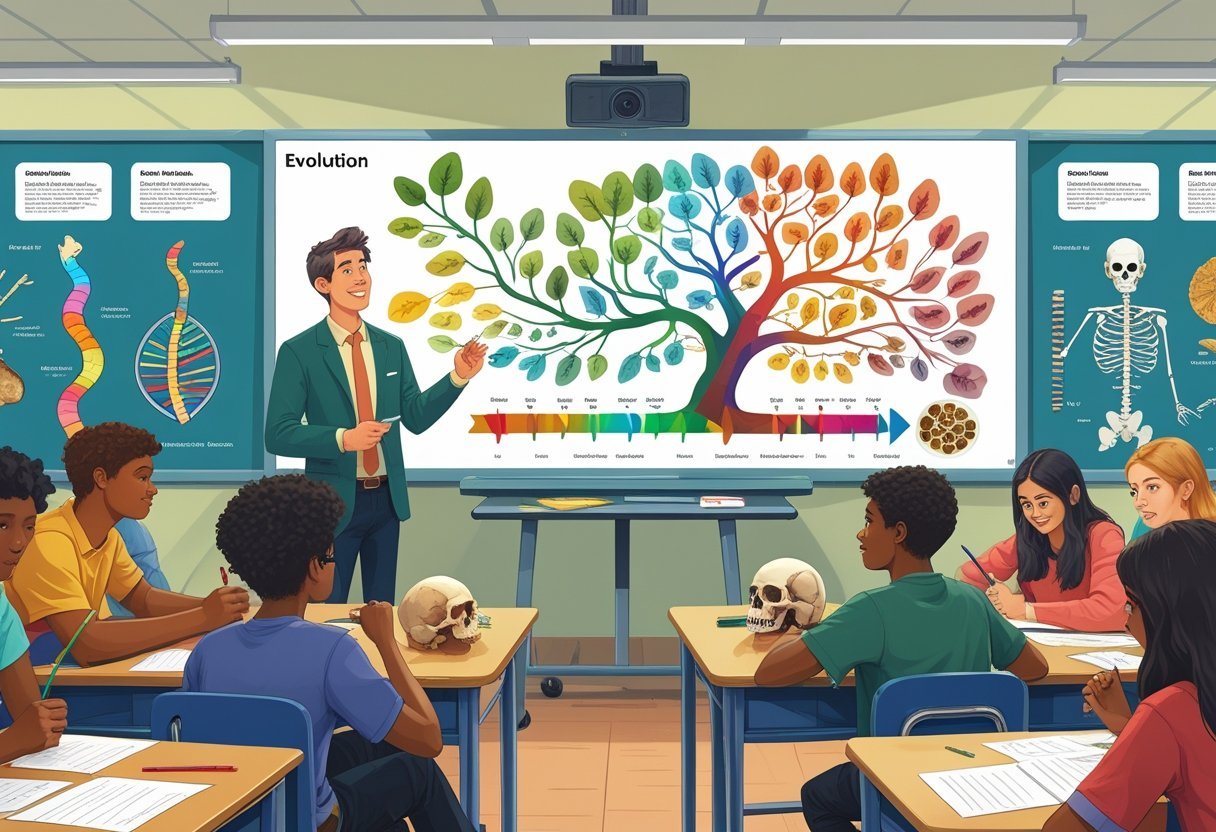
Creating clear goals, choosing important topics, and engaging students actively are key steps in building strong evolution lesson plans. These plans should focus on core ideas like natural selection, adaptations, and how species change over time. The goal is to help students understand the science behind evolution while making the lessons interesting and accessible.
Setting Learning Objectives
Effective lesson plans start with precise learning objectives. Objectives guide what students should know or be able to do by the end of the lesson. For evolution, objectives might include explaining how natural selection leads to adaptations or describing evidence that supports evolution, such as the fossil record or genetic data.
Clear objectives help teachers measure progress. For example, a lesson could aim for students to identify adaptations in specific species or to compare different models of evolution. Objectives also focus lessons on important concepts instead of unrelated details, ensuring learning is both deep and relevant.
Selecting Relevant Topics
Choosing the right topics is essential for student understanding. Key topics should cover the basics of evolution, including natural selection, adaptation, speciation, and evolutionary evidence. Lessons should connect these ideas to real-world examples, like Charles Darwin’s observations of finches or the role of environment in shaping traits.
It is important to sequence topics logically. Starting with simple concepts, like variation in populations, then moving to natural selection and how it causes adaptations, helps build knowledge step-by-step. Including modern evolutionary research can also make lessons current and meaningful.
Incorporating Student Engagement
Engagement increases learning and retention. Using hands-on activities, such as simulating evolution through role-play or computer models, lets students see evolution in action. Group discussions on controversial topics or adaptations encourage critical thinking.
Inquiry-based learning, where students ask questions and test ideas, helps them discover concepts on their own. Using multimedia resources, like videos or interactive timelines, supports different learning styles. Keeping activities varied and interactive maintains student interest and deepens their understanding of evolution.
Hands-On Projects and Activities
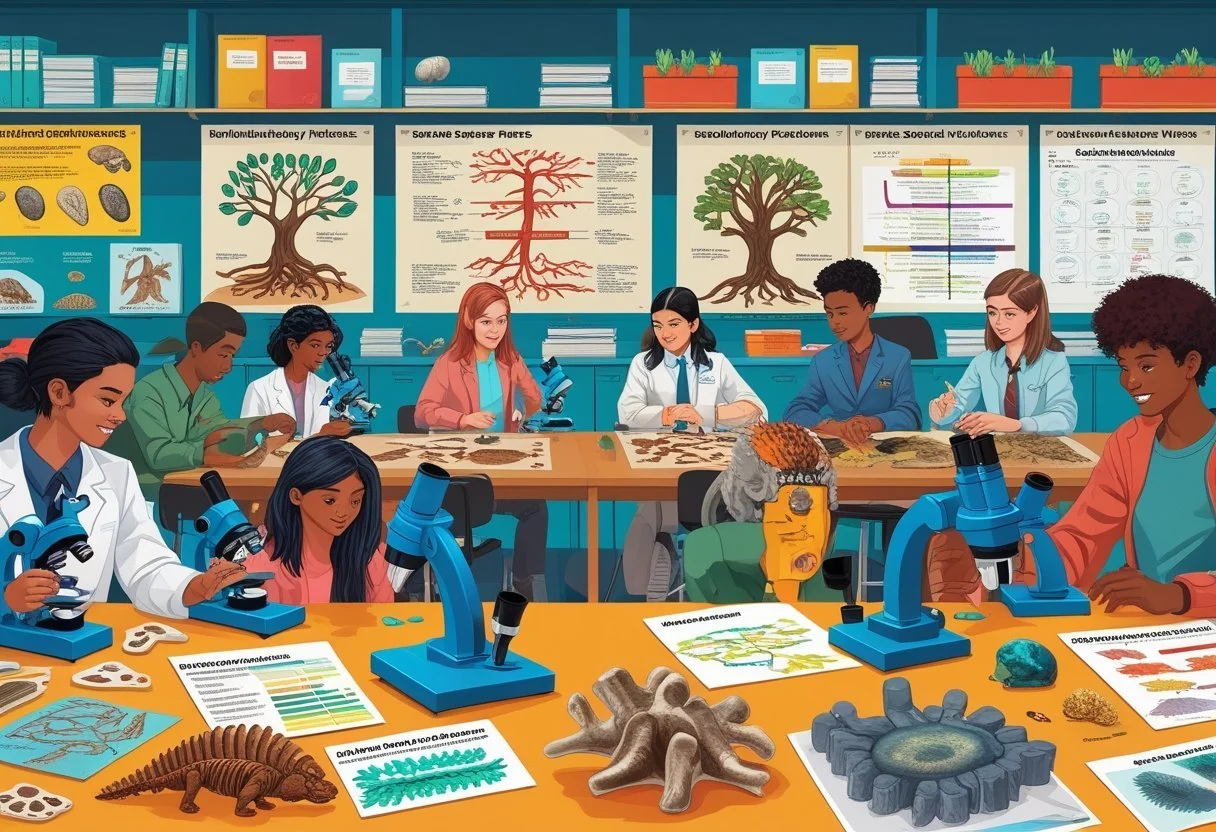
Hands-on projects help students see how evolution works in nature. They learn how animals and plants change over time through natural selection. These activities teach about adaptations, camouflage, and the ways species survive in their environments.
Modeling Natural Selection
In this activity, students use physical models or simple materials like colored beads or paper to show how natural selection works. They simulate how traits that help survival become more common in a population. For example, models can represent a population of animals with different colors living in a habitat.
Students change the environment or add challenges, like predators, to see which traits increase or decrease. This helps explain how adaptations develop over generations. The activity highlights how random mutations can lead to traits that make survival easier or harder.
Students can track survival rates for different traits and see how natural selection affects the population over time. This project makes abstract ideas concrete by showing how changes happen step-by-step.
Exploring Adaptations and Camouflage
This activity focuses on how living things use adaptations like camouflage to survive. Students examine how animals blend into their surroundings to avoid predators or sneak up on prey.
They might use colored paper, fabric, or natural materials to create models of species with different types of camouflage. Then, students test how well these models hide in different backgrounds.
This project shows the connection between adaptations and an organism's chance of survival. It helps students understand that changes in an animal’s features often improve their defense or hunting skills.
Students also discuss why some adaptations work better in certain environments than others, reinforcing the idea that evolution responds to specific survival needs.
Classroom Evolution Games
Games can simulate evolutionary processes in a fun and interactive way. These often involve group challenges where students act as members of a species in changing environments.
One example is a tag game where some students are predators, and others are prey with different traits like speed or camouflage. The outcomes depend on who survives or reproduces, mimicking natural selection.
These games teach how natural selection favors useful traits. They also highlight the importance of diversity and how multiple adaptations can help a species adjust to new conditions.
By engaging in play, students learn key concepts while practicing observation and critical thinking skills related to evolution.
Exploring Species, Populations, and Biodiversity
Species, populations, and biodiversity form the foundation for understanding life on Earth. These concepts explain how living things interact, survive, and shape their environments. They also show how changes in nature affect entire ecosystems.
Understanding Species and Populations
A species is a group of organisms that can mate and produce fertile offspring. Populations are groups of the same species living in a specific area. Changes within populations, like genetic variation, drive the process of evolution.
Populations adapt to their environments through natural selection. Some traits make individuals better suited to survive and reproduce. Over time, these traits become more common.
Studying populations helps scientists track how species respond to environmental changes. This knowledge is key in managing wildlife and protecting endangered species.
Biodiversity and Niche Concepts
Biodiversity is the variety of life in a particular habitat or on Earth. It includes plants, animals, fungi, and microorganisms. Biodiversity supports ecosystem health and resilience.
Each species has a niche, its role in an ecosystem. This includes what it eats, where it lives, and how it interacts with other species. Niches reduce competition by allowing species to specialize.
High biodiversity means many niches are filled. This balance helps ecosystems provide services like clean air, water, and soil health. When biodiversity drops, ecosystems become fragile and less able to recover from disturbances.
The Role of Extinction
Extinction is the complete loss of a species. It permanently removes unique genes and interactions from ecosystems. Extinctions have happened naturally over time but can be sped up by human actions.
Mass extinctions caused big changes in Earth’s history by wiping out many species at once. These events opened up new opportunities for surviving species to evolve and fill empty niches.
Today, animals and plants face extinction due to habitat loss, climate change, and pollution. Understanding extinction helps scientists identify species at risk and develop conservation strategies.

Advanced Topics in Evolution
This section explores specific processes that shape the diversity of life through evolution. It covers the dynamic conflicts between species, how mating choices drive new species, and major shifts that have occurred in life’s history.
Evolutionary Arms Race
An evolutionary arms race occurs when two or more species influence each other’s evolution through constant adaptations. Predators and prey often engage in this struggle. For example, prey may develop better camouflage while predators improve their hunting skills.
This cycle forces ongoing changes in both species. Adaptations like faster speed, tougher shells, or toxic chemicals appear as responses to each other’s strategies. It is a key driver of biodiversity because it promotes specialization and survival tactics.
The arms race can also happen between parasites and hosts, where parasites evolve new infection methods and hosts develop stronger immune defenses. This ongoing conflict shapes ecosystems and species interactions.
Sexual Selection and Speciation
Sexual selection explains how certain traits evolve because they increase an individual's chances of successful mating. Traits like bright feathers or complex courtship dances may not improve survival but attract mates.
This selective pressure can lead to speciation, the formation of new species. When groups prefer different traits, they may stop interbreeding, causing genetic divergence over time. For example, birds in different regions might evolve distinct songs and appearances.
Sexual selection often drives rapid changes within populations. It is a major force behind the diversity seen in animals, especially those with strong mate choice behaviors.
Great Transformations in Evolution
Great transformations refer to large-scale changes that have reshaped life on Earth. These include the development of complex organs, emergence of new body plans, and shifts like the transition from water to land.
These changes occurred over millions of years and involved many intermediate steps. Fossil records and phylogenetic studies help scientists understand how simple structures evolved into complex ones, such as jaws or wings.
Such transformations also include key events like the evolution of vertebrates or the rise of flowering plants. These milestones often opened new ecological opportunities and led to bursts of diversification.
Assessment and Reflection
Assessment and reflection are key to understanding how well students grasp evolution concepts. They also guide teachers in refining their lessons to improve learning outcomes.
Evaluating Student Understanding
Teachers can use a variety of methods to measure student knowledge of evolution. Projects like speciation case studies allow students to apply concepts in real-world scenarios, showing their ability to analyze and explain evolutionary processes.
Quizzes and concept maps help check understanding of key terms such as natural selection and adaptation. Discussions and written responses reveal students’ critical thinking and ability to connect ideas.
Using formative assessments like quick exit tickets can provide immediate feedback on student comprehension. This ongoing evaluation helps adjust instruction before moving on to new material.
Reflecting on Teaching Strategies
After assessments, teachers should review which strategies worked well and which didn’t. For instance, hands-on activities and storytelling may engage students better than lectures alone.
Teachers can ask questions like:
Were the objectives clear and achievable?
Did students participate actively?
Which parts caused confusion?
Reflection can lead to changes such as breaking lessons into smaller sections or adding more visuals. Collaborating with colleagues or reviewing student feedback can also improve future lessons.
This process keeps teaching responsive and focused on student needs.
Frequently Asked Questions
This section covers practical approaches to teaching evolution, how to include evidence in lessons, ways to engage students with human evolution, project ideas, lab integration, and useful resources.
What are effective strategies for teaching the mechanisms of evolution in high school?
Teachers should focus on clear explanations of natural selection, mutation, gene flow, and genetic drift. Using real-world examples and hands-on activities helps students understand these concepts.
Visual aids like diagrams and interactive simulations make abstract ideas easier to grasp. Encouraging discussions about common misconceptions supports deeper learning.
How can you incorporate evidence of evolution into lesson plans?
Including fossil records, comparative anatomy, and DNA similarities provides strong evidence to support evolution. Using case studies, like antibiotic resistance, shows evolution in action.
Teachers can also use timelines and phylogenetic trees to help students visualize how species are related through time.
What activities can engage students in learning about human evolution?
Hands-on activities that simulate fossil excavation or compare skull shapes increase engagement. Role-playing different stages of human evolution can make lessons more interactive.
Students can also examine genetic data and create family trees to connect human traits with evolution.
Can you recommend comprehensive evolution project ideas for middle school students?
Projects like modeling natural selection with beads or paper animals work well. Creating timelines of life on Earth helps students understand long-term changes.
Students can investigate local species and analyze adaptations to their habitats for a more practical project.
How do hominid evolution labs fit into an overarching evolution unit plan?
Hominid labs provide concrete examples of evolutionary change in humans. They link fossil evidence to genetic and anatomical changes.
Integrating these labs deepens student understanding of both human origins and general evolutionary processes.
What resources are available for teaching evolution through human examples?
Several free lesson plans and activities focus on human evolution. Museums, educational websites, and science organizations offer materials that include videos, worksheets, and interactive tools.
These resources often connect evolution concepts to real human traits and history, making lessons more relatable.