
Best Strategies for Teaching Time and Calendar Skills for Effective Learning Outcomes
Teaching time and calendar skills is essential for helping students understand how to organize their days and manage responsibilities. These skills build a foundation for both academic success and everyday life. The best strategies focus on breaking down concepts into simple steps, using hands-on activities, and making learning engaging and relevant.
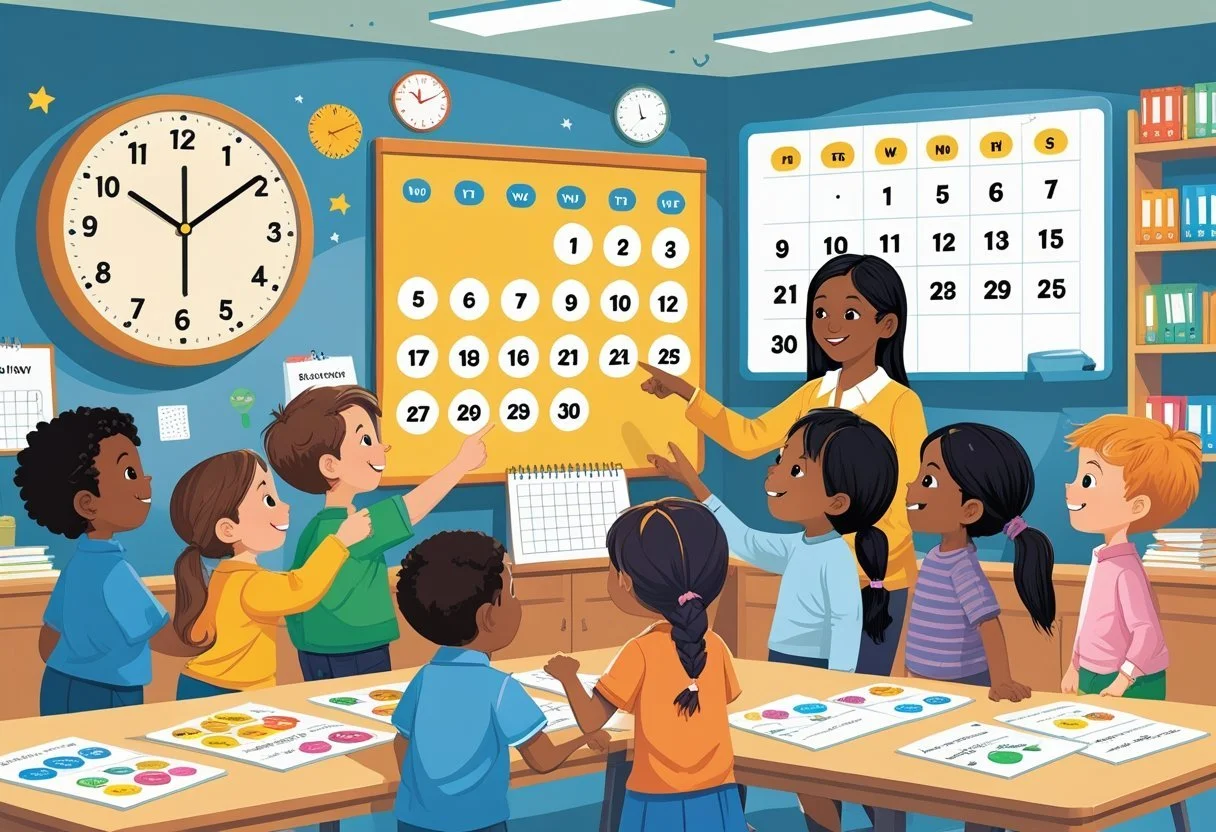
Teachers can use clear routines and practical examples to help students grasp the passing of time, days of the week, and months of the year. Incorporating visual aids, interactive games, and technology makes lessons more effective and keeps students interested. These methods also support stronger time management skills that benefit students beyond the classroom.
By focusing on consistent practice and real-world connections, educators can help students develop confidence with calendars and clocks. This approach not only improves understanding but also encourages responsibility and independence.
Key Takeways
Clear, simple steps help students understand time and calendar concepts.
Hands-on and technology-based activities keep students engaged.
Teaching these skills supports better time management and independence.
Fundamental Concepts of Time and Calendar Skills
Teaching time and calendar skills involves understanding how these ideas connect to daily life and learning. It includes knowing what time means, how the calendar is arranged, and why it matters for planning and routines in the classroom.
Difference Between Time and Calendar Skills
Time skills focus on understanding hours, minutes, and seconds. These skills help students tell time on clocks and manage tasks by time of day.
Calendar skills involve recognizing days, weeks, months, and years. Students learn how to read a calendar, track dates, and understand longer time spans.
While time skills deal with parts of a day, calendar skills cover organizing days into larger units. Both types are important, but calendar skills help with planning events and understanding sequences over weeks or months.
Importance of Developing Temporal Awareness
Temporal awareness means knowing how time passes and how events relate to one another in order. It helps students understand when things happen and how long they last.
In the classroom, this awareness supports routines, such as knowing when recess or lunch will occur. It also builds time management, which students need for homework and daily tasks.
Without temporal awareness, students may struggle to follow schedules or meet deadlines. Developing this skill early helps with reading calendars and planning ahead effectively.
Understanding Days, Weeks, and Months
Students must first learn the names and order of days in a week. Recognizing that seven days make a week helps them see patterns and predict what comes next.
Months of the year are grouped to form the calendar. Knowing all 12 months and their sequence is key for marking birthdays, holidays, and school events.
Using a classroom calendar during calendar time reinforces these concepts. Students see how days fit into weeks and weeks into months, which makes learning time organized and clear.
Engaging Classroom Activities for Teaching Time
Effective activities help students learn time concepts by keeping them involved and making lessons practical. Using daily routines, music, and math connections supports better understanding and focus. Teachers can use these techniques to create a dynamic classroom that encourages participation and helps with classroom management.
Daily Time-Telling Routines
Teachers can start each day with a brief time-telling routine. This could involve students reading the clock on a classroom clock or setting a paper clock to the current time. Repeating this daily helps students get comfortable with both analog and digital clocks.
Using visual aids, like interactive clocks or individual mini clocks, boosts engagement. It allows every student to practice independently or in small groups. This hands-on involvement helps with retention.
Teachers should ask questions such as “What time is it now?” or “What time will it be in 30 minutes?” to build critical thinking and encourage active participation. This routine supports classroom management by giving students a consistent, focused task.
Incorporating Songs and Rhymes
Songs and rhymes make learning time fun and memorable. Teachers can use simple, repetitive songs about hours, half hours, and quarters past to help students remember time vocabulary.
Music activates different parts of the brain, aiding memory. It also breaks up the lesson and holds students’ attention. Using actions or gestures with songs adds a physical element, which can help kinesthetic learners.
Teachers should choose songs that match the learning level and repeat them regularly. This method can lighten the mood and reduce classroom distractions while reinforcing key time skills.
Math Integration with Time Concepts
Time concepts fit well into math lessons through measuring durations or solving time-related word problems. Teachers can connect elapsed time with addition and subtraction, making math more meaningful.
Using real-life examples, like planning a day’s schedule or calculating how long a break lasts, helps students see practical uses. Worksheets, apps, or games that require calculating times can keep students engaged.
Integrating math and time learning supports stronger problem-solving skills. It also helps teachers manage classroom attention by combining movement and thought in one lesson.
Effective Strategies for Teaching Calendar Skills
Teaching calendar skills requires clear, consistent methods that help students understand days, weeks, and months. Using daily activities, hands-on projects, and visual aids can improve students’ grasp of how calendars work and their connection to time.
Calendar Routine Best Practices
Daily calendar time builds strong habits in students. Teachers should guide students in identifying the day, date, and month every day. This repetition helps students see patterns and understand sequencing.
Involving the whole class encourages participation and teamwork. Teachers can ask questions like, “What day was yesterday?” or “How many days until Friday?” This reinforces counting and time concepts.
Calendars should be visible and large enough for all students. Teachers may use desk calendars or wall charts to display months of the year clearly. This supports both recognition and memorization.
Hands-On Calendar Creation
Creating calendars with students deepens understanding. Students can make monthly calendars on paper or use craft materials to mark special days. This activity makes learning interactive.
Teachers might include holidays, birthdays, and school events on student-created calendars. It helps students connect real-life events to the calendar system.
Hands-on projects also improve fine motor skills and encourage responsibility. By updating their calendars regularly, students practice planning and organizing time in a simple way.
Visual Cues and Digital Tools
Visual aids help students link concepts to images. Color-coding days of the week or months makes it easier to remember the order. Symbols like stars or circles highlight important dates.
Digital tools like Google Classroom can supplement learning. Teachers can share digital calendars with students to explore interactive features, such as reminders and event creation.
Using tech also prepares students to use calendars in everyday life. Combining physical and digital calendars gives students multiple ways to engage with time concepts.
Fostering Time Management Skills in Students
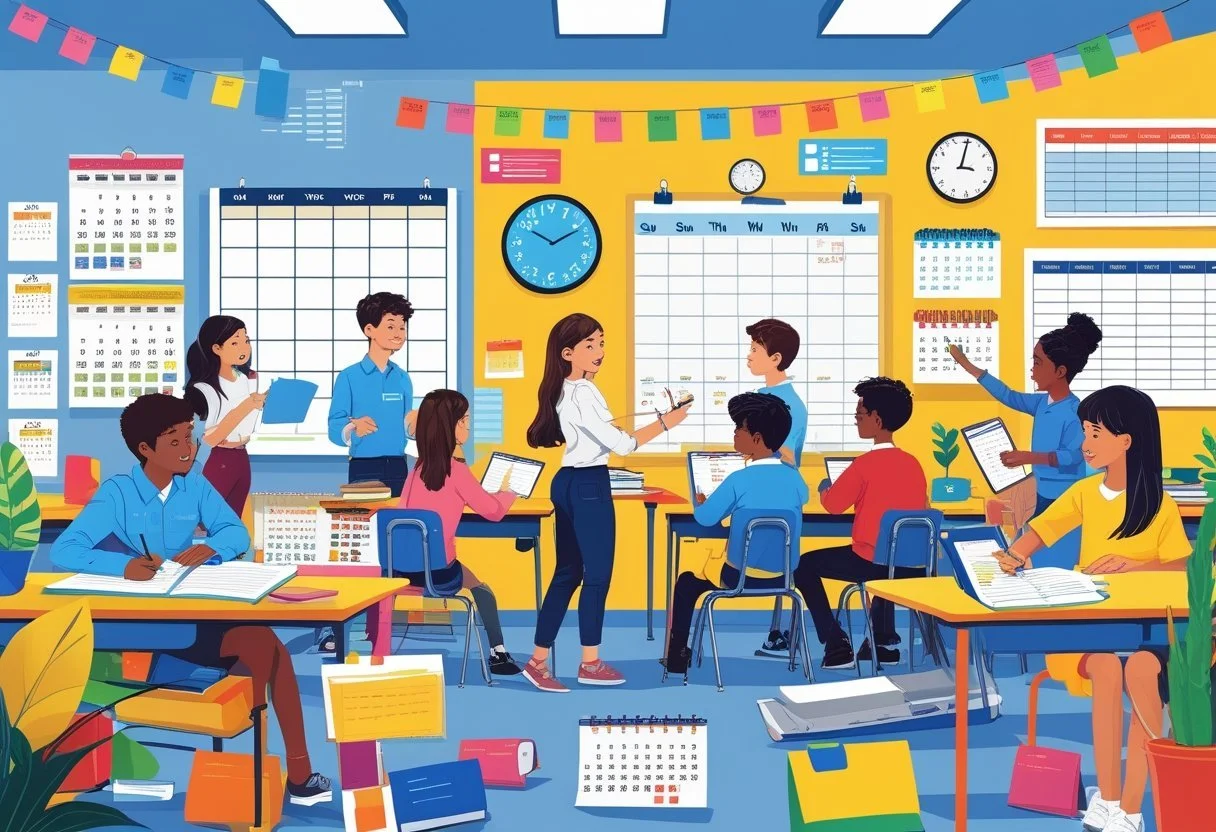
Building time management skills in students requires clear guidance on how to understand time, prioritize tasks, and evaluate their progress. These skills help students manage deadlines, reduce stress, and balance schoolwork with other activities effectively.
Introducing Time Management Concepts
Students need a simple way to grasp what time management means. Teaching concepts like estimating how long tasks take and breaking large assignments into smaller steps makes time feel more manageable.
Using tools like planners or calendars helps students see their schedule visually. This makes deadlines and time blocks clearer, which builds awareness of how to allocate time for each task.
It is important to emphasize the idea of planning ahead rather than rushing at the last minute. This approach encourages steady progress and reduces last-minute stress.
Modeling Prioritization of Tasks
Students learn a lot by watching adults organize their work. Teachers and parents should demonstrate how to rank tasks by importance and urgency.
For example, use categories such as:
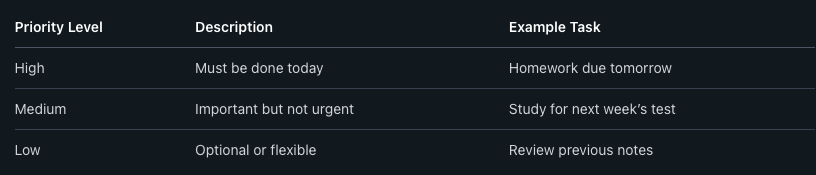
Showing students how to decide what to do first based on deadlines and difficulty helps them focus on what matters most instead of trying to do everything at once.
Reflective Practices for Improvement
Encouraging students to reflect on their time use improves how they manage it in the future. They can ask questions like:
Did I finish what I planned?
What took longer than expected?
How can I adjust my schedule next time?
Keeping a simple journal or checklist helps students track successes and challenges. This reflection builds self-awareness and encourages continuous adjustment in how they prioritize tasks and plan their time.
Classroom Management Techniques for Time and Calendar Instruction
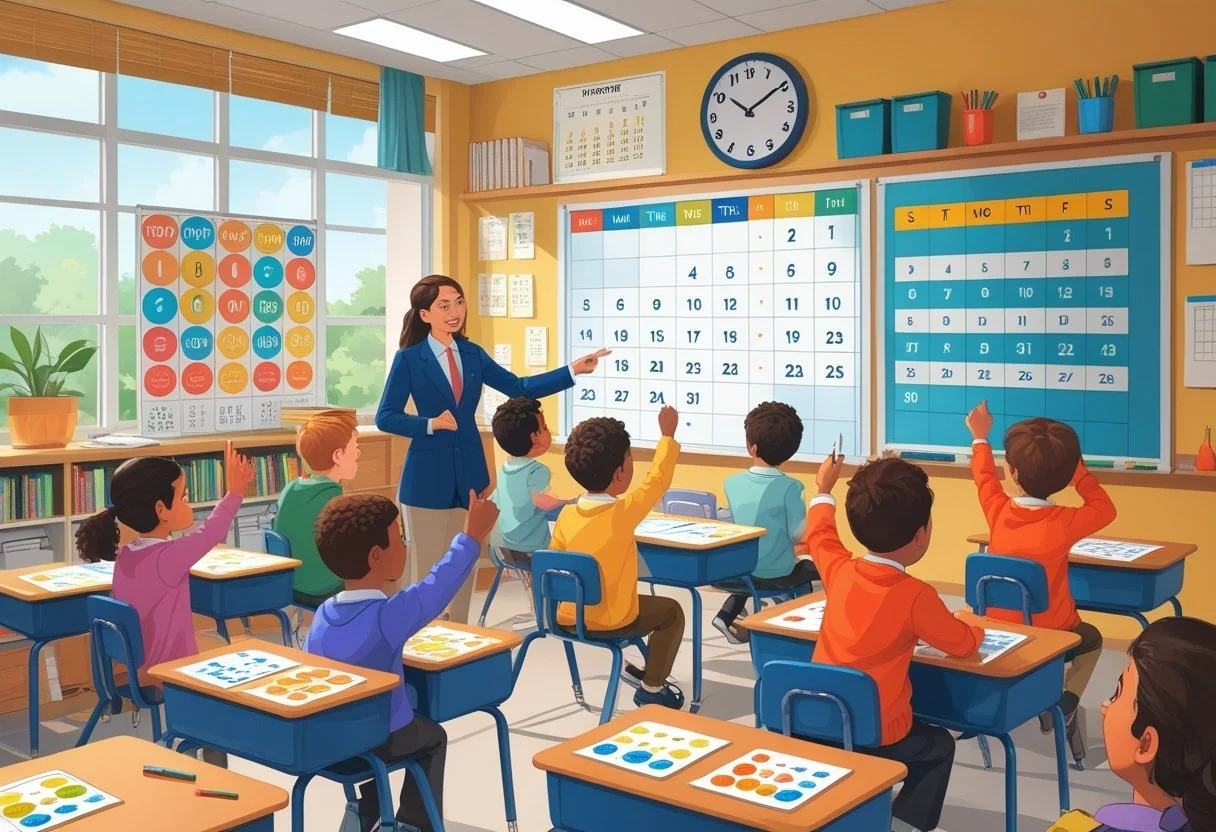
Effective classroom management is essential to teach time and calendar skills. Teachers can use clear routines, student independence, and group work to keep lessons focused and meaningful. These strategies help students stay engaged and build confidence in managing time.
Establishing Predictable Routines
Teachers should create and maintain daily routines around time and calendar activities. Starting each day with a consistent calendar review or time-telling exercise helps students understand the flow of the day.
Using visual schedules or classroom calendars on the wall gives students a clear reference. This reduces confusion and transitions smoothly between tasks.
Routines should include specific times for checking and updating calendars, reading clocks, and planning ahead. This repetition builds habit and supports classroom management by minimizing downtime or distractions.
Empowering Self-Regulation
Students need tools to manage their own time and calendar tasks. Providing individual timers or checklists enables learners to track their progress without constant teacher reminders.
Teaching students to estimate how long tasks will take develops planning skills. Teachers can model this by breaking down lessons into timed segments.
Encouraging students to check the classroom clock or calendar before asking for help promotes independence. This reduces disruptions and increases student engagement by building self-control in time management.
Utilizing Peer Collaboration
Working in pairs or small groups allows students to share knowledge and practice time and calendar skills together. Peer collaboration encourages discussion and problem solving.
Teachers can assign groups to update the calendar or read the clock aloud. This shared responsibility reinforces skills and builds teamwork.
Having peers support each other motivates students and creates a positive learning environment. Collaboration also helps manage the classroom by distributing leadership and keeping students focused on tasks.
Leveraging Technology for Time and Calendar Learning
Technology offers practical tools that help students organize tasks and manage their time effectively. These tools support scheduling, reminders, and engaging ways to practice time skills.
Using Google Classroom for Scheduling
Google Classroom helps teachers assign work and set clear deadlines. It allows students to see upcoming tasks in one place, which helps with planning and prioritizing.
Teachers can post schedules and reminders for tests or projects. Students benefit by tracking what is due and when. This reduces confusion and supports steady progress.
Google Classroom also allows teachers to give feedback quickly. This immediate response helps students adjust their work and stay on track. It’s useful for building good time habits.
Digital Calendars and Reminders
Digital calendars like Google Calendar offer more than just dates. They let students create events, set reminders, and schedule study time in advance.
Students learn to block out time for homework, tests, and breaks. Reminders reduce the chance of missing deadlines and help balance school with personal life.
Using calendar tools teaches students to break tasks into smaller steps. They can set alerts for each step. This method supports long-term projects and daily responsibilities.
Gamified Learning Tools
Gamified tools turn time management practice into a game. They use rewards and challenges to motivate students to plan and complete tasks.
These tools help students practice breaking work into chunks and tracking time spent. They add fun to learning skills that can feel boring otherwise.
Gamified apps often provide instant feedback. This helps students recognize what works well and where they need improvement. It supports continuous learning of time strategies.
Building Lifelong Learning Through Time Management and Calendar Skills
Mastering time management and calendar skills helps students develop habits that support learning throughout their lives. These skills improve how students organize tasks, meet deadlines, and balance their responsibilities. Teaching these abilities early builds a foundation for success in many areas beyond school.
Real-World Applications of Time Skills
Time and calendar skills are essential for daily life. Students use them to plan activities like homework, chores, and appointments. Understanding how to break larger projects into smaller steps with deadlines helps prevent last-minute work.
In jobs, adults rely on calendars to schedule meetings and manage tasks. Time skills support punctuality, meeting goals, and handling multiple responsibilities. Teaching students to track time realistically and adjust plans builds independence and confidence.
Encouraging Ongoing Growth
Lifelong learning depends on regularly reviewing and improving time management skills. Students should be encouraged to set short and long-term goals, using calendars to check progress. This creates a habit of self-evaluation and adjustment.
Teachers and parents can model effective use of planners and digital tools. Introducing new strategies, like prioritizing tasks based on importance, helps students adapt as their workloads grow. Continuous learning about these skills supports success through changing demands.
Transitioning Skills Beyond the Classroom
Time and calendar skills prepare students for real-world challenges after school. These include managing work schedules, appointments, and personal commitments. Practicing these skills in class makes the transition smoother.
Students who can organize their time well have better chances of succeeding in college, careers, and daily life. They develop responsibility and reduce stress by planning ahead. Effective time management is a key skill that supports growth beyond academics.
Frequently Asked Questions
Teaching calendar and time skills requires hands-on activities and routine use of visual tools. It includes clear steps for helping children understand days, weeks, and months. Teachers also need practical routines and technology to support learning and improve their own time management.
What are effective methods for teaching calendar skills in a preschool environment?
Using visual aids like picture calendars helps children connect events with dates. Teachers can include daily calendar routines where kids identify the day, date, weather, and special events. Incorporating songs, stories, and hands-on activities makes learning more engaging and memorable.
How can teachers incorporate time management strategies into classroom routines?
Teachers can build predictable schedules that include breaks and task time. Using timers and clear, simple instructions helps kids stay on track. Prioritizing tasks and planning lessons ahead of time reduces wasted minutes and allows for smooth transitions.
What are the developmental considerations for teaching calendar time to young children?
Young children understand time best when it relates to immediate events. Teaching should focus on simple concepts like yesterday, today, and tomorrow before moving to weeks or months. Patience is important since children learn at different paces.
What alternatives exist to traditional calendar time for early education settings?
Instead of using only wall calendars, teachers can try interactive digital calendars or magnetic boards. Daily storytelling linked to time concepts can replace formal calendar discussions. Some classrooms use movement or role-play to teach sequencing and time.
How can educators improve their personal time management to enhance classroom efficiency?
Educators benefit from weekly planning and setting clear priorities. They should limit interruptions and batch similar tasks like grading. Using digital calendars with reminders helps manage meetings and deadlines, freeing time for teaching.
What are the best practices for integrating technology when teaching time and calendar concepts?
Using tablets or smartboards with apps designed for calendar learning engages students visually and interactively. Teachers should choose age-appropriate tools and balance screen time with hands-on activities. Technology can also help organize classroom schedules and reminders.