
Bacteria in the Mining Industry: How to Teach This Complex Topic Simply and Effectively
Bacteria play an important role in the mining industry by helping to extract metals in cleaner and more efficient ways. Teaching this topic simply requires explaining how microorganisms break down minerals to release metals without using harmful chemicals. Breaking down complex ideas like bioleaching into easy steps helps students understand how bacteria improve mining and protect the environment.
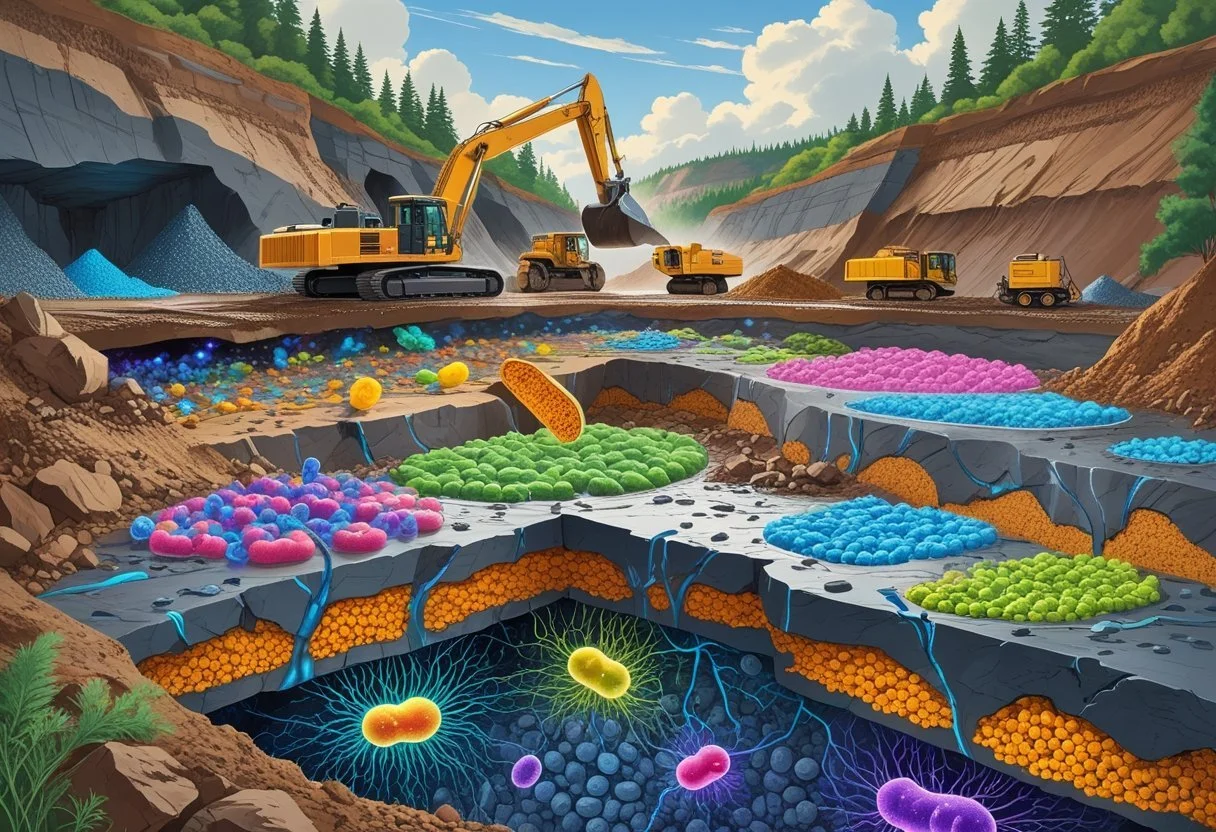
Using real-world examples, such as companies that use bacteria to mine copper, makes the subject more relatable. Hands-on activities and clear visuals can show how tiny microbes can have a big impact on mining processes. Making these connections helps students see the science behind mining and its growing role in sustainability.
Clear explanations and simple language build a strong foundation for understanding microbial mining. Teaching tools that focus on how bacteria work and why they matter turns a difficult subject into an engaging lesson that sparks curiosity and learning.
Key Takeways
Bacteria help extract metals in safer, eco-friendly ways.
Simple explanations and examples make microbial mining easier to teach.
Using clear tools and stories helps students grasp complex mining science.
Why Teach Bacteria in the Mining Industry Simply
Teaching about bacteria in mining must focus on clear, practical ideas. The topic mixes biology and industry, which can confuse learners. It is important to address common misunderstandings and use simple language to explain how microorganisms help mining.
Bridging the Gap Between Biology and Mining
Many students find it hard to connect microbiology with mining. These fields use very different terms and ideas. Mining deals with metals and machines. Biology focuses on living things and cells.
Simplifying the science helps show how bacteria actually improve mining. For example, bacteria break down minerals in ore to release metals like copper and gold. This biological process, called bioleaching, is important but often unknown. Clear explanations help learners see how microorganisms aid in metal extraction and reduce waste.
Using simple, relatable examples makes it easier to understand how biology integrates with mining technologies.
Common Misconceptions and Challenges
Many people think mining only uses machines and chemicals. They do not realize bacteria play a key role. Some believe microorganisms in mining are harmful or cause pollution. In truth, certain bacteria help extract metals and clean mining waste.
Teaching simply corrects these misconceptions. It highlights that bacteria can improve efficiency while reducing environmental damage. It also points out that microbes in mining are carefully managed to prevent problems like bacteria buildup that slows production.
Clear teaching prevents confusion and builds trust in microbial mining methods.
The Importance of Clear Communication
The mining industry involves many experts, but not all know microbiology well. Simple language builds understanding between biologists and mining workers. It also informs students or the public about sustainable mining advances.
Using lists, diagrams, and straightforward terms helps communicate complex processes simply. For example:
Bacteria break down ores → metals are easier to extract
Microbial mining reduces use of harsh chemicals
Bioremediation uses microbes to clean pollution
Clear communication supports better training and broader acceptance of microbial methods in mining.
Fundamentals of Microorganisms in Mining
Microorganisms in mining play specific roles in breaking down minerals and extracting metals. These microbes use chemical reactions to convert ores into soluble forms, which helps recover valuable metals. Their activity depends on the types of microbes present and the environmental conditions where they live.
Types of Microbes Involved
The main microbes used in mining are bacteria and archaea. Among these, Acidithiobacillus ferrooxidans and Leptospirillum species are important for oxidizing iron and sulfur compounds. These bacteria help dissolve metal sulfides, releasing metals like copper and gold.
Some archaea thrive in extremely acidic or hot environments. They aid in breaking down ores where other microbes cannot survive.
These microorganisms naturally exist in mining areas and can be boosted through biotechnology to increase metal recovery. They work best on low-grade ores, where traditional mining is less efficient.
Microbial Metabolism in Ore Processing
Microbes process ores through bioleaching, where they convert solid minerals into soluble forms. They oxidize iron and sulfur compounds in metal sulfides.
This metabolism produces energy for the microbes but also releases metals into solution. The process can extract metals such as copper, gold, and uranium.
Microbial metabolism is often indirect. For example, bacteria oxidize iron, producing ferric ions that then react with minerals to release metals. This combined action speeds up mineral breakdown.
Bioleaching reduces the need for harsh chemicals and high-energy methods usually used in mining.
Key Environmental Conditions
Microorganisms in mining need specific conditions to work well. Most acid-loving bacteria require a low pH, usually between 1.5 and 3.5.
Temperature is also important. Some microbes function best in moderate heat, while others thrive in hotter, extreme settings up to 80°C.
Oxygen and nutrient levels must be balanced to support microbial growth and activity.
Water availability influences microbial movement and chemical reactions.
Mining operations often control these conditions to maximize microbial efficiency. Biotechnology helps adjust environments where microbes break down ores faster and cleaner.
Principles of Bioleaching and Biomining
Bioleaching and biomining involve using microorganisms to extract metals from ores. These methods rely on natural processes and specific bacteria or archaea to break down minerals. This makes them different from traditional mining techniques that depend on heat or strong chemicals.
How Bioleaching Works
Bioleaching uses bacteria to break down metal-containing minerals. The bacteria produce acids or oxidizing agents that dissolve the metals from low-grade ores. This process happens naturally when bacteria interact with minerals.
The bacteria do not need to be directly attached to the ore. Instead, they create substances like ferric ions or sulfuric acid. These substances react with the minerals, freeing metals such as copper, gold, or uranium.
Because bioleaching targets specific metals, it can be more selective. It also uses fewer harsh chemicals, reducing environmental damage. The process can take longer than traditional methods but works well for ores that are hard to process.
What Is Biomining
Biomining is a broader term that includes bioleaching plus bio-oxidation. It uses microbes to extract metals from ores and mining waste, like tailings. This helps recover metals that would otherwise be lost.
Microbes used in biomining are chosen for their tolerance to acid and heavy metals. They work by breaking down rocks and releasing metals into solution. This method can be used on metal-rich waste or low-grade ores.
Biotechnology plays a key role in improving biomining. Scientists study microbial genomes and metabolism to enhance efficiency and metal recovery. Biomining is considered a natural and sustainable mining option.
Advantages Over Conventional Methods
Bioleaching and biomining offer several benefits over traditional mining. They consume less energy because they avoid smelting and high heat. This lowers greenhouse gas emissions.
These methods are also more selective, targeting valuable metals with fewer impurities. They reduce the need for chemicals like cyanide or strong acids, which can cause pollution.
Bioleaching can treat ores too poor for other methods. It also helps clean up contaminated mine sites by removing heavy metals from tailings. This makes biomining both an extraction process and an environmental tool.
Applications in Metal Recovery
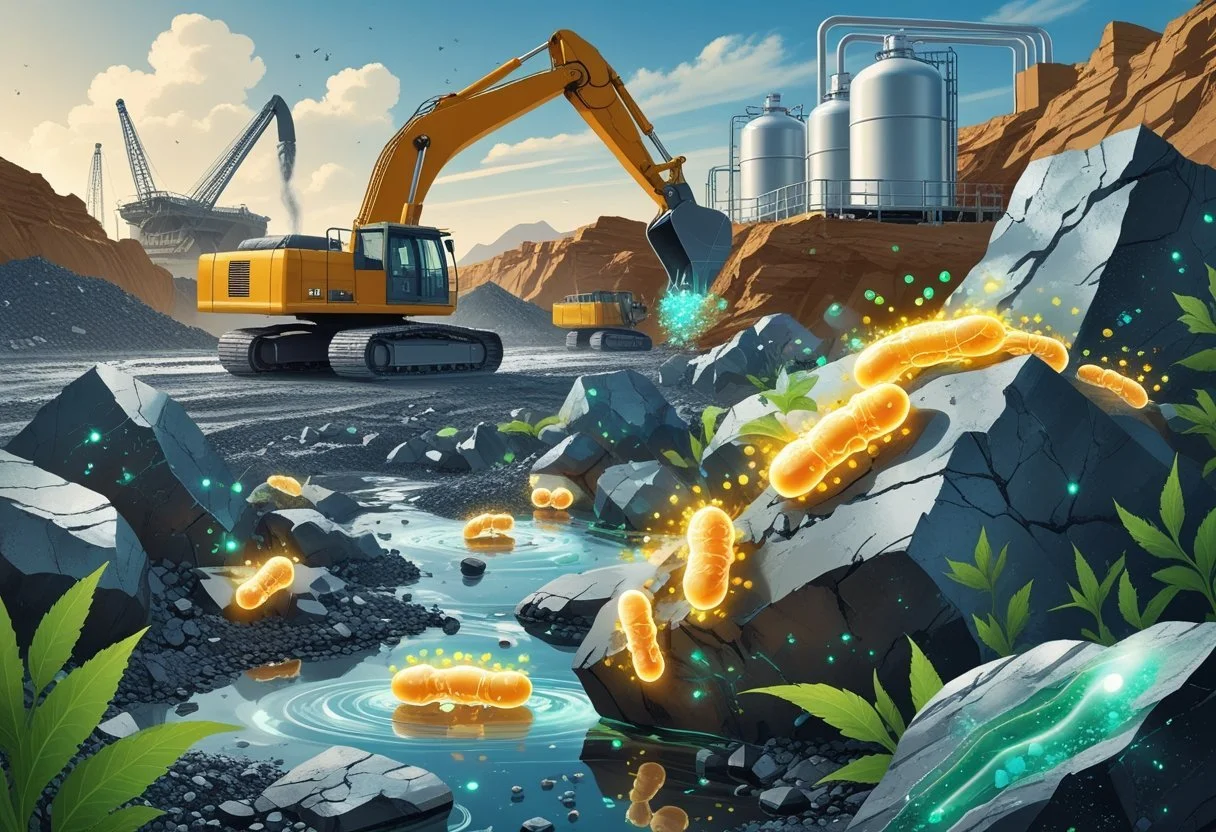
Microorganisms play an important role in extracting metals from ores. They help make metal recovery more efficient and less harmful to the environment. Some microbes break down ores to release metals like copper, gold, and nickel. Others are used to treat ore that is hard to process using traditional methods.
Copper Extraction with Microbes
Copper is often recovered using bacteria that support a process called bioleaching. These bacteria break down copper minerals in ore, turning them into a form that can dissolve in water. This liquid is then processed to extract the copper metal.
The main bacteria used are acid-loving types that work well in harsh conditions. They speed up the chemical reactions that release copper from its ore. This method lowers energy use and reduces harmful waste compared to regular mining.
Bioleaching for copper is widely used in large mines. It works best with ores that contain copper sulfides and can be done directly where the ore sits, which saves on digging and transport costs.
Gold and Nickel Recovery
Gold and nickel can also be recovered using microbes. For gold, bacteria help remove impurities that hold gold in ores so the metal can be separated and collected more easily.
Nickel recovery often uses similar bacteria that dissolve nickel-containing minerals. These microbes help extract nickel from ores that have low metal content but are too expensive to process using traditional methods.
Microbial recovery of gold and nickel is especially important for improving resource use. It allows mining companies to get more metal from deposits that would otherwise be ignored due to low grades.
Processing Low-Grade Ores
Low-grade ores contain smaller amounts of metals and are harder to extract profitably. Microorganisms make it possible to treat these ores by breaking down the minerals that hold the metals.
Using microbes for low-grade ores is more cost-effective and environmentally friendly. They can work on ores with copper, gold, nickel, and other metals. This opens new opportunities to recover metals without heavy machinery or high energy costs.
The microbes used in these processes are chosen for their ability to thrive in the specific conditions of the ore and speed up metal release. This helps reduce waste and pollution from mining operations.
Environmental Impacts and Sustainability
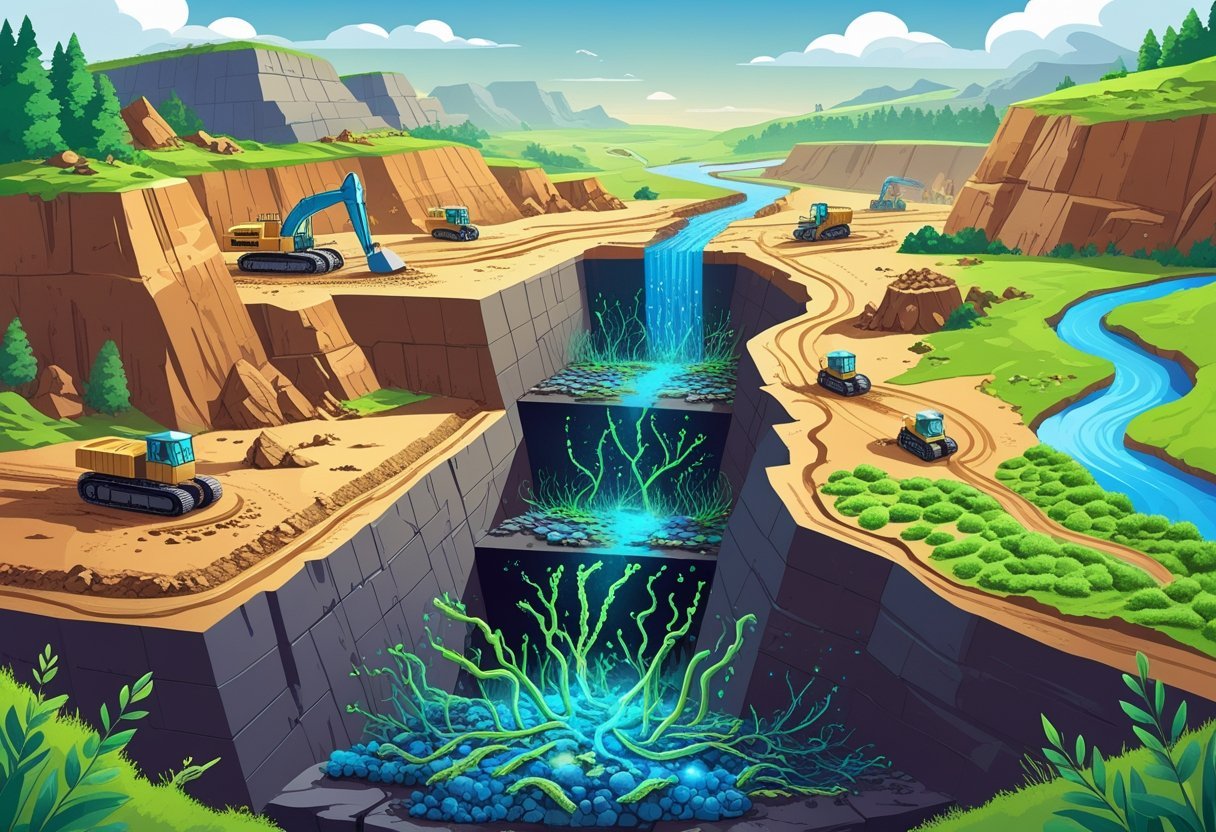
Mining creates challenges like harmful water pollution and large amounts of waste. Addressing these issues with smart methods is key to reducing damage to nature and nearby communities.
Acid Rock Drainage and Its Management
Acid rock drainage (ARD) happens when minerals in waste rock and tailings react with air and water. This reaction makes acidic water, which can harm rivers and soil. ARD is a major problem because it spreads heavy metals and toxins.
To manage ARD, mines can limit oxygen and water contact with waste. Covering waste piles or using liners helps. Monitoring water regularly also tracks acid levels and pollution.
Role of Bacteria in Bioremediation
Bacteria can clean up mining pollution through bioremediation. Certain bacteria change harmful metals into less toxic forms or solid crystals that stay put. This process reduces pollution in water and soil near mining sites.
Microbes like these work well even in tough environments of mine waste areas. They can limit metal spread and help restore ecosystems over time.
Reducing Waste and Pollution
Mining produces large volumes of tailings, often carrying dangerous chemicals. Reducing tailings and safely handling them lowers environmental risk.
Using bacteria and new technologies helps recover metals from low-grade ores. This technique, called bioleaching, reduces the need for mining more rock and cuts waste. Sustainable mining plans also include recycling water and using strategic waste storage to prevent leaks.
Teaching Strategies for Complex Mining Topics
Teaching about bacteria in mining requires clear steps to explain scientific ideas, use strong visuals, and connect lessons to real mining examples. These methods help students understand how microbes work in mining processes and why it matters for materials and environmental impact.
Breaking Down Scientific Concepts
Complex mining topics start with breaking the science into smaller, manageable ideas. Teachers can focus on key terms like bioleaching, biomining, and microbial mineral interaction. Defining these terms simply helps students grasp how bacteria extract metals from ores.
Using bullet points or tables to list processes and outcomes aids memory. For example:
Bioleaching: bacteria dissolve metals from rocks
Biomining: microbes assist in recovering metals from low-grade ores
Environmental benefits: reduced pollution and energy use
Step-by-step explanations of chemical reactions allow students to see the role of bacteria clearly. Avoiding dense jargon is crucial for keeping lessons clear and focused.
Visualization and Practical Examples
Visual aids like diagrams, videos, and charts make abstract concepts easier to understand. Showing images of mining sites alongside microbial activity helps link bacteria to real-world mining.
Hands-on activities, such as classroom simulations of bioleaching, let students observe the process. Laboratory experiments using safe bacteria or mineral samples can reinforce concepts.
Visual tools may include:
Flowcharts of bacterial metal extraction
Before-and-after images of environmental remediation
Graphs showing metal recovery rates with and without microbes
These practical examples make learning more active and less abstract.
Incorporating Real-World Case Studies
Case studies provide concrete examples of how bacteria improve mining in practice. Examples include the use of microbes in extracting copper or gold from ores that are too poor for traditional methods.
Teachers can present data on cost savings, environmental benefits, and improved metal recovery. This helps students see the value of microbial mining against conventional mining practices.
Discussing challenges, such as bacterial buildup causing equipment issues, offers a balanced view. Real stories increase student engagement and show how science applies to current mining materials and sustainability concerns.
Case Study: Biomining at Rio Tinto
Rio Tinto’s mining site in southwestern Spain is a well-studied example of how microorganisms can be used in mining. The location’s harsh environment hosts diverse bacteria that help extract metals. Learning from this site offers valuable insights for teaching complex mining topics.
The Rio Tinto Site and Its History
Rio Tinto is known for its acidic river, caused by natural mineral weathering and mining waste. The area contains high levels of toxic heavy metals like iron and copper. Mining has taken place here for thousands of years, shaping the landscape and water chemistry.
The site’s extreme conditions have made it a natural lab for studying how life survives in tough environments. Rio Tinto’s history includes extensive mining, which led to both environmental damage and unique scientific discoveries. This long history helps connect mining practices with environmental and microbial research.
Microbial Communities in Rio Tinto
Rio Tinto hosts diverse microorganisms, including bacteria, archaea, and fungi. These microbes play a key role in the iron cycle, which affects the river’s chemistry. They can break down minerals and release metals like copper and gold.
Some bacteria even help clean up mining waste or improve metal recovery in biomining processes. Researchers use tools like genetic sequencing to study these communities and understand their functions. The microbes' ability to survive and thrive in acid and metals is critical for biomining innovations.
Lessons Learned for Mining Education
Rio Tinto shows the importance of teaching mining beyond just machines and chemicals. Including microbes helps students see how biology and mining connect.
A clear, simple explanation of microbial roles makes the topic less intimidating. Using real-life examples like Rio Tinto encourages curiosity and deeper learning. Visual aids like charts of microbial functions or tables comparing traditional and microbial mining methods can help make lessons clearer.
Incorporating biomining into education also highlights sustainability, showing how microbes reduce harmful chemical use. This approach builds understanding of both science and environmental care in mining.
Key Materials and Tools for Classroom Learning
Teaching about bacteria in mining requires specific resources and engaging activities. These tools help simplify complex topics and offer hands-on learning opportunities. Effective materials include lesson kits with clear information and interactive exercises that encourage student participation.
Recommended Resources and Lesson Kits
Lesson kits tailored for microbial mining are essential for effective teaching. They usually include detailed lesson plans, worksheets, and informational posters. These kits explain how bacteria break down minerals and help extract metals like copper and gold.
Many kits come with ready-made tests and puzzles to reinforce learning. Visual aids such as diagrams and posters can help students better grasp microbial processes in mining. Kits often provide step-by-step instructions for educators, making preparation easier.
Some popular classroom bundles feature a mix of digital slides, printed materials, and answer keys. These resources support a structured approach while covering topics like bioleaching and environmental impacts. Educators can adapt these tools for different grade levels.
Interactive Activities for Students
Hands-on activities make learning about bacteria and mining more engaging. Matching worksheets help students connect bacteria types to their mining functions. These tasks improve retention and understanding.
Role-playing or debate worksheets encourage critical thinking about the pros and cons of microbial mining. Some programs offer virtual field trips or interactive digital tools that simulate how bacteria extract metals from ores.
Assignments involving chemical reactions and oxidation-reduction predictions allow students to explore the science behind microbial mining directly. Group projects and games that focus on bacteria’s environmental role promote collaboration and discussion.
Using these interactive methods, students gain a clearer, practical grasp of microbial mining beyond textbooks.
Future Trends in Mining Microbiology
Mining microbiology is advancing through new tools and methods to improve metal extraction, recover previously unreachable metals, and reduce environmental harm. These developments rely on biotechnology to make mining cleaner and more efficient.
Emerging Technologies in Biomining
Biotechnology is driving new approaches to biomining by using genetically modified bacteria. These microbes can break down ores faster and target metals more precisely. Advances in DNA sequencing help scientists understand and improve these organisms’ abilities.
Mining Microbiome Analytics Platforms, like M-MAP, combine data from mining companies and researchers. This collaboration speeds up the development of microbial solutions tailored to different mining sites and ores.
New tools also allow microbes to tolerate harsh conditions like acidity and heavy metals. This expands the types of mines where microbes can be used, making biomining viable in places once thought too difficult.
Potential for New Metal Recoveries
Microbes are helping unlock metals hidden in waste or low-grade ores. Traditional mining often leaves valuable metals behind because extraction is too costly or inefficient.
Microbial processes can recover copper, gold, cobalt, and rare earth elements from these sources. This means mining can access resources without opening new, environmentally damaging sites.
Research into microbial-metal interactions shows promise for discovering metals deep underground. Microbes may serve as indicators of metal presence, assisting exploration with fewer environmental risks.
Sustainability and Global Impacts
Microbial methods reduce the need for toxic chemicals like cyanide or sulfuric acid, cutting pollution from mining. Bioleaching and biomining produce less waste and lower greenhouse gas emissions compared to conventional mining.
Biotechnology also supports remediation by helping clean up acid mine drainage. Microbes break down pollutants and help restore damaged landscapes, improving mine site rehabilitation.
As more companies adopt microbial technologies, mining can become more sustainable globally. These efforts align with growing demands for eco-friendly production and responsible resource use.
Conclusion
Bacteria play an important role in modern mining. They help extract metals from low-grade ores and mining waste in ways that cost less and harm the environment less than traditional methods. This makes mining more sustainable.
Teaching this topic can be clear by focusing on key points:
How bacteria break down minerals
Benefits like lower pollution and cost
Real examples of bioleaching and biomining
Using simple language and visuals, like charts or tables, helps students remember these ideas. Showing them how bacteria work at a basic level makes the subject easier to grasp.
It is also useful to highlight challenges. For example, some bacteria need specific conditions to work well. Mining environments can sometimes limit their activity. This can lead to discussions about why scientific research is important.
In the end, bacteria in mining show how nature and technology can work together. Educators can use this to encourage interest in science and environmental care. The topic connects biology, chemistry, and earth science in practical ways.
Frequently Asked Questions
Bacteria play many different roles in mining, from breaking down ores to reducing environmental harm. Their use can change how minerals are extracted and managed in mine sites.
What are the roles of bacteria in the bioleaching process?
Bacteria help break down metal ores by oxidizing minerals. This process releases valuable metals like copper and gold from the ore.
They speed up metal extraction without the need for harsh chemicals. This makes bioleaching an eco-friendlier alternative to traditional mining.
How can bacteria be used to improve the efficiency of mineral extraction?
Bacteria can target specific metals inside the ore, making extraction more precise. This reduces waste and increases the amount of metal recovered.
Using bacteria can lower energy use in mining, as some biological processes need less heat and pressure than conventional methods.
What are the environmental impacts of using bacteria in mining operations?
Microbial mining reduces the use of harmful chemicals and limits pollution. It also helps to clean up mine waste by breaking down toxic substances.
However, bacteria must be controlled carefully to avoid unwanted damage, such as corrosion or the spread of harmful microorganisms.
How can microbiological methods be effectively integrated into existing mining processes?
Mining companies can add bioleaching steps after crushing and grinding the ore. They can also use microbes to treat mine waste and tailings.
Training workers and monitoring bacterial activity on-site helps manage these new methods safely and efficiently.
What safety considerations should be taken into account when using bacteria in mines?
Operators should monitor bacteria to prevent any health risks to workers. Proper handling and containment are needed to avoid unintended bacterial growth in the environment.
Regular checks ensure bacteria do not damage mining infrastructure like pipes and pumps.
How does the presence of bacteria affect the stability of mine waste and tailings?
Certain bacteria can reduce the toxicity of mine waste by breaking down harmful metals. This helps in making tailings less dangerous for the environment.
Sometimes bacteria cause buildup on equipment, which can reduce the flow and increase maintenance needs in mine waste handling.


Introducing our comprehensive "Microbial Miners Bundle," designed to illuminate the captivating role of bacteria in the mining industry through a diverse array of engaging activities and resources.
Product Features:
Assignments: Embark on 10 stimulating assignments covering diverse topics, encouraging critical thinking and practical application of knowledge.
Bingo: 30 bingo cards featuring mining industry terms and bacterial concepts for interactive group play.
Crossword: Challenge your knowledge with a crossword puzzle focused on key terminology and microbial processes in mining.
Cryptogram: Decode hidden messages related to bacteria's impact on mining operations with this stimulating cryptogram activity.
Debate: Engage in lively discussions and critical thinking exercises surrounding the ethical and practical considerations of utilizing bacteria in mining.
Experiments: Explore hands-on experiments illustrating fundamental principles across various disciplines, fostering deeper understanding and engagement.
Fill in the Blank: Test your understanding of microbial mining concepts with this fill-in-the-blank worksheet.
Flash Cards: Reinforce key concepts and terms with flashcards designed for quick review and memorization.
Free ABC Order: Practice alphabetizing mining-related terms with this free ABC order worksheet.
Free Cut and Paste: Enhance learning through hands-on activities with a free cut-and-paste worksheet exploring bacterial processes in mining.
Free Poster: Decorate your learning space with a visually appealing poster highlighting the significance of bacteria in the mining industry.
Lesson Plan: Dive deep with our detailed lesson plan, complete with engaging activities and discussion topics.
Matching: Connect mining-related terms with their corresponding definitions in this engaging matching activity.
Missing Letters: Sharpen spelling and vocabulary skills by filling in missing letters to complete mining-related words.
Multiple Choice: Test comprehension with multiple-choice questions covering various aspects of bacterial involvement in mining.
PowerPoint: Access a comprehensive PowerPoint presentation providing an in-depth exploration of bacteria's role in the mining industry.
Questions and Answers: Deepen understanding with a worksheet featuring thought-provoking questions and detailed answers about microbial miners.
Reading Comprehension: Sharpen reading skills with engaging passages, perfect for students and educators alike.
Scramble: Unscramble mining-related words and phrases to reinforce vocabulary and comprehension.
Test (45 minutes): Assess knowledge retention and understanding with a comprehensive 45-minute test covering all aspects of bacteria in the mining industry.
True or False: Determine the accuracy of statements regarding bacteria's impact on mining operations with this true-or-false worksheet.
Word Search: Have fun while reinforcing terminology with a stimulating word search puzzle focused on mining and microbiology.
Writing Prompts: Inspire critical thinking and creativity with writing prompts centered around the utilization of bacteria in mining processes.
Unlock the secrets of microbial miners with our versatile bundle, perfect for educators, students, and anyone intrigued by the intersection of microbiology and mining. Discover the hidden world beneath our feet and embark on a journey of scientific exploration and discovery!
Order your copy today!