
Why Teaching Cellular Respiration Early Matters for Building Strong Scientific Foundations
Teaching cellular respiration early helps students understand how living things get energy, which is essential for life. Early lessons on cellular respiration give students a clear picture of how cells use food and oxygen to make the energy they need to survive. This basic knowledge supports learning about more complex biological processes in later grades.
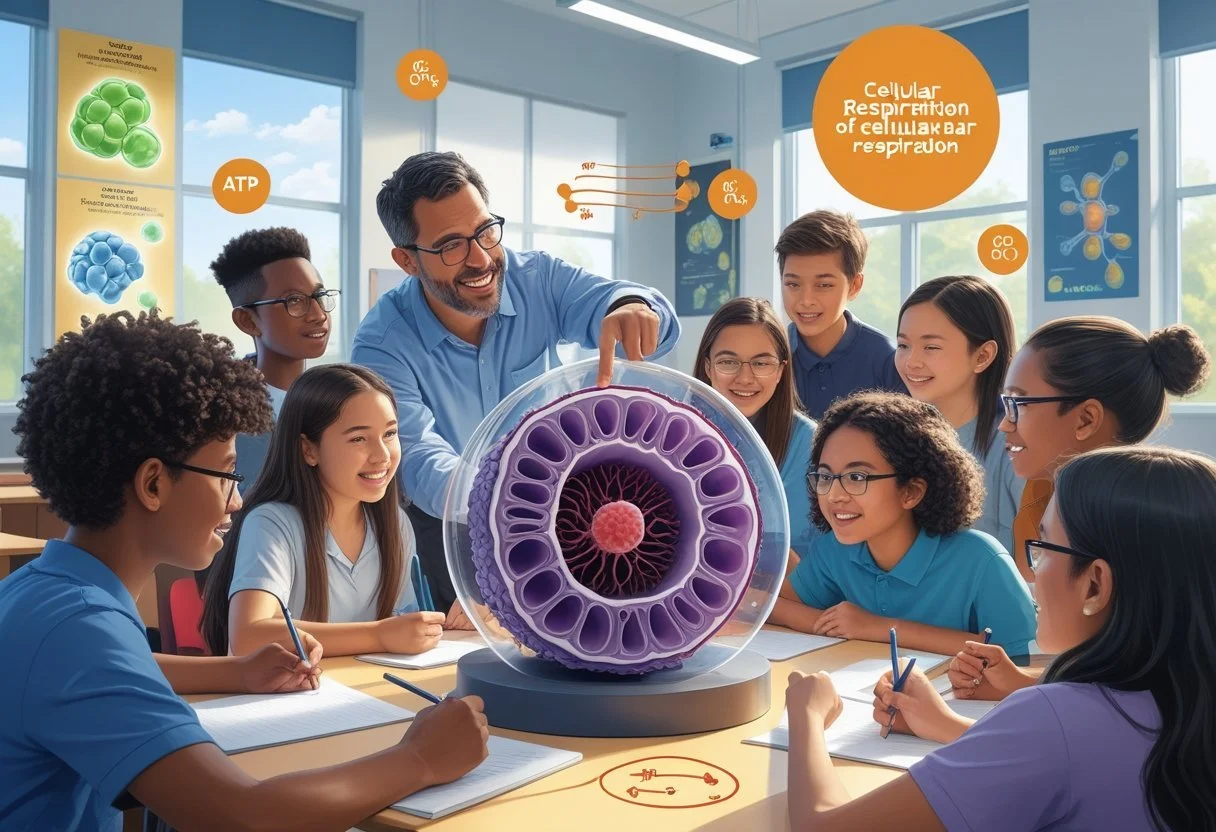
Starting with cellular respiration allows students to connect ideas about energy use in plants, animals, and even humans. It also helps them see how science works in everyday life, such as how muscles get energy during exercise. Introducing this topic early can make science more interesting and easier to grasp over time.
By learning these ideas early, students build a foundation that improves their understanding of related subjects like photosynthesis and metabolism. Teaching methods that simplify the steps of respiration make it easier for young learners to grasp and remember the concepts.
Key Takeways
Early education on energy use in cells builds a strong science foundation.
Understanding cellular respiration helps explain real-life biological processes.
Simple teaching strategies improve student comprehension and interest.
The Importance of Early Cellular Respiration Education
Understanding cellular respiration early helps students build key science skills and connect biology concepts to their daily lives. This foundation supports learning in other areas like nutrition, health, and energy use in living things.
Laying a Strong Scientific Foundation
Teaching cellular respiration early gives students a clear view of how cells turn food into energy. They learn about glucose, oxygen, and ATP, the energy molecule that powers cell activities.
This basic knowledge opens doors to more complex science topics. It helps students understand processes like metabolism and photosynthesis later on. Early lessons also introduce important scientific ideas such as chemical reactions and energy flow.
Using clear diagrams and simple experiments improves comprehension. Students can see how the body changes food into usable energy, which builds a strong base for biology and chemistry studies.
Developing Critical Thinking Skills
Learning cellular respiration early encourages students to analyze processes step-by-step. They explore how glucose breaks down during glycolysis, the Krebs cycle, and the electron transport chain, gaining insight into complex biological pathways.
This process supports problem-solving skills. Students learn to identify cause and effect and predict outcomes when oxygen is limited, such as during fermentation.
Teachers can use labs and discussions to challenge students to ask questions and make connections between what they observe and scientific explanations. This method strengthens reasoning and helps students think like scientists.
Connecting Theory to Everyday Life
Early lessons on cellular respiration help students understand how energy from food supports all their activities. This knowledge links nutrition and oxygen intake to real health outcomes like stamina and recovery.
Students also learn why cells need oxygen and how energy production relates to exercises, breathing, and even sleep. Recognizing this connection makes science relevant and meaningful.
Educators can use simple activities, like measuring carbon dioxide output, to show how cellular respiration changes with different energy needs. These connections make abstract concepts easier to grasp and motivate students to care about science and their bodies.
Core Concepts of Cellular Respiration
Cellular respiration is the process cells use to turn food into energy. It involves specific chemicals, defined steps, and clear outcomes that keep living things functioning. Understanding these key ideas helps explain how energy moves inside all organisms.
Definition and Overview
Cellular respiration is a chemical process inside cells. It breaks down glucose, a sugar made from food, to release energy. This energy is stored in a molecule called ATP, which cells use to power activities like movement and repair.
The process needs oxygen and happens in nearly all living things all the time. It also creates byproducts such as carbon dioxide and water, which the body gets rid of. This steady cycle supports life by providing constant energy.
Key Reactants and Products
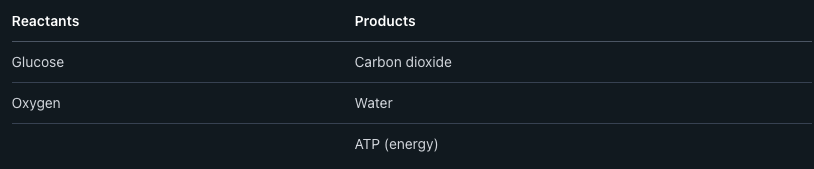
The two main starting materials in cellular respiration are glucose and oxygen. Glucose provides the fuel, while oxygen helps break it down through chemical reactions. Without oxygen, this process slows down or changes form.
The main products are carbon dioxide, water, and energy stored as ATP. Carbon dioxide is released as a waste gas, and water is produced during these reactions. ATP then supplies energy for cells to do work, making it essential for survival.
Stages of the Process
Cellular respiration happens in three main stages: glycolysis, the Krebs cycle, and electron transport.
Glycolysis takes place in the cell’s cytoplasm. It breaks glucose into smaller molecules and makes a small amount of ATP.
The Krebs cycle occurs inside mitochondria. It processes molecules from glycolysis, releasing carbon dioxide and transferring energy to helper molecules.
The electron transport chain uses oxygen to help generate the most ATP. This step produces water by combining oxygen with electrons and hydrogen.
Each stage relies on the products of the previous one and works together to capture energy efficiently.
The Role of Mitochondria in Cellular Respiration
Mitochondria play a key role in converting nutrients into usable energy inside cells. Their structure supports various steps that produce energy efficiently. This energy is vital for cells to carry out growth, repair, and other functions.
Structure and Function
Mitochondria have two membranes: an outer membrane and a folded inner membrane. The inner membrane folds, called cristae, increase the surface area. This design allows more space for chemical reactions to occur.
Inside, the mitochondrion has a fluid-filled space called the matrix. The matrix contains enzymes crucial for the energy-making process. These enzymes help break down molecules like glucose.
Mitochondria also control important cell activities like growth and signaling. Their structure supports not just energy production but also cell regulation and survival.
Energetics in the Cell
Mitochondria produce ATP, the cell’s main energy source, through cellular respiration. This process uses oxygen to help convert food molecules into energy.
The main stages inside mitochondria include the Krebs cycle and the electron transport chain. The Krebs cycle breaks down glucose products, releasing electrons.
These electrons move along the electron transport chain in the inner membrane. Their movement creates a flow that powers ATP synthesis.
This energy supports many cell functions, such as muscle movement and nerve signaling. Without mitochondria, cells could not meet their energy needs efficiently.
The Relationship Between Photosynthesis and Cellular Respiration
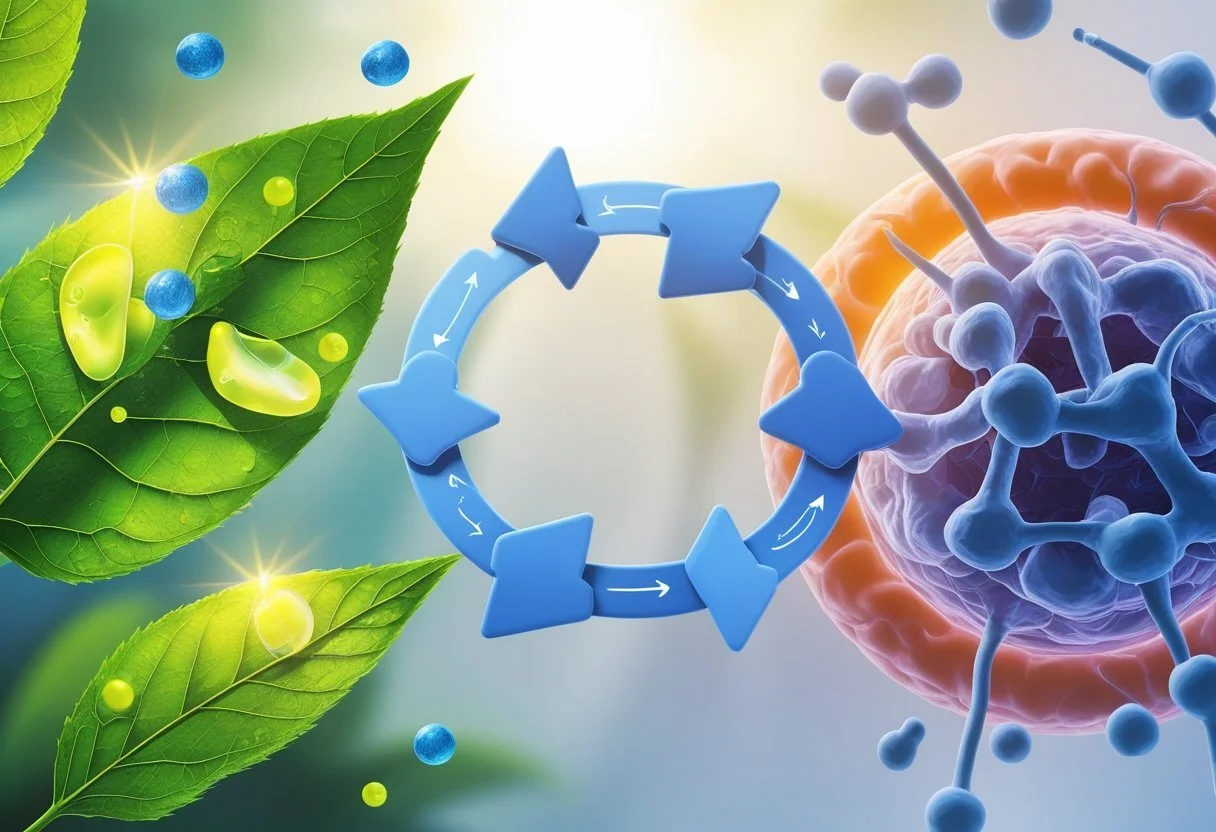
Photosynthesis and cellular respiration are closely linked processes that balance the flow of energy and matter in living systems. Their interaction is essential for life on Earth, as one process provides the materials the other needs to function. This connection helps explain how energy cycles through ecosystems and supports various teaching strategies.
Complementary Biological Processes
Photosynthesis and cellular respiration depend on each other to maintain life. Photosynthesis occurs in plants, algae, and some bacteria. It captures sunlight to convert carbon dioxide and water into glucose and oxygen.
Cellular respiration happens in almost all living cells. It breaks down glucose and oxygen to release energy in the form of ATP, the usable energy molecule for cells. This process also produces carbon dioxide and water as byproducts.
These two processes form a cycle. Photosynthesis produces glucose and oxygen, which cellular respiration uses. Cellular respiration then generates carbon dioxide and water, which photosynthesis absorbs. This complementary relationship supports both plant and animal life.
Energy Flow in Ecosystems
Photosynthesis adds energy to ecosystems by creating glucose from sunlight. This chemical energy is stored and later used by organisms during cellular respiration to power their activities.
Plants are primary producers because they capture energy from the sun. When animals eat plants, they obtain the stored energy in glucose. The animals then break down glucose through cellular respiration to fuel their cells.
Together, these processes regulate key gases in the atmosphere. Photosynthesis reduces carbon dioxide and increases oxygen, while cellular respiration does the opposite. This balance supports life and keeps the Earth’s atmosphere stable.
Connecting Classroom Activities
Teaching the link between photosynthesis and cellular respiration early helps students understand energy flow at a deeper level. Hands-on activities like building diagrams or performing simple experiments can make the concepts clearer.
For example, students can track how oxygen and carbon dioxide levels change in a plant and an animal. Visual aids comparing the chemical formulas side by side highlight the cycle:
Photosynthesis: 6CO₂ + 6H₂O + light → C₆H₁₂O₆ + 6O₂
Cellular respiration: C₆H₁₂O₆ + 6O₂ → 6CO₂ + 6H₂O + energy (ATP)
Connecting these processes with real-life examples, like food chains and energy pyramids, strengthens students’ grasp on how energy moves through nature and why both are crucial for life.
Teaching Strategies for Young Learners
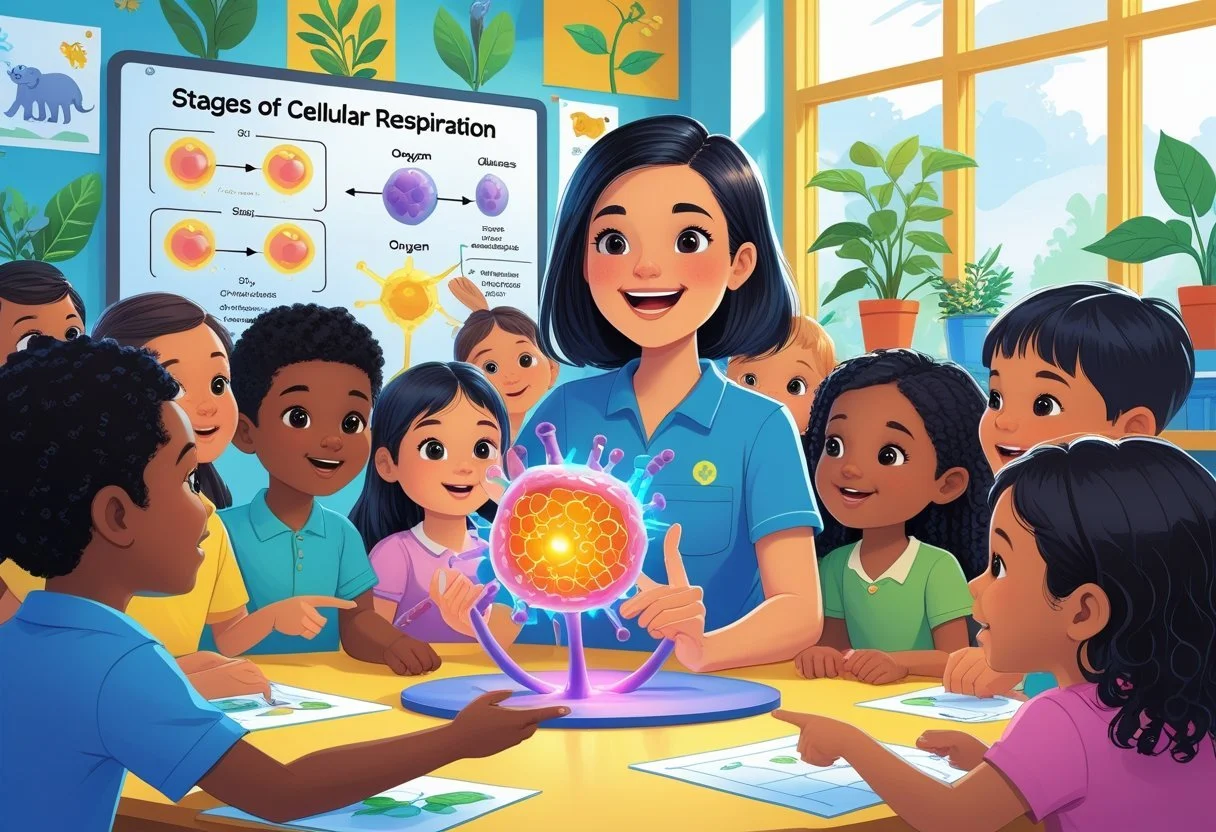
Teaching cellular respiration effectively means using clear, hands-on methods that show how cells use energy. Simple activities help students understand important parts like glucose use, oxygen's role, and how fermentation differs from respiration.
Hands-On Demonstrations
Hands-on demonstrations help students see the process of cellular respiration in action. For example, showing how yeast ferments sugar to produce carbon dioxide makes the idea of fermentation concrete. Teachers can demonstrate this with a simple balloon experiment where yeast and sugar mix, causing the balloon to inflate.
Visual aids like models displaying molecules involved in respiration—glucose, oxygen, carbon dioxide, and ATP—also clarify complex steps. Using colored beads or blocks to represent these molecules helps students track how energy flows through the cell.
This approach focuses on making abstract ideas tangible. It supports students in connecting chemical reactions to real life and encourages questions about energy use and cell function.
Interactive Experiments
Interactive experiments give students a chance to observe cellular respiration and fermentation firsthand. A common lab activity is measuring the rate of respiration in plants or small animals by tracking oxygen use or carbon dioxide release.
Using simple tools like respirometers allows students to collect real data and see how factors like temperature or glucose availability affect respiration. Experiments like these demonstrate the difference between aerobic respiration and fermentation clearly.
These activities deepen understanding by involving students directly in scientific inquiry. They build skills in observation, data recording, and analysis while reinforcing key concepts about energy cycles in living things.
Addressing Common Misconceptions
Many students confuse basic ideas about respiration and energy production. Clearing up these misunderstandings helps build a strong foundation in biology. It also improves how students grasp more complex topics later.
Respiration vs. Breathing
Respiration is a chemical process where cells break down glucose to produce energy. It happens in plants, animals, and many microorganisms. This process uses oxygen to create ATP, the energy molecule cells need.
Breathing, on the other hand, is the physical act of moving air in and out of the lungs. It supplies oxygen for respiration but is not the same thing. Some students believe respiration happens only in the lungs or only during exercise, but it actually happens in every cell all the time.
Understanding this difference prevents confusion about where and when energy production occurs in the body and other organisms.
ATP and Energy Misunderstandings
ATP, or adenosine triphosphate, is often misunderstood as just "energy." It is actually a molecule that stores and transfers energy for cell functions. When cells break down glucose, they use chemical reactions to add a phosphate group to ADP, making ATP.
Many think ATP is made only during heavy activity, but cells produce ATP continuously to support all life processes. Without a clear idea of ATP, students may struggle to understand how cells power activities like growth, repair, and movement.
Teaching the role of ATP clearly helps connect how respiration fuels the body at a cellular level.
Real-World Applications of Cellular Respiration Knowledge
Understanding cellular respiration helps explain how energy is produced and used in living things. It shows how oxygen and glucose are turned into energy, carbon dioxide, and water. This knowledge plays a key role in sports, nutrition, and how organisms interact with their environment.
Athletics and Physical Education
Athletes rely on cellular respiration to power their muscles during exercise. When people exercise, their cells use oxygen to break down glucose and create ATP, the energy currency for muscle work. This process is called aerobic respiration.
During intense activities, sometimes oxygen supply is low. In that case, cells switch to anaerobic respiration, which produces less energy and creates lactic acid. This causes muscle fatigue. Knowing this helps trainers design workouts and recovery plans.
Athletes training at high altitudes experience lower oxygen levels. This forces the body to adapt by improving oxygen use for cellular respiration. Understanding this helps athletes plan for better performance in different environments.
Health and Nutrition
Cells need oxygen and nutrients like glucose to perform cellular respiration. This process provides energy for growth, repair, and everyday functions. Teaching this early helps students understand why balanced diets and oxygen-rich environments are vital for health.
Diseases like diabetes affect how cells process glucose, impacting energy production. Awareness of cellular respiration makes it easier to understand these health issues. It also explains why proper breathing and blood flow are critical to supply oxygen for energy.
Nutrition impacts respiration too. For example, carbohydrates provide glucose, which fuels this energy-making process. Poor nutrition means less energy and weaker body function. Understanding cellular respiration emphasizes the importance of healthy food choices.
Environmental Awareness
Cellular respiration links closely to the carbon cycle in nature. Organisms use oxygen to break down food and release carbon dioxide as a byproduct. Plants then use this carbon dioxide in photosynthesis, showing a vital balance in ecosystems.
Understanding this process helps explain how pollution affects oxygen and carbon dioxide levels. For example, high carbon dioxide in the air can change respiratory efficiency in animals and plants.
This knowledge also shows why protecting oxygen-producing organisms like trees is essential. They maintain the air quality that supports cellular respiration for all living things. Environmental awareness strengthens with this understanding.
Comparing Aerobic and Anaerobic Respiration
Aerobic and anaerobic respiration are two ways cells get energy by breaking down glucose. One uses oxygen, and the other does not. Both produce energy, but the amount and byproducts differ. These differences affect how cells and organisms function in various settings.
Differences in Energy Yield
Aerobic respiration uses oxygen to fully break down glucose. This process happens in the mitochondria of cells. It produces a large amount of ATP, the energy molecule cells need. For each glucose molecule, aerobic respiration makes about 36 ATP.
Anaerobic respiration happens without oxygen. It occurs mainly in the cytoplasm. Cells break down glucose partly, creating less energy. Anaerobic respiration usually produces 2 ATP per glucose molecule.
Because of this energy difference, aerobic respiration is more efficient. Anaerobic respiration supports short bursts of energy but cannot sustain long-term activity. It also produces byproducts like lactic acid or alcohol, depending on the organism.
Examples in Everyday Situations
Aerobic respiration happens during activities like walking, running, or any exercise with steady breathing. Cells get constant oxygen, so energy production stays high and efficient.
Anaerobic respiration takes place during intense exercise when oxygen supply is low. Muscles break down glucose quickly but less efficiently. This causes lactic acid to build up, leading to muscle fatigue.
Fermentation is a type of anaerobic respiration seen in yeast. It breaks down glucose without oxygen, producing alcohol and carbon dioxide. This process is used in baking and brewing.
Both types of respiration are essential for survival. They allow cells to adapt to different oxygen levels and energy demands in daily life.
The Impact of Early Teaching on Future Science Learning
Introducing cellular respiration early helps students build strong foundations in biology and understand key life processes. This early knowledge supports deeper learning in future science classes and encourages interest in science careers.
Preparing for Advanced Biology
Teaching cellular respiration early gives students a clear view of how organisms convert food into energy. This understanding is important for subjects like biochemistry and genetics.
Students who learn these concepts early handle complex topics better later on. They can connect ideas in metabolism, energy transfer, and cellular function without confusion.
Using tools like diagrams and hands-on activities enhances comprehension. It also prepares students for lab work and problem-solving in higher-level biology.
Stimulating STEM Career Interests
Early exposure to cellular respiration can spark curiosity in science and technology fields. Students see how biology relates to health, medicine, and environmental science.
Interactive learning, such as virtual labs, makes cellular respiration engaging. This can motivate students to explore science further and consider STEM careers.
Building confidence in biological concepts early helps students feel capable of succeeding in science. This increased confidence can influence their education and career choices positively.
Integrating Cellular Respiration with Cross-Curricular Themes
Cellular respiration connects well with other subjects by showing how energy moves through living systems and the environment. Exploring its chemical basis and environmental impact helps students see the bigger picture.
Linking to Chemistry and Energy
Cellular respiration is a key example of chemical reactions where glucose breaks down to release energy. This energy converts stored chemical energy into ATP, the cell’s usable power source.
The process involves several steps: glycolysis, the Krebs cycle, and the electron transport chain. Water is produced during the electron transport chain, showing how chemical reactions link respiration to water molecules.
Teaching this connection deepens students’ understanding of concepts like oxidation, reduction, and energy transfer. It highlights the role of molecules such as NADH and FADH2 in moving electrons.
Connecting to Environmental Science
Cellular respiration affects ecosystems by controlling how energy flows within food webs. When organisms breathe, they release carbon dioxide, impacting the atmosphere and climate.
Understanding cellular respiration also helps explain decomposition and nutrient cycling. As organisms break down organic matter, they release energy and chemicals back into the environment.
This topic can connect to real-world issues such as pollution and deforestation, emphasizing how changes in the environment can alter respiration rates and energy balance in ecosystems.
Frequently Asked Questions
Understanding cellular respiration helps students link energy use to biological processes and cell function. It sets a foundation for learning about metabolism, physiology, and energy transformation in living things.
How does understanding cellular respiration enhance a student's grasp of biology?
It helps students see how energy moves through cells and powers life. This understanding connects to larger biology concepts like photosynthesis, metabolism, and organism survival.
What are the foundational concepts in cellular respiration critical for early science education?
Students need to know that cellular respiration breaks down glucose to produce energy in the form of ATP. Key stages include glycolysis, the Krebs cycle, and electron transport.
Why is cellular respiration a key topic in teaching metabolic processes to students?
It shows how cells convert food into usable energy. Teaching this helps students grasp how metabolic pathways work and how energy flow supports cell and organism health.
How can early knowledge of cellular respiration influence a student's future learning in physiology?
Early understanding prepares students to study how organs and systems use energy. It also supports learning about muscle function, brain activity, and overall body energy management.
What role does teaching cellular respiration play in comprehending energy conversion in cells?
It explains how chemical energy from glucose becomes usable energy in ATP molecules. Students learn how energy changes form and fuels cellular activities.
How does cellular respiration connect to broader themes in life sciences and interdisciplinary studies?
Cellular respiration links biology with chemistry, physics, and environmental science. It helps students understand ecosystems, energy cycles, and how living organisms interact with their environment.


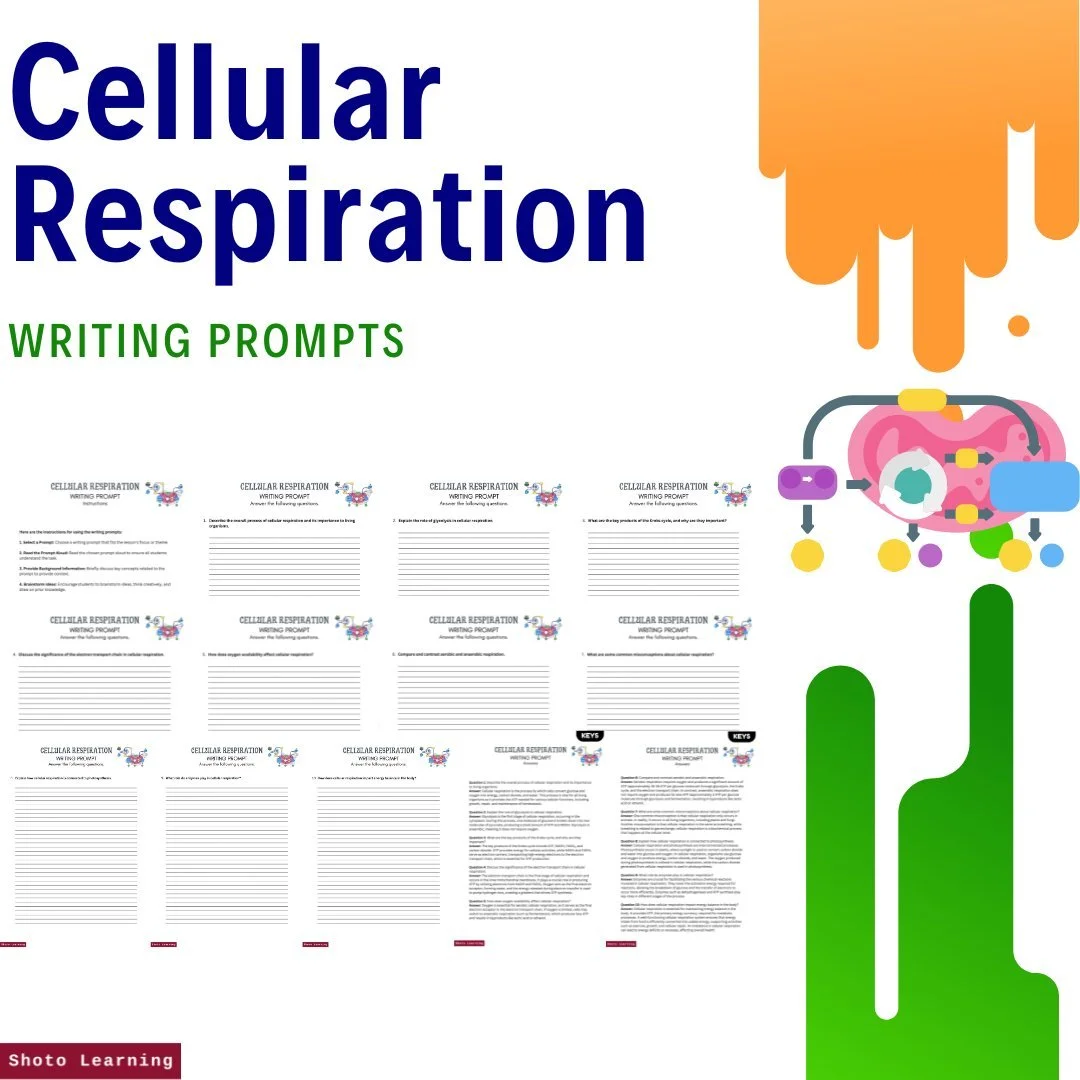


The Complete Cellular Respiration Bundle is the ultimate resource for teaching and learning about cellular respiration! This all-inclusive bundle contains over 20 engaging and educational worksheets, activities, and assessments that cover every aspect of cellular respiration, from glycolysis to the electron transport chain. Perfect for middle school and high school biology students, this bundle includes everything teachers need to create comprehensive lessons, reinforce key concepts, and assess student understanding. Each resource comes with an answer key for easy grading and self-assessment.
Included Worksheets and Resources:
Free ABC Order Worksheet: Organize important terms related to cellular respiration in alphabetical order.
Free Label the Parts Worksheet: Label key parts of the cellular respiration process with or without a word box.
Free Cellular Respiration Poster: A visual aid for the classroom to support student learning.
Plus:
Assignments: 10 detailed assignments on cellular respiration, each with answers included.
Bingo: A fun, educational bingo game with cellular respiration keywords.
Crossword: 20 questions and clues to reinforce cellular respiration vocabulary.
Cryptogram: Solve a hidden message on cellular respiration using three different key codes.
Debates: 10 debate questions and answers to promote critical thinking and discussion.
Experiment: A hands-on activity for students to explore cellular respiration in a real-world setting.
Fill-in-the-Blank: 20 questions with answers for a quick review of key terms and processes.
Flashcards: 20 keywords and definitions for students to practice vocabulary.
Lesson Plan: A comprehensive cellular respiration lesson plan with objectives, materials, and assessments.
Matching: 10 matching questions on key terms and processes.
Missing Letters: 20 holiday-themed keywords with missing letters, for vocabulary reinforcement.
Multiple Choice: 20 questions to assess understanding of cellular respiration concepts.
PowerPoint: A 13-slide presentation with detailed speech notes, available for purchase and free on YouTube.
Questions & Answers: A worksheet with key questions and answers on cellular respiration.
Reading Comprehension: Activities designed to improve understanding of the cellular respiration process.
Scramble: 30 scrambled terms for students to solve.
Test: A 45-minute test to evaluate student knowledge, with answer key included.
True or False: 20 true/false questions to reinforce learning, with answers.
Word Search: A 30-word search puzzle to strengthen terminology understanding.
Writing Prompts: Engaging prompts to inspire critical thinking and writing on cellular respiration.
Key Features:
Over 20 Resources covering all aspects of cellular respiration.
Answer Key Included for all worksheets, quizzes, and assessments.
Engaging and Interactive activities to cater to different learning styles.
Designed for Middle and High School students studying biology.
Diverse Formats such as crosswords, flashcards, bingo, experiments, and debates engage all learners.
Comprehensive Coverage: From beginner to advanced concepts, this bundle covers all stages of cellular respiration.
How to Use It:
Lesson Planning: Use the lesson plan and PowerPoint to structure your classroom sessions on cellular respiration.
Review and Reinforcement: Assign worksheets, including the fill-in-the-blank, crossword, and flashcards, to help students reinforce their understanding.
Classroom Activities: Engage students with bingo, debates, and experiments for hands-on learning.
Assessment: Utilize the test, true or false worksheet, and multiple-choice questions to assess student knowledge.
Homework: Assign tasks such as the scramble, matching, and reading comprehension worksheets for homework or extra practice.
This Complete Cellular Respiration Bundle equips teachers with everything they need to successfully teach cellular respiration, making science education both fun and informative!
133 pages
Order your copy today!