
Using Crosswords and Word Searches to Build Vocabulary for Effective Language Learning
Crosswords and word searches are simple yet effective tools for building vocabulary. They help learners practice new words in a fun way, which improves reading, writing, and communication skills. By engaging with these puzzles, people not only remember words better but also understand how to use them in different contexts.
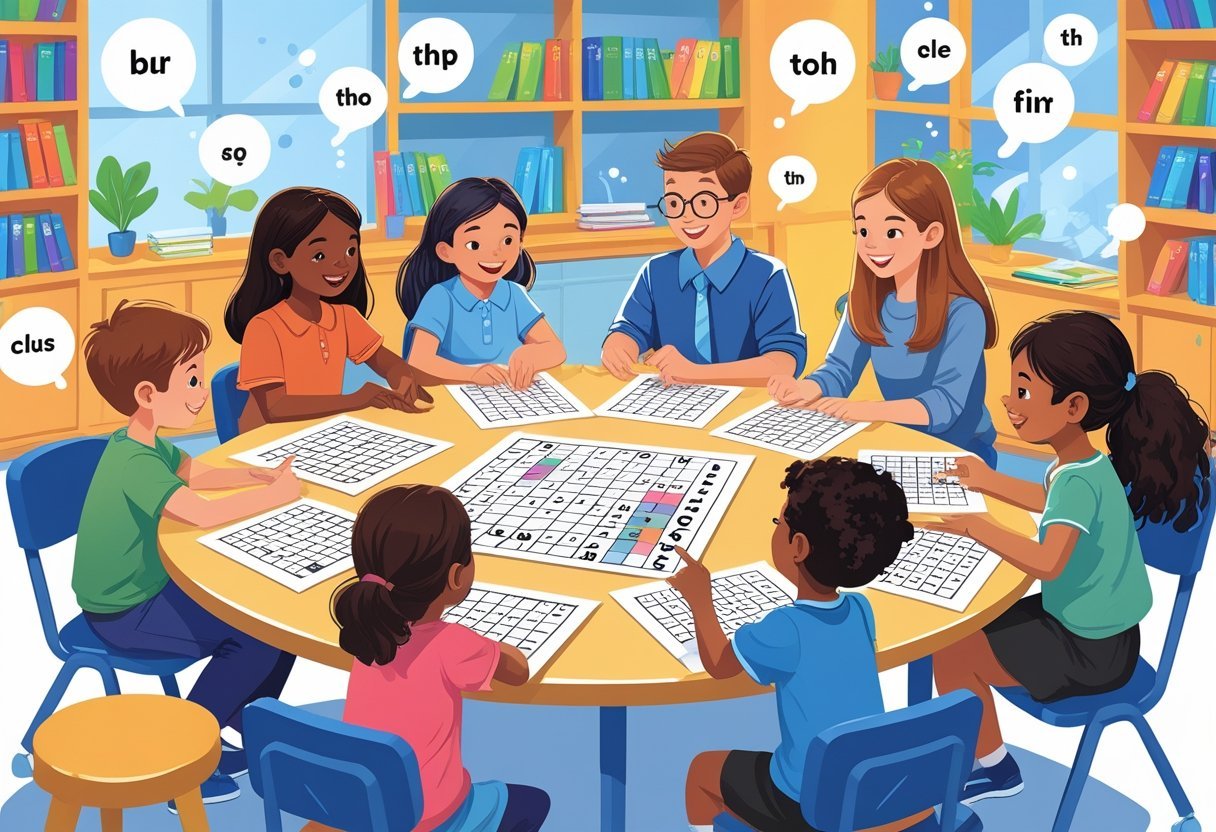
These puzzles also boost cognitive abilities like memory and problem-solving. They encourage learners to think critically and make connections between words. This makes vocabulary learning more active and less like memorization, which can be boring or hard to stick with.
Teachers and learners can easily include crosswords and word searches in their routines. These activities fit well with various subjects and skill levels, making vocabulary development accessible and engaging for everyone. Using puzzles regularly helps track progress and keeps learners motivated over time.
Key Takeaways
Crosswords and word searches strengthen vocabulary through active engagement.
These puzzles improve memory and critical thinking skills.
Regular use helps maintain motivation and track learning progress.
The Role of Crosswords and Word Searches in Vocabulary Building
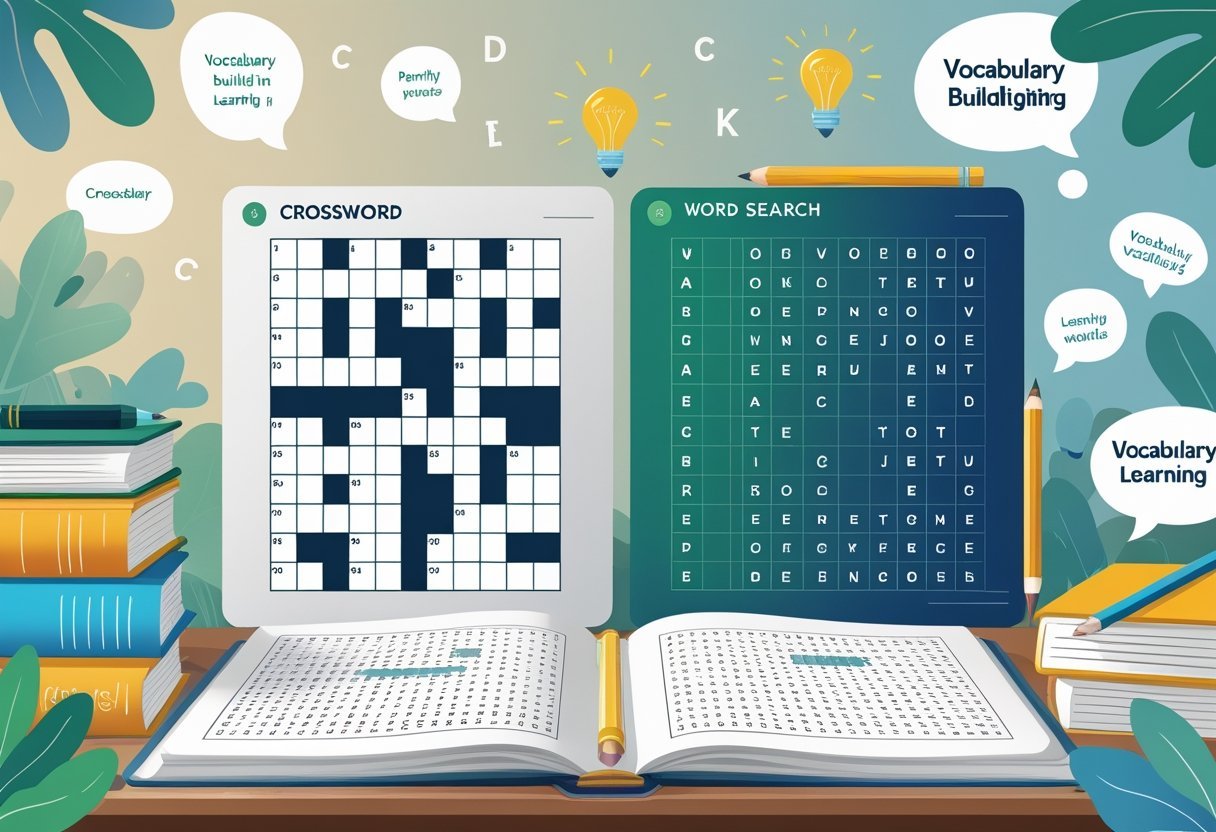
Crosswords and word searches play specific roles in helping learners remember words and grow their vocabulary. Each type of puzzle promotes different aspects of language skills and supports education by creating interactive ways to engage with new words.
How Puzzles Enhance Word Retention
Both crosswords and word searches help users remember vocabulary by encouraging active learning. When learners complete puzzles, they focus on spelling, word patterns, and meanings. This hands-on approach makes words easier to recall later.
Crosswords require problem-solving to fit the right word into a grid. This task strengthens memory by connecting clues to vocabulary. Word searches, on the other hand, emphasize recognizing words within a larger group of letters. This visual search helps reinforce word shapes and familiarizes learners with common spelling.
Using puzzles regularly can increase motivation and reduce stress, making learners more open to practicing vocabulary over time.
Vocabulary Growth Through Word Games
Word games promote vocabulary growth by presenting words in context or as part of a challenge. Crosswords often use clues related to word meanings, allowing learners to deepen their understanding of new terms.
Word searches introduce vocabulary through repetition, which builds familiarity. When students find the same word multiple times in different puzzles, they internalize its spelling and meaning. Both puzzles encourage curiosity, as learners sometimes guess meanings from surrounding clues.
Teachers can use these puzzles as educational tools to improve language skills such as reading, writing, and speaking because learners engage actively with vocabulary instead of passively memorizing word lists.
Comparing Crosswords and Word Searches
Crosswords involve critical thinking and recall since learners solve clues and write words into a pattern. This makes crosswords more effective for developing language comprehension and cognitive skills.
Word searches focus on pattern recognition and visual scanning, which supports spelling and vocabulary recognition but offers less practice with word meaning. They are simpler and can be helpful for beginners or young learners.
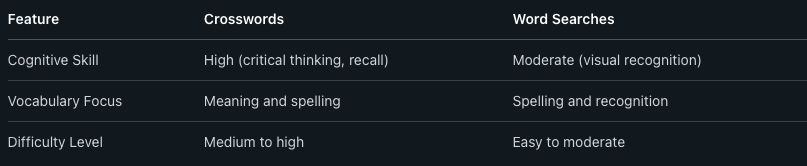
Both have value in education but suit different learning goals. Combining them can provide a balanced approach to vocabulary building.
Cognitive Benefits of Word-Based Puzzles

Word-based puzzles like crosswords and word searches help develop key mental skills. They improve how the brain stores and recalls information, focus on details, and solve problems effectively.
Memory Enhancement
Engaging with word puzzles strengthens memory by requiring players to recall words and patterns. This practice activates areas of the brain responsible for language skills and reading comprehension.
When solving crosswords, individuals often retrieve knowledge from their vocabulary bank and link it with clues. This exercise builds stronger memory connections over time.
Repeatedly searching for words in puzzles helps with recognition memory. This makes it easier to remember new words, improving overall language learning.
Improved Focus and Concentration
Word puzzles demand careful attention to find correct words or solve clues. This trains the brain to maintain focus for longer periods.
Concentration improves as the solver ignores distractions and processes information step-by-step. This skill supports reading comprehension by helping individuals stay engaged with text.
Regular practice with puzzles sharpens mental agility, allowing quicker spotting of word patterns. This can benefit classroom learning or daily reading tasks.
Boosting Problem-Solving Abilities
Crosswords and word searches train the brain to think critically and logically. Players analyze clues, test possible answers, and adjust their approach.
This structured guessing enhances strategic thinking and decision-making skills. It also strengthens the ability to break down complex problems into manageable parts.
Boosted problem-solving skills from word puzzles transfer to real-world tasks, such as planning and understanding complex language or instructions.
Practical Strategies for Using Crosswords to Build Vocabulary
Effective crossword puzzles use carefully chosen words and clear hints to help learners remember new vocabulary. The choice of words and how clues are written can make a big difference in how well students learn and use English vocabulary.
Selecting Relevant Vocabulary
Choosing the right words is essential for vocabulary building. The words should match the learner’s level and relate to topics they study or encounter daily. For example, if a student is learning science, words like photosynthesis or evaporation should be included. This helps connect new words to real knowledge.
The list of words can come from textbooks, reading materials, or common use in conversation. Using both simple and challenging words keeps learners engaged but not frustrated. Including synonyms or related words can deepen understanding. Teachers should also update the vocabulary to match the learners’ progress.
Incorporating Contextual Clues
Well-written clues help learners understand how words are used in context, not just their definitions. Instead of giving a dictionary meaning, clues can provide examples, categories, or hints about word use. For instance, for the word harmony, a clue might say, “When different sounds blend beautifully.”
Contextual clues make the puzzle more meaningful and encourage critical thinking. Clues can vary by level, with easier puzzles stating simple hints and harder ones using indirect or metaphorical meanings. Clear and relevant clues ensure learners can solve the puzzle while thinking about word meaning and usage.
Maximizing the Value of Word Searches for Learners
Word searches can be a useful tool to improve vocabulary when used thoughtfully. Focusing on discovering new words and using theme-based activities helps learners stay interested and understand words better. These strategies support language learning and improve retention.
Discovering New Words and Meanings
Word searches introduce learners to new words in context. When learners find a word, they should also look up its meaning and use it in a sentence. This deepens understanding beyond just recognizing the word.
Teachers can encourage learners to keep a vocabulary journal. Writing down each word, its definition, and an example sentence helps reinforce learning. Learners can review this journal regularly to remember new vocabulary.
Using word searches with varying difficulty levels also helps. Starting with simple words and moving to harder ones matches learners’ skill levels and challenges them at the right pace. This gradual approach builds confidence.
Theme-Based Word Search Activities
Organizing word searches around themes, like food, travel, or nature, makes learning relevant and meaningful. Themes help learners make connections between words and real-life topics, improving retention.
Educators can design word searches that align with lessons or topics learners study. For example, a lesson on animals could include a word search listing different animal names. This reinforces new vocabulary from class.
Themed word searches also support learners of English by showing how words relate to each other. Combining words on similar subjects helps learners remember not only the words themselves but also their context. This makes learning more practical.
Integrating Puzzles into Language Education
Using crosswords and word searches in language education helps make learning more active and focused. These puzzles encourage students to engage deeply with vocabulary and improve memory while keeping motivation high. Teachers can apply different strategies and tools to support vocabulary growth effectively.
Gamification in the Classroom
Gamification turns vocabulary learning into a fun and interactive process. When students solve crosswords or word searches, they often feel less anxious and more motivated to learn. This approach helps build confidence because it mixes challenge with play.
Because puzzles require students to recall and use new words, they reinforce vocabulary in a practical way. Teachers can track progress through vocabulary journals where students note new words from puzzles. Regular use of gamified exercises has shown to improve comprehension and grammar skills across an academic term.
Tools and Resources for Teachers
Teachers have access to many digital and print tools to create custom puzzles. Software like Puzzle Maker Pro allows educators to design word searches tailored to specific vocabulary lists and language levels. These resources save time and enable targeted teaching.
In addition, combining puzzles with a vocabulary journal helps students record and review words in context. Word puzzles also enhance cognitive skills like problem-solving and memory. Educators should choose tools that fit their curriculum goals and match student needs for the best impact.
Tracking Progress and Retention
Tracking vocabulary growth helps learners see their improvements and identify areas needing more work. Effective tracking involves recording new words and testing knowledge over time. This makes learning clearer and supports long-term retention.
Maintaining a Vocabulary Journal
A vocabulary journal is a practical tool for recording new words from crosswords and word searches. Learners write down each word’s meaning, part of speech, and a sentence using the word. This reinforces understanding and helps with reading comprehension.
Regularly reviewing the journal encourages recall and deepens memory. It also lets learners track how their vocabulary builds over weeks or months. Using different colors or symbols to mark mastered words can motivate continued practice and highlight progress clearly.
Assessing Learning Outcomes
Assessing vocabulary learning means measuring how well words are remembered and used. Quizzes based on crossword clues or words found in puzzles can test both spelling and meaning. These assessments show if learners can apply new words in different contexts.
Tracking quiz results over time reveals patterns in word retention and helps focus on weak areas. Combining written tests with oral use of vocabulary supports better retention and understanding. Technology tools can also automate progress tracking and provide instant feedback.
Tips for Independent Practice and Lifelong Learning
Building vocabulary through crosswords and word searches works best with choices that match skill level and steady, regular practice. Selecting puzzles that challenge but don’t frustrate and setting a routine help learners keep improving over time.
Choosing the Right Puzzle Difficulty
It is important to pick puzzles that suit the learner’s current vocabulary level. Starting with easy crosswords or word searches helps build confidence. These puzzles include familiar words and simple clues, which support basic word recognition and spelling.
As skills grow, learners should move to medium or harder puzzles. These feature less common words, tricky clues, or themed content. This encourages discovering new English vocabulary and applying prior knowledge.
A good approach is to vary puzzle types. Using both word searches and crosswords helps strengthen different skills like spelling and word meaning. Selecting puzzles aligned with personal interests or English learning goals increases motivation.
Establishing Consistent Habits
Consistency is key to lifelong vocabulary growth. Setting specific times each day or week for puzzle practice helps form a habit. For example, solving one crossword every morning or doing word searches during breaks creates a steady learning rhythm.
Regular practice also improves memory and recall. Revisiting words multiple times through puzzles reinforces spelling and meaning. It is helpful to keep a journal or list of new words to review and use in writing or speaking.
Learners can increase engagement by joining puzzle groups or sharing progress with others. This adds variety and social support, making independent practice more enjoyable and effective over the long term.
Frequently Asked Questions
Crosswords and word searches support vocabulary growth by encouraging active engagement with words. They challenge the brain to recall meanings, spellings, and word relationships. This kind of practice helps learners improve both their understanding and use of language over time.
How do crosswords and word searches enhance language learning?
They promote word recognition and spelling by requiring players to connect clues or find terms within grids. This process builds stronger links between words and their meanings. It also improves the ability to retrieve words quickly in reading and writing.
What are the cognitive benefits of solving word puzzles for vocabulary acquisition?
Solving puzzles enhances memory, concentration, and problem-solving skills. It exercises the brain’s ability to make connections between words and concepts. These benefits support better language retention and mental sharpness.
Can regular engagement with word games improve academic vocabulary?
Yes, consistent practice with word puzzles helps learners familiarize themselves with more complex words often found in academic texts. It encourages repeated exposure to terms, which aids long-term retention and understanding.
In what ways do crossword puzzles differ from word searches in teaching new words?
Crosswords require decoding clues and filling in words, which deepens understanding of word meanings and usage. Word searches focus more on word recognition and spelling by locating words in a grid. Both methods reinforce vocabulary but engage different cognitive skills.
How often should one engage with word puzzles to see a noticeable improvement in their vocabulary?
Regular practice, such as daily or several times a week, is recommended for steady progress. Consistent engagement helps reinforce learning and boosts word recall over time.
Are there specific strategies for using word puzzles to effectively learn new words?
Using themed puzzles helps focus on specific vocabulary areas like science or history. Writing down new words and reviewing them can also improve retention. Combining puzzles with reading and writing activities strengthens overall language skills.


Help your students master the Life Cycle of a Frog with this set of Crossword Worksheets! Featuring 20 engaging questions, this set includes two worksheets—one with a word bank for extra support and one without for more challenge. Ideal for building vocabulary and reinforcing key concepts, these crosswords make learning fun and interactive. Answers are provided for easy grading.
Key Features:
Two Crossword Worksheets
One crossword includes a word bank for guided support, while the other challenges students to recall terms without hints.
20 Life Cycle Questions
Comprehensive questions covering key concepts such as stages of development, frog anatomy, and habitat. Perfect for 2nd-3rd grade students.
Answer Keys
Full answer sheets for both worksheets are included for quick and easy assessment.
Science and Literacy Skills
Encourages students to apply both their knowledge of the frog life cycle and spelling skills.
How to Use It:
Classroom Activity: Use the word bank version for beginners and the version without for advanced students or as a review.
Homework Assignment: Assign as a take-home task for individual practice.
Group Work: Have students collaborate in pairs or small groups to complete the crossword together.
Assessment Tool: Use as a formative or summative assessment with the included answer keys for grading.
These crossword worksheets are a fun and educational resource that blends science learning with word-solving skills, perfect for reinforcing the life cycle of a frog!
Order your copy today!