
Interactive Strategies for Learning Multiplication Tables to Boost Student Engagement and Mastery
Learning multiplication tables can be a challenge for many students, but interactive strategies make the process easier and more engaging. These methods use hands-on activities, visual aids, and games to help learners understand and remember multiplication facts better. Interactive learning helps students connect abstract numbers to real-world concepts, making memorization faster and more meaningful.
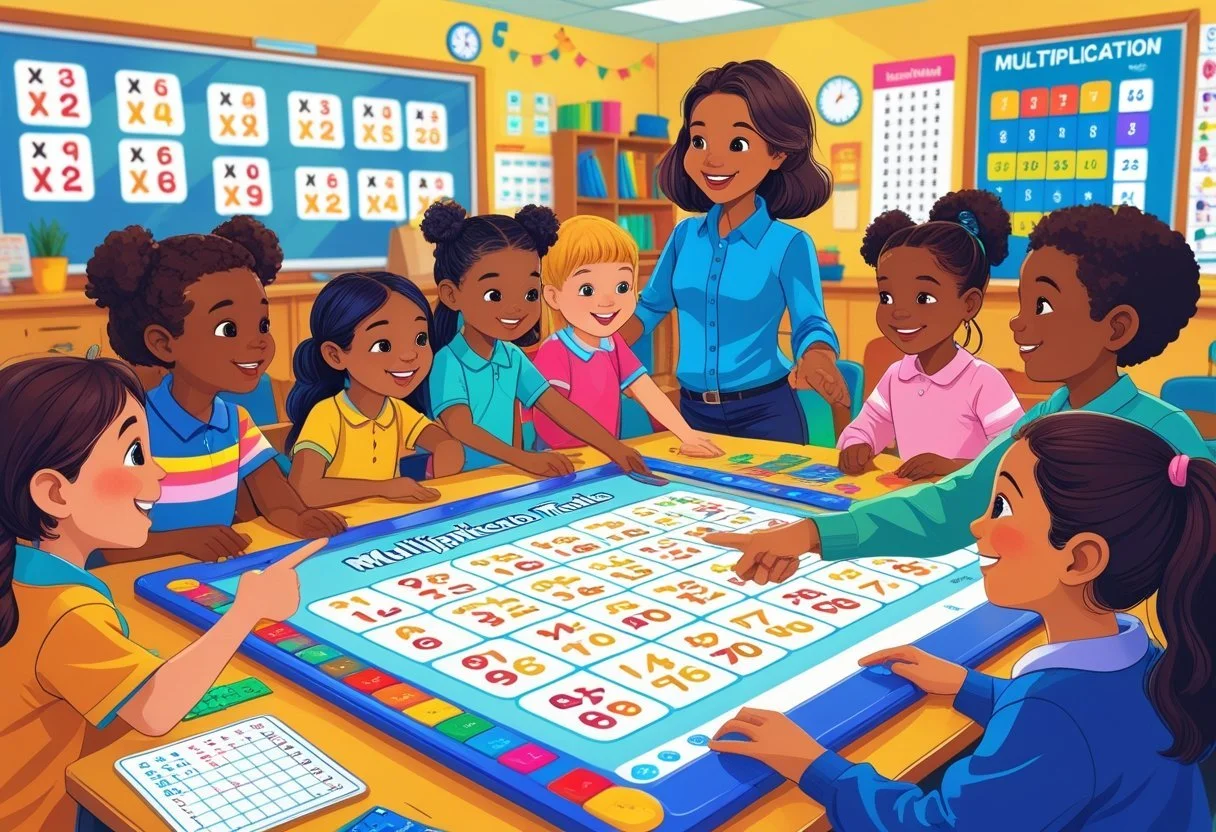
By using tools like arrays, skip counting, and groupings, learners see multiplication as more than just rote memorization. This approach builds a deeper understanding that supports long-term retention. Engaging challenges and multisensory activities also keep learners motivated and focused.
Teachers and parents can use these interactive methods to transform how children approach multiplication, making the experience enjoyable and effective.
Key Takeaways
Visual and hands-on activities improve understanding of multiplication.
Using patterns and groups helps students grasp multiplication concepts.
Games and challenges increase motivation and reinforce learning.
Fundamentals of Learning Multiplication Tables
Learning multiplication tables requires a strong grasp of basic facts, clear understanding of multiplication principles, and good memory skills. Mastery of these areas helps students complete math tasks faster and with more confidence.
Importance of Multiplication Facts Mastery
Multiplication facts, or times tables, form the foundation for many math operations. When students memorize facts up to 12, they improve speed in solving problems involving division, fractions, and percentages.
Mastery reduces the need for repeated calculation, making math work smoother and less stressful. It also builds confidence, encouraging students to tackle more complex problems.
Teachers recommend practicing tables regularly using tools like flashcards, charts, or games. This consistent practice helps facts become automatic, so students recall them quickly without hesitation.
Understanding Multiplication Concepts
Knowing what multiplication means is key, not just memorizing facts. Students learn that multiplication is repeated addition, like 4 groups of 3 equals 12.
Exploring skip counting and the commutative property (e.g., 3 × 4 equals 4 × 3) helps deepen understanding. Using real-life examples, such as counting objects or sharing items evenly, connects abstract numbers to daily activities.
When students grasp these ideas, they can figure out unknown facts and apply multiplication to solve practical problems.
Role of Memory in Multiplication
Memory plays a big role in learning multiplication. Students must store and recall many number pairs quickly. Techniques like using mnemonics, rhymes, or pictures help make facts easier to remember.
Repetition and practice improve recall speed. Short, frequent sessions work better than long, occasional ones. Visual aids such as multiplication charts provide quick reference and reinforce learning.
Strong memory skills make multiplication less about hard work and more about quick, confident answers. This efficiency is crucial for higher-level math tasks.
Interactive Strategies Overview
Interactive strategies for learning multiplication tables use hands-on activities, visual aids, and games. These methods help students understand concepts, stay engaged, and retain information better. They encourage active participation and adapt to different learners’ needs for more effective teaching multiplication.
Benefits of Interactive Approaches
Interactive methods make multiplication less boring. Students use tools like times table songs, finger tricks, or visual arrays that show multiplication as groups of objects. This helps students see how multiplication works instead of only memorizing facts.
These strategies improve focus and motivation. When students play games or use real-life examples, they connect math skills to everyday life. It also helps struggling learners by breaking down multiplication into simpler parts such as repeated addition or skip counting.
Using interaction often leads to better memory. Engaging multiple senses—hearing, seeing, and moving—strengthens recall of multiplication facts. This makes teaching multiplication more effective over time.
Comparison to Traditional Methods
Traditional multiplication learning mostly uses rote memorization and repeated writing. This can cause students to forget facts quickly or feel frustrated. It relies heavily on drills without explaining why multiplication works.
Interactive strategies offer more understanding by showing visual or physical examples. For example, arrays or equal groups show the logic behind multiplication facts. This builds a solid foundation rather than just speed.
While traditional approaches focus on speed and accuracy, interactive ones focus on comprehension and engagement. Combining both methods often gives the best results, especially for students who struggle with pure memorization.
Adapting Strategies for Different Learning Styles
Interactive teaching can adapt to different learners. Visual learners benefit from color-coded times tables, pictures, or stories. Auditory learners remember multiplication songs or chants well.
Kinesthetic learners engage with finger counting, building arrays with objects, or using movement-based games. These methods suit various ages and abilities with simple adjustments.
Teachers can mix methods based on student needs. Some may need more repetition, while others benefit from games or real-world examples. This adaptive approach supports personalized learning and helps all students succeed in learning multiplication.
Using Arrays to Visualize Multiplication
Arrays help learners see multiplication as rows and columns, making the concept clearer. They organize objects or pictures into groups to show how multiplication works. This hands-on way builds a solid base for understanding and remembering multiplication facts.
Building Arrays with Everyday Objects
Using everyday items like coins, buttons, or blocks, learners create rows and columns to form arrays. For example, arranging 3 rows of 4 buttons shows 3 × 4 clearly. This physical setup helps students count and understand groups.
This method encourages active participation and makes abstract numbers real. It also allows students to correct errors by rearranging objects. Teachers can use different items based on what students find interesting or familiar.
Connecting Arrays to Multiplication Facts
After building arrays, students link the visual with multiplication facts. They learn that the number of rows times the number of columns equals the total objects. For example, a 5 by 2 array means 5 × 2 = 10.
Students can also see related facts easily, like 2 × 5, which is the same total but arranged differently. Arrays help them understand commutative property of multiplication, reinforcing that order doesn’t change the product.
Transitioning from Arrays to Abstract Thinking
Once comfortable with physical arrays, learners move to pictorial arrays using drawings or grids. This shifts focus from counting objects to visualizing groups mentally.
At this stage, students practice multiplying without arranging items but still think of rows and columns. This helps them solve problems faster and prepares them for more advanced math, like area and division concepts.
Exploring Equal Groups in Multiplication
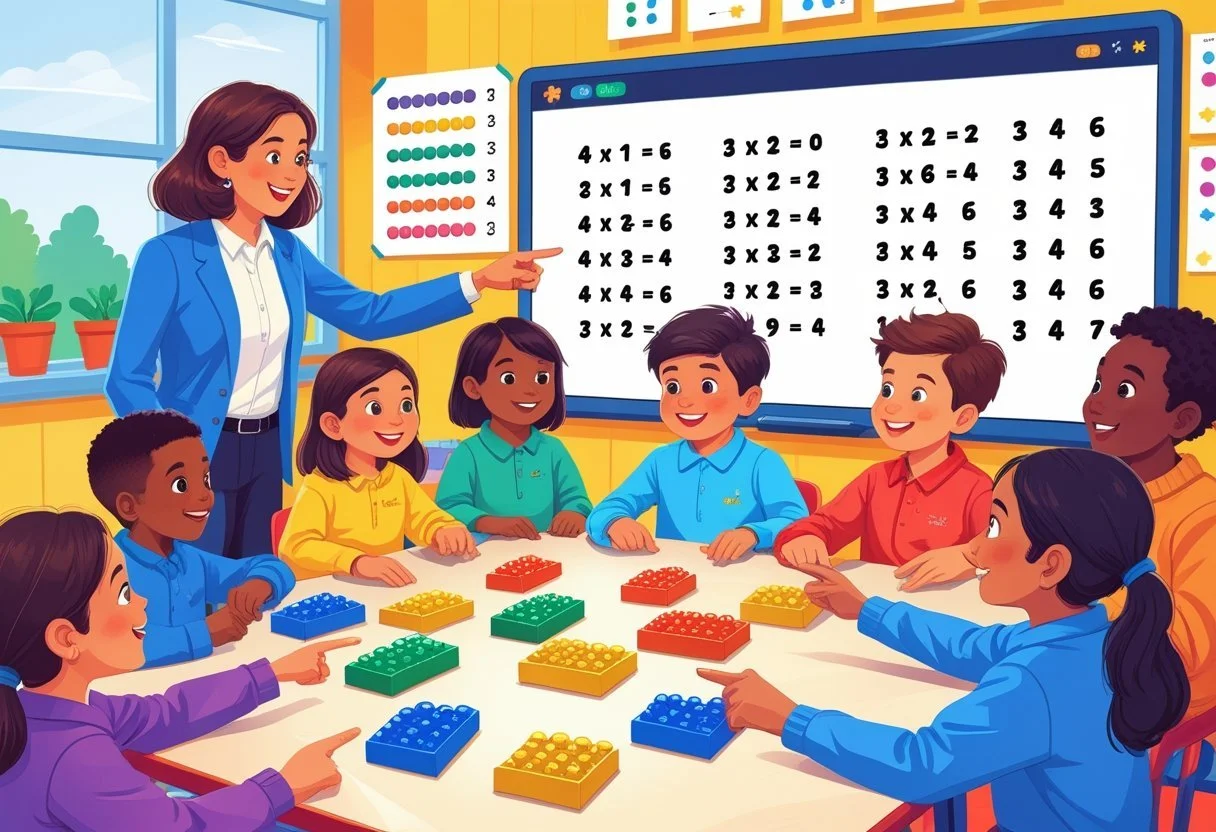
Understanding multiplication through equal groups helps students see how repeated addition works. They learn to sort items into sets that have the same number of objects. Using skip counting ties directly into the idea of equal groups and makes it easier to find totals quickly. Real-life examples show why equal groups matter beyond the classroom.
Creating Equal Groups Activities
Teachers can use various objects like blocks, beads, or stickers to form equal groups. For example, 4 groups of 3 blocks each help students visualize 4 × 3. Sorting items into these piles helps students see multiplication as combining equal sets.
Using hands-on activities allows learners to move, count, and organize objects. This builds their understanding by connecting numbers to real items. Simplifying the groups by counting all items or multiplying the number of groups by the number in each group reinforces the concept.
Skip Counting with Groups
Skip counting is an efficient way to add equal groups without counting each item one by one. For example, counting by 5s to find the total in 5 groups of 5 objects means saying 5, 10, 15, 20, 25.
This method strengthens mental math skills. It shows that multiplication is fast repeated addition. Students gain confidence as they use skip counting to work through multiplication problems like 6 × 4 or 8 × 7.
Linking Equal Groups to Real-Life Scenarios
Multiplication with equal groups appears in many real-world situations. For instance, if someone sets 3 plates with 6 cookies on each plate, they can find the total cookies by multiplying 3 × 6.
Other examples include organizing chairs in rows, packing boxes with the same number of items, or counting wheels on several bikes. These examples make equal groups meaningful and show multiplication as a practical skill for everyday tasks.
Skip Counting Techniques for Multiplication Tables
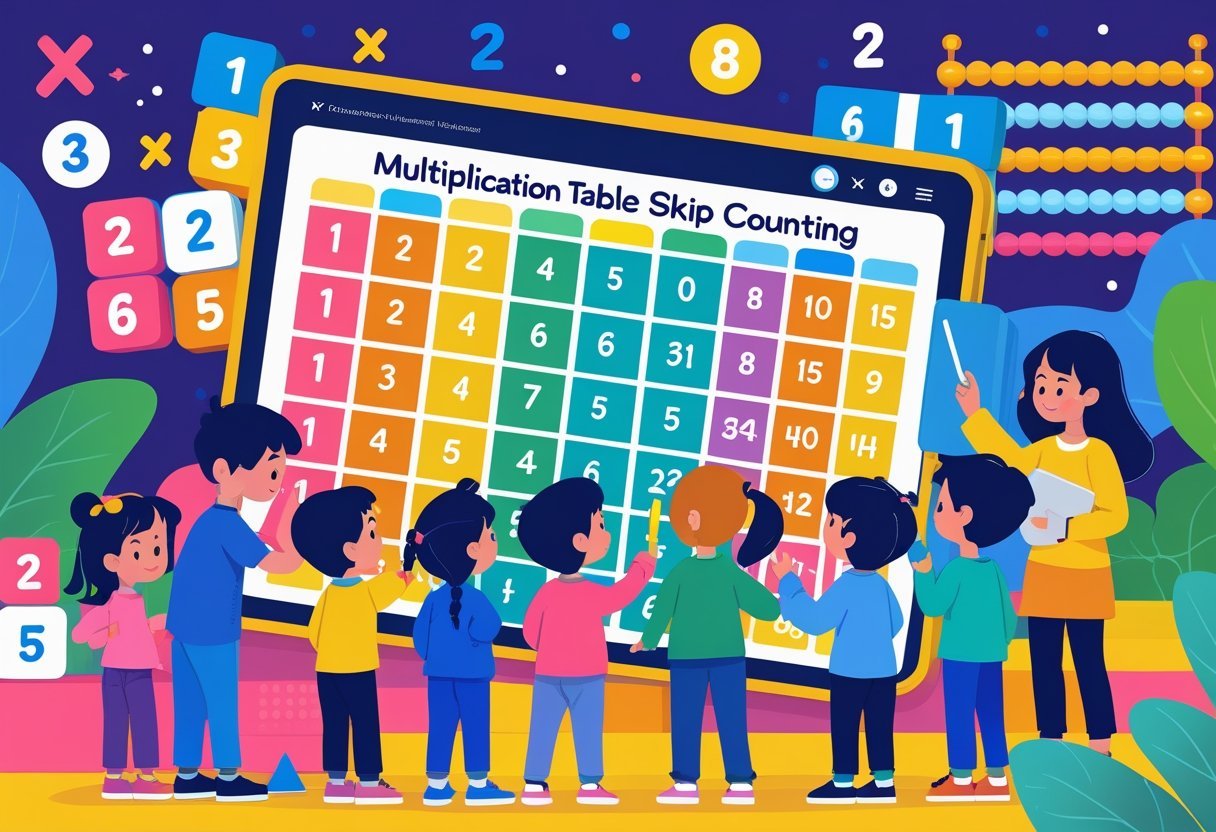
Skip counting helps children learn multiplication by regularly counting numbers in fixed steps. It shows how multiplication is repeated addition and builds a strong understanding of number patterns. Using skip counting with clear exercises, catchy songs, and daily practice helps students remember multiplication facts more easily.
Practical Skip Counting Exercises
Practical exercises focus on counting in steps like 2s, 3s, 4s, or 5s. For example, counting by 3s means saying 3, 6, 9, 12, and so on. This helps with the 3 times table because each number you say is part of the multiplication facts.
Using tools like number charts or blocks can make it easier to see the pattern. Children can also write out skip counting sequences and say them aloud. Doing this regularly helps them memorize tables naturally.
Visual aids, such as drawing rows of objects grouped in the skip counting number, also build clear connections between the count and multiplication facts.
Songs and Rhymes for Skip Counting
Songs and rhymes turn skip counting into fun and memorable chants. Singing a skip counting song encourages repeated exposure and helps kids recall multiplication facts without effort.
Simple tunes with clear numbers build rhythm. For example, a song for counting by 4s might say “4, 8, 12, 16...” in a catchy beat. This can make learning enjoyable and less like a chore.
Teachers and parents can find or create these songs. Repetition through singing helps cement the skip counting steps in memory, making multiplication faster to recall.
Integrating Skip Counting Into Daily Routines
Skip counting fits easily into everyday activities. For example, children can count steps by twos or count toys in groups of 5 while playing. This continuous practice keeps multiplication in mind outside the classroom.
Other daily moments include counting buttons on clothes, counting snack pieces, or clapping hands in sequences of 3 or 6. These small habits build fluency without needing extra study time.
Parents and educators can encourage this by asking questions like, “Can you count these pencils by 4s?” or “Let’s count your jumps by 2s.” This turns skip counting into a natural skill.
Engaging Games and Challenges
Interactive activities make learning multiplication facts easier and more fun. Using different formats helps students build fluency and keeps them motivated. Practical games and challenges encourage practice and make time tables less intimidating.
Board and Card Games
Board and card games give students a hands-on way to practice multiplication. Games like Multiplication Bingo use cards with multiplication problems, helping kids recognize patterns quickly. Players mark answers on their bingo sheets, which encourages fast recall.
Card games can involve matching pairs or racing to solve multiplication problems. These games often include time limits or competition to boost excitement. Setting up small prizes or points rewards effort and keeps players engaged.
Games like flashcard races also help build speed and accuracy with multiplication facts. Players flip cards and answer quickly, reinforcing knowledge through repetition. These simple, low-tech options can be used in classrooms or at home.
Digital Multiplication Practice
Digital multiplication games offer interactive and visual approaches to learning. Many apps and websites provide challenges that adapt to a student’s skill level. For example, kids can complete puzzles or timed quizzes focused on multiplication facts from 1 to 13.
These platforms often include animation and sound, which can capture attention better than static worksheets. Some digital games track progress and highlight areas where a student needs more practice. This data can guide personalized learning paths.
Online games provide instant feedback, allowing students to correct mistakes in real time. This immediate response solidifies learning and builds confidence. Digital multiplication practice can also be done independently, encouraging self-paced growth.
Classroom Challenges and Rewards
Classroom challenges motivate students to practice multiplication facts regularly. Teachers can organize contests like multiplication races where students answer as many questions as possible in set time frames. This promotes quick thinking under pressure.
Reward systems work well by recognizing effort and improvement. Stickers, points, or small prizes motivate students to participate and keep trying. When students see their progress celebrated, they often feel more confident.
Group challenges encourage teamwork and peer support. Students can work in pairs or small teams to solve multiplication problems and earn points. Such activities build social skills while reinforcing multiplication learning through collaboration.
Creative Tools and Multisensory Learning
Using different tools and senses helps students grasp multiplication facts better. Hands-on materials, movement, and visual aids work together to engage multiple learning styles. These methods support memory and understanding through active participation.
Hands-On Activities and Crafts
Physical objects like beads, cubes, and strings help students see multiplication as groups and sets. For example, pony beads on strings allow children to count and group items, making abstract numbers concrete. Craft stick arrays or playdough can model multiplication problems visually and physically.
These activities promote fine motor skills and make math more tangible. When students build or manipulate items, they connect sensory input with math concepts. This approach suits learners who understand best through touch and movement.
Using Music and Movement
Songs and rhythms help students memorize multiplication tables by linking facts to beats. Repeating chants or math songs encourages quick recall through auditory memory. Movement activities, like clapping or stepping in patterns, can reinforce number sequences physically.
Combining sound and motion helps lock multiplication facts in the brain. It makes learning less boring and more interactive, especially for children who need active engagement. Teachers often use body movement to break up lessons and boost focus while practicing multiplication.
Visual and Tactile Memory Aids
Visual tools like charts, color-coded tables, and drawings organize multiplication facts clearly. Interactive charts may include pictures or symbols to illustrate calculations. Students can trace numbers or write with finger movements to enhance touch-based memory.
Tactile aids such as Unifix cubes or counting blocks allow learners to feel mathematical relationships. These methods strengthen visual and kinesthetic connections, helping students who benefit from seeing and touching to retain information more effectively.
Assessing and Reinforcing Multiplication Mastery
Effective multiplication learning requires regular checks of progress and methods that encourage steady practice. Tracking how well students recall multiplication facts helps identify areas needing focus. Using tools that motivate and guide practice can improve results over time.
Ongoing Assessment Methods
Frequent, short quizzes are a simple way to measure mastery of multiplication facts. These quizzes can focus on specific sets of numbers or random facts to check overall recall. Visual aids, like arrays or repeated addition problems, allow teachers to see how students understand multiplication, not just memorize it.
Another method is timed drills. These help improve speed while reinforcing accuracy. Teaching should balance challenge with support, so students don't feel pressured but stay engaged. Assessments can also be informal, such as oral questioning during lessons, which gives immediate feedback.
Motivational Tracking Tools
Charts and progress boards are useful for showing students their improvement with multiplication facts. Marking daily wins, like mastering a particular times table, builds confidence. Reward systems tied to these charts encourage consistent effort.
Apps that gamify multiplication practice combine testing with fun, making repetition less tedious. Many of these tools provide instant feedback, helping learners understand mistakes and track growth. They also let teachers and parents monitor how often and well students practice.
Tips for Consistent Review
Short, daily practice sessions work best for solidifying multiplication facts. About 10 to 15 minutes a day is enough to keep skills sharp without overwhelming learners. Mixing up activities—such as chants, flashcards, and simple games—prevents boredom.
Consistency is key. Scheduling review at the same time each day helps make it a habit. Tracking progress with a simple log or app ensures students cover all multiplication tables regularly. This routine supports long-term mastery over cramming or irregular study habits.
Frequently Asked Questions
Interactive learning uses tools like games, technology, and hands-on activities to help students learn multiplication tables better. It also involves techniques parents and teachers can use to make memorization easier and more engaging.
What are some effective games for helping children learn multiplication tables?
Games like matching cards, multiplication bingo, and timed quizzes encourage practice in a fun way. Board games with multiplication challenges or digital apps can hold kids’ attention while reinforcing facts.
How can technology be utilized to enhance multiplication learning for students?
Technology offers interactive apps, online quizzes, and videos with songs that make learning multiplications more engaging. Adaptive programs adjust difficulty based on skill level, giving personalized practice.
What interactive methods can parents use to assist their kids with memorizing times tables at home?
Parents can use flashcards, multiplication songs, and daily quick quizzes. Turning multiplication into daily challenges, like asking questions during meals or car rides, helps reinforce learning without pressure.
Are there any proven strategies in classroom settings that engage students with multiplication practice?
Teachers often use group activities, timed drills, and mnemonic devices. Incorporating music, chants, or storytelling with numbers keeps students active and improves recall.
What are some creative activities that can make learning multiplication facts more enjoyable?
Creating multiplication art, using physical movement like clapping or jumping for answers, and role-playing multiplication scenarios make learning dynamic. These activities connect facts with actions or visuals.
How can teachers assess students' understanding of multiplication tables through interactive means?
Teachers can use games that require correct answers to advance or earn points. Digital quizzes with instant feedback and peer group challenges also allow quick and clear assessment of skills.