
Unlocking the Mysteries of Biochemistry: Proven Methods for Teaching Complex Molecular Concepts
Biochemistry helps explain how life works at a very basic level. This field brings together ideas from biology, chemistry, and molecular genetics to show how living things grow, heal, and survive. Teachers who use simple and active ways to explain biochemistry can help students understand big ideas about the molecules of life.
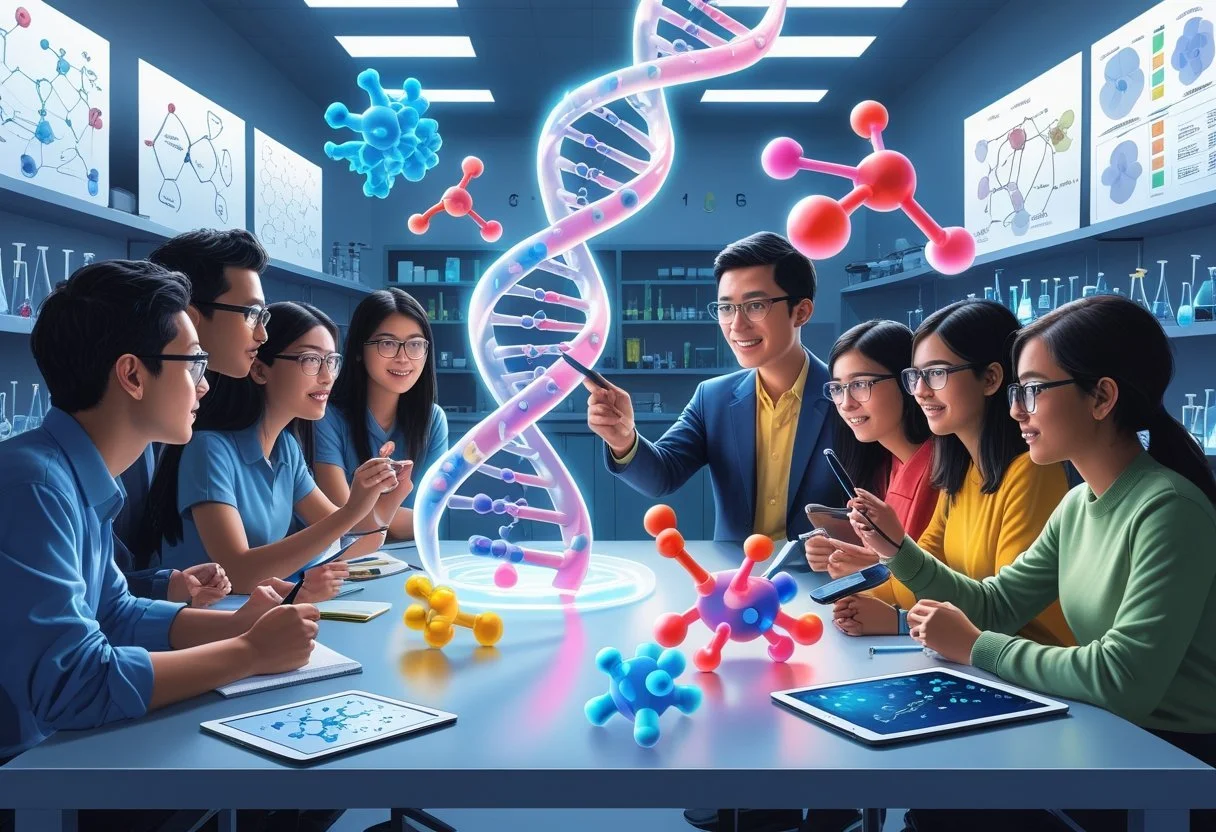
Many students struggle with these topics because the science feels abstract or complicated. Clear examples, hands-on activities, and real-world connections can help make the subject more interesting and easier to learn. With the right methods, difficult ideas about molecules, cells, and genetics can become lessons everyone can relate to.
Key Takeaways
Biochemistry connects biology, chemistry, and molecular genetics to explain life.
Effective teaching uses clear examples and real-world activities.
Understanding these topics can show why biochemistry is important in many areas.
Fundamentals of Biochemistry and Its Role in Life
Biochemistry is the study of the molecules and processes that make up living things. It connects biology and chemistry to explain how life works at a molecular level.
Defining Biochemistry
Biochemistry is a branch of science that examines the chemical substances and vital processes inside living organisms. It looks at molecules like proteins, DNA, RNA, carbohydrates, and lipids that are necessary for life.
Scientists use biochemistry to understand how cells use nutrients, make energy, and communicate. The field helps explain how genetic information in DNA controls everything from cell structure to behavior. Biochemistry also studies how enzymes speed up chemical reactions in the human body and other living things.
Biochemistry has played a major role in studying diseases, developing medicines, and learning about the origin of life. This field is key to understanding how basic chemistry supports complex forms of human life.
Core Principles and Concepts
Some core principles of biochemistry include the structure and function of biological molecules, metabolism, and molecular genetics. These ideas help explain life’s most important processes.
Structure of Biological Molecules: Every organism is made of molecules, each with a special shape and job—like enzymes that break down food or DNA that stores genetic instructions.
Metabolism: Metabolism is the sum of all chemical reactions in a living thing. It includes catabolism (breaking down molecules for energy) and anabolism (building up molecules for growth).
Molecular Genetics: This area studies how genetic material is passed from one generation to the next and how it controls cell functions.
All these principles show how tiny chemical changes inside cells lead to major differences in health, behavior, and the growth of life from its earliest beginnings.
Relationship to Biology and Chemistry
Biochemistry links biology and chemistry by studying life at the molecular level. While biology looks at living systems and chemistry studies matter and reactions, biochemistry focuses on the chemical reactions that happen within living things.
For example, in the human body, breathing, eating, and moving all rely on complex chemical changes. Biochemistry explains how blood carries oxygen, how cells make energy, and how genetic traits are inherited through molecular genetics.
Biochemistry also helps explain the origin of life by studying how simple molecules can form complex structures found in living things. It gives tools to study both the foundations of health and the reasons for diseases.
Historical Perspectives and Philosophical Foundations
Biochemistry has roots in both scientific discoveries and different schools of thought about life. Key changes in the field have come from advances in research and debates about life's origins.
Evolution of Biochemistry
Biochemistry developed as scientists began to study the chemical processes in living things. The term itself came into use in the early 1900s, but earlier work laid the groundwork.
In the 19th century, researchers like Louis Pasteur and Eduard Buchner showed that living cells use enzymes to speed up chemical reactions. Their work proved that chemistry is at the heart of biological processes. The discovery of DNA’s structure by James Watson and Francis Crick in 1953 was a major moment, showing how genetic information is stored and passed on.
Today, biochemistry explains life at the molecular level. It shows how topics like metabolism, genetics, and human evolution are linked through chemical pathways.
The Influence of the History of Science
The history of science shows how new ideas can change how people understand life. Early beliefs saw living matter as very different from nonliving matter. Over time, experiments showed that many life processes follow the same physical and chemical laws as everything else.
A timeline of key events:

These milestones shaped modern biology and challenged older views, such as vitalism—the idea that life needs a special force beyond chemistry and physics.
Philosophical Approaches: Materialism and Intelligent Design
Biochemistry raises questions about what explains life. Materialism is the idea that only physical and chemical laws are needed to explain living processes. Most modern scientists use this idea to study biochemistry.
Some groups support intelligent design, which claims that complex features in living things show evidence of a guiding mind or force. Supporters argue some things can't arise by chance or evolution alone. Most scientists say evidence supports materialism and the theory of evolution, including human evolution.
Teaching biochemistry can include both views, but it is important to note how they rely on different assumptions about nature. Scientific study depends on evidence and testable explanations.
Effective Strategies for Teaching Biochemistry
Teaching biochemistry requires approaches that build real understanding, connect to students’ lives, and make abstract topics clear. Instructors can use classroom tools, technology, and well-planned course design to help students learn complex molecular ideas.
Active Learning Techniques
Active learning helps students engage with biochemistry through participation and collaboration. Teachers might use problem-based activities like case studies or real-life clinical examples to show how biochemistry connects to medicine or AP Biology content. Small group discussions can make it easier for students to ask questions or explain confusing ideas.
A simple technique is the “think-pair-share” method. Students get time to consider a question alone, discuss their thoughts with a partner, then share their ideas with the class. Concept mapping also supports understanding—students make visual diagrams that link terms such as proteins, DNA, and enzymes.
Games like biochemistry trivia or flashcards help students practice facts. Teachers may use short quizzes or classroom polls to quickly find out what students know or what they need extra help with.
Integrating Technology in the Classroom
Technology can make biochemistry easier to learn and teach. Interactive simulations show students how molecules work or how chemical reactions happen. These visual demonstrations are especially helpful for topics that are hard to see or imagine, like enzyme activity.
Teachers use learning platforms such as Google Classroom or Edmodo to give assignments, videos, and digital resources. Data science tools, like spreadsheets and basic coding projects, let students work hands-on with real biochemistry data and see patterns. For example, they might use a simple Python script to model how a protein folds or use a spreadsheet to track changes in chemical concentrations.
Online quizzes and feedback apps allow students to check their understanding and prepare for tests. Recorded lessons help students review difficult parts at their own pace.
Designing Engaging Biochemistry Courses
Good course design is essential for biochemistry education. Teachers can connect biochemistry to subjects like mathematics and English to help students see how different ideas work together. For example, a biochemistry lesson may include measuring pH changes (mathematics) or writing lab reports (English).
A clear course outline helps students understand what they will learn and what is expected of them. Setting specific learning goals for each topic, such as “explain how enzymes speed up reactions,” keeps the course focused. Teachers may include lab experiments, group work, and projects that mirror real research.
Assessments can use multiple formats—short questions, projects, and presentations—to give all students a chance to succeed. Courses should also use feedback so students know how to improve. Teachers can adapt lessons to fit students’ needs, making biochemistry more engaging and accessible.
Interdisciplinary Connections and Applications
Biochemistry overlaps with many fields, providing tools and knowledge to solve real-world problems. These connections support advances in medicine, engineering, materials science, and neuroscience.
Biochemistry and Medicine
Biochemistry helps people understand diseases at the molecular level, which can support better treatments and diagnostics. Enzyme activity, DNA mutations, and protein folding play a key role in diseases like cancer and cardiovascular disease.
Doctors and researchers use biochemical markers to identify illnesses early. For example, they might measure specific proteins in blood tests for heart attacks.
Understanding how cancer cells grow and survive leads to new cancer treatments, such as targeted drugs that block certain pathways.
Regenerative medicine uses biochemistry to create new tissues or organs. Scientists study how stem cells work and use that to repair or replace damaged body parts.
Key Applications:
Early disease detection
Targeted drug design
Organ and tissue regeneration
Intersection with Engineering and Materials Science
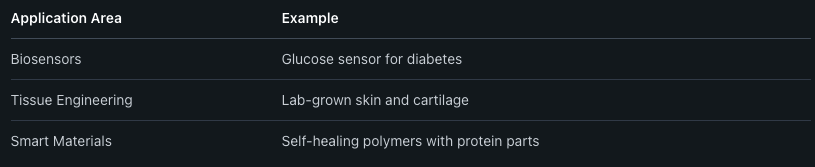
Biochemistry supports the creation of new technologies in engineering and materials science. Scientists combine biological molecules, like proteins and enzymes, with advanced materials.
This helps in building biosensors, medical devices, and new materials that respond to their surroundings.
For example:
Sensors that detect glucose levels use enzymes to measure sugar in a drop of blood.
Engineers use proteins to make stronger or smarter materials for medicine or industry.
In tissue engineering, researchers combine living cells with materials to build replacement tissues. These breakthroughs rely on understanding biochemistry at both the cellular and molecular levels.
Links to Neuroscience and Neurology
Neuroscience explores how the brain and nervous system work. Much of this depends on biochemistry, especially when looking at how nerve cells use chemicals to send signals.
Neurotransmitters like dopamine and serotonin are important for mood, movement, and memory. Problems with these molecules can lead to diseases such as Parkinson's disease or depression.
Researchers use biochemistry to develop new drugs for neurological disorders. For instance, studying how neurons communicate has led to medicines that help manage symptoms for Alzheimer’s disease and epilepsy.
Interdisciplinary research between biochemistry and neurology helps doctors understand and treat brain diseases. This kind of work has led to better imaging tools and targeted therapies for people affected by nerve disorders.
Molecules of Life: Focus on Genetics and Cellular Function
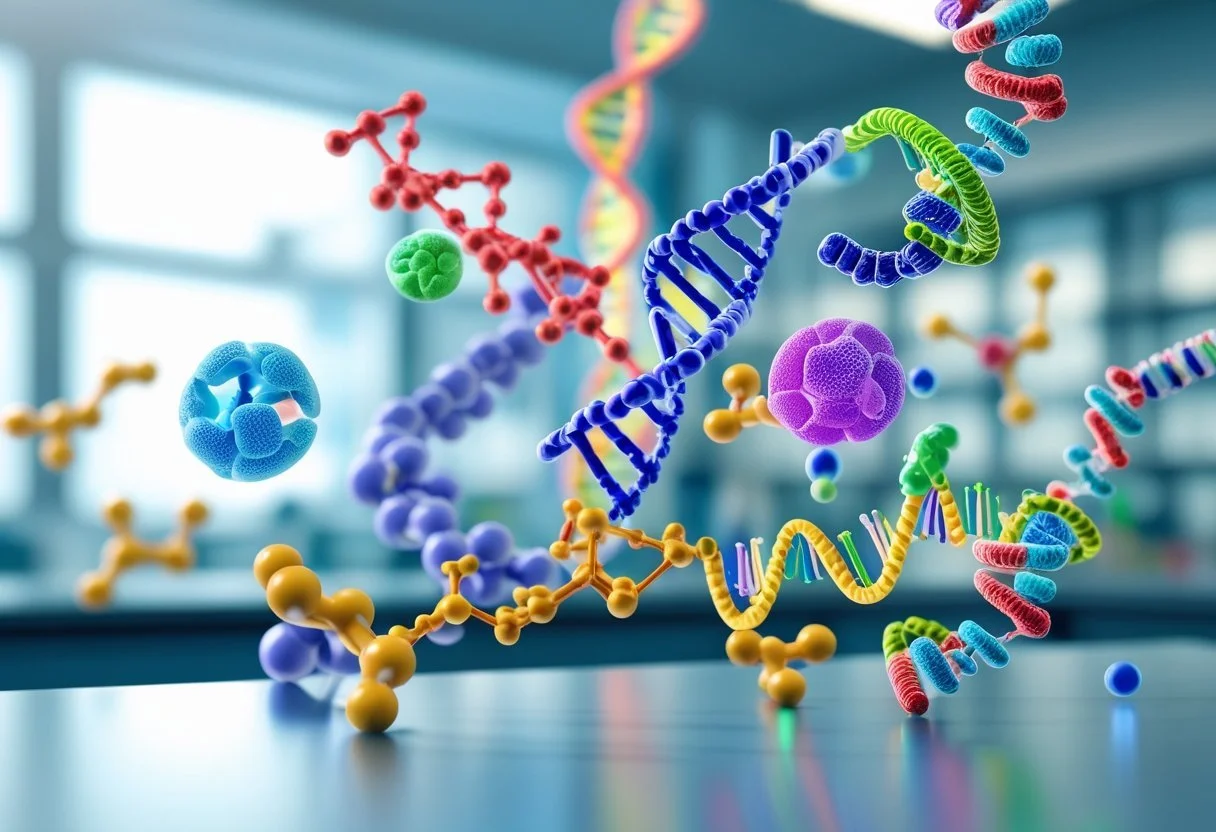
Scientists have discovered how genetic information guides cell function and how the mapping of the human genome has improved medicine. These insights help explain how diseases like cancer begin and open new paths for treatments.
DNA, RNA, and Genetic Information
DNA holds the instructions for building proteins, which perform most life functions. Each cell in the human body contains DNA in its nucleus, shaped like a double helix. DNA is made up of four bases: adenine (A), thymine (T), cytosine (C), and guanine (G).
When a cell needs to make a protein, DNA is copied into RNA in a process called transcription. RNA, which uses uracil (U) instead of thymine, carries the message out of the nucleus. In the cytoplasm, translation happens as this message is read and turned into a protein.
Proteins help control growth, repair, and daily activities of the cell. Any changes or mistakes in genetic information, called mutations, can lead to diseases or changes in cell function.
The Human Genome and Human Genome Project
The human genome is all the genetic material found in the human body. It contains about 3 billion DNA base pairs and around 20,000 to 25,000 genes. Each gene provides instructions for a specific protein or function.
The Human Genome Project was a global effort completed in 2003. Its goal was to map the sequence of all DNA in humans.
Key achievements included:
Identifying most human genes
Locating genes for inherited diseases
Making data available for research
These findings have led to new tests for genetic diseases and better understanding of human diversity. Advances also support reproductive technology, allowing parents to screen embryos for genetic disorders.
Cellular Processes and Cancer
Cells in the human body divide and grow as needed. Normal cells follow strict controls for growth. When these controls fail, cells may become cancerous. Cancer cells ignore signals to stop dividing and can spread to other parts of the body.
Key features of cancer cells:
Uncontrolled division
Ability to invade nearby tissues
Evasion of the immune system
Genes related to cell division, such as oncogenes and tumor suppressor genes, play a central role. Mutations in these genes can trigger cancer. Studying how cells work helps scientists develop drugs and therapies to target these changes and treat cancer more effectively.
Biochemistry’s Reach Across Diverse Scientific Fields
Biochemistry connects with many areas of science. It explains basic processes in living things, affects how diseases spread, and helps us understand both health and evolution.
Links with Microbiology, Immunology, and Virology
Biochemistry is central to understanding how microbes work. Bacteria, viruses, and fungi depend on specific molecular reactions to thrive and survive.
In immunology, biochemistry explains how antibodies recognize and fight pathogens. This helps scientists create vaccines and new treatments for infections.
Virology also relies on protein and nucleic acid studies to learn how viruses hijack cells. Mapping these interactions has led to better ways to prevent and control diseases.
Some key ways biochemistry connects with these fields are:
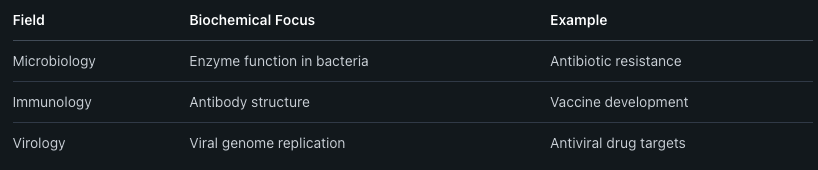
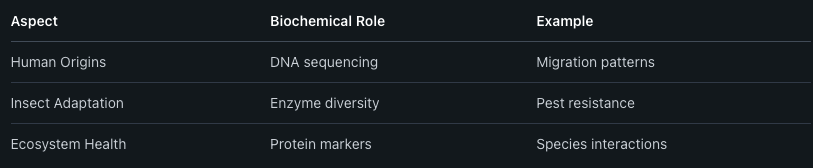
Connections to Anthropology and Biodiversity
Anthropology uses biochemistry to trace human evolution by studying DNA and proteins. Ancient remains are analyzed for their biochemical content, which gives clues about diet, migration, and ancestry.
Biodiversity is strongly linked to biochemical variety. The presence of unique enzymes and proteins allows different organisms—including insects and plants—to adapt to their ecosystem.
Researchers analyze biochemical markers to compare species and identify their roles in nature. This work helps explain how different forms of life survive and interact.
Role in Physical Health and Sleep Studies
Physical health is shaped by biochemical reactions inside the body. Vitamins, hormones, and enzymes all work together to keep cells running smoothly.
Biochemistry is important in sleep and circadian rhythms research. Scientists study molecules such as melatonin to see how they control sleep cycles.
Sleep loss changes the body’s chemistry. It can affect immune function, stress hormones, and even how the brain repairs itself overnight. These chemical signals help explain problems linked to poor sleep, such as illness and slower recovery.
Key molecules in sleep studies include:
Melatonin
Cortisol
Adenosine
Understanding these helps doctors and researchers improve sleep health and treat related disorders.
Global and Societal Impacts of Biochemistry
Biochemistry shapes many fields and affects daily life. Its discoveries reach into business, policy, the environment, technology, the arts, and even international teamwork.
Influence on Business, Economics, and Political Science
Biochemistry helps create new medicines and medical devices, driving the growth of the pharmaceutical industry. Companies invest millions in research to design treatments for diseases like diabetes, cancer, and COVID-19. These efforts can lead to major shifts in stock markets and influence global economies.
The cost and regulation of medicines also involves political science. Governments must decide which treatments to fund or approve. This impacts public health and can become a topic in elections. Trade agreements about biotechnology shape relationships between countries.
Table: Key Biochemistry Impacts

Biochemistry changes what people eat and how they stay healthy, so it matters in more than just labs—it shapes policy and profits.
Biochemistry in Planetary and Space Sciences
Biochemistry provides key tools for studying life on Earth and searching for it elsewhere. For example, NASA scientists use biochemical markers, like amino acids, to look for signs of life on Mars. Projects like those featured on PBS NOVA often explore these ideas, making them accessible to a broad audience.
In the sea and on land, biochemists track how pollution changes the chemistry of plants and animals. They study coral reefs to understand ocean acidification and its impact on marine life.
Key Discoveries in Space and Planetary Science:
Identification of organic molecules on other planets
Monitoring of Earth's atmospheric gases
Biochemical research for life support in space missions
Biochemistry helps answer questions about how life began and how it might exist beyond Earth.
Cultural and Collaborative Endeavors
Biochemistry has an impact on culture and the arts. For example, the science of how music affects the brain relies on an understanding of molecules like dopamine and serotonin. Research into the chemistry of how people respond to music connects biology with art.
International projects use biochemistry to promote peace and teamwork. Groups from different backgrounds unite to solve global health challenges, like vaccine development or fighting pollution.
Educational programs, such as those by PBS NOVA, help share discoveries with everyone. By making complex topics clear and relatable, these programs promote cultural understanding and scientific literacy. These efforts bridge gaps between scientists and the public, leading to wider support for research.
Frequently Asked Questions
Biochemistry educators often seek ways to make complex topics more accessible and engaging. Using practical methods, well-chosen content, and supportive tools can help students understand and enjoy learning about the molecular basis of life.
How can educators simplify complex biochemistry concepts for diverse learning levels?
Teachers can use clear analogies and simple diagrams to explain difficult ideas. Breaking lessons into small parts and repeating key concepts helps all students follow along. Offering examples that connect to everyday life makes abstract concepts more understandable.
What are the most effective teaching methods for facilitating hands-on experience in biochemistry?
Lab experiments allow students to see biochemistry in action and learn through discovery. Simulations and models give opportunities to explore molecules safely. Group activities and guided problem-solving help students build skills in a practical setting.
In what ways can technology enhance the learning experience for biochemistry students?
Interactive software lets students visualize molecules in 3D and run virtual experiments. Educational videos explain complex processes step by step. Online quizzes and apps provide instant feedback and allow students to practice at their own pace.
What are the key biochemistry topics that should be included in an introductory course?
An introductory course should cover structure and function of proteins, carbohydrates, lipids, and nucleic acids. Students should learn about enzymes, basic metabolism, and genetic information flow. Understanding pH, acids and bases, and cellular structure is also important.
How can assessments be designed to accurately measure student understanding in biochemistry?
Mixing question types, such as multiple-choice, short answers, and problem-solving tasks, gives a more complete view of what students know. Including real-life scenarios or data interpretation shows if students can apply their knowledge. Frequent, low-stakes quizzes help track progress consistently.
What strategies can be employed to keep students engaged and motivated in biochemistry classes?
Relating lessons to real-world issues in health, medicine, and the environment increases interest. Providing group projects, discussions, and competitions can make learning fun. Clear goals, regular feedback, and celebrating achievements encourage students to stay motivated.




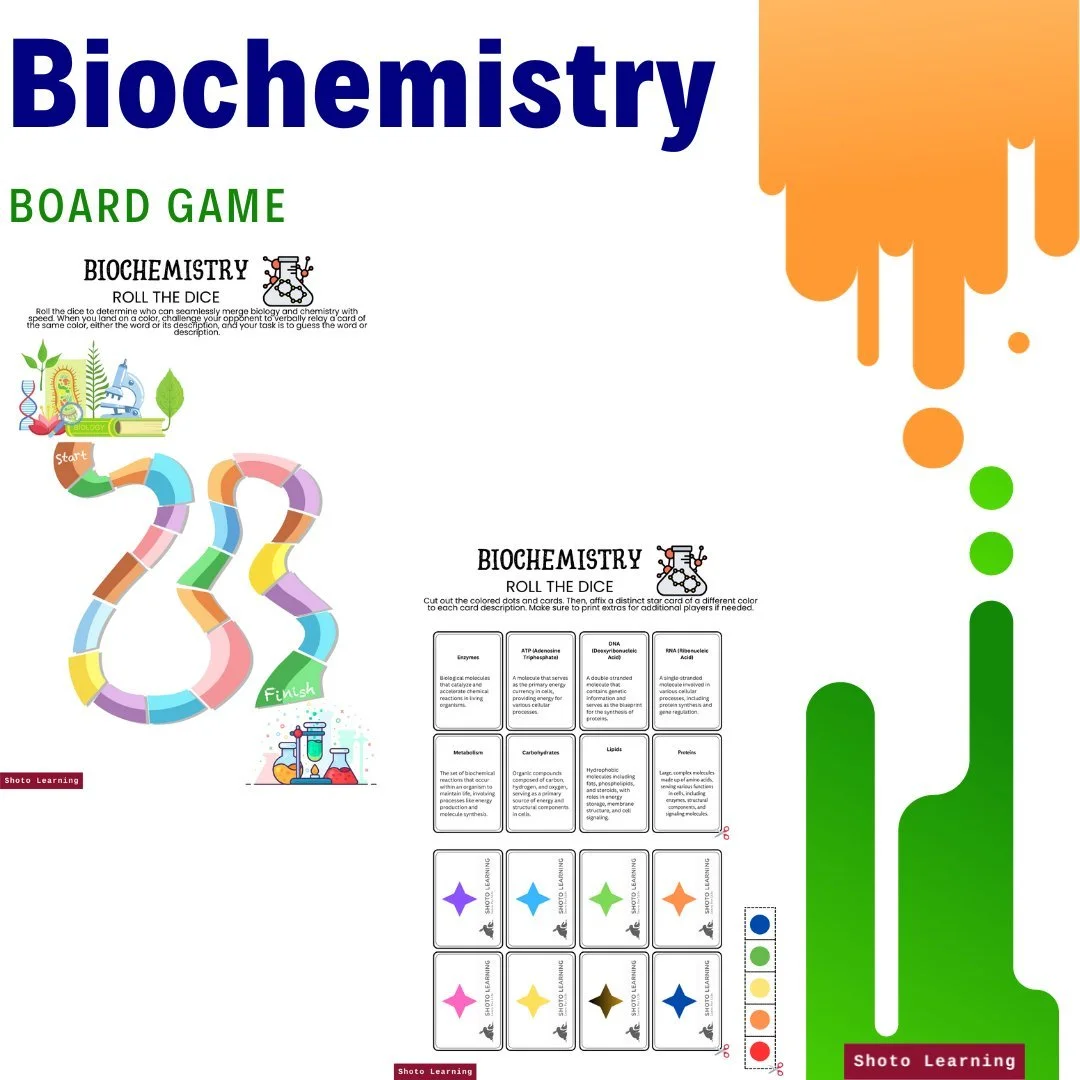


Unlock the secrets of biochemistry with our all-inclusive "Biochemistry Mastery Bundle." Designed for students, educators, and lifelong learners, this comprehensive collection of learning resources covers every aspect of biochemistry, ensuring a deep understanding of this fascinating field. Whether you're studying in a classroom, homeschooling, or simply seeking to expand your knowledge, this bundle has something for everyone.
What's Included:
Assignments: Embark on 10 stimulating assignments covering diverse topics, encouraging critical thinking and practical application of knowledge.
Bingo: A fun and interactive way to reinforce biochemistry concepts while playing a classic game.
Crossword: Challenge your knowledge of biochemistry terminology and concepts with engaging crossword puzzles.
Cryptogram: Decode hidden messages related to biochemistry while sharpening your analytical skills.
Debate: Explore biochemistry topics from different perspectives through thought-provoking debate questions and answers.
Experiments: Explore hands-on experiments illustrating fundamental principles across various disciplines, fostering deeper understanding and engagement.
Fill in the Blank: Test your knowledge with fill-in-the-blank worksheets, a great tool for reinforcing key concepts.
Flash Cards: Master biochemistry terminology and concepts with a set of 20 flashcards.
Free ABC Order: Organize and alphabetize biochemistry terms to enhance memory retention.
Free Board Game: Roll the dice, advance through biology and chemistry, and become the champion of biochemistry in a fun board game.
Free Poster: Display essential biochemistry concepts with our informative poster.
Lesson Plan: Dive deep with our detailed lesson plan, complete with engaging activities and discussion topics.
Matching: Test your knowledge by matching biochemistry terms with their corresponding definitions.
Missing Letters: Improve your spelling and recall with missing letter worksheets.
Multiple Choice: Reinforce your understanding of biochemistry with a set of 20 multiple-choice questions and answers.
PowerPoint: Enhance your learning with a comprehensive PowerPoint presentation covering all biochemistry topics.
Questions and Answers: Test your biochemistry knowledge with a set of 20 questions and answers.
Reading Comprehension: Sharpen reading skills with engaging passages, perfect for students and educators alike.
Scramble: Unscramble jumbled biochemistry terms and definitions to reinforce your understanding.
Test (45 Minutes): Challenge yourself with a 45-minute biochemistry test covering a range of topics.
True or False: Assess your knowledge with a set of 20 true-or-false questions related to biochemistry.
Word Search: Have fun while searching for biochemistry-related words in an engaging word search puzzle.
Writing Prompts: Explore biochemistry through creative writing with a set of 10 writing prompts.
Whether you're a student looking to ace your biochemistry exams or an educator searching for versatile teaching resources, our "Biochemistry Mastery Bundle" is your one-stop solution. Dive into the world of biochemistry, reinforce your knowledge, and master the molecular foundations of life with this comprehensive collection of worksheets and learning tools.
Order your bundle today and embark on a journey of biochemistry discovery!