
Why Teaching Evolution Matters: Practical Strategies to Enhance Scientific Literacy and Critical Thinking in the Classroom
Understanding evolution helps students build a strong foundation in science and develop the ability to think critically. Teaching evolution gives students the tools they need to evaluate evidence, sort facts from opinions, and make informed decisions about the world around them. When students learn about evolution, they also learn how science works and why it matters.
Some people find evolution confusing or controversial, but teachers play a key role in clearing up common misunderstandings. Educators who use the right strategies can make evolution easier to understand and help students see how it connects to their own lives. By exploring evolution, students become more confident in asking questions and thinking for themselves.
Key Takeaways
Teaching evolution supports strong science skills.
Students learn to think critically about evidence.
Clear strategies help students understand important ideas.
The Importance of Teaching Evolution in Education
Teaching evolution gives students a stronger understanding of biology and the natural world. It also builds skills in analyzing evidence, asking questions, and forming their own views based on facts.
Foundation for Scientific Literacy
Scientific literacy means understanding basic scientific ideas and knowing how science works. Evolution is a key part of this. When teachers explain how organisms change over time, students learn how to look at evidence and draw conclusions using data.
This supports critical thinking and careful reasoning, which are useful in science classes and in daily life. Students also learn to ask questions, test explanations, and check their own ideas against what scientists have found.
Including evolution in science education also prepares students for future topics in health, genetics, and environmental studies. These areas often build on ideas first learned by studying evolution.
Evolution as a Core Scientific Principle
Evolution is not just one topic among many. It is a central principle in biology. It explains why living things are the way they are, how species are related, and how new traits appear over generations.
By learning about natural selection, adaptation, and genetic variation, students understand why diseases change, why animals and plants are different, and how humans connect to other species. Evolution links information from genetics, paleontology, and ecology into a clear picture.
Without a basic understanding of evolution, students may struggle to make sense of many other scientific ideas. Biology education relies on it to explain patterns and connections seen in nature.
Impact on Societal Progress
Teaching evolution is important for society because it encourages open, evidence-based thinking. This kind of thinking helps citizens make informed choices about health, environment, and technology.
Knowledge about evolution has led to medical advances, including treatments for diseases that change quickly, like the flu or COVID-19. Understanding how bacteria evolve helps prevent antibiotic resistance. Nature conservation efforts rely on evolution to protect endangered species.
A society that values science education and accepts tested ideas is better able to solve problems and adapt to change. Fostering scientific literacy through evolution improves critical thinking skills that benefit communities as a whole.
Understanding Evolution: Key Concepts and Misconceptions
Evolution explains how species change over time through real processes seen in nature. Understanding the core ideas of natural selection, how humans evolved, and what people get wrong about evolution is central to scientific knowledge.
Natural Selection and Random Mutation
Natural selection is the process where organisms better adapted to their environment tend to survive and reproduce more. Random mutations are small changes in an organism’s DNA. Some mutations help individuals survive, while others do not.
Key points:
Mutations happen by chance.
Natural selection is not random; it favors helpful traits.
Over generations, helpful traits become more common.
Example:
If a group of beetles lives in a green forest, green beetles might be eaten less. Over time, more green beetles will be born.
Table: Effects of Mutation
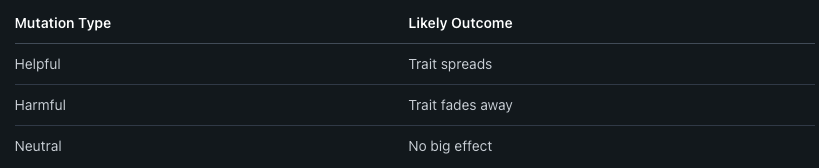
Natural selection and mutation work together but are different parts of evolution. Good science instruction shows how both are needed for change over time.
Human Evolution
Humans share a common ancestor with apes. Human evolution did not happen in a straight line but through branching paths over millions of years.
Fossils, DNA, and tools left behind provide evidence for this process. Each discovery adds details to how our species evolved. Scientists use bones, ancient artifacts, and genetic data to track changes through time.
Some key facts about human evolution:
Modern humans (Homo sapiens) appeared about 300,000 years ago.
Humans and chimpanzees share about 98-99% of their DNA.
Fossils show earlier humans walked upright, made tools, and used fire.
This research supports evolution instruction and helps build scientific literacy.
Common Misconceptions
Many people misunderstand evolution. One common mistake is thinking evolution means individuals change during their lifetime. In reality, only populations change over generations.
Other misconceptions:
Evolution is "just a theory." In science, a theory is a well-tested idea, not a guess.
Humans did not evolve from monkeys but share a common ancestor with them.
Evolution does not have a goal or direction.
Clear, careful teaching can correct these errors. Lists, graphics, and hands-on activities help students separate myths from real scientific knowledge.
Fostering Critical Thinking Through Evolution Education
Learning about evolution in school helps students build important science skills. It gives them the chance to practice evaluating evidence and thinking about how scientific knowledge changes over time.
Developing Analytical and Evaluation Skills
Teaching evolution requires students to ask questions and examine different explanations for natural phenomena. Teachers can encourage students to compare multiple sources, look for logical reasoning, and identify gaps in data.
A simple way to do this is for teachers to present real-life examples of adaptation or natural selection. Students can then break down the evidence that supports these ideas. This process builds critical thinking by challenging them to separate facts from opinions and make reasoned decisions.
Exercises like group debates, analysis of case studies, and short essays can help students practice these skills. Science literacy grows stronger when students can explain why some scientific ideas are better supported than others.
Conceptual Change in Students
Understanding evolution often means students must shift their thinking from everyday ideas to scientific explanations. This process, called conceptual change, is important for deep learning.
Many students start with misconceptions, such as believing that evolution is just a guess or that it happens to individuals instead of populations. Teachers can use class discussions, visual models, and hands-on activities to address these misunderstandings.
Changing these ideas depends on teachers giving clear explanations and lots of examples. Success can be seen when students move from memorizing facts to truly understanding how evolutionary processes shape life.
Promoting Data Analysis and Evidence-Based Reasoning
Evolution lessons often use real data from experiments, fossil records, or genetic studies. Students must look at this data and decide what it means, giving them practice with data analysis.
Teachers can provide tables or charts showing species differences or genetic traits. Students can then interpret these and make evidence-based conclusions. This develops reasoning skills and encourages them to trust scientific methods.
Key skills include identifying patterns, questioning sources, and drawing conclusions only when evidence is strong. These habits are central to science literacy and help students become more informed thinkers.
Instructional Strategies for Effective Evolution Teaching
Effective strategies for teaching evolution use engaging methods and thoughtful communication. Teachers who mix interactive questions, real-life stories, and respectful discussions help students gain deeper knowledge and stronger thinking skills.
Active Learning and Inquiry-Based Methods
Active learning lets students participate directly in their own education. Methods like small group work, class discussions, and hands-on simulations help them ask questions and test ideas. This approach gets students thinking about the evidence behind evolutionary theory.
Inquiry-based learning pushes students to seek answers, use data, and build models. For example, teachers can create a simple lab where students track changes in populations over time. These methods move students beyond memorizing facts and help them think like scientists.
Teachers may use quick activities such as:
Modeling natural selection with colored beads and “predators”
Analyzing fossil records to draw timelines
Class debates about adaptation or extinction events
These activities make evolution more understandable and encourage deeper reflection on scientific processes.
Using Case Studies to Enhance Engagement
Real-world case studies show how evolution works in nature and medicine. Stories about antibiotic-resistant bacteria, Darwin’s finches, or the peppered moth provide concrete examples students can relate to and discuss.
Good case studies present a situation, then ask students to analyze evidence, make predictions, or solve a problem. Teachers might give students newspaper articles about changing animal populations, or have them research recent discoveries in evolutionary biology.
Sample case study topics:
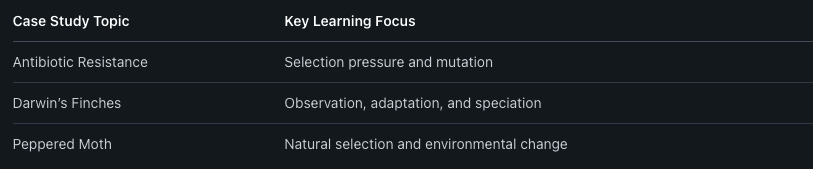
This method makes lessons more interesting and helps students remember scientific concepts.
Addressing the Affective Domain
Teachers must address not only knowledge, but also attitudes and beliefs—this is called the affective domain. Some students may feel uneasy about evolution due to cultural or religious backgrounds.
A respectful classroom lets students ask questions and discuss concerns. Teachers can set clear guidelines for open dialogue and listen carefully to student ideas. Using anonymous surveys or reflective journaling lets students share their feelings without pressure.
Teachers can provide evidence without confronting personal beliefs. Focusing on the scientific process, and explaining how scientists reach conclusions, helps students separate individual belief from classroom science.
A supportive approach helps build trust and allows every student to engage with evolutionary science in a meaningful way.
Navigating Controversies: Science and Religion in the Classroom
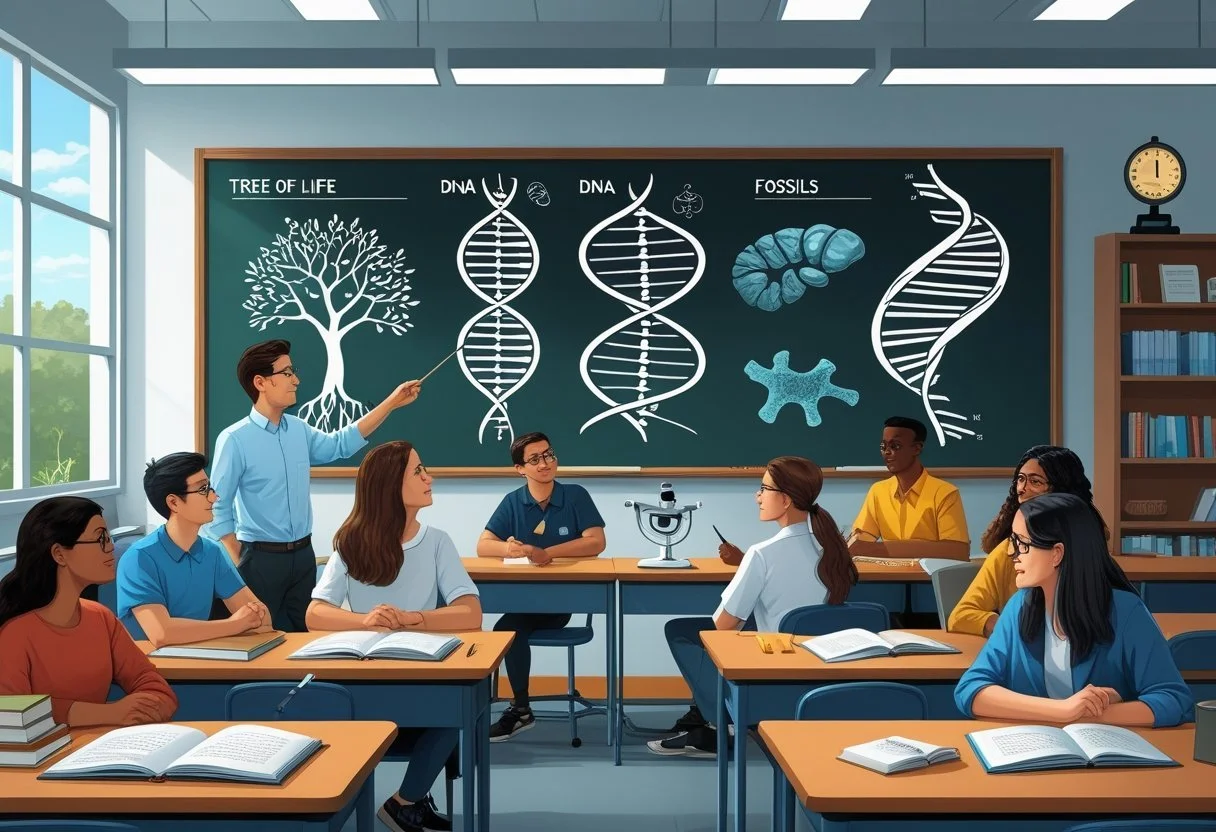
Teachers often find students with different beliefs about how life began. Addressing these ideas in a respectful and factual way helps everyone feel included and promotes honest discussion.
Creationism and Theistic Evolution
Creationism is the belief that life and the universe were created by a divine being, often described in religious texts. This belief usually rejects or questions scientific explanations like evolution. Some students may learn creationism at home or in places of worship.
Theistic evolution is different. People who support this idea accept evolution as a scientific process but also believe that a god or higher power guides or started it. This view tries to connect religious faith with science.
Teachers may see both beliefs in their classroom. The focus of science class should be on presenting evidence-based explanations, such as natural selection, fossil records, and genetic studies. It's important to note:
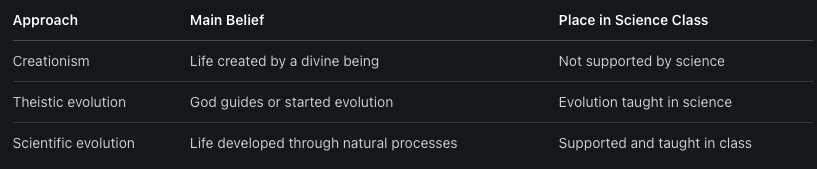
Students should know that science classes use methods that rely on testable and repeatable evidence. Creationist beliefs are respected but not taught as science.
Engaging with Religious Students
Some students come to class with strong religious beliefs. They might feel uncomfortable or challenged by the topic of evolution.
Teachers can be sensitive by letting students share their thoughts without fear of judgment or embarrassment. This can be done through open-ended questions, written reflections, or small group talks. Here are a few tips:
Listen actively: Show that all voices are heard, even if there's disagreement.
Clarify the goals: Explain that science class is about learning scientific methods, not challenging personal faith.
Use neutral language: Avoid saying one belief is better than another. Focus on what science can show with evidence.
Supporting students’ sense of belonging can help reduce tension and improve classroom discussion.
Building Respectful Dialogue
Creating a respectful classroom starts with clear ground rules. Teachers can set expectations for how to discuss controversial topics.
A few helpful strategies include:
Establishing mutual respect: Remind students to be kind and not interrupt others.
Encouraging questions: Let students ask honest questions about science and religion without feeling ashamed.
Using clear definitions: Make sure terms like “theory,” “belief,” and “evidence” are understood in their scientific and everyday meanings.
Teachers should guide conversations so that debates stay factual and do not become personal or hostile. Teachers act as a model by showing respect for all viewpoints while keeping the focus on science standards.
If students feel safe, they are more likely to participate and think critically. Respectful dialogue can help students see the value of both science and personal beliefs.
Connecting Evolution to Real-World Issues and Innovations
Understanding evolution helps people see why certain diseases spread, how crops are improved, and what drives advances in technology and industry. Evolution also shapes the ways people respond to environmental and climate changes.
Applications in Health, Environment, and Agriculture
In health, the study of evolution explains antibiotic resistance. Bacteria adapt quickly when antibiotics are overused, making drugs less effective. Teaching evolution shows why doctors must use antibiotics carefully.
It also helps explain how viruses like COVID-19 can mutate and spread. Scientists track these changes using evolutionary biology, which guides vaccine development.
In agriculture, farmers use selective breeding based on evolution. They create crops that produce more food or resist pests. This improves food security and reduces crop losses.
Quick facts:

Impact on Technology and Industry
Evolutionary principles inspire solutions in technology and industry. For example, computer scientists use "genetic algorithms" to solve complex problems. These programs copy how natural selection works in nature.
Genetic algorithms help improve scheduling, product design, and even search engines. Engineers use them to test many different designs quickly. The best designs are kept and improved in the same way as the strongest animals survive and reproduce.
Manufacturers also learn from evolution to create materials that are lighter or stronger. Some build robots that “evolve” their own movements to adapt to new tasks.
Influence on Climate Change Solutions
Evolution helps experts understand how species react to climate change. Some animals and plants can adapt to new temperatures or rainfall, while others struggle to survive.
By knowing which species are most vulnerable, scientists and policymakers can make better decisions on preserving habitats. This can help protect endangered species and local ecosystems.
Farmers use knowledge of evolution to develop crops that grow in changing climates. These crops may be able to handle heat, drought, or new pests. This is important for food production as weather patterns shift.
Climate models often use evolutionary science to predict how life on Earth will respond to new challenges. This guides strategies for conservation and sustainability.
The Broader Benefits of Scientific Literacy for Society
Scientific literacy helps people make better decisions about government, the economy, and the use of resources. Understanding science affects voting, jobs, and even how countries choose energy sources.
Democracy and Informed Citizenship
A democracy depends on citizens who can evaluate facts, recognize misinformation, and make reasoned choices. Scientific literacy supports these skills by teaching people how to analyze evidence and understand data.
The American Association for the Advancement of Science (AAAS) has outlined that a basic understanding of science helps voters interpret issues like public health, climate change, and environmental policies. People with scientific knowledge are less likely to fall for conspiracy theories or false claims about vaccines and diseases.
With skills in critical thinking and science, citizens can judge laws and candidates from an informed position. This leads to better policy decisions and a stronger, more responsible government.
Economic Growth: Business, Trade, and Employment
Scientific literacy boosts the workforce by making it easier to adapt to new technology and industries. Many modern jobs require a basic understanding of science, from manufacturing to healthcare and information technology.
Businesses looking to compete in global trade need employees who can understand trends in science and use technology well. Trade between countries often involves sharing ideas about safety, manufacturing methods, and new inventions, making science knowledge valuable at every level.
A table below lists career fields where science literacy has the highest impact:

Countries with high science literacy usually see faster job growth and better pay for workers.
Energy Policy, Investment, and Nuclear Energy
Energy decisions affect the environment, economy, and national security. Citizens who understand the basics of energy production—like fossil fuels, renewables, and nuclear energy—can judge the risks and benefits of each source.
Investment in energy often requires understanding both science and finance. Knowing how nuclear reactors work or how solar energy is stored helps guide smart choices about where to spend money.
The AAAS encourages teaching the science behind energy policy, especially as the debate over nuclear energy and renewable sources continues worldwide. Seeing both the benefits and risks allows for more balanced, cost-effective policies that support both growth and sustainability.
Frequently Asked Questions
Teachers often face questions about teaching evolution, handling misconceptions, and explaining why it is important in science education. Addressing these topics clearly helps create a stronger understanding of evolution and its place in biology.
What are the challenges faced by educators when introducing evolution in school curricula?
Educators may meet resistance from parents or community members who hold differing personal beliefs.
There can also be a shortage of classroom resources or up-to-date training for teachers.
Some schools have unclear policies or avoid controversial topics, making it harder to teach evolution thoroughly.
How does evolution education contribute to a student's overall scientific literacy?
Learning about evolution helps students understand how living things change over time.
It also shows them how scientists form ideas based on evidence and asks them to think critically about how life is connected.
This foundation makes it easier for students to engage with other areas of biology.
What strategies can educators use to effectively communicate the principles of evolution to skeptical audiences?
Teachers can use real-life examples and observable evidence, such as antibiotic resistance in bacteria.
They can encourage respectful discussions and answer questions honestly, showing how evolution is supported by science.
It helps to focus on facts and evidence, rather than opinions.
What role does critical thinking play in understanding evolutionary theory?
Critical thinking helps students look at data carefully and ask thoughtful questions.
It also allows them to compare different ideas, weigh evidence, and avoid common mistakes in reasoning.
This skill is important for understanding how scientific theories, like evolution, are developed and tested.
How can teachers address misconceptions about evolution in the classroom?
Teachers can start by identifying common misunderstandings, such as the belief that evolution is "just a theory" or that individuals change during their lifetime.
They can use clear explanations and simple activities to show how evolution actually works over generations.
Regularly checking for understanding helps clear up confusion early.
Why is it essential for science education to include comprehensive instruction on evolutionary biology?
Evolution is a core idea in biology that links all living things.
Without it, students miss out on understanding why organisms look and act the way they do.
Comprehensive instruction helps students make sense of topics like genetics, ecology, and health.



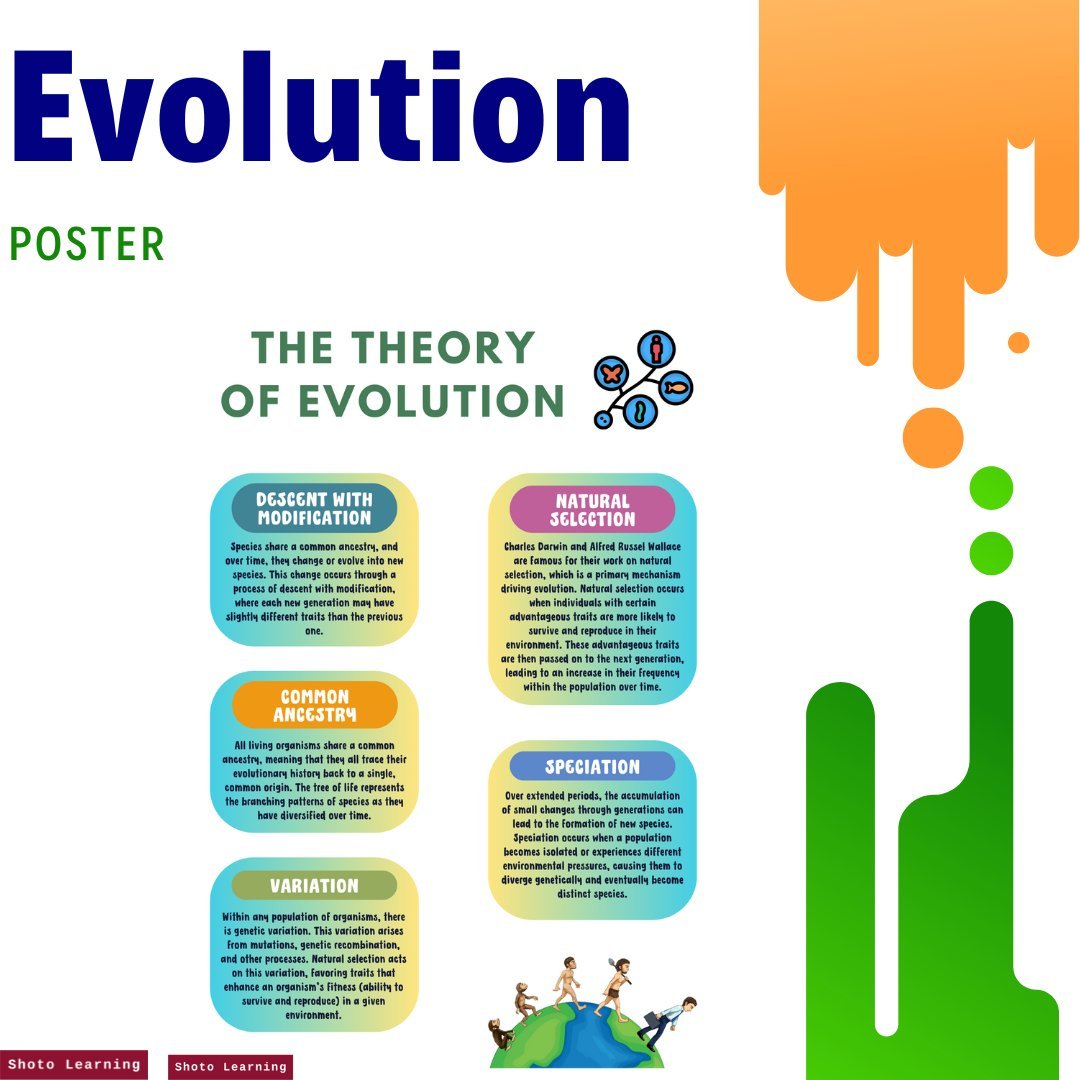


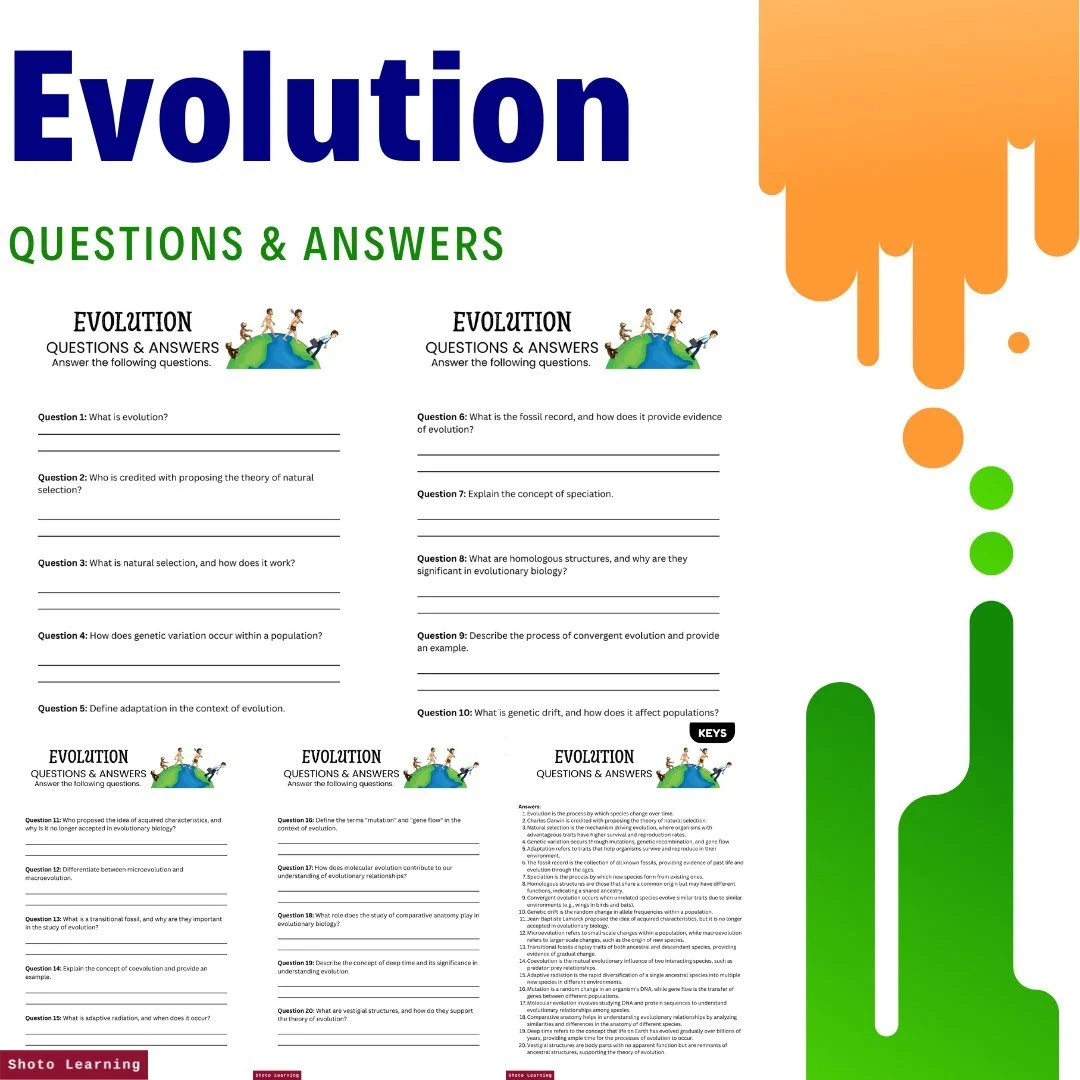


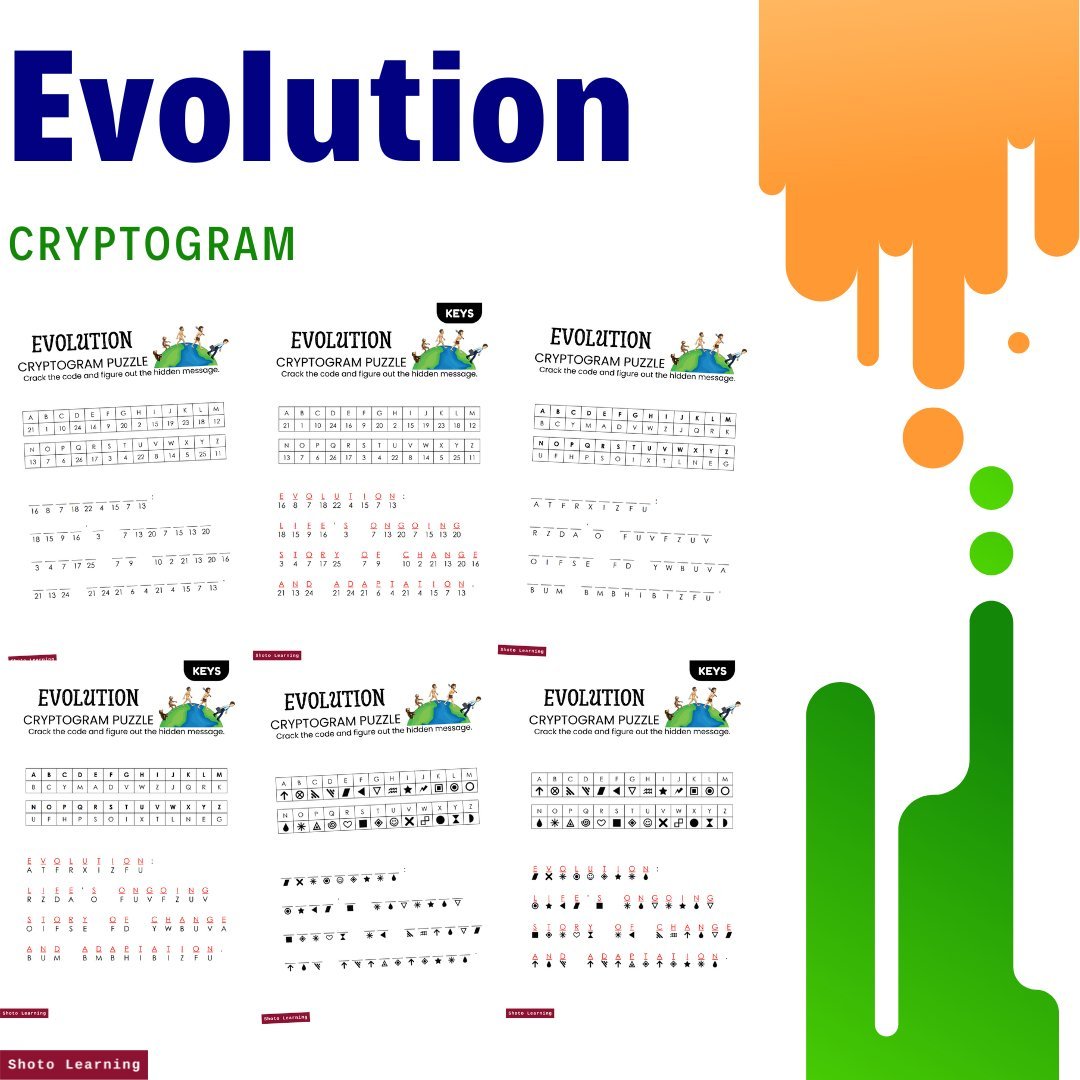


Embark on a comprehensive journey through the captivating world of evolution with our "Evolutionary Insights Bundle." This extraordinary collection combines a rich variety of educational resources, activities, and games to deepen your understanding of the incredible story of life's transformation.
Key Features:
Diverse Learning Tools: This bundle offers an extensive range of resources, including Assignments, Bingo, Crossword, Cryptogram, Debate, Experiments, Fill in the Blank, Flashcards, Mazes, Posters, Matching, Missing Letters, Multiple Choice, PowerPoint Presentations, Questions and Answers, Scramble, Tests, True or False, Word Search, and Writing Prompts.
Engaging Activities: Explore and learn through interactive games like Bingo, Crossword, and Cryptogram, or challenge your knowledge with debates and multiple-choice questions.
Reading Comprehension: Sharpen reading skills with engaging passages, perfect for students and educators alike.
Comprehensive Knowledge: Dive into the depths of evolutionary science with resources covering various aspects, from the fundamentals to advanced topics.
Lesson Plan: Dive deep with our detailed lesson plan, complete with engaging activities and discussion topics.
Educational Posters: Visualize key concepts with an informative poster that serves as a reference point for learners of all levels.
Flexible Teaching Tools: Whether you're an educator, a student, or a lifelong learner, this bundle accommodates diverse learning styles and preferences.
Freebies Included: Enjoy complimentary resources such as an ABC Order worksheet, a maze, and additional posters that complement your learning experience.
Enhanced Understanding: Reinforce your knowledge with flashcards, fill-in-the-blank exercises, questions and answers, and other effective study tools.
Test Your Knowledge: Challenge yourself with a 45-minute test that assesses your comprehension of evolutionary principles.
Fun and Educational: From word searches to writing prompts, our bundle ensures that learning about evolution remains engaging and enjoyable.
Versatile Learning:
Ideal for educators seeking comprehensive teaching resources for the classroom.
Perfect for students looking to supplement their biology curriculum or prepare for exams.
Suitable for self-guided learners interested in delving into the wonders of evolution.
Explore, engage, and deepen your understanding of evolution with the "Evolutionary Insights Bundle." Whether you're teaching, learning, or simply exploring the mysteries of life's transformation, this bundle provides a wealth of educational resources and activities to enrich your journey.
View on Youtube
128 pages
Order now and embark on an educational adventure like no other!