
Learning about ecology is important for everyone, but especially for young people who will shape the future. Teaching ecology in a way that is clear, fun, and practical helps students connect with nature and learn how to protect it. With the right methods and tools, educators can make environmental education exciting and even inspire lasting change.

Different approaches, like hands-on activities and real-world examples, keep students engaged and interested in how ecosystems work. Teachers also use technology and outdoor experiences to help students see the importance of caring for the environment.
Key Takeaways
Strong ecology education builds a deeper understanding of the environment.
Practical and creative teaching strategies support active learning.
Inspiring students helps prepare future environmental leaders.
Foundations of Ecology Education

A strong understanding of ecology education depends on building knowledge, promoting a sense of connection to the environment, and preparing students to address global challenges. These concepts set the stage for deeper discovery and action.
The Role of Environmental Literacy
Environmental literacy means having the knowledge, skills, and attitudes to understand and address environmental challenges. It includes recognizing how people impact nature and how nature supports life. Environmental literacy helps students analyze problems like habitat loss and the greenhouse effect.
Developing this literacy involves reading, writing, mathematics, and critical thinking applied to real-world scenarios. For example, students may study local biodiversity or track population growth in a specific region.
Key knowledge and skills include:
Understanding ecosystems and food webs
Identifying local species and their roles
Analyzing effects of human actions
With this foundation, learners are better prepared to make informed decisions and contribute positively to their communities.
Understanding Interconnectedness in Nature
Nature is a web where each part affects others. Biodiversity supports ecosystem stability, while changes in one species can impact many others. For example, removing a top predator can lead to overpopulation of prey animals, affecting plant growth.
The greenhouse effect and climate change show the link between atmosphere, land, and living things. Plants, animals, and people all adapt to environmental shifts. Learning about interconnectedness helps students see why even small actions matter.
A well-designed activity might have students:
Build food web diagrams
Observe the adaptation of plants and animals to habitat loss
Discuss how invasive species impact native populations
This approach helps students visualize and grasp the complexity of ecological relationships.
Addressing Environmental Issues
Teaching ecology includes examining real environmental issues like habitat loss, pollution, and population growth. These topics challenge students to think critically and propose solutions based on sound science.
A focus on current issues helps learners:
Understand local and global environmental threats
Study causes and effects of problems such as deforestation or a loss in biodiversity
Explore strategies for adaptation and conservation
Educators can use news articles, data sets, and local examples to illustrate the impact of human activity. This makes the learning more relevant and guides students to become active problem-solvers with skills they can apply beyond the classroom.
Inspiring Environmental Stewardship
Effective ecology education supports responsible choices and stronger connections to the natural world. Students benefit from clear guidance on social responsibility, awareness of environmental issues, and the value of community partnerships.
Fostering a Sense of Social Responsibility
A sense of social responsibility is important for environmental stewardship. It means caring not just for one’s needs, but also for the needs of others and the environment.
Teachers can encourage students to take positive action through service projects, like community clean-ups or tree planting. Classroom discussions about local and global problems help them see their role in bigger issues.
Table: Ways to Foster Social Responsibility

Seeing the results of these actions helps students understand their impact and motivates them to keep working for change.
Cultivating Environmental Awareness
Environmental awareness starts with understanding how human actions affect the planet. Learning about pollution, natural habitats, and climate change helps students recognize problems and think about solutions.
Field trips to nature parks, science projects, and observing local ecosystems allow students to see these issues firsthand. Educators can use simple experiments, nature walks, and group projects to build connections between class lessons and real-life experiences.
Awareness is also increased through visual aids, photos, and short videos that show changes in the environment over time. This helps students picture causes and effects, making the lessons more memorable. Engaged students are more likely to practice good habits, like saving water and using less plastic.
Empathy and Community Partnership
Empathy teaches students to care about other people and living things. It is a key part of responsible behavior and helps students understand different perspectives. Teachers can use stories and case studies about local species or people affected by environmental problems.
Community partnerships make learning more personal and practical. Schools can invite community leaders, scientists, or park rangers to speak with students, or organize visits to local projects.
Joint efforts—such as community gardens or wildlife monitoring—show students how working together leads to positive outcomes. These experiences help them value teamwork, develop empathy, and see the benefits of being active community members.
Engaging Strategies for Effective Learning
Interactive strategies can help students remember ecology concepts better. Using real-world experiences and connecting lessons to local places makes learning more meaningful.
Hands-On Activities and Fieldwork
Hands-on activities let students touch, see, and experience the natural world. Simple experiments, such as testing soil samples or observing plant growth, help them understand key ideas about ecosystems. Fieldwork, such as stream sampling or bird watching, allows students to collect data and practice scientific methods.
Benefits of hands-on and fieldwork experiences:

Teachers should encourage curiosity by letting students ask questions and test their ideas. This approach builds confidence and hands-on skills.
Place-Based Learning Approaches
Place-based learning connects lessons to locations familiar to students. By learning about their own environment, students see the impact of ecological issues around them. Using the schoolyard or nearby nature trails makes topics more relevant.
Educators can organize neighborhood cleanups, native plant studies, or lessons on local wildlife. These activities help students develop a sense of responsibility for their community. Learning is tied directly to their lives, making it easier to remember and understand.
This method also helps students see how stewardship projects can make a real difference where they live.
Project-Based and Service Learning
Project-based learning asks students to solve real-world problems through teamwork and research. Service learning combines classroom lessons with community service, such as restoring habitats or starting recycling programs.
These projects:
Build leadership skills.
Encourage teamwork.
Connect knowledge to action.
For example, students might create a plan to reduce waste at school or join a citizen science project. Teachers guide students as they plan, carry out, and reflect on their work. By tackling real problems, students see how their actions can help their community and the environment.
Innovative Educational Tools and Resources
Teachers use technology, hands-on workshops, and community-based projects to make ecology lessons more engaging. These tools can help students connect classroom learning to real-world environments.
Utilizing Educational Technology
Educational technology adds variety and interactivity to ecology education. Teachers can use apps, interactive maps, and simulations to show ecological concepts like food webs, climate change, and habitats. Programs such as Google Earth allow students to see global ecosystems and observe changes over time.
Online tools like quizzes, videos, and virtual labs make learning more personal. For example, platforms such as Kahoot! or Quizlet help students review key facts in a fun way.
Key digital resources include:
Virtual field trips
Ecology games and quizzes
Data visualization tools
Online citizen science projects
Many teachers use free, grant-supported resources. Grants help schools afford advanced tools, giving students access to the latest information and materials.
Workshops and Community Engagement
Workshops provide students with active, hands-on experiences. Programs like Project WET focus on water education, offering practical lessons that include fieldwork, data collection, and group activities.
Community engagement helps students see how ecology connects to local problems and solutions. Activities might include tree planting, recycling drives, or local habitat clean-ups.
Benefits of workshops and community projects include:
Learning from real-life situations
Building teamwork skills
Connecting with local environmental leaders
Applying classroom lessons in the field
Grants often support these initiatives, making them possible even for schools with limited budgets. Collaboration with nearby organizations and volunteers helps expand the reach of these programs.
Promoting Sustainable Practices and Solutions

Teaching students about sustainability means giving them the knowledge and tools to protect natural resources and reduce waste. Focusing on recycling, composting, energy efficiency, and water use helps them understand daily actions that create real environmental benefits.
Recycling and Composting Initiatives
Recycling keeps valuable materials out of landfills and reduces the need for raw resources. Schools can set up recycling stations for paper, plastic, and metals. Easy-to-read signs can teach students which items belong in each bin.
Composting turns food scraps and yard waste into nutrient-rich soil instead of trash. Students can collect cafeteria leftovers and leaves for compost piles or bins. Science lessons can explain how bacteria and worms break down waste through decomposition.
A school-wide recycling and composting chart tracks progress. For example:

Hands-on participation helps students understand the real impact of waste reduction.
Sustainable Living and Resource Use
Sustainable living means using resources wisely to make less waste and save energy. Students can check for lights that are left on, turn off devices when not in use, and set up class reminders to close doors and windows to reduce heating or cooling costs.
Discussions can cover ways to use less water, such as fixing leaks and using water-saving faucets. Schools can use reusable water bottles, lunch containers, and cut down on single-use plastics.
Key steps in resource use:
Choose reusable over disposable items
Share supplies to limit waste
Start "bring your own container" days
Encouraging small, daily habits helps students develop a lasting focus on sustainability.
Renewable Energy and Water Conservation
Learning about renewable energy introduces students to solar panels, wind turbines, and other clean power sources. Classroom demonstrations might include small solar kits or models that show how sunlight and wind make electricity without pollution.
Water conservation activities highlight the importance of saving this resource. Rain barrels, low-flow showerheads, and collecting water for plants are practical examples. Teachers can organize timers for hand washing to show how much water can be saved by paying attention.
Important projects include:
Installing classroom solar panels or wind turbines
Setting up rainwater harvesting systems
Tracking energy and water use over time
These hands-on projects allow students to see how technology and habits can create sustainable solutions in their daily lives.
Addressing Environmental Justice and Inclusion
Teaching ecology must address issues such as social justice, cultural diversity, and the real-world challenges faced by different groups. Learners need a clear understanding of how environmental issues impact people in different ways, including those from indigenous and underrepresented communities.
Promoting Equity and Cultural Diversity
Educational programs should reflect the needs and backgrounds of all students. This means using diverse examples and including stories from many cultures. Teachers can highlight the work of scientists and activists from different backgrounds to help all students feel represented.
Schools can offer lessons in multiple languages to make information accessible. It is important to encourage open conversations about bias, privilege, and barriers in environmental fields.
Table: Ways to Promote Equity in Ecology Education

Supporting Indigenous Communities
Indigenous communities often have unique ecological knowledge rooted in centuries of tradition. Featuring indigenous voices and lessons can add depth to science lessons. Schools and educators should seek partnerships with indigenous leaders and organizations and respect their experiences.
It is important to recognize indigenous land, customs, and resources in class discussions and fieldwork. Inviting indigenous speakers or elders to share their perspectives helps students learn directly from those most affected by certain policies and practices.
Inclusion should not be tokenistic. Educators must follow ethical guidelines and gain consent before sharing indigenous knowledge.
Understanding Power Dynamics and Historical Injustices
Environmental problems do not affect everyone equally. Some communities face more risks due to past decisions, like where factories were built or who controlled resources. Teaching about power dynamics helps students see why environmental burdens often fall on lower-income or minority groups.
A few important topics to cover include:
Redlining and housing policies affecting exposure to pollution
Access to safe water and air in different neighborhoods
The history of social justice movements in the environment
Learning about these issues helps students recognize patterns of injustice and consider fair solutions. Teachers can use maps, timelines, and real stories to make these lessons more concrete. Focusing on facts and events, while avoiding stereotypes, is key.
Integrating Sustainability Education Across Levels
Sustainability education benefits from a strong foundation that develops over time. It uses a holistic approach and includes new teaching methods to meet diverse learning needs at each level of education.
K-12 Education Initiatives
K-12 programs start early by weaving sustainability themes into daily lessons. Teachers connect real-world problems, like pollution and habitat loss, to subjects such as science, social studies, and even art. Students may participate in school gardens, recycling drives, and citizen science projects.
Hands-on activities make abstract ideas easier to grasp. For example, younger students track waste in the cafeteria using simple charts, while older students might analyze local water quality data. Field trips to parks and nature centers are common.
K-12 educators often use a critical pedagogy approach, encouraging students to ask questions and understand the impact of human actions on the environment. This builds both knowledge and a sense of responsibility in young learners.
Higher Education Transformations
Colleges and universities integrate sustainability across majors, from environmental science to business and engineering. Many institutions now offer dedicated degrees or certificate programs focused on sustainability education.
Faculty use interdisciplinary courses so students can understand complex environmental problems from many views. For instance, a class might cover ecosystem health, public policy, and economics all in one semester. Campuses run green initiatives, like solar panel installations, where students collect data and propose improvements.
Higher education fosters leadership through research projects and internships with local organizations. Student-led groups often advocate for policy changes, organize awareness events, or run campus recycling programs. Critical pedagogy plays a key role by promoting discussions about ethics, equity, and the long-term impact of choices.
STEM Education Connections
STEM (science, technology, engineering, and math) subjects give students practical skills to solve environmental challenges. In classrooms, students use technology—such as sensors, coding platforms, or modeling software—to monitor ecosystems and design sustainable systems.
Examples of STEM integration in sustainability:
Robotics teams build trash-sorting machines.
Math classes calculate carbon footprints.
Science projects model renewable energy systems.
Teachers encourage teamwork and problem-solving, showing that real progress comes from combining knowledge from different STEM fields. This prepares students for green careers and helps bridge the gap between theory and real-life environmental action.
Global Perspectives and Future Challenges
Ecology education today faces worldwide issues such as climate change, the spread of cities, resource limits, and the need for sustainable development. Students and educators must understand the direct effects humans have on water, wildlife, and the overall health of natural habitats.
Responding to Climate Change and Urbanization
Climate change is increasing sea levels, changing weather, and harming ecosystems. Urbanization adds pressure by turning forests, wetlands, and farmland into cities and roads. This leads to habitat fragmentation and loss.
Ecology classrooms should highlight examples like disappearing coral reefs and salt marshes. Both are important for protecting coastlines and supporting marine life, but are now threatened by pollution and climate change.
Teachers can use local and global case studies to show how communities adapt to these changes. For example, some cities restore green spaces or use eco-friendly buildings to absorb heat and filter rainwater. Understanding these solutions helps students see how knowledge can guide action.
Human Impact and Ecological Footprint
Every person leaves an ecological footprint, which measures the resources they use and the waste they produce. This impact affects land, air, and water quality.
Key Areas of Human Impact:
Overuse of water and energy
Loss of habitats from development
Pollution from factories and farms
Introduction of invasive species
Teaching about ecological footprints connects daily life to global challenges. Students can calculate their own footprints and learn ways to reduce them. Action steps include using less plastic, eating less meat, and supporting wildlife-friendly products.
This approach encourages students to think about environmental protection as a daily responsibility, not just a policy issue.
Conservation of Natural Resources and Wildlife
Natural resources such as fresh water, forests, and soil are limited and must be managed carefully. Wildlife conservation is also critical as many species are endangered due to habitat loss, poaching, and pollution.
Students benefit from learning about successful conservation programs. For example:
Protected areas: National parks and reserves
Habitat restoration: Planting trees or restoring wetlands
Wildlife corridors: Allowing animals to move between habitats safely
Examining these efforts shows how science, community work, and laws can work together to protect the environment. Classroom activities might include research on local conservation projects or designing small-scale habitat restoration plans.
Globalization and Sustainable Development
Globalization connects people and markets worldwide but also increases resource use and pollution. Sustainable development aims to balance economic growth with environmental protection and social justice.
Educators can introduce the United Nations' Sustainable Development Goals (SDGs) to highlight key targets like clean water, climate action, and life below water. Case studies from different countries can show how these goals are put into practice, such as community-led waste reduction or the use of renewable energy in schools.
Understanding these examples gives students real-world ideas about how environmental sustainability can be achieved on local, national, and international levels. This prepares them to take part in building a more sustainable future.
Support and Leadership for Environmental Protection
Strong environmental protection requires both government action and cooperation with communities. Agencies and partnerships play clear roles in guiding, enforcing, and improving efforts to protect natural resources.
Role of the Environmental Protection Agency
The Environmental Protection Agency (EPA) leads many important efforts to protect air, water, and land. It sets and enforces rules that limit pollution and manage waste, helping to keep the environment healthy for everyone.
The EPA also creates standards for drinking water safety and manages cleanup of hazardous sites. Through research and data collection, it helps provide facts about pollution and health risks.
The agency works with schools to support environmental education. The EPA gives out grants and runs programs that encourage students and teachers to study environmental science. It also helps states and local groups get support for their own projects.
Key EPA roles include:
Setting environmental standards
Enforcing environmental laws
Funding educational and community initiatives
Sharing scientific information
Collaboration with Local and Global Partners
Environmental protection depends on collaboration beyond the EPA. Many groups, including local governments, non-profits, and international organizations, work together to solve environmental problems.
Local groups often run cleanup events, tree-planting days, and recycling drives. They also teach people about ways to reduce pollution in their own communities.
International partnerships address issues like climate change, endangered species, and ocean health. Groups such as the United Nations Environment Programme and the World Wildlife Fund give support and share expertise across countries.
Some key partners include:
Cities and local governments
Schools and youth organizations
Non-profits and community groups
Global organizations, like the UN Environment Programme
These partnerships help share ideas, pool resources, and teach people how to make lasting change.
Frequently Asked Questions
Teachers use many approaches to teach ecology, including technology, projects, and outdoor lessons. Different strategies help students build knowledge, develop critical thinking, and connect classroom ideas with real-world environmental issues.
What are effective methods for integrating technology into ecology education?
Digital simulations and interactive maps can help students learn about ecosystems and biodiversity.
Virtual field trips let students explore habitats without leaving the classroom.
Online databases and apps support research and data collection.
How can educators assess student understanding in environmental science?
Quizzes and tests measure knowledge of key facts.
Teachers can use presentations, projects, and lab reports to see how well students apply concepts.
Observation during group work or outdoor activities helps evaluate skills like teamwork and problem solving.
What role does project-based learning play in teaching ecology?
Project-based learning lets students investigate environmental questions in depth.
It encourages teamwork and real-world problem solving.
Examples include building model ecosystems or studying water quality in local streams.
How can we promote critical thinking in students about environmental issues?
Debates and discussions on current events encourage students to look at different viewpoints.
Assigning research on real-world problems helps students evaluate evidence.
Case studies let students practice making decisions based on data.
What strategies can be used to foster a connection between students and nature?
Outdoor lessons like nature walks and field studies give hands-on experience.
Gardening or schoolyard habitat projects connect students with local wildlife.
Keeping nature journals helps students notice changes in their environment.
What resources are available for educators seeking to implement engaging ecology curricula?
Organizations like the National Wildlife Federation and Project Learning Tree offer free lesson plans and activities.
Online platforms such as NASA’s Climate Kids provide videos and games for students.
Teacher workshops and community partnerships can also support environmental education.






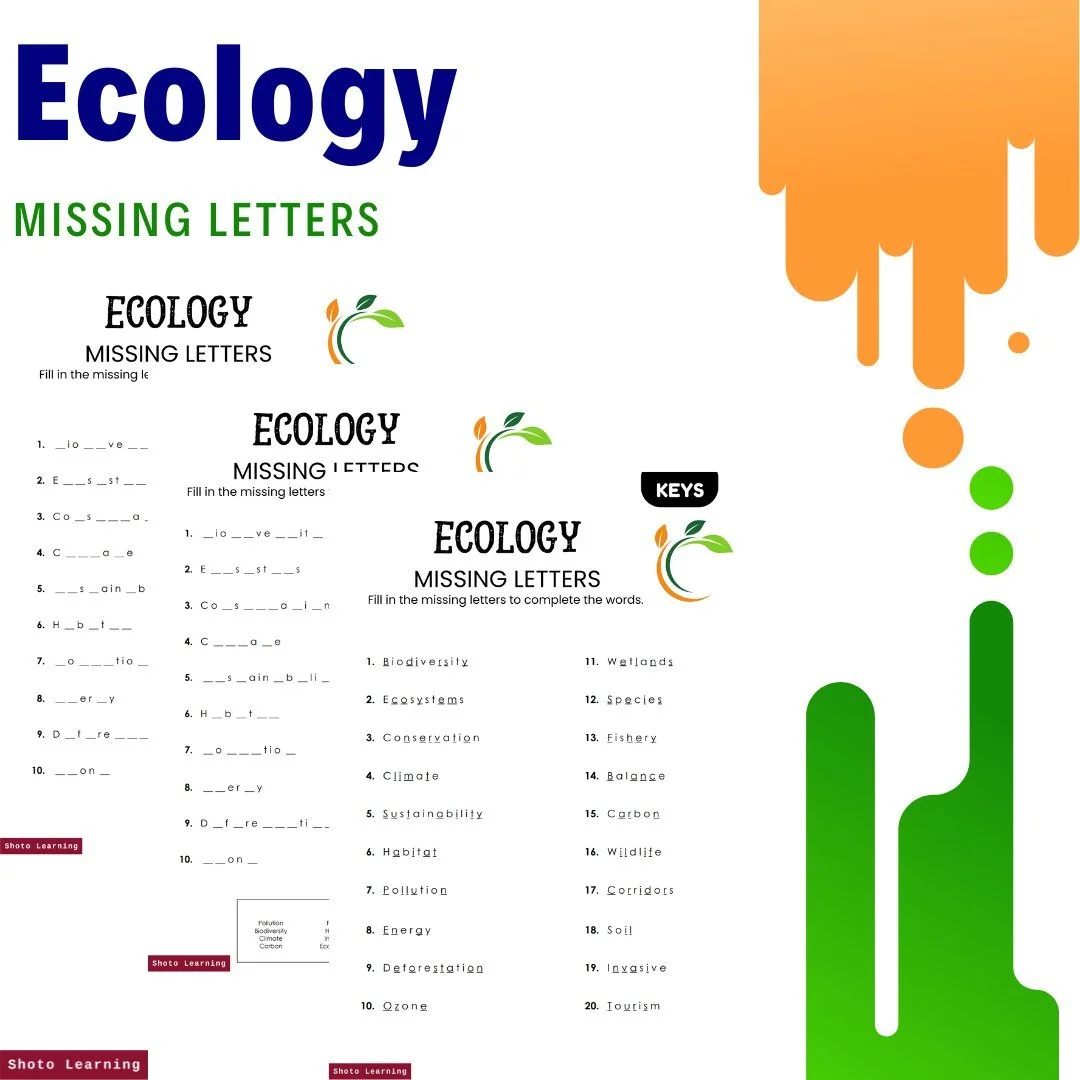


Introducing the ultimate "Ecology Explorer's Bundle" – a treasure trove of resources designed to empower learners, educators, and eco-enthusiasts alike! This comprehensive bundle is your gateway to a deeper understanding of ecology, environmental awareness, and the delicate balance of life on our planet.
What's Included:
Assignments: Embark on 10 stimulating assignments covering diverse topics, encouraging critical thinking and practical application of knowledge.
Bingo: Engage in an exciting game that fosters ecological awareness, making learning a fun and interactive experience.
Crossword: Challenge your knowledge of ecological terms with stimulating crossword puzzles that reinforce key concepts.
Cryptogram: Decode hidden ecological messages while enhancing critical thinking skills.
Debate: Dive into thought-provoking ecological debates that encourage open discussion and exploration of various viewpoints.
Experiments: Explore hands-on experiments illustrating fundamental principles across various disciplines, fostering deeper understanding and engagement.
Fill in the Blank: Test your understanding of ecology with these engaging fill-in-the-blank exercises.
Flashcards: Master essential ecological terms and concepts with a set of informative flashcards for easy learning.
Free ABC Order: Organize and enhance your understanding of ecological terms with this free ABC Order worksheet.
Free Poster: Decorate your learning space with an informative and visually appealing free ecology poster that highlights key concepts.
Free Reading Material: Immerse yourself in an enriching reading material that delves into the fascinating world of ecology.
Lesson Plan: Dive deep with our detailed lesson plan, complete with engaging activities and discussion topics.
Matching: Strengthen your knowledge by matching ecological terms and definitions in this interactive exercise.
Missing Letters: Challenge yourself to complete ecological terms by filling in the missing letters.
Multiple Choice: Assess your knowledge with multiple-choice questions that cover a wide range of ecological topics.
PowerPoint: Explore an enlightening PowerPoint presentation that simplifies complex ecological concepts for easy comprehension.
Questions and Answers: Deepen your understanding with a comprehensive set of questions and answers on ecology.
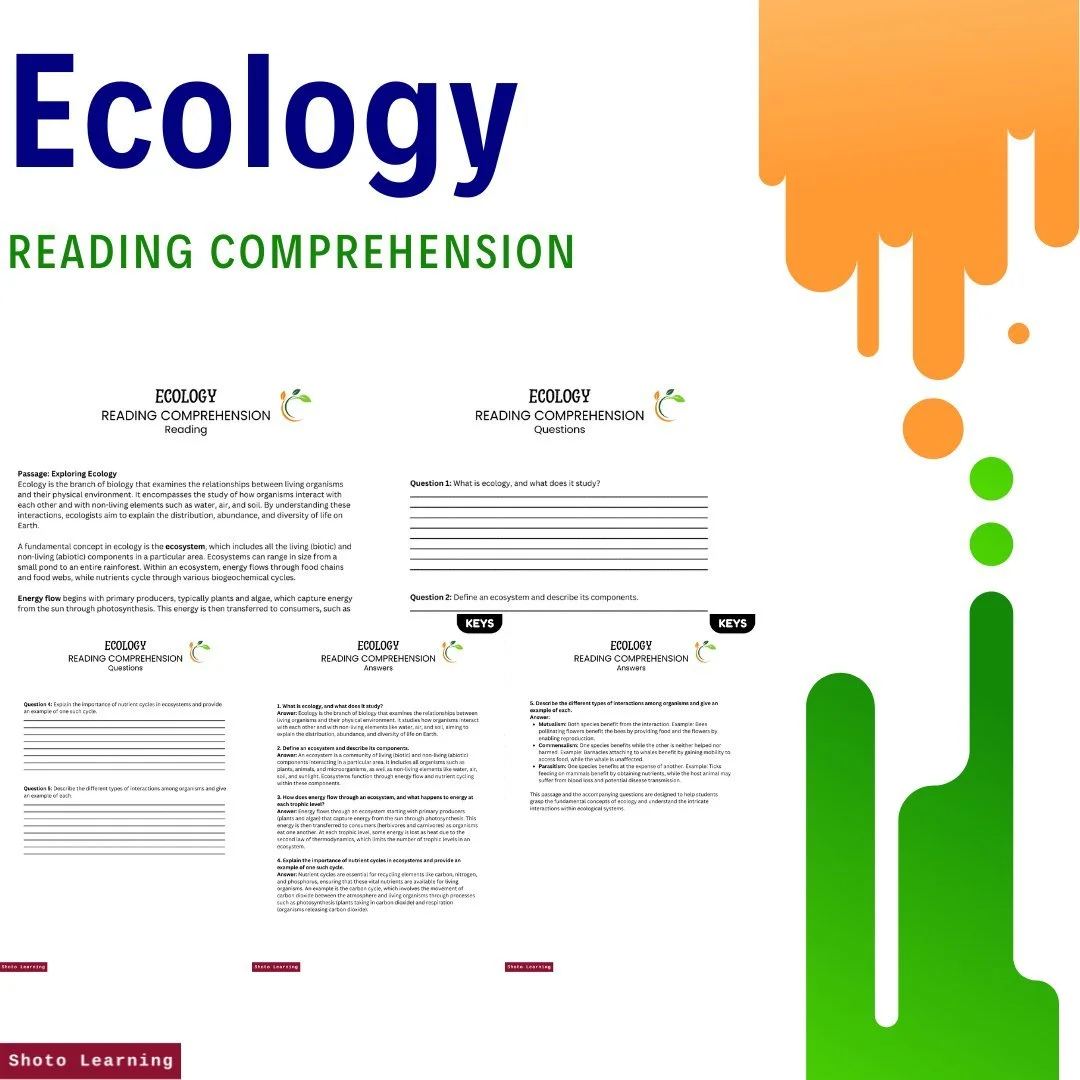
Reading Comprehension: Sharpen reading skills with engaging passages, perfect for students and educators alike.
Scramble: Unscramble ecological terms and phrases in a brain-teasing exercise.
Test (45 Minutes): Test your ecological expertise with a 45-minute examination that covers a variety of topics.
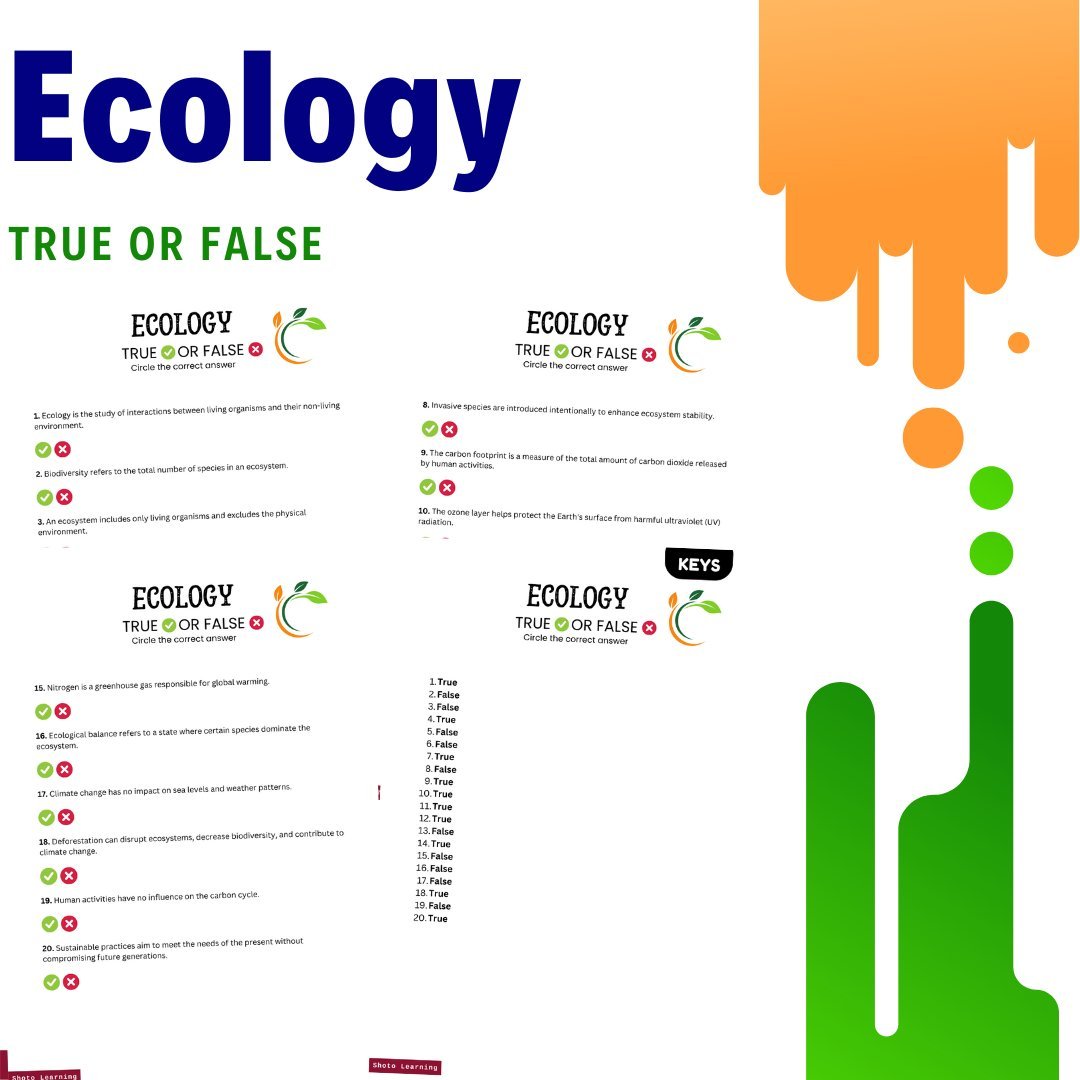
True or False: Evaluate your ecological knowledge with true-or-false questions that encourage critical thinking.
Word Search: Have fun while discovering ecological terms hidden in a word search puzzle.
Writing Prompts: Ignite your creativity and ecological insights with stimulating writing prompts.
Worksheet: Explore an engaging worksheet that reinforces ecological principles through exercises and questions.
This "Ecology Explorer's Bundle" is a versatile and comprehensive resource for classrooms, workshops, or individual study. It caters to learners of all ages and levels, making it a valuable addition to your educational journey. Dive into the world of ecology, spark discussions, and deepen your understanding of our interconnected planet with this incredible bundle today!
129 pages
Don't wait; order yours today and start enjoying the benefits!