
Exploring Cell Biology: Essential Concepts, Teaching Approaches, and Top Resources for Educators
Cell biology is a key part of science education, helping students understand how life works at the smallest level. Teachers who know the main cell concepts, use the right teaching strategies, and find useful resources can make this topic more clear and interesting for students. Simple explanations about cell parts, different cell types, and the cell cycle give learners the foundation they need to move ahead in biology.
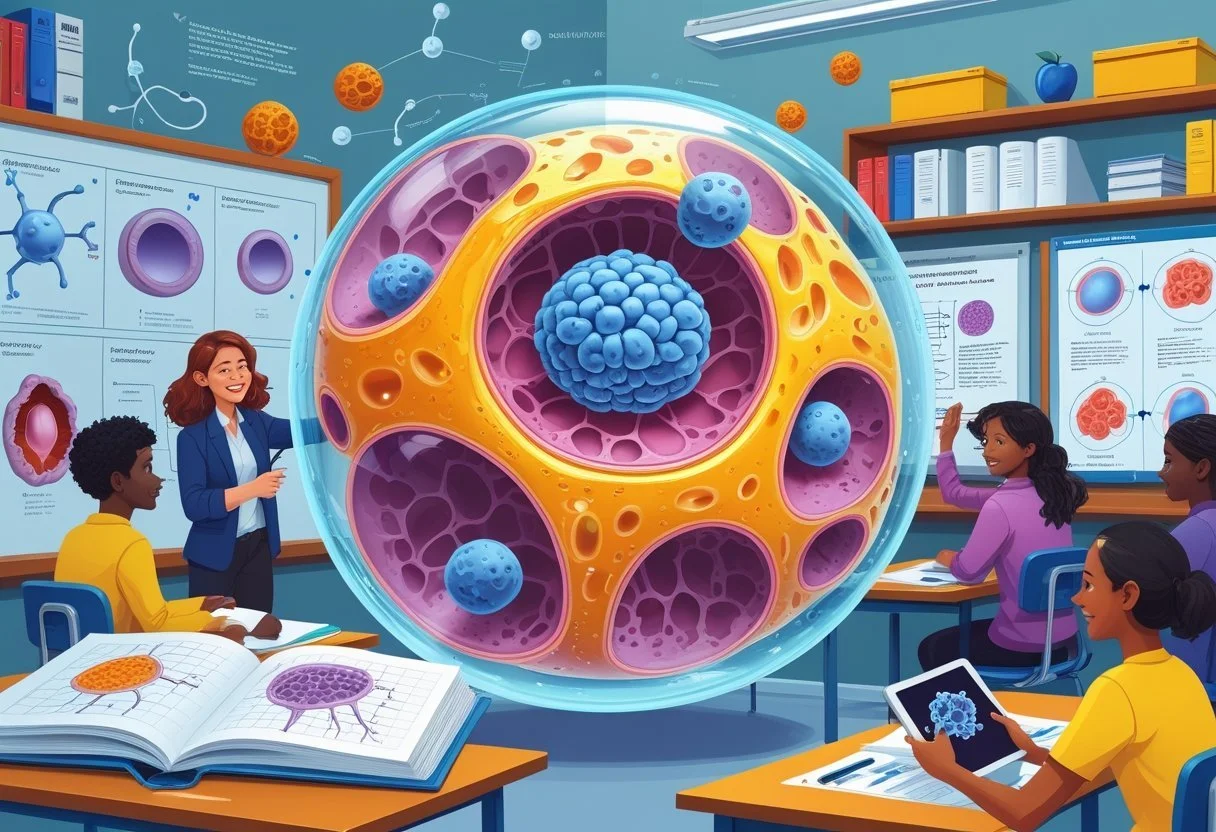
Hands-on methods like using microscopes or real-life examples help bring cell biology to life in the classroom. By understanding and teaching both the basics and the tricky parts, educators can help students feel more confident in this important subject.
Key Takeaways
Clear teaching of cell biology builds a strong science foundation.
Visual tools and lab activities help make lessons clearer.
Using the best resources makes learning cell biology easier.
Understanding Essential Cell Biology Concepts
Cells are the basic units of all living things. Learning how they work helps explain how life functions, changes, and grows.
Cell Theory
Cell theory is a major idea in biology. It states that:
All living things are made up of cells.
The cell is the basic unit of structure and function in living things.
All cells come from existing cells.
This concept means no living thing is smaller than a cell. Bacteria, plants, and animals all follow this rule. Cell theory helps people understand diseases, growth, and reproduction. It also explains why scientists study cells to learn more about health and life.
Prokaryotic Versus Eukaryotic Cells
There are two main types of cells: prokaryotic and eukaryotic.
Prokaryotic cells, like bacteria, are small and simple. They do not have a nucleus. Their DNA floats in the cytoplasm.
Eukaryotic cells are more complex. They have a nucleus that holds their DNA. Plants, animals, fungi, and protists all have eukaryotic cells.
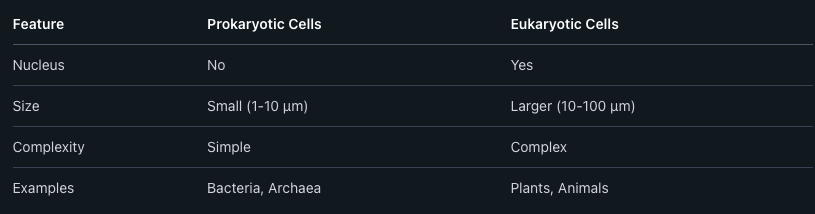
Understanding the differences helps explain how each type of cell survives and works.
Cell Structure and Function
Each cell has parts called organelles. They have specific jobs.
The nucleus stores genetic material.
The membrane controls what goes in and out.
Mitochondria produce energy.
Ribosomes make proteins.
Chloroplasts are found in plant cells and help make food by photosynthesis.
Form and function are linked. The shape of each organelle matches its job. For example, a muscle cell has many mitochondria for energy. A leaf cell has more chloroplasts for capturing sunlight. These structures help the whole cell stay healthy and active.
Cell Cycle and Cell Division
Cells grow, do their work, and then divide. This process is called the cell cycle.
The main stages are:
Interphase – The cell grows and copies DNA.
Mitosis – The nucleus divides.
Cytokinesis – The rest of the cell splits in two.
Cell division is needed for growth, repair, and making new life. In mitosis, one cell becomes two identical cells. The cell cycle must be controlled, or it can lead to problems like cancer. Learning about this process helps explain how organisms develop and stay healthy.
Exploring Cell Components and Organelles
Cells contain specialized parts, known as organelles, each with unique roles. Understanding these structures, like the nucleus, mitochondria, and cell membrane, helps explain how plant and animal cells function.
Nucleus and DNA
The nucleus controls the cell and keeps its genetic material safe. It is surrounded by a double membrane called the nuclear envelope.
Inside the nucleus is DNA, which holds the instructions for making proteins and carrying out life processes. DNA is organized as chromosomes. The nucleolus, found in the nucleus, helps make ribosomes needed for building proteins.
The nucleus is often called the “control center” because it sends commands that guide cell growth, division, and everyday work. Most human, animal, and plant cells have a nucleus.
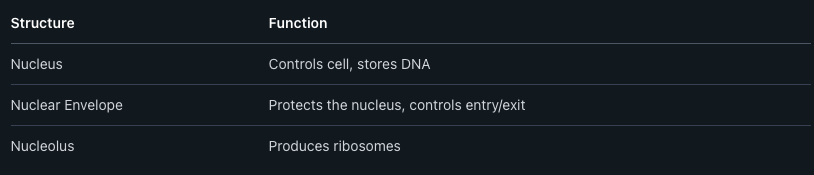
Mitochondria and Energy Conversion
Mitochondria are often called the “powerhouses” of the cell. They turn glucose and oxygen into a form of energy called ATP, which cells use to work and grow.
Mitochondria have their own DNA, which is separate from the DNA in the nucleus. This allows them to make some proteins on their own. The process of making energy inside mitochondria is called cellular respiration.
Nearly all animal, plant, and human cells have mitochondria. Cells that need a lot of energy, such as muscle cells, contain more mitochondria than others.
Cell Membrane and Cytoplasm
The cell membrane surrounds the cell and acts like a gatekeeper. It controls what goes in and out of the cell, such as nutrients, water, and waste. The membrane is made mostly of lipids and proteins.
Inside the membrane is the cytoplasm, a jelly-like fluid that holds all the organelles in place. The cytoplasm includes the cytoskeleton, which is a network of protein fibers that helps support the cell’s shape and moves things around.
Cells rely on the membrane and cytoplasm to keep everything organized and to protect the cell’s contents.
Cell membrane: controls entry and exit of materials
Cytoplasm: supports organelles, helps with movement
Cytoskeleton: maintains cell shape, assists transport
Organelles Specific to Plant and Animal Cells
Plant cells and animal cells have many organelles in common, but also some that are unique.
Plant cells have chloroplasts. These organelles use sunlight to make food through photosynthesis. Chloroplasts contain chlorophyll, which gives plants their green color. Plant cells also have a large central vacuole that stores water and nutrients.
Animal cells do not have chloroplasts or large vacuoles. Their vacuoles, if present, are much smaller. Both plant and animal cells have mitochondria, a nucleus, and a cell membrane.
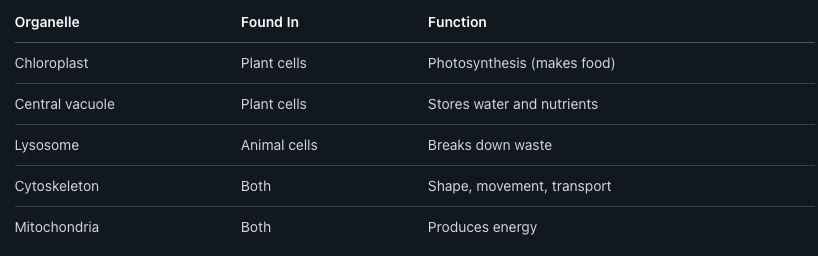
Comparing Plant, Animal, and Specialized Cells
Plant and animal cells are both eukaryotic, but their structure and function reveal important differences. Specialized cells, such as neurons and stem cells, have unique features that allow them to carry out specific roles in living organisms.
Key Differences Between Plant and Animal Cells
Plant cells and animal cells share many organelles, but some parts are unique to each type.
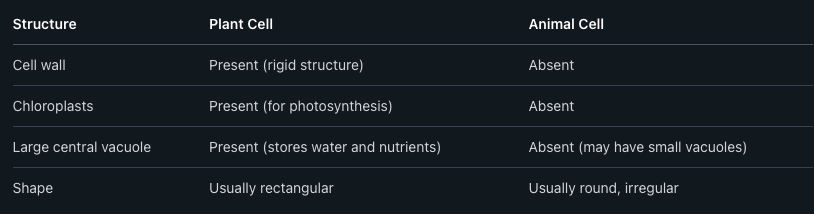
Plant cells use chloroplasts to make food from sunlight in photosynthesis. Animal cells cannot do this because they lack chloroplasts.
Plant cells have a cell wall that provides support and protection. Animal cells only have a flexible cell membrane. Both have nuclei, mitochondria, and other organelles.
Functions of Specialized Cells
Specialized cells perform particular jobs in multicellular organisms. For example, neurons are nerve cells that transmit signals in the brain and throughout the body. They have long extensions called axons and dendrites to help send messages quickly.
Red blood cells are another example. They carry oxygen using hemoglobin. These cells have a disc shape and lack a nucleus in humans, making space for more oxygen.
Muscle cells help with movement. They contain many mitochondria for energy. Leaf guard cells in plants control the opening and closing of stomata, balancing gas exchange and water loss.
Stem Cells and Cell Differentiation
Stem cells are undifferentiated human cells found in embryos and some adult tissues. Unlike regular cells, they can become almost any kind of cell in the body.
During cell differentiation, stem cells receive signals that turn specific genes on or off. This process changes the cell’s structure and function, turning it into a neuron, muscle cell, or other specialized cell.
Stem cells are crucial in growth, healing, and cell replacement. Scientists study them to understand disease and develop new treatments, such as regenerating tissues or organs. Understanding how stem cells work helps explain how complex organisms develop from a single cell.
Cell Cycle, Mitosis, and Disease Connections
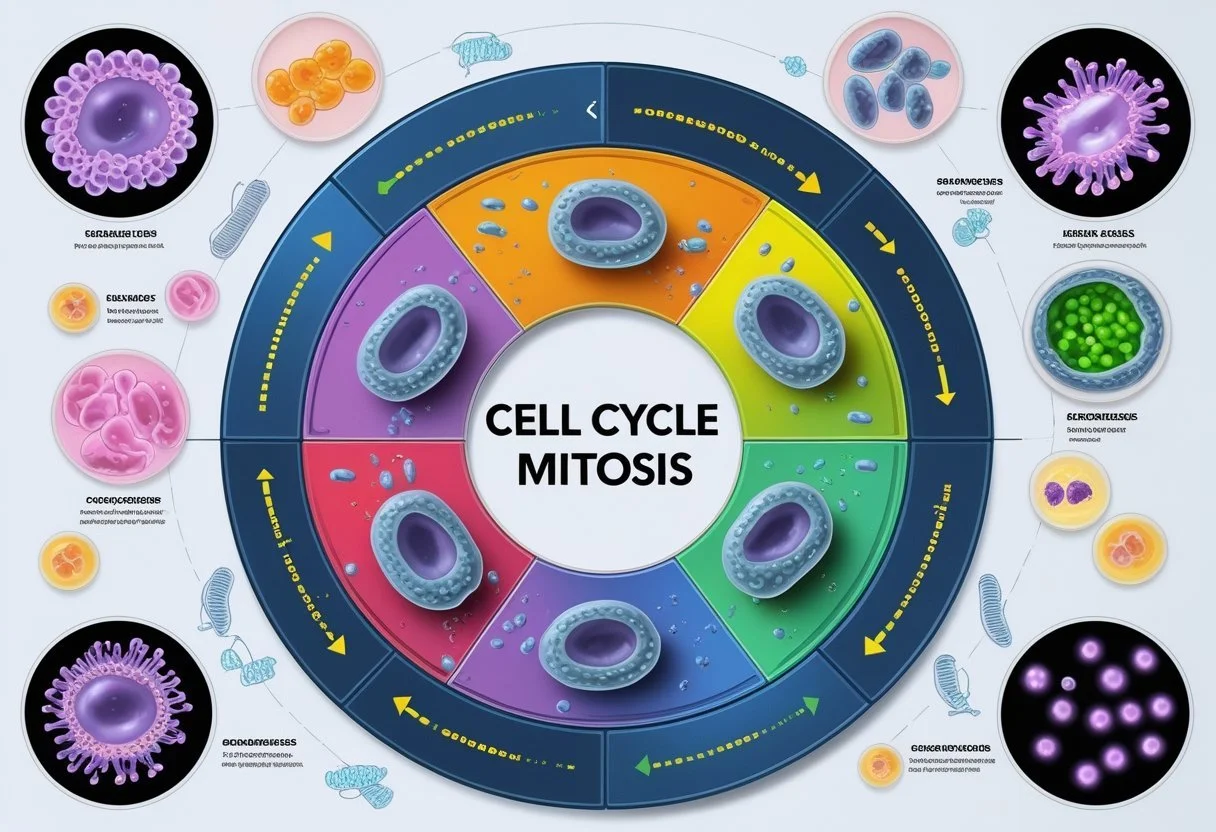
Cells go through a set of steps known as the cell cycle, which helps them grow and divide. Problems in the cell cycle, like errors during mitosis, can lead to diseases such as cancer and leukemia.
Phases of the Cell Cycle
The cell cycle includes interphase and mitotic (M) phase. Interphase is when the cell grows and prepares for division. It has three main stages:
G1 phase: Cells grow and make proteins.
S phase: DNA is copied.
G2 phase: The cell gets ready to divide.
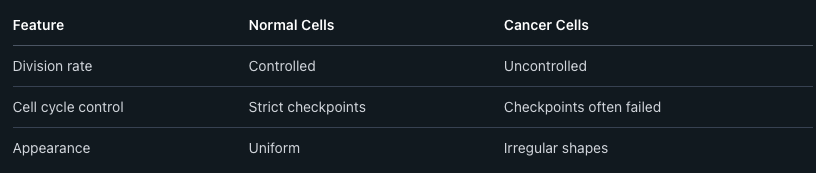
After interphase, the cell enters the M phase, where it splits into two. There are checkpoints at each stage. These checkpoints make sure cells only divide when everything is right. If checkpoints fail, there is a higher chance for mistakes, which may cause disease.
Mechanisms of Mitosis
Mitosis is the process that divides the cell’s nucleus. It has four basic steps:
Prophase: Chromosomes condense, and the nuclear envelope breaks down.
Metaphase: Chromosomes line up in the middle.
Anaphase: Chromosomes are pulled apart toward opposite sides.
Telophase: New nuclear envelopes form around two groups of chromosomes.
Cytokinesis follows, splitting the cell’s cytoplasm and making two new, identical cells. Cells rely on proper DNA separation during mitosis to prevent mutations. Mistakes in mitosis can cause cells with the wrong number of chromosomes, which can lead to health problems.
Cancer and Abnormal Cell Division
Cancer happens when the cell cycle loses control and cells divide too much. This often results from mutations in genes that regulate growth, such as the p53 gene. Abnormal mitosis may cause these cells to grow tumors.
Some cancers, like leukemia, develop from abnormal cell division in blood cells. In leukemia, white blood cells multiply uncontrollably and can crowd out healthy cells. Treatments often target fast-dividing cells to slow cancer’s progress. Below is a table comparing normal cells and cancer cells:
Microscopy and Lab Techniques in Cell Biology
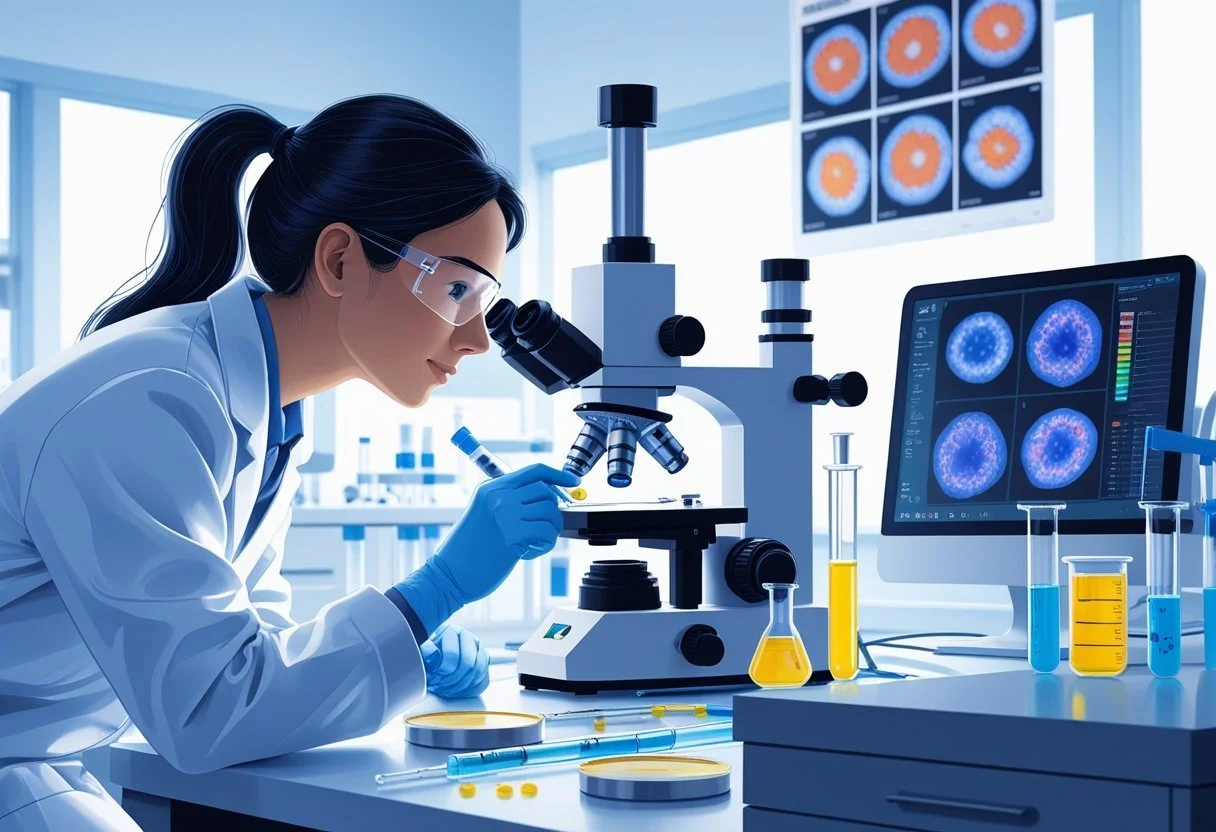
Microscopy helps biology teachers and students observe cells directly, making it a key part of cell biology education. Fluorescent dyes are often used in labs to highlight certain parts of cells, and hands-on activities let students practice these tools for deeper learning.
Microscopy Methods
Microscopy allows students and science teachers to view the structure of cells and their components up close. There are several common types:
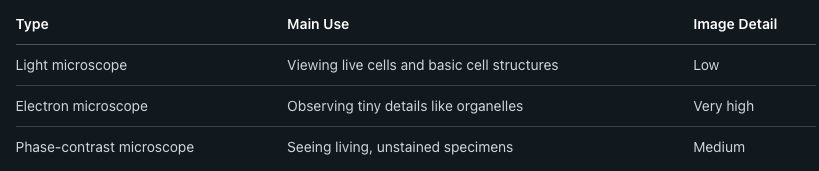
Teachers can help students compare these methods by giving them cell samples and letting them test different microscopes. Proper training in sample preparation and focusing techniques is important for clear images and accurate observation.
Application of Fluorescent Dyes
Fluorescent dyes are chemicals that attach to cell parts and glow under certain light. Biology teachers use these dyes in labs to help students identify specific structures such as the nucleus, mitochondria, or cell membrane.
Common dyes include:
DAPI: Binds to DNA and marks the nucleus with a blue color.
Fluorescein: Often used to label proteins or cell membranes with a green glow.
Rhodamine: Used for tagging different proteins or cell parts in red.
Students should learn safety procedures and correct application techniques when using dyes. Viewing cells with fluorescence microscopy shows clearly how organelles are distributed, which makes cell structure easier to understand.
Hands-On Activities for Students
Teachers can plan simple, effective labs for science students using everyday cell samples, such as onion skin or cheek cells. These activities may include:
Using a light microscope to view cells and sketch what they see.
Staining cells with methylene blue or iodine solution to highlight details.
Applying fluorescent dyes and then using a fluorescence microscope for comparison.
Short lab checklists and step-by-step guides help students follow procedures. Teachers can encourage observations, label drawings, and discuss what structures are visible under different conditions. This hands-on approach supports understanding and retention of important cell biology concepts.
Effective Teaching Strategies for Cell Biology
Strong cell biology teaching combines hands-on activities, discussion-based learning, assessment tools, and literature-based assignments. These methods increase student understanding, motivation, and ability to apply concepts in real life.
Active Learning Approaches
Active learning puts students at the center of the lesson. Teachers use labs, modeling, or group work to promote hands-on experiences. For example, students might use microscopes to examine cell structures or build cell models from craft materials.
Other activities include debates about bioethical issues or designing experiments to test how different conditions affect cell growth. Teachers may assign think-pair-share sessions or case studies focused on diseases like cancer or genetic disorders.
This approach encourages students to ask questions and explain their ideas to peers. It also helps students remember content longer because they practice using it in many ways.
Lecture and Discussion Techniques
Direct lecture remains valuable for covering essential facts and vocabulary. However, adding short discussions every 10–15 minutes helps keep students focused. Teachers may pause to ask concept checks or encourage students to summarize what they just learned with a partner.
Interactive lectures, where the teacher poses a question and students respond using clickers or hand signals, can break up passive listening. Short essays or quick group brainstorms during class help students build connections between new material and what they already know.
Carefully planned lectures, with opportunities for questions and discussion, help students clarify misunderstandings and deepen understanding.
Games and Quizzes for Engagement
Games and quizzes make cell biology more engaging. Jeopardy-style games, crossword puzzles, or matching card activities help students review terms like “mitosis,” “organelle,” or “membrane transport.”
Biology teachers often use online platforms or smartphone apps to create instant feedback quizzes. For example, a teacher might use Kahoot! or Quizizz to test content after a lesson. Timed group challenges or flashcard races can also encourage teamwork.
A sample table for in-class activities:

Quizzes can be short and frequent, helping students and teachers identify which topics need more review.
Reading and Primary Literature Integration
Assigning readings helps students engage with cell biology outside of class. Teachers use textbooks, Science News articles, or summaries of recent discoveries to provide context.
Introducing primary literature—articles written by scientists—teaches students how research is done. Teachers may select shorter or adapted articles, then guide students in reading, highlighting main findings, and answering key questions. Instructors might build assignments where students explain a study’s main idea or connect it to course topics.
Classroom discussions or essays based on these readings allow students to practice critical thinking and apply scientific ideas. Carefully chosen readings and guided activities support both understanding and scientific literacy.
Resources and Tools for Cell Biology Educators
Cell biology teaching can be more effective with organized materials, digital tools, and easy access to accurate science content. Reliable product catalogs, multimedia resources, and formal reference guides help educators support different learning needs.
Lab Kits and Materials Catalogs
Educators often need kits to help science students perform hands-on lab activities. Companies like Carolina Biological, Fisher Scientific, and Bio-Rad offer lab kits for cell biology, including microscopes, prepared slides, and reagents. These products come with detailed instructions and safety information, making classroom use easier.
Most catalogs are available as both physical books and online databases. Online catalogs let teachers search by topic, grade level, or even specific experiments. These tools save time and help educators find products that fit their teaching goals. Larger catalogs often feature items for biotechnology and complex biology topics, which expand lab opportunities.
Popular Lab Kit Vendors:

Multimedia and Virtual Learning Resources
Many teachers use digital videos, interactive simulations, and virtual labs to help students learn about cell structures and processes. Sites like HHMI BioInteractive, Zoom, and Learn Genetics offer free and paid multimedia, covering topics from ecosystems to biotechnology.
Virtual learning tools often include quizzes, models, and real examples from biologists. These allow students to experiment with variables, take virtual lab notes, and learn at their own pace. Teachers can assign specific resources to reinforce classroom lessons, making complex biology concepts more understandable.
Some science apps and platforms provide group work features, so teams can collaborate on projects or model cell behaviors together. These tools make cell biology more interactive.
Reference Guides and ISBN Cataloging
Accurate reference books help teachers plan lessons and check facts. Most science textbooks and teacher guides come with an ISBN, which makes them easy to find in school libraries or online bookstores. These books give clear explanations, diagrams, and practice questions for both basic and advanced topics in cell biology.
Educators often use catalogs and ISBN databases to locate new books about cell biology or biotechnology. For detailed topics, some guides focus on specific ecosystems or cell functions. Libraries and educational websites usually list ISBNs for quick lookup and ordering.
Popular reference series include “Molecular Biology of the Cell” and “Essential Cell Biology.” Teachers can quickly compare editions and prices with ISBNs. Reference guides help make sure students have accurate, up-to-date information about cell biology.
Frequently Asked Questions
Cell biology educators often want practical teaching activities, reliable worksheets, and ways to encourage student interest in complex topics. Many also seek trusted resources and detailed answer keys to support instruction and assessment.
What are some effective hands-on activities for teaching cell biology in high school?
Students can build cell models using clay or everyday materials. Looking at onion skin or cheek cells under microscopes helps them identify cell parts. Creating cell analogies, like comparing cell parts to a factory, helps make concepts clear.
How can I access high-quality cell biology worksheets for middle school students?
Many well-known education sites, like Teachers Pay Teachers and Education.com, offer ready‐to‐use worksheets. Some science textbook publishers provide free downloadable worksheets aligned with curriculum guidelines.
What are innovative ways to make learning about cells fun and engaging?
Educators can use interactive games, digital simulations, and cell-themed escape rooms. Group projects and creative assignments, like comic strips or videos, help students apply their knowledge. Virtual labs can also offer experiences that are not possible in a regular classroom.
Where can I find comprehensive answer keys for cell biology worksheets?
Many worksheet sites include answer keys with their resources. Science textbooks and publisher websites often have teacher’s editions with detailed solutions. Some professional educator forums also provide shared answer keys.
What essential concepts should be included when teaching cell biology to students?
Students need to understand the function of cell organelles, the differences between prokaryotic and eukaryotic cells, and how cells carry out life processes. Topics should also include the cell cycle, cellular respiration, and how cells work together in tissues.
Can you recommend any professional biology resources specifically designed for educators?
The National Science Teaching Association (NSTA) offers lesson plans and professional growth tools. HHMI Biointeractive provides classroom activities and media for biology topics. Other reliable sites include the American Society for Cell Biology and the Smithsonian National Museum of Natural History.


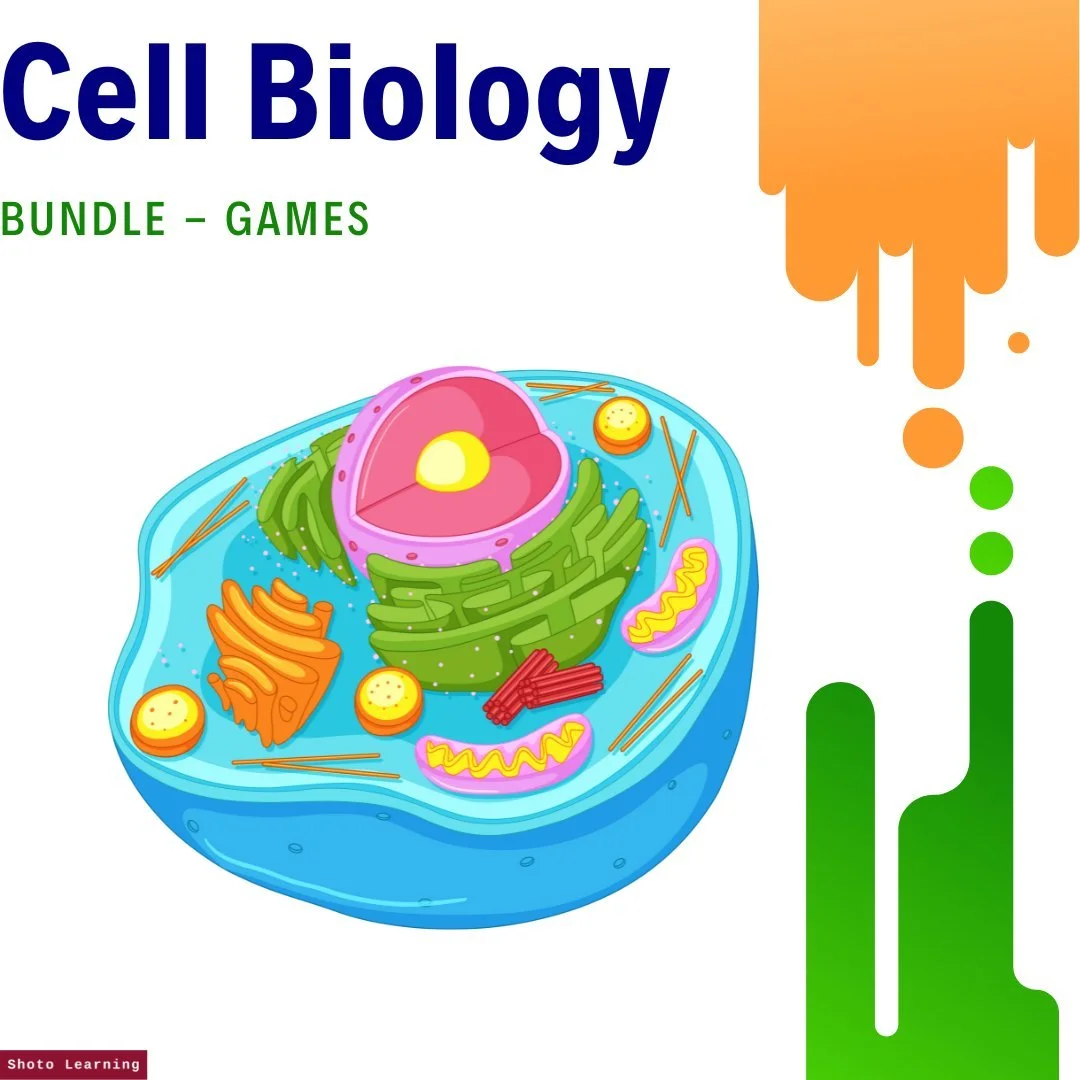


Discover the captivating world of cell biology with our Cell Biology Explorer Bundle, a comprehensive collection of interactive games and educational resources designed to engage, educate, and assess students' understanding of cellular processes. Whether you're an educator looking to enrich your classroom instruction or a student eager to deepen your comprehension, this bundle has everything you need to dive into the fascinating realm of cell biology.
Bundle Overview:
This all-inclusive bundle features an array of interactive games and learning resources that cater to different learning styles and preferences. From Bingo to Crossword puzzles, Cryptograms to Matching activities, and everything in between, each component is meticulously crafted to reinforce key concepts in an enjoyable and effective manner.
Engaging Games:
Bingo: Turn learning into a game and reinforce cell biology concepts in an interactive and exciting way.
Crossword: Challenge your knowledge with a stimulating puzzle that tests your understanding of cellular processes.
Cryptogram: Decode secret messages related to cell biology while sharpening critical thinking skills.
Matching: Connect terms with their definitions to strengthen understanding of cell biology vocabulary.
Missing Letters: Fill in the blanks to complete sentences related to cellular processes and reinforce comprehension.
Scramble: Unscramble jumbled words to enhance vocabulary retention and word recognition.
Word Search: Have fun while reinforcing cell biology terms in an engaging word search activity.
Comprehensive Learning Resources:
Assignments: Embark on 10 stimulating assignments covering diverse topics, encouraging critical thinking and practical application of knowledge.
Lesson Plan: Dive deep into cell biology with detailed lesson plans complete with engaging activities and discussion topics.
Experiments: Explore hands-on experiments illustrating fundamental principles across various disciplines, fostering deeper understanding and engagement.
Flash Cards: Reinforce key terms and definitions for effective memorization and quick recall.
PowerPoint Presentation: Explore essential concepts and processes of cells through captivating visuals and clear explanations.
Multiple Choice: Assess your knowledge with comprehensive multiple-choice questions covering a range of cell biology topics.
Test 45 Minutes: Evaluate your comprehension and application of cell biology principles through a timed test.
True or False: Challenge your understanding with true or false statements related to cell biology concepts.
Reading Comprehension: Sharpen reading skills with engaging passages, perfect for students and educators alike.
Writing Prompts: Encourage critical thinking and creativity with thought-provoking writing prompts.
Free Resources:
ABC Order: Organize cell biology terms alphabetically for improved understanding and communication.
Field Trip Examples: Explore real-world applications of cell biology through free field trip examples.
Conclusion:
With our Cell Biology Explorer Bundle, you'll embark on an enriching learning journey filled with interactive games, engaging activities, and comprehensive resources. Whether you're looking to supplement your curriculum, reinforce understanding, or inspire curiosity, this bundle has you covered. Unlock the full potential of your cell biology studies and explore the fascinating world of cellular processes today!
217 pages
Download a copy today!