
Effective Strategies for Teaching Cell Organelles: Practical Approaches to Engage High School Biology Students
Learning about cell organelles is a key part of high school biology, but it can sometimes feel confusing or boring for students. Teachers can make this topic more interesting and easier to understand by using hands-on activities, new teaching methods, and simple tools. When students see how organelles work like parts of a busy city, they start to connect with the material in real ways.
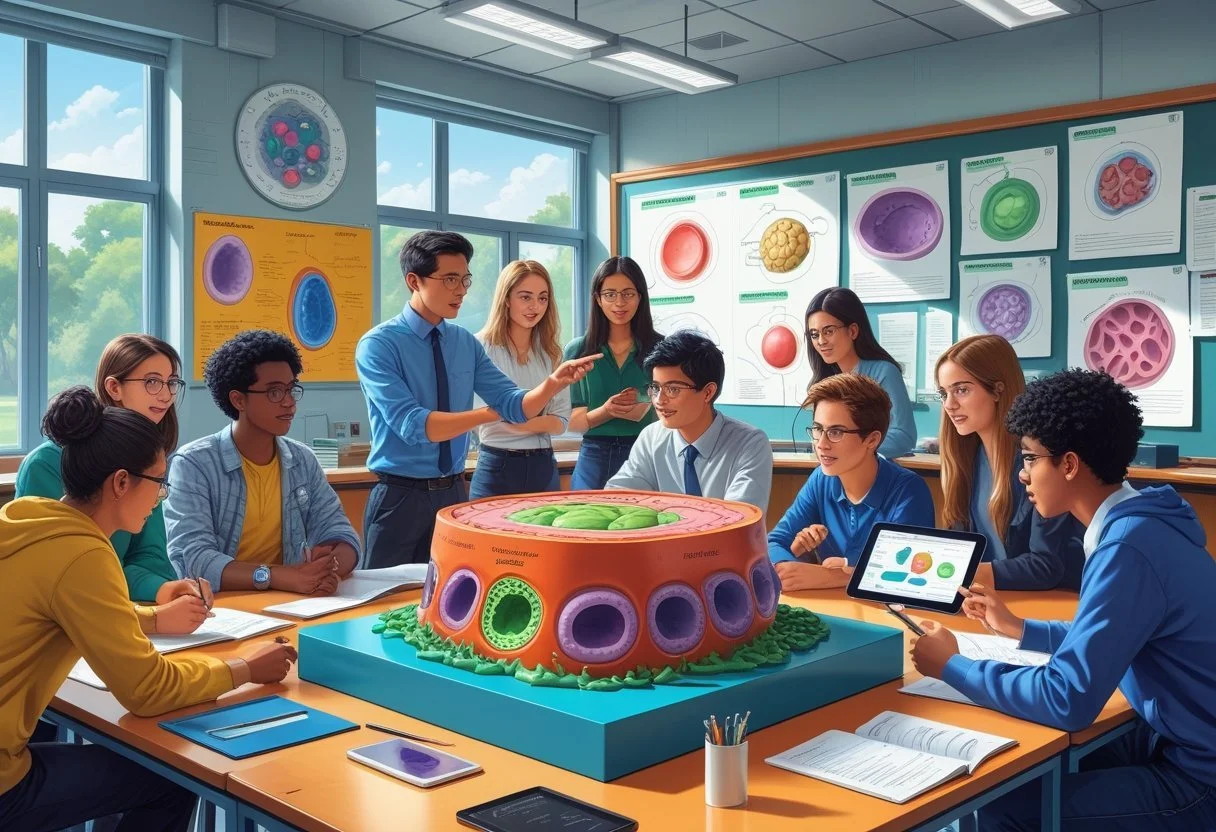
By using games, models, and digital resources, teachers help students remember cell structures better. Bringing real-life examples and group work into the lesson can also help students see why learning about cell organelles matters now and in the future.
Key Takeaways
Using active learning keeps students interested in cell biology.
Creative lessons make organelle functions clear and memorable.
Connecting cell concepts to real life helps students see their importance.
Understanding Cell Structure and Organelles
Cells are the basic units of life and form the foundation for all living things. Every cell contains structures called organelles, which have unique roles that keep the cell working properly.
Cell Theory and Its Significance
Cell theory is a key idea in biology. It states that all living things are made up of cells, that cells are the smallest units of life, and that all cells come from other cells.
This theory helps explain how organisms grow and heal. Since every cell does specific jobs, understanding cell theory shows why studying each part of a cell is important.
Cell theory guides scientists in research and medical work. Without cell theory, it would be hard to understand how diseases happen or how plants and animals stay alive.
Overview of Plant and Animal Cells
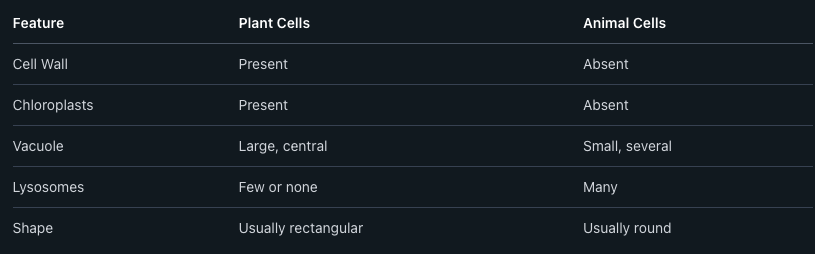
Plant and animal cells share many things, but there are some main differences. Both have a cell membrane, cytoplasm, and a nucleus.
Plant cells have a stiff cell wall and contain chloroplasts, which help them make food through photosynthesis. They also have a large central vacuole that stores water and supports the cell.
Animal cells do not have a cell wall or chloroplasts. Instead, they have small vacuoles and may contain more lysosomes, which break down waste in the cell.
Essential Cell Organelles and Functions
Organelles each have a special task inside the cell. The nucleus is like the cell’s control center; it stores DNA and tells the cell what to do.
The endoplasmic reticulum (ER) helps make proteins and fats. The rough ER has ribosomes and makes proteins, while the smooth ER handles fats and detoxifies chemicals.
Lysosomes break down waste and old cell parts. The vacuole, especially in plant cells, stores water, nutrients, and waste.
Other organelles such as mitochondria make energy, and the Golgi apparatus packages and sends out proteins. Each organelle helps the cell stay healthy and do its work.
Engaging Students Through Active Learning
Students learn more when they participate. Using activities that make students think and share ideas helps them remember cell organelles and their functions.
Inquiry-Based Activities
Inquiry-based activities let students discover new concepts about cell organelles by asking questions and testing ideas. In one activity, students might examine plant and animal cells under a microscope and record differences in the organelles they see. Teachers can ask students to predict the role of certain organelles based on what they observe.
A simple investigation table can guide observations:

This method builds critical thinking by having students make connections and explain their findings. Teachers can prompt discussions so students can share what they noticed and compare ideas with classmates.
Collaborative Problem-Solving
Collaborative problem-solving helps students learn by working together. In small groups, students may solve a real-world problem, such as “How would a cell survive if its mitochondria stopped working?” Students must use what they know about cell organelles to answer the question as a team.
Each group member has a specific role, such as recorder or presenter, to increase participation. This encourages student interaction and teaches the importance of teamwork in biology. When groups share their solutions, the class can discuss the strengths and weaknesses of each answer, helping students build their problem-solving skills while deepening their understanding of cell organelles.
Creative Teaching Techniques for Cell Organelles
Students often learn best by doing, seeing, and engaging directly with the material. Using creative strategies in the classroom helps make the parts of a cell easier to understand and remember.
Edible Cell Models
Building an edible cell model allows students to "see" and "touch" cell organelles in a memorable way. Teachers can use items like gelatin, candy, or cookies to represent structures such as the nucleus, mitochondria, and cell membrane. Each part of the cell receives a unique treat, so students can physically lay out the components and compare them.
This technique is not just fun. It challenges students to match real cell organelles to their “edible” versions. Teachers may create a checklist or table like the following to keep the activity organized:
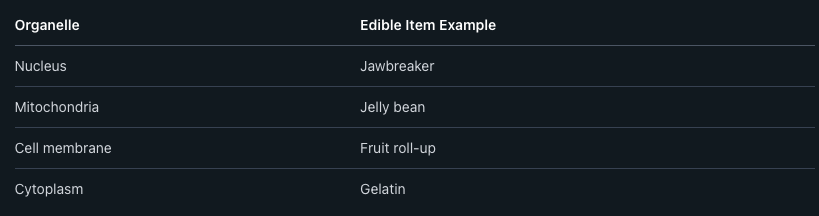
Students label parts of their model and explain their choices, helping reinforce the lesson.
Hands-On Experiments
Experiments can make learning about cells more interactive. Teachers can use microscopes to let students look at real cells: onion skin for plant cells, or cheek cells for animal cells. Observing how the nucleus, cytoplasm, and cell membrane appear in actual samples connects textbook drawings to real life.
Simple activities may also involve making a hypothesis about which organelle a cell needs most and then testing ideas with model cells or simulations. For example, they might remove sugar from a solution to see if the "mitochondria" can still "produce energy."
Engaging with living cells, such as the classic "Cells Alive" experiments, brings the science to life and encourages curiosity.
Visual Aids and Diagrams
Clear and simple visual aids can help students quickly recognize cell organelles and their functions. Diagrams, posters, and interactive models show each part of the cell and its location. Teachers often use color-coded charts or digital images to highlight differences between plant and animal cells.
Labeled diagrams support memory by associating organelles with names and roles, such as labeling the "nucleus" as the control center or mitochondria as the "powerhouse." Some classes use diagrams with missing labels as an activity, asking students to fill them in after a lesson or experiment.
Displaying visual information in many ways, such as on smart boards or through handouts, ensures all students have a chance to learn according to their strengths.
Integrating Technology and Online Resources
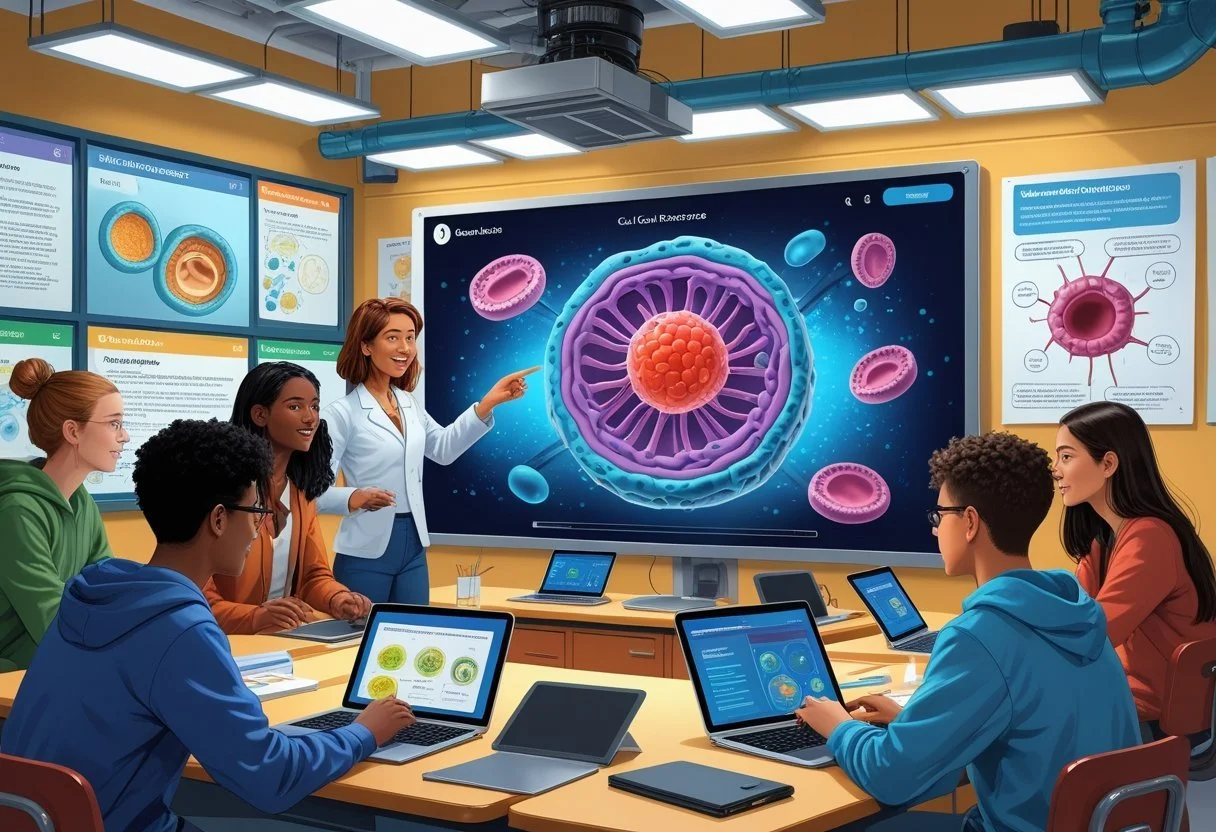
Teachers can use technology to help students learn about cell organelles. Online resources and digital tools can make lessons more interactive and easier to understand.
Utilizing Educational Videos
Educational videos explain cell organelles through clear visuals and spoken words. Videos from sources like Khan Academy, Amoeba Sisters, and National Geographic give detailed, accurate explanations with animations and diagrams.
These videos help students see how each organelle works inside the cell. Some videos even include real-life cell footage or 3D models. Teachers can pause the video to ask questions or replay sections that are confusing.
Many platforms also offer lesson plans, quizzes, and printable worksheets that match the videos. These extras help teachers check how well students understand the information.
Interactive Digital Tools
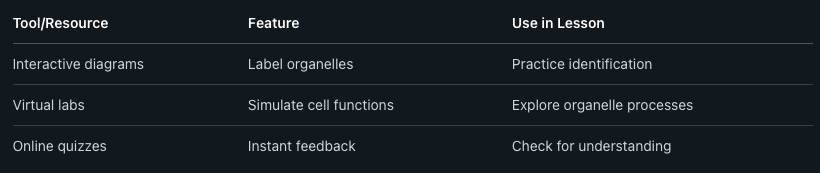
Interactive digital tools let students explore cell organelles by clicking, dragging, or labeling diagrams. Virtual labs and simulations such as BioMan Biology or Learn Genetics allow students to build and test digital cells.
Online quizzes give immediate feedback, so students know when they get questions right or wrong. Teachers can use cell organelle games to make learning more fun.
Some tools have features for students with different learning needs, like adjustable text size or audio narration. These resources can also track student progress and highlight areas that need more review.
A table below lists examples:
Linking Cell Organelles to Broader Biological Concepts
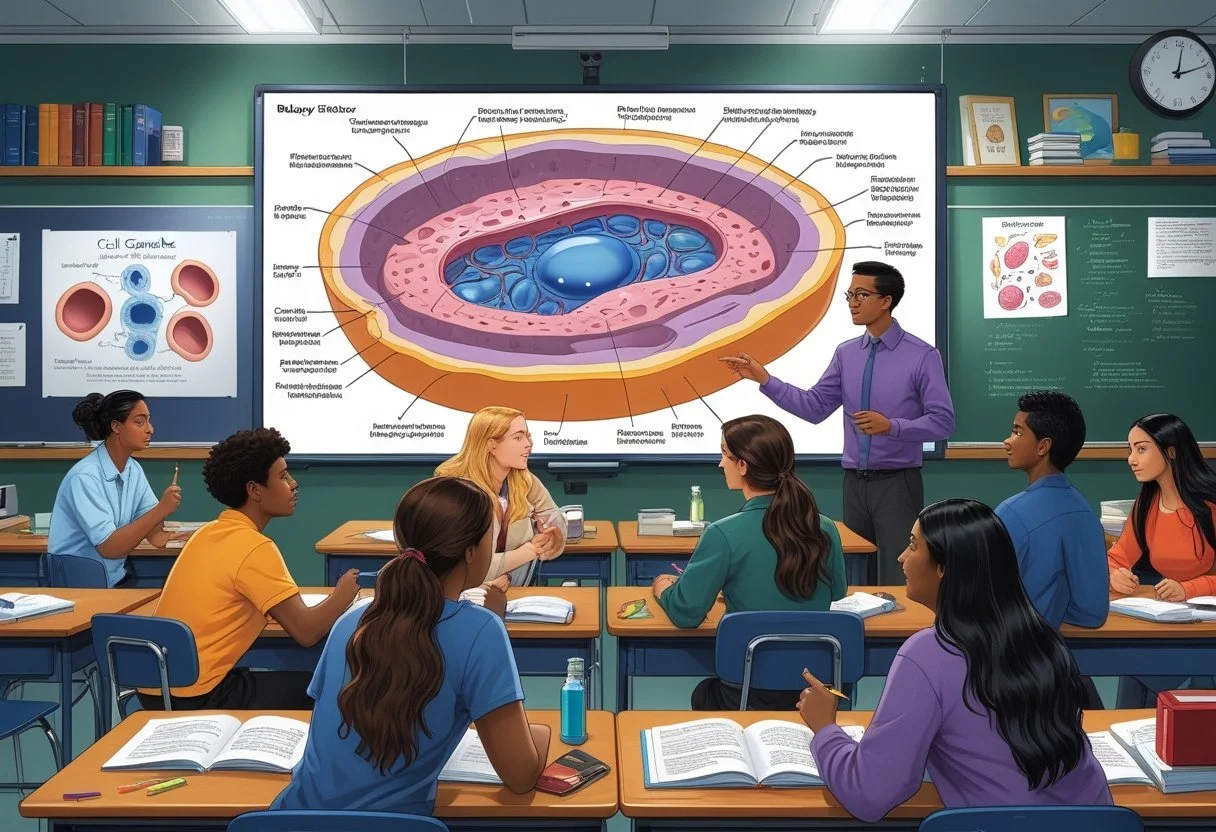
Cell organelles play key roles in important biological processes. Understanding their functions helps students make sense of how genetics and cell division work in living things.
Connections to Genetics and DNA
Organelles such as the nucleus and ribosomes are essential in genetics. The nucleus holds the cell’s DNA, which contains instructions for making proteins. Chromatin inside the nucleus is made of DNA and proteins working together.
Ribosomes use these instructions to build specific proteins. The rough endoplasmic reticulum helps fold and modify these proteins, while the Golgi apparatus sorts and packs them for use or transport. When teaching, it helps to link these steps to the central dogma: DNA → RNA → Protein.
Key Genetics Connections:
Nucleus: Stores DNA
Ribosome: Reads RNA, builds proteins
Endoplasmic reticulum and Golgi: Modify and move proteins
This connection to real genetic processes makes organelles more interesting and shows students how mutations in DNA affect proteins, which can impact the whole cell.
Cell Division and Reproduction
Cell division involves organelles working together to make new cells. The nucleus must duplicate its DNA before division begins. Mitosis is the process that ensures each new cell gets an exact copy of DNA.
Centrioles and the spindle apparatus organize chromosome movement during mitosis. After separation, organelles like the mitochondria distribute themselves to help the new cells survive.
Stages in Cell Division:
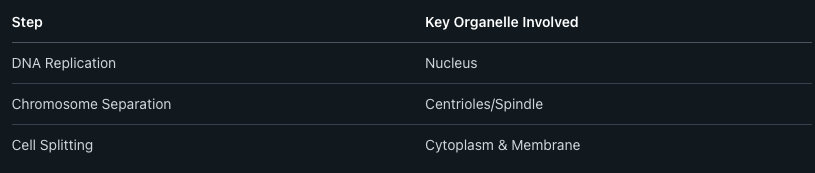
During meiosis, these steps also occur but with extra phases for creating reproductive cells (sperm and eggs). Emphasizing these connections helps students see why a cell’s structure is important for life and reproduction.
Applying Knowledge Beyond the Classroom
Understanding cell organelles prepares students to connect biology with how human bodies work, how life has changed over time, and how scientists make new discoveries in genetics. Real-world examples help students see the importance of these topics and support deeper learning.
Relating Cell Functions to Human Anatomy
Each cell organelle matches up with parts of the human body in the way it works.
The nucleus is like the brain, controlling what happens in the cell.
Mitochondria act like the body’s muscles, producing energy for movement.
The cell membrane works like skin, keeping things in or out.
Using tables or diagrams, students can map which organelle links to which system or job in the body.
For example:
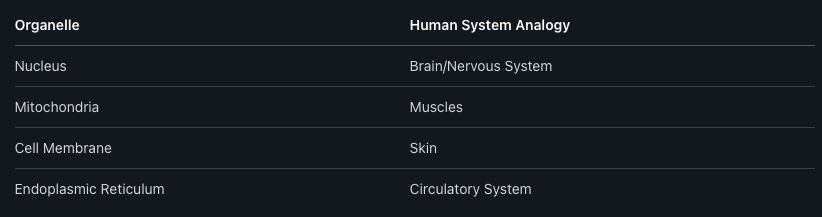
By comparing these jobs, students see how cells and bodies both rely on organization and teamwork to work well.
Cell Organelles in Evolution and Natural Selection
Cell organelles give clues about how life has changed over time.
Mitochondria and chloroplasts are believed to have come from ancient bacteria that joined larger cells. This idea, called endosymbiosis, explains why they have their own DNA. Understanding this helps students see how complex cells could evolve from simpler ones.
Natural selection also acts on organelle functions. If a mutation makes a mitochondrion more efficient, an organism may have more energy and survive better.
Students can look at the differences in organelles in plants and animals to see how they fit different environments. Comparing these features can show how small changes over time lead to new types of life.
Exploring Genetic Engineering
Knowledge of cell organelles is important in genetic engineering.
When scientists use CRISPR to modify genes, they rely on the nucleus to store and copy DNA. The rough endoplasmic reticulum and Golgi apparatus are involved in making and packaging proteins after DNA changes.
Hands-on labs or digital simulations can show how modified genes move through these organelles.
Genetic engineering is used to create insulin, study genetic diseases, and even develop crops that resist pests. By learning how cells process new genes, students understand how science and technology can solve real-world problems.
Frequently Asked Questions
Teachers can use creative lesson plans and hands-on activities to help students learn about cell organelles. There are ways to adapt lessons to fit different learning styles and to make each part of the cell easy to understand.
What are innovative methods to teach cell organelles to high school students?
Teachers often use interactive diagrams, digital tools, and 3D models in class. Gamified learning, such as quizzes or escape rooms about cell parts, can also increase interest. Storytelling and role-playing help students remember organelle functions.
Which hands-on activities effectively engage students with learning about cell organelles?
Building cell models with clay or household items gives students a tangible way to see each organelle. Microscopy labs allow students to observe real cells. Matching games or puzzles using organelle cards can reinforce names and functions.
How can I create a comprehensive lesson plan focused on cell organelles for a biology class?
A good lesson plan sets clear learning objectives, includes visual aids, and mixes reading assignments with interactive tasks. The lesson should also provide review questions or quizzes. Group work or discussion prompts help students process and share ideas.
What are some fun and educational activities to help students understand the functions of cell organelles?
Teachers can use songs or rhymes that name each organelle and its job in the cell. Acting out organelle functions as a group activity turns the concept into a memorable experience. Online games and animations can visually show how organelles work together.
In teaching cell organelles, how can one cater to different learning styles within a high school classroom?
Visual learners can use diagrams, color-coded cell charts, and videos. Hands-on learners might build models, while auditory learners benefit from discussions or listening to organelle-themed audio material. Group projects and presentations engage students who learn best by talking or teaching others.
What are some interactive classroom exercises that reinforce the learning of cell organelles and their importance in biology?
Teachers may use cell analogy projects, asking students to compare a cell to a familiar object like a factory or city. Quick question games, like "Jeopardy" or "Who Am I?", keep knowledge fresh. Organizing cell scavenger hunts or team-based quizzes encourages active participation.


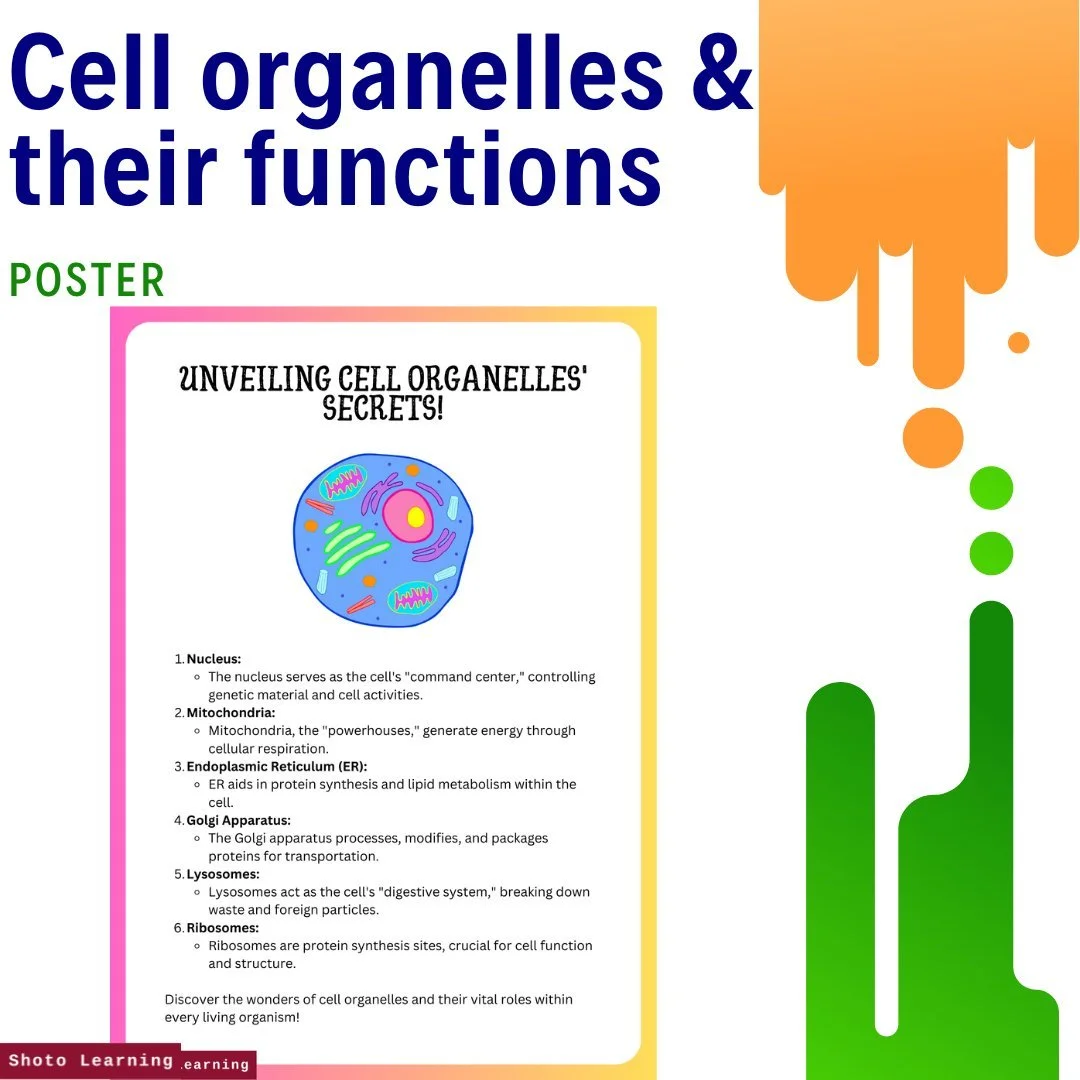


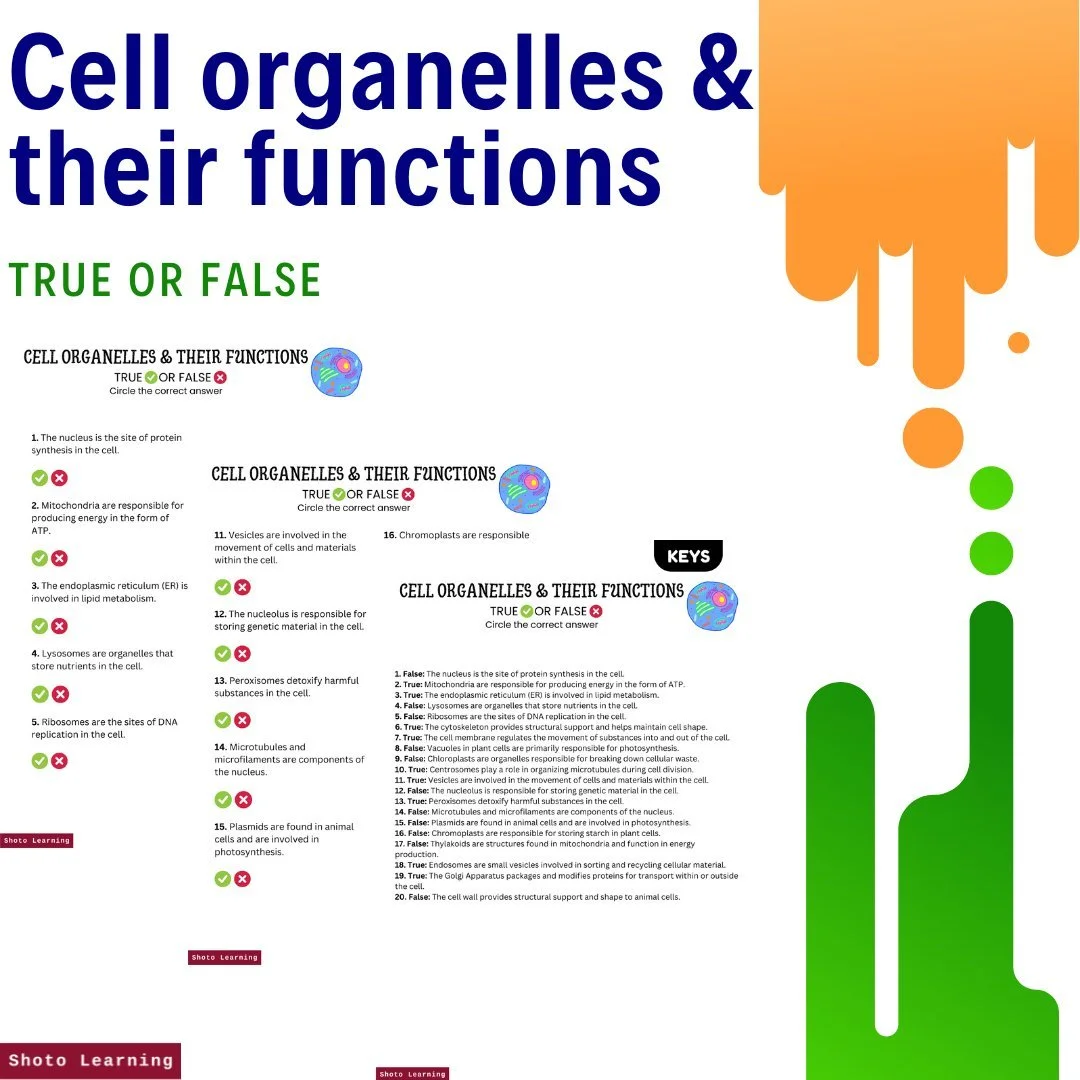


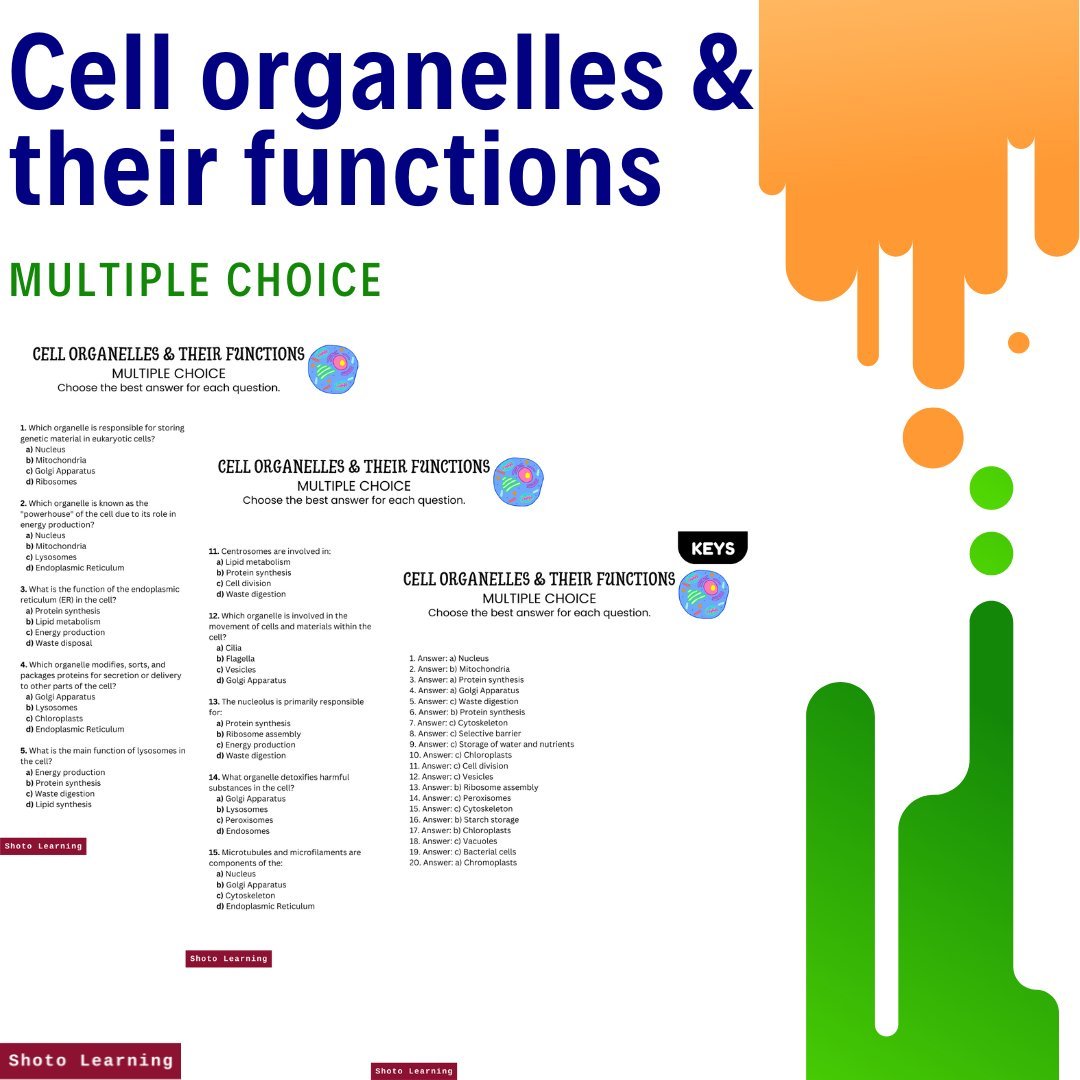


Dive deep into the world of cell organelles and their functions with our comprehensive "Cell Organelles and Functions Mega Bundle"! This all-inclusive bundle offers a wide range of engaging and educational resources designed to enhance your understanding of cellular biology.
Key Features:
Assignments: Embark on 10 stimulating assignments covering diverse topics, encouraging critical thinking and practical application of knowledge.
Bingo: 30 bingo cards featuring cell organelles and their functions for interactive learning and review sessions.
Crossword: Challenge your knowledge with a crossword puzzle focusing on cell organelles and their roles.
Cryptogram: Decode hidden messages related to cell organelles and functions with this fun and challenging activity.
Debate: Engage in stimulating discussions on various aspects of cell organelles and their functions with our debate prompts.
Experiments: Explore hands-on experiments illustrating fundamental principles across various disciplines, fostering deeper understanding and engagement.
Fill in the Blank: Test your knowledge with fill-in-the-blank questions covering essential concepts in cellular biology.
Flashcards: Reinforce key information with flashcards highlighting cell organelles and their functions.
Free ABC Order: Practice alphabetizing cell organelles and their functions with our free ABC order worksheet.
Free Label the Parts: Test your labeling skills with our free worksheet on identifying cell organelles.
Free Poster: Explore the intricate details of cell organelles and their functions with our free poster.
Lesson Plan: Dive deep with our detailed lesson plan, complete with engaging activities and discussion topics.
Matching: Match organelles with their corresponding functions in this interactive matching activity.
Missing Letters: Fill in the missing letters to complete words related to cell organelles and their functions.
Multiple Choice: Test your knowledge with multiple-choice questions covering various aspects of cellular biology.
PowerPoint: Explore the world of cell organelles and functions with our informative and visually appealing PowerPoint presentation.
Questions and Answers: Test your understanding with a comprehensive set of questions and answers on cell organelles and their functions.
Reading Comprehension: Sharpen reading skills with engaging passages, perfect for students and educators alike.
Scramble: Unscramble words related to cell organelles and their functions with this challenging activity.
Test (45 Minutes): Assess your knowledge with a 45-minute test covering cell organelles and functions.
True or False: Determine the accuracy of statements related to cell organelles and their functions with this true or false activity.
Word Search: Have fun while reinforcing your knowledge with a word search puzzle featuring cell organelles and their functions.
Writing Prompts: Stimulate critical thinking and creativity with writing prompts centered around cell organelles and their functions.
Whether you're a student, educator, or enthusiast, our "Cell Organelles and Functions Mega Bundle" has everything you need to master the fascinating world of cellular biology. Dive in, explore, and discover the intricacies of cell structure and function like never before!
Pages: 132 pages
Order your copy today!