
Mastering Cell Membranes: Effective Approaches and Top Resources for High School Biology Teachers
Understanding the cell membrane is an important part of high school biology. Teachers can help students master this topic by using clear explanations, simple models, and interactive activities. Students often find the details of the cell membrane confusing at first, but the right resources and teaching strategies make a big difference.
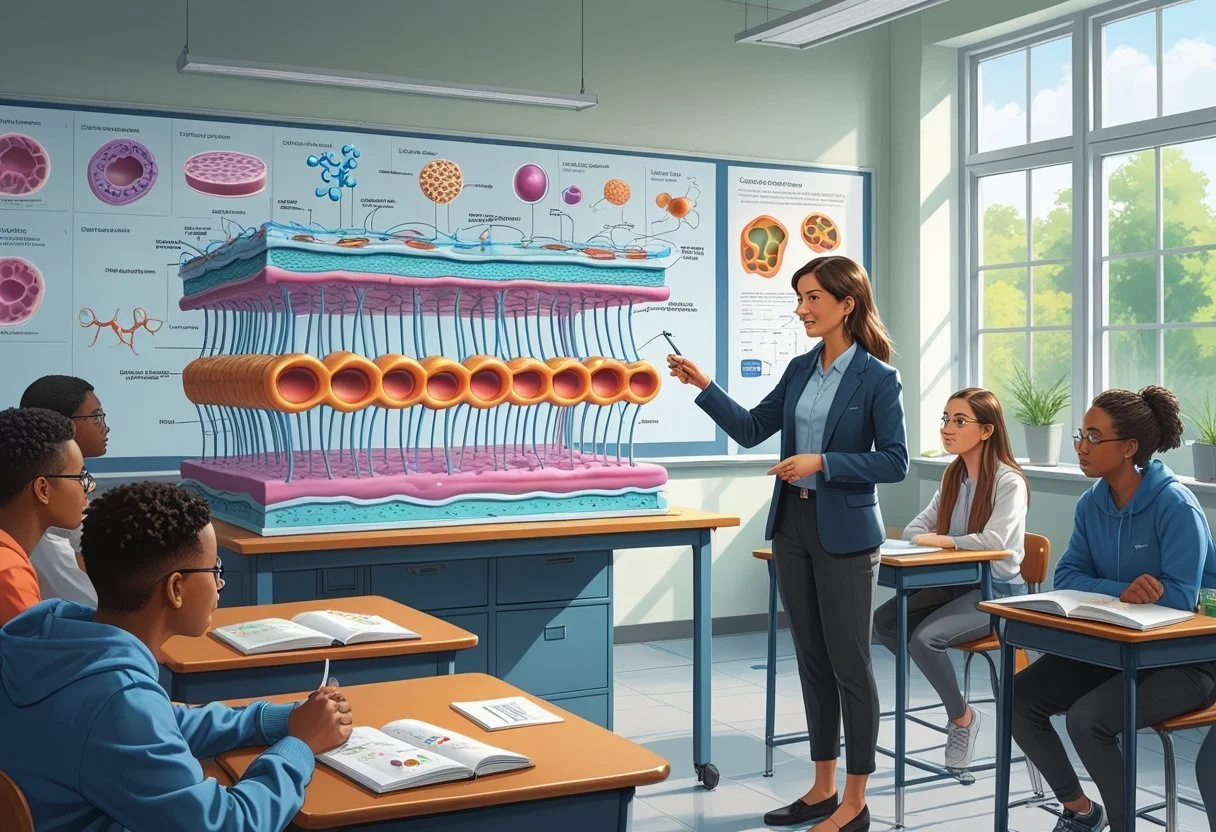
Activities that connect real-life situations and critical thinking help students remember key facts about cell membranes. Visual aids, practice questions, and frequent reviews also support learning and keep students engaged.
Key Takeaways
Effective teaching makes cell membrane concepts easier for students.
Connecting biology to real-world issues increases student interest.
Using the right learning resources supports mastery in high school biology.
Understanding the Cell Membrane Structure
The cell membrane plays a key role in controlling what enters and exits the cell, helping keep the inside stable and supporting cell theory. Its structure affects how the cell reacts to different pH levels and supports basic physiology by protecting cell parts.
Phospholipid Bilayer
The phospholipid bilayer forms the main structure of the cell membrane. Each phospholipid molecule has a hydrophilic (water-attracting) "head" and two hydrophobic (water-repelling) "tails." The molecules arrange themselves in two layers, with the heads facing outward toward water, and the tails tucked safely inside.
This design creates a flexible barrier. Only certain substances can easily pass through. Small, nonpolar molecules move freely, but ions and larger molecules need help. The bilayer is self-sealing, which keeps the cell’s environment steady and supports cell theory by maintaining a distinct boundary.
A table showing the structure:

Membrane Proteins
Membrane proteins sit in and on the bilayer. They have different important jobs. Some proteins help transport materials in and out of the cell. Others act as receptors, picking up signals from outside the cell.
There are two main kinds of proteins:
Integral proteins: Go through the entire membrane and help move large or charged particles across.
Peripheral proteins: Attach to the surface and can help with communication or support.
These proteins are essential for cell physiology. They allow for controlled movement of ions, water, or nutrients, and help the cell respond to changes in pH or signals from other cells.
Fluid Mosaic Model
The "fluid mosaic model" explains how cell membranes are flexible, not stiff. In this model, the phospholipids and proteins can move side to side within the layer. This movement helps the cell adjust to temperature changes and environmental shifts.
"Fluid" means the parts are always moving, like a liquid. "Mosaic" highlights the mix of different proteins and lipids, like small tiles in a piece of art.
This flexible nature enables the cell to divide, heal when damaged, and let certain molecules through while blocking others. The model helps explain how the cell maintains homeostasis, which is important for all cell functions and overall physiology.
Teaching Techniques for Cell Membrane Mastery
Teachers can boost student understanding of the cell membrane by using specific methods that promote student participation. These approaches help students develop problem-solving skills, work together, and build curiosity about biology.
Active Learning Approaches
Active learning keeps students involved as they examine the structure and function of cell membranes. Instead of just listening to lectures, students can work together in small groups to solve challenges about membrane transport, osmosis, or diffusion.
Example activities include:
Drawing and labeling diagrams of the phospholipid bilayer.
Sorting objects to model selective permeability.
Debating real-life situations, like what happens to cells in different solutions.
These methods encourage student interaction and let students share their ideas. Teachers can give short quizzes or use clicker questions to see what students understand, then adjust lessons as needed.
Interactive Simulations
Interactive simulations use technology to make complex topics, like membrane transport, easier to grasp. Students can watch how molecules move across a membrane in virtual activities and control variables, such as concentration gradients.
Popular simulation tools include:
CellCraft: Focuses on building and maintaining a cell.
PhET Interactive Simulations: Shows diffusion, osmosis, and active transport.
BioMan Biology: Features games and quizzes on the plasma membrane.
Simulations help students see real-time results, testing predictions and correcting mistakes. They support problem-solving skills by letting students try different solutions on their own or in pairs.
Inquiry-Based Experiments
Inquiry-based experiments use the scientific method to explore how cell membranes function. Students can design simple experiments, such as testing how different solutions affect egg membranes (a model for cell membranes).
Steps include:
Forming a testable question or hypothesis.
Planning and carrying out the experiment, like soaking eggs in vinegar, corn syrup, or water.
Analyzing and sharing results.
This hands-on work builds curiosity and teaches students to draw conclusions from evidence. It also lets students practice teamwork, data collection, and communication, which are key skills in science.
Developing Critical Thinking in Students
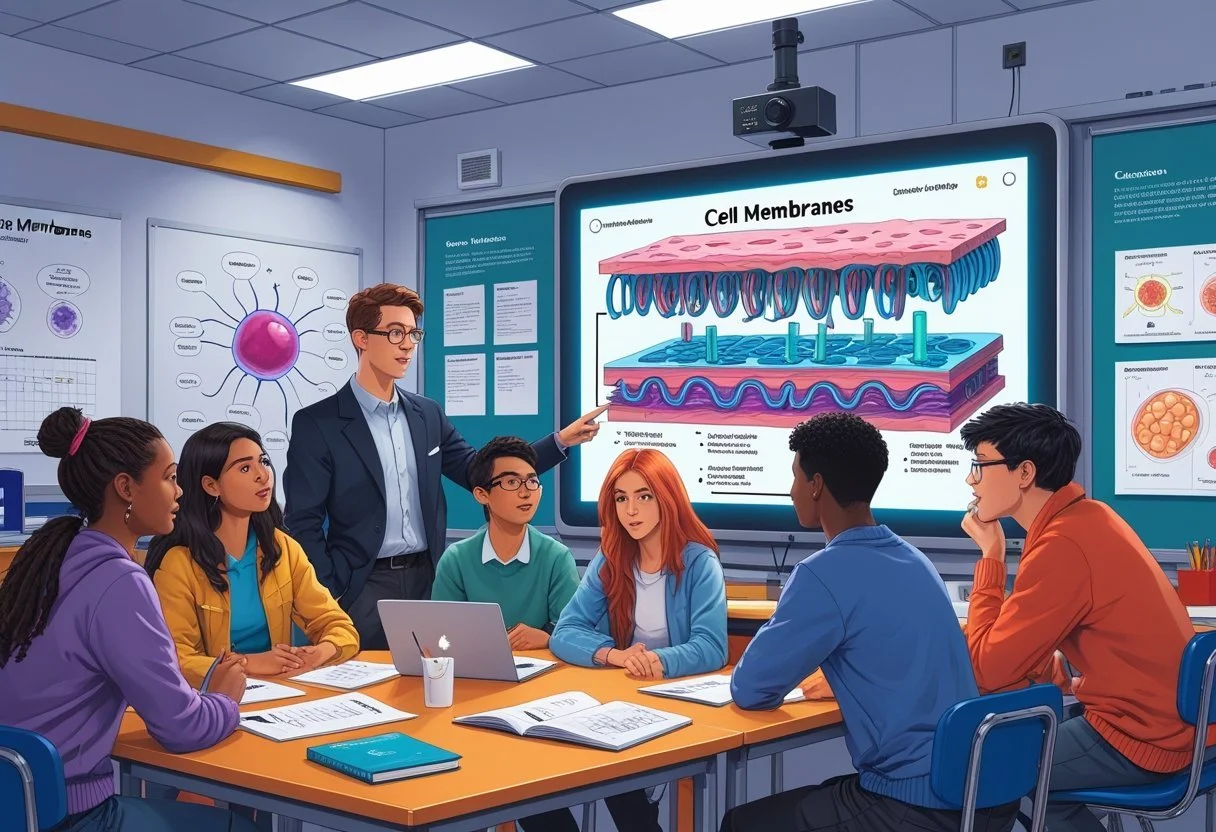
Helping students build critical thinking about cell membranes means using focused, classroom strategies. Encouraging both discussion and hands-on activities promotes deeper understanding and prepares students for real-world problem-solving.
Facilitating Thoughtful Discussion
Teachers can encourage students to discuss topics like passive and active transport, membrane structure, and real-life examples such as nerve signals and medication effects.
Small-group debates help students explain their thinking. For example, students can argue why certain molecules can or can't cross the plasma membrane.
Teachers may use question prompts:
What would happen if the membrane lost its selective permeability?
Why do cells need both diffusion and active transport?
These open-ended questions push students to evaluate and defend answers, instead of guessing. Exit tickets can be used to check if students can summarize what they learned or raise one new question, building both presentation and reflection skills.
Promoting Analytical Skills
Teachers can improve analytical skills by giving real data sets or case studies related to membrane function. For example, students can analyze a table of experimental results on osmosis in plant vs. animal cells.
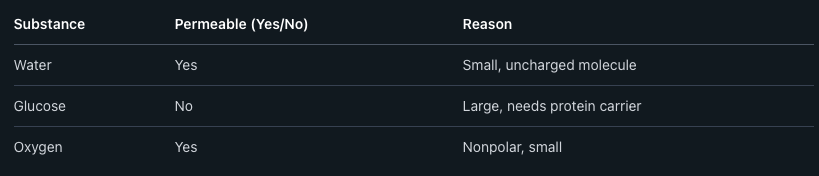
Tasks like creating flowcharts of membrane transport steps help students organize their thoughts. Teachers can also assign problem-solving activities: for example, predicting effects when ion channels malfunction.
These activities train students to apply concepts, evaluate evidence, and clearly present their reasoning.
Key Biological Processes Involving Cell Membranes
Cell membranes are involved in many important tasks. They control what enters and leaves the cell and help cells talk to each other. These actions affect things like pH balance, body functions, and how some antibiotics work.
Transport Mechanisms
Cell membranes use different methods to move molecules in and out of the cell. The main types are:
Passive transport (like diffusion and osmosis), which does not use energy. Molecules move from a high concentration to a low concentration.
Active transport needs energy, usually from ATP. It can move molecules against a concentration gradient.
Examples of transported substances:
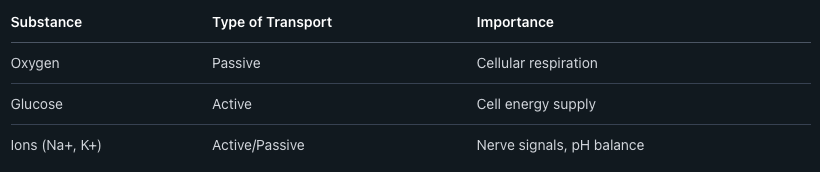
The membrane’s structure, including proteins and lipids, helps choose what moves through. Cells also use vesicles for bulk transport, like in endocytosis and exocytosis. These processes are key for balancing the cell's internal pH and help antibiotics enter or leave bacteria, which can influence treatment success.
Cell Communication
Cells use their membranes for communication. Special proteins, called receptors, stick out from the membrane. These receptors catch signals, such as hormones or neurotransmitters, and pass messages into the cell.
Communication helps cells react to changes, control physiology, and stay alive. Signal pathways often involve enzymes and second messengers, which help carry messages quickly and accurately.
Some antibiotics block cell communication in bacteria, stopping them from reacting and multiplying. Disrupting these pathways can be a way for medicines to fight infection. The membrane’s role in these messages is vital for keeping the body’s processes running smoothly.
Relevant Real-World Applications
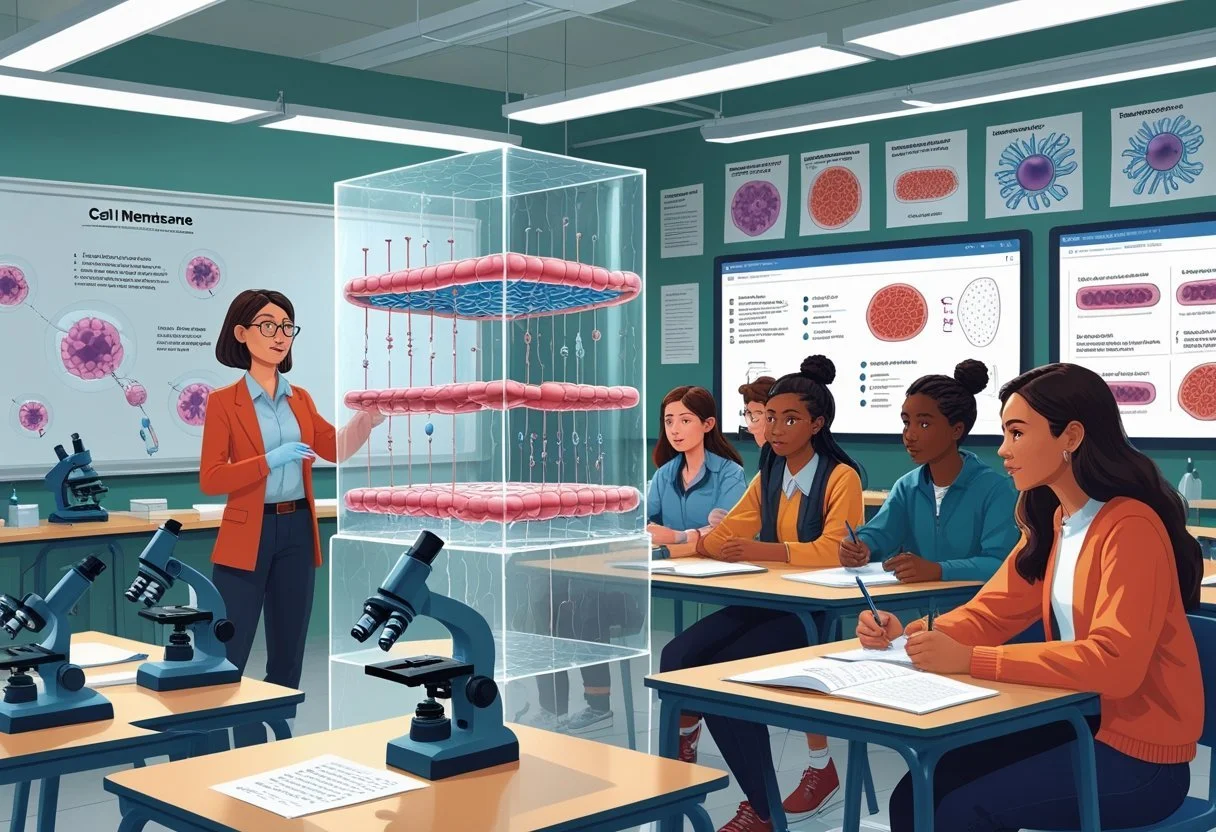
Cell membranes play an important role in medicine and public health. Understanding these structures helps explain how antibiotics work and how diseases spread.
Antibiotic Resistance
Bacteria defend themselves with their cell membranes. Antibiotics, such as penicillin, often target and damage these membranes to kill harmful bacteria.
However, some bacteria can change the structure of their membranes or produce enzymes that block the antibiotic. This leads to antibiotic resistance, which is a growing problem in hospitals and communities. When antibiotics stop working, infections become much harder to treat.
Below is a table showing some common antibiotics and how they affect bacterial cell membranes:

Teaching about cell membrane structure helps students understand why antibiotic resistance matters and how it develops.
Infectious Disease Dynamics
Many infectious diseases, including HIV, depend on interactions with cell membranes. HIV must bind to receptors on certain immune cells before it can infect a person.
The fluid nature of membranes also affects how viruses and bacteria invade cells. For example, changes in body temperature can alter the fluidity of cell membranes, which may help or hinder pathogen entry.
Teachers can explore scenarios where infectious diseases spread more quickly in certain conditions. For instance, some viruses enter cells faster when the host’s membrane is more fluid due to a mild fever.
Understanding membrane dynamics allows students to see how real-world factors like temperature, viruses, and bacteria impact disease transmission and treatment.
Connecting Cell Membranes to Broader Biological Concepts
Cell membranes are key to many processes in living things, not just at the single-cell level but also in larger biological systems. Their functions help explain patterns in population growth and play a role in biodiversity conservation.
Population Growth and Limits
Cell membranes control what enters and leaves each cell, which affects how cells use nutrients and energy. When teaching about population growth, it is important to explain that each organism in a population needs resources to survive and reproduce. If the environment cannot provide enough resources, the population will reach its carrying capacity.
The cell membrane's role in nutrient uptake and waste removal helps set limits for each organism. In crowded populations, cells may not get enough oxygen, water, or food. This connects to a drop in population growth rates as resources become scarce for both plants and animals.
A table to compare key ideas:

Understanding these links can help students see why populations cannot grow forever.
Biodiversity Conservation
Biodiversity depends on many species with different needs and abilities. Cell membranes are important for helping each species survive changes in the environment. For example, some animals can handle polluted air or water better than others because their cell membranes filter toxins more effectively.
When air quality is poor, some cells may suffer damage faster than others, leading to fewer species surviving in that habitat. This affects biodiversity and how ecosystems stay healthy.
Teachers can use examples like how plants’ cell membranes deal with polluted air, or how bacteria adapt to changes in soil. This shows that protecting biodiversity means understanding how cell membranes help living things react to the world around them.
Curating and Evaluating Educational Resources
Teachers need reliable tools and clear standards to help students understand cell membranes. The right educational content can make difficult ideas easier, especially in high school biology classes.
Selecting High-Quality Content
Quality resources should be accurate, up-to-date, and tie directly to important science standards. For cell membranes, materials should cover structure (like the phospholipid bilayer), transport mechanisms (diffusion, osmosis), and real-world examples.
Look for resources from trusted organizations, such as the National Science Teaching Association or major biology textbooks. Review each resource for clear language, simple diagrams, and age-appropriate explanations. Teachers can use this table to assist with evaluation:

Teachers should avoid resources that have errors, are outdated, or require college-level background knowledge.
Integrating Multimedia Materials
Multimedia can support learning with videos, interactive activities, and animations. These resources help students see processes like active and passive transport in action. For high school biology, platforms like HHMI Biointeractive or YouTube EDU provide accurate and engaging materials.
Short video clips can introduce lessons or review key concepts. Interactive simulations let students explore how molecules move through membranes. Teachers may group students for hands-on labs, where virtual tools help explain concepts step by step.
When adding multimedia, always check for accessibility and age-appropriate content. This ensures every student can benefit from the resource regardless of learning style or classroom technology limits.
Frequently Asked Questions
Teaching about cell membranes in high school biology involves direct instruction, hands-on activities, and the use of accurate resources. Common challenges include student misconceptions and finding effective ways to measure understanding.
What are effective strategies for teaching the structure and function of cell membranes to high school students?
Teachers often use diagrams, videos, and storytelling to help students visualize and relate to membrane structure. Group discussions and the use of clear analogies, like the “gatekeeper” model, can make the functions of cell membranes more understandable.
Hands-on demonstrations, such as building models with simple materials, help reinforce learning. Teachers can also connect membrane concepts to real-life examples, like nutrient movement and medication delivery.
How can lab activities be incorporated into a lesson plan to enhance understanding of cell membranes?
Osmosis and diffusion labs let students see membrane function in action. Common activities include using dialysis tubing or potato slices in salt water to show how water and solutes move across membranes.
Teachers can assign simple experiments where students predict and observe changes. Writing lab reports helps students organize their thoughts and connect results to membrane principles.
What resources are available for creating interactive models of cell membranes in a classroom setting?
Many teachers use printable templates, clay, beads, or online simulation tools. Websites like HHMI BioInteractive and PhET Interactive Simulations offer free, interactive digital models.
Physical model kits can be purchased and reused. Everyday materials like balloons and candy can help students build membrane models on a budget.
Can you provide a list of key concepts students should grasp when learning about cell membranes?
Structure of the phospholipid bilayer
Role of proteins, cholesterol, and carbohydrates
Selective permeability and the movement of substances
Processes like diffusion, osmosis, and active transport
Importance of cell membranes in homeostasis
What assessment methods can teachers use to gauge student understanding of cell membranes?
Quizzes and diagrams asking students to label parts test knowledge of structure. Performance-based tasks, such as building a model or explaining a process to peers, check for deeper understanding.
Short written explanations and multiple-choice questions help identify misconceptions. Lab reports can be graded to assess both content knowledge and scientific writing.
How can teachers address common misconceptions about cell membranes during biology lessons?
Teachers can ask students to share what they think before a lesson starts and correct misunderstandings on the spot. Visual aids and interactive models help clarify how and why certain molecules can and cannot pass through.
Comparing membrane functions to familiar ideas, like a security gate or filter, can prevent confusion. Reviewing misconceptions in class discussions supports long-term learning.


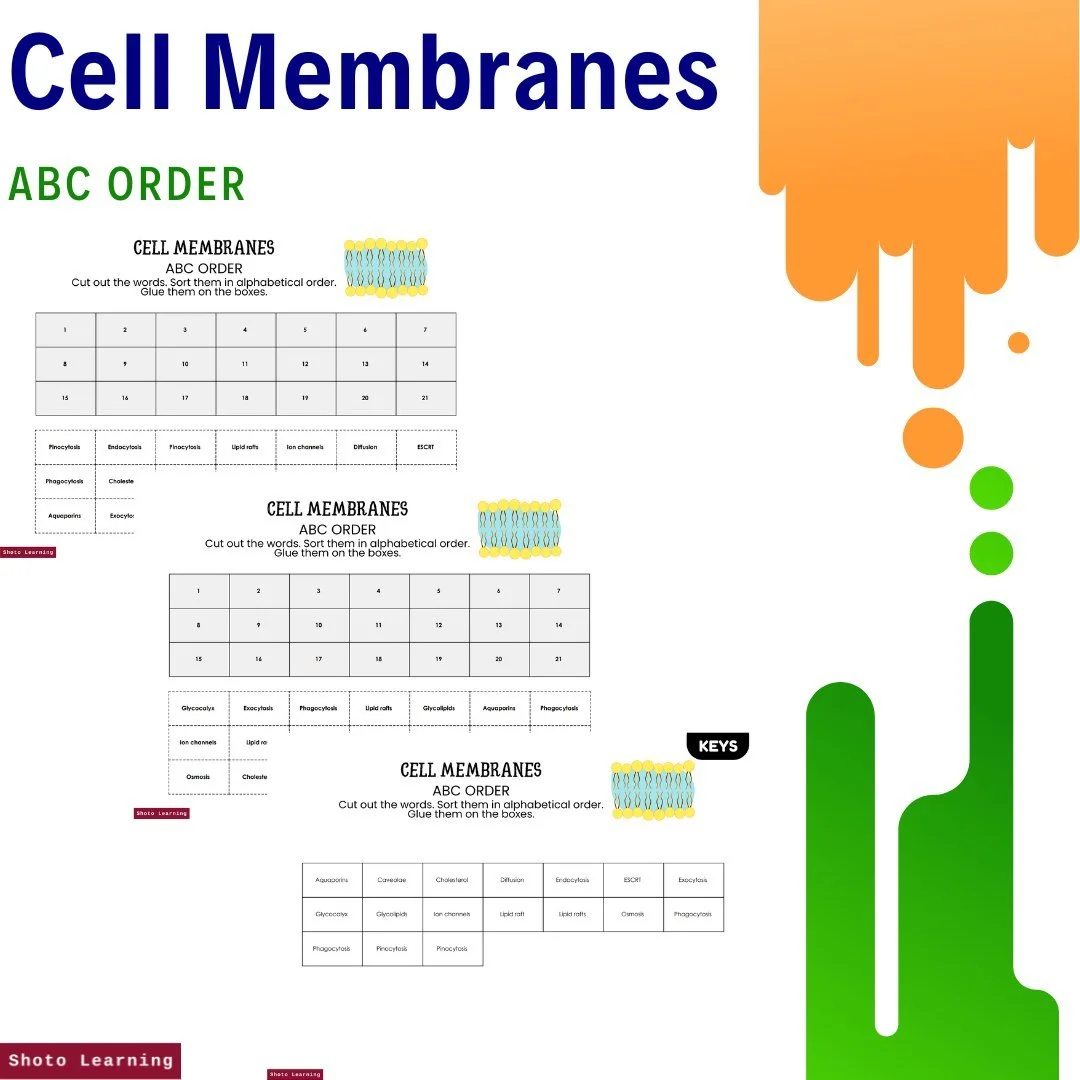


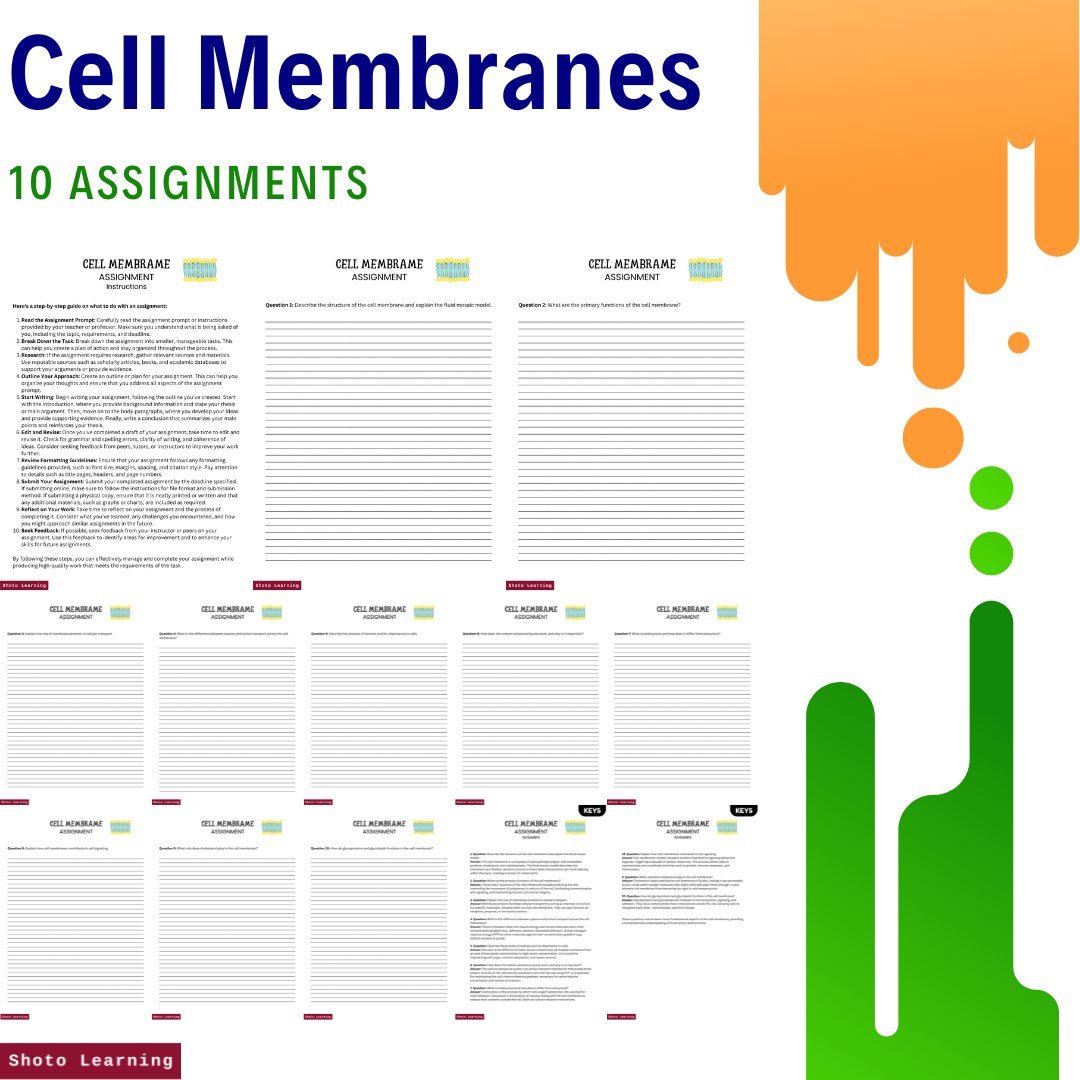
Dive deep into the world of cell membranes with our comprehensive Cell Membrane Mastery Bundle, designed to provide a holistic learning experience for students, educators, and biology enthusiasts alike. This all-inclusive bundle features a wide array of engaging and interactive resources, each meticulously crafted to enhance understanding and retention of key concepts related to cell membrane structure, function, and significance in cellular biology.
Included in this bundle:
Assignments: Embark on 10 stimulating assignments covering diverse topics, encouraging critical thinking and practical application of knowledge.
Bingo: Challenge your knowledge with 30 bingo cards featuring cell membrane-related terms and concepts.
Crossword: Test your understanding with a crossword puzzle that explores essential terminology and concepts.
Cryptogram: Decode the hidden message while learning about cell membranes in a fun and challenging way.
Debate: Engage in thought-provoking discussions on the role of cell membranes in cellular function and organization.
Experiments: Explore hands-on experiments illustrating fundamental principles across various disciplines, fostering deeper understanding and engagement.
Fill in the Blank: Reinforce your understanding with fill-in-the-blank exercises covering key concepts related to cell membranes.
Flash Cards: Master cell membrane terminology and concepts with a set of 20 flashcards for quick review and study.
Free ABC Order: Practice alphabetizing cell membrane-related terms with this free worksheet.
Free Label the Parts: Identify and label the components of a cell membrane with this free activity.
Free Poster: Decorate your classroom or study space with a visually appealing poster highlighting key aspects of cell membranes.
Lesson Plan: Dive deep with our detailed lesson plan, complete with engaging activities and discussion topics.
Matching: Test your knowledge with a matching activity that pairs cell membrane terms with their definitions.
Missing Letters: Exercise your problem-solving skills with worksheets challenging you to fill in missing letters to complete cell membrane-related words.
Multiple Choice: Assess your understanding with a set of multiple-choice questions covering various aspects of cell membranes.
PowerPoint: Dive into an informative presentation exploring cell membrane structure, function, and significance.
Questions and Answers: Test your knowledge with a series of questions and answers covering cell membrane biology.
Reading Comprehension: Sharpen reading skills with engaging passages, perfect for students and educators alike.
Scramble: Unscramble jumbled words related to cell membranes in this engaging activity.
Test (45 Minutes): Challenge yourself with a timed test covering key concepts related to cell membranes.
True or False: Determine the validity of statements about cell membranes in this true-or-false activity.
Word Search: Search for cell membrane-related terms hidden within a grid of letters.
Writing Prompts: Stimulate critical thinking and creativity with writing prompts related to cell membrane biology.
With this comprehensive bundle, you'll have everything you need to master the complexities of cell membranes and gain a deeper appreciation for their vital role in cellular biology. Unlock the secrets of cellular gatekeepers today!
Pages: 134 pages
Order your copy today!