
Mastering the Differences Between Prokaryotic and Eukaryotic Cells: Techniques for Engaging and Effective Science Instruction
Understanding the differences between prokaryotic and eukaryotic cells can be challenging for students, yet this knowledge is essential in biology. Teachers can help learners succeed by using clear strategies that highlight how these two cell types differ and why it matters. Good teaching methods make these difficult ideas easier to understand and remember.
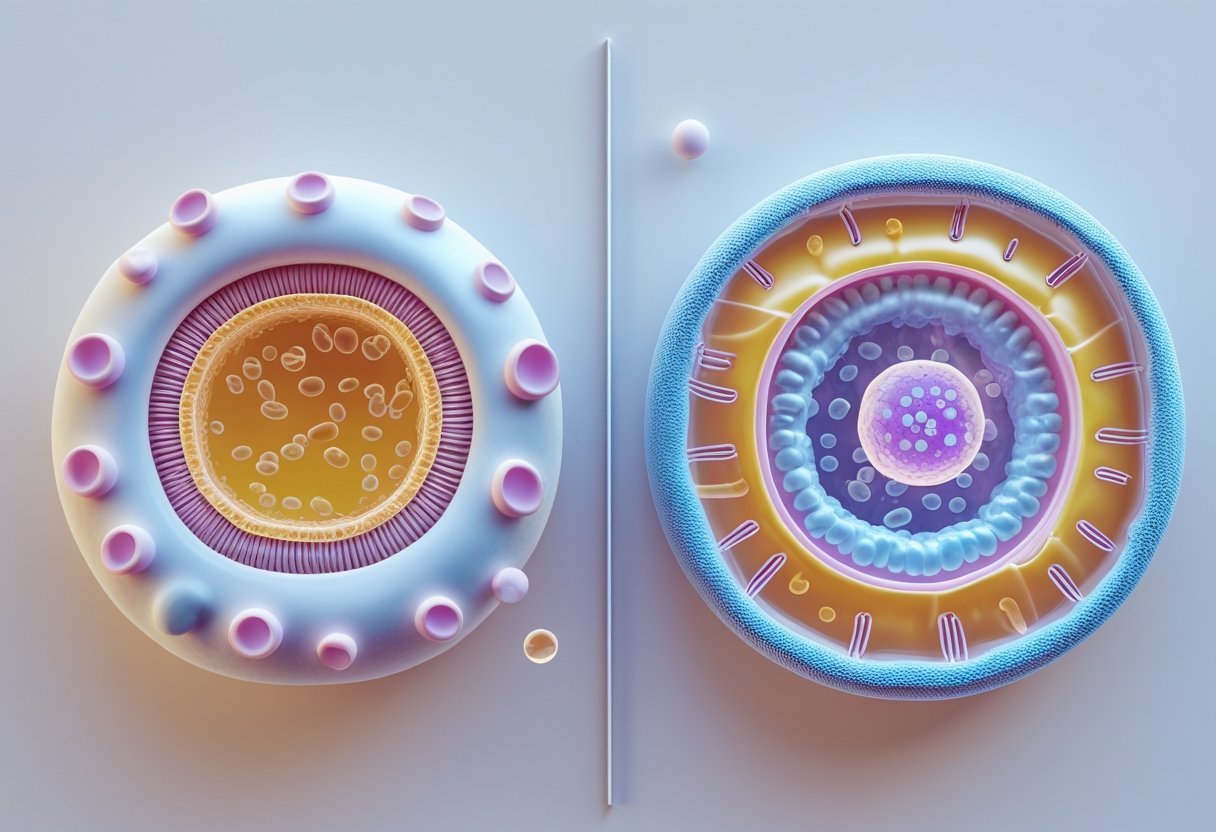
Small changes in how lessons are planned can lead to better student engagement and learning. By breaking down cell structures, genetic material, and functions step by step, teachers can help students grasp both the basics and details.
Key Takeaways
Knowing the key differences between prokaryotic and eukaryotic cells builds a strong science foundation.
Clear teaching helps students understand cell types, structure, and function.
Simple explanations make learning complex biology topics more manageable.
Fundamental Cell Theory and Cell Types
Cell theory explains that cells are the smallest unit of life and all living things are made of cells. There are two main kinds of cells in living organisms: prokaryotic and eukaryotic, each with special features that set them apart.
Overview of Cell Theory
Cell theory is a set of ideas that guide the study of biology. It has three main points:
All living things are composed of one or more cells.
The cell is the basic unit of structure and function in living things.
All cells come from pre-existing cells.
These principles apply to both prokaryotes and eukaryotes. The theory shows that even the simplest life forms, like bacteria (which are prokaryotic), still have cells that act as the building blocks of life. The idea that new cells only come from other cells helps explain growth and healing in all living things.
Defining Prokaryotic and Eukaryotic Cells
Prokaryotic cells are small and simple. They do not have a nucleus or other membrane-bound organelles. Most prokaryotes are bacteria and archaea. Their genetic material is stored in a single loop of DNA found in the cytoplasm.
Eukaryotic cells are larger and more complex. They have a nucleus surrounded by a membrane. They also have other organelles such as mitochondria and endoplasmic reticulum. Animals, plants, fungi, and protists are all made of eukaryotic cells.
The presence or absence of a nucleus is the main way to tell prokaryotes and eukaryotes apart. Eukaryotes can be single-celled or multi-celled, while prokaryotes are always single-celled organisms.
Major Differences Between Prokaryotes and Eukaryotes
The key differences between prokaryotic and eukaryotic cells can be seen in their structure and complexity:
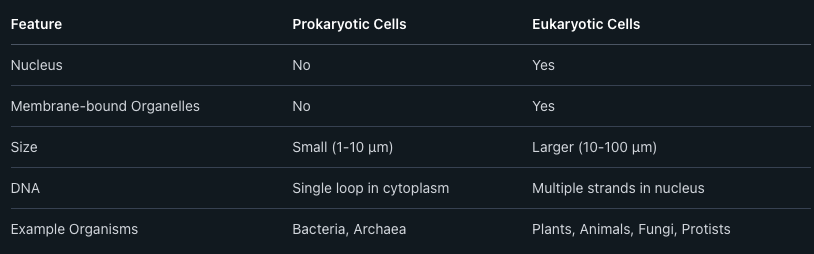
Prokaryotes often live in environments that are harsh or extreme, using simpler ways to survive and reproduce quickly. Eukaryotes have specialized parts inside the cell that allow them to perform more functions and build multicellular organisms. These basic structural differences explain how both cell types support different kinds of life on Earth.
Detailed Structure of Prokaryotic Cells
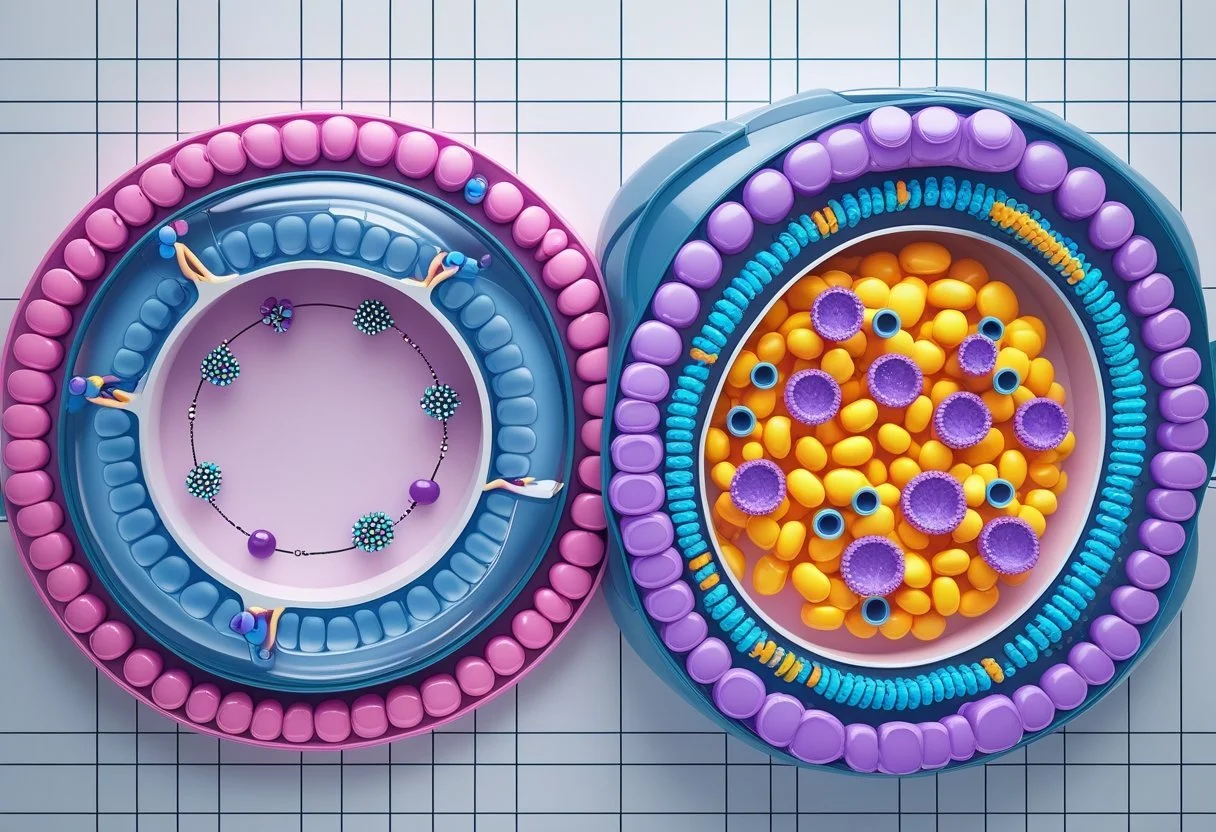
Prokaryotic cells, such as bacteria and archaea, have a straightforward structure without a nucleus. Their features help them survive in many environments, from soil to hot springs.
Cell Wall and Capsule
Most prokaryotic cells, including those in the domains Bacteria and Archaea, have a strong cell wall. In eubacteria (true bacteria), this wall is made mostly of peptidoglycan, which gives it strength and shape. Archaea, however, have cell walls made from other molecules, not peptidoglycan, making them different from bacteria.
Outside the cell wall, many prokaryotes have a capsule. The capsule is made of sugars and sometimes proteins. It helps protect the cell from drying out and shields it from the body's immune system, making some bacteria harder to destroy. The capsule also lets bacteria stick to surfaces and to each other, forming groups known as biofilms.

Nucleoid and Circular DNA
Prokaryotic cells lack a true nucleus. Instead, their genetic material gathers in a region called the nucleoid. The nucleoid is not surrounded by a membrane.
The DNA in prokaryotes is usually a single, circular molecule. This circular DNA carries the instructions for the cell's activity and reproduction. Since there is no nuclear membrane, the DNA is in direct contact with the rest of the cell.
Unlike eukaryotic cells, prokaryotes often have only one copy of their main DNA. The simple structure lets the cell copy its DNA and divide quickly, helping bacteria and archaea increase in number fast when conditions are good.
Plasmids, Pili, and Flagella
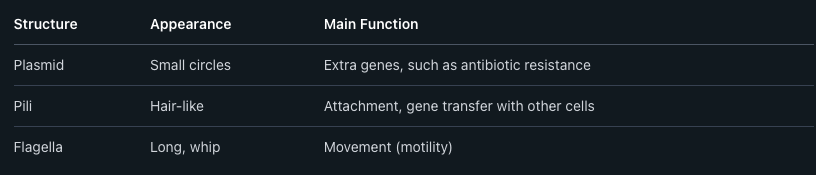
Many prokaryotic cells carry small, extra pieces of DNA called plasmids. Plasmids are circular and can give advantages, such as antibiotic resistance or the ability to eat new food sources.
Prokaryotes move and connect with their world using surface structures:
Pili are hair-like tubes that stick out from the cell. They help the cell attach to things and to transfer plasmids to other cells.
Flagella (singular: flagellum) are long, whip-like tails. Bacteria and archaea use them to swim through liquids.
Prokaryotic Ribosomes and Cytoplasm
All prokaryotic cells contain ribosomes in the cytoplasm. Ribosomes in prokaryotes are smaller than those found in eukaryotic cells, often called 70S ribosomes. These bodies build proteins needed for life by reading the cell’s genetic instructions.
The cytoplasm is the jelly-like fluid filling the cell. It holds all the cell’s molecules, enzymes, and structures. Since there are no membrane-bound organelles (like mitochondria), every part of the cell’s activity, including growth and energy production, happens in the cytoplasm.
This simple setup helps prokaryotes survive in all types of environments, from the human body to extreme conditions like hot springs and salt lakes.
Detailed Structure of Eukaryotic Cells
Eukaryotic cells are complex and contain many specialized parts. They include a nucleus, various organelles, an organized cytoskeleton, and unique features in plant and animal cells.
Nucleus and DNA Organization
The nucleus is the command center of the eukaryotic cell. It stores most of the cell’s genetic material as DNA. The DNA in eukaryotic cells is organized into multiple linear chromosomes.
A double membrane called the nuclear envelope surrounds the nucleus. Nuclear pores in this envelope allow certain molecules to move in and out. Inside the nucleus, the nucleolus helps make ribosomes. Eukaryotic DNA is wrapped around proteins called histones, which helps keep the DNA organized and easy to manage.
Functions of the nucleus:
Stores and protects genetic information
Controls cell activities by regulating gene expression
Coordinates cell division (mitosis and meiosis)
Membrane-Bound Organelles
Eukaryotic cells have different organelles, each with special tasks. These are surrounded by membranes and found only in eukaryotes.
Main organelles and their functions:
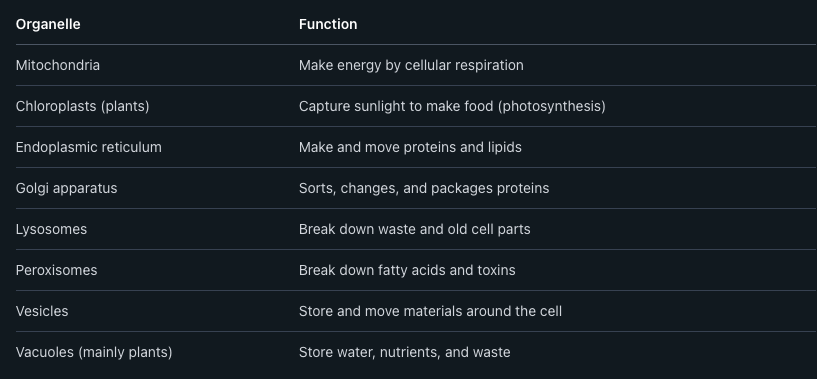
These organelles help the cell do many jobs at once. Mitochondria and chloroplasts have their own DNA and are important for energy use.
Cytoskeleton and Cell Membrane
The cytoskeleton gives shape and support to the cell. It is made of a network of fibers like microtubules, microfilaments, and intermediate filaments.
These fibers help with cell movement, division, and the transport of materials. Without the cytoskeleton, cells would lose their shape and many functions.
The cell membrane is a thin layer that surrounds the cell. It is made mostly of phospholipids and proteins. The membrane controls what enters and leaves the cell and helps cells communicate with each other.
Key features of the cytoskeleton:
Provides structure
Helps move cell parts
Plays a role in cell division
Specialized Structures in Plant and Animal Cells
There are some parts found only in plant or animal cells.
Plant cells have:
Chloroplasts: Absorb light to make food by photosynthesis
Large central vacuole: Stores water, helps maintain shape
Cell wall: Rigid layer outside the cell membrane, made of cellulose for extra support
Animal cells have:
Centrioles: Help organize cell division
More, smaller vacuoles: Store water and other substances
These differences help plant and animal cells do their specific roles in living things. Plant cells focus more on making food and holding shape, while animal cells often focus on movement and flexibility.
Genetic Material and DNA Processes
Genetic material shapes how cells operate. DNA structure, gene expression, and copying methods all show major differences between prokaryotes and eukaryotes.
Comparing DNA Structure: Prokaryotes vs Eukaryotes
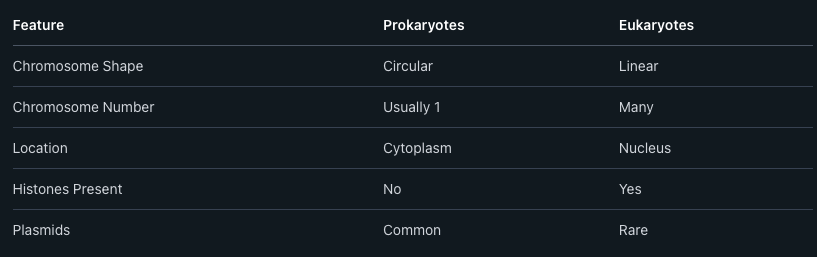
Prokaryotic cells store their DNA as a single, circular DNA molecule in the cytoplasm. They have no nucleus. Most prokaryotes have only one main chromosome. They may also have small rings of DNA called plasmids.
Eukaryotic cells keep their genetic material in a separate nucleus. Their DNA is arranged in linear chromosomes. These chromosomes are tightly wrapped around histone proteins for support. Most eukaryotes have multiple chromosomes.
Transcription and Translation Differences
In prokaryotes, transcription and translation happen at the same time in the cytoplasm. As soon as an RNA strand begins to form, ribosomes can attach and start making proteins. This is called coupled transcription and translation. Prokaryotic mRNA usually does not need to be edited before it is used.
Eukaryotic cells keep these processes separate. Transcription happens inside the nucleus, where DNA to RNA is made. The new mRNA is changed by adding a cap and tail, and by removing introns (non-coding regions). The edited mRNA then leaves the nucleus. Translation takes place in the cytoplasm.
Key differences:
Compartmentalization in eukaryotes
RNA editing in eukaryotes, but almost none in prokaryotes
Speed: protein production is faster in prokaryotes
DNA Replication Mechanisms
DNA replication copies the cell’s genetic material so it can be passed to new cells.
In prokaryotes, the process starts at a single point called the origin of replication. The circular DNA then unzips and new strands are formed, going both directions until the whole loop is copied. Plasmids can replicate on their own, separate from the main chromosome.
Eukaryotes have much more DNA, so they use multiple origins of replication on each chromosome to speed up the process. Replication happens only in the nucleus and is highly organized. Special proteins and enzymes help control the accuracy of copying.
Key facts:
Prokaryotic replication is simpler, with one starting point.
Eukaryotic replication is more complex with many starting points.
Eukaryotes use more proteins to control and check DNA replication.
Cellular Reproduction and Division
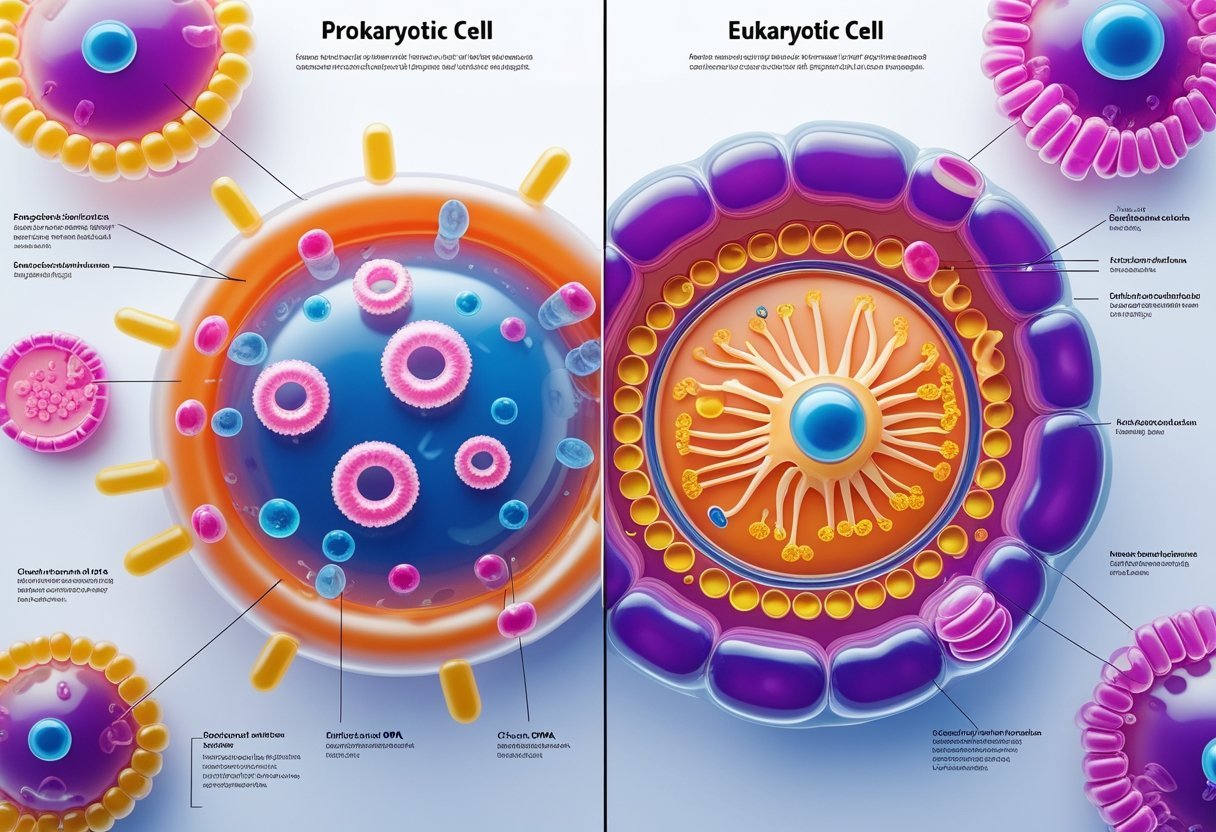
Cells reproduce and divide in different ways depending on their type. Understanding these differences helps explain how organisms grow, repair, and maintain their bodies.
Binary Fission in Prokaryotic Cells
Prokaryotic cells, like bacteria, use a simple process called binary fission to reproduce. In this process, the cell’s single circular DNA molecule copies itself. The cell then grows larger, and the DNA copies move to opposite ends.
A new cell wall forms down the middle, splitting the cell into two identical cells. This process is quick and doesn’t need many steps. Binary fission lets prokaryotic cells multiply rapidly, which helps them survive in changing environments.
Key features of binary fission:
Simple and fast
Produces two identical daughter cells
Used by bacteria and archaea
This process does not include complex structures like a nucleus or involve many chromosomes.
Mitosis and Meiosis in Eukaryotic Cells
Eukaryotic cells use more complex methods called mitosis and meiosis. In mitosis, a cell duplicates its DNA and divides into two new cells. Each has the same number of chromosomes as the original. Mitosis is used for growth and repair in multicellular organisms like plants and animals.
In meiosis, cells divide to make reproductive cells, like sperm and eggs. Each new cell gets half the number of chromosomes. This is important for sexual reproduction because it keeps the chromosome number stable, generation after generation.
Comparison table:

Both mitosis and meiosis involve a nucleus and several steps to ensure correct DNA division.
Cytokinesis and Its Importance
Cytokinesis happens after the nucleus divides. It is when the cell’s cytoplasm splits, creating two new cells. In prokaryotes, this is part of binary fission. In eukaryotes, it follows mitosis or meiosis.
In animal cells, the cell membrane pinches in and splits the cell. In plant cells, a new cell wall forms between the two new cells. Cytokinesis is needed to finish cell division and ensure each new cell gets enough cytoplasm, organelles, and materials for growth.
Without cytokinesis, cells would have extra nuclei or incomplete contents, which would affect cell function and survival.
Functional and Metabolic Differences
Prokaryotic and eukaryotic cells carry out life processes in different ways. Their ability to use energy, make food, and live as single or multicellular organisms sets them apart.
Autotrophs and Heterotrophs
Both cell types can be autotrophs (make their own food) or heterotrophs (get food from outside sources). However, their methods are not always the same.
Many prokaryotes, like cyanobacteria, use photosynthesis to convert sunlight into energy. Others break down inorganic chemicals, which is called chemosynthesis. These abilities help them survive in harsh places, such as hot springs or deep ocean vents.
Eukaryotic cells, such as those in plants and algae, also perform photosynthesis. Animals and fungi are heterotrophs; they must eat plants, other animals, or decaying matter. Plants are never heterotrophs, but some unicellular eukaryotes can switch types, depending on what food is there.

Cellular Processes: Proteins, Carbohydrates, and Lipids
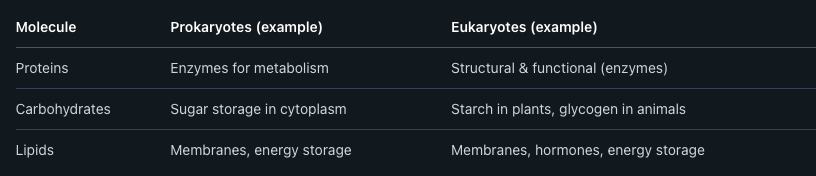
Prokaryotic and eukaryotic cells use proteins, carbohydrates, and lipids in different ways. Both types need these molecules for energy and structure, but their processes can be more simple or complex.
Prokaryotic cells carry out cellular respiration across the cell membrane since they do not have mitochondria. Their smaller size means fewer specialized structures. They use proteins for most cell tasks and store simple sugars for energy.
Eukaryotic cells break down carbohydrates, lipids, and proteins often inside organelles like mitochondria or lysosomes. This lets them handle complex reactions and store energy for longer. They can also build complex tissues using these molecules.
Single-Celled and Multicellular Organisms
Most prokaryotes are unicellular organisms, meaning each cell lives and works alone. Some, like certain bacteria, can form colonies, but each cell is independent.
Eukaryotic cells can be single-celled (like amoebas) or part of multicellular organisms (like humans or plants). In multicellular eukaryotes, cells can have special jobs. For example, nerve cells send signals, while muscle cells help move the body.
Multicellular eukaryotes can grow big and complex because their cells work together. This allows for tissues and organs that do many tasks at once. Prokaryotes usually stay small and simple since they do not have this level of teamwork.
Effective Teaching Strategies for Cell Differences
Teaching the differences between prokaryotic and eukaryotic cells is easier when students can see, interact, and test their knowledge in different ways. Using microscopes, hands-on activities, frequent assessments, and multimedia tools helps make cell science more clear and memorable.
Visualizing Cells: Microscopes and Electron Microscopes
Real cell images support learning. Teachers often use light microscopes to show the basic shapes of prokaryotic and eukaryotic cells.
Electron microscopes reveal much smaller cell parts, like ribosomes or cell walls in bacteria. Light microscopes are common in classrooms, but these only show larger structures. In contrast, electron microscopes offer images of structures like mitochondria or detailed cell membranes.
A clear diagram or side-by-side table showing details found under each microscope helps students grasp differences.
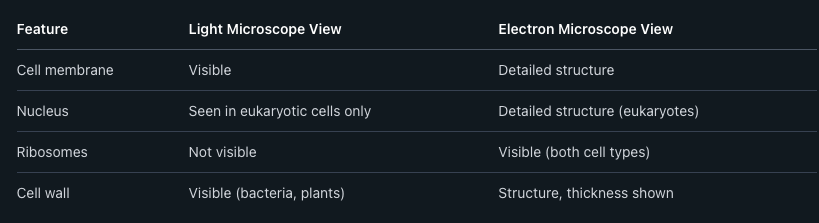
Microscope labs and image comparisons make lessons specific and engaging.
Interactive Classroom Activities
Hands-on activities help students connect facts with real experiences. Building models of prokaryotic and eukaryotic cells lets students learn organelle names and locations.
Drawing comparisons between the two cell types with Venn diagrams makes key similarities and differences stick.
Group activities like matching games, sorting tasks, or even digital quizzes using interactive whiteboards can improve participation. These methods keep students focused while allowing teachers to spot misunderstandings quickly.
Role-playing organelles or labeling diagrams also supports memory through movement and teamwork.
Assessment: Quizzes, Practice Tests, and Study Resources
Assessment helps track progress and highlights problem areas. Quizzes and practice tests—short, focused, and frequent—help students remember what they learn about cell structures and functions.
Teachers often use digital quiz tools or platforms like study.com, which offer unlimited access to quizzes, flashcards, and teaching resources. These resources include step-by-step review questions and practice problems for both in-class and homework assignments.
A table to organize quiz types can be useful:
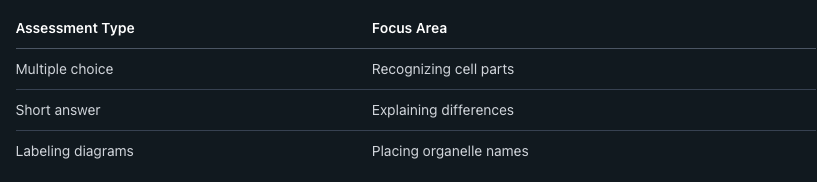
Regular review and feedback from these tools encourages understanding, not just memorization.
Leveraging Video Lessons and Personalized Coaching
Video lessons help explain cell differences using animations, diagrams, and real-life examples. These videos show how microscopes and electron microscopes reveal different cell parts, which words and pictures alone can’t always make clear.
Websites like study.com allow students and teachers to access video lessons anytime. This supports different learning speeds and styles.
Personalized coaching is useful for students who need extra help. Teachers or online resources can give one-to-one guidance, answer specific questions, and provide custom explanations. Many platforms also allow unlimited access to these features, making it easier for students to learn at their own pace.
Frequently Asked Questions
Prokaryotic cells and eukaryotic cells show clear differences in structure, genetic organization, and organelles. Teaching approaches can make these ideas easier for students to understand.
What are the primary differences in cell structure between prokaryotic and eukaryotic cells?
Prokaryotic cells are smaller and do not have a nucleus. Their DNA floats freely in the cytoplasm.
Eukaryotic cells are larger, have a true nucleus, and contain many internal structures called organelles.
How can the genetic material of prokaryotic cells be contrasted with that of eukaryotic cells?
Genetic material in prokaryotic cells exists as a single, circular strand of DNA. It is not found inside a membrane.
Eukaryotic cells have DNA arranged in several linear chromosomes. This DNA is stored within the nucleus.
What are the key differences in the cell division processes of prokaryotic and eukaryotic cells?
Prokaryotic cells use binary fission to divide. This is a simple process with little preparation.
Eukaryotic cells divide by mitosis or meiosis. These processes are more complex and involve multiple steps.
Can you explain the differences in membrane-bound organelles between prokaryotic and eukaryotic cells?
Prokaryotic cells lack membrane-bound organelles such as mitochondria and endoplasmic reticulum.
Eukaryotic cells have many types of organelles, each with a special job, and most are surrounded by membranes.
What teaching strategies best aid in understanding the cellular differences relevant to high school biology?
Using labeled diagrams can help students picture how prokaryotic and eukaryotic cells differ.
Hands-on activities, such as building cell models or sorting organelle cards, can support memory. Comparing real cell images under a microscope adds to understanding.
In what ways are the ribosomes of prokaryotic cells different from those in eukaryotic cells?
Prokaryotic ribosomes are smaller, measuring 70S in size.
Eukaryotic ribosomes are larger, at 80S, and are found both in the cytoplasm and attached to organelles.


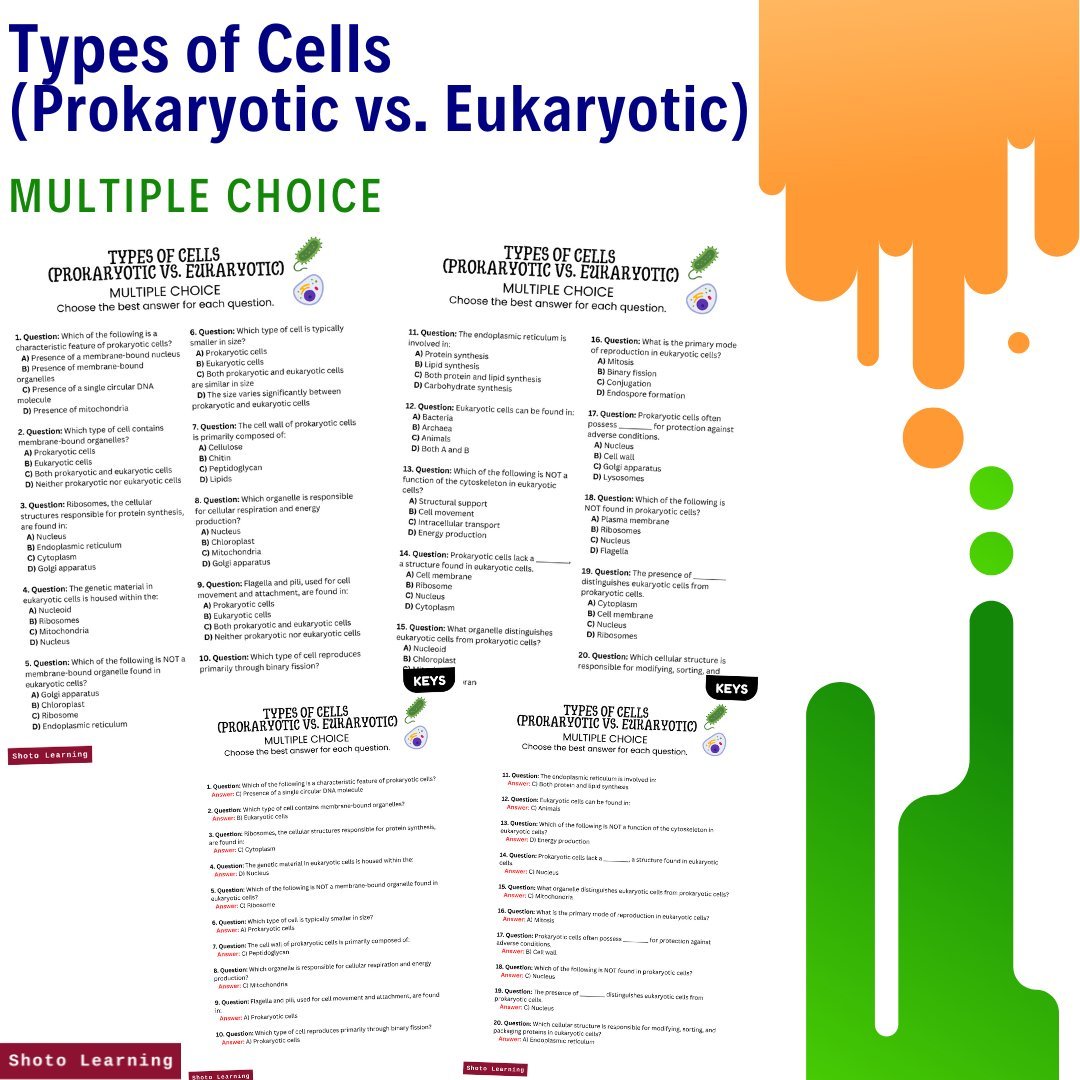


Embark on an exciting journey into the realm of cellular biology with our comprehensive "Cell Biology Activity Bundle," focusing on the comparison between prokaryotic and eukaryotic cells. This bundle features a diverse selection of engaging activities and resources designed to deepen understanding, promote critical thinking, and reinforce key concepts. Whether you're a teacher looking to enhance classroom lessons or a student seeking additional practice, this bundle provides a wealth of educational opportunities. From bingo and crossword puzzles to flashcards and writing prompts, there's something for everyone in this comprehensive bundle.
Bundle Includes:
Assignments: Embark on 10 stimulating assignments covering diverse topics, encouraging critical thinking and practical application of knowledge.
Bingo - 30 Bingo Cards: Enjoy a fun and interactive game of bingo while reinforcing knowledge of prokaryotic and eukaryotic cells. Perfect for classroom activities or study groups.
Crossword Puzzle: Challenge yourself with a crossword puzzle that tests your understanding of cell biology concepts and terminology.
Cryptogram: Decode cryptic messages related to prokaryotic and eukaryotic cells, combining logic and knowledge to unravel hidden meanings.
Debate: Engage in lively debates exploring the differences between prokaryotic and eukaryotic cells, fostering critical thinking and communication skills.
Experiments: Explore hands-on experiments illustrating fundamental principles across various disciplines, fostering deeper understanding and engagement.
Fill in the Blank: Test your knowledge of cell biology with fill-in-the-blank exercises covering various aspects of prokaryotic and eukaryotic cells.
Flash Cards: Reinforce key concepts and terms with flashcards designed for quick review and memorization.
Free ABC Order: Practice alphabetizing cell biology terms with a free ABC order worksheet, promoting vocabulary retention and organization skills.
Free Label the Parts: Identify and label the essential components of prokaryotic and eukaryotic cells with a free labeling worksheet.
Free Poster: Explore intriguing facts about cell biology with a free poster, perfect for classroom display or personal reference.
Lesson Plan: Dive deep with our detailed lesson plan, complete with engaging activities and discussion topics.
Matching: Match descriptions to corresponding cellular structures and functions, reinforcing understanding of key concepts.
Missing Letters: Exercise your problem-solving skills by filling in missing letters to complete words related to cell biology.
Multiple Choice: Test your knowledge with multiple-choice quizzes covering various aspects of prokaryotic and eukaryotic cells.
PowerPoint: Dive into the intricacies of cell biology with a visually engaging PowerPoint presentation, providing a comprehensive overview of prokaryotic and eukaryotic cells.
Questions and Answers: Challenge yourself with thought-provoking questions and check your understanding with comprehensive answer keys.
Reading Comprehension: Sharpen reading skills with engaging passages, perfect for students and educators alike.
Scramble: Unscramble letters to form words related to cell biology, enhancing vocabulary and spelling skills.
Test (45 Minutes): Assess your knowledge and comprehension with a timed test focusing on the similarities and differences between prokaryotic and eukaryotic cells.
True or False: Test your understanding of cell biology concepts with true or false quizzes, providing instant feedback for self-assessment.
Word Search: Have fun while reinforcing knowledge of cell biology concepts with a word search puzzle.
Writing Prompts: Reflect on the significance of prokaryotic and eukaryotic cells and explore their roles in living organisms with engaging writing prompts.
Enhance your understanding of prokaryotic and eukaryotic cells with our "Cell Biology Activity Bundle," offering a wide array of interactive and educational resources for comprehensive learning. Whether you're a student or an educator, these activities provide valuable tools for mastering the fundamentals of cell biology.
Order your copy today!