
Understanding how substances move across the cell membrane is important for every biology student. Many students struggle with this topic, especially when trying to learn the difference between passive and active transport, and how these processes keep cells working well. Teachers can help students master cell membrane transport by using clear explanations, real-world examples, and hands-on activities.
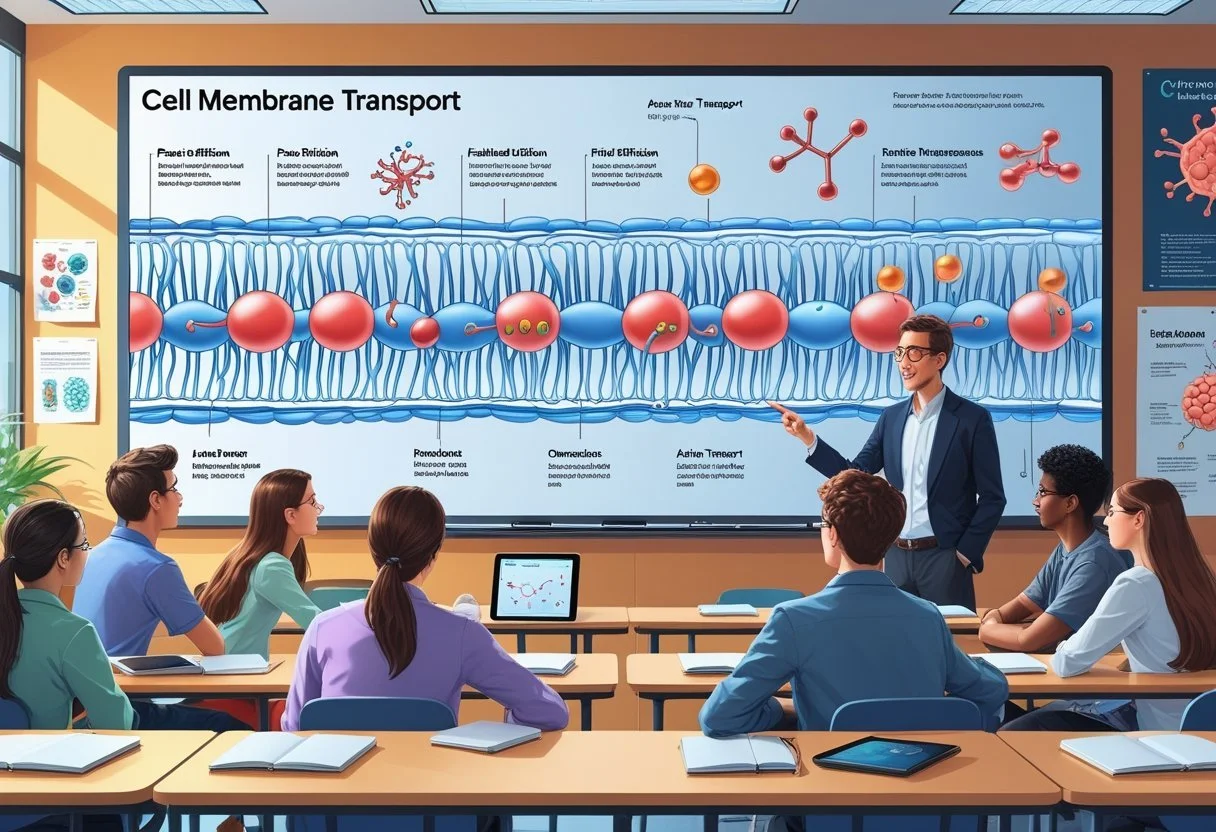
When educators use tools like models, diagrams, and classroom games, students can see and feel how molecules enter and leave the cell. Linking cell membrane transport to bigger ideas in biology helps students remember what they have learned and see why it matters. With the right strategies, teachers make this challenging topic easier and more interesting.
Key Takeaways
Clear teaching methods help students understand membrane transport.
Real-world examples and visual aids build strong connections.
Linking transport to bigger biology topics improves memory and interest.
Foundations of Cell Membrane Structure
The cell membrane is a thin, flexible barrier that surrounds all cells. It controls what enters and leaves the cell, keeps the cell's shape, and helps the cell communicate with its environment.
Lipid Bilayer and Membrane Components
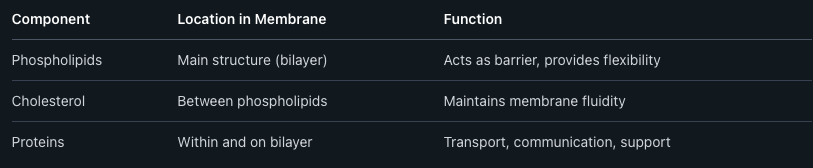
The main structure of the cell membrane is the lipid bilayer. This bilayer is made of two layers of phospholipids. Each phospholipid has a water-loving (hydrophilic) head and water-fearing (hydrophobic) tails. The heads face outward toward the water inside and outside the cell, while the tails point inward, away from the water.
This arrangement makes the membrane strong and flexible. The lipid bilayer works as a barrier, only letting certain substances move in or out. Other molecules, like cholesterol and small proteins, sit inside or move around the bilayer. These molecules help keep the membrane fluid and stable.
Role of Proteins, Carbohydrates, and Lipids
Proteins in the cell membrane have many roles. Some proteins form channels or pumps to move molecules across. Others work as receptors that send and receive signals to and from other cells.
Carbohydrates are often attached to proteins and lipids on the outer surface, creating structures called glycoproteins and glycolipids. These help cells recognize each other and play a role in immune response.
Lipids, besides phospholipids, provide energy and help make membrane parts. The balance of proteins, carbohydrates, and lipids decides how the membrane works and how the cell responds to its environment.
Key functions for each component:
Proteins: Transport, signaling, structure.
Carbohydrates: Communication, cell recognition.
Lipids: Barrier formation, stability, energy storage.
Cellular Homeostasis and Membrane Function
Cellular homeostasis means keeping stable conditions inside the cell, even if things change outside. The membrane controls this by choosing which substances move in or out.
For example, the membrane lets oxygen and nutrients enter, while blocking harmful substances. It also removes waste. Channels and protein pumps regulate ions like sodium and potassium, keeping the balance cells need to function.
The membrane also helps cells interact. Proteins can send signals that start or stop cell activities. This helps keep tissues and organs working together in living things and is a big focus in cellular biology.
Principles of Membrane Transport
Membrane transport controls how substances move in and out of cells. These processes help maintain the right balance of water, ions, and other molecules for healthy cell function.
Passive Transport Mechanisms
Passive transport does not require energy from the cell. Substances move from areas of high concentration to low concentration, down their concentration gradient.
There are three main types:
Simple diffusion: Small molecules like oxygen and carbon dioxide pass directly through the lipid bilayer.
Facilitated diffusion: Larger or charged molecules move through channels or carrier proteins.
Osmosis: Water moves across the membrane from areas of low solute concentration to high solute concentration.
Transport proteins help guide specific molecules. These proteins include channels for ions and carriers for glucose or amino acids. Passive transport helps cells take in nutrients and remove waste.
Active Transport Mechanisms
Active transport requires energy, usually from ATP. This is because substances are moved against their concentration gradient, from areas of low concentration to high concentration.
Transport proteins called pumps are key to this process. The sodium-potassium pump is a common example. It moves three sodium ions out of the cell and two potassium ions into the cell for every cycle.
Active transport is important for maintaining ion balance and cell volume. Cells use this mechanism to absorb nutrients even when their concentrations are higher inside the cell than outside.
Electrochemical Gradient and Concentration Gradient
A concentration gradient is the difference in the amount of a substance on either side of the membrane. Molecules naturally move from higher to lower concentration until balance is reached.
The electrochemical gradient considers both concentration and electrical charge. For charged particles, like ions, both gradients play a role. The cell uses these gradients to control nerve signals, muscle contractions, and energy production.
Key factors include:
Charge difference across the membrane (membrane potential)
Concentration difference of ions
Cells depend on these gradients to regulate movement and respond to changes in their environment. This is essential for communication, energy production, and overall cell survival.
Integral Transport Processes and Examples
Transmembrane transport is vital for maintaining cellular balance, energy storage, and nutrient uptake. Essential mechanisms include active transport, bulk transport, and nutrient absorption, each involving key proteins and molecules.
Sodium-Potassium Pump and Primary Active Transport
The sodium-potassium pump is a classic example of primary active transport. It uses energy from ATP to move sodium ions (Na⁺) out of a cell and potassium ions (K⁺) in. This creates concentration gradients, which are crucial for nerve impulses, muscle contraction, and cell volume control.
Process Steps:
Three Na⁺ ions bind to the pump inside the cell.
ATP splits and provides the energy to move these ions out.
Two K⁺ ions then enter the cell by attaching to the pump, which resets for another cycle.
This movement keeps the inside of the cell more negative than the outside and helps regulate cellular processes.
Key facts:
Protein involved: Sodium-potassium ATPase
Energy source: Directly from ATP
Main function: Maintains ionic balance and supports cell functions
Secondary Active Transport Explained
Secondary active transport does not use ATP directly. Instead, it relies on the ion gradients set up by pumps like the sodium-potassium pump. This energy helps move other molecules against their gradients.
There are two main types:
Cotransport (Symport): Moves two substances in the same direction (e.g., glucose and Na⁺ together)
Countertransport (Antiport): Moves substances in opposite directions
A common example is the sodium-glucose symporter in the intestines. Sodium moves down its gradient into the cell, bringing glucose along. This process helps cells absorb nutrients efficiently.

Endocytosis and Exocytosis
Cells move bulk materials using endocytosis and exocytosis.
Endocytosis brings large particles or fluids into the cell by creating vesicles from the plasma membrane. Types include:
Phagocytosis (cell eating, e.g., bacteria uptake)
Pinocytosis (cell drinking, e.g., liquid uptake)
Receptor-mediated endocytosis (specific molecule uptake)
Exocytosis releases materials, such as hormones or waste, by fusing vesicles with the plasma membrane. This is essential for nerve communication and removing cellular waste.
Techniques like these allow the cell to exchange materials it cannot transport through protein channels or pumps.
Nutrient Absorption and Cellular Energetics
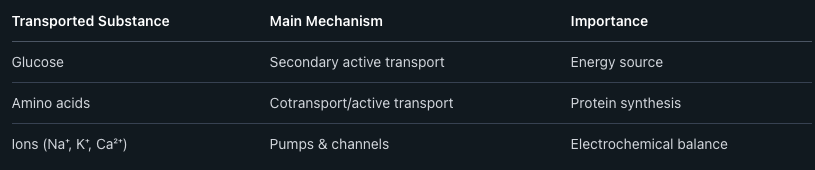
Cells use nutrient absorption to obtain glucose, amino acids, and ions. This process often involves both active and passive transport. For example, glucose absorption in the gut uses secondary active transport, relying on the sodium gradient established by the sodium-potassium pump.
Proper nutrient absorption supports cellular energetics. Cells convert nutrients into ATP using metabolic pathways. Transport processes ensure cells receive the raw materials they need for growth, repair, and energy production.
Influencing Factors on Membrane Transport
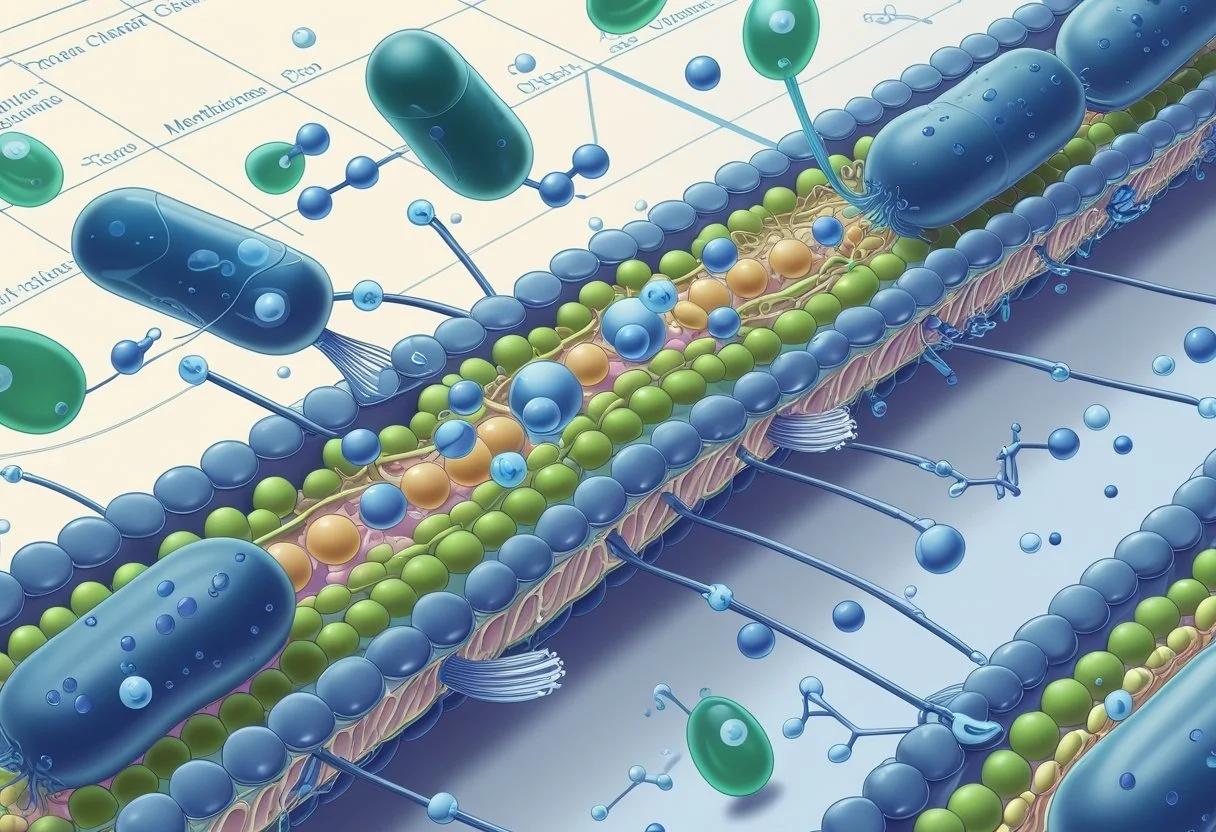
Membrane transport depends on several key conditions inside and outside the cell. Changes in pH, temperature, amino acids, and enzymes can change how molecules move through the cell membrane.
pH and Temperature Effects
Both pH and temperature can impact how substances cross the cell membrane. For instance, if the pH becomes too high or too low, proteins in the membrane may lose their normal shape. This affects how well channels and carriers work.
Temperature is also important. Higher temperatures usually make the membrane more fluid, allowing faster movement of molecules. But temperatures that are too hot can damage membrane proteins and stop transport. Lower temperatures can stiffen the membrane, slowing down or even stopping the movement of some molecules.
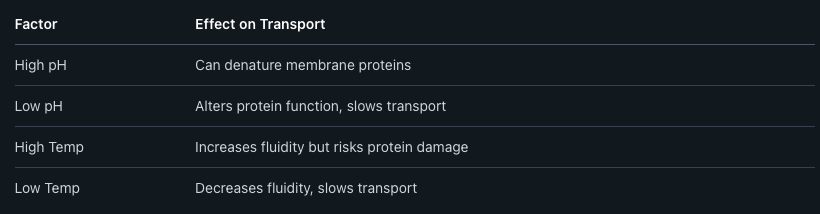
Cells try to keep pH and temperature within a small range to keep transport running smoothly.
Role of Amino Acids and Enzymes
Proteins are key in membrane transport, and they are made from amino acids. Channel and carrier proteins let specific molecules in or out. The sequence and type of amino acids in these proteins decide their shape and what they can transport.
Enzymes in the membrane can help move molecules by speeding up reactions, like breaking down ATP to provide energy for active transport. If the enzyme or its amino acids change, the protein may not work well. This could stop some molecules from crossing the membrane.
Amino acids also control where a protein goes in the membrane and how it interacts with other molecules. Even small changes may affect cell transport in noticeable ways.
Effective Teaching Strategies for Cell Membrane Transport
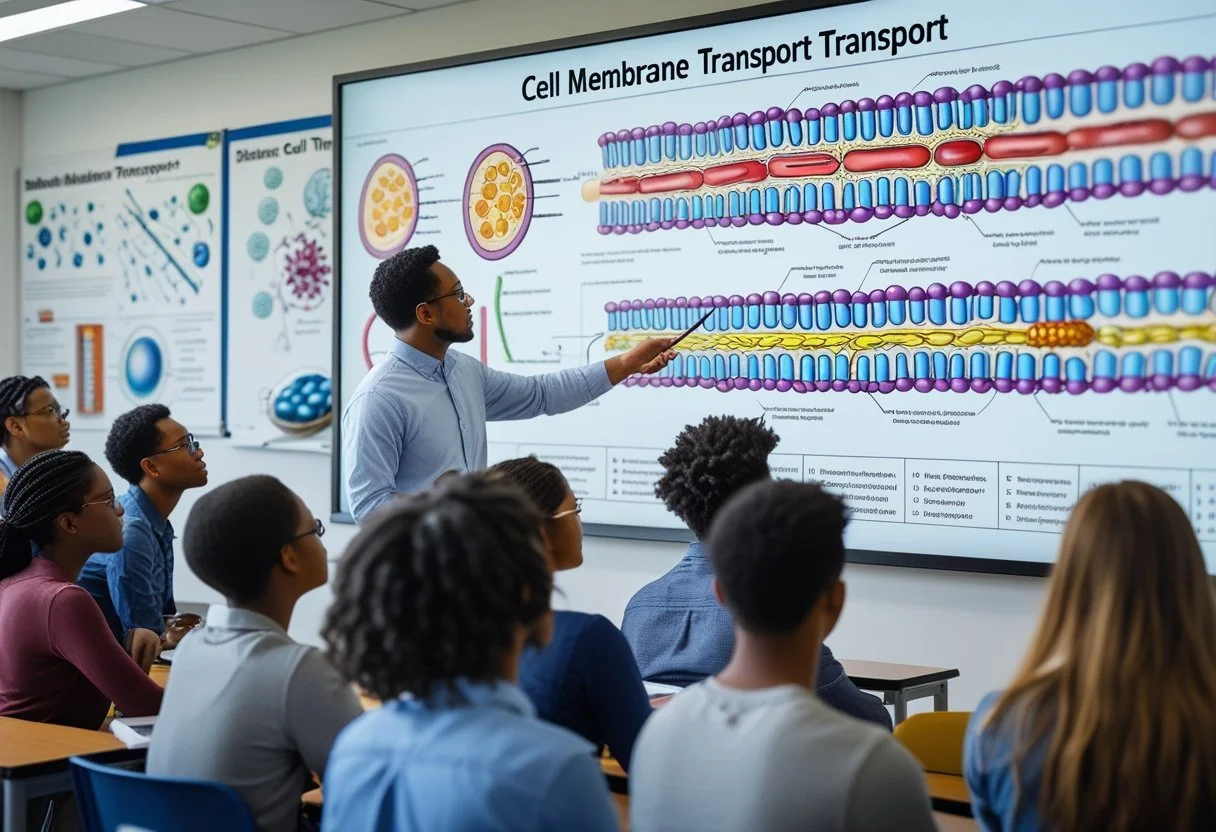
Using interactive lectures and showing how cell membrane transport connects to everyday life can make learning more effective. Teachers can use activities, visual aids, and relatable examples for deeper understanding.
Creating Engaging Lectures and Demonstrations
Teaching about the cell membrane is clearer with hands-on demonstrations and visuals. Diagrams showing the phospholipid bilayer and animations simulating diffusion or osmosis help students see how molecules move. Teachers might use colored beads or simple props to model particles moving across a membrane.
Key techniques include:
Live demonstrations of diffusion using food coloring in water
Interactive voting tools to ask questions during lectures
Short video clips or animations showing endocytosis and exocytosis
Using quizzes or quick group activities at the end of a lesson checks understanding. By mixing presentations with demonstrations, teachers help students remember terms like active transport and facilitated diffusion.
Utilizing Real-World Examples
When students see how cell membrane transport matters in real life, ideas click faster. Examples such as the movement of water in plant cells or how lungs exchange gases can help. Teachers can explain how cell transport allows nerve cells to send signals or kidneys to filter blood.
A table can make connections clearer:
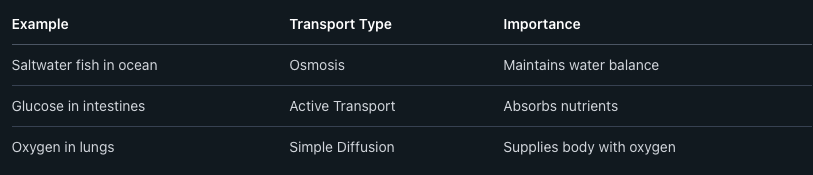
Discussing these situations helps students connect cell biology to health, sports, and the environment. It also shows how mastering biology concepts is valuable beyond the classroom.
Interactive Learning Tools and Assessment
Using interactive methods helps students better understand cell membrane transport. Strategies like games and well-structured study guides keep learners engaged and provide clear feedback to both students and teachers.
Games and Quizzes
Educational games let students practice important concepts like diffusion, osmosis, and active transport in a hands-on way. For example, teachers can use digital platforms such as Kahoot!, Quizizz, or even physical board games made for the classroom.
Quizzes track progress and reveal which topics need more review. Routine short quizzes, either on paper or online, test facts and problem-solving skills. Multiple choice, matching, and labeling diagrams are helpful question types.
Below is a quick idea table:

These methods make learning more active and provide quick feedback.
Study Guides and Review Sessions
Study guides break down complex topics, like membrane transport proteins or types of transport (passive vs. active), into simple steps and key points. Teachers can make guides with lists, diagrams, or fill-in-the-blank sections to help students organize information.
Review sessions give students a chance to ask questions and clear up confusion. These can include group activities, think-pair-share, or teacher-led Q&A. Using visual aids, charts, or summary sheets during reviews can make details easier to remember.
Checklist for an effective study guide:
Includes diagrams of cell membranes
Lists of important terms (osmosis, endocytosis, etc.)
Simple definitions
Space for notes and questions
By providing clear, organized resources and review time, teachers support students as they master the material.
Utilizing Educational Resources
Using strong resources can help students better understand how substances cross the cell membrane. Teachers can use videos and various materials to address different learning needs and reinforce important concepts.
Videos and Visual Aids
Videos let students watch real-time models of diffusion, osmosis, and active transport.
Short clips can show how molecules move through a lipid bilayer or how protein pumps work. Many educational platforms, such as YouTube and Khan Academy, offer animations and interactive simulations. These often include diagrams labeling protein channels and showing movement of ions or water.
Visual aids, like charts and diagrams, compare passive and active transport side by side. Table Example:
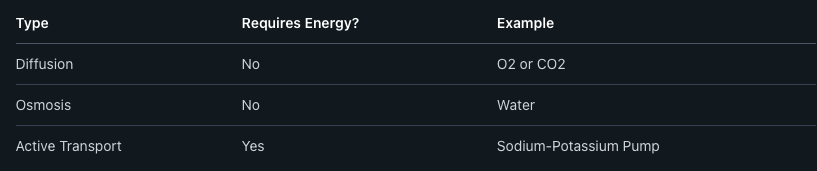
Labels, color-coding, and step-by-step visuals help students remember details. Teachers can pause videos to ask questions or explain steps in detail.
Supplementary Materials for Diverse Learners
Some students learn best with hands-on resources and worksheets. Interactive activities, such as building cell membrane models with craft supplies, help visual and tactile learners.
Teachers can provide graphic organizers and fill-in-the-blank diagrams to guide note-taking. Flashcards with pictures and key terms, like “phospholipid bilayer” or “facilitated diffusion,” reinforce vocabulary.
Audio resources or simplified readings help students with different language backgrounds. Guided discussions and partner activities allow students to talk through concepts and ask questions.
Using a mix of resources ensures all students have the support they need to master cell membrane transport. Educators should select materials based on their students’ strengths and needs.
Connecting Cell Membrane Transport to Broader Biological Concepts
Cell membrane transport helps explain how cells get what they need and remove waste. This understanding is important for learning about how cells make energy and how molecules move for life processes.
Photosynthesis and Cellular Function
Cell membranes control the entry of water and carbon dioxide, both necessary for photosynthesis. In plant cells, the guard cells around the stomata use membrane transport to allow gases in and out.
During photosynthesis, the products such as glucose and oxygen need to move to other parts of the cell or get released. This happens through both passive transport (like diffusion) and active transport.
Key points about photosynthesis and membranes:
Water enters roots by osmosis, moving through cell membranes to reach leaf cells.
Carbon dioxide enters leaf cells by diffusion.
Glucose leaves the chloroplast to be used or stored.
This process links cell membrane transport with energy production and the plant’s ability to grow.
Translation and Cell Structure Integration
Translation, the process where ribosomes make proteins from mRNA, depends on cell membrane transport. Cells use transport to bring in amino acids, which are the building blocks for proteins.
Proteins made from translation often need to move to different parts of the cell. The endoplasmic reticulum (ER) and Golgi apparatus help sort and transport these proteins, using vesicles that merge with membranes.
Important facts about translation and membrane transport:
Amino acids enter cells through protein channels or transporters.
Newly made proteins can travel in vesicles to their final place in the cell.
These steps show how cell membrane transport connects to building and moving proteins, supporting cell structure and function.
Frequently Asked Questions
Understanding cell membrane transport involves breaking down complex processes into clear, manageable ideas. Mixing hands-on activities and digital tools can improve student learning.
What are the core principles of cell membrane transport that educators should focus on in the classroom?
Students should learn about passive and active transport. Teachers need to explain diffusion, osmosis, facilitated diffusion, and active transport, including the use of protein channels and pumps.
They should also highlight the selective permeability of the cell membrane and the role of concentration gradients.
How can interactive simulations like Labster enhance the learning of cell membrane transport mechanisms for students?
Interactive simulations let students experiment with virtual cells. Tools like Labster show how molecules move across membranes in real-time.
Students can change variables such as molecule type or membrane structure and see direct results. This can increase understanding through visual and hands-on learning.
What teaching strategies have proven most effective when introducing the concept of cell transport to students?
Using models and diagrams helps students see the structure of the cell membrane. Group discussions and question sessions let students share their ideas and correct misunderstandings.
Simple experiments, such as observing diffusion with food coloring in water, make ideas easier to grasp.
Can you suggest classroom activities that help students visualize the process of osmosis and diffusion across the cell membrane?
Teachers can use dialysis tubing filled with starch and sugar to show selective permeability. Placing the tubing in different solutions allows students to observe osmosis and diffusion.
Another activity is using gummy candies and saltwater to demonstrate how water moves in and out of cells.
What assessment methods can educators use to evaluate students' understanding of cell membrane transport?
Quizzes with diagrams that ask students to label or describe transport processes work well. Short written explanations and group presentations offer other options.
Hands-on labs or simulation results can also be assessed to check if students understand the principles.
How can educators address common misconceptions about cell membrane transport in their teaching?
Teachers should identify patterns in student errors, such as confusing passive and active transport. They can use clear visuals to show differences between diffusion, osmosis, and active transport.
Encouraging students to talk through their thinking and asking guiding questions helps clear up confusion.




Dive deep into the world of cell membranes with our comprehensive Cell Membrane Mastery Bundle, designed to provide a holistic learning experience for students, educators, and biology enthusiasts alike. This all-inclusive bundle features a wide array of engaging and interactive resources, each meticulously crafted to enhance understanding and retention of key concepts related to cell membrane structure, function, and significance in cellular biology.
Included in this bundle:
Assignments: Embark on 10 stimulating assignments covering diverse topics, encouraging critical thinking and practical application of knowledge.
Bingo: Challenge your knowledge with 30 bingo cards featuring cell membrane-related terms and concepts.
Crossword: Test your understanding with a crossword puzzle that explores essential terminology and concepts.
Cryptogram: Decode the hidden message while learning about cell membranes in a fun and challenging way.
Debate: Engage in thought-provoking discussions on the role of cell membranes in cellular function and organization.
Experiments: Explore hands-on experiments illustrating fundamental principles across various disciplines, fostering deeper understanding and engagement.
Fill in the Blank: Reinforce your understanding with fill-in-the-blank exercises covering key concepts related to cell membranes.
Flash Cards: Master cell membrane terminology and concepts with a set of 20 flashcards for quick review and study.
Free ABC Order: Practice alphabetizing cell membrane-related terms with this free worksheet.
Free Label the Parts: Identify and label the components of a cell membrane with this free activity.
Free Poster: Decorate your classroom or study space with a visually appealing poster highlighting key aspects of cell membranes.
Lesson Plan: Dive deep with our detailed lesson plan, complete with engaging activities and discussion topics.
Matching: Test your knowledge with a matching activity that pairs cell membrane terms with their definitions.
Missing Letters: Exercise your problem-solving skills with worksheets challenging you to fill in missing letters to complete cell membrane-related words.
Multiple Choice: Assess your understanding with a set of multiple-choice questions covering various aspects of cell membranes.
PowerPoint: Dive into an informative presentation exploring cell membrane structure, function, and significance.
Questions and Answers: Test your knowledge with a series of questions and answers covering cell membrane biology.
Reading Comprehension: Sharpen reading skills with engaging passages, perfect for students and educators alike.
Scramble: Unscramble jumbled words related to cell membranes in this engaging activity.
Test (45 Minutes): Challenge yourself with a timed test covering key concepts related to cell membranes.
True or False: Determine the validity of statements about cell membranes in this true-or-false activity.
Word Search: Search for cell membrane-related terms hidden within a grid of letters.
Writing Prompts: Stimulate critical thinking and creativity with writing prompts related to cell membrane biology.
With this comprehensive bundle, you'll have everything you need to master the complexities of cell membranes and gain a deeper appreciation for their vital role in cellular biology. Unlock the secrets of cellular gatekeepers today!
Pages: 134 pages
Order your copy today!