
Nurturing Minds: A Comprehensive Guide to Teaching Colon Lining, Gut Bacteria, and Serotonin
Introduction to Gut Health Education
Teaching about the intricate interplay of the colon lining, gut bacteria, and serotonin is not just an educational endeavor; it's an exploration of the fascinating world of gut health. This guide provides effective strategies and engaging activities to help you impart this crucial knowledge to students. By making the learning process dynamic and informative, you empower students to appreciate the significance of gut health in overall well-being.
Understanding Your Audience for Effective Teaching
Before diving into the content, it’s essential to understand your audience. Whether you're teaching in a classroom, leading a workshop, or creating educational content online, tailor your approach to the age group, educational background, and interests of your learners. Knowing your audience allows for a more engaging and effective teaching experience.
Building a Strong Foundation: Introducing Key Concepts
Start your teaching journey by laying a solid foundation. Introduce the basic concepts of the colon lining, gut bacteria, and serotonin. Use visual aids such as diagrams and infographics to simplify complex ideas. Clear explanations with simple language make these vital concepts more accessible and memorable for students.
Interactive Learning with Visual Aids
Utilize visually appealing infographics and diagrams to illustrate the anatomy of the colon, the diverse roles of gut bacteria, and the synthesis of serotonin. Visual aids enhance understanding and retention, allowing students to grasp complex concepts more effectively.
Engaging Activities: Bacterial Fermentation Experiment
Bring learning to life with hands-on activities. A bacterial fermentation experiment can vividly demonstrate how gut bacteria break down nutrients and produce beneficial byproducts. This interactive approach fosters a deeper understanding of the digestive system’s processes, making the learning experience tangible and relevant.
Real-Life Connections: Serotonin and Mental Health
Bridge the gap between theory and real life by discussing the influence of gut health on mental well-being. Share case studies, research findings, or personal anecdotes that highlight how serotonin production in the gut affects mood and overall mental health. This connection underscores the importance of gut health in daily life.
Utilizing Technology: Virtual Tours and Simulations
Incorporate technology into your teaching arsenal. Virtual tours of the digestive system and interactive simulations provide a dynamic and immersive learning experience. Leverage online resources and educational platforms to complement traditional teaching methods, making learning more engaging.
Encouraging Discussions: Exploring the Gut-Brain Axis
Promote critical thinking by exploring the Gut-Brain Axis. Encourage students to discuss how gut health influences brain function and vice versa. Facilitate discussions around recent research, fostering curiosity and inquiry while encouraging students to think critically about gut health.
Practical Tips for Gut Health: Culinary Experiences
Integrate practical tips for maintaining gut health into your curriculum. Culinary experiences, such as preparing gut-healthy recipes or discussing the role of specific foods in supporting the gut, can make learning informative and enjoyable. This hands-on approach makes the content relatable and actionable.
Assessment Strategies: Quizzes and Project-Based Learning
Evaluate comprehension through quizzes that assess knowledge retention. Consider project-based learning where students can explore a specific aspect of gut health in-depth, fostering independent research and presentation skills. This method encourages students to engage with the material actively.
Encouraging a Lifelong Learning Mindset
Conclude your teaching journey by emphasizing the importance of lifelong learning about gut health. Provide resources for further exploration and invite students to stay curious. This approach promotes a mindset of ongoing discovery and self-education, instilling a passion for learning.
Conclusion: The Importance of Teaching Gut Health
Teaching about colon lining, gut bacteria, and serotonin is a journey into the intricate world of our bodies. By fostering engagement, utilizing diverse teaching methods, and encouraging curiosity, you empower students to appreciate the marvels of gut health as a cornerstone of overall well-being.

Dive into the fascinating world of gut health with our comprehensive Colon Lining, Bacteria & Serotonin Bundle. Crafted to illuminate the intricate relationship between the colon lining, gut bacteria, and serotonin production, this bundle equips educators and students with essential resources for a deeper understanding of digestive system dynamics.
Unravel the mysteries of gut health with these key components:
PowerPoint Presentation: Explore the roles of the colon lining, gut bacteria, and serotonin in digestive health through our visually engaging and informative PowerPoint presentation.
Test (45 Minutes): Assess comprehension and mastery of gut health concepts with our comprehensive test, designed to cover essential topics in a structured manner.
Lesson Plan: Dive deep with our detailed lesson plan, complete with engaging activities and discussion topics.
Reading Comprehension: Sharpen reading skills with engaging passages, perfect for students and educators alike.
Bingo: Make learning interactive and enjoyable with our Gut Health Bingo game, perfect for reinforcing key terms and concepts in a dynamic classroom setting.
Crossword: Challenge your knowledge and expand your vocabulary with our Gut Health Crossword puzzle, offering an entertaining way to reinforce understanding.
Word Search: Sharpen your observation skills while hunting for digestive system-related terms in our engaging Word Search activity, designed to reinforce terminology.
Cryptogram: Decode the secrets of gut health with our Cryptogram puzzle, offering a stimulating twist on learning fundamental concepts.
True or False: Test your understanding of gut health principles with our True or False activity, designed to challenge misconceptions and solidify knowledge.
Matching: Strengthen connections between gut health components with our Matching activity, fostering a deeper understanding of their roles.
Missing Letters: Fill in the blanks and complete digestive system-related terms with our Missing Letters exercise, perfect for reinforcing spelling and vocabulary.
Scramble: Unscramble jumbled phrases related to gut health with our engaging Scramble activity, promoting quick thinking and problem-solving skills.
Plus, enjoy these valuable bonuses included for free:
Free ABC Order: Practice alphabetizing gut health terms with our convenient ABC Order activity.
Free Cut and Paste: Enhance understanding of gut health components with our hands-on Cut and Paste activity.
Free Poster: Reinforce learning and decorate your learning space with our informative and visually appealing Gut Health Poster.
With answers provided for all activities, this comprehensive bundle empowers learners to unravel the complexities of gut health with confidence and clarity. Unlock the secrets of digestive wellness today!
72 pages
Don't miss out, order yours today!

Unlock Comprehensive Understanding with Our Colon Lining, Bacteria & Serotonin Worksheet Bundle!
Embark on an educational journey that goes beyond the surface of gut health with our meticulously crafted worksheet bundle. Whether you're a teacher, student, or lifelong learner, this bundle is your key to delving into the intricate world of Colon Lining, Bacteria & Serotonin.
What's Included:
Assignments: Embark on 10 stimulating assignments covering diverse topics, encouraging critical thinking and practical application of knowledge.
Debate: Foster critical thinking and discussion with our thought-provoking debate worksheet, encouraging in-depth exploration of key concepts.
Fill in the Blank: Reinforce your knowledge with our fill-in-the-blank worksheet, a valuable tool for cementing essential information.
Free ABC Order (Bonus): Enjoy a complimentary ABC Order worksheet, a fun and educational activity to reinforce alphabetical understanding.
Free Cut and Paste (Bonus): Engage your creativity with a cut-and-paste activity, combining learning with hands-on exploration in a free bonus worksheet.
Free Poster (Bonus): Decorate your learning space with a free poster, serving as a visual reminder of the intricate world of Colon Lining, Bacteria & Serotonin.
Matching: Connect the dots with our matching worksheet, fostering association and comprehension of related concepts.
Multiple Choice: Test your knowledge with our multiple-choice worksheet, offering a diverse set of questions and options for a comprehensive review.
Questions and Answers: Explore an extensive set of questions and answers, providing a detailed understanding of key gut health principles.
Reading Comprehension: Sharpen reading skills with engaging passages, perfect for students and educators alike.
Test (45 Minutes): Assess your comprehension with a 45-minute test, covering various aspects of Colon Lining, Bacteria & Serotonin.
True or False: Challenge your gut health knowledge with our true or false worksheet, offering a quick and effective review.
Writing Prompts: Stimulate creativity and critical thinking with a set of writing prompts centered around Colon Lining, Bacteria & Serotonin.
This worksheet bundle is your comprehensive guide to mastering the intricacies of gut health. Perfect for classrooms, self-study, or anyone seeking a deeper understanding of the Colon Lining, Bacteria & Serotonin. Dive into a world of interactive learning with our bundle today!
72 pages
Order your copy today!

Embark on an Exciting Gut Health Adventure with Our Game Bundle!
Dive into the world of Colon Lining, Bacteria & Serotonin with our captivating game bundle, specially curated to make learning not only educational but incredibly fun. This bundle includes an assortment of engaging games that cater to various learning styles, ensuring an immersive and entertaining exploration of gut health.
What's Inside:
Bingo: Turn the quest for knowledge into a thrilling game with our Bingo set. Thirty cards filled with gut health terms make learning interactive and enjoyable.
Crossword: Challenge your understanding of Colon Lining, Bacteria & Serotonin with our Crossword game. Fifteen thought-provoking questions and answers await your discovery.
Cryptogram: Decode the mysteries of gut health with our Cryptogram game. Uncover the hidden messages while reinforcing key concepts.
Free ABC Order (Bonus): Enjoy a complimentary ABC Order game, an entertaining way to reinforce alphabetical understanding related to gut health.
Free Cut and Paste (Bonus): Get hands-on with a cut-and-paste activity, combining learning with creativity in a free bonus worksheet.
Free Poster (Bonus): Decorate your space with a free poster, featuring captivating visuals that highlight the importance of Colon Lining, Bacteria & Serotonin.
Matching: Connect the dots with our Matching game, where association and comprehension merge for an engaging learning experience.
Missing Letters: Challenge yourself with a Missing Letters game, a playful way to reinforce key gut health terminology.
Scramble: Unravel the puzzle of gut health concepts with our Scramble game. Promote active learning while having a blast.
Word Search: Enjoy the thrill of discovery with our Word Search game. Hunt for key terms related to gut health in this entertaining activity.
This game bundle is not just a learning tool; it's an adventure waiting to be explored. Perfect for classrooms, homeschooling, or anyone eager to delve into the fascinating world of Colon Lining, Bacteria & Serotonin. Make learning enjoyable with our interactive game bundle that transforms education into an exciting journey of discovery!
40 pages
Order your copy today!

Explore the intricate world of gut health with our engaging ABC Order Worksheet focusing on Colon Lining, Bacteria, & Serotonin. Here's what makes this resource an ideal learning tool:
Product Highlights:
Two Comprehensive Worksheets: Engage with two distinct worksheets, each featuring a mix of 21 keywords related to Colon Lining, Bacteria, & Serotonin, challenging you to sort and arrange them in alphabetical order.
Interactive Learning: Cut out the provided words, shuffle them, and glue them onto the designated boxes, fostering an interactive and hands-on approach to reinforce alphabetical sequencing.
Diverse Keyword Set: Encounter a varied selection of keywords covering vital aspects of gut health, encouraging comprehensive understanding and retention of essential terms.
Answers Provided: Access the answer key for both worksheets, ensuring accuracy and aiding in self-assessment, allowing learners to validate their sequence and grasp the correct alphabetical order.
Educational Application: Ideal for educational settings, individual study, or as a supplemental activity, offering an engaging and systematic way to explore and reinforce knowledge of gut-related concepts.
Unravel the complexities of gut health dynamics by arranging key terms in alphabetical order with our ABC Order Worksheet—promoting interactive learning and a deeper understanding of Colon Lining, Bacteria, & Serotonin.
Download your copy today!

Embark on an interactive learning journey exploring the intricate Gut-Brain Axis with our engaging Cut and Paste Worksheet. This resource offers an immersive experience, allowing learners to visualize and understand the intricate connection between the brain and the gut.
Product Highlights:
Interactive Learning: Engage actively by cutting and pasting key elements illustrating the flow and interactions within the Gut-Brain Axis, including nutrient delivery, gut motility, neurotransmitters, and their influence on anxiety, mood, and stress regulation.
Visual Representation: Visually represent the complex relationship between the brain and the gut through a step-by-step cut-and-paste activity, fostering a deeper understanding of these interconnected processes.
Comprehensive Concept Mapping: Piece together the components of the Gut-Brain Axis, showcasing how neural signals, nutrient delivery, and emotional regulation intertwine, forming an essential connection impacting overall well-being.
Educational Tool: Ideal for classrooms, homeschooling, or individual study, this hands-on worksheet serves as a valuable educational aid in grasping the complexities of the Gut-Brain Axis.
Facilitates Understanding: Reinforce learning by physically arranging and linking the elements, enhancing comprehension and retention of this crucial aspect of neuro-gastroenterology.
Explore the interplay between the brain and the gut in a dynamic and engaging manner with our Cut and Paste Worksheet on the Gut-Brain Axis—an immersive educational resource promoting hands-on learning and concept visualization.
Download your copy today!

Explore the intricate connection between the gut and the brain with our informative poster on the Gut-Brain Axis. This visual masterpiece provides a comprehensive overview of how the brain and gut interact, influencing various aspects of health and well-being.
Key Elements Covered:
Brain to Nutrient Delivery: Illustrating how the brain signals affect nutrient absorption and delivery in the gut.
Gut Motility: Understanding how gut movements are influenced by neural signaling from the brain.
Neurotransmitters Impact: Exploring the role of neurotransmitters in the gut, highlighting their connection to mental health factors like anxiety, mood, and stress.
This visually engaging poster serves as a valuable educational tool for classrooms, healthcare facilities, or personal use. It offers a clear depiction of the intricate relationship between the brain and the gut, shedding light on their interconnectedness and the impact on overall health.
Download your copy today!

Embark on a fascinating journey into the realm of gut health with our comprehensive PowerPoint presentation and speech on "Colon Lining, Bacteria & Serotonin." This engaging resource, presented in a concise PDF format with 13 slides, provides a thorough exploration of key concepts related to digestive well-being.
Key Features:
Title Slide (Slide 1): Introduce the presentation with an eye-catching title, setting the stage for an insightful exploration of gut dynamics.
Introduction (Slide 2): Briefly outline the importance of gut health and the focus on the colon lining, bacteria, and serotonin in the presentation.
In-Depth Exploration (Slides 3-6): Delve into specific topics, including the role of the colon lining, the diverse world of gut bacteria, the fascinating process of bacterial fermentation, and the synthesis of serotonin in the gut.
Gut-Brain Axis (Slide 7): Explore the bidirectional communication pathway between the gut and the brain, uncovering its implications on physical and mental health.
Neurotransmitters (Slide 8): Examine the role of neurotransmitters in the gut, shedding light on their impact on gut motility and overall digestive functions.
Impact on Mental Health (Slide 9): Investigate the profound connections between gut health and mental well-being, emphasizing the potential influence on anxiety, mood, and stress.
Maintaining Gut Health (Slide 10): Provide insights into practical strategies for sustaining a healthy gut, including the importance of probiotics and a gut-friendly diet.
Conclusion (Slide 11): Summarize key takeaways, emphasizing the integral roles of the colon lining, bacteria, and serotonin in overall gut health.
Interactive Q&A Session (Slide 12): Engage your audience with a dynamic question and answer session, fostering a deeper understanding of the presented material.
References (Slide 13): Offer a curated list of references, allowing enthusiasts to explore further insights into the captivating world of gut health.
This PowerPoint presentation and speech package is a valuable resource for educators, healthcare professionals, and individuals seeking to enhance their understanding of the intricate dynamics within the digestive system.
View on Youtube
Download the PDF file to embark on a journey towards optimal gut health.
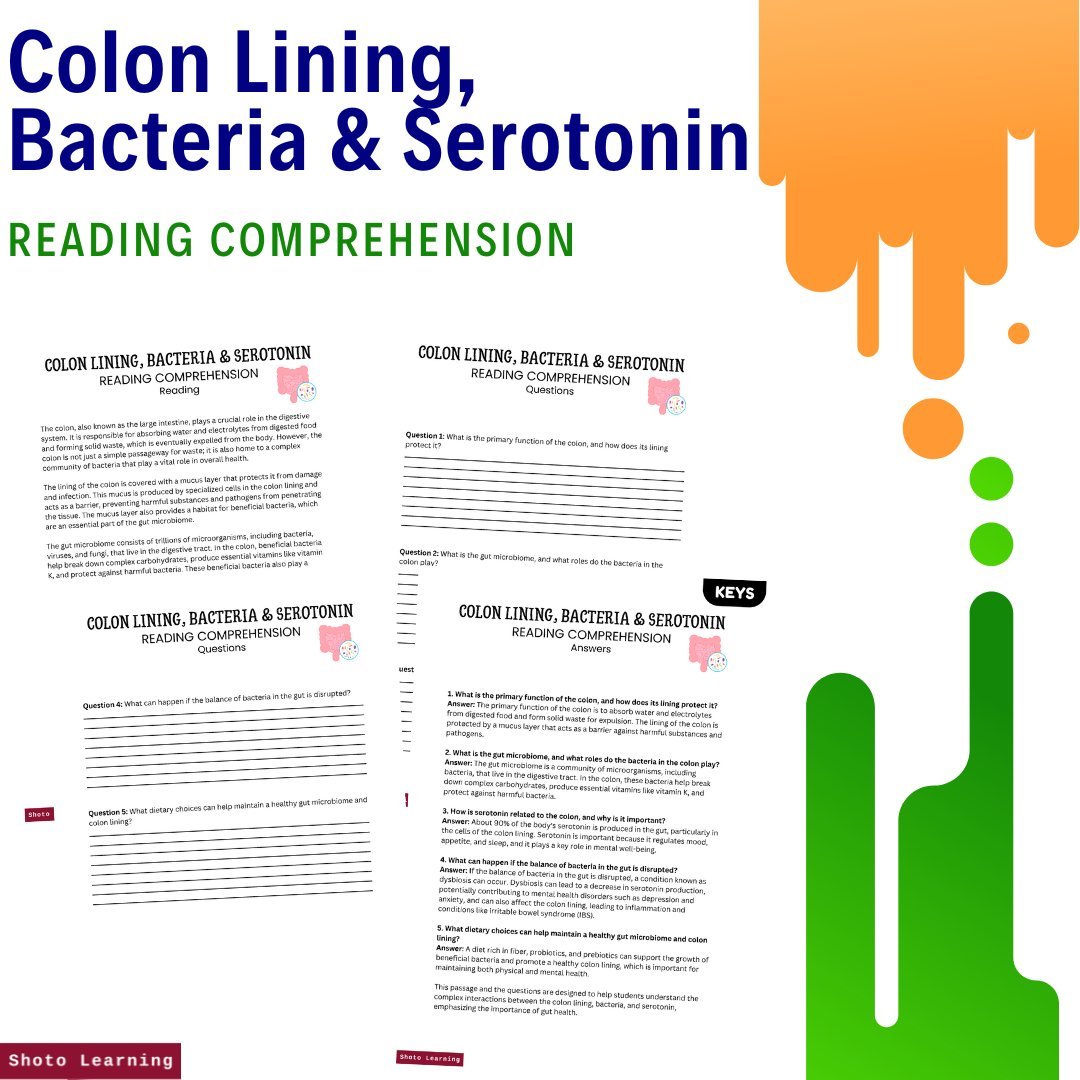
Dive into the intricate connections between the colon lining, gut bacteria, and serotonin with this engaging reading comprehension worksheet. This resource provides an informative passage that explores the role of the colon in digestion, the importance of a healthy gut microbiome, and the surprising link between gut health and mental well-being. Perfect for reinforcing lessons in biology or health sciences, this worksheet will help students understand the critical relationships that contribute to overall health.
Key Features:
Educational Passage: A detailed and engaging passage explaining the functions of the colon lining, the role of beneficial bacteria in the gut, and the production of serotonin.
5 Comprehension Questions: Thoughtfully designed questions that test students' understanding of the passage and encourage deeper exploration of the gut-brain connection.
Comprehensive Answers Provided: Detailed answers for each question to facilitate self-assessment or guided review.
Focus on Key Concepts: Covers essential topics such as the protection of the colon lining, the importance of the gut microbiome, and the impact of serotonin on mental health.
Versatile Use: Ideal for middle and high school students, this worksheet can be used in the classroom, for homework, or as a study aid.
How to Use It:
In-Class Activity: Integrate the worksheet into a lesson on the colon lining, gut bacteria, and serotonin. Students can read the passage and answer the questions individually or in small groups to deepen their understanding of these concepts and their connections.
Homework Assignment: Assign the worksheet as homework to allow students to review and reflect on the relationships between the colon lining, gut bacteria, and serotonin at their own pace.
Study Aid: Use the worksheet as a study resource for students preparing for exams or quizzes on digestive health and the gut-brain axis. It will help them consolidate their knowledge and assess their grasp of the material.
Equip your students with a comprehensive understanding of the colon, gut microbiome, and serotonin with this insightful and educational reading comprehension worksheet!
Order your copy today!

Embark on a fascinating exploration of gut health with our comprehensive lesson plan, "Gut Health Explorations: Understanding the Colon, Bacteria, and Serotonin." Tailored for high school biology or health sciences classes, this resource provides students with a deep understanding of the intricate relationship between the colon lining, gut bacteria, and serotonin production.
Key Features:
In-Depth Exploration: Delve into the anatomy and function of the colon lining, the role of gut bacteria in digestive health, and the significance of serotonin production in gut-brain communication.
Interdisciplinary Approach: Integrate biology and health sciences concepts to provide a holistic understanding of gut health and its implications for overall well-being.
Real-World Relevance: Explore the practical implications of imbalances in the colon lining, gut bacteria, and serotonin levels for digestive disorders, mental health, and overall health outcomes.
Interactive Learning: Engage students with visual aids, hands-on activities, and discussions that make complex concepts more accessible and relatable.
Health Promotion: Empower students to make informed choices about lifestyle habits that support gut health and promote overall wellness, fostering lifelong habits of self-care.
How to Use This Lesson Plan:
Review Objectives: Begin by reviewing the lesson objectives and outcomes to understand the focus and goals.
Prepare Materials: Gather all required materials, including handouts, worksheets, and any multimedia resources.
Introduce Topic: Start with a brief introduction to the topic to engage students and set the context.
Follow the Steps: Teach each section as outlined, incorporating suggested activities, discussions, and questions.
Monitor and Adapt: Observe student engagement and understanding; adapt the lesson pace and methods as needed.
Assess Understanding: Use the provided assessment tools to evaluate student comprehension and provide feedback.
Wrap-Up: Summarize key points and provide closure with a reflective activity or homework assignment.
Ignite curiosity, inspire exploration, and instill a lifelong appreciation for the intricate world of gut health with "Gut Health Explorations: Understanding the Colon, Bacteria, and Serotonin." Equip your students with the knowledge and tools to thrive in body and mind.
Order your copy today!

Explore the dynamic interactions within the digestive system with our "At-Home Experiments: Colon Lining, Bacteria & Serotonin - 2-Page Guide." This concise guide presents five engaging and simple experiments designed to illustrate key concepts related to the colon lining, bacteria, and serotonin. Perfect for students and science enthusiasts, this guide makes complex biological processes accessible and understandable through hands-on activities using everyday materials.
Key Features:
Interactive Learning: Five easy-to-follow experiments that bring to life essential concepts related to the colon lining, bacterial growth, and serotonin's impact on mood.
Clear Instructions: Step-by-step directions ensure that each experiment is straightforward and educational, suitable for home use.
Compact Format: A two-page guide that delivers focused content in a concise format, ideal for quick reference and efficient learning.
Educational Focus: Provides a practical understanding of how the colon functions, the role of bacteria, and the influence of serotonin on mood through engaging experiments.
How to Use It:
Gather Materials: Collect all items listed for each experiment.
Follow Instructions: Perform the experiments using the provided step-by-step directions.
Observe and Record: Document your observations and results.
Discuss Results: Analyze and discuss the findings based on the guide’s explanations.
Dive into the science of digestion and mood with this informative guide, making learning about the colon, bacteria, and serotonin both fun and insightful.
Order your copy today!

Delve into the intricate world of gut health with our "Comprehensive Assignments on Colon Lining, Bacteria, & Serotonin." This educational resource features 10 meticulously crafted assignments to explore the vital connections between the colon lining, gut bacteria, and serotonin production.
Key Features:
In-Depth Exploration: Each assignment covers fundamental concepts, from the role of short-chain fatty acids to the impact of diet on gut health.
Critical Thinking: Engage with questions that challenge students to apply their knowledge and think critically about the interplay between the gut and overall health.
Balanced Learning: A mix of theoretical and practical insights ensures a comprehensive understanding of gut microbiome dynamics.
Science Integration: Incorporates elements of biology, nutrition, and psychology, making it suitable for interdisciplinary studies.
Versatile Application: Perfect for classroom learning, homework assignments, or independent study, this resource supports a range of educational settings.
How to Use It:
Review the Assignments: Begin by reading through the 10 assignments to get an overview of the topics related to colon lining, bacteria, and serotonin.
Complete the Questions: Work through each question to test your knowledge and understanding of how these elements interact and affect gut health.
Check Answers: Use the provided answers to verify your responses and deepen your understanding of the material.
Discuss and Reflect: Engage in discussions or write reflections to reinforce and explore the concepts further.
Apply Knowledge: Apply what you’ve learned to practical scenarios, such as dietary impacts on gut health or the role of serotonin in digestion.
This resource is designed to enhance your understanding of the complex relationships between colon lining, bacteria, and serotonin, making it a valuable tool for students and anyone interested in gut health.
Order your copy today!

Embark on a comprehensive exploration of gut health with our set of 20 Flashcards focused on Colon Lining, Bacteria, & Serotonin.
Product Highlights:
Comprehensive Coverage: Dive into essential concepts covering the colon lining's role in nutrient absorption, the impact of gut bacteria on serotonin production, and the intricate gut-brain connection.
Visual Learning Aid: Each flashcard encapsulates a crucial concept related to gut health, facilitating easy understanding through concise and digestible content.
Key Terminology: Enrich your knowledge base with key terms, including gut microbiota, neurotransmitters, probiotics, and more, crucial in comprehending the dynamics of gut health.
Study & Review Tool: Ideal for students, health enthusiasts, or professionals seeking a quick and effective way to grasp and reinforce fundamental concepts in gut health.
Versatile Learning Resource: Whether utilized in classrooms, healthcare settings, or for personal study, these flashcards serve as a handy reference for understanding the intricacies of the gut ecosystem.
Unlock the intricacies of Colon Lining, Bacteria, & Serotonin dynamics with our 20 Flashcards—a succinct and comprehensive resource designed to enhance your understanding of vital gut health principles.
Order your copy today!

Dive into a comprehensive assessment of gut health dynamics with our 45-Minute Test, meticulously crafted to evaluate understanding and knowledge on Colon Lining, Bacteria, & Serotonin. Here's what makes this assessment an invaluable resource:
Product Highlights:
Variety of Question Types: Engage with a diverse array of question formats, including 10 Multiple Choice, 5 True or False, 5 Fill in the Blanks, 2 Short Answer, and 2 Essay questions, offering a holistic evaluation of knowledge depth.
Comprehensive Coverage: Explore multifaceted aspects of gut health, encompassing functions of the colon lining, roles of gut bacteria in serotonin production, and the impact of gut-brain communication on overall well-being.
Assessment Depth: Test takers navigate through multiple-choice scenarios, verify factual understanding with true or false statements, recall information with fill-in-the-blank questions, and demonstrate critical thinking through short answer and essay responses.
Accurate Evaluation: Each question is meticulously designed to assess specific concepts, ensuring a thorough evaluation of knowledge encompassing various aspects of gut health.
Educational Application: Ideal for educational settings, self-assessment, or instructional purposes, offering a comprehensive evaluation tool to gauge proficiency in Colon Lining, Bacteria, & Serotonin concepts.
Unveil the depth of your understanding of gut health dynamics through our 45-Minute Test on Colon Lining, Bacteria & Serotonin—a comprehensive assessment resource designed to evaluate knowledge breadth across different facets of gut-related concepts.
Order your copy today!

Dive into the intricate world of gut health dynamics with our comprehensive Multiple Choice Worksheet focusing on Colon Lining, Bacteria, & Serotonin. Here's what makes this resource an ideal learning companion:
Product Highlights:
Comprehensive Question Bank: Engage with a meticulously crafted set of 20 multiple-choice questions, covering an array of pivotal aspects related to gut health dynamics.
Educational Depth: Delve into various dimensions such as the functions of the colon lining, the role of gut bacteria in serotonin production, and the impact of the gut-brain axis on overall well-being.
Interactive Learning: Navigate through multiple-choice scenarios, stimulating critical thinking and knowledge acquisition while unraveling the intricacies of Colon Lining, Bacteria, & Serotonin.
Accurate Answers Provided: Access the detailed answer key accompanying each question, facilitating immediate feedback and aiding in self-assessment, ensuring accurate understanding and learning reinforcement.
Educational Application: Ideal for educational settings, self-study, or as a supplemental assessment tool, offering an engaging and informative platform to explore and solidify knowledge of gut-related concepts.
Explore and challenge your understanding of gut health dynamics through our Multiple Choice Worksheet on Colon Lining, Bacteria, & Serotonin—a resource designed to foster a deeper comprehension of the essential elements within this fascinating realm.
Order your copy today!

Embark on an illuminating exploration of gut health dynamics with our comprehensive set of 20 Questions and Answers centered around Colon Lining, Bacteria, & Serotonin. Here's what makes this resource a valuable learning tool:
Product Highlights:
Comprehensive Question Bank: Engage with a diverse range of 20 thoughtfully curated questions and their accurate answers, covering various facets of gut health.
In-depth Coverage: Delve into crucial aspects such as the role of gut bacteria in serotonin production, the functions of the colon lining, and the significance of the gut-brain axis.
Educational Depth: Gain a deeper understanding of gut-related concepts, encompassing the intricate interplay between gut microbiota, neurotransmitters, and their impact on overall health.
Informative Resource: Ideal for students, educators, or individuals seeking to expand their knowledge base, offering a structured and informative approach to grasp essential elements of gut health.
Interactive Learning: Encouraging self-assessment and knowledge reinforcement, these questions facilitate a deeper comprehension of Colon Lining, Bacteria, & Serotonin.
Unveil the complexities and nuances of gut health through our 20 Questions and Answers resource—an insightful tool fostering a comprehensive understanding of the intricate dynamics within the realm of gut health.
Order your copy today!

Embark on an enlightening journey into gut health with our comprehensive True or False Worksheet featuring 20 engaging questions and their accurate answers. Here's what makes this resource an invaluable tool for learning:
Product Highlights:
Educational Content: Explore 20 thought-provoking statements covering Colon Lining, Bacteria, & Serotonin, prompting users to distinguish fact from fiction in the realm of gut health.
Comprehensive Coverage: Delve into diverse aspects of gut health dynamics, including the roles of gut bacteria, the impact of serotonin, and the functions of the colon lining.
Interactive Learning: Engage in a stimulating true or false exercise, fostering critical thinking and knowledge retention while unraveling key concepts related to gut health.
Answers Provided: Access the comprehensive answer key accompanying each question, enabling immediate verification and aiding in self-assessment, ensuring accurate understanding.
Educational Application: Ideal for classrooms, educational workshops, or personal study, offering an engaging platform to challenge and reinforce knowledge of gut-related concepts.
Uncover the truths and dispel myths surrounding Colon Lining, Bacteria, & Serotonin through our True or False Worksheet—an immersive resource fostering deeper understanding and critical thinking in the realm of gut health dynamics.
Order your copy today!

Delve into the intricate world of gut health with our exclusive 10 Writing Prompts Worksheet focusing on Colon Lining, Bacteria, & Serotonin. Here's what makes this resource an invaluable learning tool:
Product Highlights:
Thought-Provoking Prompts: Engage with 10 meticulously crafted writing prompts, each delving into different aspects of Colon Lining, Bacteria, & Serotonin, prompting insightful reflections and explorations.
Comprehensive Coverage: Dive into diverse topics, including the role of gut bacteria in serotonin production, the influence of the colon lining on digestive health, and the impact of gut-brain communication on mental well-being.
Interactive Writing Exercise: Encourage critical thinking and creativity through writing, fostering an in-depth understanding of gut-related concepts and their implications on overall health.
Answers Provided: Access the comprehensive answer key for each prompt, offering guidance and potential insights to aid in self-assessment and learning reinforcement.
Educational Application: Ideal for educational settings, personal study, or as a writing exercise, providing a structured and informative approach to explore and reflect upon gut health dynamics.
Uncover the complexities and nuances of gut health through reflective writing exercises with our 10 Writing Prompts Worksheet on Colon Lining, Bacteria, & Serotonin—an engaging resource fostering deeper understanding and critical thinking in this field.
Order your copy today!

Embark on an insightful journey into the intricacies of gut health with our comprehensive Fill in the Blank Worksheet focusing on Colon Lining, Bacteria, & Serotonin. Here's what makes this resource an invaluable learning tool:
Product Highlights:
Dual Worksheet Format: Dive into two thoughtfully crafted pages, each presenting 10 fill-in-the-blank sentences exploring different aspects of Colon Lining, Bacteria, & Serotonin.
Interactive Learning: Engage with targeted questions designed to reinforce understanding and retention of essential concepts related to gut health.
Comprehensive Coverage: Delve into a diverse range of topics, from the influence of gut bacteria on serotonin synthesis to the role of the colon lining in digestive health.
Answer Key Included: Access the comprehensive answer key for both worksheet pages, providing immediate feedback and aiding in self-assessment and learning reinforcement.
Educational Depth: Ideal for students, educators, or individuals seeking to deepen their knowledge, offering a structured and informative exploration of key aspects of gut health.
Unveil the intricacies of gut health dynamics through our Fill in the Blank Worksheet on Colon Lining, Bacteria, & Serotonin—a stimulating resource fostering an enhanced understanding of the profound relationship between the gut and overall well-being.
Order your copy today!

Engage in stimulating discussions and thoughtful debates surrounding Colon Lining, Bacteria, & Serotonin with our exclusive 10 Debate Worksheet. Here's what makes this worksheet an enriching and comprehensive resource:
Product Highlights:
Provocative Debate Questions: Explore 10 thought-provoking questions designed to inspire informed discussions on the intricate relationship between the colon's lining, gut bacteria, and serotonin's role in gut-brain interactions.
Comprehensive Exploration: Delve into multifaceted aspects of gut health, from the influence of gut bacteria on serotonin regulation to their impact on mental well-being, fostering a deeper understanding of this dynamic field.
Facilitates Discourse: Stimulate critical thinking and nuanced arguments among participants, encouraging in-depth exploration and expression of diverse perspectives on the subject matter.
Inclusive Learning: Ideal for classroom settings, discussion groups, or individual study, providing a structured platform to engage in insightful debates about gut health dynamics.
Answers Included: Access the comprehensive answer key, offering guidance and insight into potential arguments or perspectives for each debate question.
Unveil the complexities and nuances of gut health through stimulating debates with our Colon Lining, Bacteria, & Serotonin 10 Debate Worksheet—a catalyst for informed discussions and comprehensive understanding.
Order your copy today!

Embark on an engaging exploration of gut health with our exclusive Colon Lining, Bacteria, & Serotonin Missing Letters Worksheet. Here's what makes this worksheet set an intriguing and informative resource:
Product Features:
Two Distinct Worksheets: Choose between two versions of the worksheet—a variant with a word box (hint) providing assistance and another without, offering diverse challenge levels to cater to varying skill sets and preferences.
Educational Content: Encounter 20 partially completed words related to Colon Lining, Bacteria, & Serotonin, prompting a deeper understanding of crucial elements within gut health.
Interactive Learning: Fill in the missing letters to complete the words, facilitating an interactive and stimulating learning experience centered around gut microbiota, neurotransmitters, and digestive health.
Comprehensive Coverage: Explore essential terms associated with the gut's lining, microbiome, and serotonin pathways, enhancing knowledge retention and comprehension.
Answers Included: Access the answer key for both worksheet variations, allowing for self-assessment and ensuring a comprehensive understanding of the missing terms.
Embark on this enlightening journey through the intricacies of gut health, unraveling the missing letters within our Colon Lining, Bacteria, & Serotonin Worksheet—where education and engagement harmoniously intersect!
Order your copy today!

Engage in an insightful exploration of gut health with our exclusive Colon Lining, Bacteria, & Serotonin Matching Worksheet. Here's what makes this worksheet an enriching and interactive learning tool:
Product Highlights:
Educational Matching: Dive into a curated selection of 10 questions and their corresponding answers, meticulously designed to match and reinforce knowledge about the Colon Lining, Bacteria, & Serotonin.
Comprehensive Learning: Encounter thought-provoking questions that unravel the interconnectedness between the colon's lining, gut microbiota, and the pivotal role of serotonin in gut-brain communication.
Interactive Format: Engage in an interactive matching activity, fostering a deeper understanding of crucial concepts related to gut health through an intuitive and enjoyable learning experience.
Versatile Usage: Ideal for individual learning, classroom settings, or as a supplemental educational resource, providing an accessible and engaging platform to explore the complexities of gut dynamics.
Embark on this educational journey, delving into the intricacies of gut health with our Colon Lining, Bacteria, & Serotonin Matching Worksheet—where learning meets engagement seamlessly!
Order your copy today!

Embark on a captivating journey into the depths of gut health exploration with our exclusive Colon Lining, Bacteria, & Serotonin Crossword puzzle set. Here's what makes this product a comprehensive and engaging experience:
Product Features:
Two Varied Worksheets: Choose between two versions of the crossword puzzle—a worksheet with a word bank (hint) for added assistance and another without, offering diverse challenge levels to suit individual preferences and skill levels.
Educational Content: Encounter 15 thoughtfully curated questions interwoven into the crossword, covering essential aspects of the Colon Lining, Bacteria, & Serotonin, fostering an insightful understanding of gut dynamics.
Comprehensive Learning: Engage with questions probing into the interplay between the gut's lining and its impact on overall health and well-being.
Inclusive Usage: Suitable for classroom settings, educational workshops, or personal enrichment, providing an entertaining avenue to absorb and retain crucial information regarding gut health.
Answers Included: Access the answer key for both worksheet variations, ensuring an enlightening learning experience and facilitating self-assessment.
Embark on this stimulating journey, exploring the intricacies of gut health through an interactive and informative crossword puzzle set—where education meets entertainment seamlessly!
Order your copy today!

Embark on an enlightening quest through the intricacies of gut health with our immersive Word Search puzzle, centered around the vital elements of Colon Lining, Bacteria, & Serotonin. Engage in a captivating exploration while discovering these 30 keywords hidden within the puzzle:
Product Highlights:
Educational Adventure: Immerse yourself in an enjoyable and educational journey uncovering the essential components of gut health.
Comprehensive Vocabulary: Encounter 30 carefully curated keywords interwoven into the puzzle, focusing on the interplay between the colon, beneficial bacteria, and serotonin modulation.
Mental Stimulation: Exercise your cognitive prowess while searching for words associated with gut microbiome, neurotransmitter, and digestive ecosystem.
Informative Engagement: Delve into terms encapsulating the fundamental aspects of gut-brain interactions, fostering a deeper comprehension of gut dynamics.
Versatile Use: Perfect for individuals seeking entertainment with an educational twist, classroom settings, or group challenges, offering an engaging exploration of gut-related concepts.
Embark on this captivating journey through our Word Search puzzle, where entertainment meets education, fostering a deeper understanding of the dynamic world of gut health.
Order your copy today!

Embark on an enriching mental exercise with our Word Scramble, a captivating puzzle centered around the themes of Colon Lining, Bacteria, & Serotonin. Delve into the intricacies of gut health while unraveling these 30 keywords:
Product Highlights:
Brain Teaser: Engage in a stimulating word scramble activity, designed to challenge and entertain while exploring essential concepts of gut health.
Educational Content: Encounter 30 keywords intricately woven into the puzzle, focusing on the dynamic interplay between the colon, beneficial bacteria, and serotonin regulation.
Cognitive Exploration: Exercise your mental agility by unscrambling words related to gut microbiota, neurotransmitters, and gastrointestinal function.
Comprehensive Learning: Dive into terms encompassing the vital aspects of gut health, fostering a deeper understanding of its complexities.
Entertaining and Informative: Perfect for solo play, educational settings, or group challenges, offering an enjoyable way to absorb key concepts of gut-brain interactions.
Engage in a captivating mental challenge and unravel the intricacies of gut health with our Word Scramble puzzle—where entertainment meets enlightenment!
Order your copy today!

Embark on an engaging journey delving into the complexities of gut health with our exclusive Cryptogram Puzzle. Here's what makes this puzzle an intriguing exploration:
Cipher Variety: Decode the enigmatic messages using an assortment of ciphers, including symbol-to-letter, number-to-letter, and letter-to-letter conversions. Each puzzle variation offers a unique decoding experience, enhancing your problem-solving skills while uncovering the concealed wisdom of gut dynamics.
Intriguing Theme: Immerse yourself in the thematic essence of the Colon Lining, Bacteria, & Serotonin. This puzzle is designed to offer an intellectually stimulating experience, unveiling the intricate relationship between the colon's lining, bacterial influences, and their impact on serotonin production.
Educational Insight: Gain valuable insights into the fascinating interplay between the gut's microcosm, the colon lining, and the production of serotonin—a neurotransmitter crucial for gut-brain health. Unravel the cryptic code to reveal the hidden message, shedding light on this vital connection.
Comprehensive Experience: Engage in a cerebral challenge that not only entertains but also educates. The included answers provide a roadmap to deciphering the cryptograms, ensuring a fulfilling experience while understanding the profound significance of gut health.
Revelatory Message: As you crack the codes, an enlightening message emerges: "The colon lining interacts with bacteria, impacting serotonin production." This revelation encapsulates the essence of the intricate relationship between the colon, bacterial flora, and the regulation of serotonin—a vital factor in overall well-being.
Indulge in this captivating puzzle, fostering curiosity and understanding regarding the remarkable symbiosis within the gut. Explore the hidden truths behind the gut-brain axis and the profound impact it holds on your holistic health and well-being.
Order your copy today!

Dive into the world of gut health exploration with our set of 30 Bingo Sheets centered around the fascinating dynamics of Colon Lining, Bacteria, & Serotonin. Here's what makes this package a holistic experience:
Product Features:
Educational Bingo: Engage in an entertaining yet educational activity that sheds light on the intricate facets of gut health.
Versatile Sheets: Enjoy a collection of 30 varied Bingo sheets, each highlighting unique aspects of the Colon Lining, Bacteria, & Serotonin.
Interactive Learning: Foster knowledge while having fun, exploring keywords that encompass the essence of gut microbiota and serotonin's role in gut-brain health.
Inclusive Gameplay: Ideal for classrooms, workshops, or family settings, facilitating inclusive learning and engagement for all ages.
Comprehensive Content: Each sheet is packed with 30 keywords encapsulating the vital components of the gut's ecosystem and serotonin modulation.
Immerse yourself in an interactive journey, exploring the crucial elements of gut health through this engaging set of Bingo Sheets. An inclusive and informative activity to uncover the mysteries of the gut's inner workings!
Order your copy today!
Embark on a Comprehensive Gut Health Journey with Our Exclusive Bundle!
Unveil the secrets of Colon Lining, Bacteria & Serotonin with our all-inclusive bundle designed to make learning engaging and fun. This comprehensive package encompasses an array of interactive and educational resources, catering to various learning styles and preferences.
What's Inside:
Assignments: Embark on 10 stimulating assignments covering diverse topics, encouraging critical thinking and practical application of knowledge.
Bingo (30 Cards): Transform learning into a game with 30 visually appealing bingo sheets, making the exploration of gut health an interactive experience.
Crossword: Challenge your knowledge with crossword questions and answers, reinforcing key concepts in an engaging puzzle format.
Cryptogram: Decode the mysteries of gut health with our cryptogram puzzle, adding an element of intrigue to the learning process.
Debate: Foster critical thinking and discussion with a thought-provoking debate worksheet on Colon Lining, Bacteria & Serotonin.
Experiments: Explore hands-on experiments illustrating fundamental principles across various disciplines, fostering deeper understanding and engagement.
Fill in the Blank: Enhance retention and understanding through a fill-in-the-blank worksheet, a valuable tool for reinforcing key information.
Flash Cards: Reinforce learning on the go with a set of 20 flashcards, offering quick glimpses into essential concepts related to gut health.
ABC Order (Free): Enjoy a complimentary ABC order worksheet, a fun and educational activity to reinforce alphabetical understanding.
Cut and Paste (Free): Get hands-on with a cut-and-paste activity, combining learning with creativity in a free bonus worksheet.
Poster (Free): Decorate your learning space with a free poster, serving as a visual reminder of the intricate world of Colon Lining, Bacteria & Serotonin.
Lesson Plan: Dive deep with our detailed lesson plan, complete with engaging activities and discussion topics.
Matching: Connect the dots with a matching worksheet, fostering association and comprehension of related concepts.
Missing Letters: Challenge yourself with a missing letters worksheet, a playful way to reinforce gut health terminology.
Multiple Choice: Test your knowledge with a multiple-choice worksheet, offering a diverse set of questions and options for a comprehensive review.
PowerPoint: Dive into a visually rich PowerPoint presentation, unraveling the complexities of Colon Lining, Bacteria & Serotonin.
Questions and Answers: Explore an extensive set of questions and answers, providing a detailed understanding of key gut health principles.
Reading Comprehension: Sharpen reading skills with engaging passages, perfect for students and educators alike
Scramble: Unscramble the puzzle of gut health concepts with a word scramble worksheet, promoting active learning.
Test (45 Minutes): Assess your comprehension with a 45-minute test, covering various aspects of Colon Lining, Bacteria & Serotonin.
True or False: Challenge your gut health knowledge with a true or false worksheet, offering a quick and effective review.
Word Search: Enjoy a word search activity, combining fun and learning as you search for key terms related to gut health.
Writing Prompts: Stimulate creativity and critical thinking with a set of 10 writing prompts centered around Colon Lining, Bacteria & Serotonin.
Embark on an educational adventure with our Colon Lining, Bacteria & Serotonin bundle—where learning meets excitement! Perfect for classrooms, self-study, or educational events. Unlock the secrets of gut health engagingly and comprehensively.
128 pages
Order your copy today!