
Unlocking the Mysteries of Eukaryotic Cells: Exploring Their Structure and Essential Role in Life
Eukaryotic cells are the building blocks of almost all visible life on Earth, from simple algae to animals and plants. Understanding eukaryotic cells helps people see how living things grow, use energy, and pass on their traits. Many science enthusiasts are curious about what happens inside these small but complex units.
Each eukaryotic cell has special parts called organelles that work together to keep the cell alive. Inside, energy is made, DNA is stored, and vital processes happen to support life. By learning about these cells, readers can discover how single cells connect to create complex life.
Key Takeaways
Eukaryotic cells are the foundation of complex life.
Organelles inside cells support energy production and life processes.
Research on cells reveals how organisms function, grow, and evolve.
Foundations of Eukaryotic Cells
Eukaryotic cells are organized structures that are crucial to all complex life. Understanding their features, how they differ from other cells, and their origins is important for studying biology.
Cell Theory
Cell theory is a main principle in biology. It states that all living things are made up of cells, which are the basic units of life. Every cell comes from another cell.
There are three main parts of cell theory:
All organisms contain one or more cells.
The cell is the smallest unit of life.
All cells arise from pre-existing cells.
This theory helps explain how living things grow, repair, and reproduce. It also shows why cells are so important to life. Scientists like Matthias Schleiden, Theodor Schwann, and Rudolf Virchow helped develop cell theory in the 1800s.
Prokaryotic vs. Eukaryotic Cells
Cells fall into two main groups: prokaryotic and eukaryotic.
Prokaryotic cells include bacteria and archaea. They are simple and lack a nucleus or other membrane-bound organelles. Their DNA floats in the cell.
Eukaryotic cells have a nucleus to store genetic material. They also have other organelles like mitochondria and the endoplasmic reticulum. Plants, animals, fungi, and protists have eukaryotic cells.
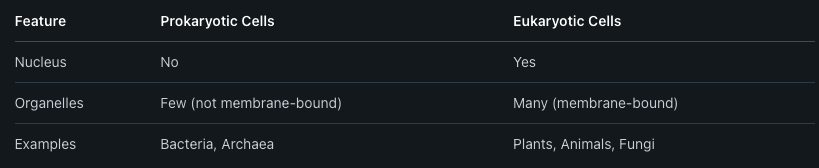
Eukaryotic cells are usually larger and more complex. This allows them to perform special tasks and build multicellular organisms.
Emergence of Life
The first forms of life on Earth were prokaryotic cells. Evidence suggests bacteria and archaea existed about 3.5 billion years ago.
Eukaryotic cells appeared later, likely through a process called endosymbiosis. In this process, one prokaryotic cell absorbed another, and they started living together. Over millions of years, this partnership led to complex cells with organelles like mitochondria.
The emergence of eukaryotic cells allowed the development of multicellular life. These changes supported the evolution of animals, plants, and other large life forms. Understanding this transition shows how life has become more diverse over time.
Cell Structure and Organelles
Every eukaryotic cell has a unique arrangement of parts that work together to help it live and grow. These parts include barriers for protection, centers for information, and tiny machines for making energy and building proteins.
Cell Membrane and Cytoplasm
The cell membrane surrounds the cell. It is a thin barrier that controls what enters and leaves. The membrane is made of a double layer of lipids and proteins. This structure supports the cell’s shape and protects it from outside harm.
Just inside is the cytoplasm, a jelly-like fluid. The cytoplasm holds all the cell’s organelles in place. It also helps move materials around the cell.
The cell membrane helps the cell interact with its environment. It uses proteins to let in nutrients and get rid of waste. This selective movement is called semi-permeability.
Nucleus and Genetic Material
The nucleus is the largest organelle in most eukaryotic cells. It acts as the control center. The nucleus is surrounded by its own membrane, called the nuclear envelope, which keeps the DNA safe.
Inside the nucleus, cells store their genetic material as DNA. The DNA carries instructions for everything the cell does. Here, DNA replication takes place when the cell prepares to divide.
The nucleolus is a small area in the nucleus where ribosomes begin to form. Several processes happen here, including transcription, which is the copying of DNA into RNA. This RNA then leaves the nucleus to help make proteins in the cytoplasm.
Organelles
Eukaryotic cells have special structures called organelles that perform different jobs. Each organelle is like a tiny factory in the cell.
Mitochondria are the main source of energy. They change nutrients into usable energy, often called the cell’s “powerhouse.”
In plant cells, chloroplasts capture sunlight and make food using photosynthesis.
The endoplasmic reticulum (ER) comes in two types: rough and smooth. Rough ER is covered with ribosomes and helps make proteins. Smooth ER makes fats and helps remove toxins.
Ribosomes use instructions from RNA to build proteins. This process is called translation. Some ribosomes float in the cytoplasm while others stick to the ER.
Each organelle works with others so the cell can live, grow, and divide. They help make proteins, process materials, and turn food into energy. Together, these parts keep the cell healthy and working.
Energy Production in Eukaryotic Cells
Eukaryotic cells need energy to survive, grow, and carry out tasks like protein synthesis. They rely on special structures called organelles to make and manage this energy.
Mitochondria and ATP Generation
Mitochondria are often called the "powerhouses" of the cell. They take in nutrients, such as glucose, and use oxygen to break them down. This process releases energy.
The main job of mitochondria is to make a molecule called ATP (adenosine triphosphate). ATP stores energy in its chemical bonds. Cells use ATP to power almost everything they do, including building proteins, moving substances, and dividing.
Key steps in energy production:

The mitochondria have their own DNA and make some proteins needed for energy production. High-energy cells, like muscle cells, have more mitochondria than others.
Chloroplasts and Photosynthesis
Chloroplasts are found in plant and algae cells. They trap sunlight and use it to make food through photosynthesis.
During photosynthesis, chloroplasts use sunlight, carbon dioxide, and water to make glucose and oxygen. The process happens in two main stages: the light-dependent reactions, which happen in the thylakoid membranes, and the Calvin cycle, which takes place in the stroma.
Important facts about chloroplasts:
Contain a green pigment called chlorophyll.
Convert solar energy into chemical energy stored in glucose.
Provide oxygen as a byproduct.
Energy made in the chloroplasts fuels plant cells and, through food chains, almost all life on Earth. Chloroplasts also have their own DNA and make several proteins needed for photosynthesis.
Key Cellular Processes
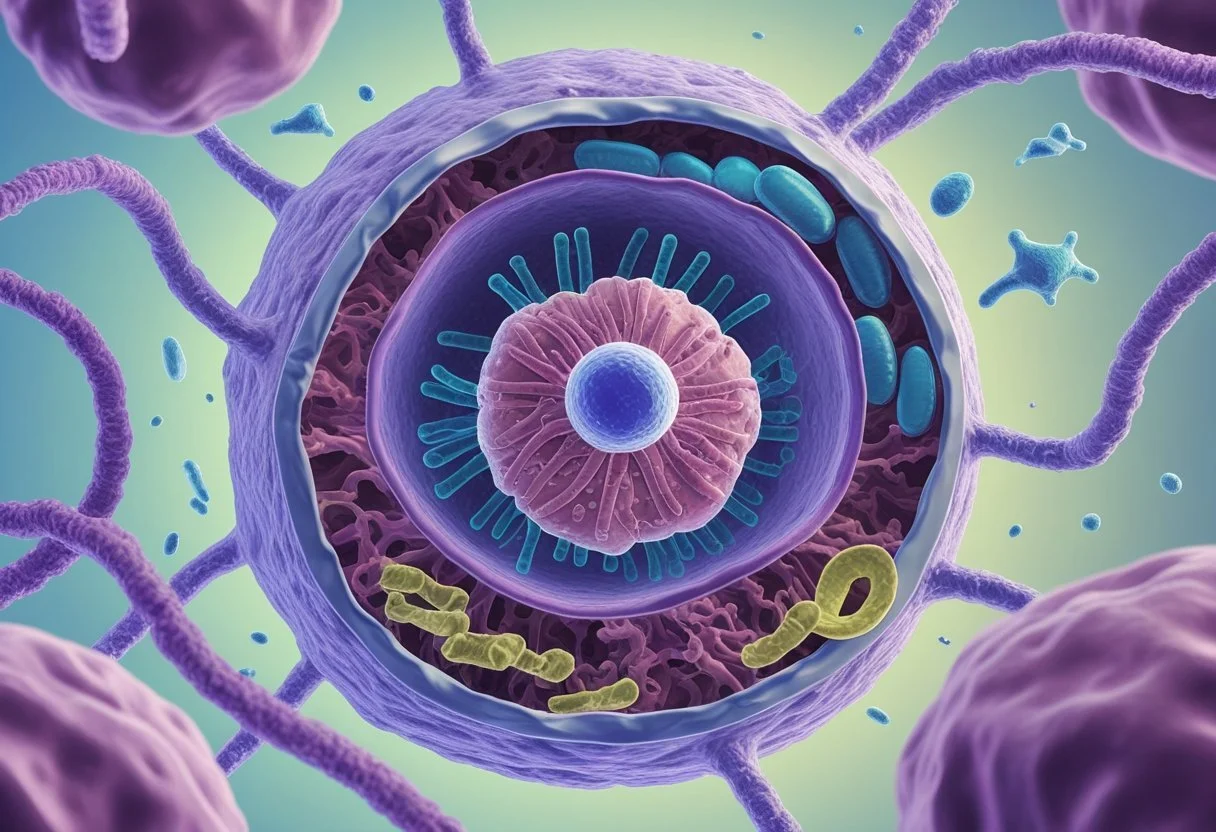
Eukaryotic cells rely on several main processes to survive and reproduce. These include the movement of molecules across membranes and the duplication and separation of genetic material.
Cellular Transport
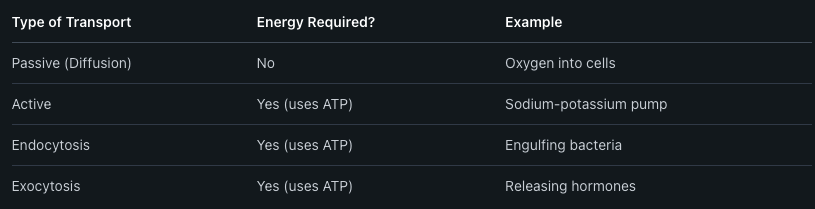
Cellular transport is essential for moving substances into and out of the cell. Eukaryotic cells use both passive and active transport. Passive transport does not require energy. Diffusion is a common passive method where molecules like oxygen move from areas of high to low concentration. Osmosis, a special type of diffusion, helps control water balance in the cell.
Active transport uses energy in the form of ATP to move molecules against their concentration gradient. A key example is the sodium-potassium pump. This process keeps the proper balance of ions inside and outside the cell, which helps nerve signals and muscle function.
Cells also use endocytosis and exocytosis to move large particles. Endocytosis brings materials into the cell, while exocytosis pushes them out. These processes allow cells to control what enters and leaves, keeping the internal environment stable.
Cell Division
Cell division lets eukaryotic cells grow, repair tissues, and reproduce. There are two main types: mitosis and meiosis.
Mitosis is used for growth and repair. The cell makes an exact copy of its DNA, then splits to form two identical cells. This process happens in body cells like skin or bones.
Meiosis is for sexual reproduction. It reduces the DNA by half, making special cells called gametes (sperm and egg). Each gamete has only one set of chromosomes. When they join, a new cell with a full set of DNA forms.
The steps of mitosis include:
Prophase: Chromosomes appear.
Metaphase: Chromosomes line up in the middle.
Anaphase: Chromosomes move apart.
Telophase: Two new nuclei form.
Cell division is controlled by several proteins and signals. Mistakes can lead to problems like cancer. Because of these checks, cells only divide when needed.
Genetics and Genomics
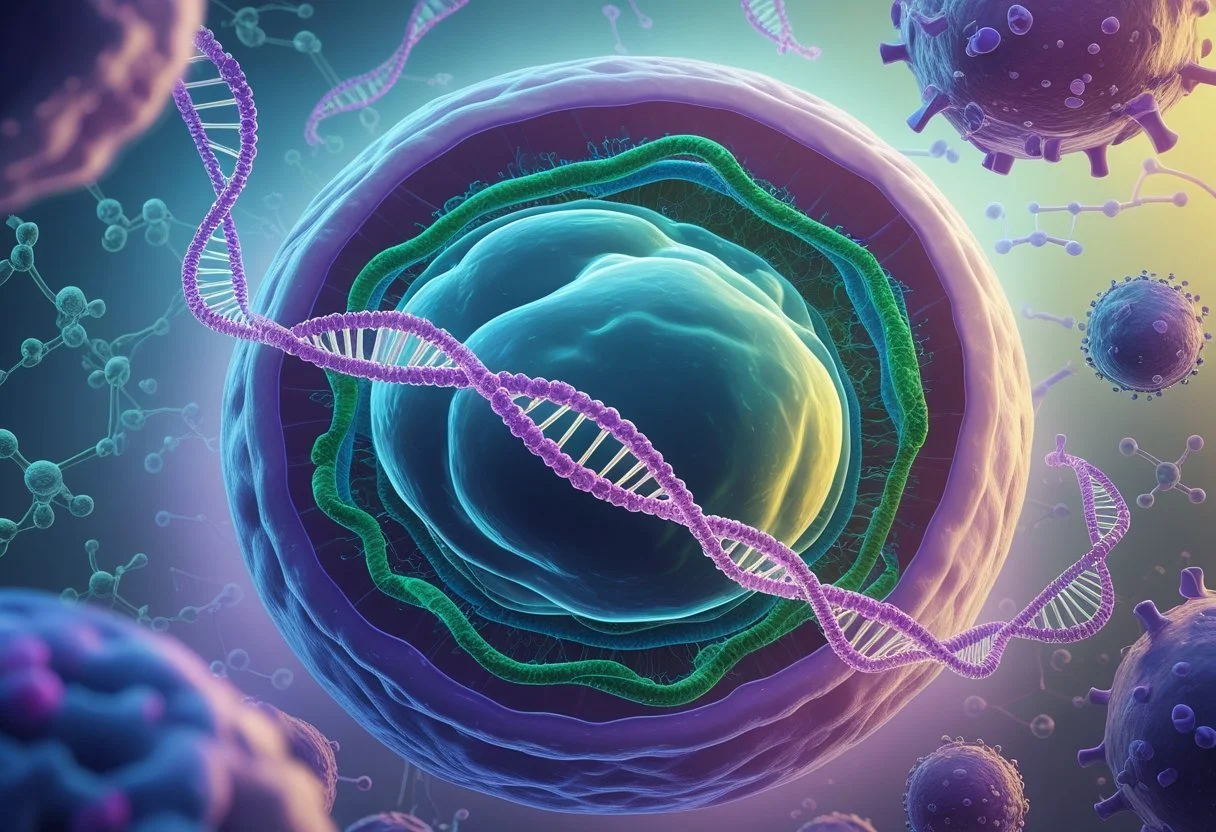
Eukaryotic cells store genetic instructions in the nucleus. The study of their DNA—how genes work, how genomes are organized, and how scientists analyze this information—has led to big discoveries in biology and medicine.
Genetics in Eukaryotes
Genetics looks at how traits are passed from parents to offspring. In eukaryotes, most of the DNA is inside the nucleus, packed into chromosomes. Genes are parts of DNA that provide instructions for making proteins.
Each eukaryotic cell can have thousands of different genes. Changes in these genes, or mutations, can affect how the cell works. Understanding these changes is important for learning about diseases, like cancer or genetic disorders.
Mendel’s laws of inheritance help explain how genetic traits move through generations. Tools like Punnett squares and pedigree charts are used to predict which traits might appear in offspring.
Genomic Analysis
Genomics is the study of all of an organism’s genes at once. Scientists look at entire genomes to find patterns, differences, and similarities between individuals and species.
They use powerful computers to store and examine huge amounts of DNA data. Sequencing technologies, like next-generation sequencing, make it possible to read DNA quickly and cheaply.
Bioinformatics and computational biology help researchers compare genomes, find disease genes, and study evolution. Researchers can use databases to search for genes, look at gene families, and identify mutations linked to health conditions.
Sequence and Statistical Analysis
Sequence analysis finds information in DNA or protein sequences. Scientists look for coding regions (exons), noncoding regions (introns), and regulatory elements.
Statistical analysis helps make sense of large data sets. For example, it is used to:
Search for gene patterns across genomes
Measure how gene changes affect health
Find links between genes and diseases
Common methods include sequence alignment and clustering. Researchers use software to spot similarities, differences, and patterns in DNA data, helping them answer important questions about eukaryotic cell function.
The Evolutionary Origins of Eukaryotic Cells
Scientists believe eukaryotic cells came from ancient relationships between different kinds of single-celled organisms. Research points to both bacteria and archaea as key players in this major event in evolutionary biology.
Endosymbiosis Theory
The endosymbiosis theory explains how some parts of eukaryotic cells, such as mitochondria and chloroplasts, have their own DNA. This idea suggests that a large ancestral cell, likely related to archaea, engulfed smaller free-living bacteria.
Instead of being digested, these bacteria formed a partnership with their host. Over time, the bacteria and the host cell depended on each other to survive. The bacteria provided energy or food for the host, while the host offered shelter and nutrients.
Key parts of endosymbiosis:
Origin of mitochondria from ancient bacteria (possibly alphaproteobacteria)
Formation of chloroplasts from cyanobacteria in plant ancestors
Permanent merging of these bacteria inside the host cell
This theory helps explain why mitochondria and chloroplasts have their own DNA, which is similar to bacterial DNA and very different from the DNA found in a cell's nucleus.
Evidence from Free-Living Bacteria
Several features of mitochondria and chloroplasts match those found in free-living bacteria. For example, both have circular DNA instead of the linear DNA in most eukaryotic cell nuclei.
Mitochondria and chloroplasts reproduce by dividing, just like bacteria. When scientists compare the DNA sequences in mitochondria and free-living bacteria, they find strong similarities.
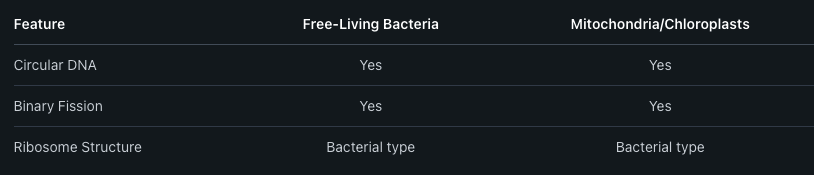
These shared features support the idea that parts of eukaryotic cells started as independent bacteria.
Symbiotic Relationships
Symbiosis means two different organisms live closely together and help each other. In the early history of eukaryotic cells, symbiotic relationships made it possible for cells to gain new features and abilities.
Endosymbiosis, a special kind of symbiosis, led to cells that could make more energy and survive in different environments. For example, plants use chloroplasts to turn sunlight into food, thanks to this symbiotic event.
Such relationships are still seen today. Some modern bacteria and single-celled organisms live inside others, showing that endosymbiosis and symbiosis are important across evolutionary biology. This process shapes how complex life forms have evolved over time.
From Cells to Complex Life
Eukaryotic cells form the basis of animals, plants, fungi, and protists. These cells can group together to build complex living things that can sense and interact with their environment.
Eukaryotic Organisms
Eukaryotic organisms include animals, plants, fungi, and protists. These life forms have cells with a nucleus and other organelles. This makes them different from prokaryotes, such as bacteria.
Key Features of Eukaryotic Organisms:
Cells have a nucleus that holds genetic material.
Organelles like mitochondria and chloroplasts handle tasks such as energy production.
Many eukaryotes are multicellular, although some, like yeast, are single-celled.
Their structure helps them perform tasks needed for survival, such as movement, digestion, and reproduction. Plants use chloroplasts to make food from sunlight, while animals eat food for energy. Fungi break down other matter to survive. By working together, these cells allow organisms to grow, heal, and adapt to different environments.
Tissues and Organs
When eukaryotic cells come together, they often form tissues. Each type of tissue has cells playing similar roles. For example, muscle tissue moves the body, while nerve tissue sends messages.
Examples of Tissues and Organs:
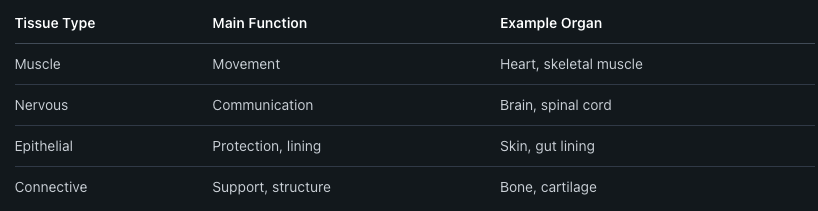
Organs are made up of several tissues working together. The heart pumps blood, lungs help with breathing, and leaves in plants capture sunlight. This teamwork among tissues forms the foundation for the functions that keep eukaryotic organisms alive.
Vision and Sensory Systems
Some eukaryotic animals have developed complex sensory systems. Vision is one key sense that helps animals find food, avoid danger, and socialize.
Vision starts when light enters the eye. The eye has specialized cells called photoreceptors that respond to light. These cells send signals to the brain, which then creates images.
Other senses, like hearing or smell, also rely on special organs and tissues. For example, the ear picks up sound waves, and the nose detects chemicals in the air. Sensory systems let multicellular organisms gather information and react to changes in their surroundings, increasing their chances of survival.
Tools and Techniques in Eukaryotic Cell Research
Researchers use different tools and scientific techniques to understand the structure and function of eukaryotic cells. These methods help scientists observe tiny details, discover how cells work, and explain many mysteries of life.
Microscopes and Imaging
Microscopes are the foundation of cell research. They allow scientists to see cell structures like the nucleus, mitochondria, and other organelles. Light microscopes are common in schools and labs for viewing cells stained with dyes. These microscopes can show basic shapes but cannot reveal very fine details.
Electron microscopes use beams of electrons instead of light. These include transmission electron microscopes (TEM) and scanning electron microscopes (SEM), both of which provide much higher resolution. TEM images show the inside of cells, while SEM creates 3D images of the cell surface. This makes it possible to study organelles and cell membranes very closely.
Imaging technologies like fluorescence microscopy also help researchers see specific parts of cells by tagging proteins with glowing markers. These advanced tools make it possible to track cell processes in real time and study interactions between molecules within the cell.
Advances in Molecular and Cellular Biology
Molecular biology tools let scientists look deeper into how cells function. PCR (polymerase chain reaction) allows them to copy and study DNA from eukaryotic cells. With PCR, even tiny amounts of genetic material can be analyzed and identified.
Gene editing techniques, including CRISPR-Cas9, let scientists change the DNA of eukaryotic cells. This helps study how certain genes affect the way cells grow or fight disease.
Other common methods include gel electrophoresis, which sorts DNA, RNA, or proteins by size, and cell culture, where living eukaryotic cells grow in controlled environments for experiments. These methods have led to key discoveries about how cells divide, change, and react to medicines.
Scientists also use western blots to detect specific proteins in a sample and flow cytometry to count and sort cells by their features. These techniques allow researchers to learn about the building blocks and behavior of eukaryotic cells in detail.
Frequently Asked Questions
Eukaryotic cells have many specialized parts called organelles, each with clear jobs. Scientists continue to discover new details about how these cells work and change.
What are the defining features of eukaryotic cells?
Eukaryotic cells have a nucleus surrounded by a membrane. They contain other membrane-bound organelles, like mitochondria and the endoplasmic reticulum. These cells are usually larger and more complex than prokaryotic cells.
How do the organelles within eukaryotic cells contribute to their overall function?
Organelles have their own specific roles. Mitochondria make energy for the cell, while lysosomes break down waste. The endoplasmic reticulum and Golgi apparatus help build and move proteins and other molecules.
What is the role of the nucleus in eukaryotic cell processes?
The nucleus stores the cell’s genetic material, or DNA. It controls which proteins the cell makes by sending out instructions in the form of RNA. The nucleus also plays a role in cell growth and division.
How do eukaryotic cells differ from prokaryotic cells?
Eukaryotic cells have a nucleus and other organelles that are surrounded by membranes. Prokaryotic cells, like bacteria, do not have a nucleus or most organelles. Eukaryotes are usually bigger and more advanced.
What is the significance of eukaryotic cell division and its mechanisms?
Eukaryotic cells divide by processes called mitosis and meiosis. Mitosis helps with growth and repair by making new, identical cells. Meiosis is used in reproduction and creates cells with half the usual amount of DNA, which is important for forming eggs and sperm.
What are the latest discoveries in eukaryotic cell research?
Researchers have found new ways to see inside living eukaryotic cells using advanced microscopes. Studies are uncovering how cells talk to each other and how certain diseases affect cell parts. Some scientists are also learning how organelles can change shape or move to respond to signals.




Embark on a Comprehensive Journey into Eukaryotic Cells with Our Complete Activity Bundle!
Explore the fascinating world of eukaryotic cells through an all-inclusive bundle of engaging resources designed to enrich your understanding of cellular biology. This comprehensive package includes an array of interactive activities meticulously crafted to cater to diverse learning styles and levels of expertise.
Key Features:
Variety of Activities: Delve into cellular biology using an assortment of resources such as Assignments, Bingo, Crossword, Cryptogram, Debate, Experiments, Fill in the Blank, Flashcards, and more. Each activity offers a unique approach to grasping the complexities of eukaryotic cells.
Educational Depth: From PowerPoint presentations elucidating cell structures to comprehensive tests challenging your knowledge, this bundle covers every aspect of eukaryotic cells, ensuring a holistic understanding.
Lesson Plan: Dive deep with our detailed lesson plan, complete with engaging activities and discussion topics.
Flexibility and Engagement: Enjoy the freedom to learn at your pace with a range of activities like Matching, Missing Letters, Multiple Choice, Scramble, True or False, Word Search, and Writing Prompts, catering to various learning preferences.
Supplementary Resources: Benefit from additional assets such as a free ABC Order activity, free Matching exercise, and a poster to supplement your exploration of eukaryotic cells.
Whether you're a student delving into cellular biology, an educator seeking versatile teaching resources, or an enthusiast fascinated by the intricacies of cells, this bundle provides a comprehensive and immersive learning experience. Unlock the mysteries of eukaryotic cells and broaden your understanding of the fundamental units of life with this extensive activity bundle!
Begin your exploration into eukaryotic cells today with our comprehensive bundle, designed to make learning engaging, enriching, and enjoyable.
128 pages
Order your copy today!