
Unveiling the Secrets: Teaching Small Intestine Dynamics – Lining and Bacteria
Description: Discover effective strategies for teaching the complexities of small intestine dynamics, focusing on its intricate lining and the vital role of bacteria. This blog will guide you in making this captivating subject engaging and accessible for all learners.
1. Start with the Basics of Small Intestine Anatomy
Begin your lesson by establishing a solid foundation in small intestine anatomy. Introduce the three key segments: the duodenum, jejunum, and ileum. Explain the primary functions of each section, highlighting the crucial role of the mucosa layer. Emphasizing these basics will help students grasp the complexities of small intestine dynamics.
2. Utilize Visual Aids for Enhanced Learning
Visual aids are invaluable in teaching small intestine dynamics. Use diagrams, illustrations, and 3D models to help students visualize the organ's structure. Focus on essential components such as goblet cells, the mechanics of segmentation and peristalsis, and the fascinating world of gut bacteria. Visuals can significantly enhance understanding and retention.
3. Engage with Interactive Activities
Bring the processes of the small intestine to life with hands-on activities. Encourage students to create models, engage with virtual simulations, or conduct simple experiments demonstrating the mechanics of digestion. These interactive experiences will deepen their understanding and make learning memorable.
4. Connect Small Intestine Dynamics to Real-World Relevance
Highlight the practical implications of small intestine dynamics in everyday life. Discuss how dietary choices influence gut microbiota and overall health, and explore the concept of the gut-brain axis and its effects on mental well-being. Relating this knowledge to real-world experiences enhances its significance and relevance.
5. Leverage Technology in Your Teaching
Integrate technology to enrich the learning experience. Use educational videos, virtual tours of the digestive system, and interactive simulations. Online platforms and apps can offer additional resources, promoting self-paced exploration and engagement.
6. Introduce Case Studies and Real-Life Scenarios
Make the subject matter come alive by incorporating case studies or real-life scenarios that showcase the applications of small intestine dynamics. Discuss medical cases, current research findings, or historical breakthroughs related to digestive health. This approach encourages critical thinking and problem-solving skills.
7. Foster Questions and Encourage Discussions
Create an engaging learning environment by inviting questions and facilitating discussions among students. The dynamic nature of the small intestine naturally leads to intriguing inquiries and thought-provoking conversations. Cultivate a classroom culture where curiosity is celebrated.
8. Assess Understanding Through Varied Formats
Utilize diverse assessment methods to evaluate student understanding. Incorporate quizzes, projects, presentations, and group discussions to allow students to demonstrate their comprehension in ways that align with their individual learning styles.
9. Invite Guest Speakers or Organize Field Trips
Whenever possible, invite guest speakers, such as healthcare professionals or researchers specializing in digestive health, to share their insights. Alternatively, consider organizing field trips to science museums or laboratories, where students can witness practical applications of small intestine dynamics firsthand.
10. Provide Resources for Further Exploration
Encourage self-directed learning by equipping students with additional resources. Share articles, documentaries, and reputable online sources that delve deeper into the topic of small intestine dynamics. Promote independent research to foster a lifelong interest in this fascinating subject.
Conclusion: Teaching small intestine dynamics offers a journey of discovery for both educators and students. By employing these strategies, you can make this intricate subject both engaging and accessible, fostering a profound appreciation for the wonders of our bodies and their inner workings.
Discover the Marvels of Small Intestine Dynamics: Comprehensive Worksheet Bundle
Embark on a comprehensive exploration of Small Intestine Dynamics with our engaging worksheet bundle. From the intricacies of the lining to the symbiotic relationship with bacteria, this bundle is crafted to cater to diverse learning styles and preferences. Here's what this enlightening bundle holds:
Included Worksheets:
Assignments: Embark on 10 stimulating assignments covering diverse topics, encouraging critical thinking and practical application of knowledge.
Debate: Stimulate critical thinking by exploring and discussing different perspectives on Small Intestine Dynamics.
Fill in the Blank: Reinforce learning through the classic format of filling in the blanks with essential terms and concepts.
Free ABC Order: Practice alphabetizing while learning key terms, a free addition to enhance your organization skills.
Free Cut and Paste: Get hands-on with a cut-and-paste activity for a visual and tactile approach to learning.
Free Poster: Decorate your study space with a visually appealing poster, serving as a constant reminder of key concepts.
Matching: Connect terms with their corresponding definitions, reinforcing understanding through a classic matching game.
Multiple Choice: Assess your knowledge with a variety of multiple-choice questions, allowing for diverse testing scenarios.
Questions and Answers: Reinforce your understanding with a comprehensive set of questions and detailed answers.
Reading Comprehension: Sharpen reading skills with engaging passages, perfect for students and educators alike.
Test (45 minutes): Assess your grasp of the subject with a timed examination.
True or False: Challenge your knowledge with a classic true or false worksheet format.
Writing Prompts: Encourage creativity and critical thinking with thought-provoking prompts.
Why Choose the Small Intestine Mastery Worksheet Bundle?
This bundle goes beyond conventional learning, offering a diverse array of worksheets to accommodate varied preferences. Whether you thrive in debates, prefer hands-on activities, or enjoy visual aids, our bundle ensures that Small Intestine Dynamics becomes an accessible and enjoyable subject. Ideal for students, educators, or anyone seeking a comprehensive understanding. Elevate your learning experience with this all-inclusive worksheet bundle!
70 pages
Order your copy today!

Dive into the intricate world of small intestine dynamics with our comprehensive bundle, focusing on the lining and bacteria interactions within this vital organ. Perfect for educators and students alike, this bundle offers a rich array of resources to deepen understanding and engagement.
Key Features:
PowerPoint Presentation: Unveil the complexities of small intestine dynamics with our visually stimulating and informative PowerPoint presentation, offering insights into the intricate processes of the intestinal lining and bacterial interactions.
Test (45 Minutes): Assess comprehension and mastery of small intestine dynamics with our comprehensive test, meticulously designed to cover key concepts within a 45-minute timeframe.
Bingo: Make learning fun and interactive with our Small Intestine Dynamics Bingo game, perfect for reinforcing terminology and concepts related to the lining and bacterial interactions.
Crossword: Challenge understanding and expand vocabulary with our Crossword puzzle, offering an entertaining way to reinforce key terms and concepts.
Lesson Plan: Dive deep with our detailed lesson plan, complete with engaging activities and discussion topics.
Word Search: Sharpen observational skills while hunting for small intestine-related terms in our engaging Word Search activity, designed to reinforce terminology.
Cryptogram: Decode the secrets of small intestine dynamics with our Cryptogram puzzle, offering a stimulating twist on learning fundamental concepts.
True or False: Test understanding of small intestine principles with our True or False activity, designed to challenge misconceptions and solidify knowledge.
Reading Comprehension: Sharpen reading skills with engaging passages, perfect for students and educators alike.
Matching: Strengthen connections between terms and definitions with our Matching activity, fostering a deeper understanding of small intestine dynamics.
Missing Letters: Fill in the blanks and complete small intestine-related terms with our Missing Letters exercise, perfect for reinforcing spelling and vocabulary.
Scramble: Unscramble jumbled phrases related to small intestine dynamics with our engaging Scramble activity, promoting quick thinking and problem-solving skills.
Additional Bonuses Included:
Free ABC Order: Practice alphabetizing small intestine terms with our convenient ABC Order activity.
Free Cut and Paste: Enhance your understanding of small intestine anatomy and functions with our interactive Cut and Paste activity.
Free Poster: Reinforce learning and decorate your learning space with our informative and visually appealing Small Intestine Dynamics Poster.
With answers for all activities, this comprehensive bundle equips you with the tools needed to master the complexities of small intestine dynamics. Unravel the mysteries of the intestinal lining and bacterial interactions today!
72 pages
Don't miss out, order yours today!

Embark on a Small Intestine Adventure: Game Bundle Unveiling Dynamics
Journey into the intricate world of Small Intestine Dynamics with our exciting game bundle, a treasure trove of engaging worksheets designed to make learning fun and immersive. Uncover the fascinating details of the lining and the symbiotic dance with bacteria through a variety of entertaining games. Here's what's in store for you:
Included Worksheets:
Bingo: Enjoy a lively and interactive game with 30 bingo cards, reinforcing key concepts in a playful way.
Crossword: Challenge your mind with a crossword puzzle that tests and expands your vocabulary in the world of Small Intestine Dynamics.
Cryptogram: Decipher the secrets of the small intestine in an intriguing worksheet that combines fun and learning.
Free ABC Order: Practice alphabetizing while mastering essential terms, a free and engaging addition to your learning experience.
Free Cut and Paste: Get hands-on with a cut-and-paste activity, making learning visual and tactile.
Free Poster: Decorate your learning space with a visually appealing poster that serves as a quick reference guide.
Matching: Connect terms with their corresponding definitions in a classic matching game for deeper understanding.
Missing Letters: Challenge yourself to fill in the blanks, reinforcing memory and improving spelling skills.
Scramble: Unscramble terms in an engaging game that enhances memory and problem-solving abilities.
Word Search: Discover and circle key terms in a delightful word search puzzle, making learning a joyful experience.
Why Choose the Small Intestine Spectacle Game Bundle?
This bundle isn't just a collection of worksheets; it's a dynamic gaming experience tailored for explorers of all learning styles. Whether you prefer the excitement of bingo, the mental workout of crosswords, or the hands-on appeal of cut and paste, our game bundle ensures that Small Intestine Dynamics becomes an adventure rather than a lesson. Ideal for students, educators, or anyone eager to turn learning into a captivating experience. Elevate your understanding and enjoy the journey with this thrilling game bundle!
40 Pages
Order your copy today!

Explore Small Intestine Dynamics with ABC Order: Cut-and-Glue Worksheet Set!
Dive into the world of the small intestine's lining and bacteria with our engaging ABC Order worksheet. This educational resource goes beyond conventional learning, combining the benefits of ABC order with a hands-on cut-and-glue approach to make studying small intestine dynamics not just informative but also entertaining.
What's Inside:
21 Keywords: Immerse yourself in the language of small intestine dynamics with 21 carefully selected keywords. From layers of the lining to essential bacteria species, each term contributes to a comprehensive understanding of this fascinating aspect of the digestive system.
Cut-and-Glue Format: Enhance your learning experience with a cut-and-glue format that adds a tactile dimension to your studies. Arrange the keywords in alphabetical order, reinforcing your familiarity with each term.
Two Worksheets: Enjoy the flexibility of two worksheets, each presenting the challenge of sorting keywords alphabetically. Whether you're a beginner or seeking a greater challenge, these worksheets cater to various learning levels.
Answers Included: No need to second-guess yourself – the answers are conveniently included. Verify your efforts and solidify your command of small intestine vocabulary.
This ABC Order worksheet set is more than just an exercise; it's a dynamic learning adventure into the complexities of the digestive system. Perfect for students, educators, or anyone eager to make learning an engaging experience. Elevate your understanding of Small Intestine Dynamics with our ABC Order worksheet set today!
Download your copy today!

Embark on a visual odyssey into the intricate world of the small intestine with our captivating poster. "Journey Through the Small Intestine" beautifully showcases the architectural marvels of the intestinal lining, highlighting the significance of valli – the unique folds that play a crucial role in the digestive process.
Key Features:
Detailed Illustrations: Marvel at intricate illustrations capturing the folds and nuances of the small intestine's lining, providing a visually enriching experience.
Educational Insight: Gain a deeper understanding of the valli and how they contribute to the efficiency of nutrient absorption within the small intestine.
Anatomical Clarity: Explore the anatomical features of the small intestine, enhancing your knowledge of this vital organ and its essential role in the digestive system.
Perfect for Learning Spaces: Ideal for classrooms, labs, or study spaces, this poster serves as an invaluable educational tool, promoting engagement and comprehension.
Whether you are a student, educator, or a health enthusiast, "Journey Through the Small Intestine" is a captivating addition to your educational resources, providing a comprehensive and visually stimulating exploration of the small intestine's lining and valli. Elevate your understanding of human anatomy with this informative and aesthetically pleasing poster.
Download a copy today!

Embark on an interactive journey into the intricacies of the small intestine with our "Discover Small Intestine Valli" cut and paste activity. This engaging resource invites learners to explore and label the four essential components of valli – Arteriole, Lacteal, Capillary, and Venule.
Key Features:
Hands-On Learning: Immerse yourself in a tactile learning experience by cutting, pasting, and labeling the distinct parts of the valli found in the small intestine.
Anatomical Accuracy: Enhance your understanding of the small intestine's structural elements with anatomically accurate representations of Arteriole, Lacteal, Capillary, and Venule.
Educational Fun: Combine the joy of crafting with educational value, creating a dynamic and enjoyable learning experience for students of various ages.
Comprehensive Labeling: Ensure a thorough grasp of the small intestine's valli components by precisely labeling each part, reinforcing knowledge retention.
Perfect for educational settings, homeschooling, or personal exploration, "Discover Small Intestine Valli" adds a dynamic and interactive dimension to the study of human anatomy. Elevate your understanding of the small intestine's structural marvels with this captivating cut and paste adventure.
Download your copy today!
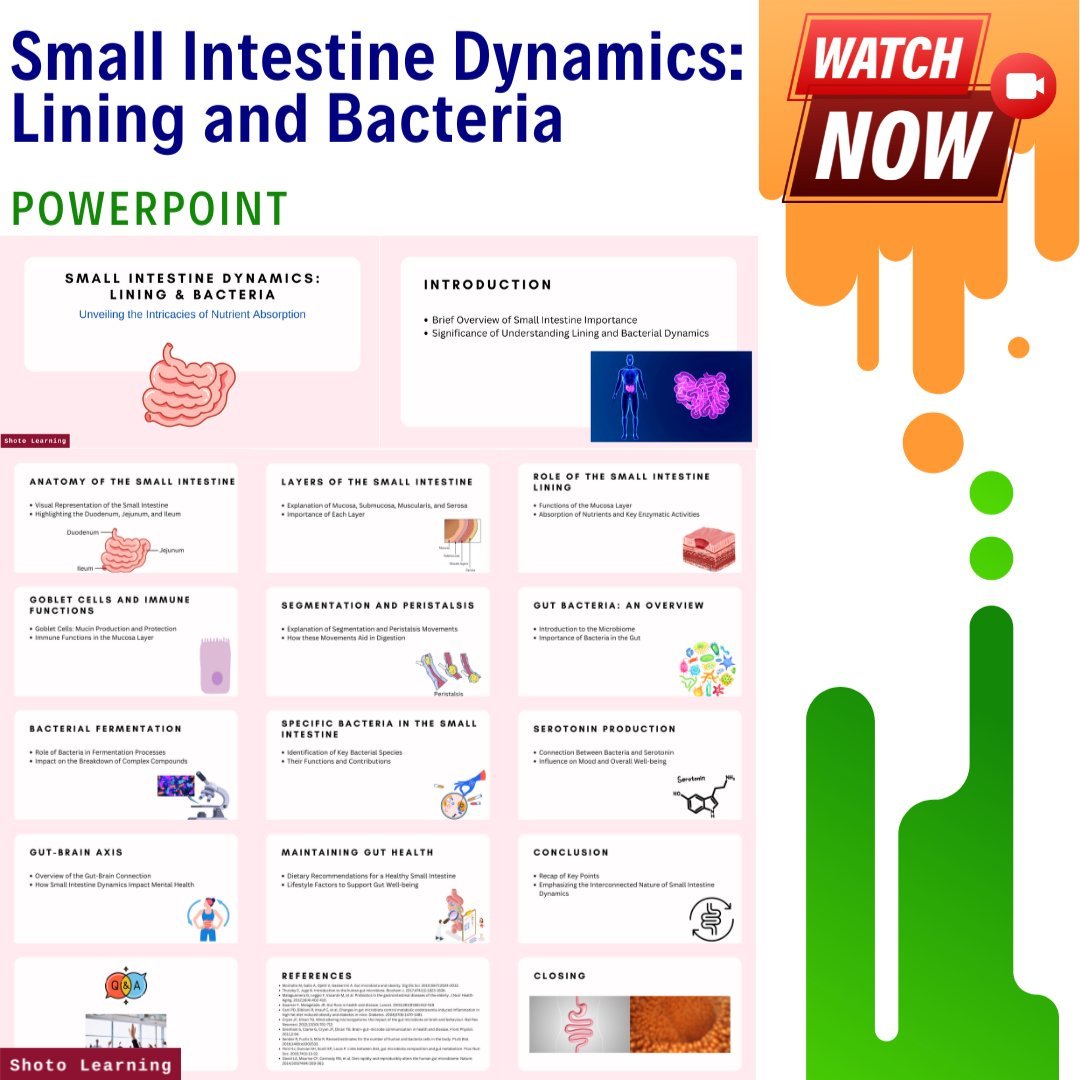
Unraveling the Intricacies: Small Intestine Dynamics PowerPoint Presentation
Embark on an enlightening journey through the world of the small intestine with our comprehensive PowerPoint Presentation and speech. Delving into 17 meticulously crafted slides, this presentation illuminates the dynamic interplay between the small intestine's lining and bacteria.
Key Features:
Slide 1: Title Captivating title design introducing the focus of the presentation.
Slide 2: Introduction A compelling introduction setting the stage for the exploration of small intestine dynamics.
Slide 3: Anatomy of the Small Intestine Visual breakdown of the small intestine's anatomy, spotlighting the duodenum, jejunum, and ileum.
Slide 4: Layers of the Small Intestine In-depth exploration of the mucosa, submucosa, muscularis, and serosa layers, unraveling their significance.
Slide 5: Role of the Small Intestine Lining Insightful discussion on the crucial functions of the mucosa layer in nutrient absorption and enzymatic activities.
Slide 6: Goblet Cells and Immune Functions Unveiling the role of goblet cells, their mucin production, and their contribution to the immune functions of the small intestine.
Slide 7: Segmentation and Peristalsis Understanding the mechanical movements of segmentation and peristalsis and their vital role in digestion.
Slide 8: Gut Bacteria: An Overview Overview of the diverse gut microbiota and its pivotal role in maintaining a healthy gut environment.
Slide 9: Bacterial Fermentation Exploration of how gut bacteria contribute to fermentation processes, breaking down complex compounds.
Slide 10: Specific Bacteria in the Small Intestine Detailed examination of specific bacterial species residing in the small intestine and their functions.
Slides 11 to 13: Serotonin Production, Gut-Brain Axis, Maintaining Gut Health An interconnected exploration of the gut's influence on serotonin production, the gut-brain axis, and practical tips for maintaining gut health.
Slide 14: Conclusion Summarizing key points to solidify understanding and appreciation for small intestine dynamics.
Slide 15: Q&A Encouraging audience engagement and questions, fostering an interactive learning experience.
Slide 16: References Citing sources used in the presentation, promoting transparency and further exploration.
Slide 17: Closing Concluding remarks, leaving the audience with a lasting impression.
Elevate your understanding of the small intestine with this visually compelling and informative PowerPoint presentation and speech. Perfect for educational settings, presentations, or personal exploration.
View on Youtube
Order your copy today!

Unlock the mysteries of digestion with our comprehensive lesson plan on Small Intestine Dynamics - Lining and Bacteria. Designed for high school biology classes, this engaging resource delves into the intricate structures and dynamic processes within the small intestine, essential for nutrient absorption and overall digestive health.
Key Features:
In-depth Exploration: Dive deep into the structure of the small intestine lining, uncovering the specialized adaptations such as villi and microvilli that maximize nutrient absorption.
Dynamic Processes: Experience the marvels of peristalsis and other dynamic movements within the small intestine through captivating visuals and interactive demonstrations.
Gut Microbiota Insights: Gain valuable insights into the world of gut microbiota and discover the pivotal role bacteria play in digestion. Learn about specific bacteria species found in the small intestine and their contributions to breaking down nutrients and maintaining gut health.
Engaging Activities: Keep students actively involved with hands-on activities and thought-provoking discussions that reinforce key concepts and promote deeper understanding.
Assessment Tools: Assess students' comprehension with built-in assessment tools, including quizzes and worksheets, ensuring a thorough understanding of the material.
Empower your students to become digestive system experts with our Dynamic Digestion lesson plan. Prepare them for a journey through the small intestine, where every twist and turn reveals the secrets of efficient nutrient absorption and the symbiotic relationship between our bodies and the bacteria within.
Don't miss out; order yours today!

Explore the fascinating world of the small intestine with our "Intestine Dynamics: Hands-On Experiments on Lining and Bacteria" guide. This two-page resource offers five engaging and educational experiments designed to illustrate the key functions and processes of the small intestine, including its lining and the role of gut bacteria.
Key Features:
Interactive Experiments: Conduct experiments at home to simulate digestion, test starch breakdown, observe bacterial growth, and understand nutrient absorption and fiber effects.
Educational Insights: Gain a deeper understanding of how the small intestine's lining functions, the importance of gut flora, and the impact of dietary fiber on digestion.
Easy-to-Follow Instructions: Each experiment is detailed with clear, step-by-step instructions and uses readily available materials, making it easy to perform at home.
Visual Learning: Enhance comprehension with practical, visual demonstrations of complex biological processes.
How to Use It:
Gather Materials: Collect all items listed for each experiment.
Follow Instructions: Perform the experiments using the provided step-by-step directions.
Observe and Record: Document your observations and results.
Discuss Results: Analyze and discuss the findings based on the guide’s explanations.
Make learning about intestinal dynamics both fun and informative with these hands-on experiments that bring scientific concepts to life!
Order your copy today!

Dive deep into the complex world of the small intestine with our "Small Intestine Dynamics: Lining and Bacteria" assignment set. This resource includes 10 thoughtfully crafted assignments designed to explore the intricate structure of the small intestine lining and the essential role bacteria play in digestion and overall health.
Key Features:
In-Depth Exploration: Assignments cover key concepts such as nutrient absorption, the immune function of the small intestine lining, and the symbiotic relationship between gut bacteria and digestion.
Critical Thinking: Each question challenges students to apply their knowledge and think critically about the dynamic processes within the small intestine.
Comprehensive Learning: Provides clear and concise answers that reinforce understanding, making it an excellent resource for self-study or classroom use.
Engaging Format: The assignments are designed to keep students engaged, promoting a deeper appreciation for the complexities of digestive health.
Versatile Use: Ideal for students, educators, or anyone looking to enhance their understanding of small intestine dynamics, whether for coursework or personal interest.
How to Use It:
Review the Assignments: Begin by reading each of the 10 assignments to familiarize yourself with key concepts related to the small intestine's lining and bacteria.
Complete the Questions: Answer the questions to assess your understanding of small intestine dynamics, focusing on bacterial roles and nutrient absorption.
Check Answers: Refer to the provided answers to verify your responses and deepen your comprehension of the topics.
Discuss and Reflect: Use the assignments to spark discussions or reflections on the importance of gut health and its implications.
Apply Knowledge: Relate the information to real-life scenarios, such as the effects of diet on the small intestine's health and overall digestion.
This resource is ideal for solidifying your grasp on the interaction between the small intestine lining and bacteria, offering valuable insights for both academic and practical learning.
Order your copy today!

Dive into the intricate workings of the small intestine with our "Small Intestine Dynamics: Lining and Bacteria Reading Comprehension Worksheet." This resource provides a detailed exploration of the small intestine's structure, function, and microbial environment, making it an invaluable tool for students and educators.
Key Features:
In-Depth Content: Gain insights into the structure of the small intestine, including its lining with villi and microvilli, and the role of bacteria in digestion and health.
Engaging Questions: Test comprehension with 5 thought-provoking questions designed to reinforce key concepts and ensure understanding.
Clear and Concise: Written in an accessible format, making complex biological processes easy to grasp for learners of all levels.
Educational Use: Ideal for classroom activities, homework assignments, or as a supplemental resource for lessons on digestive health and microbiology.
How to Use It:
In-Class Activity: Incorporate the worksheet into a lesson on the small intestine, focusing on its lining and the role of bacteria. Have students read the passage and answer the questions individually or in small groups to enhance their understanding of the dynamics of the small intestine and its microbiome.
Homework Assignment: Assign the worksheet for homework to allow students to review and reflect on the small intestine’s structure and function at their own pace. This helps reinforce their knowledge and allows them to explore the subject more deeply.
Study Aid: Use the worksheet as a study tool for students preparing for exams or quizzes on the small intestine. It provides a comprehensive review of key concepts related to the intestinal lining and bacteria, aiding in their preparation and comprehension.
Equip your students with a thorough understanding of the small intestine’s dynamics with this informative and interactive reading comprehension worksheet!
Order your copy today!

Embark on a comprehensive assessment of your knowledge with our meticulously crafted 45-minute test worksheet focusing on Small Intestine Dynamics: Lining and Bacteria. This resource is designed to challenge and evaluate your understanding across various question formats.
Key Features:
Section A: Multiple Choice (5 questions) Evaluate your ability to choose the correct answers from a set of options, testing your knowledge of fundamental concepts in Small Intestine Dynamics.
Section B: True or False (5 questions) Navigate through statements to discern their accuracy, refining your understanding of key facts related to the small intestine's lining and bacterial dynamics.
Section C: Fill in the Blanks (5 questions) Assess your proficiency by completing sentences with the appropriate terms, reinforcing your grasp on crucial terminology in the realm of Small Intestine Dynamics.
Section D: Short Answer (2 questions) Demonstrate a deeper understanding with short answers, elaborating on specific concepts and showcasing your ability to articulate key points concisely.
Section E: Essay (3 questions) Engage in thoughtful exploration as you respond to essay prompts, delving into broader topics within Small Intestine Dynamics and showcasing your ability to synthesize information.
Benefits:
Holistic Evaluation: Assess your knowledge across various question types, providing a comprehensive overview of your proficiency in Small Intestine Dynamics.
Time-Efficient: Complete the test within a focused 45-minute timeframe, making it an ideal tool for both individual and classroom assessments.
Detailed Answers: Gain insights into your performance with detailed answers provided for each section, allowing for self-assessment and targeted improvement.
Perfect for students, educators, or anyone seeking to gauge their understanding of Small Intestine Dynamics, this test worksheet is an invaluable resource for refining your knowledge in this intricate field. Elevate your learning experience today with "Mastering Small Intestine Dynamics: 45-Minute Test Worksheet."
Order your copy today!

Embark on a Knowledge Journey with "Small Intestine Dynamics: Multiple Choice Worksheet"
Dive into the complexities of the small intestine with our engaging multiple-choice worksheet, meticulously crafted to enhance your understanding of its lining and bacterial dynamics. This resource comprises 20 thought-provoking questions and answers, designed to challenge and reinforce your knowledge.
Key Features:
Comprehensive Coverage: Explore various facets of Small Intestine Dynamics, from the innermost layers to the crucial roles played by bacteria, through a carefully curated set of 20 multiple-choice questions.
Versatile Learning: Suitable for individual study, group discussions, or classroom settings, this worksheet caters to diverse learning preferences, ensuring an engaging and effective educational experience.
Self-Assessment: Evaluate your grasp of essential concepts and monitor your progress through the comprehensive set of answers provided for each question.
Perfect for students, educators, or anyone seeking to master Small Intestine Dynamics, this worksheet is a valuable tool for reinforcing knowledge and promoting a deeper understanding of the intricate processes within the digestive system. Elevate your learning journey today with "Small Intestine Mastery: Multiple Choice Worksheet."
Order your copy today!

Unlock Digestive Wisdom with "Small Intestine Mastery: 20 Flashcards"
Embark on a journey of comprehensive learning with our meticulously crafted flashcard set, focusing on Small Intestine Dynamics: Lining and Bacteria. These 20 flashcards are designed to deepen your understanding of the intricate processes within the small intestine, from the innermost layers to the crucial role of bacteria.
What's Inside:
In-Depth Knowledge: Each flashcard unveils a key concept, term, or process related to the small intestine's lining and bacteria, offering a holistic view of digestive dynamics.
Versatile Learning Tool: Ideal for individual study, group discussions, or classroom settings, these flashcards cater to various learning preferences, making complex topics more accessible.
Comprehensive Coverage: From the mucosa layer to the impact of bacteria on fermentation, these flashcards cover the breadth of Small Intestine Dynamics, providing a comprehensive overview.
Revitalize your learning experience and reinforce your knowledge of Small Intestine Dynamics with "Small Intestine Mastery: 20 Flashcards." Perfect for students, educators, or anyone seeking to master the intricacies of the digestive system. Elevate your understanding today!
Order your copy today!

Embark on an Educational Journey with "Small Intestine Mastery: Fill-in-the-Blank Worksheets"
Unleash the power of interactive learning with our engaging resource featuring two worksheets, each boasting 10 fill-in-the-blank questions meticulously designed to delve into the intricacies of Small Intestine Dynamics: Lining and Bacteria.
What's Inside:
20 Thought-Provoking Questions: Immerse yourself in a comprehensive exploration of the small intestine's lining and bacteria. From nutrient absorption to bacterial fermentation, these questions cover key aspects of digestive dynamics.
Word Box Included: Navigate the challenges seamlessly with a word box that assists learners in completing the blanks. This ensures a supportive environment for individuals or groups to enhance their understanding.
Versatile Learning: Whether you're a student aiming for self-assessment or an educator seeking a valuable classroom resource, these worksheets cater to diverse learning needs.
In-Depth Insights: Each question unveils a layer of knowledge, offering insights into the adaptive features, immune functions, and overall functionality of the small intestine.
Transform your learning experience with "Small Intestine Mastery: Fill-in-the-Blank Worksheets." Perfect for reinforcing knowledge, these worksheets bring the complexities of the digestive system to life, fostering a deeper understanding of Small Intestine Dynamics. Start your journey toward mastery today!
Order your copy today!
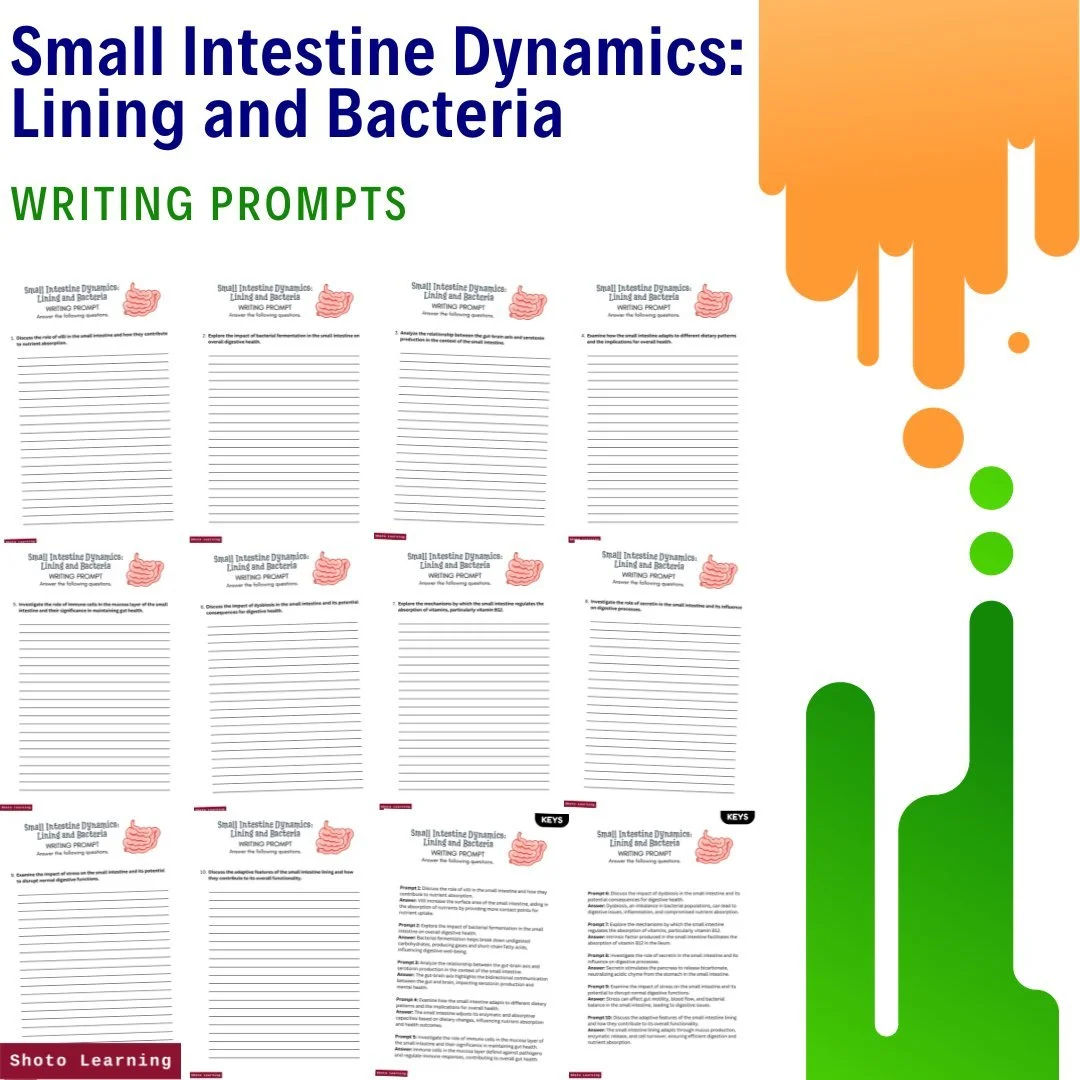
Ignite Inquiry with "Small Intestine Dynamics Writing Prompts": Explore and Understand!
Dive deep into the intricacies of the small intestine's lining and bacteria with our dynamic resource offering 10 thought-provoking writing prompts and their detailed answers. This product encourages in-depth exploration, critical thinking, and a comprehensive understanding of digestive dynamics.
What's Inside:
10 Stimulating Writing Prompts: Embark on an intellectual journey as each writing prompt invites you to delve into various aspects of small intestine dynamics, from nutrient absorption to the role of bacteria.
Comprehensive Answers: Gain valuable insights with detailed answers to each writing prompt. Enhance your knowledge and understanding of the digestive system through well-crafted explanations.
Critical Thinking: Foster critical thinking skills by addressing prompts that encourage reflection on the adaptive features, immune functions, and overall functionality of the small intestine.
Versatile Learning: Suitable for individual study, group discussions, or classroom assignments, this resource adapts to diverse learning environments, making it a valuable tool for students and educators alike.
Transform your exploration of Small Intestine Dynamics into a captivating and intellectually stimulating experience. "Small Intestine Dynamics Writing Prompts" offers a gateway to deepening your understanding of the digestive system. Begin your journey of exploration today!
Order your copy today!

Engage Minds with "Small Intestine Dynamics Debates": 10 Questions Explored!
Embark on an intellectual journey into the intricacies of the small intestine's lining and bacteria with our dynamic debate resource. This product invites you to explore, question, and critically think about various aspects of digestive dynamics through 10 carefully crafted debate questions and their enlightening answers.
What's Inside:
10 Provocative Debate Questions: Delve into stimulating debates surrounding the small intestine's role in nutrient absorption, bacterial influences, and its impact on overall health.
Comprehensive Answers: Gain insightful answers to each debate question, providing a well-rounded perspective on the complexities of small intestine dynamics. Deepen your understanding and refine your viewpoints with clarity.
Intellectual Engagement: Whether you're a student looking to enhance your studies or an educator seeking thought-provoking discussions, this resource fosters intellectual engagement and critical thinking.
Versatile Learning: Perfect for individual study, classroom debates, or group discussions, this product offers a versatile approach to learning about the digestive system.
Challenge your understanding, question assumptions, and engage in meaningful discourse with "Small Intestine Dynamics Debates." Elevate your knowledge, refine your perspectives, and embrace the intellectual exploration of digestive intricacies. Start your debate journey today!
Order your copy today!

Embark on a Cryptogram Journey: Unravel Small Intestine Dynamics!
Uncover the hidden message, "Unlock Digestive Secrets: Decode Small Intestine Dynamics!" with our Cryptogram worksheet. This unique resource combines the thrill of cryptography with the intricacies of small intestine dynamics.
What's Inside:
Hidden Message: Decode the concealed message that holds the key to unlocking digestive secrets related to the small intestine's lining and bacteria.
Three Key Codes: Navigate through the challenge using three distinct key codes – Symbol to letter, Number to letter, and Letter to letter. Each code adds a layer of complexity to the cryptogram, ensuring an engaging and stimulating experience.
Educational Fun: While deciphering the cryptogram, immerse yourself in the educational content related to small intestine dynamics. Learn as you decode, making the process both enjoyable and informative.
Perfect for All Ages: Whether you're a student looking to reinforce your studies or someone curious about the complexities of the digestive system, this Cryptogram worksheet is suitable for all ages.
Unravel the cryptic world of Small Intestine Dynamics with our Cryptogram worksheet. Engage your mind, decode the message, and gain valuable insights into the digestive secrets hidden within the cryptic patterns. Embark on this exciting journey today!
Order your copy today!

Embark on a Journey of Knowledge with "Small Intestine Dynamics: True or False Challenge!"
Dive deep into the complexities of the small intestine's lining and bacteria with our engaging True or False worksheet. This educational resource is meticulously crafted to test your understanding of digestive dynamics through 20 thought-provoking questions, providing a dynamic and immersive learning experience.
What's Inside:
20 True or False Questions: Challenge yourself with a carefully curated set of 20 questions covering various aspects of small intestine dynamics. Put your knowledge to the test as you navigate through the intricacies of layers, functions, and bacterial interactions within the small intestine.
Clear Instructions: Easily follow along with clear instructions, ensuring a seamless and enjoyable learning process. Whether you're a student aiming to reinforce your studies or an educator seeking an engaging teaching tool, this worksheet caters to all.
Comprehensive Answers: Explore detailed answers that not only clarify the correctness of your responses but also offer insights into the nuances of small intestine dynamics. Use this resource as a valuable tool for self-assessment and learning reinforcement.
Perfect for All Learners: Whether you're studying solo or engaging in group activities, this True or False worksheet is designed for learners of all levels. Challenge your friends, test your knowledge, and deepen your understanding of the digestive system.
Elevate your knowledge of Small Intestine Dynamics with our True or False Challenge. Transform learning into an interactive journey where engagement meets education. Uncover the truth behind the intricacies of the digestive system – start your challenge today!
Order your copy today!

Embark on a Word Adventure: Small Intestine Dynamics Missing Letter Worksheets!
Immerse yourself in the exploration of the small intestine's lining and bacteria with our engaging Missing Letter worksheet set. This educational resource adds an exciting twist to learning by challenging you to complete 20 carefully selected words related to digestive dynamics.
What's Inside:
20 Words per Worksheet: Delve into the language of small intestine dynamics with 20 words carefully chosen to broaden your understanding of the digestive system. Each word is strategically selected to enhance your vocabulary in this field.
Word Box (Hint): Choose the worksheet with a word box for additional support, providing hints for completing each word. This option is perfect for those seeking a bit of assistance while still enjoying the challenge.
Challenging Version: Opt for the version without the word box for a more challenging experience. Test your knowledge and see how many words you can complete without additional hints.
Answers Included: No need to puzzle over correctness – the answers are conveniently included. Confirm your word completions and solidify your grasp on the vocabulary associated with small intestine dynamics.
This Missing Letter worksheet set is not just a task; it's an interactive journey through the intricate details of the digestive system. Whether you're a student aiming to reinforce your studies or an educator seeking an engaging teaching tool, this resource is tailored to enhance your understanding of Small Intestine Dynamics. Start your word adventure today!
Order your copy today!

Engage and Learn: Small Intestine Dynamics Matching Worksheet!
Immerse yourself in the intricacies of the small intestine's lining and bacteria with our interactive matching worksheet. This resource is meticulously designed to enhance your understanding of digestive dynamics through a fun and educational activity.
What's Inside:
10 Questions and Answers: Explore the small intestine's complexities with 10 carefully crafted questions and their corresponding answers. Match the elements of the lining to their functions and pair bacteria species with their roles in this interactive learning experience.
Clear Instructions: Easily navigate through the worksheet with clear instructions, ensuring a seamless and enjoyable learning process. Challenge yourself or collaborate with peers as you match key concepts related to small intestine dynamics.
Visual Learning: Reinforce your knowledge through visual association. Connect the dots between the small intestine's layers, functions, and bacterial interactions in a way that's both effective and enjoyable.
Perfect for All Learners: Whether you're a student looking to reinforce your studies, an educator seeking an engaging teaching tool, or someone curious about the complexities of the digestive system, this matching worksheet is tailored for all.
Elevate your understanding of Small Intestine Dynamics with our Matching Worksheet. Transform learning into a dynamic experience where engagement meets education. Uncover the connections between the lining and bacteria with ease. Engage, match, and learn – start your Small Intestine Dynamics journey today!
Order your copy today!

Embark on a Journey of Discovery with "Small Intestine Dynamics: 20 Q&A Unveiled!
Delve into the intricate world of the small intestine's lining and bacteria with our thoughtfully curated set of 20 questions and answers. This educational resource is designed to enrich your understanding of digestive dynamics, providing clarity on the complexities within the small intestine.
What's Inside:
Comprehensive Exploration: Uncover the secrets of small intestine dynamics through a meticulously crafted set of 20 questions. Each query leads you on a journey through the layers, functions, and bacterial interactions within the small intestine.
Clear and Concise Answers: No more uncertainties! Receive detailed and clear answers to each question, ensuring a thorough grasp of the concepts related to the lining and bacteria dynamics.
Educational Excellence: Perfect for students, educators, or anyone eager to deepen their knowledge, this product transforms learning into an engaging experience. Whether you're reviewing, studying, or preparing for an examination, this resource is your key to mastering small intestine dynamics.
Elevate your understanding of the digestive system's marvels with "Small Intestine Dynamics: 20 Q&A Unveiled!" This product is not just a set of questions and answers; it's a comprehensive guide designed to enhance your knowledge and foster a deeper appreciation for the complexities of the small intestine. Engage with learning in a meaningful way – uncover the answers to your questions today!
Order your copy today!

Embark on a Brain Teasing Scramble Adventure: Decipher Small Intestine Dynamics!
Challenge your mental prowess with our Small Intestine Dynamics Scramble. Unscramble 30 carefully chosen keywords related to the lining and bacteria of the small intestine in this fun and engaging activity. This brain-teasing puzzle promises entertainment and a deeper understanding of the complexities within the digestive system.
What's Inside:
30 Keywords: Immerse yourself in the world of small intestine dynamics with 30 strategically selected keywords. Each term contributes to a comprehensive exploration of the intricate interplay between the lining and bacteria in the small intestine.
Brain Teasing Fun: Enjoy the thrill of unscrambling as you decipher each term, reinforcing your knowledge of the digestive system in an entertaining way. Perfect for students, educators, or anyone looking to engage their minds in a dynamic learning experience.
Answers Included: No need to wrestle with uncertainty – the answers are included. Confirm your unscrambling victories and enhance your grasp of the vocabulary associated with small intestine dynamics.
This Small Intestine Dynamics Scramble isn't just a puzzle; it's a stimulating adventure into the mysteries of the digestive system. Elevate your understanding while enjoying the mental challenge this activity brings. Perfect for solo study or group enjoyment, our Scramble is designed to make learning dynamic and fun. Unleash your mental prowess with our Small Intestine Dynamics Scramble today!
Order your copy today!

Embark on a Small Intestine Adventure with Bingo: Lining and Bacteria Exploration!
Turn your learning experience into an interactive journey with our Small Intestine Bingo. Explore the intricate details of the small intestine's lining and bacteria in a fun and engaging way. This educational resource is designed to make studying digestive dynamics entertaining and memorable.
What's Inside:
30 Vocabulary Words: Dive into the world of small intestine dynamics with 30 carefully chosen vocabulary words. Each term contributes to a deeper understanding of the complex interplay between the lining and bacteria within the small intestine.
Interactive Gameplay: Enjoy the thrill of Bingo as you match terms to their definitions, fostering a connection between theory and practice. Whether in a classroom setting or with friends, this game adds an element of excitement to the learning process.
Educational and Fun: Immerse yourself in an educational experience that feels more like play than study. Small Intestine Bingo seamlessly blends learning and entertainment, making it perfect for students, educators, or anyone eager to explore the wonders of the digestive system.
This Small Intestine Bingo is more than just a game; it's a key to unlocking the secrets of digestive dynamics. Engage in a dynamic exploration of the small intestine's inner workings while enjoying the camaraderie that Bingo brings. Elevate your understanding of Small Intestine Dynamics with our Bingo game today!
Order your copy today!
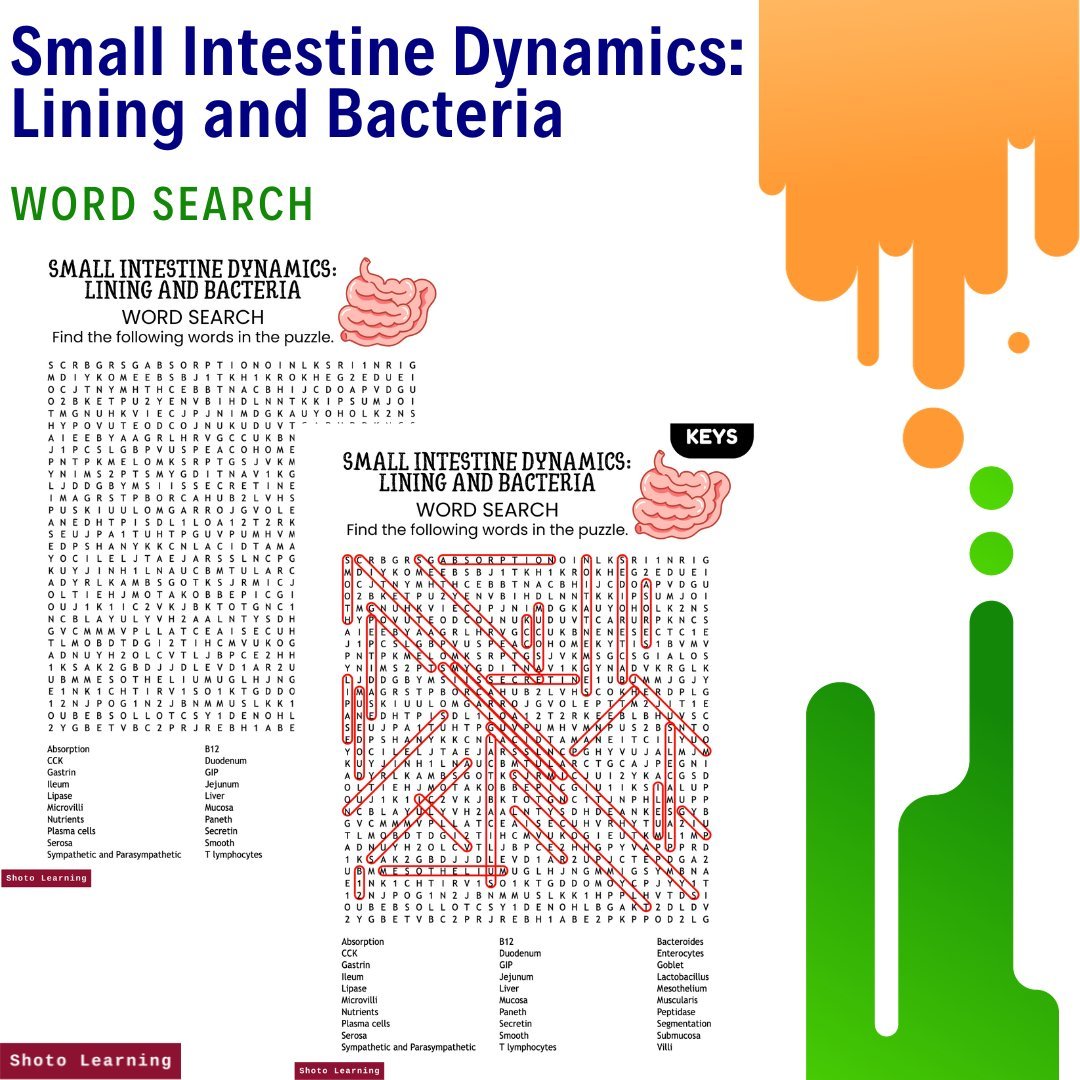
Embark on a Word Search Adventure: Small Intestine Dynamics Unveiled!
Discover the intricate details of the small intestine's lining and bacteria in a playful and engaging way with our Word Search puzzle. Dive into the world of digestive dynamics as you seek out 30 essential vocabulary terms carefully hidden within the grid.
What's Inside:
30 Vocabulary Terms: Immerse yourself in the vocabulary of small intestine dynamics with 30 carefully selected terms. From layers of the lining to bacteria species, each word contributes to a comprehensive understanding of this fascinating aspect of the digestive system.
Answers Included: No need to search endlessly for correctness – the answers are conveniently included. Confirm your discoveries and reinforce your grasp on the vocabulary associated with small intestine dynamics.
This Word Search puzzle isn't just a game; it's an interactive journey through the intricacies of the small intestine. Perfect for students, educators, or anyone keen on exploring the marvels of the digestive system, this resource transforms learning into an enjoyable adventure. Elevate your understanding of Small Intestine Dynamics with our Word Search puzzle today!
Order your copy today!

Embark on a Journey through Small Intestine Dynamics with Our Crossword Challenge!
Immerse yourself in the intricate world of the small intestine's lining and bacteria with our engaging crossword challenge. This educational resource is designed to make learning about digestive dynamics both entertaining and enlightening.
What's Inside:
15 Questions and Answers: Delve into the depths of small intestine intricacies with a carefully crafted set of 15 questions and their corresponding answers. Each clue provides a valuable piece of knowledge about the lining and bacterial dynamics.
Word Bank Option: Choose between two worksheet variations to tailor your learning experience. One version includes a word bank, offering additional support for those seeking a bit of assistance. The other version provides a more challenging experience without the word bank, allowing you to test your knowledge to the fullest.
Answers Included: No need to fret over correctness – the answers are included! Check your responses and reinforce your understanding of small intestine dynamics.
This crossword challenge is not just a puzzle; it's a key to unlocking the secrets of the small intestine's lining and bacteria. Perfect for students, educators, or anyone with a curious mind, this resource adds an element of fun to the exploration of the digestive system. Elevate your understanding of Small Intestine Dynamics with our crossword challenge today!
Order your copy today!
Embark on the Small Intestine Adventure Bundle: Lining and Bacteria Dynamics
Dive into the intricate world of Small Intestine Dynamics with our comprehensive bundle designed to engage and educate. This bundle covers every aspect, from the lining intricacies to the symbiotic relationship with bacteria. Here's what awaits you:
Included Worksheets:
Assignments: Embark on 10 stimulating assignments covering diverse topics, encouraging critical thinking and practical application of knowledge.
Bingo (30 cards): A fun and interactive way to reinforce key concepts.
Crossword: Test and expand your vocabulary with challenging puzzles.
Cryptogram: Decode the secrets of the small intestine in this intriguing worksheet.
Debate: Stimulate critical thinking by exploring and discussing different perspectives.
Experiments: Explore hands-on experiments illustrating fundamental principles across various disciplines, fostering deeper understanding and engagement.
Fill in the Blank: Reinforce learning through this classic worksheet format.
Flash Cards: Reinforce knowledge through quick, bite-sized information.
Free ABC Order: Practice alphabetizing while learning essential terms.
Free Cut and Paste: Get hands-on with a cut-and-glue activity for visual learners.
Free Poster: Decorate your learning space with a visually appealing poster.
Lesson Plan: Dive deep with our detailed lesson plan, complete with engaging activities and discussion topics.
Matching: Connect terms with their corresponding definitions for deeper understanding.
Missing Letters: Challenge yourself to fill in the blanks with this engaging worksheet.
Multiple Choice: Assess your knowledge with a variety of multiple-choice questions.
PowerPoint: Visualize Small Intestine Dynamics through an informative presentation.
Questions and Answers: Reinforce learning with a comprehensive Q&A session.
Reading Comprehension: Sharpen reading skills with engaging passages, perfect for students and educators alike.
Scramble: Unscramble terms to reinforce memory and spelling.
Test (45 minutes): Assess your understanding with a timed examination.
True or False: Test your knowledge with this classic worksheet format.
Word Search: Discover and circle key terms in a delightful word search puzzle.
Writing Prompts: Encourage creative thinking and written exploration.
Why Choose the Small Intestine Adventure Bundle?
This bundle isn't just a collection of worksheets; it's a holistic learning experience. Whether you prefer visual aids, interactive games, or traditional study methods, our bundle has something for everyone. Ideal for students, educators, or anyone eager to unravel the mysteries of the small intestine. Elevate your understanding with this all-encompassing bundle!
Order your copy today!