
Counting Beyond 20: Fun Strategies to Boost Your Child's Math Skills at Home
Many young children can count up to twenty, but moving beyond that number can be challenging. Helping kids learn to count past twenty is a key step in building strong math skills and a better understanding of numbers. Simple, hands-on activities and practical strategies make this process fun and less stressful for both kids and parents.
There are easy ways to support a child's counting abilities with games, objects from everyday life, and even coins. These methods help make bigger numbers feel less scary and help children feel confident with addition, subtraction, and basic problem solving.
Key Takeaways
Counting beyond twenty builds number sense and math confidence.
Fun, real-life activities can boost learning and keep children interested.
Guided practice helps track progress and supports individual needs.
Building Number Sense Beyond 20
Children need strong number sense to understand and work with numbers beyond 20. Skills like number recognition, subitizing, and cardinality help kids count objects correctly and handle higher numbers.
Understanding Higher Numbers
Higher numbers may seem abstract at first. Children often count to 20 with ease but feel less sure after that. To help, adults can introduce counting by tens (like 20, 30, 40) using real objects, such as blocks or beads.
Grouping objects in sets can make big numbers easier to understand. For example, show 25 as two groups of 10 and five single items. Using visual hundred charts or number lines can also help children see patterns in numbers and learn proper sequencing. This builds confidence in using and comparing larger numbers.
Activities to practice:
Count groups of objects past 20
Use objects in different colors to show tens and ones
Point out higher numbers in daily life (like on clocks or calendars)
Subitizing and Number Recognition
Subitizing means quickly seeing how many objects are in a small group without counting each one. While most children can do this up to 5 or 6, practicing with bigger numbers helps stretch their skills.
Games with dice, dominoes, or dot cards are useful. When children recognize patterns—like a group of 4 dots and a group of 2 as “6”—they build number sense for totals over 20. Try placing 12 or 17 small items in a tray and ask the child how many they see without counting one by one.
Number recognition for higher numbers is also important. Practice reading and writing numbers above 20, matching them to quantities, and using number flashcards to boost instant recognition.
Tips:
Play with double dice to make numbers above 20
Use flashcards with numbers from 21 to 50
Arrange small objects in simple groups, such as rows or rectangles
Developing Cardinality
Cardinality is knowing that the last number counted tells how many items there are in total. This skill is key when working with higher numbers, as children need to keep track when sets get bigger.
Let children count each object in a group, then ask them “How many are there?” Use collections such as coins, toy cars, or buttons—all grouped in different amounts over 20. Encourage them to count out loud and state the final number.
Progress checklist for cardinality:
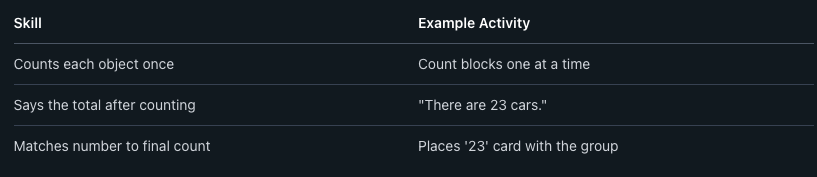
Repeat this with different totals so children practice until they are comfortable. Visual reminders and regular practice help children confidently count and identify larger quantities.
Effective Strategies for Teaching Counting Beyond 20
Learning to count past 20 helps children build stronger number sense and prepares them for more complex math skills. Strategies like counting on, skip counting, grouping, and using manipulatives make the process smoother and more engaging for young learners.
Counting On and Skip Counting
Counting on means starting from a number greater than one and continuing to count up. Instead of always starting at one, children might begin at 21 and say “22, 23, 24…” This helps them understand where numbers fit in a sequence and improves mental math.
Skip counting is counting forward by a number other than one, such as twos, fives, or tens. This builds a foundation for multiplication.
A simple skip counting routine could look like this:

Using songs or clapping with each number keeps skip counting lively and memorable. Practical tasks, like counting pairs of socks by twos, also strengthen this skill.
Grouping and Sorting Techniques
Grouping is putting objects together in equal-sized sets, such as groups of ten. When children group objects, like beans or blocks, into sets of ten, they see how numbers are structured. This makes it easier to count past 20, since they can add "one more group of ten" instead of counting each piece.
Sorting is also vital. Kids can sort objects by color, size, or shape and then count the number in each group. For example, if they sort buttons by color, they may count, “21 red, 15 blue.” This gives practice with numbers above 20 and helps them compare amounts.
Try these grouping and sorting activities:
Sort coins and count each pile.
Make chains of paper clips in groups of 10.
Using Manipulatives for Concrete Learning
Manipulatives are physical items children use to model numbers and counting. Everyday objects, like blocks, counters, or beads, make abstract number concepts real.
With manipulatives, children can physically group sets, move pieces to count on, or practice skip counting by arranging items in lines or arrays. This hands-on approach helps them “see” what it means to count past 20.
Using a ten-frame (a tray with 10 spots) supports grouping, while linking cubes can show how numbers like 21 are made from two groups of 10 plus 1 more. Visual aids like these make counting beyond 20 clearer and more accessible.
Engaging Activities for Math Skill Development
Interactive math games help children practice counting and recognize numbers in their daily lives. Using tools such as ten frames and number lines can improve number sense and make learning more engaging.
Hands-On Counting Activities
Hands-on activities make counting fun and memorable. Children can use common items like beads, buttons, or blocks to practice counting out loud and grouping by tens or fives.
Dice games, counting objects during snack time, or making “count and sort” jars use physical objects to build basic math skills. Parents can set up a simple scavenger hunt where kids search for a certain number of specific objects, such as “find 22 leaves.” This kind of play makes counting beyond twenty feel natural.
Simple hands-on activity ideas:
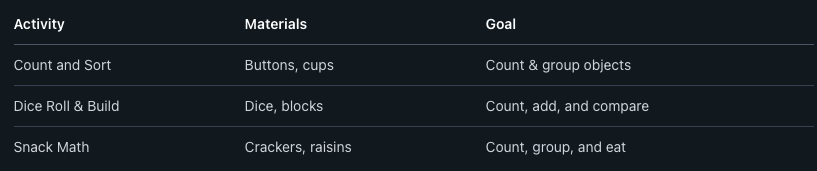
Small challenges, such as “How many blocks tall is your toy?” keep kids interested while reinforcing their counting skills.
Utilizing Ten Frames and Number Lines
A ten frame is a simple chart with two rows of five boxes. Children fill boxes with counters or draw dots to see numbers as groups of tens and ones. Using ten frames helps kids clearly visualize numbers like 16 as “ten and six more.”
Number lines let children see numbers in a row, which makes adding and counting on easier. For example, children place a marker on 21 and then “hop” forward four spots to see they land on 25. This visual approach strengthens skills in counting, adding, and understanding number order.
To practice:
Draw a number line on paper or use tape on the floor.
Give children small counters for ten frames, such as coins or checkers.
Encourage kids to show how to make 23 on a ten frame and a number line.
These tools make it clearer how numbers build on each other and support stronger math foundations.
Strengthening Addition and Subtraction Abilities
Building strong addition and subtraction skills takes practice with real examples. Children benefit most when they see how numbers connect to everyday situations and can use different formats, like words and symbols, to solve problems.
Incorporating Story Problems
Story problems help kids understand why math matters. A simple story, such as “Jenny has 15 apples and gives 7 away,” lets children visualize the numbers. This makes subtraction and addition feel less abstract and more like a puzzle they can relate to.
Parents can ask questions that connect to a child’s world, such as sharing snacks or toys. Using objects, drawings, or acting out the problems often makes the steps clearer. For younger children, stories should include small numbers and familiar situations.
Here are a few ways to make story problems more engaging:
Use real-life items (blocks, coins, fruit)
Act out the story using toys or puppets
Draw simple pictures to match each part of the problem
As children get more confident, parents can add extra steps or introduce bigger numbers. The goal is to build comfort with reading and solving word-based addition or subtraction situations.
Exploring Number Sentences
A number sentence is a simple math equation written with numbers and symbols, such as 9 + 6 = 15. Practicing number sentences helps kids move from storytelling to more abstract thinking. It teaches how to set up and solve problems with clear, concise expressions.
Children gain understanding by writing out what is happening in a story problem as a number sentence. They also learn that the “=” sign means both sides of the equation must have the same value. For example, if a child reads “5 birds fly away from 12,” they can write 12 - 5 = 7.
Families can use small addition and subtraction flashcards or fill-in-the-blank worksheets. Mixing up the positions (e.g., __ + 4 = 9) keeps kids thinking about different parts of the number sentence. Repeating this kind of practice each week makes solving equations more automatic and less stressful.
Fostering Mental Math and Problem Solving
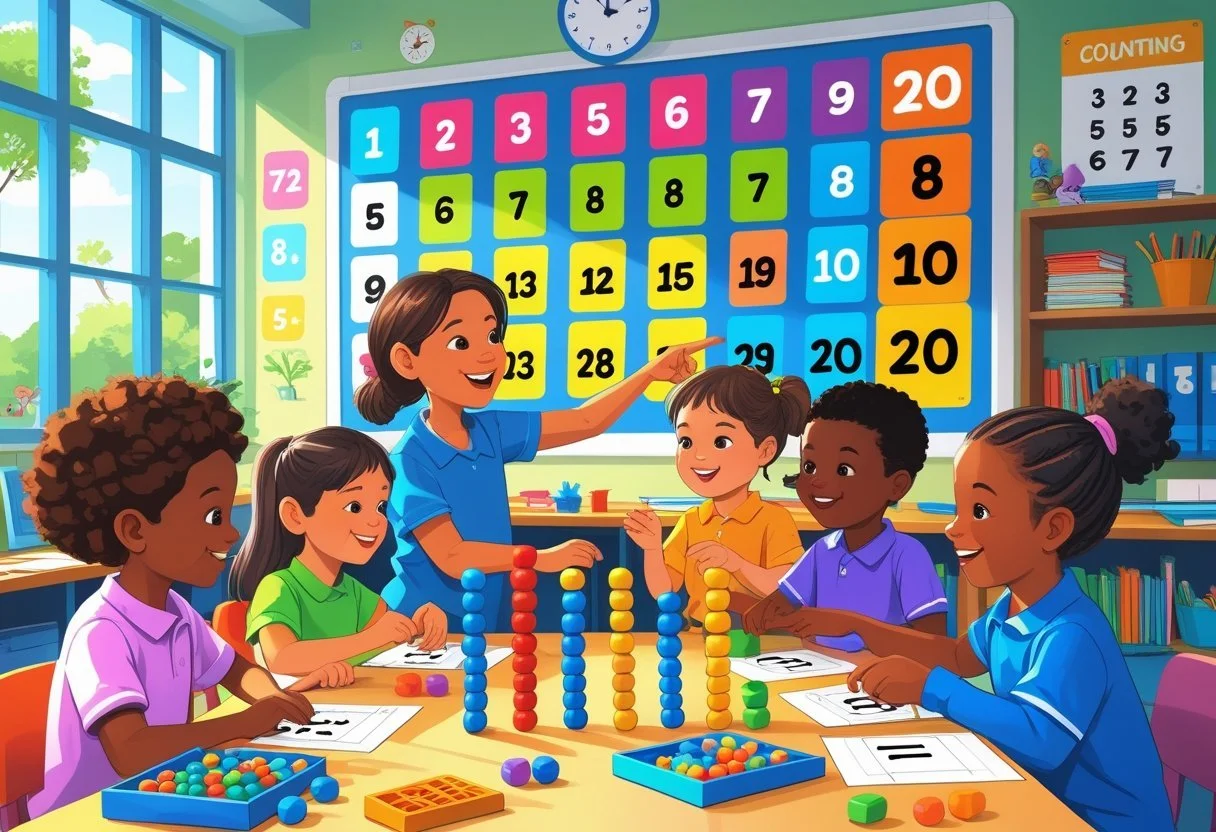
Kids become better at mental math when they spot connections between numbers and practice breaking problems into parts. Learning about measurement also helps them compare, estimate, and use math in daily life.
Encouraging Relationships Between Numbers
Children need chances to see how numbers fit together. For example, they can learn that 8 and 12 make 20, or that 15 is 5 more than 10. Using number lines, counters, and blocks makes these ideas clear.
Simple ways to practice:
Use flashcards for quick math facts
Play matching games finding pairs that add up to the same number
Ask questions like, “If you have 13 blocks and you add 7, how many in total?”
Talking aloud while solving problems helps kids explain their thinking. By understanding patterns, like doubles (5+5, 6+6), children can often solve math in their heads faster.
Developing Measurement Skills
Measurement ties math to real life. Activities such as cooking, building, or comparing heights give children a reason to use numbers.
Everyday measurement tasks:
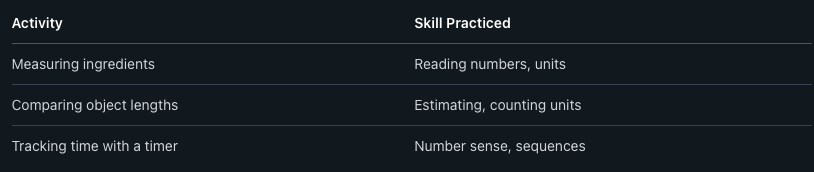
Asking questions like, “Which cup holds more?” or “How wide is this book?” encourages problem solving beyond simple counting. Measuring and comparing let kids test ideas and see if their estimates were close. This builds confidence in using math to solve problems.
Integrating Objects and Money in Counting Practice
Children can learn to count more than 20 by using real items from their homes. Everyday objects and coins help kids practice hands-on math and understand numbers better.
Counting Everyday Objects
Using real items like blocks, buttons, or spoons helps kids see and touch what they are counting. This gives them a clear idea of how numbers connect to the real world.
Parents can make a simple game with objects found around the house. For example, they can line up 25 crayons and count each one together out loud. Breaking groups into sets of ten also helps. Sorting items by color or size adds variety and fun.
Tip: Try counting different objects every day. Use a table to keep track of what has been counted.
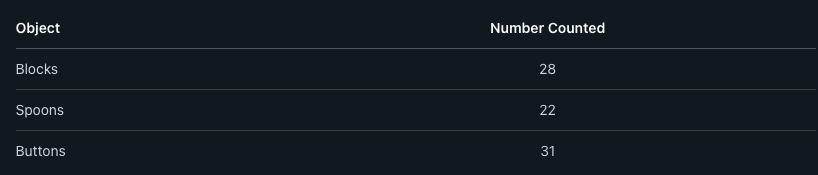
These activities help children practice numbers beyond 20 and improve their attention to details.
Learning with Coins: Quarters, Dimes, Nickels, and Pennies
Coins give kids a new way to count and learn values at the same time. Each coin is worth a different amount, so children practice both counting and simple math.
Lay out coins and show how many pennies, nickels, dimes, or quarters make up different amounts. Kids can group coins to make 25, 50, or 100 cents. Sorting and adding coins by type and value builds skills in adding and skip-counting.
For practice, create a simple chart:

Counting with real money makes learning both useful and engaging. It shows how math is used in daily life.
Assessment and Guided Instruction in Counting Beyond 20
Children need both assessment and targeted teaching to build skills in counting past 20. Identifying gaps and offering the right support helps them read, write, and understand bigger numbers like those in the teens and twenties.
Utilizing Assessment Tools
Assessment tools help pinpoint what students already know and where they need help. Teachers often use observation checklists, simple quizzes, or counting games to track progress. These tools let them see if a child can count to 30, read teen numbers, or write numbers correctly.
For example, a teacher might ask a student to count objects past 20 or match the spoken number to its written form. Notes may be kept in a table to compare each child’s skills:

This data guides the next steps in teaching.
Implementing Cognitively Guided Instruction (CGI)
Cognitively Guided Instruction (CGI) is a teaching approach based on how children think about numbers and problems. Teachers listen to how students solve counting tasks or write numbers. They use these ideas to plan lessons that match each child's understanding.
With CGI, a teacher may notice a student struggles with writing numbers like 17 or saying "twenty-one," so lessons are chosen to practice those skills. Small group activities can focus on reading, writing, and using teen numbers in context.
CGI helps teachers ask key questions, such as, “How did you know what comes after 29?” This supports children in making sense of bigger numbers in a way that fits their learning style.
Frequently Asked Questions
Children can build strong counting skills and number sense through hands-on activities, engaging games, useful online resources, and simple counting methods. Support from adults helps students practice and grow their skills at every level.
What are effective interactive activities to help children learn counting beyond 20?
Using objects like buttons, blocks, or coins lets children touch and move as they count. Counting aloud while stepping, clapping, or jumping can keep them interested and active. Grouping objects into sets of ten helps kids picture larger numbers.
How can parents and teachers make counting to 100 engaging for young learners?
Singing songs that count by ones, fives, or tens keeps students focused and entertained. Playing board games that need counting spaces is fun and adds practice. Creating colorful charts or filling in a hundreds chart with stickers turns learning into a visual project.
What are some number sense games suitable for first graders?
Games like "Guess My Number" with clues build understanding of more and less. "Race to 100" using dice helps students count forward and backward. Card games matching pairs that add up to twenty also boost basic math skills.
How can struggling students be supported in developing strong number sense skills?
Teachers and parents can use clear language and examples when talking about numbers. Offering items to count, sort, and match gives extra support. Breaking problems into small steps and giving lots of chances for practice helps these students gain confidence.
Are there free resources available for teaching advanced counting techniques?
Many websites offer free printable worksheets and interactive games for counting by twos, fives, and tens. Educational videos and online platforms often have activities for skip counting and recognizing patterns. Public libraries can provide counting books and board games at no cost.
Which counting methods can aid in laying a foundation for higher mathematics for older children?
Skip counting by different numbers introduces patterns needed for multiplication. Using number lines to count forward and backward helps with the idea of positive and negative numbers. Teaching strategies like grouping and breaking numbers apart lays groundwork for division and algebra.

Make counting fun and engaging with this Counting Beyond 20 Worksheets pack, designed specifically for Kindergarten and First Grade learners! Aligned with Common Core Standards, this resource helps students practice number recognition, develop place value understanding, and build early addition skills—all while counting past 20.
Key Features:
Targets numbers beyond 20 up to 100
Includes number tracing, fill-in-the-blank, and cut-and-paste activities
Supports place value concepts and simple addition
Fun visuals and interactive formats to hold young learners’ attention
Perfect for math centers, morning work, homework, or independent practice
How to Use: These worksheets are ideal for classroom use, math centers, or homeschool settings. Simply print and go—students can work independently or in small groups. Use them to reinforce counting skills, assess number fluency, or introduce new math concepts in an engaging way.
Package
Page 1 - Count on ten frames - up to 30
Page 2 - Count on ten frames - up to 30
Page 3 - Count on ten frames - up to 30
Page 4 - Count groups of ten
Page 5 - Count groups of ten
Page 6 - Count groups of ten
Page 7 - Count to 100
Page 8 - Count to 100
Pages 9 - Count to 100
Pages 10 - Counting on the hundred chart
Page 11 - Counting on the hundred chart
Page 12 - Counting on the hundred chart
Page 13 - Number lines - up to 30
Page 14 - Number lines - up to 30
Page 15 - Number lines - up to 30
Page 16 - Count forward - up to 30
Page 17 - Count forward - up to 30
Page 18 - Count forward - up to 30
Page 19 - Count blocks - up to 30
Page 20 - Count blocks - up to 30
Page 21 - Count blocks - up to 30
Page 22 - Count tens and ones - up to 30
Page 23 - Count tens and ones - up to 30
Page 24 - Count tens and ones - up to 30
Page 25 - Write tens and ones - up to 30
Page 26 - Write tens and ones - up to 30
Page 27 - Write tens and ones - up to 30
Page 28 - Count forward - up to 30
Page 29 - Count forward - up to 30
Page 30 - Count forward - up to 30
Page 31 - Sequences - count by ones and tens
Page 32 - Sequences - count by ones and tens
Page 33 - Sequences - count by ones and tens
Page 34 - Count blocks - up to 100
Page 35 - Count blocks - up to 100
Page 36 - Count blocks - up to 100