
Mastering Place Value with Teen Numbers: Effective Strategies for Teaching Numbers up to 20
Understanding place value with teen numbers is a key step for young learners as they build math skills. Many students find numbers between 11 and 20 confusing because the way we say them does not always match how we write them. Helping children see that teen numbers are made from "ten and some more" can make learning much easier.
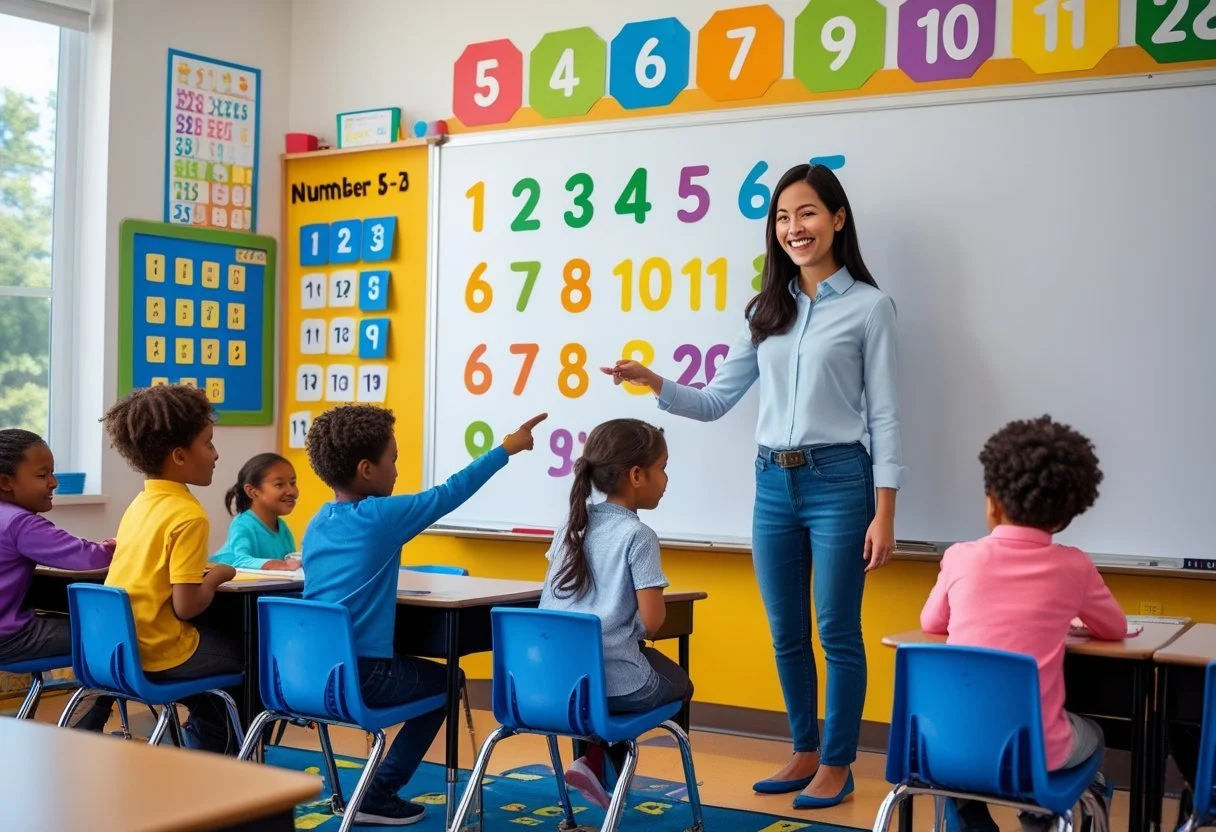
Teachers and parents can use simple activities, visual aids, and hands-on materials to make these math ideas clear. Learning to recognize, compose, and break apart teen numbers is important for developing number sense.
Key Takeaways
Clear strategies help teach place value for teen numbers.
Activities and visuals make learning engaging and memorable.
Understanding teens builds a foundation for higher math.
Understanding Place Value with Teen Numbers
Place value helps children make sense of numbers, especially as they enter the tricky range of teen numbers. Early understanding of these ideas builds a strong math foundation for kindergarten and first grade students.
The Concept of Place Value in Numbers up to 20
Place value means that a number’s value depends on where a digit is placed. For numbers from 11 to 19, students need to see that each teen number is made from one group of ten and some extra ones.
For example, 16 is made of 1 ten and 6 ones. Teachers often use ten frames, math blocks, or drawings like this:
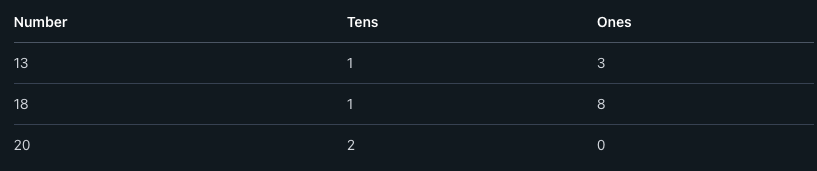
This clear breakdown helps children see that the “1” in teen numbers stands for a group of ten, and the second digit shows the leftover ones.
The Importance of Teaching Teen Numbers
Teaching place value with teen numbers builds vital number sense for young learners. Kindergarten and first grade students who learn how to break apart teen numbers find it easier to add, subtract, and understand larger numbers later.
Key reasons to focus on teen numbers:
Teen numbers look different than single digits and can be confusing at first.
Understanding that “13” is “ten and three more” helps students count and group numbers with confidence.
This knowledge lets students spot and fix mistakes in their own math work.
Showing lots of examples and asking students to build teen numbers using objects helps them master these ideas.
Challenges with Tricky Teens
Teen numbers can be hard for children because they don’t always follow the patterns found in single-digit numbers. For example, the words for “eleven,” “twelve,” and “thirteen” do not tell students what the digits actually show.
Young learners often mix up the order, say “one-teen” instead of “eleven,” or try to write “16” as “61.” These common mistakes come from not fully understanding place value.
To help, teachers use tools like ten frame cards and place value blocks. They give practice in writing, saying, and modeling teen numbers to make learning the “tricky teens” clearer and less confusing. Accurate practice and clear visuals build stronger number sense.
Engaging Strategies for Teaching Teen Numbers
Teen numbers can be confusing for young learners. Visual tools, hands-on activities, and clear counting methods help children see that teen numbers are made from ten plus some more.
Using Manipulatives for Deeper Understanding
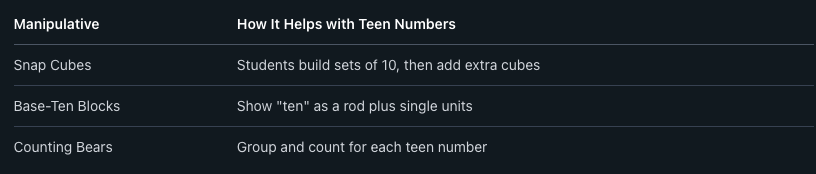
Manipulatives like snap cubes, counters, or base-ten blocks provide a concrete way to build and break teen numbers.
Students can group ten objects to make a "ten," then add more to see numbers like 13 or 17. This process makes the "ten plus some more" structure clear.
Letting children handle objects builds fine motor skills as well as number sense. Teachers can ask students to make teen numbers, talk about what they notice, or sort the numbers in order.
Examples of common manipulatives:
Incorporating Ten Frames and Tally Marks
Ten frames and tally marks are strong visual tools for showing how teen numbers are built from ten and more ones.
A ten frame allows students to fill all spots, then add extra counters for the "and ones." For example, 16 is a full ten frame plus six more. This helps students understand the composition of teen numbers in a consistent way.
Tally marks give yet another way to break numbers into parts. Every fifth tally is crossed, making it easy to see groups of five. For teen numbers, students make two groups of five, then count the extras to reach the desired number.
Benefits:
Ten frames stress place value.
Tally marks build pattern recognition and simple counting skills.
Both methods are quick to model and use in class activities.
Counting, Matching Sets, and Number Lines
Counting is the most direct way to grasp teen numbers. Saying numbers aloud helps with memory and order.
Activities that ask students to match sets (like counting sticks, pencils, or stickers) to specific teen numbers show the size and sequence of each number. This supports both counting and comparison skills.
Number lines display all numbers in order and show how teen numbers follow each other. Placing markers on number lines helps students see gaps and progressions. Teachers can use number lines to model counting on from ten to reach teen numbers, letting students visualize where each number belongs.
Simple exercises with sets or number lines can strengthen understanding and boost number sense for all learners.
Building Number Sense and Numerals Recognition
Young learners need a strong base in recognizing, writing, and saying numbers up to 20. Attention to numerals, number names, and number words helps with early math and literacy in kindergarten and first grade.
Recognizing and Writing Numerals up to 20
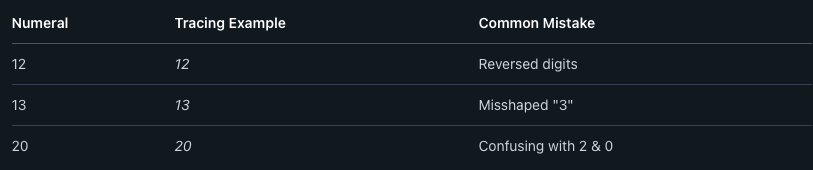
Learning to recognize numerals is key for counting and basic math. Children first connect spoken numbers like "four" with the numeral "4." Visuals and repetition help them remember and identify each symbol.
Using number cards or number lines helps children spot differences between similar numbers, such as 12 and 21. Teachers can show numerals in groups, have kids match numbers to sets of objects, or ask them to trace and write digits. Practice can be built into fun games and activities.
Writing numerals clearly is important. Giving children lined paper and examples helps them form numbers correctly. Extra support with tricky numbers like 7, 8, and 9 can make a difference.
Exploring Number Names and Number Words
Understanding number names is more than just saying numbers aloud. Children need to link these names—like "fifteen"—to both their numeral (15) and the word. This step is vital in bridging spoken and written language in math.
Teachers can use number charts and songs to repeat number names. Reading and spelling number words reinforce learning, especially for numbers with unexpected spellings (like "eleven" and "twelve"). Practice can include writing number words or matching them to the correct numerals.
A simple list helps with memorization:
One
Two
Three
Four
...
Nineteen
Twenty
Using flashcards and group reading activities supports both recognition and pronunciation.
Developing Early Literacy in Math
Strong number sense supports early math literacy. Children need to read, write, speak, and listen to number words and names with understanding. Mixing reading and math activities helps build both skills.
Books with numbers up to 20, math rhymes, and group counting games tie math to real language experiences. Teachers guide students by pointing out words and symbols during daily routines.
As children become familiar with numerals and number words, they build confidence in reading and following simple math instructions. Early literacy in math sets the base for future math learning in school.
Introducing Base Ten Concepts and Composing Numbers
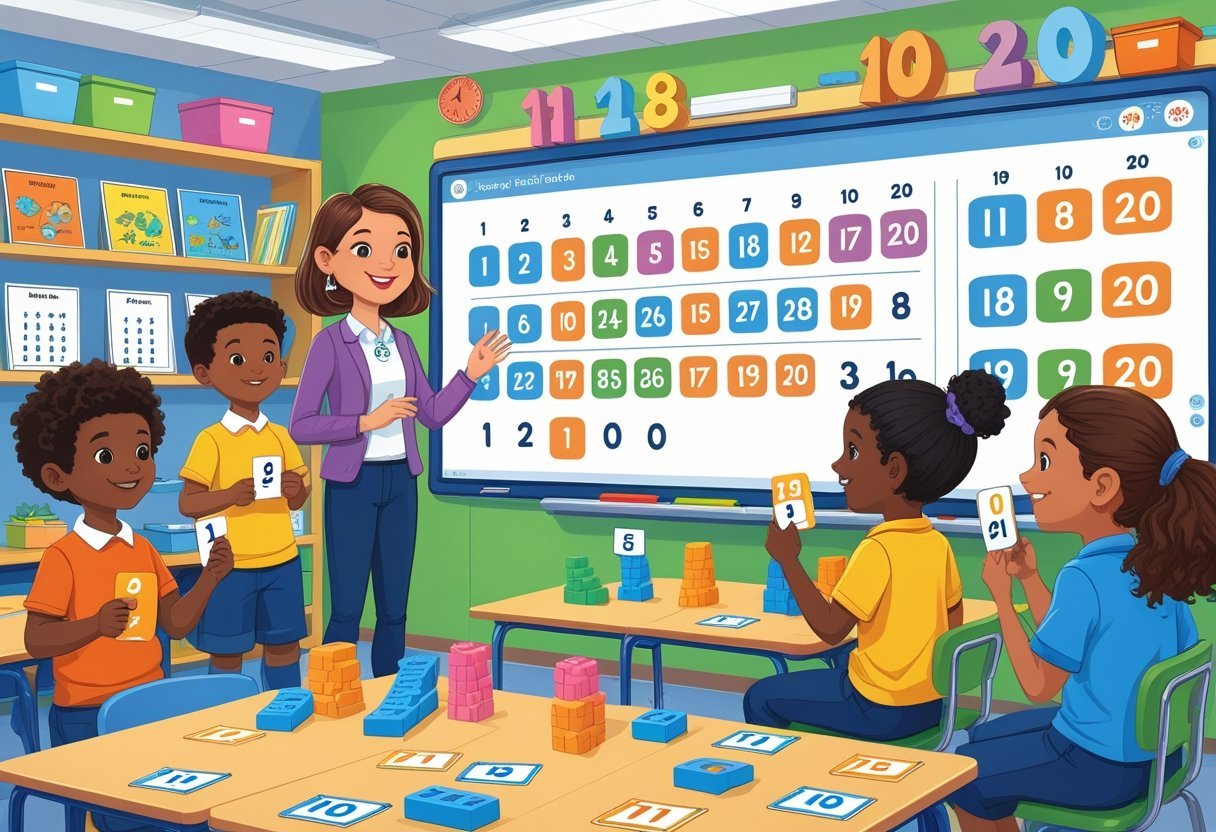
Understanding how numbers from 11 to 20 are built helps students see the role of groups of ten. Using real objects and simple tools supports children as they compose and decompose these numbers.
Understanding Groups of Ten in Teen Numbers
Each teen number is made up of one group of ten and extra ones. For example, 17 is made of 10 and 7 more. Teaching this helps students see that the “1” in 17 stands for one group of ten.
A clear way to show this is through a table:
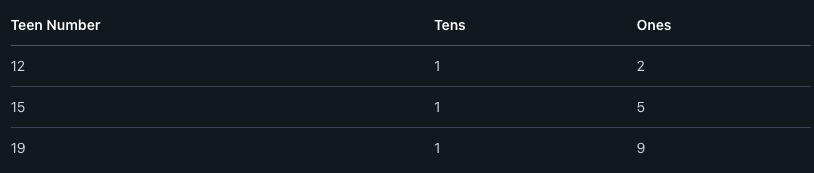
Teachers can use objects like straws, counting sticks, or beans grouped in tens and ones. Students who practice grouping will better understand what each digit means.
Demonstrating Composing and Decomposing Numbers
Composing means putting smaller numbers together to make a teen number. Decomposing is breaking a teen number into tens and ones.
For example, 14 can be shown as 10 + 4 or as 1 ten and 4 ones.
Students can use number bonds or simple drawings to show their thinking:
Composing: 10 + 6 = 16
Decomposing: 18 can be broken into 1 group of ten and 8 ones
Practice with these steps helps make place value clear and supports addition and subtraction skills.
Applying Base Ten Blocks Effectively
Base ten blocks are helpful tools for showing teen numbers in a hands-on way. A long block (called a "ten rod") stands for ten. Single small blocks ("unit cubes") stand for ones.
To make 13, a student takes 1 ten rod and 3 unit cubes. This shows the two parts of the number right in front of them.
Students should handle, group, and count the blocks themselves. Teachers should ask them to trade ten ones for a ten rod to see how numbers change.
Using base ten blocks supports visual and tactile learning. It reinforces how each teen number is made with tens and ones.
Practical Classroom Applications and Activities
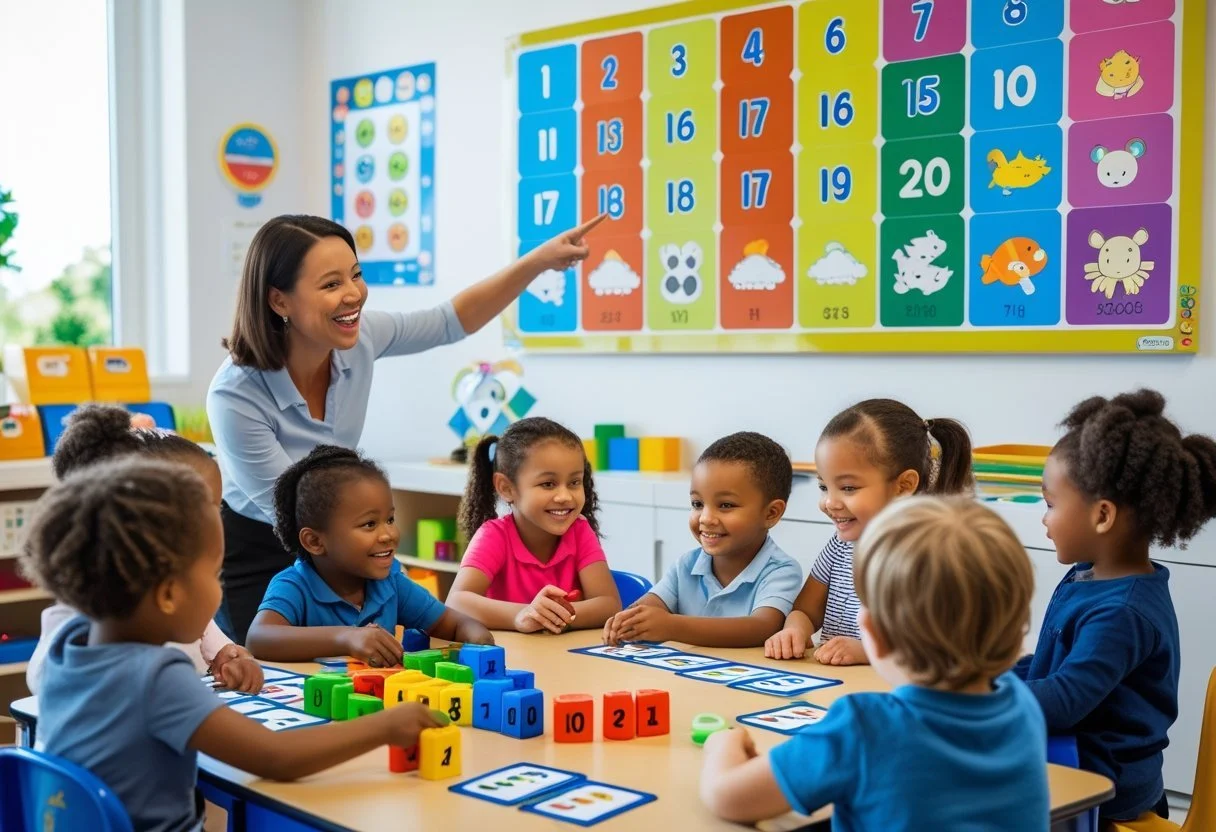
Teachers can help students understand teen numbers by using real objects, visual tools, and active participation. Showing numbers in different ways helps students see patterns and builds a foundation for place value.
Hands-On Math Lessons and Math Centers
Hands-on math lessons use coins, blocks, or counters to show the value of each teen number. For example, teachers might give each student a set of ten rods and loose cubes. Students then build numbers like 14 by combining one ten rod and four single cubes.
Math centers can be set up in the classroom for small group work. Each center can focus on a different skill, like matching written numbers to sets of objects or building numbers with counting bears.
Teachers include recording sheets to track each student’s progress. Students write or draw what they built with the math tools. This gives both students and teachers a way to see growth in understanding.
Interactive Printables and Worksheets
Printables and worksheets provide more practice with teen numbers. Worksheets might ask students to color groups of ten and some ones, match numbers to pictures, or fill in blanks on a number chart.
Using interactive worksheets helps students remain engaged. Some worksheets may include cut-and-paste activities or coloring sections that show a number’s tens and ones.
Teachers often use worksheets as morning work or homework. This gives students extra practice and helps reinforce what they learned in lessons and math centers.
A simple table might be included on worksheets to help students see the connection between numbers:

Utilizing Math Stations for Guided Math
Math stations allow students to rotate through different activities, often in small groups. Each station focuses on a different part of place value, such as sorting numbers, matching number cards, or playing simple games.
Guided math helps small groups get targeted support from the teacher. The teacher can ask questions, correct mistakes, and give extra practice with tricky numbers. This focused instruction ensures each student understands the concept and can show their work on a recording sheet.
Math stations also encourage students to work together. They discuss answers, explain their thinking, and help each other use the math tools correctly. This builds confidence and a stronger understanding of teen numbers.
Assessment and Differentiation in Teaching Teen Numbers
Effective teaching of teen numbers relies on supporting each student’s needs. Assessing learning, providing targeted help, and adapting lessons for different grade levels make it easier for children to understand place value up to 20.
Supporting Independent Practice and Math Intervention
Teachers use independent practice to see how students work with numbers 11 to 20 on their own. Worksheets, math games, and quick checks like exit tickets show if students can build, write, and compare teen numbers.
For students who need extra help, intervention strategies are used. Small group instruction and hands-on math centers can help. Using tools like number charts, counters, and base-ten blocks supports struggling learners.
Teachers track progress with quick assessments such as the following:
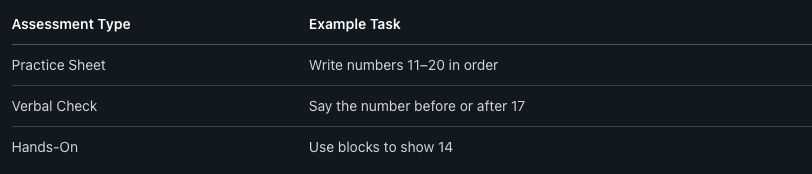
This information lets teachers adjust instruction as needed.
Tutoring Strategies for Struggling Students
Tutoring helps when students do not fully grasp teen numbers. Tutors can use visual aids and simple routines, such as making teen numbers with ten frames and ones cubes. Repeating these steps helps build strong understanding.
One-on-one or small group sessions focus on the basics. Tutors might play matching games or use number cards to check for recognition of place value. Explaining how 17 is "ten and seven ones" makes the concept easier.
Frequent short sessions support memory and boost confidence. Progress is checked by asking students to show and explain numbers using objects or drawings. Adjustments are made based on each student’s needs.
Adapting Lesson Ideas for Second and Third Grade
Second and third graders often need more challenging work with place value and teen numbers. Lessons can include two-digit comparisons, regrouping, or solving simple problems that use numbers up to 20.
Teachers can use activities like:
Sorting numbers by value
Puzzles that match numbers with word forms
Math stories requiring students to build and explain numbers
"Number talks" let students explain their thinking to the class. For extra support, teachers use more concrete materials or review with smaller groups. For advanced students, questions may go beyond 20 to prepare for future topics.
Connecting Teen Numbers to Broader Math Skills
Teen numbers play a key role when building strong math skills in young learners. Understanding teen numbers helps support comparing values, prepares students for basic operations, and sets a foundation for later work with place value and decimals.
Comparing Numbers and Exploring Large Numbers
Children use place value knowledge with teen numbers to compare which numbers are bigger or smaller. For example, by looking at the digits in 12 and 17, students see both numbers have a “1” in the tens place but different ones in the ones place.
This skill helps students compare numbers in larger groups. As numbers grow, the ability to look at each digit’s value becomes important. Teachers may use number lines, counting charts, or hands-on tools to model the process.
Here is a simple table to help students compare numbers:
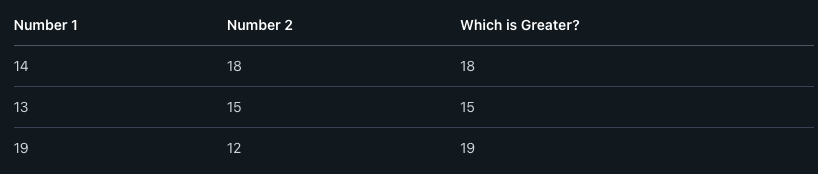
Comparing numbers leads to skills in estimating, ordering, and understanding more complex numbers later on.
Preparing for Addition and Subtraction Concepts
Teen numbers are useful when children start learning basic addition and subtraction. Numbers from 11 to 19 can be broken down as "ten and some more." For example, 16 can be seen as 10 + 6.
This breakdown helps children add and subtract with better understanding. When asked to solve 13 + 4, they might think of it as 10 + 3 + 4, which is easier to manage.
Many teachers use visual aids or manipulatives to show how teen numbers connect with addition and subtraction. Using objects, number bonds, or base-ten blocks makes these ideas clearer.
Understanding how teen numbers are built encourages flexible thinking when kids start solving harder equations.
Introducing Decimals in Later Grades
The basic ideas of place value with teen numbers help students understand decimals in future grades. Just as the “1” in 13 means one group of ten, in the number 1.3 the “1” is still a whole, and the “3” stands for tenths.
When students learn decimals, they use the same place value logic from earlier years. They recognize that each digit’s spot tells its value. Games, charts, and simple practice with whole numbers make this easier later.
Teaching place value early with teen numbers helps students adjust to seeing tenths and hundredths. This smooths the path as they move into adding, subtracting, and comparing decimals.
Frequently Asked Questions
Children often need support to see how teen numbers are built using groups of tens and ones. Using everyday objects, hands-on practice, and playful activities makes learning about numbers up to 20 more clear and memorable.
What are effective strategies for introducing place value to children?
Teachers and parents can use base-ten blocks, counters, or bundled straws to show how numbers are made of tens and ones. Visual models help children grasp the basic structure of teen numbers. Speaking aloud while grouping items into sets of ten gives extra support.
How can I help students distinguish between numbers 10 and those in the teen range?
It helps to compare and show ten as a single group and teen numbers as one ten plus more ones. Visual charts display the differences side by side. Counting out loud with real objects highlights the change from 10 to 11 and so on.
What are some engaging activities for reinforcing the concept of teen numbers?
Matching games, card games, and number puzzles let children build teen numbers hands-on. Sorting activities using everyday items, like snacks or coins, add excitement. Simple math stories where children group and count help students practice in real-life ways.
What role does hands-on learning play in mastering teen numbers and their place values?
Working with physical items like blocks, cubes, or beads makes numbers concrete. It allows children to actually build groups of ten and see the extra ones. Moving, touching, and grouping objects help students understand the idea of place value better.
At what educational stage should place value with teen numbers be introduced?
Most children start learning about place value and teen numbers in kindergarten or first grade. It is usually introduced after children know numbers up to ten. Early exposure lets students get comfortable building and breaking apart numbers.
How can games be utilized to strengthen a child's understanding of numbers up to 20?
Board games with counting steps or collecting items let children practice building numbers to 20. Digital games with visuals can also help by giving instant feedback. Rolling dice, drawing cards, or moving game pieces link math skills to fun and movement.

Make place value practice fun and effective with this engaging worksheet pack for numbers up to 20! Designed for Grade 1 and Kindergarten students, these activities help children understand the concept of tens and ones through visual aids and hands-on tasks.
Key Features:
Covers numbers 11 to 20
Includes matching, base ten blocks, and number sorting
Simple, clear layout for early learners
Printable and easy to use in class or at home
Perfect for math centers, homework, or early finishers
How to Use:
Use these worksheets during math lessons, as independent practice, or as part of a center rotation. Students will build a strong foundation in number sense and place value by counting tens and ones, identifying teen numbers, and reinforcing number recognition skills.
Whether you're a teacher or homeschool parent, this resource is a must-have for introducing place value in a straightforward, student-friendly way.
Package
Page 1 - Count tens and ones - up to 20
Page 2 - Count tens and ones - up to 20
Page 3 - Write tens and ones - up to 20
Page 4 - Write tens and ones - up to 20
Page 5 - Make teen numbers: words
Page 6 - Make teen numbers: words
Page 7 - Take apart teen numbers: words
Page 8 - Take apart teen numbers: words
Page 9 - Make teen numbers
Page 10 - Make teen numbers
Page 11 - Take apart teen numbers
Page 12 - Take apart teen numbers
Page 13 - Take apart teen numbers
Page 14 - Take apart teen numbers