
Teaching Easter: Exploring Meaningful Lessons and Traditions in the Classroom for Engaged Learning
Easter can be a special time for teachers and students to learn together in the classroom. There are many traditions and activities that can make lessons about Easter meaningful and easy to understand. Connecting classroom lessons to the history and meaning of Easter helps students learn in a way that is fun and relevant.
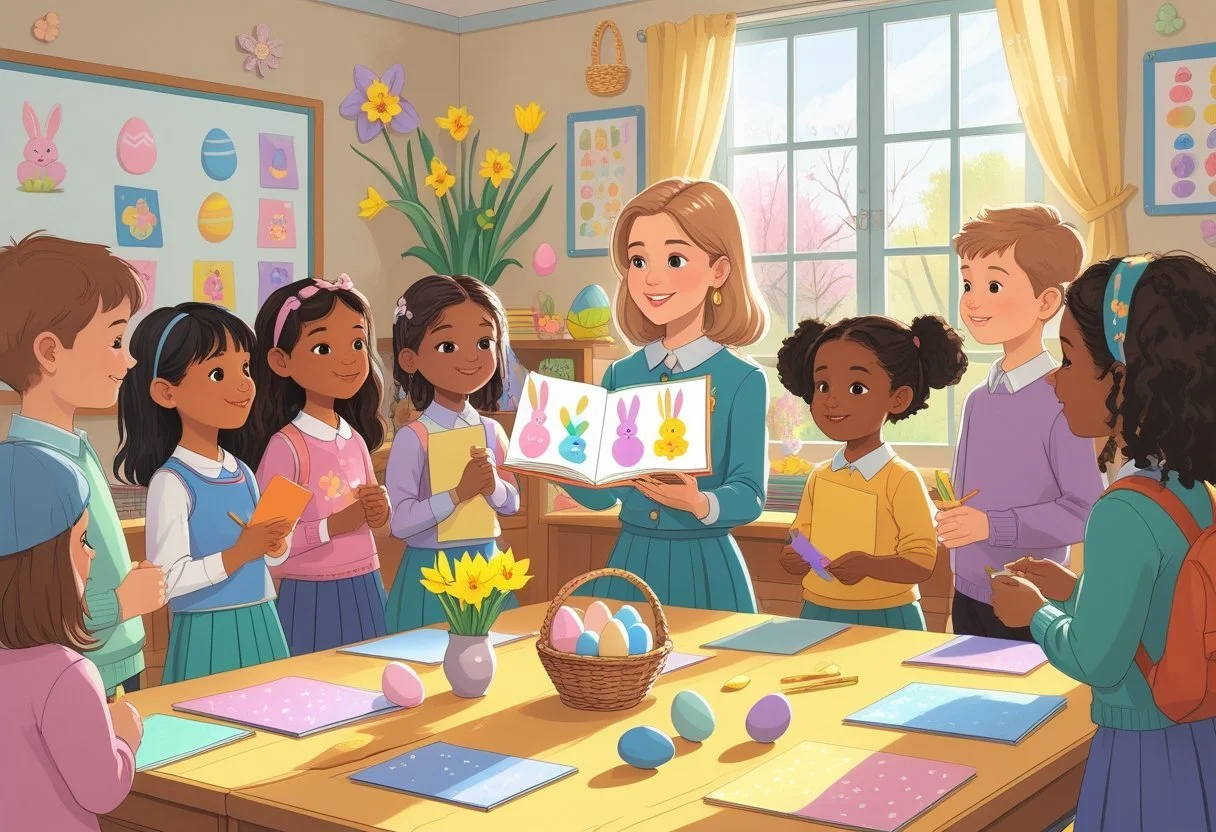
Teachers can use stories, crafts, and simple activities to help students of all ages understand Easter traditions. Exploring the symbols and stories linked to Easter also supports reading and conversation skills. When teachers include stories like the Holy Week or use objects like resurrection eggs, students can better engage with the lesson.
Key Takeaways
Teaching Easter connects lessons to real traditions and history.
Activities and stories help students of all ages learn about Easter.
Easter lessons support reading and meaningful classroom conversations.
Understanding the Meaning of Easter
Easter centers around the resurrection of Jesus Christ and is a key event in Christian faith. It also connects to themes of sacrifice, renewal, and love that influence Easter traditions and classroom lessons.
Significance of the Resurrection
The resurrection of Jesus is the main reason Easter is celebrated. After his death, Christians believe Jesus rose from the dead on the third day. This event is seen as a sign of hope and proof of life after death.
For many, the resurrection means that love and forgiveness are stronger than death. Easter Sunday becomes a symbol of new beginnings and victory over sadness. Christians often gather for church services, songs, and prayers to remember the resurrection.
These beliefs influence how Easter is taught in the classroom. Teachers may talk about the reason for Easter, focusing on the hope and positive change it brings.
Easter Story and Core Themes
The Easter story begins with Jesus’ entry into Jerusalem and ends with his resurrection. Important events include the Last Supper, Jesus' arrest, his crucifixion, and finally his rising from the tomb. Each part of the story offers lessons on love, courage, and forgiveness.
Key themes from the Easter story often include:
Sacrifice: Giving up something for others.
Renewal: Starting over or having a new beginning.
Love: Caring for others, even when it is difficult.
These themes can be discussed and explored through stories, art projects, and classroom discussions. Teachers may also emphasize how these messages can be used in daily life to help students grow in kindness and understanding.
Role of Sacrifice and Renewal
Easter highlights the idea of sacrifice through the story of Jesus giving his life for others. This act is meant to show great love and the importance of thinking about other people’s needs. Understanding sacrifice can help students appreciate what it means to help others, even if it is hard.
Renewal is also a central theme. The resurrection points to a fresh start and the chance to change for the better. This message can encourage students to think about their own actions and how they can improve.
Teachers often use real-life examples, classroom activities, or stories to help students connect with these lessons. The focus remains on the growth, hope, and caring that Easter traditions can represent.
Incorporating Easter Traditions in the Classroom
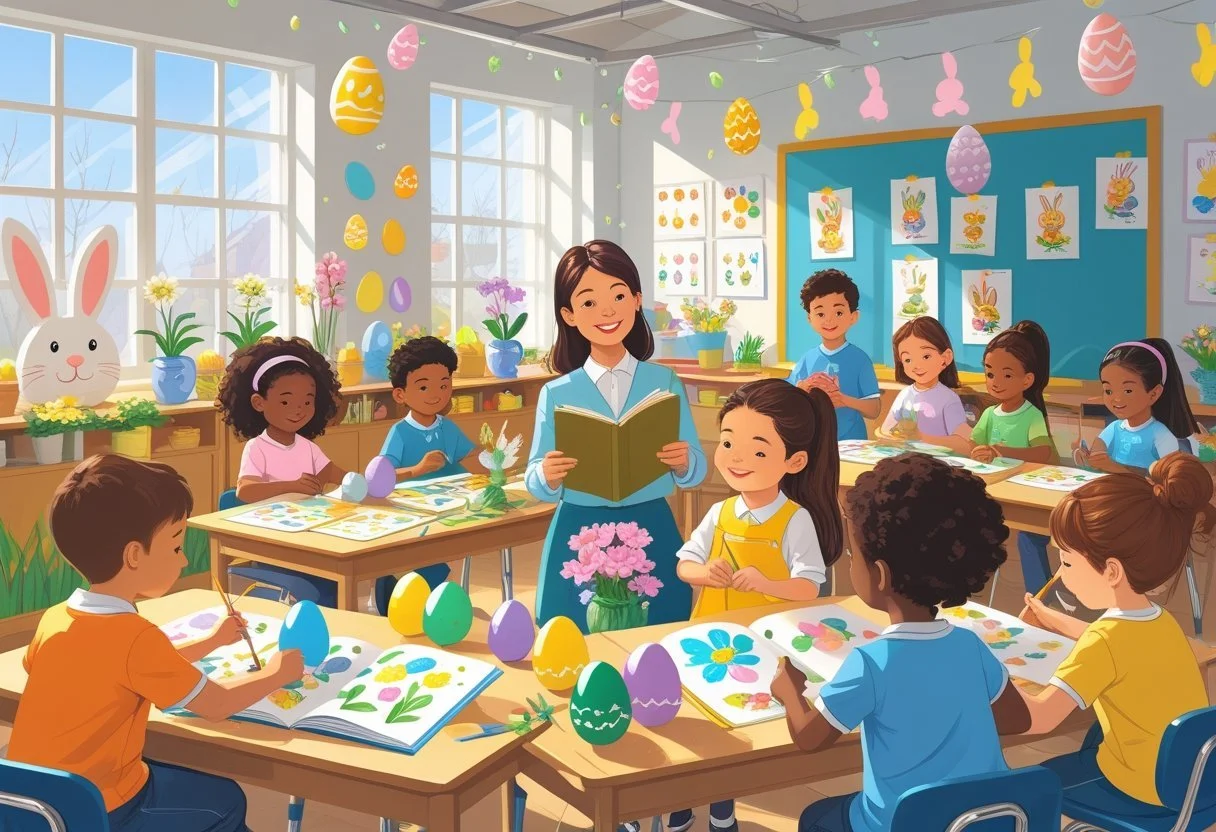
Easter gives teachers a chance to talk about different customs, beliefs, and activities from around the world. Exploring these topics helps students better understand cultural and community traditions linked with Easter.
Teaching About Global Easter Traditions
Easter is marked in many ways around the world. Students can learn how some cultures use eggs, like the Pysanky eggs from Ukraine or chocolate eggs in the United Kingdom. In Sweden, children dress up as Easter witches and go door to door exchanging art for candy.
A table or visual chart can help show how certain traditions differ by country:

Discussing these unique practices shows students that Easter is celebrated in many diverse ways.
Cultural Activities and Cultural Awareness
Hands-on activities help students connect with cultural traditions. Teachers can organize egg-decorating sessions using different styles from around the globe. Creating a "traditions collage" with magazine cutouts lets students highlight what Easter means in other places.
Role-playing or storytelling from different cultures encourages empathy and understanding. Show-and-tell lets students share family Easter customs, building cultural awareness in the classroom.
For increased cultural respect, teachers should help students listen to each other and ask questions. This helps everyone learn about the importance of traditions in different communities.
Exploring Church and Community Customs
Many Easter traditions come from churches or local communities. In some areas, there are sunrise services, special music, or processions on Easter Sunday. Students can learn about how different religions or churches mark this day with prayer, song, or acts of service.
Community events, such as egg hunts or charity drives, often bring people together. Teachers can invite local community leaders or members to talk about these customs and their meaning.
Including real stories or photos of these events makes lessons more personal. This approach shows students how Easter traditions help bring families and communities closer.
Exploring the Holy Week Timeline
Holy Week spotlights important days and customs connected to Easter. Students learn about the sequence of events and what each tradition means for many people today.
Lent and Palm Sunday
Lent is a 40-day period before Easter. It starts on Ash Wednesday and ends on Holy Saturday. Many Christians use Lent as a time for reflection and self-control. People may give up favorite foods, such as candy, or spend extra time in prayer.
Palm Sunday marks the start of Holy Week. It celebrates Jesus entering Jerusalem, when crowds waved palm branches to greet him. In many churches, children hold palm leaves and may join in short processions.
A simple table of Lent and Palm Sunday activities:

Both events remind believers about the values of sacrifice and celebration.
Maundy Thursday and the Last Supper
Maundy Thursday is the Thursday before Easter. It remembers the Last Supper, the meal Jesus shared with his followers.
Many churches hold special evening services on this day. Some include the washing of feet, based on the story of Jesus washing the feet of his friends as a sign of service and humility. Teachers might use simple role-play or art activities to help students understand the meaning.
The Last Supper is important because it inspires the Christian practice of Communion. Bread and juice or wine represent Jesus' body and blood, showing unity and remembrance.
Good Friday Customs
Good Friday is the day that remembers the crucifixion of Jesus. It is a solemn day in the Christian calendar.
Many people attend church services, often held at noon or in the afternoon. Some churches darken the building or cover decorations with cloth. Others read Bible passages or stay silent to reflect on the events.
A few key customs observed on Good Friday:
Attending quiet prayer services
Retelling the story of the crucifixion
Avoiding celebrations or loud music
Good Friday activities focus on respect, quiet, and thought about sacrifice. These customs help students understand why the day is significant for millions of people worldwide.
Easter Activities for Meaningful Learning
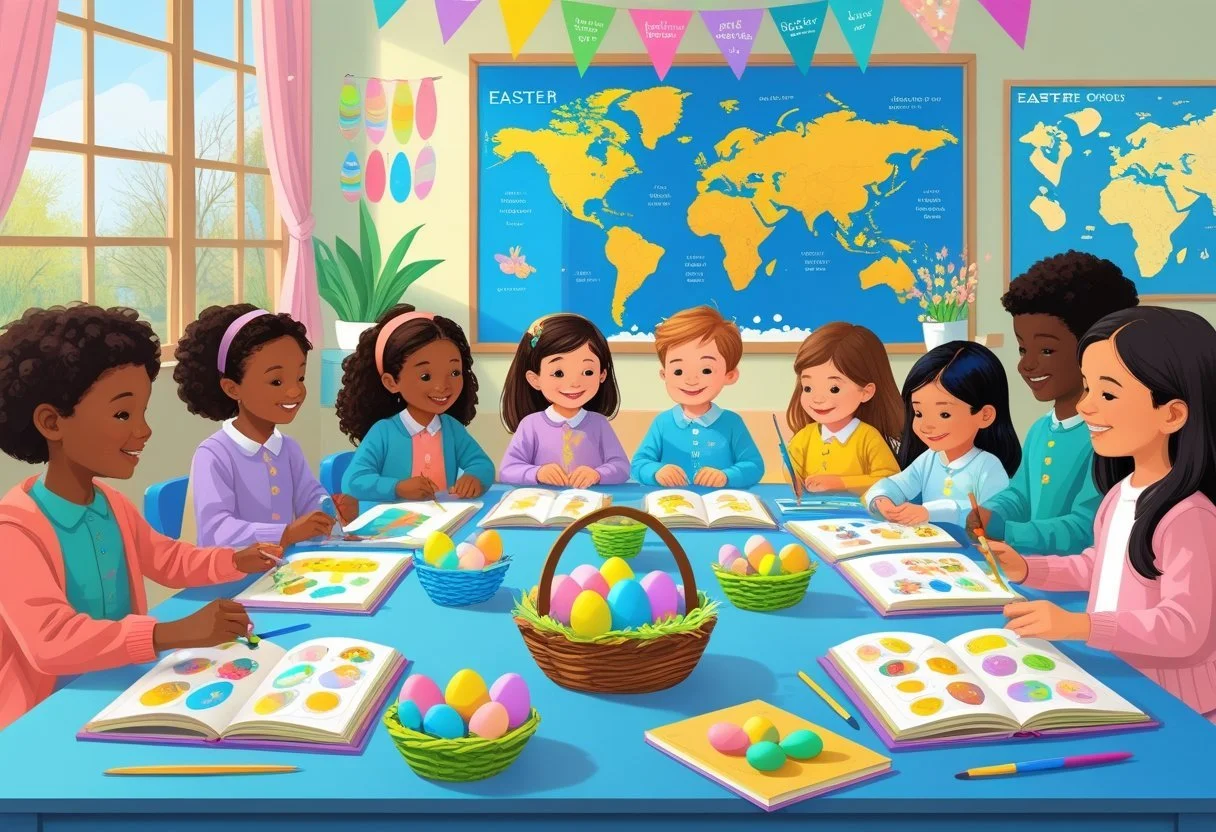
Easter offers many chances for students to learn through fun and practical activities. These lessons use art, crafts, and games to build creativity, teamwork, and understanding of Easter traditions.
Creative Arts and Easter Coloring Pages
Students enjoy expressing themselves by making Easter art. Teachers can hand out Easter coloring pages that show eggs, rabbits, and spring scenes. These pages help younger children work on fine motor skills as they color inside the lines. Older students may design their own coloring pages or use different patterns and colors to show what makes Easter special to them.
Materials to use:
Crayons
Markers
Colored pencils
Glitter
Pom-poms for texture
Teachers can also allow students to draw or paint Easter images on larger paper. This activity mixes creativity with learning about Easter symbols. Sharing finished art with the class can help everyone see different ideas and styles.
Hands-On Learning With Easter Eggs
Easter eggs give a chance for hands-on learning. Students can decorate real eggs or use plastic ones. Teachers can show how to dye eggs safely by mixing colors or adding designs with stickers and crayons.
For a group project, students can fill plastic eggs with facts about Easter or words to practice spelling. They can then open the eggs in pairs and talk about what they find inside.
Supply ideas:
Plastic eggs
Hard-boiled eggs
Food dye
Stickers
Small pom-poms or beads
This makes learning active and keeps students interested. Decorating eggs also lets students be creative and proud of their work.
Easter Egg Hunts and Games
An Easter egg hunt is a classic Easter activity for kids. Teachers can organize egg hunts indoors or outside, using plastic eggs filled with small prizes, vocabulary words, math problems, or trivia questions.
A simple list organizes the hunt:
Hide eggs in safe areas.
Create rules for fairness.
Let each student find a set number of eggs.
Other games include rolling eggs in races or sorting them by color. These Easter activities support teamwork and friendly competition. They also help students move around after sitting for long periods.
Supporting Early Literacy Through Easter
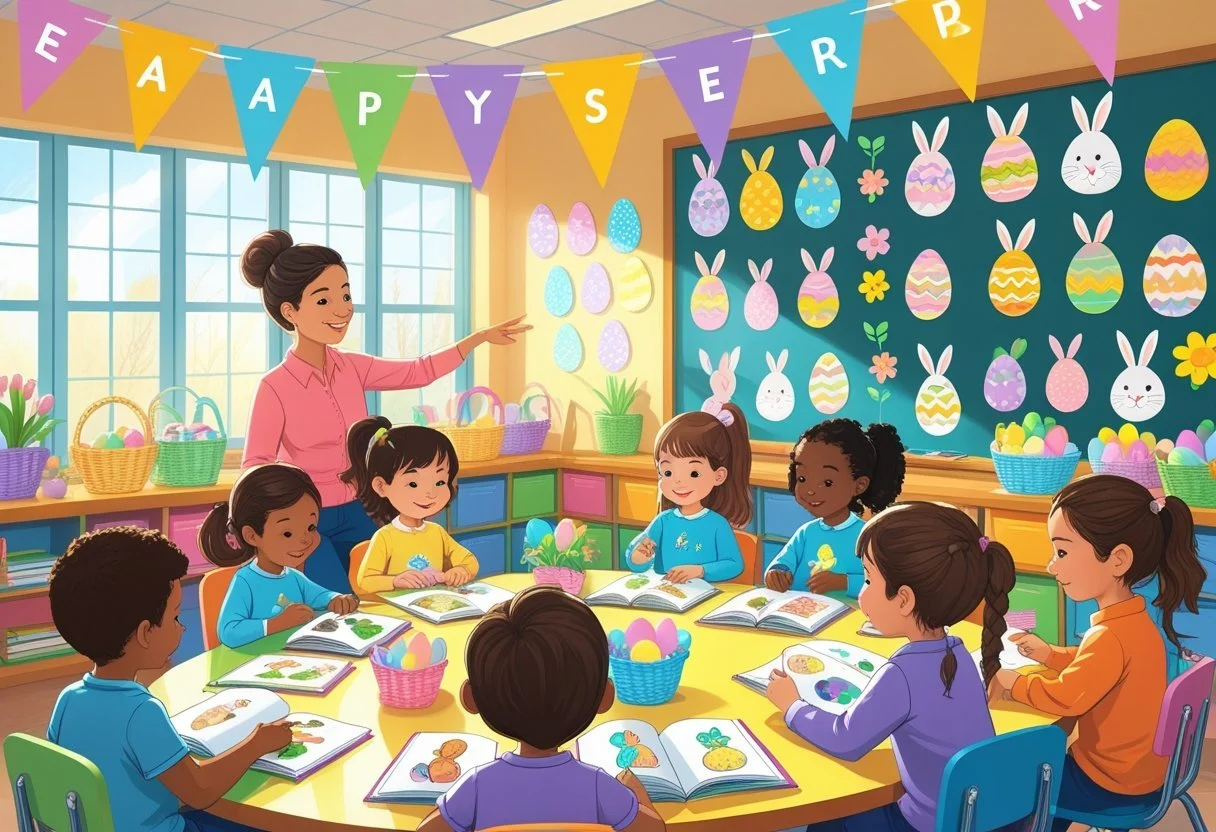
Teachers often use Easter as an opportunity to encourage young readers. Through special stories and activities, students can build key reading and language skills while also learning about holiday traditions.
Reading Easter Books Aloud
Reading stories about Easter lets children hear new words and practice listening skills. Teachers might choose picture books about bunnies, eggs, or springtime celebrations. Some common Easter books include The Tale of Peter Rabbit by Beatrix Potter and The Easter Egg by Jan Brett.
During read-aloud time, teachers often pause to ask questions. For example, they might ask, “What do you think will happen next?” or “Why do you think the character felt happy?” This helps students connect the story to their own lives.
Tips for Easter Read-Alouds:
Use different voices for each character
Point to words and pictures as you read
Let students join in on repeated phrases
Reading together as a class builds excitement and helps students pay attention.
Developing Early Literacy Skills
Easter-themed activities can help children practice early literacy skills like phonics, vocabulary, and comprehension. Teachers may use word matching games with Easter words such as egg, bunny, and basket. These games help students recognize letters and sounds.
Writing activities, like creating simple Easter cards or filling in story blanks, let children use what they know in a fun way. Teachers often encourage students to share their stories with the class, which builds speaking confidence.
Teachers also use short poems or songs about Easter to help children notice rhyming words and syllables. These literacy tasks build a strong foundation for reading success.
Montessori Approaches to Easter Learning
Montessori schools focus on student-centered discovery and respect for different cultures. When teaching about Easter, teachers use hands-on activities and guided lessons to help students gain a deeper understanding of traditions.
Cultural Exploration in Montessori Classrooms
Montessori classrooms highlight cultural diversity when talking about Easter. Teachers use maps, books, and artifacts to show how Easter is celebrated in different countries.
Students might look at Easter traditions in Italy, Greece, or the United States. Teachers may display a table of symbols found in various cultures:

Learners explore traditions with hands-on work like art, cooking, and music. This helps children understand that Easter has many meanings around the world. It builds respect for others and helps students see how holiday traditions connect to family and community.
Self-Expression and Social Interaction
Montessori curriculum values self-expression and cooperative learning. In Easter activities, students might create their own cards, paint eggs, or make holiday crafts.
This encourages children to share their thoughts and ideas. Group projects, like decorating a classroom Easter tree, allow students to work together and develop social skills.
Key benefits include:
Increased communication: Students talk and share stories about their family’s traditions.
Creativity: Each child designs something unique.
Sense of accomplishment: Finishing a project boosts confidence and pride.
Interactions in group settings help students practice listening and cooperation. This prepares them for both classroom and real-world situations.
Engaging Preschool and Early Learners
Preschool activities for Easter help children build important skills while having fun. Projects like egg decorating and sorting games can make lessons hands-on and engaging for young learners.
Developing Fine Motor Skills
Children in preschool develop fine motor skills by using their hands and fingers for small tasks. Coloring Easter eggs or using stickers lets them practice grasping, pinching, and placing objects, which are important for handwriting later on.
Simple crafts like making bunny masks or threading beads help strengthen these muscles. Teachers can set up stations for:
Cutting out shapes with safety scissors
Pasting paper pieces together
Rolling and molding playdough into egg shapes
Short, guided activities give children many chances to use their hands in different ways. Repeating these activities helps build confidence and skill over time.
Color Recognition and Matching Activities
Learning to recognize and match colors is a key part of early childhood education. Easter-themed tasks, such as sorting colored plastic eggs or matching objects by color, give students practical ways to learn this skill.
Teachers can use color cards, paint chips, or colored baskets for sorting activities. For example:

By naming colors out loud and asking children to find matches, teachers support language growth as well. These games make learning colors concrete and memorable for preschool students.
Storytelling With Resurrection Eggs
Resurrection eggs are a hands-on tool for teaching the Easter story. Each plastic egg contains a small object that represents a part of the story. Teachers can use these eggs to guide students through the important events of Easter week.
A simple way to use resurrection eggs is in a group storytime. As each egg is opened, students can guess or discuss what the object might mean. This keeps students engaged and helps them remember the story.
Here is a sample list of what might be inside the resurrection eggs:
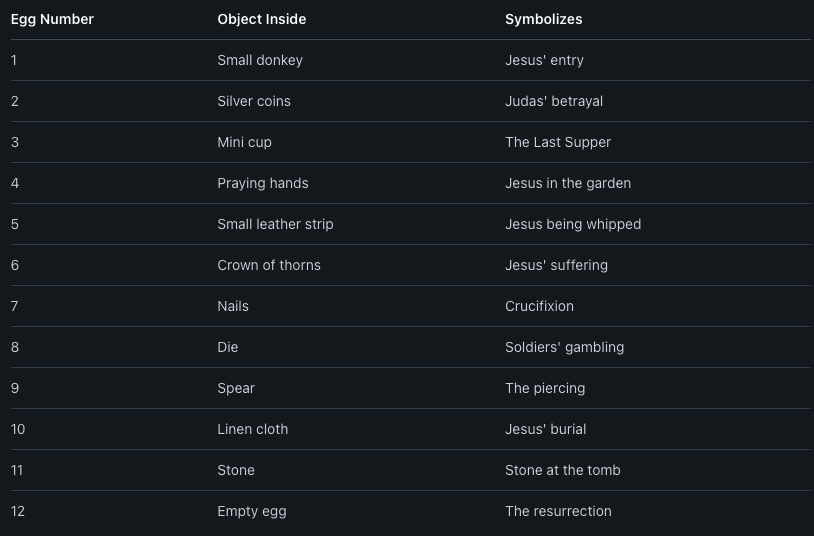
Open-ended questions can make the lesson more meaningful. Teachers may ask, "Why do you think this object is important?" or "How do you think the people in the story felt?"
Using resurrection eggs helps students connect with the Easter message in a concrete way. The activity can be adjusted for different ages and group sizes.
Celebrating Easter as a Seasonal Event
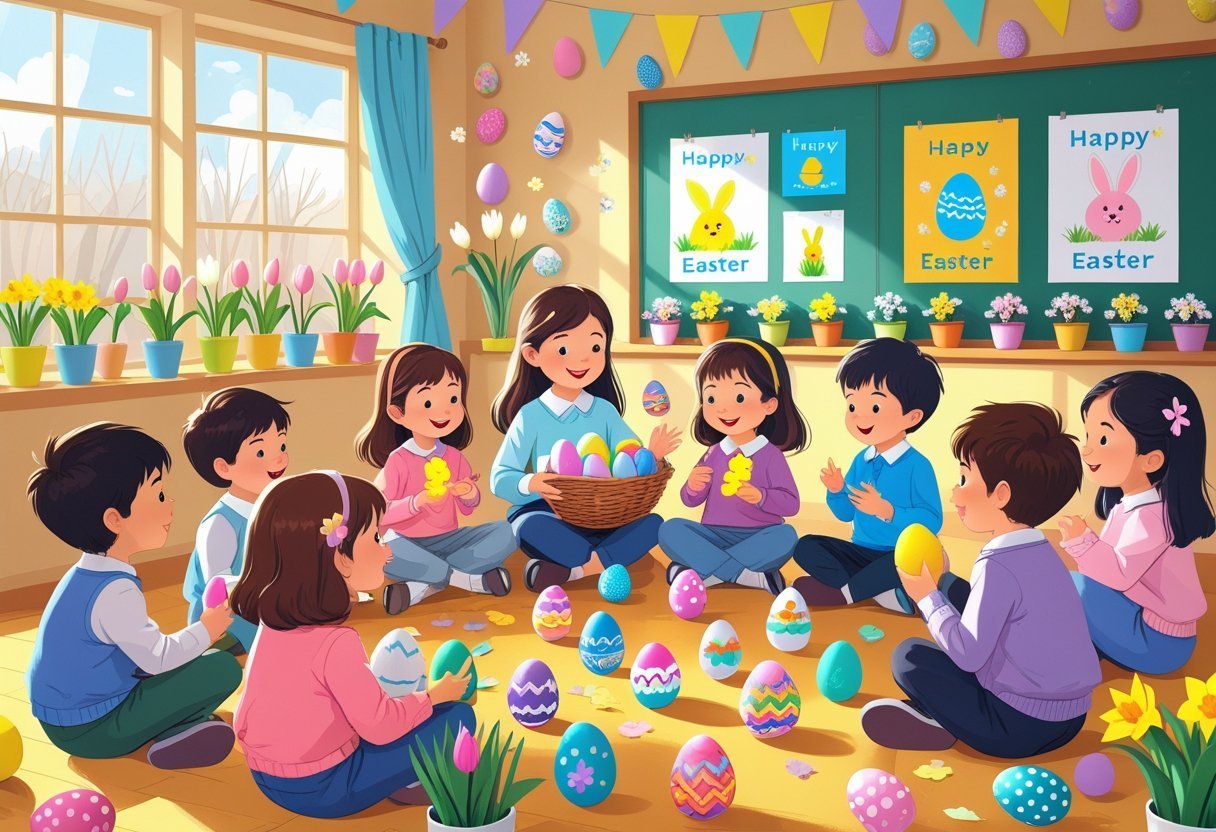
Easter is often linked to the changing of seasons and special gatherings. These connections help students see how traditions develop over time and across cultures.
Spring Equinox Connections
The spring equinox marks the time when day and night are nearly equal. Many cultures celebrate this balance, and Easter often takes place soon after. The themes of new life, growth, and light are common during this season.
Teachers can discuss how ancient peoples noticed that plants, flowers, and animals became more active in spring. The egg, a strong symbol of Easter, stands for life and new beginnings. Some schools use classroom gardens or seed planting to show nature’s renewal.
A quick chart can help students connect Easter traditions to the spring equinox:

Easter Feasts and Celebrations
Easter is known for its special meals and gatherings. Families often share feasts that include foods like eggs, sweet breads, and lamb. These foods are chosen for their symbolism and their place in spring harvests.
In the classroom, students can learn about the history behind these dishes. For example, lamb is popular because it has often been a symbol of innocence and new life in many cultures. Eggs and breads represent abundance after winter.
Teachers might invite students to bring recipes or stories from their own family traditions. This helps everyone see both the similarities and differences in how Easter is celebrated around the world. Such activities promote respect and understanding in a diverse classroom.
Exploring the Symbolism of the Easter Bunny
The Easter Bunny is one of the most well-known symbols of Easter in many countries. It often appears in decorations, stories, and classroom activities during the holiday.
The bunny is usually linked to spring and new life because rabbits can have many babies and are often seen in spring. This connects to the Easter story, which is about new beginnings.
Key Symbols of the Easter Bunny:

Some students may wonder how a rabbit relates to eggs. The idea likely comes from old stories in Europe, where rabbits were signs of fertility and hope.
Teachers can use the Easter Bunny to discuss traditions from different cultures. For example, in some places, the bunny brings eggs; in others, it’s just part of games or decorations.
A few possible classroom activities include:
Making paper bunny crafts
Reading stories about the Easter Bunny
Comparing holiday symbols in different cultures
The Easter Bunny helps make Easter fun and gives teachers a simple way to talk about symbols, change, and new beginnings.
Frequently Asked Questions
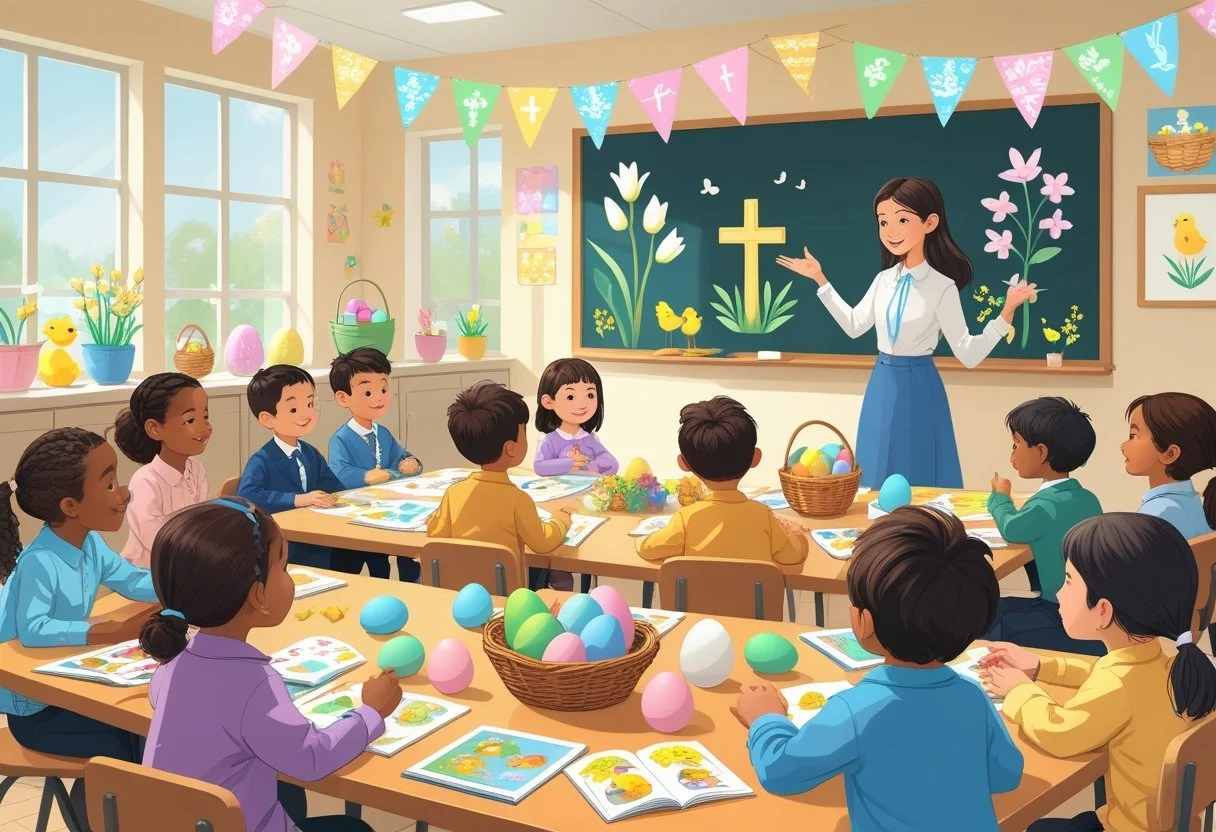
Teachers often seek ways to make Easter lessons meaningful and suitable for all students. Lessons and activities can highlight culture, creativity, and respect for different backgrounds.
How can Easter traditions be incorporated into classroom teaching?
Easter traditions can be included through stories, songs, and hands-on projects. Teachers might share how different cultures celebrate Easter. Activities like egg decorating and themed games can also teach students about symbols and practices related to Easter.
What are some age-appropriate Easter lessons for elementary students?
Young students can read simple Easter stories and talk about symbols like eggs, bunnies, and spring flowers. Drawing, coloring, and short writing prompts can help them share what they know about Easter. Activities should be easy to understand and focus on the ideas of renewal and kindness.
How can educators address the religious aspects of Easter in a diverse classroom setting?
Teachers can explain that Easter has religious meanings for some people, but there are also cultural ways many families celebrate. They can let students share their own family traditions if they feel comfortable. It is helpful to focus on common themes, like hope and new beginnings, that everyone can discuss.
What are creative ways to teach the cultural significance of Easter?
Teachers can use art, music, and food to explore how different groups celebrate Easter. Students can make crafts from around the world or listen to stories about Easter in other countries. Creating a display or sharing facts can help students see the holiday from many viewpoints.
How can storytelling be used to convey the message of Easter to students?
Using books and oral stories lets students imagine the events and meanings of Easter. Teachers can read folk tales or modern stories that show the themes of hope and renewal. Students may also write or draw their own stories to share what Easter means to them.
What types of crafts or activities can reinforce the themes of renewal and hope during Easter?
Simple activities like planting seeds or making spring-themed cards connect to renewal and growth. Art projects, such as painting eggs or creating flowers from paper, can show new life. Group projects, like building a class tree or mural, let students work together to celebrate hope and change.



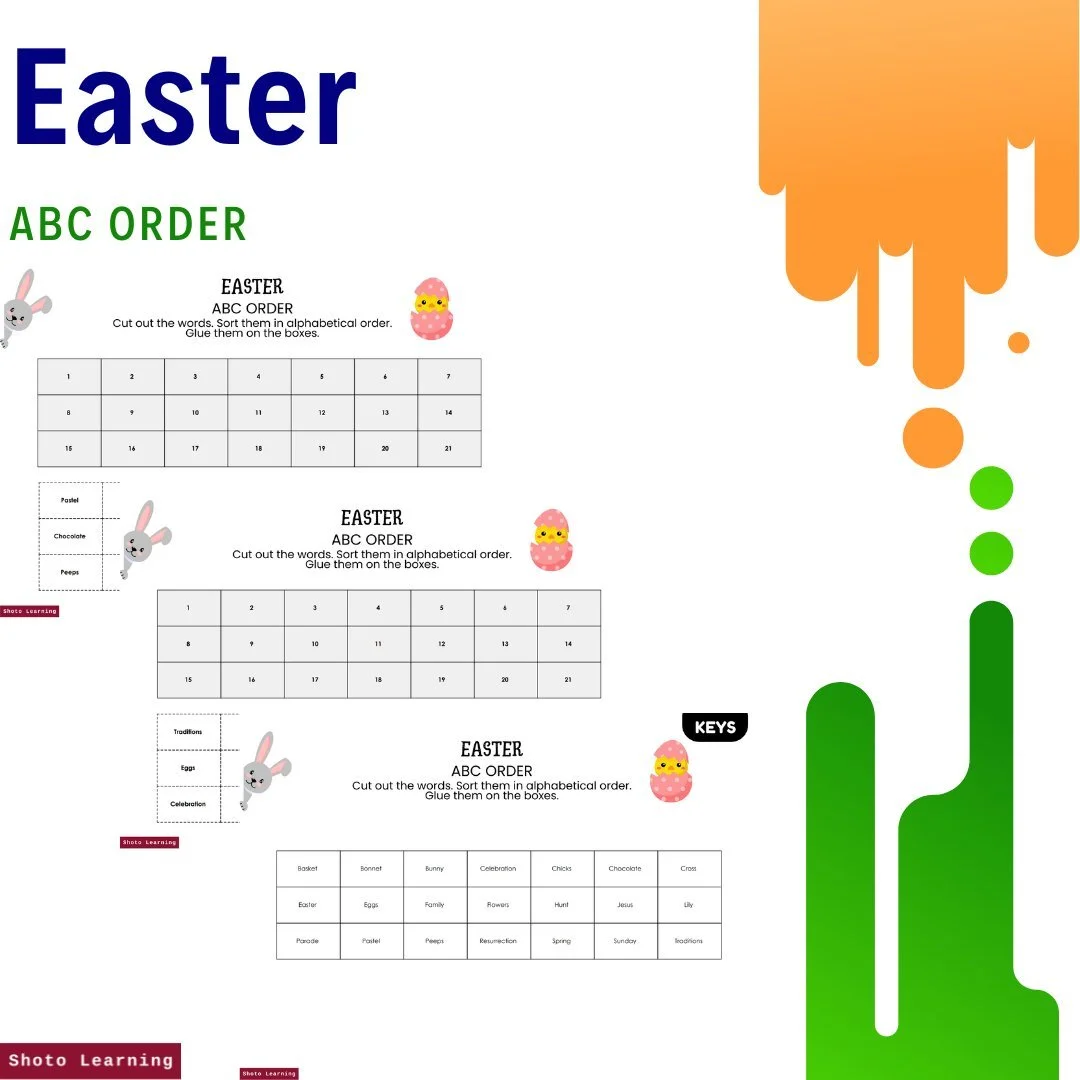


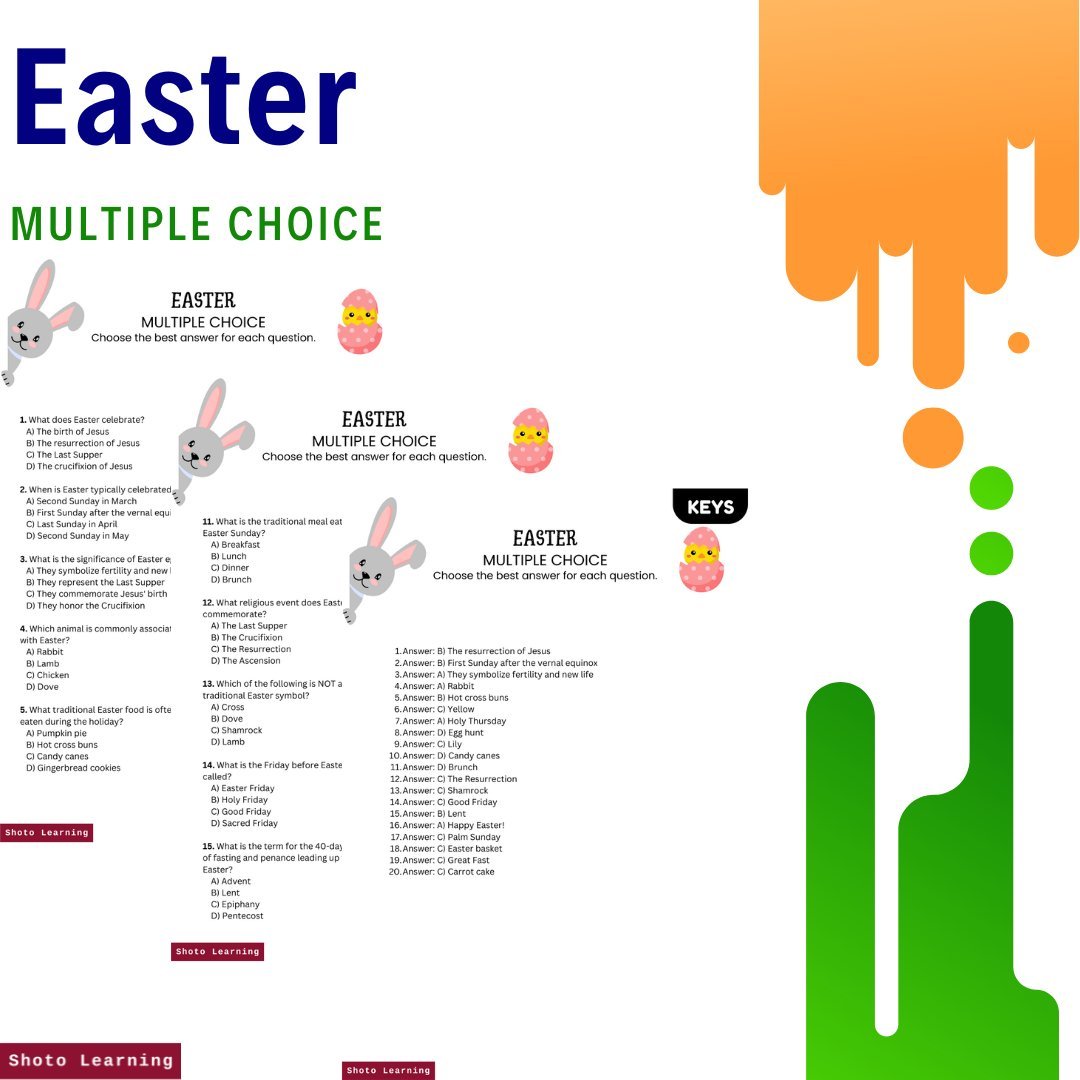


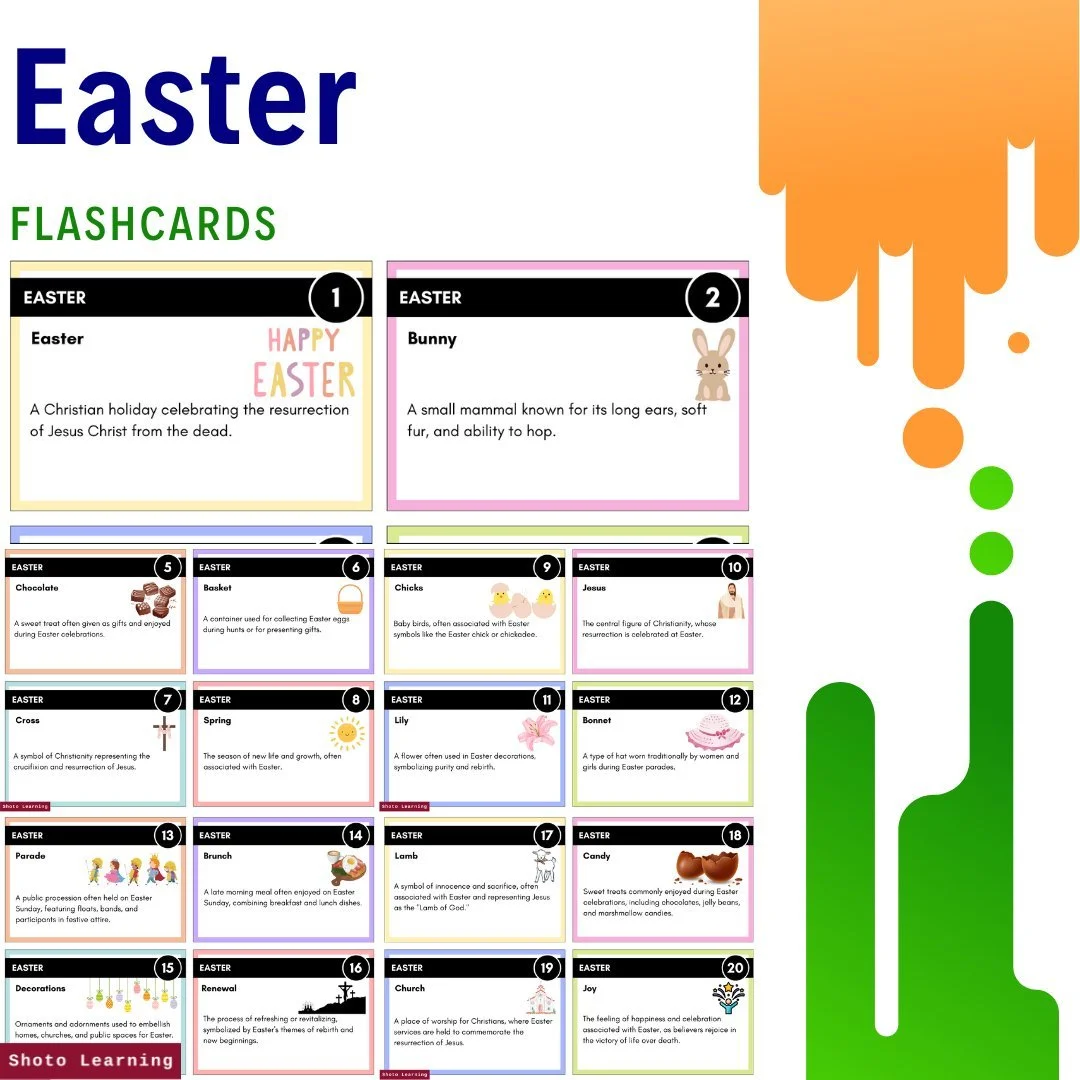


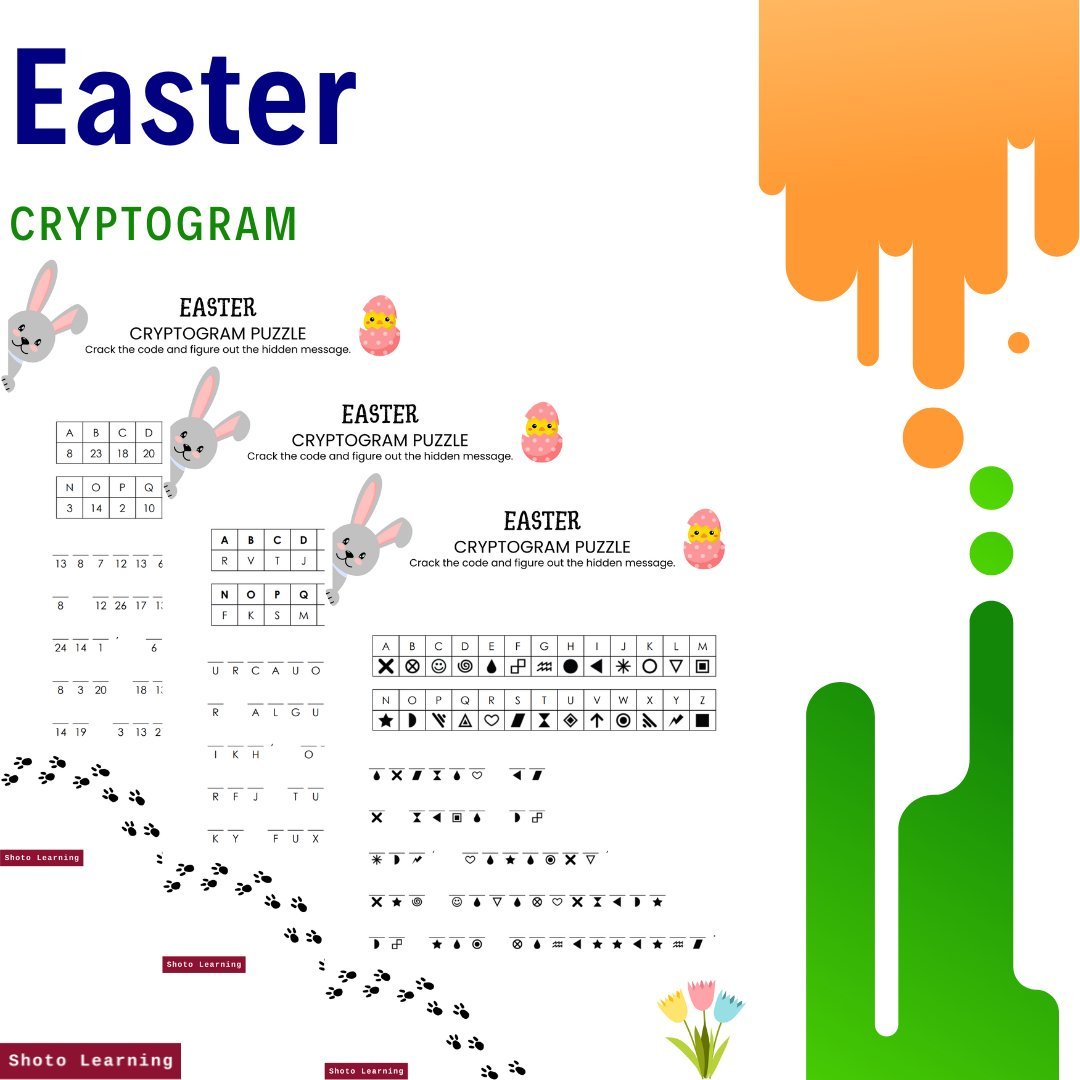


Dive into the spirit of Easter with our comprehensive Easter Activity Bundle! Packed with a wide range of engaging resources, this bundle offers something for every student, educator, and Easter enthusiast. With activities ranging from interactive games to educational worksheets, our bundle is designed to inspire curiosity, foster creativity, and celebrate the joy of Easter.
Key Features:
Assignments: Embark on 10 stimulating assignments covering diverse topics, encouraging critical thinking and practical application of knowledge.
Bingo: 30 bingo cards filled with Easter-themed words and images, perfect for group play and learning vocabulary.
Crossword: Challenge students' knowledge of Easter traditions and symbols with our Easter-themed crossword puzzle.
Cryptogram: Decode hidden messages related to Easter using our cryptogram worksheets, providing a fun and challenging activity for students.
Debate: Engage students in critical thinking and discussion with Easter-themed debate topics, promoting communication skills and teamwork.
Experiments: Explore hands-on experiments illustrating fundamental principles across various disciplines, fostering deeper understanding and engagement.
Fill in the Blank: Reinforce learning with Easter-themed fill-in-the-blank worksheets, covering a variety of topics and concepts.
Flash Cards: Enhance vocabulary and memory with our Easter flashcards, featuring colorful images and key terms related to the holiday.
Free ABC Order and Activity Sheets: Practice alphabetical order and enjoy Easter-themed activities with our free ABC order and activity sheets.
Free Math Activity: Sharpen math skills with our free Easter math activity, offering fun and educational challenges for students.
Free Memory Cards: Strengthen memory and concentration with our free Easter memory cards, featuring festive images and matching pairs.
Free Word Search: Challenge students' word-finding skills with our free Easter word search puzzles, providing hours of entertainment and learning.
Lesson Plan: A comprehensive guide to facilitate engaging activities and lessons
Matching: Improve observation and matching skills with our Easter matching game.
Missing Letters: Enhance spelling and vocabulary with our Easter Missing Letters worksheets, offering engaging exercises for students.
Multiple Choice: Assess comprehension with our Easter multiple-choice quizzes, covering a variety of topics related to the holiday.
PowerPoint: Explore Easter traditions, symbols, and meanings with our informative PowerPoint presentation, featuring visually appealing slides and detailed explanations.
Questions and Answers: Test knowledge and reinforce learning with our Easter-themed questions and answers worksheets, covering key concepts and facts.
Scramble: Unscramble Easter-themed words and phrases with our scramble worksheets, providing a fun and challenging activity for students.
Reading Comprehension: Sharpen reading skills with engaging passages, perfect for students and educators alike.
Test (45 Minutes): Evaluate understanding with our Easter-themed 45-minute test, covering a range of topics related to the holiday.
True or False: Challenge students' understanding of Easter with our true or false worksheets, promoting critical thinking and analysis.
Word Search: Enjoy hours of entertainment with our Easter word search puzzles, featuring a variety of themes and difficulty levels.
Writing Prompts: Inspire creativity and expression with our Easter writing prompts, encouraging students to explore their thoughts and ideas related to the holiday.
Answers Included: All worksheets and activities come with answers included, making it easy for educators to assess and review student work.
Embrace the spirit of Easter and enrich learning with our Easter Activity Bundle! Download now and make this Easter a memorable and educational experience for all.
Pages: 142 pages
Order your copy today!