
Celebrating St. Patrick’s Day in the Classroom: Engaging Activities and Lessons for Inspired Learning
St. Patrick’s Day can be a great opportunity to bring learning to life in the classroom. Teachers can use this holiday to make lessons fun while still meeting educational goals. Students get to enjoy themed crafts, readings, and activities that encourage participation and teamwork.
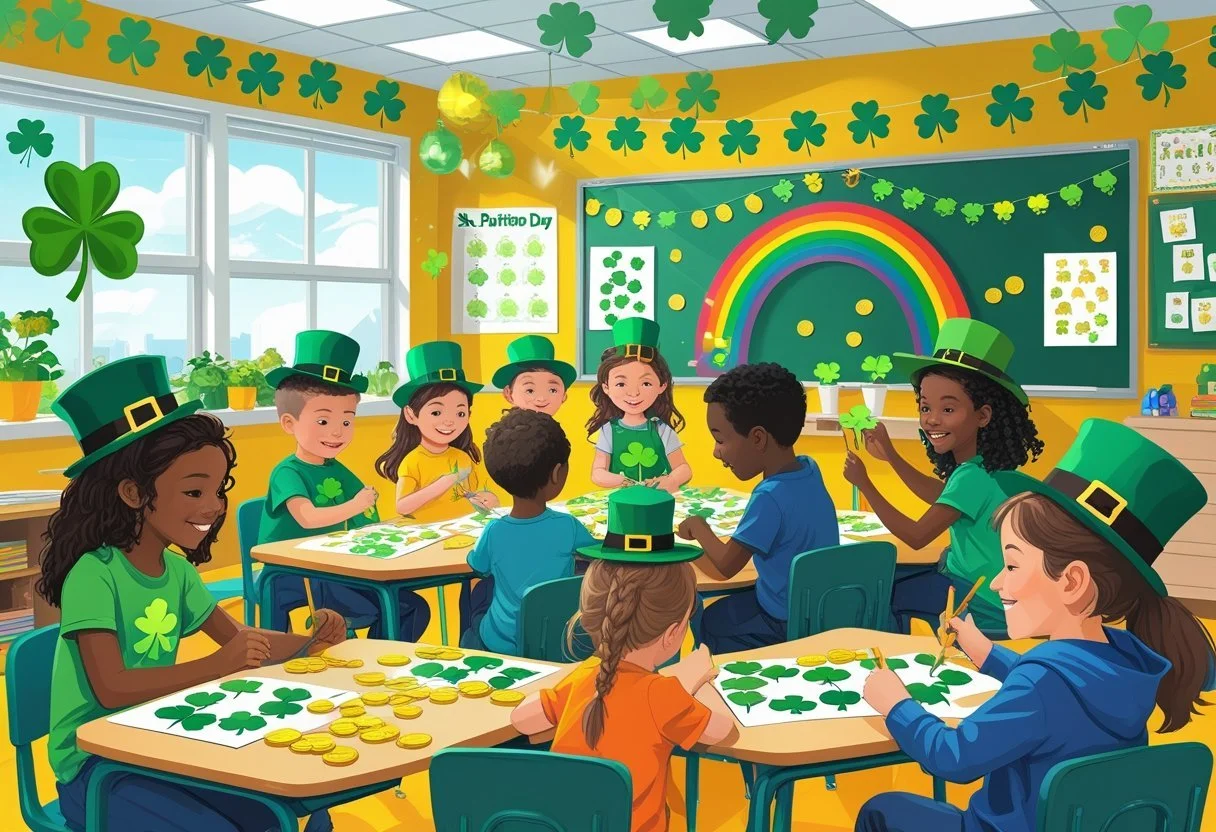
Simple changes to the classroom, like decorations or music, set the mood for learning about Irish history, culture, and traditions. Activities connect to lessons in reading, math, and science so learning is meaningful and memorable.
Key Takeaways
St. Patrick’s Day can be used to boost engagement in class.
Activities can cover reading, math, science, and culture.
Themed lessons help students learn in fun and creative ways.
Creating a Festive Learning Environment
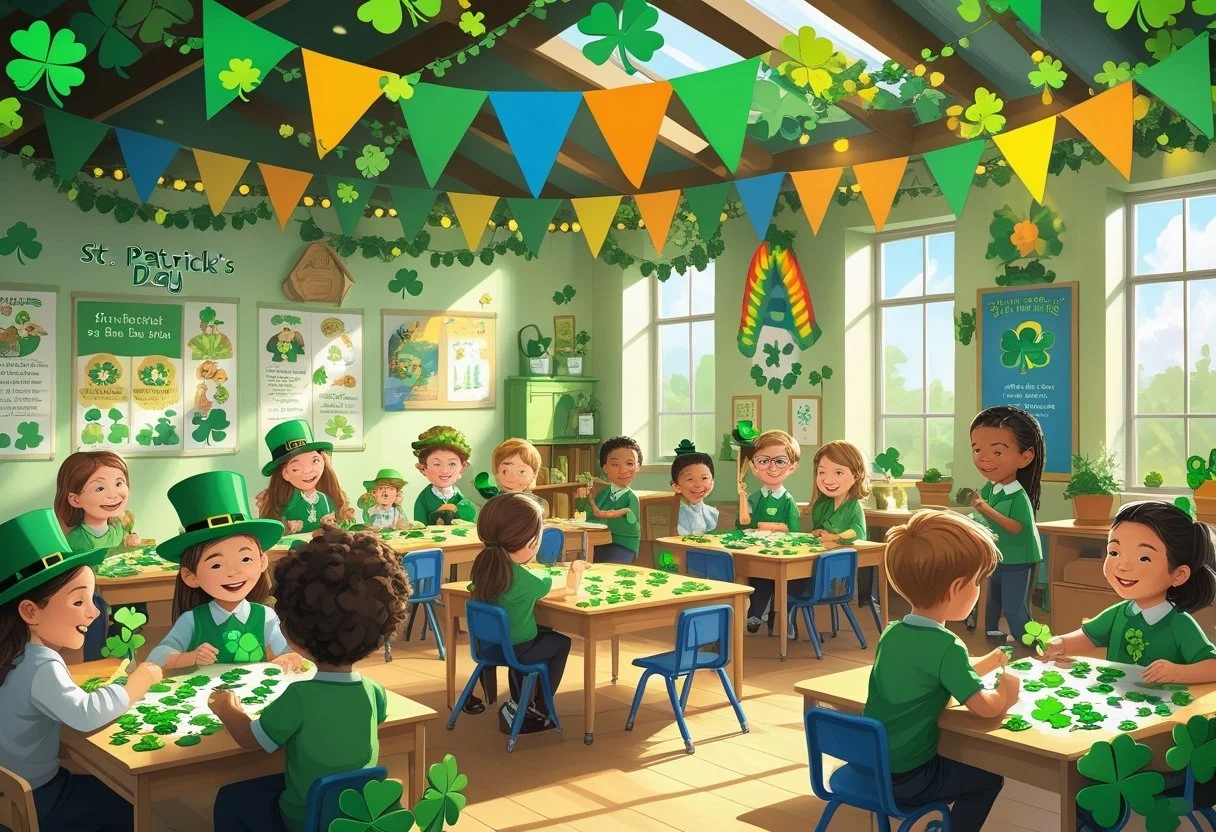
Adding St. Patrick’s Day decorations and themed displays can help engage students and create excitement for learning. These activities also encourage creativity and help build a sense of classroom community.
Decorating With Shamrocks and Rainbows
Shamrocks and rainbows are classic symbols for St. Patrick’s Day. Teachers can invite students to make their own paper shamrocks and string them across the classroom, doorways, or bulletin boards. Green construction paper or felt is best for shamrocks, while rainbows can be made using colored paper strips or ribbons.
Table decorations can include jars filled with green beads or fake gold coins. Window clings shaped like shamrocks or rainbows add more color and interest. For an added learning component, teachers can ask students to write facts about St. Patrick or Irish culture on each shamrock.
Encouraging students to help with these projects lets them take pride in their classroom. It makes the space feel festive and welcoming for everyone.
Designing a St. Patrick's Day Bulletin Board
A bulletin board is a useful tool for celebrating St. Patrick’s Day. Teachers may use a green or gold background and add shamrocks, rainbows, and even small leprechaun cutouts. Displaying student artwork, such as drawings or short poems about luck or Irish traditions, adds a personal touch.
Teachers can create interactive bulletin board elements. For example, use a chart or table to show favorite St. Patrick’s Day traditions or have students write kind messages on gold coin cutouts. This type of board keeps students involved and gives them a sense of belonging.
A themed bulletin board is eye-catching and provides a space to highlight different parts of the holiday.
Building Classroom Community With Festive Displays
Festive displays help bring students together. Working side by side to hang up rainbows or design shamrock garlands fosters teamwork. Teachers can use these moments for short group discussions about kindness, inclusion, or the meaning of St. Patrick’s Day.
Class-made decorations also encourage students to share their ideas and respect each other’s choices. Displaying each student’s work, whether it’s a drawing or a written fact, helps everyone feel seen and valued in the classroom community.
Simple holiday displays can start conversations and make every student feel connected to the group.
Engaging St. Patrick’s Day Activities
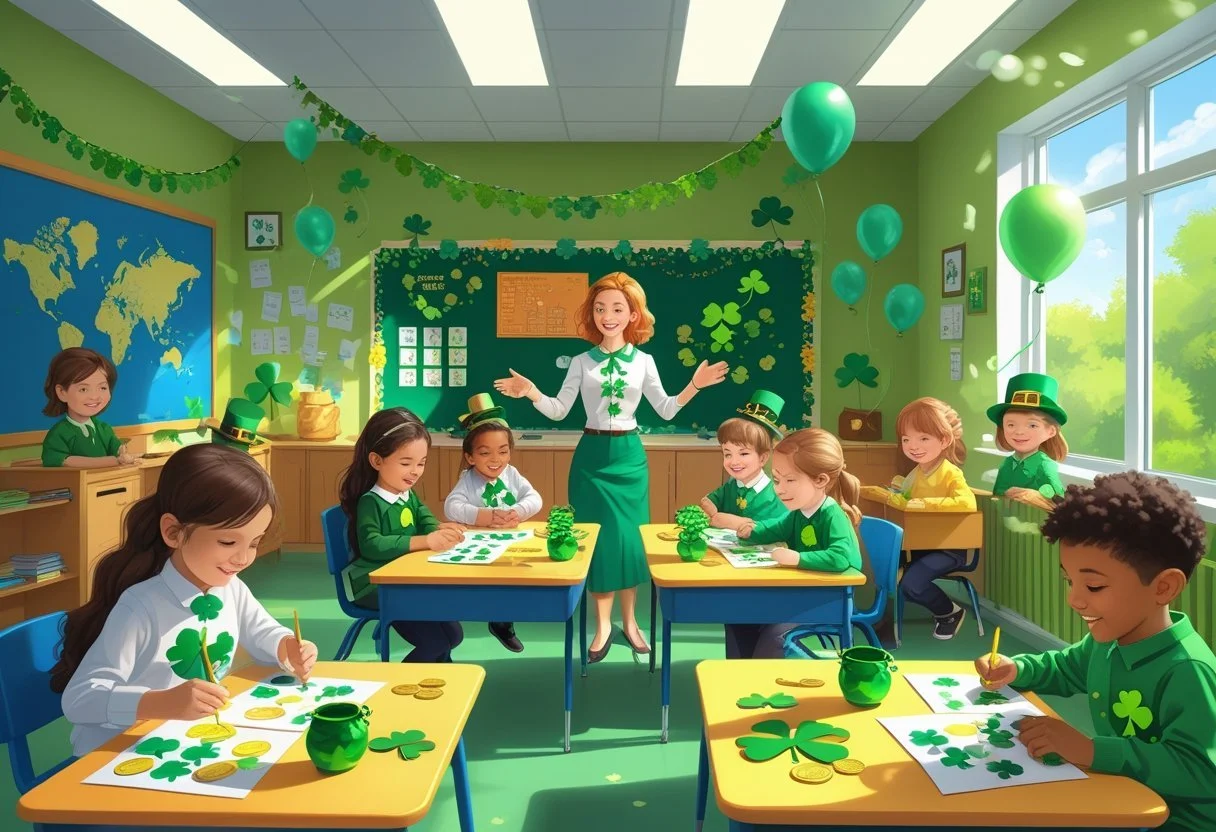
St. Patrick’s Day offers students a unique chance to learn through hands-on activities and playful challenges. These classroom projects encourage teamwork, creativity, and critical thinking.
Creative Leprechaun Traps
Students enjoy building leprechaun traps as they use both imagination and problem-solving skills. Teachers may offer materials like cardboard boxes, pipe cleaners, paper rolls, and strings. Learners discuss how to attract a leprechaun and design traps with ramps, ladders, and faux pots of gold.
This activity helps students think about simple machines and engineering principles. It also provides an opportunity to talk about Irish folklore. Many classes display their leprechaun traps and even leave notes or small chocolate coins as pretend “leprechaun” visits.
The focus stays on process, not just results. Students can explain their designs, sharing why they think their trap might catch a sneaky leprechaun.
Classroom Scavenger Hunt
A classroom scavenger hunt turns St. Patrick’s Day into an interactive adventure. Teachers hide themed items such as shamrocks, rainbows, felt hats, and small gold coins in different areas. Instructions can be listed using a simple table or checklist for clear step-by-step searching.

Small teams look for clues, read riddles, and check off items they find. This st. patrick's day activity sharpens observation and reading skills in a fun way. The hunt can be timed or just for fun, and teachers may reward students with simple treats or extra points.
Hands-On Arts and Crafts
Hands-on activities like making shamrock cards, rainbow collages, and pots of gold let students explore their artistic side. They work with paper, markers, paint, cotton balls, and recycled materials. For example, students might glue strips of paper in rainbow order onto a poster or paint and decorate their own paper leprechaun hats.
These crafts help develop fine motor skills and offer creative ways to learn about St. Patrick’s Day symbols. Teachers might hang the finished art in the classroom, building a festive and welcoming environment.
Decorating paper “pots of gold” is a favorite for many. Some classes fill these pots with written wishes or math problems on paper coins, combining art with learning.
Leprechaun-Inspired Games
St. Patrick’s Day games keep students active while reinforcing themes like luck or problem-solving. A favorite is “Catch the Leprechaun,” where one student acts as a leprechaun and the others try to tag them within a marked play area.
Other options include themed bingo with symbols like clovers and rainbows or a relay race carrying imaginary pots of gold. Many teachers use task cards or dice games that highlight math facts or vocabulary.
Games create a sense of community and encourage friendly competition. They also give students a break from sitting, making lessons more dynamic and memorable.
Incorporating Literature and Reading
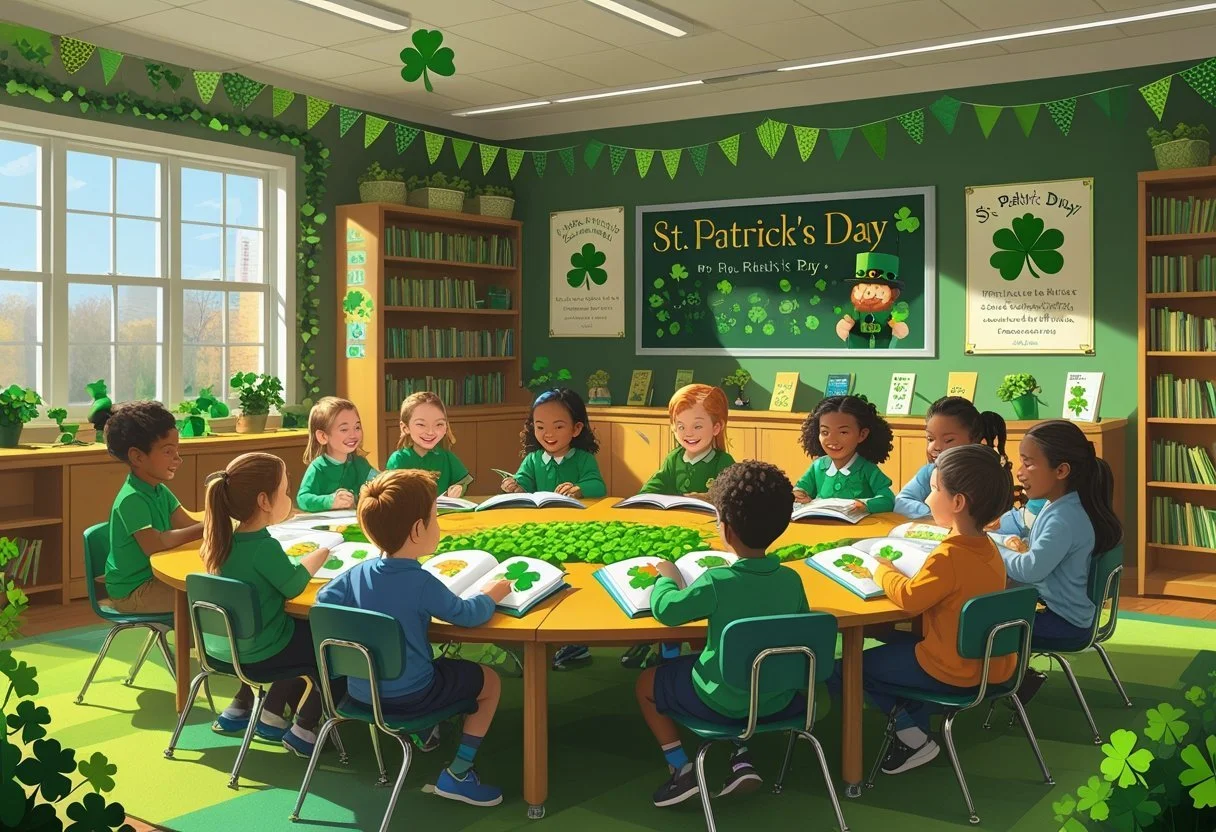
Literature adds meaning to St. Patrick’s Day by bringing Irish folktales, cultural stories, and themed texts into lessons. Guided reading and discussion activities help students develop better reading comprehension and thinking skills.
Reading Passage Selections
Choosing the right reading passage with an Irish theme is important for upper elementary students. Teachers may select Irish folktales, short stories, or nonfiction about St. Patrick’s Day traditions. Using a range of texts, such as poems and informational passages, exposes students to different writing styles.
For early finishers or advanced readers, teachers might offer longer stories or more challenging materials. Consider topics like the history of St. Patrick, how shamrocks became a symbol, or the origins of leprechaun legends. Teachers can use graphic organizers to help students track story elements or important facts.
Close Reading With Irish-Inspired Texts
Close reading encourages students to look deeper into a text. Teachers may use short Irish-inspired stories or passages about holiday symbols. Students can annotate the text, highlight key details, and mark unfamiliar words.
The teacher may read aloud once, then ask students to re-read in pairs or small groups. This helps them focus on main ideas and supporting evidence. During each read, students draw connections to Irish culture or compare the events in the story to their own experiences.
Comprehension Questions and Discussion
Comprehension questions are designed to check students’ understanding of the passage. These questions may include:
Literal questions (What happened to the main character?)
Inferential questions (Why did the leprechaun hide his gold?)
Opinion questions (Would you make the same choice as St. Patrick?)
Teachers encourage group discussion, so students hear different ideas and viewpoints. Students might use sentence starters or a table like the one below to organize their thoughts.

Exploring Jamie O’Rourke and the Big Potato
Jamie O’Rourke and the Big Potato is a well-known Irish folktale often used in upper elementary classrooms. The story has simple language, humor, and a clear plot, making it easy for students to follow. Teachers may read the book aloud, show the illustrations, and ask students to predict what happens next.
After reading, students discuss Jamie’s actions and the story’s message. Activities like retelling, acting out scenes, or sequencing story events help strengthen understanding. Teachers can also guide students to compare Jamie’s choices to their own lives, deepening the reading experience.
Exploring Irish Culture and Traditions
Irish culture includes unique traditions, symbols, and celebrations. Understanding these topics helps students see the meaning behind St. Patrick’s Day and learn more about Ireland.
Learning About Irish Traditions
Ireland is known for several long-lasting traditions including music, dance, and storytelling. Popular activities include traditional Irish dancing, which uses quick footwork and lively music.
Family gatherings often include singing songs and sharing stories called “seanchaí.” Many Irish people also enjoy foods like soda bread, potatoes, and stews. On St. Patrick’s Day, people wear green and take part in parades with bagpipes, drums, and colorful costumes.
Irish games, such as hurling and Gaelic football, are also important in Irish culture. Teachers can show short videos or share photos of these traditions in class. Students can also try simple Irish crafts or recipes to better understand daily life in Ireland.
Investigating the Symbolism of the Four-Leaf Clover
The four-leaf clover is linked to good luck and is often seen during St. Patrick’s Day. Each leaf stands for something special: hope, faith, love, and luck.
Most clovers have three leaves. Some say St. Patrick used the three-leaf shamrock to explain the Holy Trinity. The rare fourth leaf became a symbol of luck over time.
Teachers can lead students in a search for clover leaves outside or create paper versions in class. Discussions can cover why certain symbols grow important in different cultures. Below is a table showing the meaning of each leaf:

Discovering the Story of St. Patrick
St. Patrick is the patron saint of Ireland. He is known for spreading Christianity in Ireland during the 5th century. As a young boy, he was captured and brought to Ireland as a slave, but later escaped.
After returning to Ireland, St. Patrick taught people about Christianity using familiar symbols, like the shamrock. There are also legends that say he drove snakes out of Ireland, though this is likely a myth.
During St. Patrick’s Day, people remember his work with parades, church services, and feasts. Students can read short stories or watch a video about his life to better understand why this holiday is celebrated.
Introducing Limericks
A limerick is a short, funny poem with five lines and a specific rhyming pattern (AABBA). Limericks are a well-known part of Irish literary culture. Many famous limericks use jokes or silly stories.
Students can read simple limericks in class or try writing their own. Teachers can use examples like:
There once was a man from Cork,
Who dined every day with a fork.
He picked up his spoon,
And whistled a tune,
Then danced all the way to New York.
Group activities might include writing limericks about St. Patrick’s Day, Ireland, or four-leaf clovers. This helps students practice language skills while learning about Irish tradition.
Hands-On Science and Math Connections
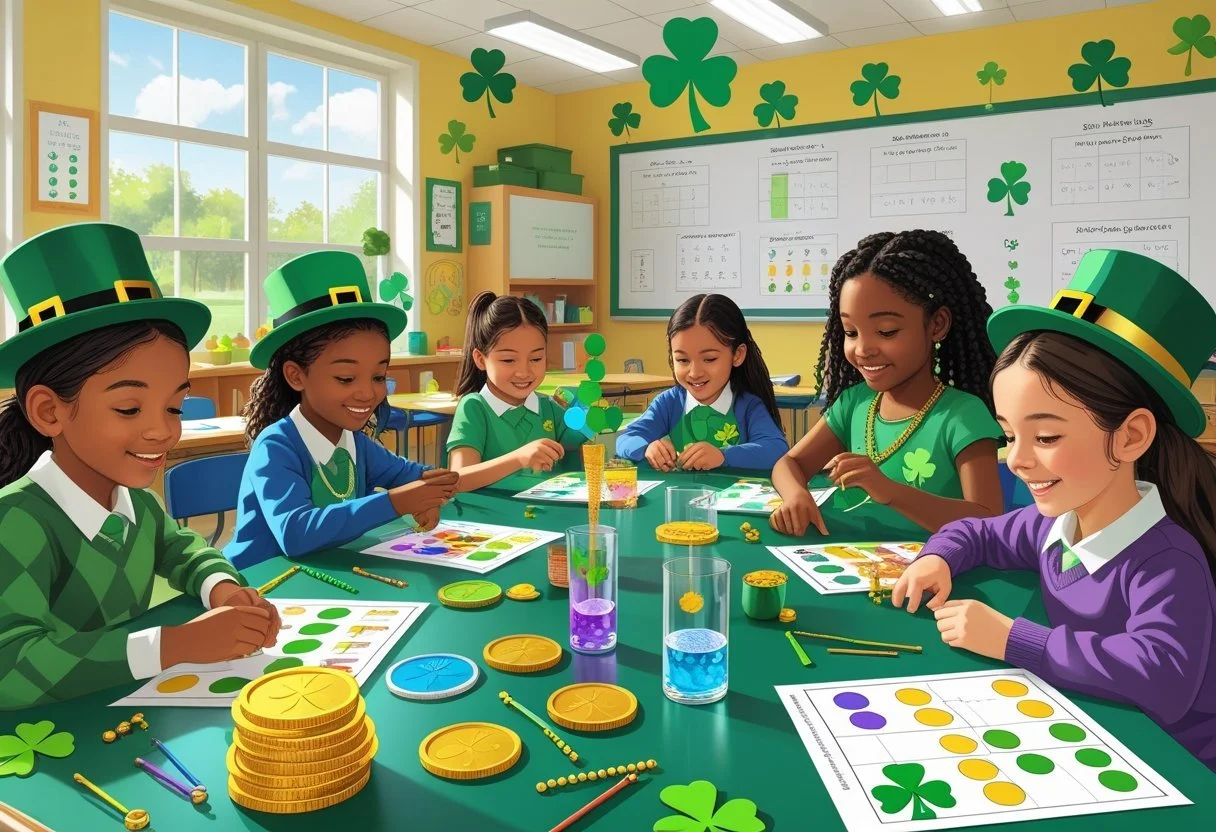
Teachers can make St. Patrick’s Day more meaningful and fun by linking the holiday to science and math lessons. Using simple materials like green food coloring, students can see real reactions and changes. Science videos can help explain ideas that students might find difficult.
St. Patrick’s Day Themed Experiments
Hands-on experiments bring excitement to the classroom. Mixing vinegar and baking soda can create “leprechaun potions.” Adding a few drops of green food coloring turns this classic experiment into a St. Patrick’s Day activity.
Students can use measuring cups and keep track of the amounts they use. They might record what happens in a simple table like this:

Teachers can also set up a “rainbow density” experiment by layering colored liquids with different sugar levels. Using green water helps tie to the holiday and lets students talk about why some liquids float above others.
Incorporating Science Videos
Science videos can build background knowledge and get students ready for hands-on work. Short clips about rainbows explain how light and water droplets create colors in the sky. Watching these videos before or after experiments helps make ideas stick.
Some teachers use videos about chemical reactions to show what should happen in their green “potions.” Others pause a video and ask questions, which gets more students thinking.
Teachers can pick videos with clear visuals and simple language to match their students’ needs. Many science channels make St. Patrick’s Day playlists that focus on themes like color, weather, and reactions.
Creative Uses of Green Food Coloring
Green food coloring is a safe way to tie experiments to St. Patrick’s Day. It changes water, dough, or even slime to festive shades. Teachers can use green coloring not just for “potions” but for activities like estimating how many drops it takes to turn a cup of water bright green.
Easy activity ideas:
Mix green coloring into milk and use soap to make swirling patterns.
Dye celery sticks green and watch how the color climbs up the stalks, teaching about roots and absorption.
Create green “slime” to explore texture and measurement.
Students can keep track of their results by making simple charts or lists. This makes science more active and helps students better understand what they learned.
Encouraging Writing and Reflection
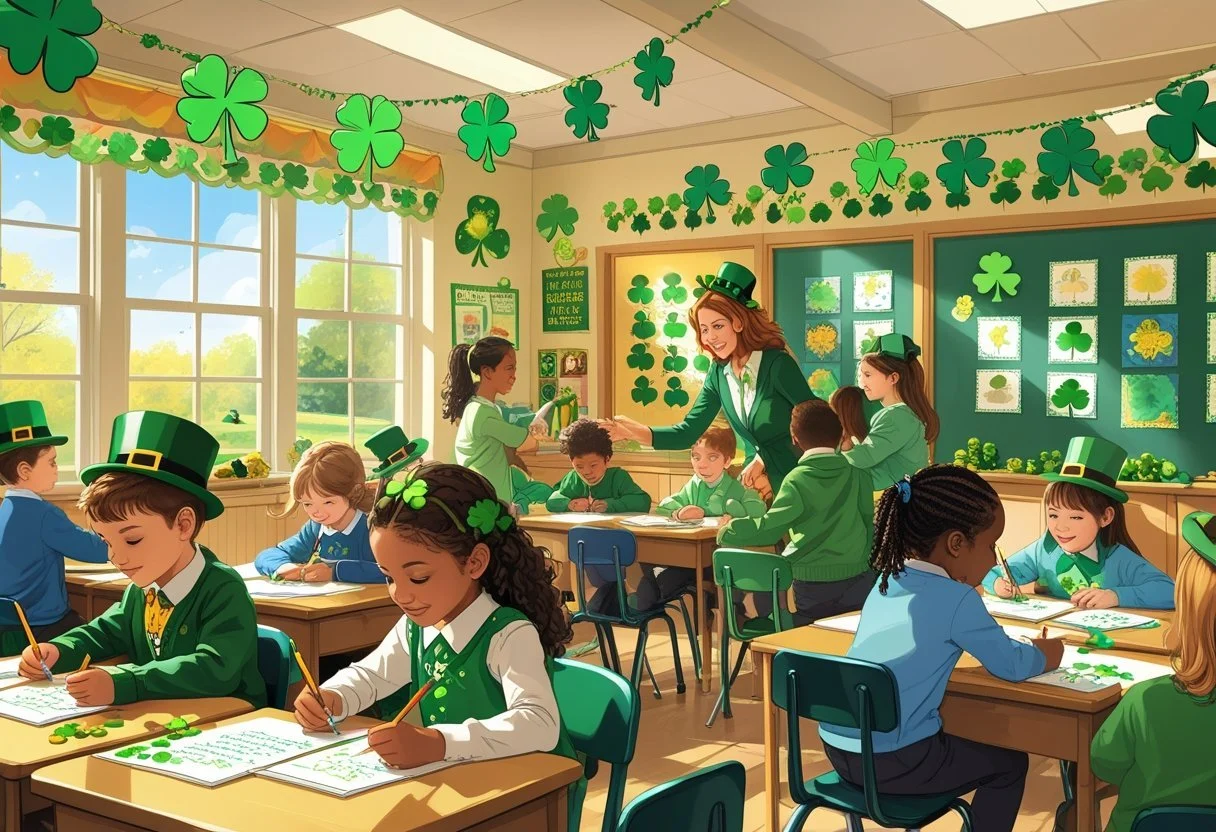
Writing activities help students process new ideas and make connections to St. Patrick’s Day traditions. Reflecting on classroom events allows for deeper understanding and helps students express their thoughts in creative ways.
St. Patrick’s Day Writing Prompts
Using themed writing prompts gives students the chance to explore Irish culture, history, and legends. Teachers can provide prompts like “Describe how you would catch a leprechaun and what you’d do with his pot of gold.” Another prompt could be “Write a letter to a friend explaining what you learned about Ireland.”
For younger students, sentence starters and word banks help get them started. Older students may enjoy researching famous Irish figures and writing short biographies or opinion pieces on their importance. Group brainstorming before writing can support students who need more ideas.
Writing can be done in journals, displayed around the classroom, or even shared during a “St. Patrick’s Day Authors’ Circle.”
Student Reflections on Classroom Activities
After each St. Patrick's Day activity, students can write brief reflections about what they did and how they felt. This can include thoughts about crafts, games, or lessons on Irish history. A simple reflection template can help, such as:

Class discussions can also follow the written reflections. Sharing thoughts with the class encourages listening skills and shows respect for others’ ideas. Reflections help students connect the classroom experience to their own lives, making learning more meaningful.
Assessment, Worksheets, and Extensions
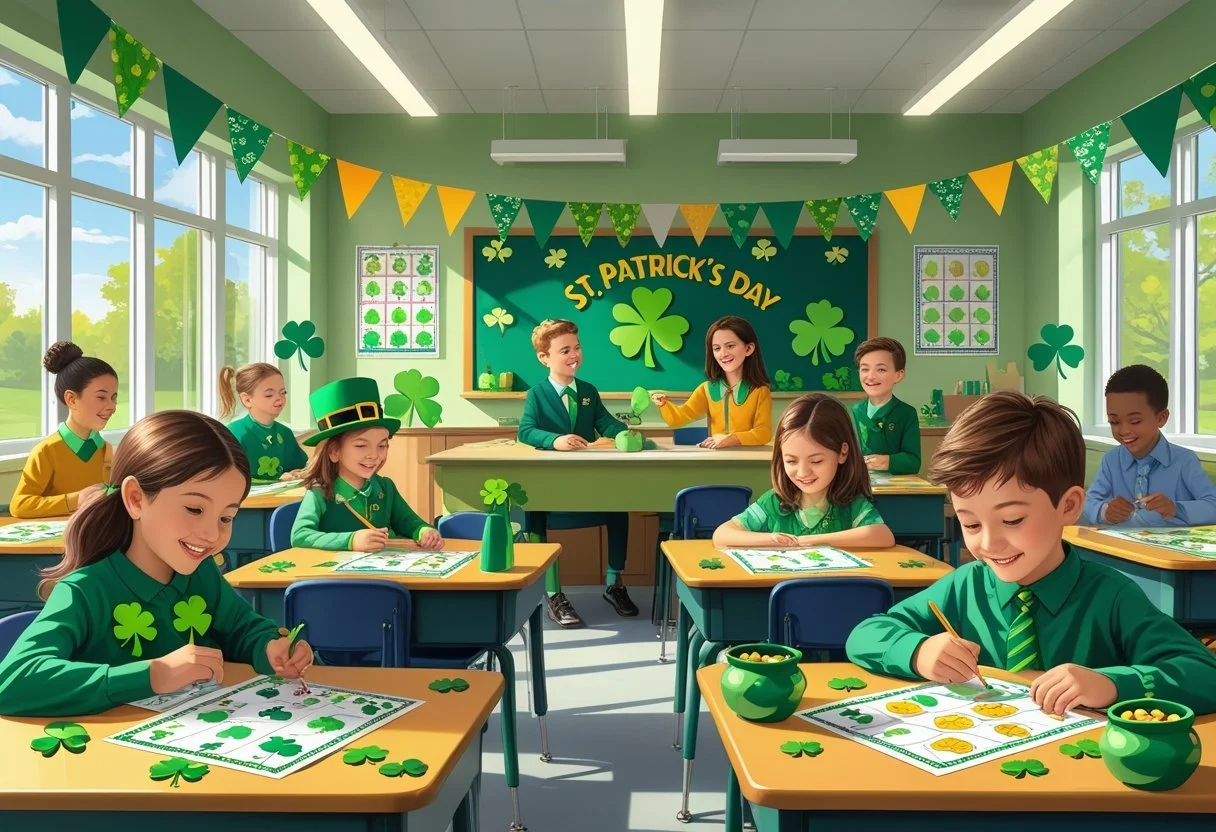
Teachers can use a mix of worksheets, adapted challenges, and extra projects to help all students engage with St. Patrick’s Day lessons. Choosing the right material supports both learning checks and deeper thinking for different ages.
St. Patrick’s Day Worksheets
St. Patrick’s Day worksheets provide clear ways to check students’ understanding. Common worksheets include word searches, themed math puzzles, reading passages about Irish history, and short quizzes. Teachers can use fill-in-the-blank formats to help students practice spelling and vocabulary linked to the holiday.
Some teachers create matching activities. For example, students match symbols like shamrocks or leprechauns to their meanings. Writing prompts are also useful, such as, “Describe a St. Patrick’s Day parade you might see.” These worksheets make it easy for teachers to see what students know and what still needs review.

Adapting Activities for Upper Elementary
Upper elementary students need more complex activities. They can handle longer reading assignments about St. Patrick, Irish legends, and historical facts. Teachers often use group projects, such as creating posters about Irish traditions or timelines of the holiday.
Discussion questions can include, “How does St. Patrick’s Day compare with other cultural holidays?” Students might write a story or report on how Irish immigrants influenced American traditions. Math activities could involve word problems using St. Patrick’s Day themes, like calculating parade costs.
Older students also benefit from more responsibility. Teachers can ask them to lead small groups or design their own St. Patrick’s Day games. This approach helps build leadership and teamwork.
Providing Additional Extensions for Learning
Extensions encourage deeper learning outside of basic worksheets. Art projects are popular, such as designing St. Patrick’s Day cards using Celtic patterns or building simple leprechaun traps. Music activities might include learning an Irish folk song or researching instruments like the tin whistle.
Students may also research and present facts about modern St. Patrick’s Day celebrations worldwide. Teachers can introduce basic map skills by having students locate Ireland and trace the spread of the holiday.
For extra reading, students might select a folktale about St. Patrick or Irish myths to share and discuss. These extensions offer new ways to connect learning with creativity and real-world knowledge.
Frequently Asked Questions
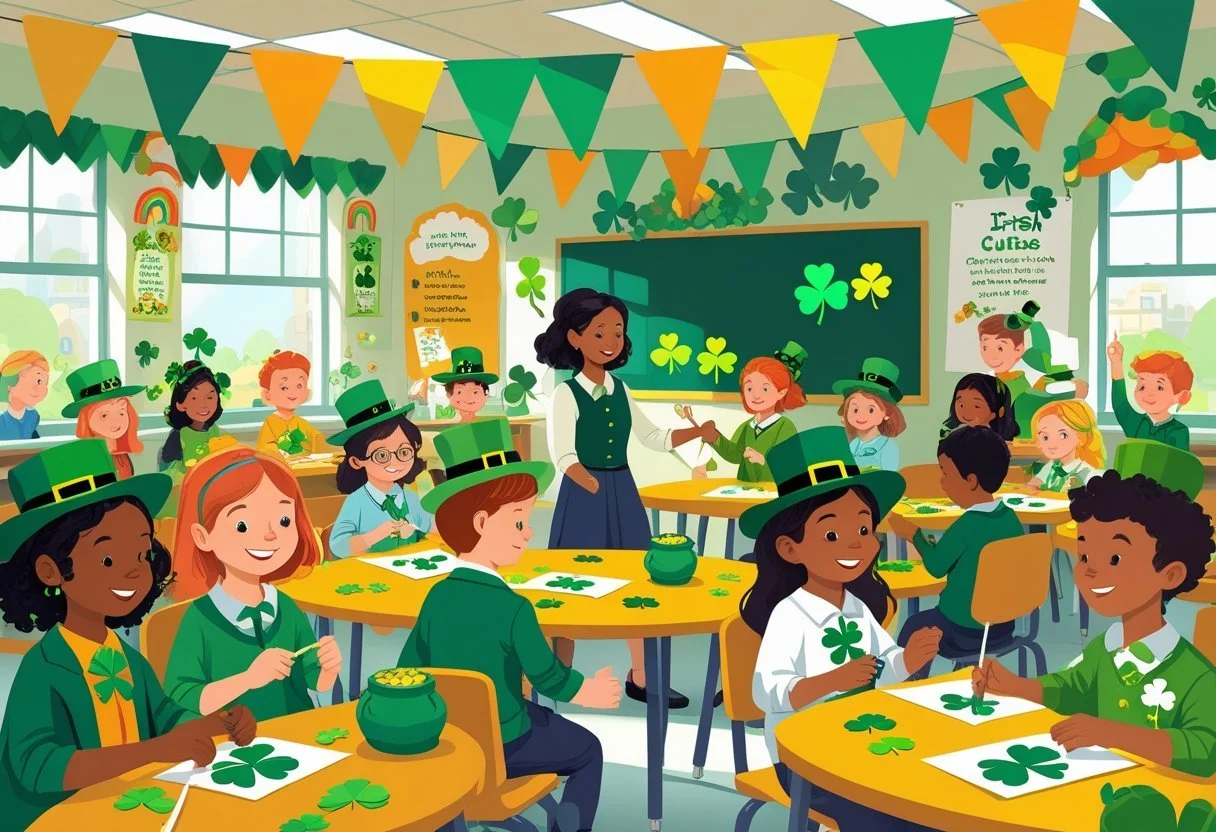
St. Patrick’s Day offers many ways for students of all ages to learn about Irish culture, history, craft-making, and more in the classroom. Teachers can use these activities to create engaging, age-appropriate lessons that are both fun and educational.
What educational activities can be incorporated into a St. Patrick's Day lesson for elementary students?
Elementary students can research Irish symbols, read Irish folktales, or solve math problems using green counters or shamrock shapes.
They might also write stories about leprechauns or explore maps to locate Ireland and learn about its geography.
How can teachers make St. Patrick's Day celebrations culturally informative for middle school students?
Middle school teachers can organize presentations on Ireland’s history, language, and music.
Class discussions about the true origins of St. Patrick’s Day, the impact of Irish immigration, or the Irish language can offer more depth.
Students may interview family members about cultural traditions or learn simple words in Irish Gaelic.
What are suitable St. Patrick's Day themed activities for kindergarten classrooms?
Kindergarten classrooms can have simple activities like coloring pages with shamrocks, rainbows, or pots of gold.
Teachers can also lead singalongs with Irish folk songs or organize a green-themed show-and-tell.
How can St. Patrick's Day be celebrated with toddlers in an educational setting?
Toddlers enjoy sensory bins with green rice or shamrock-shaped foam pieces.
They can also join in finger painting with gold and green paints or listen to simple Irish folktales read aloud by an adult.
Are there free printables available for St. Patrick's Day classroom activities?
Many educational websites offer free downloadable worksheets, coloring pages, and craft templates related to St. Patrick’s Day.
Teachers can look for printable bingo cards, math worksheets, or themed writing prompts designed for different ages.
What creative projects can students undertake to commemorate St. Patrick's Day at school?
Students can make leprechaun traps, build paper rainbows, or design their own Irish flags.
Older students may create posters about Irish inventions, write poems about spring, or perform short skits based on Irish legends.



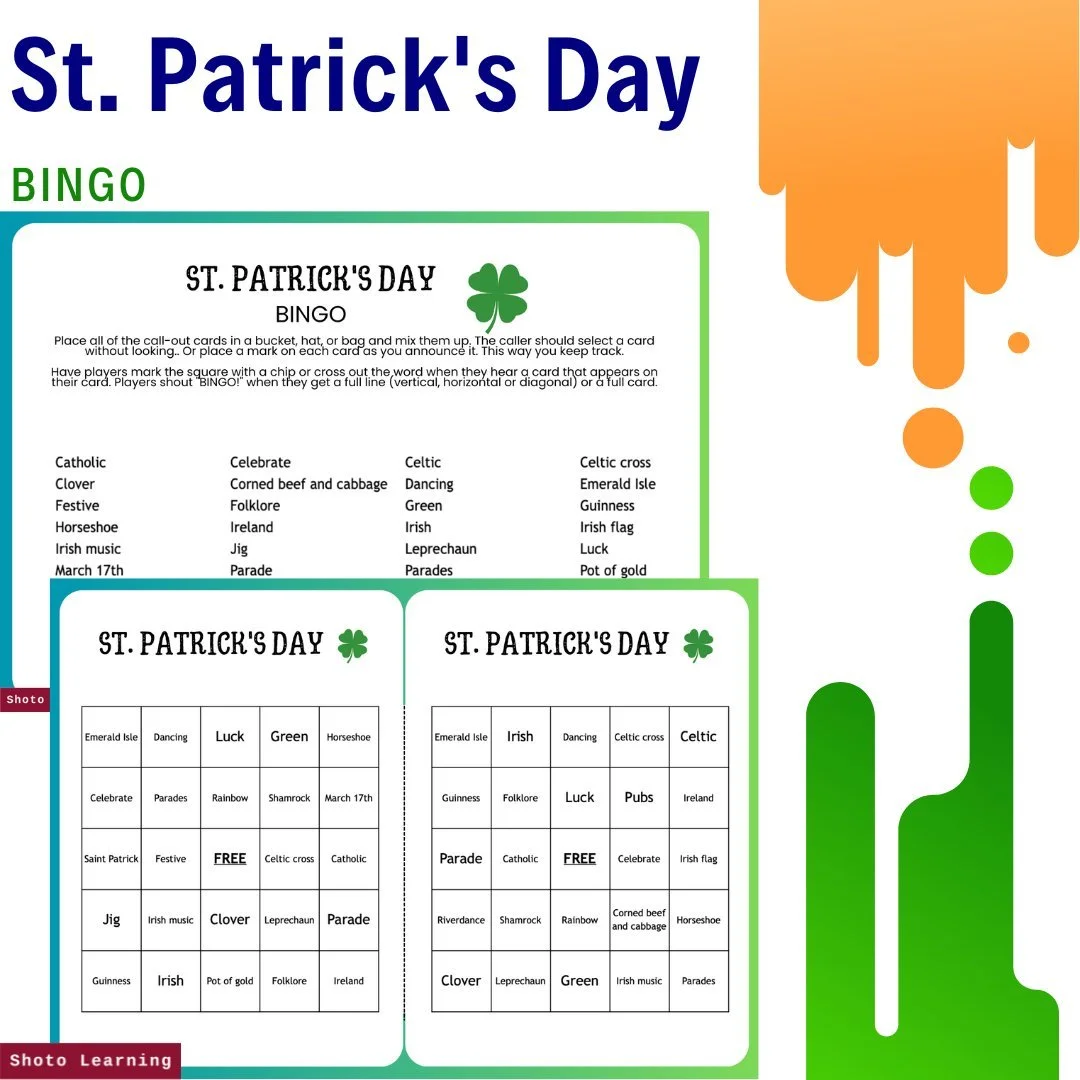


Step into the festive spirit of St. Patrick's Day like never before with our Ultimate Worksheet Bundle! Elevate the celebration with 20 dynamic activities, offering a blend of entertainment and education suitable for learners of all ages. From timeless favorites like Bingo and Crossword to brain-teasing challenges such as Cryptogram and Scramble, each activity is meticulously crafted to engage and delight. But wait, there's more! Dive into complimentary bonus activities like ABC Order, Activity Pack, Count, Letter Trace, and more, ensuring the revelry never fades. Whether for classroom instruction, homeschooling, or family bonding, our bundle is your all-in-one solution for a St. Patrick's Day to remember.
Key Features:
30 Bingo cards: Inject energy into your gathering with a spirited game of St. Patrick's Day Bingo.
Crossword, Cryptogram, and Scramble puzzles: Stimulate cognitive prowess with thought-provoking challenges.
Fill in the Blank and Missing Letters worksheets: Enhance reading comprehension with exercises tailored for language reinforcement.
Flash Cards: Foster interactive learning and expand vocabulary effortlessly.
Free ABC Order, Activity Pack, Count, Letter Trace, and Scramble worksheets: Unlock bonus rounds of fun and learning.
Lesson Plan: Seamlessly orchestrate captivating St. Patrick's Day activities with our comprehensive guide.
Matching and Multiple Choice activities: Cater to diverse learning styles for enriched experiences.
PowerPoint presentation: Immerse learners in an engaging exploration of St. Patrick's Day themes.
Test (45 minutes) and Questions & Answers sheets: Assess comprehension and consolidate knowledge.
True or False worksheets: Cultivate critical thinking skills through reflective practice.
Word Search: Embrace tradition with a classic St. Patrick's Day pursuit.
Don't let this golden opportunity slip away! Embrace the essence of St. Patrick's Day with our Ultimate Worksheet Bundle. Download now and embark on a journey filled with the luck of the Irish!
132 pages
Order your copy today!