
Gene expression is the process by which information in a gene is used to create a functional product, usually a protein. Protein synthesis, which includes transcription and translation, is central to this process because it turns genetic codes into proteins that perform vital functions in cells. Understanding gene expression and protein synthesis with simple models helps clarify how cells control and produce the proteins needed for life.

Simple models break down complex biological steps into easy-to-understand parts. These models allow researchers and students to explore how genes are turned on or off and how proteins are made from DNA instructions. By using these straightforward approaches, it becomes easier to study how different factors affect protein production and how cells respond to changes.
This approach also highlights the key stages where gene expression can be regulated. It helps scientists predict protein behavior and improve research in genetics and medicine. Using simple models makes the complex world of gene expression more accessible and opens pathways to new discoveries.
Key Takeaways
Gene expression directs protein creation from DNA instructions.
Simple models simplify the study of gene activity and protein making.
These models help show how cells control protein production.
Fundamentals of Gene Expression
Gene expression is the process cells use to turn genetic information into proteins. It involves specific steps controlled by molecular signals. This process ensures that the right proteins are made at the proper time and place.
Overview of Gene Expression Mechanisms
Gene expression starts with DNA. The information in a gene is copied to messenger RNA (mRNA) in a process called transcription. This happens inside the cell's nucleus. The mRNA then leaves the nucleus and moves to ribosomes in the cytoplasm. Here, translation takes place, where the mRNA code is used to build proteins.
Proteins carry out many cell functions like structure, enzymes, and signals. The efficiency and timing of expression depend on several factors, including the availability of RNA and ribosomes. Cells regulate which genes are expressed based on their needs and environment.
Stages of Gene Expression
Gene expression has two main stages: transcription and translation. During transcription, RNA polymerase reads the DNA sequence of a gene and creates a complementary mRNA strand. This step controls if and when a gene is used.
In the translation stage, ribosomes read the mRNA sequence three nucleotides at a time. Each three-nucleotide group, or codon, corresponds to a specific amino acid. These amino acids link together to form a protein chain. Once completed, the protein folds into its active shape.
Both stages must occur correctly for proteins to function. Errors can lead to nonfunctional or harmful proteins.
Role of Transcription Factors
Transcription factors are proteins that control gene expression. They bind to specific DNA regions near genes, helping or blocking the RNA polymerase from starting transcription.
These factors respond to signals inside and outside the cell. By turning genes on or off, they control cell growth, development, and responses to the environment. Different transcription factors work together to fine-tune which genes are active.
Without transcription factors, cells could not control which proteins to make or adjust their functions to changing conditions.
Protein Synthesis: From Genes to Proteins
Protein synthesis is the process that translates genetic information into functional proteins. This involves reading the messenger RNA (mRNA) and linking amino acids in the correct order. The ribosome plays a central role in coordinating each step.
Translation Process Overview
Translation converts the code in mRNA into a chain of amino acids to build a protein. The ribosome moves along the mRNA, reading three-nucleotide units called codons. Each codon matches a specific amino acid.
Transfer RNA (tRNA) molecules bring amino acids to the ribosome. Each tRNA has an anticodon that pairs with the mRNA codon. The ribosome joins the amino acids, forming a growing protein chain.
This process has three main stages: initiation, elongation, and termination. Initiation starts the assembly of the ribosome on mRNA. Elongation adds amino acids sequentially. Termination ends the process when a stop codon is reached.
Translation Initiation and Ribosomal Assembly
Translation begins when the smaller ribosomal subunit binds to the mRNA near a specific start codon (AUG). This marks where the protein will begin to form.
Initiation factors help bring in the first tRNA carrying methionine, the starting amino acid. Once the tRNA is correctly placed paired with the start codon, the larger ribosomal subunit attaches. This forms the full ribosome, with sites ready to receive tRNA molecules.
The ribosome has three important sites: the A (aminoacyl), P (peptidyl), and E (exit) sites. During initiation, the first tRNA occupies the P site, setting up the chain’s starting point.
Translation Elongation Dynamics
During elongation, the ribosome moves step by step along the mRNA, reading each codon. Incoming tRNAs bring amino acids to the A site based on the codon sequence.
A peptide bond forms between the new amino acid and the growing chain at the P site, lengthening the protein. Then the ribosome shifts, moving the tRNA from A to P and the empty tRNA to the E site for exit.
This cycle repeats, adding amino acids one by one. Elongation factors assist in tRNA delivery and ribosome movement to ensure accuracy and speed. The protein chain grows until a stop codon signals the process to end.
Simple Models in Gene Expression Research
Simple models help scientists understand how genes turn on and off and how proteins are made. These models focus on key parts of gene expression, such as activation and repression, without adding too much complexity. They use mathematical tools to describe the basic steps like transcription and translation.
Rationale for Using Simple Models
Simple models allow researchers to focus on essential processes in gene expression. They make it easier to study how genes are activated or repressed without dealing with every molecular detail.
By simplifying, researchers can test ideas quickly and see how changes affect gene activity or protein production. This helps in understanding patterns and general behaviors in cells.
Simple models also make teaching gene regulation and protein synthesis clearer for students and new researchers.
Key Mathematical Approaches
Mathematical equations are commonly used to represent gene expression in simple models. Differential equations describe how gene products like mRNA and proteins change over time.
The law of mass action often guides these equations, linking molecule concentrations to reaction rates. This mathematical framework helps predict gene switching patterns and protein levels under different conditions.
Two-state models are popular for showing gene activation and repression, switching between "on" and "off" states of gene promoters.
Modeling Activation and Repression
Activation involves turning a gene on to produce mRNA and proteins. Simple models represent this by increasing the rate of transcription when activator molecules are present.
Repression lowers gene activity. Models show this by decreasing transcription rates or blocking the promoter.
Together, these processes control how much protein a cell makes. Modeling them helps explain varying gene expression levels and how cells respond to signals or stress.
Gene Regulation and Control Circuits

Gene regulation determines when and how much protein is made in a cell. This happens through different control systems that respond to internal and external signals, ensuring cells adapt and function properly.
Mechanisms of Gene Regulation
Gene regulation mainly controls the production of RNA and proteins. It can work at several steps, including transcription, where DNA is copied into RNA, and translation, where RNA is used to build proteins. Cells use proteins called transcription factors to either activate or block gene expression.
Other important mechanisms include RNA splicing, RNA degradation, and protein modification. These steps adjust gene expression precisely. Timing and location of gene activity are also controlled to meet the cell's needs. This regulation helps cells respond to changes and maintain balance in protein levels.
Transcriptional Regulatory Networks
A transcriptional regulatory network consists of genes, transcription factors, and their interactions. These networks form complex circuits that decide which genes turn on or off. Feedback loops and other regulatory motifs within the network add stability and flexibility.
Such networks enable cells to process multiple signals at once and make decisions based on environmental conditions. They can also filter noise, ensuring only necessary genes are expressed. Modeling these networks helps scientists understand how gene activity patterns emerge and change.
Role of Operons
Operons are groups of genes controlled by a single promoter and are common in bacteria. They allow coordinated regulation of genes with related functions. When the operon is active, all the genes it controls are transcribed together into one messenger RNA.
The classic example is the lac operon, which controls genes needed to digest lactose. Operons provide a simple, efficient mechanism for gene regulation in prokaryotes. They help cells quickly adjust protein production based on available nutrients or other signals.
Kinetics and Dynamics of Expression
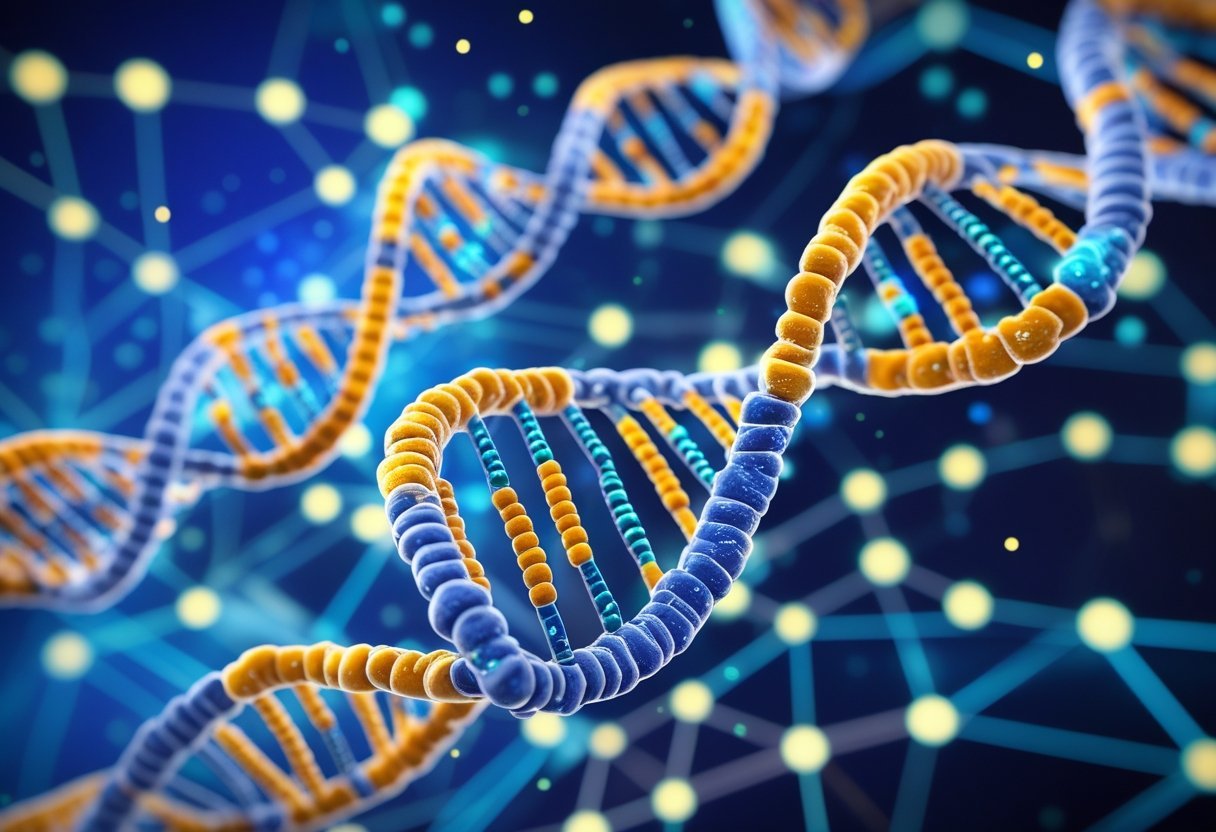
Gene expression involves precise timings and interactions that control how cells adapt and function. Key aspects include how fast gene circuits respond, how proteins break down over time, and how cells switch between different gene states.
Response Time of Gene Circuits
The response time measures how quickly a gene circuit changes its activity after a signal. It depends on multiple factors, such as the rate of mRNA synthesis and degradation, and the speed of protein production. Fast response allows cells to adapt quickly to new conditions, while slow response can filter out brief changes.
In gene circuits, delays occur at steps like transcription and translation. The accumulation of mRNA and protein adds time before the effect appears. Additionally, feedback loops can speed up or slow down this timing.
Understanding response time helps design synthetic biological systems and interpret natural behavior in cells.
Protein Degradation and Stability
Protein degradation is a key factor controlling protein levels in cells. Proteins have different lifetimes depending on their function and cellular signals. Stability determines how long a protein remains active before it breaks down.
Degradation occurs through processes such as the proteasome system, which tags and destroys proteins. Faster degradation means proteins are removed quickly, allowing rapid changes in cell state. Stable proteins remain longer, supporting sustained activity.
Protein stability influences overall gene expression dynamics because the balance between synthesis and degradation sets steady-state protein levels. Cells regulate degradation to fine-tune responses to environmental or internal cues.
Switching and Genetic Switches
Genetic switches control turning genes on or off, creating distinct states in cells. These switches rely on regulatory molecules that act like switches by binding DNA and controlling transcription.
Switching is often stochastic, meaning random fluctuations in gene expression can flip the switch. This randomness allows cells to be diverse even in identical environments.
Types of genetic switches include positive feedback loops, where protein production stimulates its own synthesis. This creates stable “on” or “off” states, which are important in development and cell differentiation.
Switches can also respond to signals, enabling cells to change behavior quickly in reaction to environmental changes.
Modeling Translation and Ribosome Function
Translation involves the ribosome reading mRNA to build proteins. Models of this process focus on the movements and interactions of ribosomes on mRNA and how factors like codon usage and resource availability affect protein output.
Biophysical Models of the Ribosome
Biophysical models simulate the step-by-step movement of ribosomes along mRNA. These models incorporate biochemical reactions such as initiation, elongation, and termination. They account for ribosome binding rates, codon translation speeds, and energy use.
Some models use stochastic methods to capture the randomness inherent in ribosome kinetics. This lets researchers study how ribosomes compete for mRNA and factors influencing translation rates.
These models also consider ribosome collisions and pauses, which affect protein synthesis efficiency. By including such details, biophysical models help explain how molecular mechanisms control protein production in cells.
Translation Efficiency Analysis
Translation efficiency depends on key parameters such as initiation rate and ribosome density. Models analyze how changes in these parameters impact the overall protein synthesis.
Researchers use ribosome profiling data to measure ribosome occupancy on mRNA. This data helps identify which steps of translation limit efficiency.
Parameters like codon usage and tRNA availability influence elongation speed, but optimizing these alone may not improve efficiency. Initiation often controls the maximum protein output, making it a critical target for regulation.
Understanding translation efficiency helps in genetic engineering and disease studies by revealing bottlenecks in protein production.
Modern Techniques for Studying Protein Synthesis
Modern methods analyze how RNA is translated into proteins, focusing on the activity of ribosomes and the translation process. These techniques reveal which parts of RNA are being actively read to produce proteins and can measure translation efficiency across different genes.
Polysome Sequencing and Profiling
Polysome sequencing studies messenger RNA (mRNA) molecules that are bound by multiple ribosomes, called polysomes. When many ribosomes attach to a single mRNA, it indicates active protein production. By separating these polysomes from free ribosomes or single ribosomes, researchers can see which mRNAs are heavily translated.
The method involves isolating polysomes through techniques like density gradient centrifugation. Then, RNA sequencing identifies the exact mRNAs in these complexes. This lets scientists measure how much each gene is being translated, offering insights into the regulation of gene expression at the protein synthesis level.
Ribo-seq and Ribosome Profiling
Ribo-seq, or ribosome profiling, is a precise method that maps the exact positions of ribosomes on mRNA molecules. It works by digesting unprotected RNA, leaving only fragments shielded by the ribosome. Sequencing these fragments shows which parts of the mRNA are currently being translated.
This technique provides a snapshot of translation at a high resolution, revealing start sites, pause sites, and ribosome density on different genes. It allows researchers to study translation kinetics and how protein production responds to cellular signals or stress. Ribo-seq has become a critical tool in understanding gene expression beyond RNA levels.
Applications of Simple Models in Translational Research
Simple models of gene expression and protein synthesis help researchers study complex biological processes by breaking them down into understandable parts. These models guide experiments and improve predictions in medical and biotechnological fields. They focus on specific steps like transcription, translation, and protein degradation to reveal important details.
Insights into Disease Mechanisms
Simple models show how changes in gene expression can lead to disease. They help identify how proteins are made incorrectly or in the wrong amounts, which is critical in diseases like cancer or genetic disorders. By modeling translation rates and mRNA stability, researchers can link molecular changes to health outcomes.
These models also assist in testing how mutations affect protein synthesis. They provide data on ribosome activity and translation initiation, revealing bottlenecks in protein production. This helps design targeted treatments by correcting faulty gene expression or controlling protein levels in cells.
Biotechnology and Synthetic Biology
In biotechnology, simple models are used to optimize protein production. They guide the design of synthetic gene circuits that can efficiently produce proteins in cell-free or living systems. By understanding translation kinetics and codon usage, scientists improve yield and function of engineered proteins.
Synthetic biology uses these models to design and control artificial systems for drug manufacturing or vaccine development. Modeling helps predict how changes in mRNA or ribosome interactions affect protein output. This supports scalable and controllable production platforms for industrial and research applications.

Limitations and Challenges of Current Models
Models of gene expression and protein synthesis offer valuable insights but often face trade-offs between simplicity and accuracy. They also struggle to fully represent the complexity found in real biological systems.
Accuracy vs. Simplicity
Simple models are easier to use and interpret but often miss vital details. For example, many models do not account for protein costs, enzyme kinetics, or limits on cell resources. This can lead to inaccurate predictions about how genes express proteins in living cells.
More complex models aim to include these factors but require large amounts of data and computational power. Deep learning approaches improve prediction accuracy but depend heavily on quality and quantity of training data. Balancing detailed representation with practical usability remains a core issue.
Key challenges include:
Capturing dynamic protein synthesis rates
Including regulation by untranslated regions in mRNA
Modeling variability across different cell types or conditions
Scaling from Model to Real Systems
Applying models to actual biological systems introduces many difficulties. Real cells have complex feedback loops, varying environments, and physical constraints that models often oversimplify or ignore.
Genome-scale models can provide a broad overview but may fail to predict protein expression under changing conditions accurately. Moreover, transferring predictions from model organisms to others is limited because of species-specific differences in gene regulation.
Important factors affecting scalability:
Cell surface and volume limits on protein concentration
Differences in enzyme efficiency and availability
Environmental stresses impacting gene expression
These challenges mean that while models guide experiments, their results often require validation in living systems.
Future Directions in Gene Expression and Protein Synthesis Modeling
Modeling gene expression and protein synthesis is becoming more detailed and accurate. New tools and data types help deepen understanding of how genes behave and how proteins are made. Progress in data integration and computational methods will shape the future of this field.
Integrative Multi-Omics Approaches
Combining different types of biological data—such as genomics, transcriptomics, and proteomics—allows researchers to build better models. This multi-omics approach links gene activity directly with protein outcomes, offering a clearer picture of biological processes.
It helps identify how changes in mRNA levels affect protein abundance and their interactions. By integrating data, scientists can capture complex regulatory networks. This approach also deals with variations caused by environmental factors or diseases.
Multi-omics data integration helps improve the accuracy of predictions. It also aids in targeting specific pathways for therapy or biotechnology. Overall, this approach makes modeling more reliable and biologically relevant.
Advances in Computational Modeling
Mathematical and computational models of gene expression are improving rapidly. New methods use both analytical equations and machine learning to simulate protein synthesis more precisely.
For example, models now incorporate translation initiation rates and codon usage, which control how fast proteins are made. These models use ribosome profiling data to predict protein production under different conditions.
Data-driven models are combined with physical principles to create hybrid approaches. These models are useful for cell-free systems and in silico experiments. They allow virtual tests before lab experiments, saving time and resources.
Improvements in model design help in understanding diseases and designing novel proteins. Better computational tools provide faster and more detailed results, moving the field forward.
Frequently Asked Questions
This section explains how ribosomes work during protein synthesis and outlines the key steps of gene expression. It also covers how environmental factors can change gene activity, the role of mRNA, how transcription factors control genes, and the importance of the genetic code.
How do ribosomes contribute to protein synthesis?
Ribosomes read the sequence of mRNA and link amino acids together to form a protein. They match each three-base codon on the mRNA to the correct amino acid using tRNA.
What are the main steps involved in gene expression?
Gene expression starts with transcription, where DNA is copied into mRNA. Then, translation occurs, and the mRNA code is used to build a protein.
Can gene expression be affected by environmental factors?
Yes. Factors like temperature, chemicals, and nutrients can turn genes on or off, changing how much protein is made.
What role does mRNA have in the synthesis of proteins?
mRNA carries the genetic information from DNA in the nucleus to the ribosomes in the cytoplasm. It serves as the template that guides protein assembly.
How do transcription factors regulate gene expression?
Transcription factors bind to specific DNA regions to help start or stop transcription. They control when and how much a gene is expressed.
What is the significance of the genetic code in protein synthesis?
The genetic code is the set of rules that converts codons in mRNA into specific amino acids. It ensures proteins are made correctly with the right sequence of amino acids.
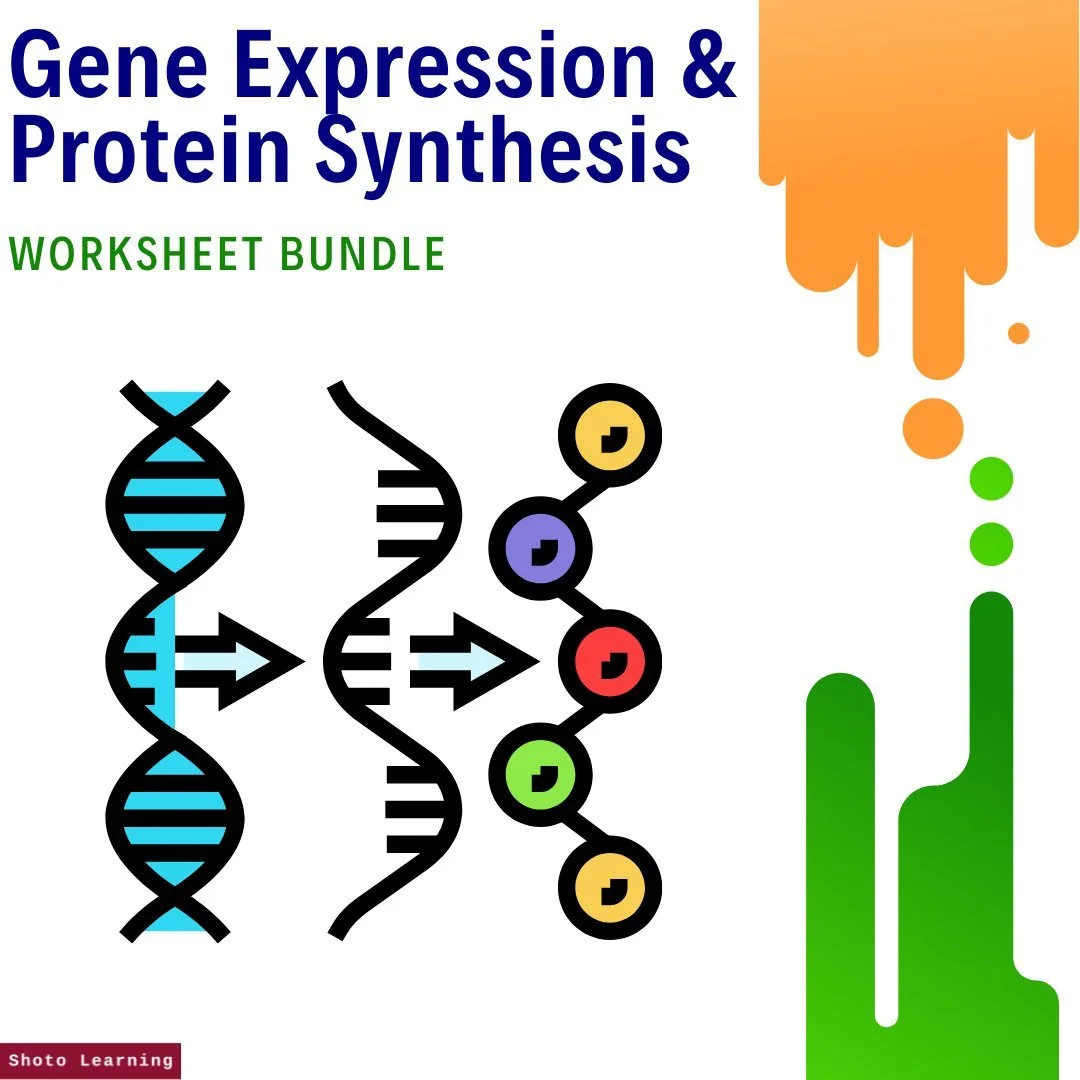


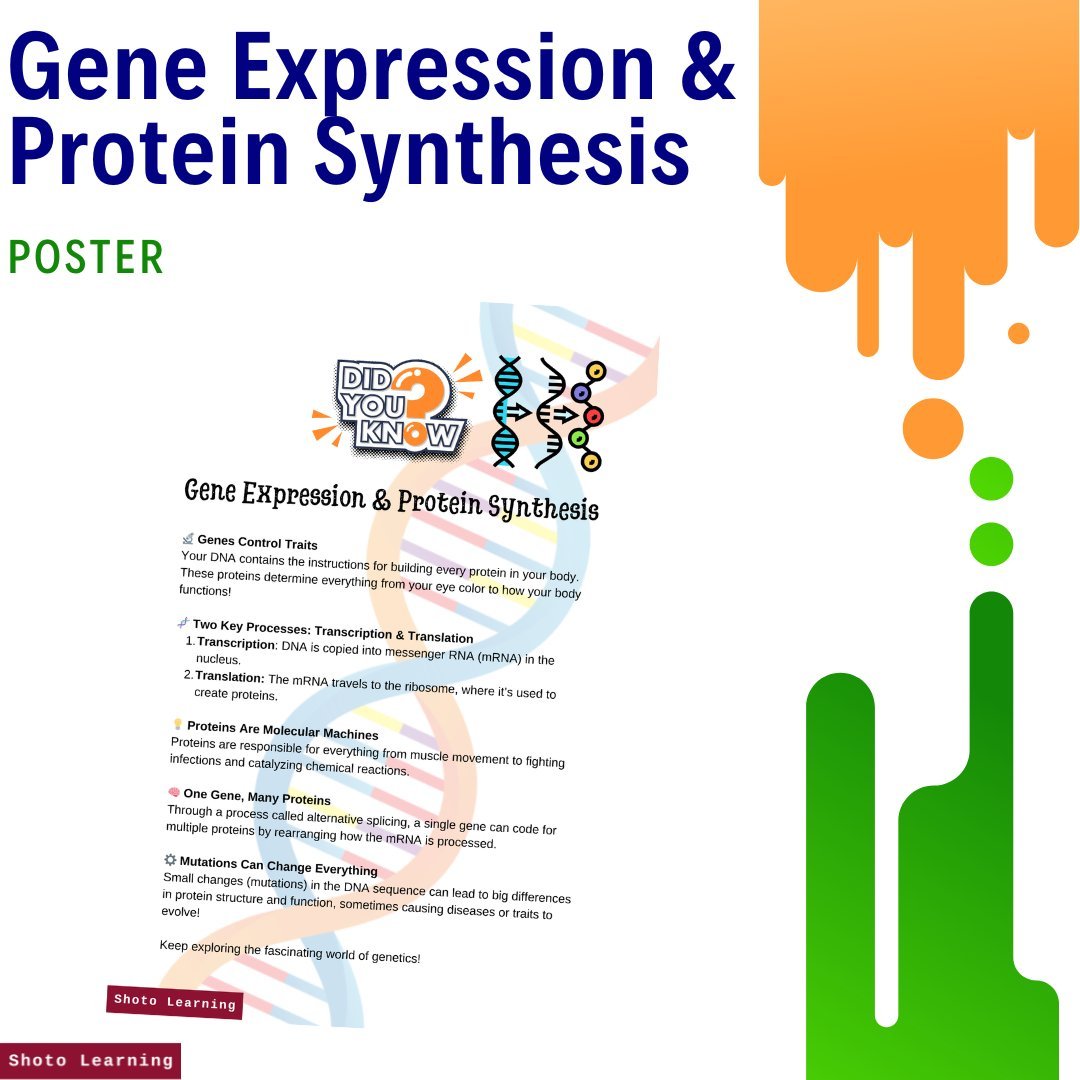


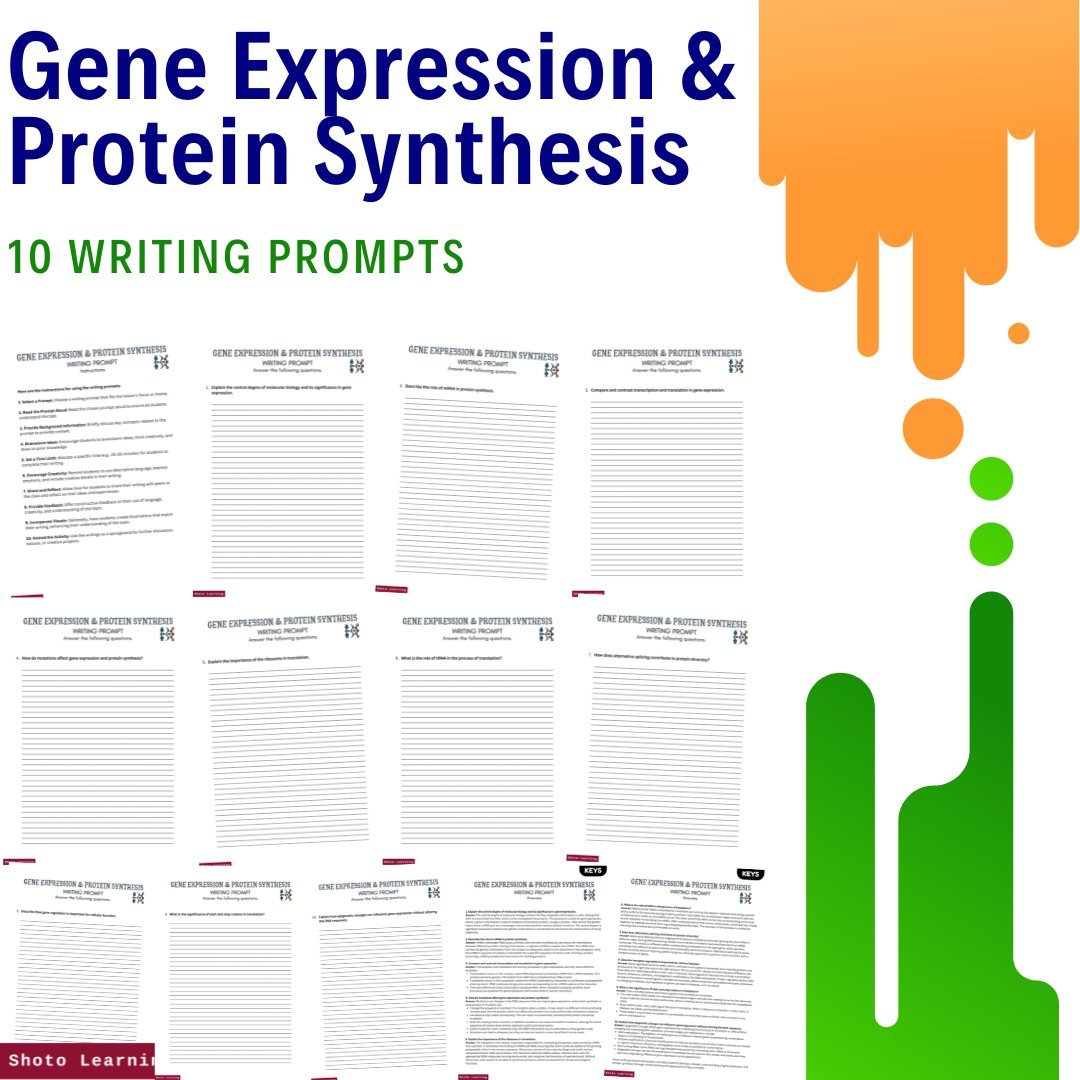


Unlock a comprehensive learning experience with our Complete Gene Expression & Protein Synthesis Bundle. This all-in-one package includes a diverse array of educational materials designed to engage students and deepen their understanding of gene expression and protein synthesis. Perfect for educators and students alike, this bundle offers everything from interactive activities and quizzes to detailed lesson plans and visual aids.
Key Features:
Variety of Activities: Includes Assignment, Bingo, Crossword, Cryptogram, Debate, Experiment, Fill-in-the-Blank, and more.
Comprehensive Resources: Comes with Flashcards, Lesson Plan, Matching, Missing-Letters, Multiple-Choice Questions, PowerPoint Presentation, Questions-&-Answers, Reading Comprehension, Scramble, Test, True-or-False Questions, Word Search, and Writing Prompts.
Supplemental Materials: Features Free ABC Order, Free Flashcards, and a Free Poster to enhance learning and engagement.
Engaging Formats: Designed to accommodate different learning styles and preferences, from hands-on experiments to interactive games and quizzes.
How to Use It:
Plan Lessons: Use the Lesson Plan and PowerPoint Presentation to structure your teaching sessions and introduce key concepts.
Engage Students: Incorporate activities like Bingo, Crossword, and Debates into your lessons to make learning interactive and fun.
Assess Understanding: Utilize Tests, Multiple-Choice Questions, and True-or-False activities to evaluate students’ grasp of the material.
Reinforce Learning: Employ Flashcards, Word Searches, and Writing Prompts to reinforce key concepts and vocabulary.
Enhance Learning: Use Free Flashcards and the Free Poster as visual aids and study tools to support student comprehension.
Equip yourself with this all-encompassing bundle to create a dynamic and effective learning environment for mastering gene expression and protein synthesis!
Pages: 139 pages
Order your copy today!