
Fun Money Math Activities for Real-World Practice Enhancing Financial Skills in Everyday Life
Teaching money math through fun activities helps kids learn skills they will use every day. Hands-on games and real-life examples like shopping or budgeting make money concepts easier to understand and remember. These activities allow children to practice counting coins, making change, and planning simple budgets in ways that feel natural and useful.
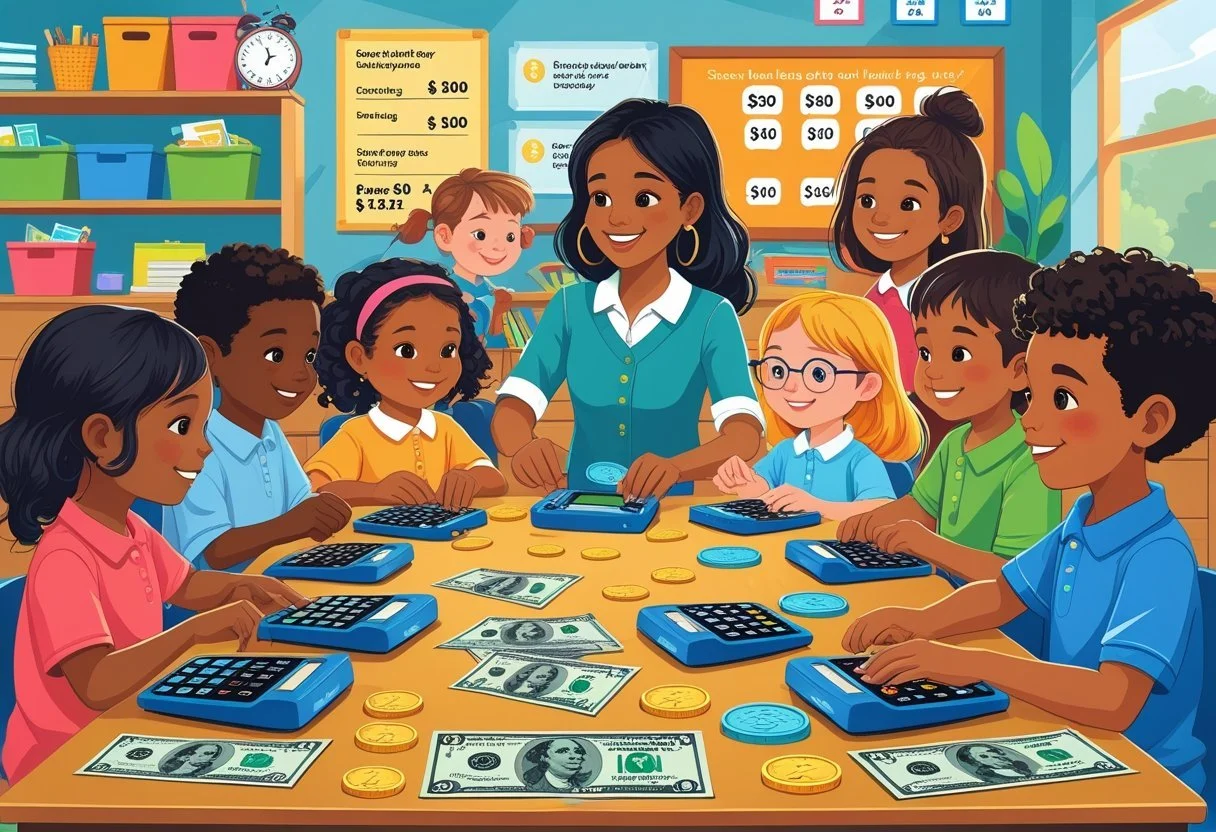
Using play money, menus, or grocery lists creates real-world situations that build confidence and prepare kids for managing money outside the classroom. This approach keeps learning active and engaging, helping students see how math fits into daily life.
Key Takeaways
Kids learn best when money math relates to real situations.
Interactive activities make practicing money skills more effective.
Building confidence with money helps prepare for future financial skills.
Getting Started With Money Math
Using play money, menus, or grocery lists creates real-world situations that build confidence and prepare kids for managing money outside the classroom. This approach keeps learning active and engaging, helping students see how math fits into daily life.
Key Takeaways
Kids learn best when money math relates to real situations.
Interactive activities make practicing money skills more effective.
Building confidence with money helps prepare for future financial skills.
Getting Started With Money Math
Learning to recognize and understand money is a key skill for children. This includes knowing different coins and bills, their values, and how to tell them apart. Activities with real or plastic coins and bills make these lessons easier and more practical.
Coin Identification Made Fun
Children begin by learning to identify coins like pennies, nickels, dimes, and quarters. Each coin has a unique size, color, and design, which helps differentiate them. Using plastic coins or real coins in games can make this process more enjoyable.
Hands-on activities like sorting coins by type or matching coins to their names engage kids. Visual aids, such as charts showing coin pictures and names, support faster recognition. This skill helps build confidence in handling money daily.
Recognizing Coin Values
Understanding the value of each coin is essential. A penny is worth 1 cent, a nickel 5 cents, a dime 10 cents, and a quarter 25 cents. Teaching children to add these values helps with counting money accurately.
Simple exercises can include counting groups of coins and comparing amounts. Using real-world examples, like paying for items or making change, connects coin values to everyday use. Practice with both coins and visual tools improves this skill.
Exploring Dollar Bills
Beyond coins, dollar bills come in various amounts, such as $1, $5, $10, and higher. Recognizing these bills involves learning their size, color, and distinct features like portraits and numbers.
Hands-on activities with real or play bills boost familiarity. Children learn to match bills with prices or simulate transactions. This helps them understand larger money values and supports skills like budgeting and spending.
Basic Money Math Skills
Learning to work with money involves understanding how to add and subtract coins and bills accurately. These skills build the foundation for handling real-world money tasks like shopping, budgeting, and making change.
Addition With Coins and Bills
Adding coins and bills requires knowing the value of each type. For example, pennies are worth 1 cent, nickels 5 cents, dimes 10 cents, and quarters 25 cents. When adding different coins, it helps to group similar values first.
Using simple addition, the child counts the total value:
3 quarters = 75 cents
2 dimes = 20 cents
4 pennies = 4 cents
Adding these gives 75 + 20 + 4 = 99 cents.
Practicing with paper money is important too. Adding dollar bills is similar to adding ones, tens, or hundreds in basic addition. Starting with small amounts helps prevent confusion.
Subtraction and Making Change
Subtraction with money focuses on figuring out how much money is left after a purchase. This also teaches how to make change correctly. If an item costs 43 cents and a person pays with 50 cents, they subtract 43 from 50 to find the change: 7 cents.
It helps to break down the subtraction into smaller steps, such as subtracting tens then ones. Visual aids like coins can make this clearer.
Making change involves giving back the correct coins to match the difference. For example, 7 cents change can mean 1 nickel and 2 pennies. Teaching this supports not just subtraction but also real-life decision-making with money.
Hands-On Activities and Games
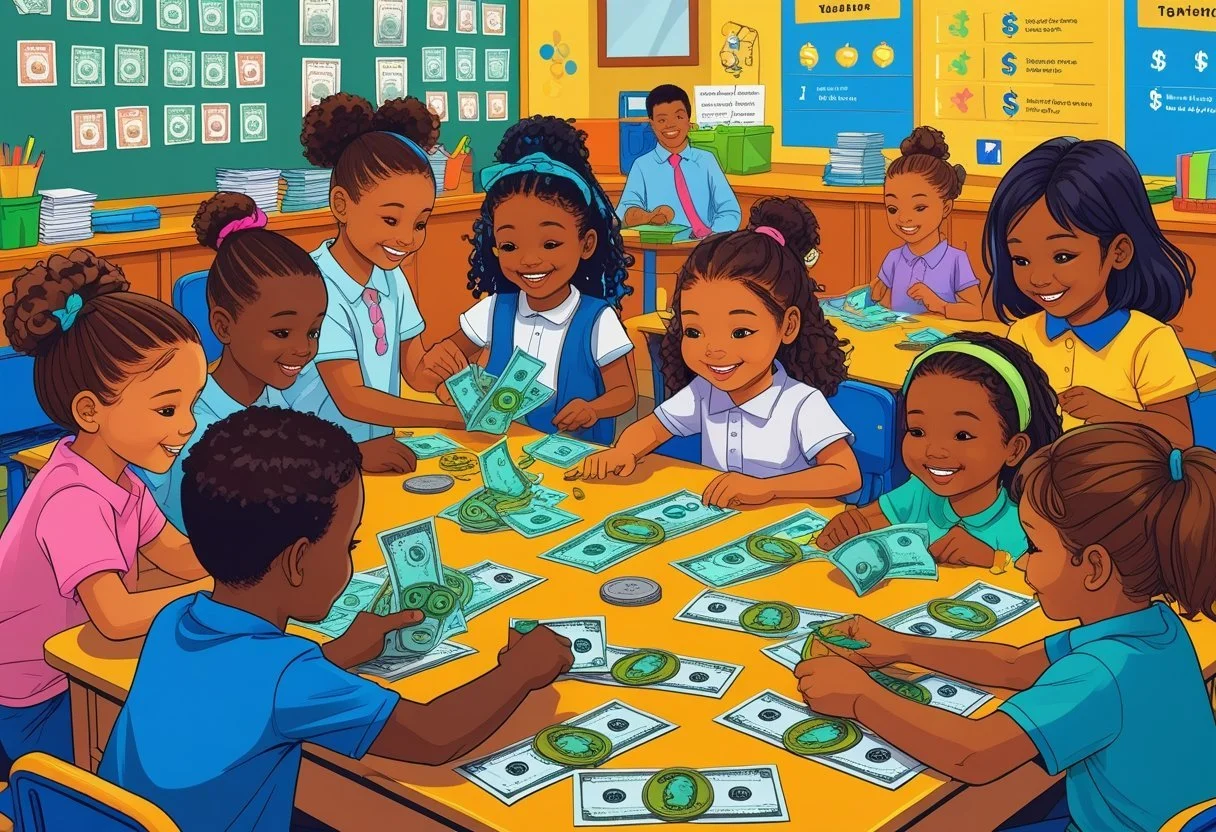
Hands-on activities help children develop important money skills by making math concrete and interactive. Using physical objects and organized learning spaces allows students to practice counting, sorting, and using money in ways they can see and touch.
Using Manipulatives for Learning
Manipulatives like plastic coins and play bills give children a real feel for money. These tools help with coin identification and counting, which are key for building early math skills. Students can handle different coins to learn their value and practice making exact amounts.
Teachers often use manipulatives to create scenarios where children buy or trade items. This encourages them to think critically about saving, spending, and making change. The tactile experience increases engagement and helps kids remember concepts better than just working with pictures or numbers.
Classroom Money Centers
Classroom money centers are dedicated areas where students focus on practicing money skills. These centers typically contain manipulatives, worksheets, and games designed for small group work or independent practice.
Centers allow students to work at their own pace and apply skills like budgeting and transaction calculations. Teachers can include tasks such as matching coins to prices, adding up total costs, or role-playing real-life shopping. These activities encourage repeated practice and build confidence handling money effectively.
Interactive Coin Sorting
Interactive coin sorting helps children learn to quickly identify and organize coins by value. Activities might involve sorting a pile of mixed coins into groups or matching coins to price tags.
Using sorting trays or mats makes this process clear and hands-on. Sorting sharpens observation and classification skills while reinforcing knowledge of coin sizes, colors, and values. This skill supports faster calculation in real-life situations like shopping or saving.
Real-World Money Math Scenarios
These activities help students practice counting money, making decisions about spending, and understanding prices. They use common situations where money is handled, such as shopping or paying for food, to teach key math skills. This builds both confidence and real-life money skills.
Role-Playing and Shopping Games
Role-playing activities simulate grocery shopping. Students can use play money, price tags, and shopping baskets to practice addition and subtraction while buying items. They learn to calculate the total price and figure out change.
Teachers can create different levels of difficulty by varying the types of coins and bills students use. This lets beginners focus on simple coins, while advanced learners work with more complex amounts.
These games also teach budgeting by giving students a set amount of money to spend. They must decide what to buy without going over budget, helping them understand the value of money in everyday life.
Restaurant and Café Math Practice
Restaurant math activities involve taking orders, adding item prices, and calculating totals, including tax and tips. Students practice addition and multiplication in a real-world context.
They also learn about responsible spending by comparing menu prices and choosing meals within a budget. This helps develop smart money habits.
Using pretend menus and bills, students role-play customers and servers. This interactive method allows hands-on learning about money exchange and reinforces financial literacy skills in an engaging way.
Budgeting for Kids
Budgeting helps children learn how to plan their money and make good decisions. It teaches basic money skills like tracking spending and saving for goals. Understanding what money is for and how to divide it into parts is key to building financial literacy.
Creating Simple Budgets
Kids can start budgeting by listing where their money comes from and where it goes. This can include allowance, gifts, or money earned from chores. Then, they divide their money into categories such as saving, spending, and sharing or donating.
Using a chart or table can help visualize this:
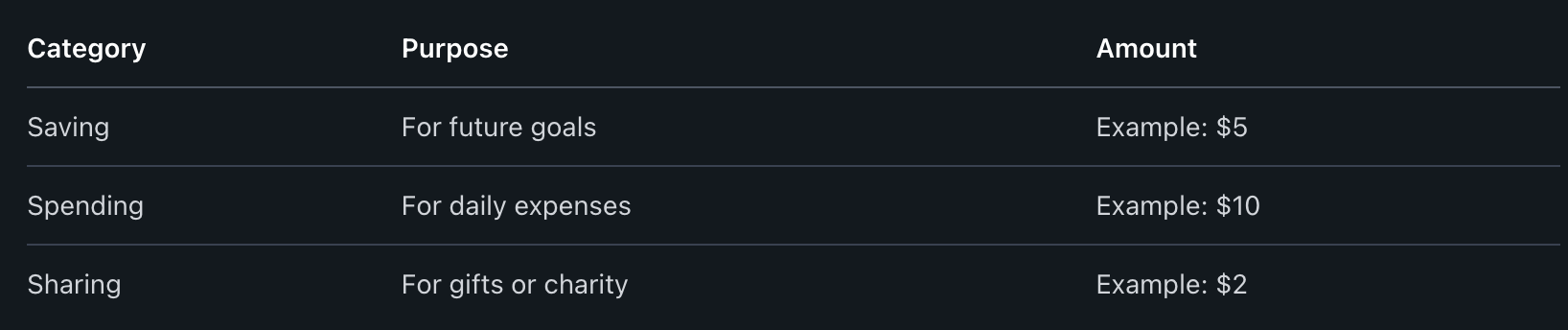
Kids should track their spending to see if they stick to their budget. This hands-on approach helps them understand budgeting as a real skill, not just math problems.
Understanding Needs vs. Wants
Teaching children to tell the difference between needs and wants is important. Needs are items necessary for survival, like food or clothing. Wants are things that are nice to have but not essential, such as toys or sweets.
Parents and teachers can guide kids by asking questions like:
Is this something I must have?
Can I wait to buy it later?
This practice helps children make smarter spending choices. By focusing on needs first, they learn to control impulses and prioritize their money, building a strong foundation in money concepts.
Building Advanced Money Skills
Learning to handle more complex money tasks is important for strengthening financial literacy. This includes understanding how to use credit cards and checks properly, as well as making smart saving and spending choices. These skills prepare students to manage money responsibly in real life.
Handling Credit Cards and Checks
Teaching students about credit cards involves explaining how they work, including the idea of borrowing money that must be paid back with interest. They need to know the importance of making payments on time and how late payments can hurt credit scores. Simulating credit card use through role-play or classroom activities helps them practice.
Checks are less common but still useful. Learning to write and manage checks teaches accuracy and record-keeping. Students can practice filling out checks, keeping track of balances, and understanding bank statements. Both credit cards and checks require attention to detail to avoid mistakes or fraud.
Saving and Spending Decisions
Students must learn to balance saving with spending. Activities that include budgeting exercises, like setting aside part of their money for future needs, improve decision-making skills. They also practice comparing prices and planning purchases to avoid impulse buys.
Teaching the concept of trade-offs is key. For example, if a student spends more now, they save less for later goals. Using real-life scenarios encourages thinking about needs versus wants and the value of saving for emergencies or larger purchases. This helps develop responsible money habits.
Frequently Asked Questions
Teaching kids how to make change involves clear steps and practice with real coins. Using actual buying and selling situations helps children understand money exchanges better.
What are effective ways to teach kids about making change?
Start by showing the total cost and the amount given. Guide the child to subtract and count back the change using coins.
Role-playing store settings lets kids practice making change with peers or adults. Practice with real or play money increases confidence.
How can I incorporate real-world scenarios into money math lessons?
Use familiar activities like shopping, eating out, or paying bills. For example, calculate totals from a menu or grocery receipt.
Creating scenarios like “buying snacks with a budget” helps children apply math in real life. It also teaches decision-making with money.
What are some interactive money math activities for elementary students?
Games that involve counting money, such as “store” or “restaurant,” engage students actively. Sorting coins and bill identification are useful hands-on tasks.
Adding money board games or card games can boost skills in a fun way. Use flashcards for matching coin values and simple calculations.
Can you suggest resources for printable money math worksheets?
Many education sites offer free printable worksheets for coin recognition, counting, and making change. Look for grade-level appropriate materials.
Worksheets that include word problems about spending and saving are helpful. They support practice in understanding money in different contexts.
What online games are recommended for reinforcing money counting skills?
Websites with interactive money games help kids learn through play. Games that simulate shopping or counting coins improve speed and accuracy.
Games should offer levels from basic coin identification to making change and budgeting. They work well on computers and smartphones.
How do I use money manipulatives to teach budgeting and saving concepts?
Use real or play coins and bills to simulate earning and spending. Set limits and goals to demonstrate budgeting basics.
Encourage children to plan purchases and track savings using manipulatives. This hands-on approach makes abstract ideas like saving more concrete.

Introduce young learners to essential math concepts with this FREE Pre-K Math Bundle! Designed for parents and teachers, this engaging resource helps children build foundational skills through interactive activities.
✔️ Numbers & Counting – Recognize and identify numbers
✔️ Money & Classification – Learn to classify coins and bills
✔️ Comparing & Positioning – Understand size, position, and contrast
✔️ Shapes & Patterns – Identify and differentiate basic shapes
✔️ 17 Printable Worksheets – Includes answer key for easy learning
Make math fun and accessible with hands-on activities that encourage early numeracy skills!
Package includes:
17 Worksheets
Key Answers
Order your copy today!
Related products:
Complete Pre-K Bundle – 212 Pages

Introduce your preschoolers to basic money concepts with this fun set of worksheets, designed for young learners to explore coins and their values.
Key Features:
Coin identification for Penny, Nickel, Dime, and Quarters
Easy-to-follow activities like matching, coloring, and counting
Perfect for beginners to master money recognition
Interactive and colorful, ideal for classroom or homeschool use
Includes a variety of exercises to engage kids and help them practice basic math skills
These worksheets make learning fun and easy, helping children gain confidence in their coin skills, preparing them for kindergarten!
Package
Page 1 - Coin Identification
Page 2 - Penny and Nickel - Match back to front
Page 3 - Penny and Nickel - Identify
Page 4 - Penny and Nickel - Cut and paste
Page 5 - Dime and Quarters - Circle
Page 6 - Dime and Quarters - Cut and Paste
Page 7 - Dime and Quarters - Match back to front
Page 8 - Penny, Nickel, Dime, and Quarters - Circle
Page 9 - Penny, Nickel, Dime, and Quarters - Circle
Page 10 - Penny, Nickel, Dime, and Quarters - Count
Page 11 - Penny, Nickel, Dime, and Quarters - Color
Page 12 - Penny - Count and circle
Page 13 - Penny - Count and write the answer
Page 14 - Penny, Nickel, Dime, and Quarters - Circle
Page 15 - Penny, Nickel, Dime, and Quarters - Cut and paste
Page 16 - Penny, Nickel, Dime, and Quarters - Cut and paste
Order your copy today!
Related products:
Complete Pre-K Bundle – 212 Pages

Give your child a strong math foundation with this Pre-K Math Bundle, covering essential early skills like number recognition, shapes, sizes, and comparisons. This bundle includes engaging worksheets, activities, and games to make learning fun and effective.
Key Features:
Covers essential Pre-K math skills: Numbers, counting, classifying, comparing, position, size, shape, and money.
Interactive learning: Fun activities and engaging worksheets to boost early math confidence.
Perfect for beginners: Simple, structured, and easy-to-follow exercises.
Ideal for home and classroom use: Great for preschool lessons, homeschooling, and extra practice.
How to Use:
Daily Practice: Assign one worksheet or activity per day.
Hands-on Learning: Use interactive games to reinforce concepts.
Skill Assessment: Track progress with structured exercises.
Flexible Learning: Suitable for independent work or guided lessons.
Order your copy today!
Math BUNDLE Worksheets include 16 topics:
Number 1-3 Worksheets – 15 Pages
Number 1-5 Worksheets – 25 Pages
Number 1-10 Worksheets – 17 Pages
Number 1-20 Worksheets – 13 Pages
Comparing – 12 Pages
Position – 8 Pages
Classify – 9 Pages
Patterns – 8 Pages
Size – 10 Pages
Money – 16 Pages
Flat Shapes – 13 Pages
Solid Shapes – 12 Pages
Adding Up to 5 – 16 Pages
Adding Up to 10 – 16 Pages
Subtract up to 5 – 11 Pages
Subtract up to 10 – 11 Pages