
Fun Worksheets and Labs for the Respiratory System Engaging Activities to Enhance Student Learning
Learning about the respiratory system doesn't have to be boring. Fun worksheets and hands-on labs can help students really understand how the respiratory system works and keep them interested in the lesson. These activities offer a simple way to explore how we breathe, how our lungs function, and why our bodies need oxygen.
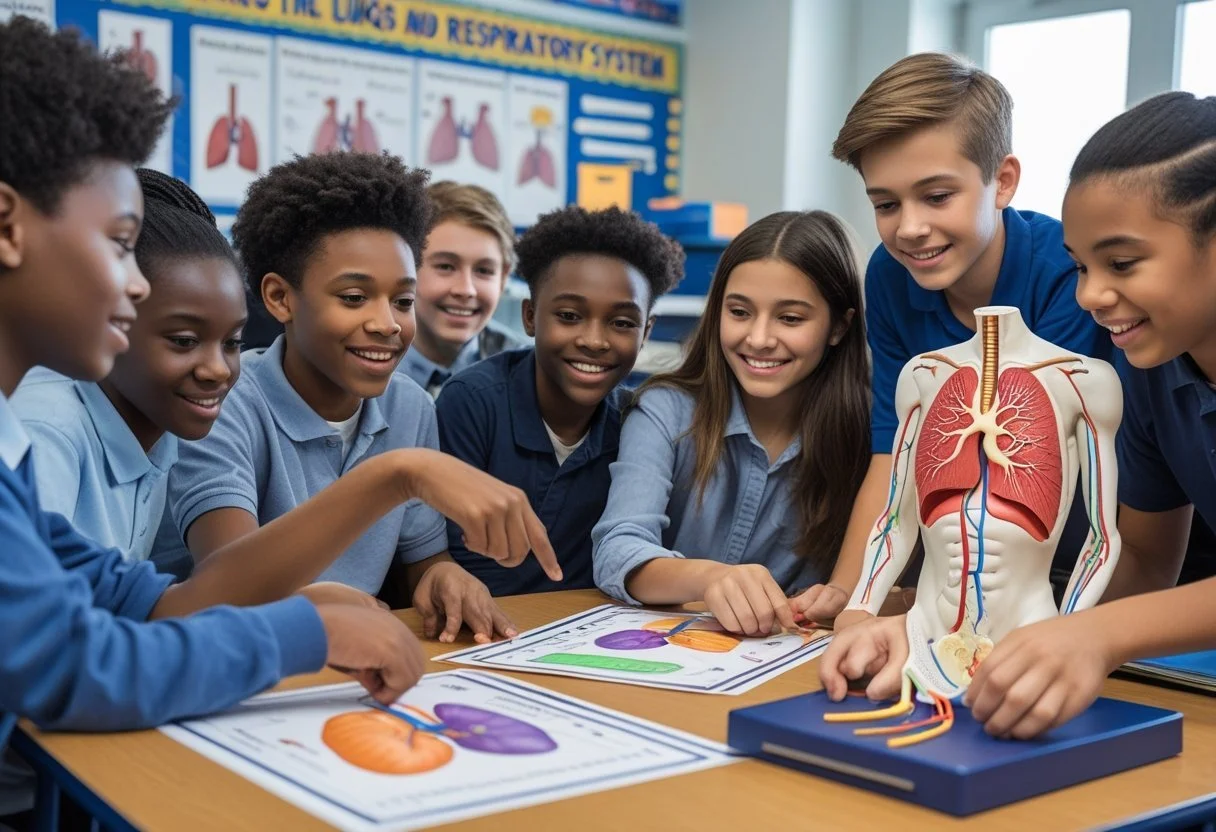
Teachers and students can use creative labs, interactive worksheets, and easy projects to make complex ideas easier to grasp. By using engaging resources, students are able to visualize the anatomy and functions of the respiratory system and connect what they learn to real life.
Key Takeaways
Fun worksheets and labs make learning about the respiratory system interesting and clear.
Creative activities help students understand how the respiratory system works.
Using engaging resources supports better understanding and retention.
Engaging Respiratory System Worksheets
Respiratory system worksheets help students understand how breathing works in the human body. Well-designed worksheets offer practice, reinforce terms, and allow hands-on labeling for improved learning outcomes.
Printable Worksheet Collections
Many printable worksheet collections cover all key areas of the respiratory system. These collections often include diagrams for labeling parts like the lungs, trachea, and alveoli.
Some sets provide word searches, crosswords, and matching games that help reinforce vocabulary, such as “bronchi,” “diaphragm,” or “oxygen exchange.” Worksheets may also include fill-in-the-blank questions about the path air takes or steps in inhalation and exhalation.
Structured worksheet sets save teachers planning time. Often, these printables are organized by topic or grade, making it easy to select appropriate activities for middle school science classes.
Worksheet Types and Formats
Respiratory system worksheets come in several types and formats. Common types include:
Labeling Diagrams: Students fill in names for parts like the nose, lungs, or alveoli.
Vocabulary Puzzles: Crosswords and word searches encourage mastery of key terms.
Sequencing Activities: Arrange the steps of breathing or the oxygen pathway in order.
Short Answers: Direct questions test understanding of concepts like gas exchange.
Formats vary from single-page printouts to full activity packets. Many worksheets use simple images, bullet points, and clear instructions. Some may offer interactive versions for digital classrooms, supporting both in-person and remote learning.
Using Worksheets in Lesson Plans
Teachers can use respiratory system worksheets in several ways. Worksheets work as class warm-ups, homework assignments, or group activities. A diagram labeling worksheet might start a lesson to help students recall lung anatomy.
Vocabulary puzzles reinforce terms after lessons. Sequencing and short answer worksheets are useful for reviewing complicated topics like how oxygen is transported in the blood.
Worksheets also support science notebooking and hands-on labs. Teachers can combine coloring sheets, diagrams, and questions to create well-rounded lesson plans that support different learning styles.
Creative Labs and Hands-On Activities
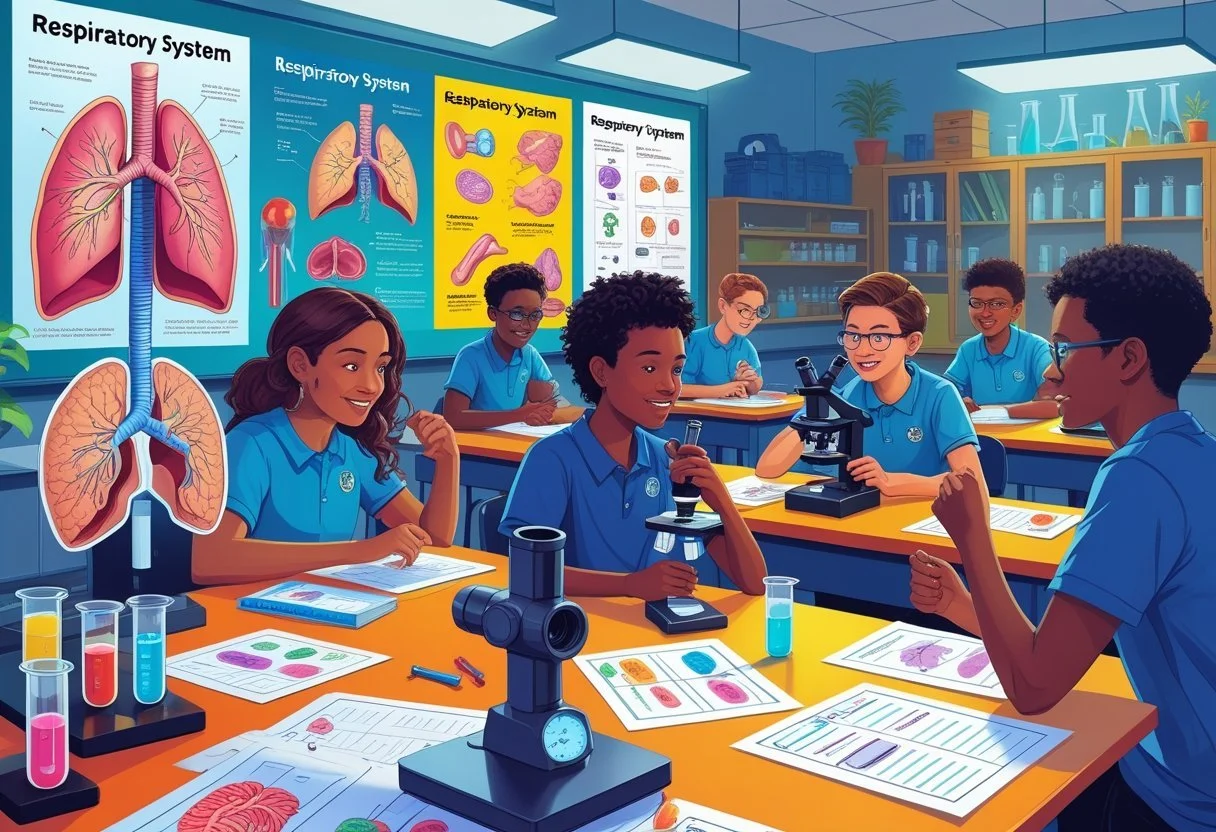
Hands-on activities help students understand how breathing works and how the body uses oxygen. Simple models and experiments allow learners to see science in action.
Lung Model Demonstrations
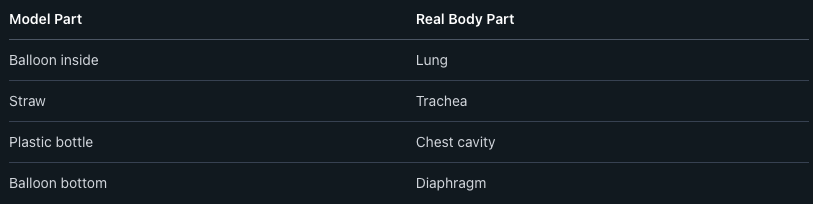
Building a lung model helps students see how the lungs and diaphragm work together during breathing. A popular activity uses a clear plastic bottle, a balloon, and a straw to represent the chest, lungs, and trachea. When the "diaphragm" (often a balloon at the bottom) is pulled, the "lung" balloon inflates.
This demonstrates how changing air pressure causes the lungs to fill with air. By pushing the diaphragm back up, students see the balloon deflate, like exhaling. Teachers can ask students to label the parts and explain how oxygen enters the body through the lungs.
Try letting students make models in pairs. Provide a table to compare their models to real lungs:
Gas Exchange Experiments
Gas exchange is the process where oxygen goes into the blood and carbon dioxide comes out. A simple experiment uses two clear glasses, straws, and a pH indicator like red cabbage juice.
Students blow into one glass through a straw. The liquid changes color as carbon dioxide mixes with water, showing how CO₂ leaves the body during breathing. In the other glass, they gently blow regular air, showing less change.
This helps students see that carbon dioxide is a waste gas removed from the lungs. Teachers can use these results to talk about how gases move between air and blood in the tiny air sacs called alveoli. Students make observations, record color changes, and discuss why gas exchange is important for life.
Breathing Rate Investigations
Measuring breathing rate shows how the lungs respond to activity. Students count their breaths per minute while resting, then after mild exercise like jumping or jogging in place.
They write down results in a chart:

Students can graph the results to see the difference. They learn that the body needs more oxygen during activity, so breathing speeds up to supply it. Discussions can include how oxygen gets into the bloodstream and how carbon dioxide is removed from the lungs more quickly when active.
Teachers may encourage students to predict what could affect breathing rates, such as stress, excitement, or illness. This hands-on lab makes the function of the lungs clear and easy to remember.
Anatomy of the Respiratory System
The respiratory system lets the body take in oxygen and get rid of carbon dioxide. Each part has a special role in breathing and keeping blood full of oxygen.
Lungs and Alveoli
The lungs are two spongy organs found in the chest on both sides of the heart. Each lung is made up of small air sacs called alveoli. Alveoli are where gas exchange happens.
Oxygen from the air moves through the thin walls of the alveoli into the blood. At the same time, carbon dioxide moves out of the blood into the alveoli. The body then breathes out this waste gas.
There are millions of alveoli in the lungs. Their tiny size and large total surface area help the body take in plenty of oxygen. The lungs also protect themselves by trapping dust and other particles before they can reach the alveoli.
Trachea, Larynx, and Pharynx
The trachea, larynx, and pharynx are important air passages that guide air from the nose and mouth to the lungs. The pharynx sits at the back of the throat and connects the mouth and nose to the windpipe.
The larynx, or voice box, is below the pharynx. It gives people the ability to speak and also keeps food from going into the trachea. The trachea, often called the windpipe, is a tube with rings of cartilage.
These cartilage rings keep the trachea open so air can flow to the lungs smoothly. The trachea branches into left and right bronchi just before entering the lungs. Each of these parts works together to make sure air reaches the lungs safely.
Bronchi and Bronchioles
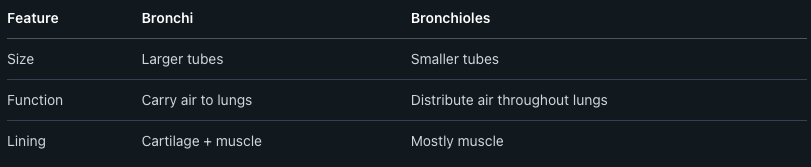
The bronchi are two large tubes that branch off from the trachea and enter the lungs. Each bronchus leads to a lung and then splits into smaller tubes called bronchioles.
Bronchioles spread throughout the lungs and end at the alveoli. The walls of the bronchi and bronchioles are lined with smooth muscle. This helps control the flow of air as it moves deeper into the lungs.
Mucus coats these tubes and helps trap dust and germs. The network of bronchi and bronchioles makes sure air is carried to all parts of each lung. This helps the whole body get enough oxygen.
Table: Bronchi vs. Bronchioles
Role of Cilia
Cilia are tiny hair-like structures found on the lining of the respiratory system, including the trachea and bronchi. They move in a wave-like pattern.
Their main job is to sweep mucus, along with dust and germs, out of the airways. This action helps clean the respiratory system and keep it healthy. Cilia work with mucus to stop particles from reaching the lungs.
If cilia do not work well, germs and dust can build up in the airways. This may lead to coughing or respiratory infections. Proper cilia function is key for protecting the lungs and keeping breathing easy.
Functions and Processes of the Respiratory System
The respiratory system is responsible for taking in oxygen, removing carbon dioxide, and supporting the body’s cells through these important processes. Its main functions involve moving air in and out, exchanging gases, and keeping blood oxygen and carbon dioxide levels balanced.
Mechanics of Breathing
Breathing is the process that moves air into and out of the lungs. The diaphragm, a dome-shaped muscle below the lungs, plays a big role in this action.
When a person inhales, the diaphragm contracts and moves downward. This creates more space in the chest, causing the lungs to expand and air to flow in. The rib muscles also help by lifting the chest upward and outward.
During exhalation, the diaphragm relaxes and moves upward into its resting position. The chest cavity becomes smaller, and air is pushed out of the lungs. This simple cycle repeats about twelve to twenty times per minute in most people.
Here's a quick comparison in a table:

This mechanical process is automatic. It lets the body work efficiently without thinking about each breath.
Gas Exchange and Oxygen Transport
Inside the lungs, air reaches tiny sacs called alveoli. Alveoli are surrounded by small blood vessels called capillaries. This is where gas exchange happens.
Oxygen from the air passes through the alveoli walls and enters the blood in the capillaries. Hemoglobin, a protein in red blood cells, binds to this oxygen and carries it through the bloodstream to every cell in the body.
At the same time, carbon dioxide, a waste product from cells, moves from the blood into the alveoli. This process depends on differences in concentration—oxygen moves in where it is needed, and carbon dioxide moves out where it can be removed.
This gas exchange supports all body tissues with oxygen and helps maintain healthy levels of both gases in the blood.
Removal of Carbon Dioxide
Removing carbon dioxide is just as important as getting oxygen. Carbon dioxide builds up as cells use oxygen to create energy. Too much carbon dioxide in the blood can be harmful.
When blood carrying carbon dioxide flows into the lungs, the gas passes from the capillaries into the alveoli. From there, it is released when the person exhales.
The body uses sensors in the brain and blood vessels to track how much carbon dioxide is present. If levels go up, breathing speeds up to remove the extra gas. This keeps the body’s in-balance and prevents dangerous changes in blood pH levels.
Efficient removal of carbon dioxide allows the respiratory system to protect the organs and keep everything working correctly.
Integrating Respiratory System Study with Other Body Systems
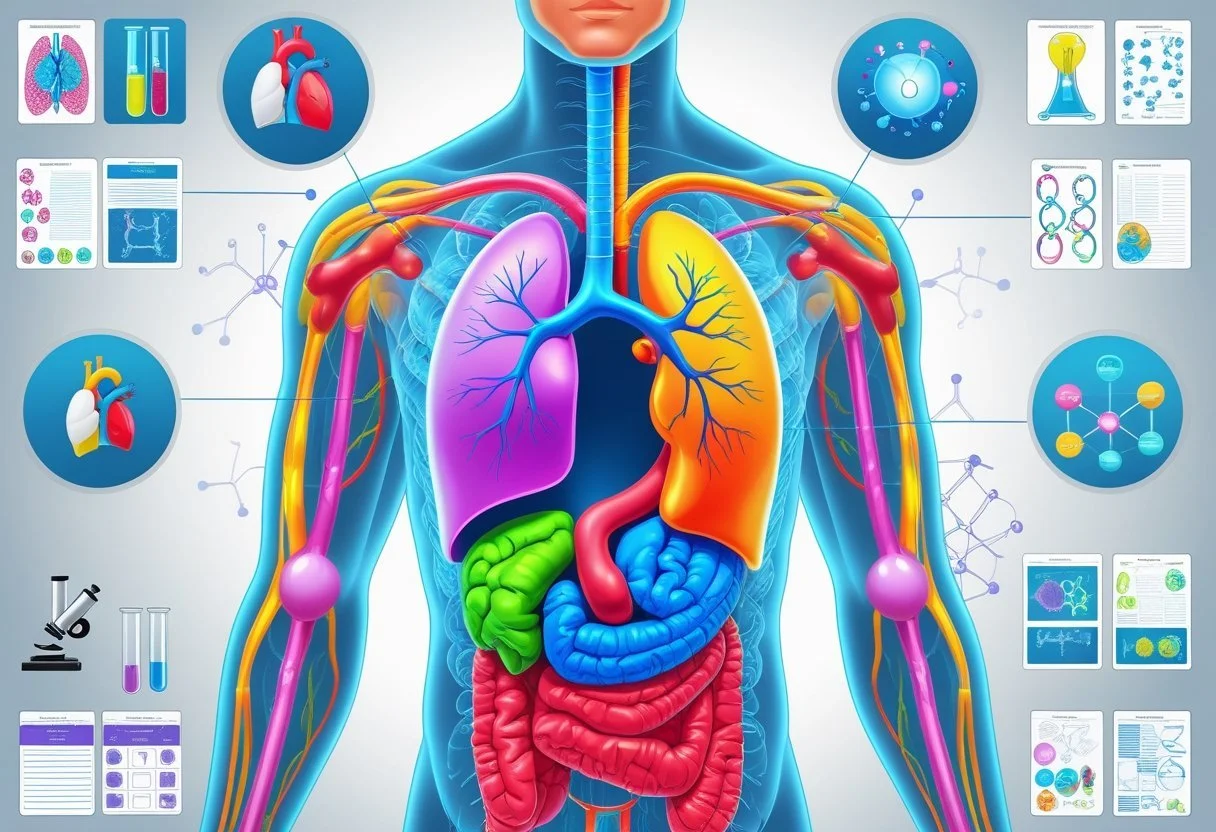
The respiratory system does not work alone. It connects closely with other parts of the human body, playing important roles in how bodies work and stay healthy.
Respiratory and Circulatory System Connections
Oxygen enters the body through the respiratory system and is passed to the circulatory system. The lungs transfer oxygen to the blood, which is then pumped by the heart to every cell. Carbon dioxide, a waste product, is moved from the blood to the lungs to be breathed out.
Activities like tracing the flow of oxygen from the air through the lungs and into the bloodstream help students understand this exchange. A simple table can show how oxygen and carbon dioxide switch places:
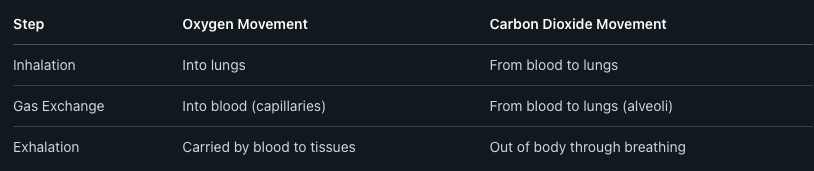
Seeing the connection between breathing and heart function helps explain why exercise makes hearts beat faster and breathing rate go up.
Role in the Digestive System
The respiratory system supports the digestive system by supplying oxygen that cells in the stomach and intestines need for breaking down food. Cells use oxygen to convert nutrients from food into energy through a process called cellular respiration.
During eating, the epiglottis covers the windpipe to keep food out of the lungs. This action helps prevent choking and shows the protective link between the two systems. Teachers can use diagrams or flow charts to show where the paths for air and food cross in the throat.
Class activities can include modeling how oxygen enters the bloodstream and is used by digestive organs, emphasizing how different body systems rely on each other for basic functions.
Muscular and Skeletal System Interactions
Breathing depends on muscles such as the diaphragm and the muscles between the ribs. When these muscles contract and relax, they help air move in and out of the lungs. The skeletal system provides the rib cage, which protects the lungs and supports the structure of the chest.
Simple experiments, like inflating a model lung with a balloon inside a bottle, let students see how muscle movement changes air pressure and causes inhalation and exhalation. Students can label diagrams of the rib cage and diaphragm to connect how the muscular and skeletal systems aid the process of breathing.
Understanding these movements shows that anatomy and biology are connected, and that no system works alone in the human body.
Teaching Strategies and Resources for Educators
Teachers can make the respiratory system interesting by using hands-on activities, engaging worksheets, and interactive labs. Clear planning and good lesson resources help connect science concepts to real-life experiences for students.
Lesson Planning Tips
Effective lesson plans for the respiratory system often begin with clear learning goals. Teachers should start by outlining objectives, such as naming the main parts of the respiratory system or explaining how oxygen moves through the body.
Variety helps maintain students' interest. Mixing worksheets, group activities, and demonstrations can address different learning styles. Teachers may use simple models like balloons to show how lungs expand and contract, or diagrams for labeling exercises.
Including everyday examples, such as how we breathe during exercise, helps connect science to students’ lives. Teachers can add short videos, interactive games, or virtual labs for deeper engagement. Clear instructions and easy-to-follow steps are important for students to work independently or in groups.
Planning time for questions, class discussions, and reflection lets students share ideas and clear up confusion. Teachers should also prepare materials, copies, and instructions ahead of time to keep lessons running smoothly.
Curriculum Alignment
Aligning respiratory system lessons to curriculum standards is necessary for meeting grade-level expectations. Teachers should review local or national science standards to identify required concepts and vocabulary.
A table can help match lesson activities with standards:
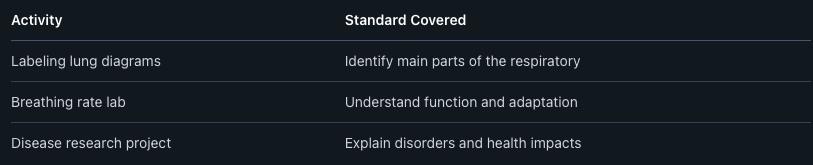
Using such matching tools keeps lessons focused on science goals. Teachers can adapt activities to fit both younger and older students by increasing the difficulty of the concepts or questions.
Checking the curriculum helps decide which demonstrations, worksheets, and labs are most important. This ensures learning builds from simpler to more complex ideas, matching the science content students need for assessments.
Assessment and Review Activities
Teachers use different ways to check students’ understanding of the respiratory system. Quizzes, matching games, and exit tickets help see what students remember and where they need extra help.
Some useful review activities include:
Short-answer worksheets about breathing and the parts of the lungs
Pair or group discussions where students explain functions to each other
Interactive activities like labeling digital diagrams or using online simulations
Hands-on assessments, like building a simple lung model from a bottle and balloons, can show learning in action. Peer review and small group quizzes provide quick feedback and encourage teamwork.
It is important to include both written and practical assessments. This helps teachers see if students can explain concepts and apply what they have learned thoughtfully.
Exploring Respiratory Health and Common Conditions
Keeping the respiratory system healthy is important for everyone. People can protect their lungs and understand conditions like asthma by learning key habits and creating safe environments.
Promoting Respiratory Health
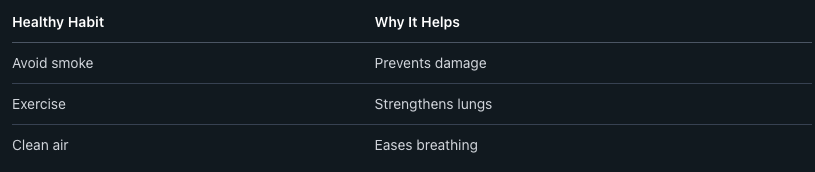
Healthy lungs help the body get plenty of oxygen. Daily habits matter. Practicing deep breathing exercises, staying active, and getting fresh air support strong lungs. Avoiding cigarette smoke and pollutants is important since these can harm breathing and cause long-term problems.
A helpful classroom activity is to have students make a list of ways to keep their lungs healthy. Teachers can use charts to track habits such as handwashing, regular exercise, and wearing masks during high pollen or pollution days. Students can also label diagrams that show how air moves through the nose, trachea, bronchi, and lungs. Using models or even blowing up balloons can show how lungs expand and contract.
Asthma Awareness Activities
Asthma is a common condition where the airways become inflamed, making it hard to breathe. It can be triggered by dust, pollen, smoke, or exercise. Understanding asthma helps students support classmates who may have it and recognize symptoms.
A classroom role-play or scenario can help students learn what to do if someone has an asthma attack. Teachers can provide Asthma Action Plans and discuss inhalers—devices some people carry to help open their airways during an attack. Students might chart common asthma triggers and talk about ways to reduce them. Worksheets could include matching symptoms like coughing and wheezing to the right condition. It’s important to teach that asthma is manageable when people take care and avoid triggers.
Impact of Environment on Breathing
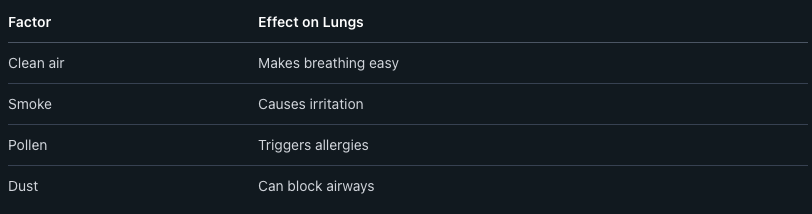
The quality of the air people breathe affects their lung health. Air pollution, smoke, and allergens like dust or pollen can make breathing difficult, especially for those with asthma. Comparing indoor and outdoor air, and learning about ways to test air quality, can help students make safer choices.
Teachers can guide experiments where students observe how well they breathe after doing light exercise indoors and outdoors. Using simple tools like DIY air quality testers or tracking local air quality indexes supports this activity. Students can also discuss how homes and schools can improve air—such as using air filters or keeping windows closed on high pollen days.
A table can show the impact of common environmental factors:
Frequently Asked Questions
Many teachers and students want practical ways to study the respiratory system. They also need quality worksheets, interactive labs, and hands-on activities for all age groups.
What are engaging activities to help high school students understand the respiratory system?
High school students often learn best with a mix of demonstrations, group activities, and visual aids. They can explore lung capacity by measuring their own breath with simple materials like balloons. Using online simulations or virtual dissections also helps them see the structure and function of the lungs and airways in detail.
Debates about the effects of smoking or air pollution on lung health can inspire critical thinking. Quizzes and interactive games help reinforce key terms and concepts.
Where can I find a comprehensive respiratory system worksheet with answers for educational use?
Websites like Twinkl, K12Reader, and Homeschool Giveaways offer detailed respiratory system worksheets. These usually come with answer keys for easy checking. Teachers can look for worksheets that include labeling diagrams, multiple choice questions, and short answer sections.
Some sites, such as readingduck.com, focus on worksheets tailored for middle and high school learners, covering anatomy and function.
How can I create an interactive lab session about the respiratory system for middle school students?
To create an interactive lab, teachers can have students build a lung model using simple items like balloons, straws, and plastic bottles. This model shows how lungs expand and contract when we breathe.
Students may also measure their breathing rates before and after exercise, recording their results and discussing how activity affects breathing. Digital simulations or videos can show the inside of the lungs in action.
What are some effective respiratory system study exercises for 9th-grade students?
Labeling diagrams of the lungs, trachea, and bronchi helps students learn the parts of the system. Practice questions using real-life cases, like how asthma affects breathing, make the topic more relatable.
Short research assignments about respiratory diseases or presentations on healthy habits for lung health can deepen understanding. Flashcards and online quizzes build recall for important terms.
Can you suggest any free printable worksheets that cover the human respiratory system?
Free printable worksheets are available from resources such as Homeschool Giveaways, Twinkl, and K12Reader. These offer activities like labeling, fill-in-the-blank, and content reviews.
Many worksheets include diagrams and fun facts, making them useful for both classroom and homework assignments.
What hands-on activities can enhance the learning experience of the respiratory system in a classroom setting?
Building simple lung models using household materials shows the mechanics of breathing. Acting out the path air takes through the body, from the nose to the lungs, helps students visualize each step.
Experimenting with breath-holding or measuring lung capacity using balloons makes lessons interactive. Scavenger hunts for respiratory terms or matching games also support learning in a fun way.


The Complete Respiratory System Bundle
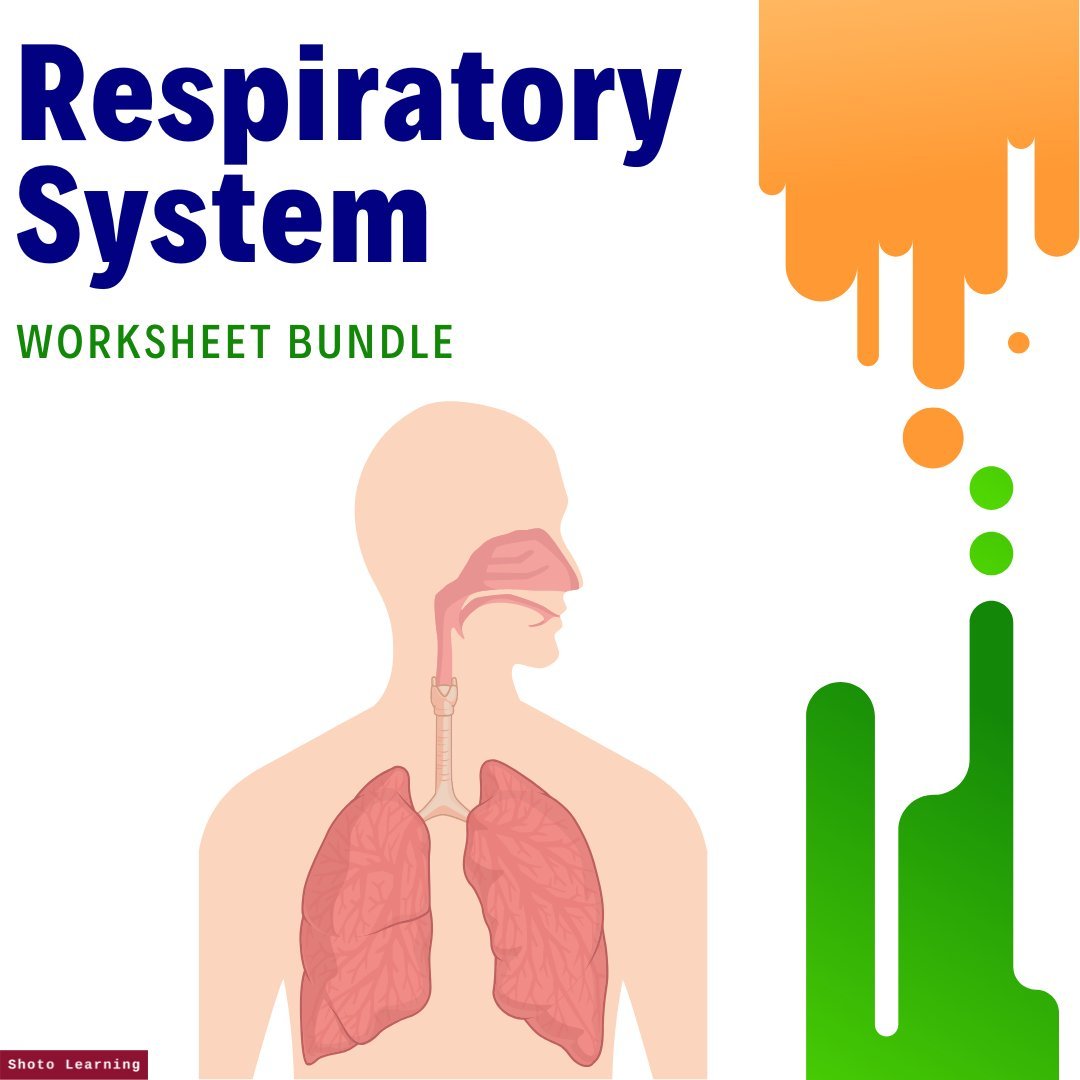
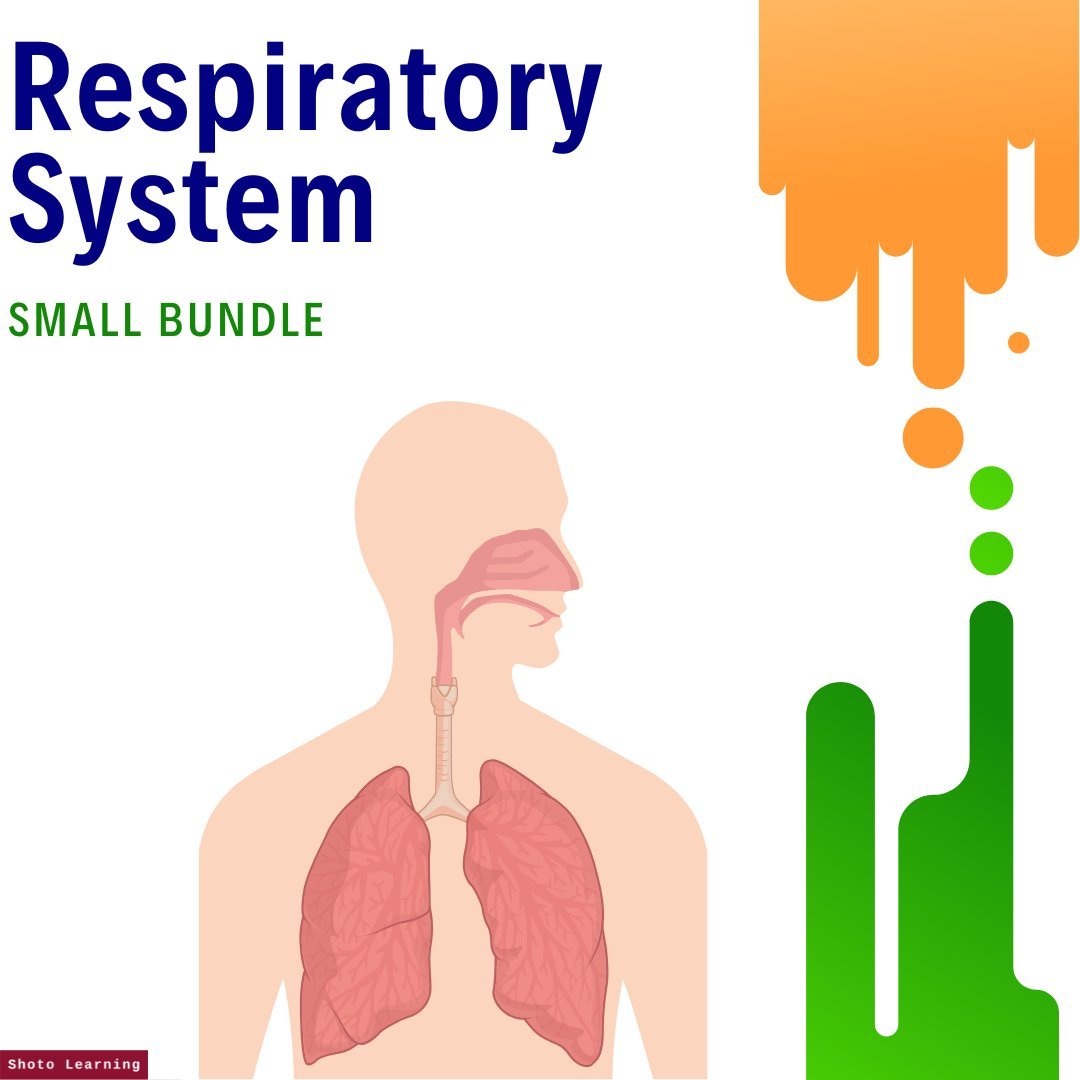
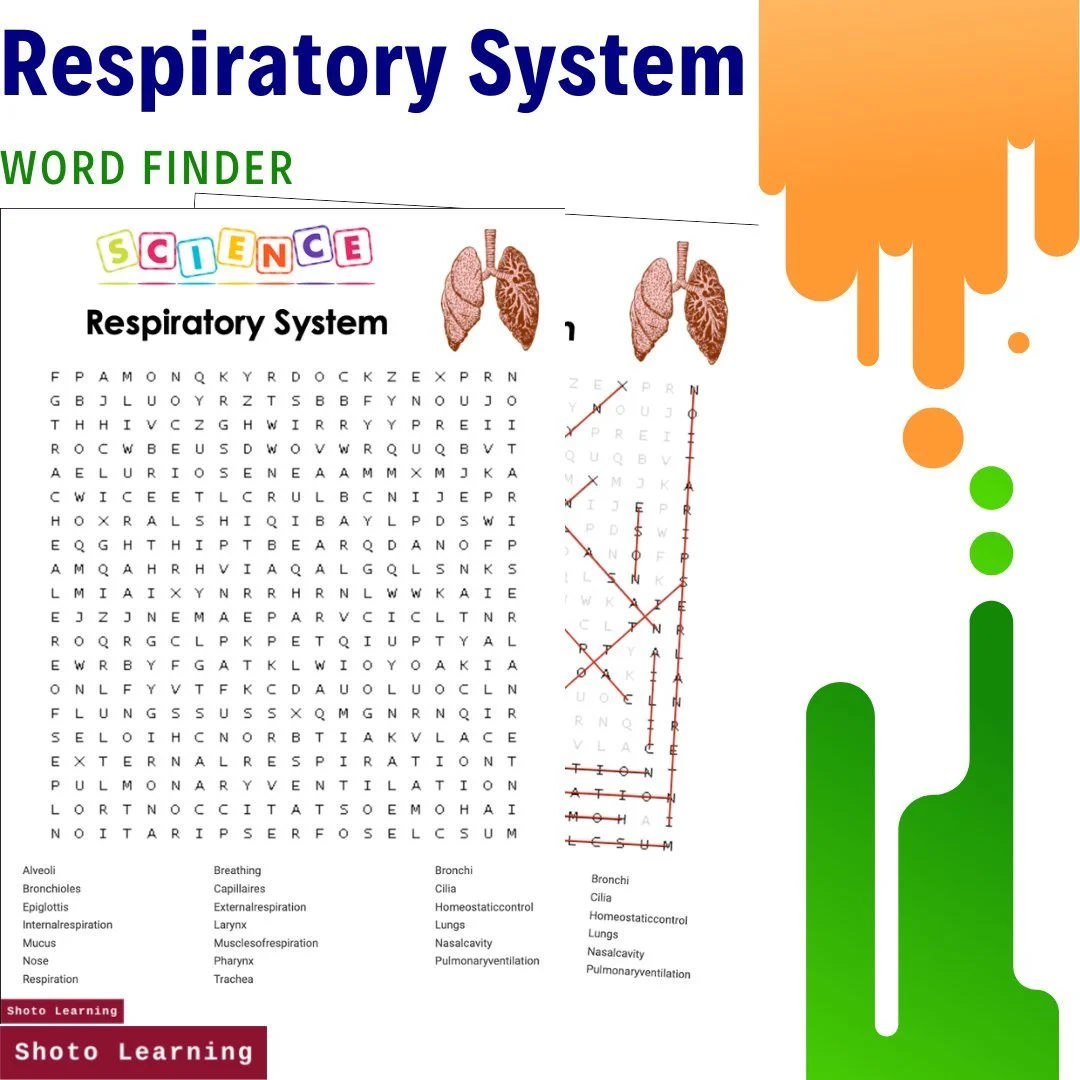
This comprehensive bundle includes everything you need to learn about the respiratory system in a fun and engaging way. With 20 different activities, you'll be able to test your knowledge of anatomy, physiology, and diseases. Whether you're a student, teacher, or healthcare professional, this bundle is a must-have for anyone who wants to understand how our bodies breathe.
Features:
20 different activities to test your knowledge
Clear and concise explanations of the respiratory system
Visual aids to help you understand the concepts
Fun and engaging activities to keep you motivated
Benefits:
Improve your understanding of the respiratory system
Learn about anatomy, physiology, and diseases
Test your knowledge with quizzes and games
Be better prepared for exams and presentations
Contents:
Assignments
Bingo
Crossword
Cryptogram
Debate
Experiments
Fill in the blank
Flashcards
Free ABC Order
Free Fill in the Blank
Free Poster
Lesson Plan
Matching
Missing letters
Multiple choice
PowerPoint
Questions and answers
Reading Comprehension
Scramble
Test (45 minutes)
True or false
Word search
Writing prompts
Get started today and learn about the respiratory system in a fun and engaging way!
128 pages
Order your copy today!