
Using Math Bingo to Build Fluency: Engaging Strategies for Classroom Success
Math Bingo is a simple and effective way to help students build math fluency while keeping practice fun and engaging. Unlike worksheets or drills, playing Bingo lets students solve problems in a game setting, which can boost their confidence and motivation. Teachers and parents notice that students look forward to these sessions and are more willing to practice their math facts.
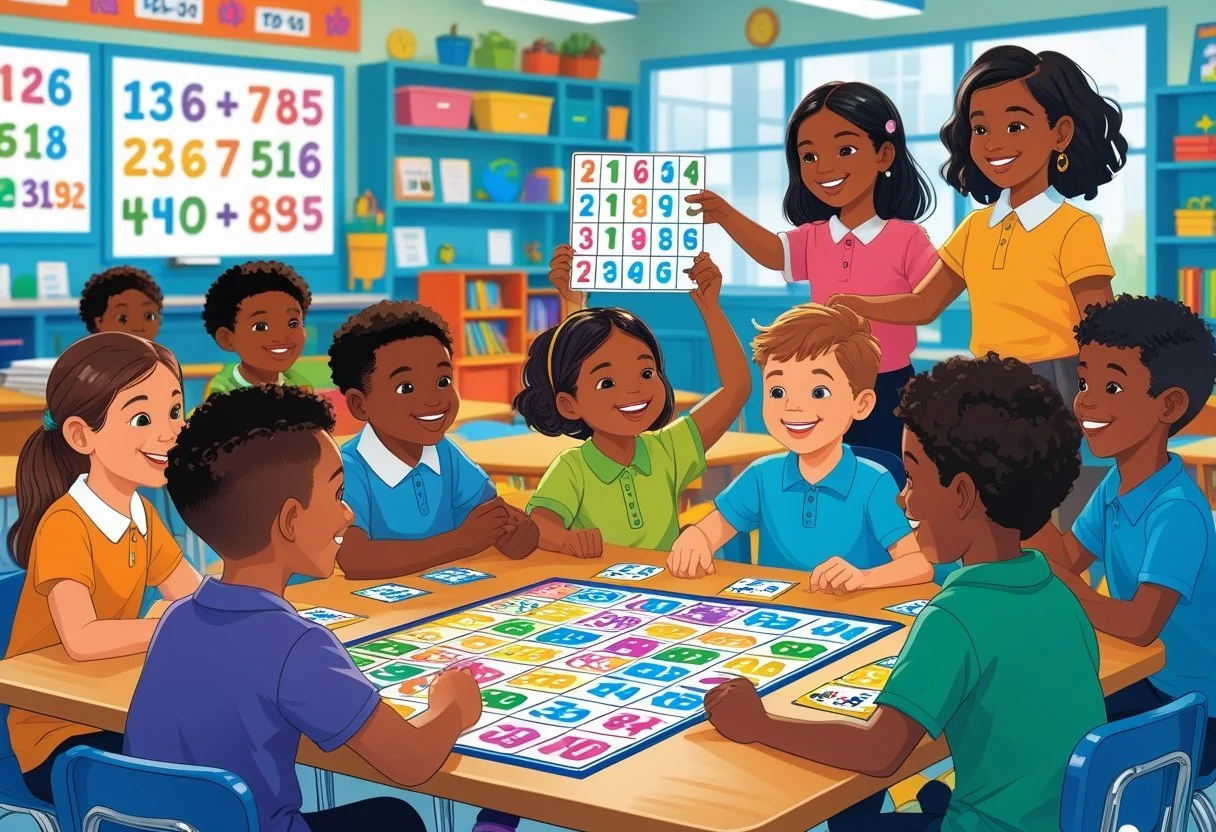
Math Bingo can be used with many topics, like addition, subtraction, multiplication, or division. The game is easy to set up and works well in classrooms or at home. Students get quick practice solving problems, and the competitive element helps them stay focused.
Key Takeaways
Math Bingo helps students practice math skills in a fun way.
The game can be adapted for different levels and topics.
Both teachers and parents can use Math Bingo to build fluency.
What Is Math Bingo?
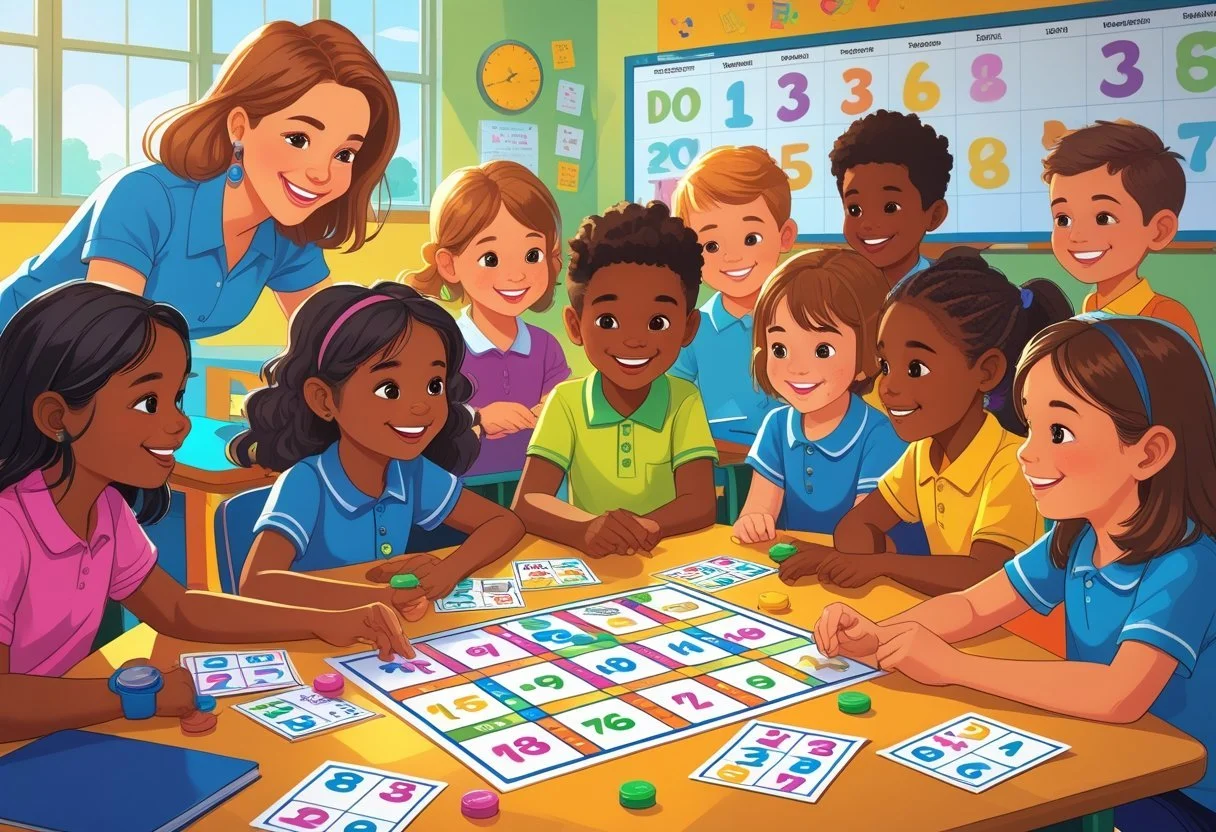
Math Bingo is a classroom game that mixes basic math skills with the familiar format of bingo. It uses bingo cards, math problems, and group play to help students practice facts and improve fluency. The game is popular in elementary and middle school classrooms for making math practice active and social.
Origins of Math Bingo
Math Bingo is based on the classic game of bingo, which has been played for hundreds of years. In traditional bingo, players fill in cards with random numbers and listen for numbers called out loud. Whenever a called number matches one on their card, they mark it off. The first person to mark a full line wins.
Teachers began using bingo as a learning tool in the 20th century, seeing it as a way to add excitement to classroom activities. Instead of calling just numbers, they started calling out math problems. The answers would be found on the students’ bingo cards. This simple change allowed students to practice math facts while playing a game they already knew.
Traditional Bingo Versus Math Bingo
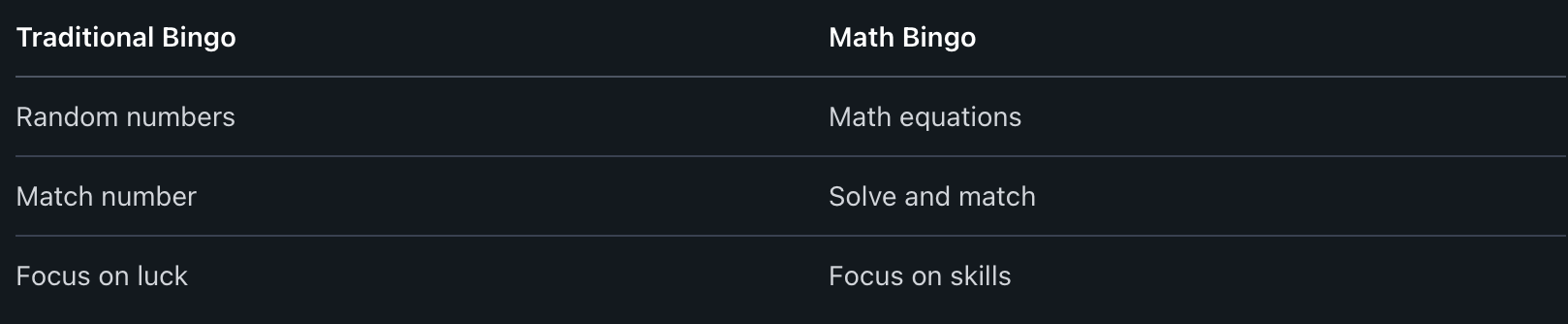
There are key differences between regular bingo and Math Bingo. In traditional bingo, players listen for random numbers within a set range, such as 1 to 75. The goal is to complete a row, column, or diagonal on the card.
In Math Bingo, instead of calling a number, the teacher calls out a math equation like “7 + 5” or “9 - 4”. Students solve the problem in their heads or on paper. If their answer appears on their bingo card, they mark it. The objective remains the same—completing a line—but the focus shifts to solving problems.
A simple comparison:
Why Math Bingo Engages Learners
Math Bingo increases student involvement by turning math practice into a game. The use of bingo cards and competition adds excitement and a sense of urgency. Instead of passively memorizing facts, students actively solve problems and check answers in real time.
Key reasons for its appeal include:
Direct, hands-on problem solving
Instant feedback when a match is found
Opportunities for both individual and group play
Students often feel less pressure because mistakes are seen as part of the game. The visual and interactive elements of using bingo cards keep players focused. The friendly competition motivates students to keep practicing their math skills.
How Math Bingo Builds Fluency
Math Bingo uses fun, repeated practice to help students remember math facts and improve problem-solving ability. When learners engage in the game, they work with numbers in ways that build confidence and accuracy in their skills.
Developing Fact Fluency Through Play
Fact fluency means being able to answer math facts quickly and correctly. Playing Math Bingo gives students regular chances to practice addition, subtraction, multiplication, and division problems.
Teachers or leaders call out questions, such as "9 + 6," and students find and cover the answer on their cards. This process repeats many times during one game.
By mixing different types of problems and requiring fast answers, Math Bingo makes practice less boring than drills. Each correct answer is rewarded in the game, which keeps students engaged and motivated.
The game works for both individuals and groups, so all students get experience at their own level. Students become faster and more accurate at math facts as they play, showing growth in fluency over time.
Strengthening Number Sense With Math Bingo
Number sense is understanding what numbers mean and how they relate to each other. Math Bingo sharpens this by making students think about math problems in new ways.
When faced with a math problem, students must understand what the question is asking. For example, when they hear "12 – 5," they picture what that subtraction means.
Math Bingo also helps students recognize patterns and relationships, such as knowing that if 7 + 8 = 15, then 8 + 7 must also be 15. This repeated exposure adds depth to their understanding.
The game lets students see which facts they know well and which ones need more practice. It gives instant feedback, helping them connect answers with real math concepts instead of just memorizing.
Reinforcing Math Skills Across Grade Levels
Math Bingo is useful in different grades because it can be changed for any age or skill level. In the early grades, the game often uses basic addition and subtraction within 10 or 20.
As students move up, the math problems can cover higher numbers, multiplication, or division. Some Bingo cards feature facts up to 50 or 100 for older children.
Teachers can select problems that fit their lesson goals or cater to students’ needs. This supports all learners, whether they are just starting to build basic skills or need to speed up their recall of more complex facts.
Math Bingo can also be adapted for small groups, whole classes, or even home review, making it a flexible tool to build math fluency throughout a child's education.
Designing Effective Math Bingo Games
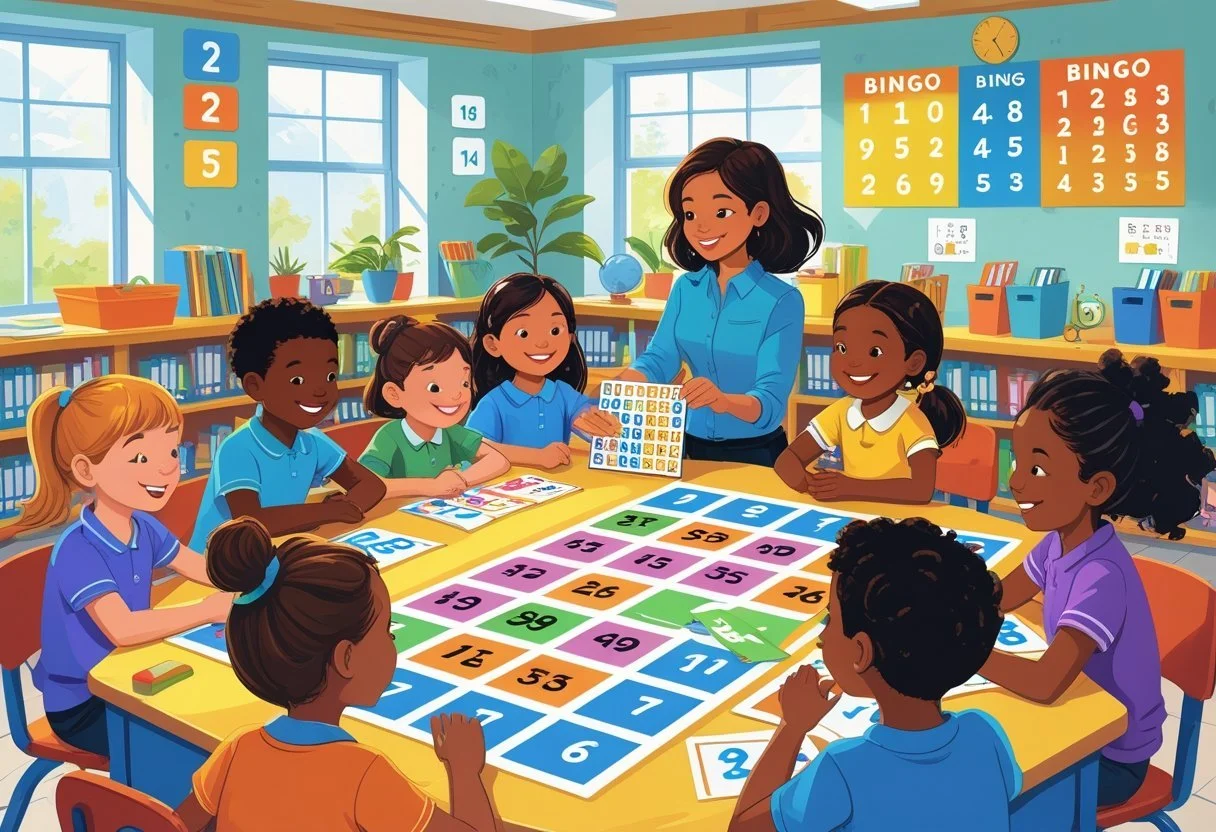
A well-designed Math Bingo game matches students’ needs by using a range of math problems and carefully adjusting the level of difficulty. It ensures that learners are challenged but not frustrated, making practice both rewarding and enjoyable.
Types of Math Problems to Include
Choosing problems for Math Bingo depends on the skills the group needs to practice. Addition and subtraction problems work for students learning basic math facts or building mental math speed. These can be presented as single-digit or double-digit equations.
For older students, algebra challenges introduce variables and simple equations, such as 2x + 3 = 9. A balanced bingo card may also include multiplication, division, or word problems, especially in mixed-ability classrooms.
Including a variety keeps students engaged. Consider mixing straightforward fact problems with a few that test reasoning or require multi-step thinking. An example set:

Building cards based on curriculum goals helps tie practice to classroom content.
Balancing Difficulty Levels for All Learners
Math Bingo works best when every student feels included. To balance difficulty, offer multiple versions of cards, each tailored to different skill levels.
For example, one group could receive cards with simpler addition or subtraction facts while another has multiplication or algebra questions. Alternatively, all players can use the same cards, but the teacher calls out questions with varying complexity, allowing everyone a chance to participate.
Use random placement of problems on the bingo grid so no specific skill or level forms a straight line. Encourage peer support by pairing students to solve tougher math problems together.
Rotating the types of problems and difficulty from round to round ensures steady progress and keeps the activity fair and motivating for all.
Creating and Customizing Bingo Cards
Choosing the right type of bingo card and method for making them helps teachers and parents match the game to their needs and resources. Factors such as class size, learning goals, and available technology can affect which option is best.
Printable Versus Digital Card Options
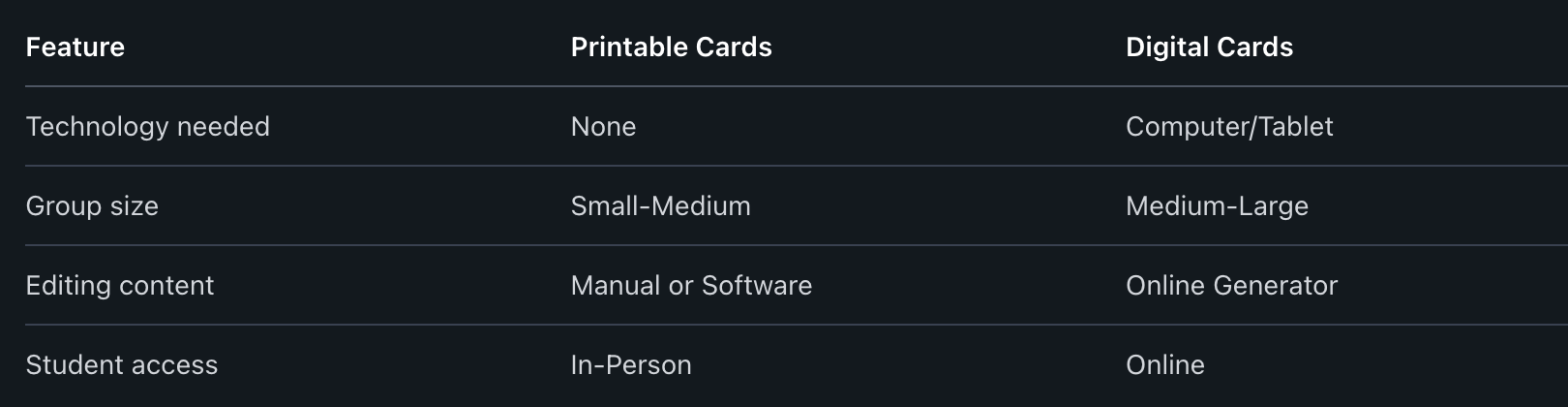
Printable bingo cards are a good choice for classrooms with limited technology. They can be created using free online tools or by hand. Teachers can print multiple sets with different math problems, making it easy to reuse cards for different skill levels. Printable cards work well for small groups and let students use counters or markers.
Digital bingo cards are ideal for virtual classrooms or large groups. Online generators allow for quick customization, randomization, and distribution. Features include auto-marking answers and automatic shuffling of questions. Some platforms support up to 2000 players at once, making them good for school-wide events. A chart below highlights key differences:
DIY Bingo Card Creation Strategies
Teachers can make bingo cards by hand or with digital tools. Handwritten cards allow for fast changes and can be tailored to specific lessons. To make them, use grid paper and fill boxes with math answers based on lesson objectives. For variety, swap out problems or insert bonus spaces.
Online bingo card generators save time and reduce errors. Many offer customizable layouts, math templates, and the ability to randomize answers for each card. This ensures no two cards are the same, promoting fairness. Teachers can enter addition, subtraction, multiplication, or division problems, creating sets that match student skill levels.
For home use or small groups, parents and tutors can encourage children to help design their cards. Involving students in this process makes the activity more personal and helps reinforce math concepts. Simple lists or templates can be printed or drawn, letting the entire group participate in card creation.
Incorporating Math Bingo Into the Classroom
Math Bingo can be adapted for many classroom setups and learning goals. Teachers can use it to help students review important math facts while keeping lessons active and inclusive.
Strategies for Small Groups and Whole Class Play
In small groups, Math Bingo allows for more interaction and personalized support. The teacher can adjust the difficulty of the questions or focus on specific skills each group needs to practice. For example, students might work with addition in one group and multiplication in another.
When playing as a whole class, teachers can use a projector or interactive board to display problems. Each student or pair gets a bingo card. The teacher calls out or shows a math question, and students mark the correct answer if it appears on their card.
A useful tip is to mix types of play. Start with individual turns, then try team rounds or peer calling for added engagement. This helps keep all students involved. Teachers can rotate roles, so every student gets a chance to be the caller or helper.
Here is a quick comparison of formats:

Managing Engagement and Participation
Keeping students engaged during Math Bingo is key to its success. Teachers can encourage participation by offering small rewards, like stickers or extra recess minutes, for reaching bingo or showing effort.
Randomly selecting students to answer questions or call out problems can keep everyone on their toes. This avoids the same students always participating. Teachers may use a name jar or cards to make the process fair.
Establishing clear rules helps keep the game orderly and positive. For example, students must wait for the teacher to finish reading before marking a card. Quick brain breaks between rounds can refocus attention and prevent restlessness.
To make sure all students participate, the teacher can walk around the room, check for understanding, and offer hints to those who need extra help. This also helps spot students who may need more support with specific math skills.
Math Fluency Beyond Addition and Subtraction
Fact fluency is not limited to simple sums and differences. As students progress, they need strong skills in multiplication, division, and even basic algebra to succeed in higher-level math.
Introducing Multiplication and Division
Math bingo can easily be adjusted to support multiplication and division practice. Teachers may call out multiplication or division problems, and students must find the correct answer on their bingo cards.
For example, a teacher says "6 x 4." Students look for "24." This format keeps learners active and makes memorizing times tables engaging rather than repetitive.
It is helpful to mix in different facts, such as multiplication by 0, 1, and 10, or simple division facts like "15 ÷ 5." The variety ensures students encounter a wide range of problems. Bingo cards can be printed with different difficulty levels for mixed-ability groups. Using colors or symbols to group tricky facts can also aid recall.
This approach turns multiplication and division into a game, building fact fluency with repeated, low-pressure practice.
Exploring Algebra and Further Concepts
As students become comfortable with the four operations, math bingo can be adapted for algebra basics. Instead of only numbers, bingo cards might have simple equations or expressions.
For instance, a teacher could ask, "What is x if x + 3 = 8?" Students look for "5" on their cards. Teachers may also include equations with missing numbers, such as "__ × 4 = 16." This helps develop problem-solving and logical thinking skills.
Using math bingo for topics like order of operations or properties (commutative, associative) allows exposure to new concepts in a familiar format. This kind of practice makes early algebra less intimidating, supporting a smooth transition from arithmetic to algebraic thinking. Mixing concepts helps reinforce connections between fact fluency and more advanced math.
Tips for Parents Using Math Bingo at Home
Math Bingo can support number sense and build strong calculation skills. With the right approach, parents can make at-home practice fun, effective, and suited to any child’s level.
Promoting Practice in a Fun Environment
Parents can turn regular math drills into a lively activity by using Math Bingo as a game instead of a chore. Kids who play feel more confident and less anxious about numbers. Smiles and laughter often replace boredom during these sessions.
Try switching up the format. Use small treats, stickers, or simple rewards for getting “Bingo.” Read the problems out loud together, or even invite siblings and friends to join. This creates a positive atmosphere and helps build social skills along with math ability.
Parents can increase motivation by mixing the topics on each card: addition, subtraction, and even word problems. The repetition and quick pace of bingo solidify mental math and promote fluency through practice, not pressure.
Adapting Games for Different Skill Levels
It is important to make sure the game fits the child’s current skills. Younger children or beginners can practice with simple problems (like sums under 10), while older kids can work on harder operations or multi-step questions.
Try using tables like the one below to match game difficulty:

Parents can make their own cards to focus on skills their child finds hardest. Adjust time limits, number of rounds, or add challenge rounds to keep older kids engaged. This flexibility helps every child grow stronger in number sense and mental calculation.
Frequently Asked Questions
Math Bingo helps students become faster with math facts by making practice more engaging. This section looks at ways teachers can use Math Bingo, how it connects to research, and tips for different ages and learning needs.
What are the best strategies for using Math Bingo to improve fact fluency?
Teachers can use Math Bingo by giving each student a card with math answers and reading math problems aloud. Students look for the answer on their cards and mark it if they have it.
Switching up the types of math problems—like addition, subtraction, or multiplication—keeps students interested. Using repetition with new problems helps students remember math facts better.
How does Math Bingo fit into research-based math fluency instruction?
Research shows that regular, active practice helps students learn math facts faster. Math Bingo combines repetition and mental math in a playful way, which helps with fact recall.
Games like Math Bingo also keep students motivated, making it more likely they will join in and pay attention.
What are the ways Math Bingo can be tailored for different grade levels?
Math Bingo can use simpler problems for younger students, such as addition or subtraction within 20. For older students, teachers can use harder problems, like multiplication, division, or basic algebra.
Teachers may also use different-sized Bingo boards or include two-step problems to match what students are learning.
Can Math Bingo be effective for helping struggling students learn math facts?
Math Bingo provides extra practice for students who have trouble remembering math facts. Since it uses a game format, students may feel less pressure and more confidence while practicing.
Teachers can give hints or use smaller groups for even more support.
How often should students play Math Bingo to see improvement in fluency?
Students usually see the most benefit when they play Math Bingo at least once or twice a week. Regular practice helps math facts move from short-term to long-term memory.
Short, frequent games are more effective than long sessions played only once in a while.
What are some examples of math fluency that can be developed using Math Bingo?
Students can improve their speed and accuracy in basic operations like addition, subtraction, multiplication, and division. For higher grades, Math Bingo can be used for fractions, decimals, or even solving simple equations.
This helps students build a strong foundation in math that supports new learning.