
Cells are the fundamental units of life, tiny yet complex structures that carry out all the functions necessary for organisms to survive. They come in diverse forms, from the simple prokaryotic cells of bacteria to the more elaborate eukaryotic cells found in plants and animals. Understanding cells helps us grasp how all living things function, from the smallest microorganisms to the largest mammals on Earth.
Teaching about cells offers students their first glimpse into the microscopic world that makes up all living things. This invisible universe contains organelles working together like tiny machines, each with specific roles that keep the cell—and by extension, the entire organism—alive. When students learn about cells, they begin to see connections between biology, chemistry, and even physics.
Key Takeaways
Cells form the basic building blocks of all living organisms, containing specialized structures that work together to sustain life.
Teaching cell biology effectively requires connecting microscopic concepts to everyday experiences students can relate to.
Modern educational resources and STEM activities help students visualize cellular processes through technology and hands-on experiments.
Unveiling the Cell Theory and Its Historical Development
The cell theory stands as one of biology's foundational frameworks, developed through centuries of scientific discovery and technological innovation. Scientists gradually built our understanding of cells through careful observation and improved tools.
Foundational Aspects of Cell Theory
Cell theory rests on three key principles. First, all living organisms consist of one or more cells. Second, the cell serves as the basic unit of life and structure in all organisms. Third, all cells arise from pre-existing cells through cell division.
Robert Hooke first observed plant cell walls in cork slices in 1665, naming these tiny compartments "cells." In the 1830s, Matthias Schleiden determined that all plants consist of cells. Shortly after, Theodor Schwann extended this concept to animals.
Rudolf Virchow completed the modern cell theory in 1855 with his famous statement "Omnis cellula e cellula" (all cells come from cells), rejecting the idea of spontaneous generation.
The Evolution of Cellular Understanding Through Technology
The microscope revolutionized our understanding of cells. Early compound microscopes allowed Hooke and Anton van Leeuwenhoek to observe cells for the first time, though with limited magnification and clarity.
The 19th century brought achromatic lenses that eliminated color distortion, enabling scientists to see cellular structures more clearly. This technological improvement directly contributed to the formulation of cell theory.
Electron microscopes, developed in the 1930s, increased magnification by thousands of times compared to light microscopes. Scientists could now observe subcellular structures like mitochondria, the endoplasmic reticulum, and Golgi apparatus in unprecedented detail.
Modern techniques like fluorescence microscopy allow researchers to track specific molecules within living cells, further expanding our cellular knowledge beyond what the cell theory's originators could have imagined.
The Structural Complexity of Cells
Cells display remarkable architectural diversity across different organisms. Their structures range from simple prokaryotic arrangements to intricate eukaryotic systems with specialized compartments.
Understanding Prokaryotic vs Eukaryotic Cells
Prokaryotic cells represent a simpler cellular design found in bacteria and archaea. These cells lack a nucleus and contain minimal internal structures. Their genetic material floats freely in the cytoplasm as a single circular DNA molecule.
Eukaryotic cells, by contrast, display greater structural complexity. Found in plants, animals, fungi, and protists, these cells contain a true nucleus that houses DNA protected by a nuclear membrane.
The size difference is notable. Prokaryotes typically measure 0.1-5 micrometers, while eukaryotic cells range from 10-100 micrometers—often ten times larger.
This fundamental distinction shapes how these cells function, reproduce, and interact with their environment.
Exploring Cell Membrane and Cell Wall Functions
The cell membrane forms a selective barrier around all cells. This phospholipid bilayer controls what enters and exits the cell through specialized proteins and channels.
Cell membranes contain receptors that recognize signals from the environment, allowing cells to respond to changing conditions.
Some organisms possess an additional protective layer called the cell wall. Plant cells have cellulose walls that provide structural support. Bacterial cell walls contain peptidoglycan, protecting against osmotic pressure.
Fungi display cell walls made of chitin, while algae use various polysaccharides. These different compositions reflect evolutionary adaptations to specific environments.
The membrane and wall work together to maintain cell integrity while allowing necessary interactions with the surrounding environment.
Organelles: The Specialized Structures Within
Eukaryotic cells contain numerous organelles that perform specialized functions. The nucleus serves as the control center, housing genetic information and directing cellular activities.
Mitochondria generate energy through cellular respiration, converting nutrients into ATP. Plant cells also contain chloroplasts for photosynthesis, capturing light energy to produce glucose.
The endoplasmic reticulum forms an extensive network for protein and lipid synthesis. The rough ER, studded with ribosomes, focuses on protein production, while the smooth ER handles lipid synthesis.
Golgi apparatus packages and modifies proteins for transport. Lysosomes contain digestive enzymes that break down waste materials and foreign particles.
These specialized structures work together in a coordinated fashion, allowing eukaryotic cells to perform complex functions impossible for simpler prokaryotic cells.
Genetics and DNA: Blueprint of Life
Genetics and DNA form the core of cellular function, providing instructions for every aspect of life. These molecular structures determine traits, guide protein production, and allow genetic information to pass from one generation to the next.
DNA and Genetic Material Foundations
DNA (deoxyribonucleic acid) serves as the genetic material in almost all organisms. This molecule contains a unique code made of four chemical bases: adenine, thymine, guanine, and cytosine.
DNA has a distinctive double helix structure, resembling a twisted ladder. The "rungs" of this ladder consist of paired bases that follow specific rules: adenine pairs with thymine, and guanine pairs with cytosine.
Each organism has a specific DNA sequence that makes it unique. Humans have approximately 3 billion base pairs organized into 23 pairs of chromosomes.
DNA replication is the process where DNA makes a copy of itself. This happens before a cell divides, ensuring each new cell receives identical genetic information.
Gene Regulation and Protein Synthesis
Genes are segments of DNA that contain instructions for making proteins. Not all genes are active at once—cells carefully control which genes are "turned on" or "turned off."
Protein synthesis involves two main steps: transcription and translation. During transcription, the DNA code is copied to RNA in the cell nucleus.
The RNA then moves to the cytoplasm for translation, where ribosomes read the RNA code and assemble amino acids into proteins. This process follows the "central dogma" of molecular biology: DNA → RNA → protein.
Gene regulation ensures cells make the right proteins at the right time. Regulatory proteins can activate or block genes depending on what the cell needs.
Plasmids, Archaea, and Bacterial Genetics
Bacteria and archaea have simpler genetic systems than human cells. Their DNA usually exists as a single circular chromosome in the cytoplasm.
Plasmids are small, circular DNA molecules that exist separately from chromosomal DNA in bacteria. They often carry genes that help bacteria survive, such as antibiotic resistance genes.
Bacteria can exchange genetic material through:
Transformation: uptake of DNA from the environment
Conjugation: direct transfer between bacterial cells
Transduction: transfer via viruses
Archaea, though similar to bacteria in size, have genetic machinery more like eukaryotes. They thrive in extreme environments thanks to unique genes that produce specialized proteins.
Scientists use bacterial plasmids in genetic engineering as vectors to introduce new genes into organisms.
From Single Cells to Multicellular Organisms
The journey from single-celled organisms to complex multicellular life forms involves specialized cell functions, organization into tissues, and the development of interconnected systems that work together to maintain life.
Cell Differentiation and Development
Cell differentiation is the process where cells become specialized for specific functions. In multicellular organisms, cells start as stem cells with the potential to develop into many different cell types. This amazing transformation begins during early development.
As an organism grows, these cells receive chemical signals that activate or deactivate certain genes. For example, a cell might become a nerve cell, muscle cell, or blood cell based on these signals.
The development process follows specific patterns. In humans, a single fertilized egg divides repeatedly, eventually forming over 200 different cell types. Each cell contains the same genetic information but uses only certain parts of it.
Scientists study differentiation to understand diseases and develop treatments. When differentiation goes wrong, conditions like cancer can develop.
Tissues, Organs, and Systems Interaction
Tissues form when similar cells work together for a common function. The human body has four main tissue types: epithelial, connective, muscle, and nervous tissue.
These tissues combine to create organs like the heart, lungs, and brain. Each organ has a specific job in the body's operation.
Multiple organs working together form body systems. For example:
Digestive system: breaks down food for energy
Respiratory system: exchanges oxygen and carbon dioxide
Circulatory system: transports nutrients and waste
These systems don't work in isolation. The circulatory system delivers oxygen from the respiratory system to all body cells. The nervous system coordinates activities between different organs.
This interconnection ensures the body functions properly. When one system struggles, others can be affected too.
Diversity of Multicellular Life Forms
Multicellular organisms display incredible diversity across our planet. They range from simple sponges with just a few cell types to complex mammals with hundreds of specialized cells.
Plants, animals, and fungi represent the major groups of multicellular life. Each evolved different strategies for survival:
Plants: Use photosynthesis for energy and have specialized tissues for water transport and support.
Animals: Developed complex nervous systems and mobility to find food and escape predators.
Fungi: Created unique cell walls and digestion methods to break down and absorb nutrients from their surroundings.
Despite these differences, all multicellular organisms share common challenges. They must coordinate cellular activities, distribute resources throughout their bodies, and respond to environmental changes.
This diversity resulted from billions of years of evolution, with each organism adapting to its specific environmental niche.
Cellular Processes and Physiology
Cells carry out complex processes that keep organisms alive. These activities include dividing to create new cells, moving materials across membranes, and performing chemical reactions with specialized molecules.
Cell Division: Mitosis and Meiosis
Cell division allows organisms to grow, develop, and reproduce. Two main types exist: mitosis and meiosis.
Mitosis creates two identical daughter cells from one parent cell. This process happens in five phases:
Interphase: The cell grows and copies its DNA
Prophase: Chromosomes condense and become visible
Metaphase: Chromosomes line up at the cell's center
Anaphase: Chromosomes separate and move to opposite poles
Telophase: Two new nuclei form
Meiosis produces four cells with half the chromosomes of the parent cell. This is crucial for sexual reproduction. Without meiosis, the chromosome number would double with each generation.
Errors in cell division can lead to diseases like cancer or genetic disorders such as Down syndrome.
Cellular Transport Mechanisms
Cells must move materials in and out to survive. The cell membrane controls what enters and exits.
Passive transport requires no energy:
Diffusion: Molecules move from areas of high to low concentration
Osmosis: Water diffusion across a membrane
Facilitated diffusion: Proteins help certain molecules cross the membrane
Active transport uses energy (ATP):
Pump proteins move substances against concentration gradients
Endocytosis brings materials into the cell by forming vesicles
Exocytosis releases materials by fusing vesicles with the membrane
Transport problems can cause diseases like cystic fibrosis, where ion channels don't work properly.
Biochemistry of Cells: Enzymes and Macromolecules
Cells contain important chemicals that perform life functions. Four main types of macromolecules exist in cells.
Proteins do most cellular work:
Enzymes speed up chemical reactions
Structural proteins provide support
Transport proteins move substances
Carbohydrates provide energy and structure. Simple sugars like glucose fuel cellular respiration. Complex carbohydrates store energy or build structures.
Lipids include fats, oils, and waxes. They store energy, make up membranes, and send signals in the body.
Nucleic acids (DNA and RNA) store and express genetic information. DNA contains genes that serve as instructions for making proteins through RNA.
Enzymes are vital protein catalysts that lower activation energy for reactions. Without them, most cellular processes would happen too slowly to support life.
Specialization and Types of Cells
Cells in living organisms develop unique features to perform specific jobs. This cellular specialization creates diverse cell types with distinct structures and functions, allowing complex multicellular organisms to thrive.
Specialized Cells and Their Roles
Specialized cells are modified to perform particular functions within an organism. These cells adapt their structure to match their purpose. For example, red blood cells lack nuclei to maximize space for oxygen-carrying hemoglobin.
Plant cells show specialization too. Root hair cells have elongated projections to absorb water, while guard cells control gas exchange through leaf pores.
Epithelial cells form protective barriers in skin and organ linings. They can be flat, cuboidal, or columnar depending on their location and function.
Bone cells (osteoblasts and osteocytes) build and maintain skeletal structure. Their star-shaped design allows them to communicate with neighboring cells to coordinate bone growth and repair.
Nerve Cells, Muscle Cells, and the Nervous System
Neurons (nerve cells) transmit electrical signals throughout the body. These specialized cells have three main parts:
Cell body: Contains the nucleus and organelles
Dendrites: Branch-like structures that receive signals
Axon: Long extension that sends signals to other cells
Muscle cells come in three types: cardiac (heart), skeletal (voluntary movement), and smooth (internal organs). They contain protein filaments that slide past each other during contraction.
The nervous system integrates neurons with supporting cells called glial cells. Glial cells protect neurons, provide nutrients, and remove waste. Together, these cells form the communication network that controls bodily functions.
Immune System: White Blood Cells and Beyond
Leukocytes, or white blood cells, defend the body against pathogens. Several types work together to provide immunity:
Neutrophils act as first responders, engulfing bacteria through phagocytosis. They make up 60-70% of all white blood cells in circulation.
Lymphocytes include B cells and T cells. B cells produce antibodies, while T cells directly attack infected cells. Natural killer cells, another lymphocyte type, destroy virus-infected and cancerous cells.
Macrophages clean up cellular debris and dead pathogens. These large cells can move through tissue and act as both defenders and housekeepers.
The immune system also includes dendritic cells that present antigens to other immune cells, activating specific immune responses. These specialized cells demonstrate how cellular differentiation enables complex protective mechanisms.
Cell Biology in Educational Context
Cell biology forms a cornerstone of modern science education, providing students with crucial insights into how living organisms function at their most basic level. Educators have developed numerous approaches to make this complex subject accessible and engaging.
Incorporating Cell Biology into STEM Education
Cell biology naturally integrates across multiple STEM disciplines, creating rich learning opportunities. In K-12 classrooms, teachers can connect cell functions to chemistry concepts like diffusion and osmosis. Physics principles apply when examining cell membranes and movement.
Mathematics enters through data analysis of cell growth rates or population studies. Technology supports learning through digital microscopy and visualization tools that make invisible cellular processes visible to students.
Cross-disciplinary approaches help students see real-world applications. For example, engineering students might design artificial cells, while environmental science classes can explore how cells respond to pollution.
Many schools now incorporate cell biology into integrated STEM programs rather than teaching it in isolation. This approach helps students develop a more comprehensive understanding of natural systems.
Developing Lesson Plans and Classroom Activities
Effective cell biology instruction requires thoughtful planning and engaging activities. Hands-on experiments like observing onion cells or cheek cells under microscopes create memorable learning experiences.
Model-building activities help students visualize cellular structures. Using clay, paper, or digital tools, students can construct 3D cell models that reinforce understanding of organelle functions.
Sample Activity Types:
Laboratory investigations
Interactive simulations
Guided inquiry exercises
Collaborative research projects
Cell-themed games and competitions
Study guides and quizzes should emphasize concept application rather than memorization. For example, ask students to predict cellular responses to environmental changes instead of simply naming parts.
Regular formative assessments help teachers identify misconceptions early and adjust instruction accordingly.
Enhancing Critical Thinking and Problem-Solving
Cell biology provides excellent opportunities for developing higher-order thinking skills. Case studies of cellular diseases or disorders challenge students to apply knowledge to real situations.
Teachers can pose open-ended questions like "How might a cell adapt to extreme temperatures?" Students must then analyze cellular processes and propose reasonable mechanisms.
Problem-based learning scenarios engage students in authentic scientific thinking. For instance, students might investigate why aquatic plants have different cellular structures than desert plants.
Experimental design activities develop scientific reasoning. When students plan their own cell investigations, they must consider variables, controls, and methodology.
Debate formats work well for exploring cellular ethics topics like stem cell research or genetic modification. These discussions connect biology to broader societal contexts.






Embark on an enlightening journey into the captivating realm of cellular biology with our comprehensive "Cell Biology Mastery Bundle." Designed to cater to learners of all ages and levels, this bundle offers a diverse array of 20 engaging resources to deepen understanding and foster curiosity about the intricate world of cells.
Key Features:
Assignments: Embark on 10 stimulating assignments covering diverse topics, encouraging critical thinking and practical application of knowledge.
Bingo: Challenge yourself with 30 bingo cards featuring cell biology terms and concepts, perfect for interactive learning and review sessions.
Crossword: Put your knowledge to the test with a stimulating crossword puzzle, packed with clues related to cell structure, function, and processes.
Cryptogram: Decode secret messages about cells using three different key codes, adding an element of mystery and intrigue to the learning experience.
Debate: Engage in lively discussions and critical thinking exercises with debate prompts that explore controversial topics in cellular biology.
Experiments: Explore hands-on experiments illustrating fundamental principles across various disciplines, fostering deeper understanding and engagement.
Fill in the Blank: Test your understanding of cell biology concepts with 20 fill-in-the-blank questions and answers, providing a fun and interactive way to reinforce learning.
Flash Cards: Reinforce key terms and definitions with a set of flashcards, perfect for study sessions and on-the-go reviews.
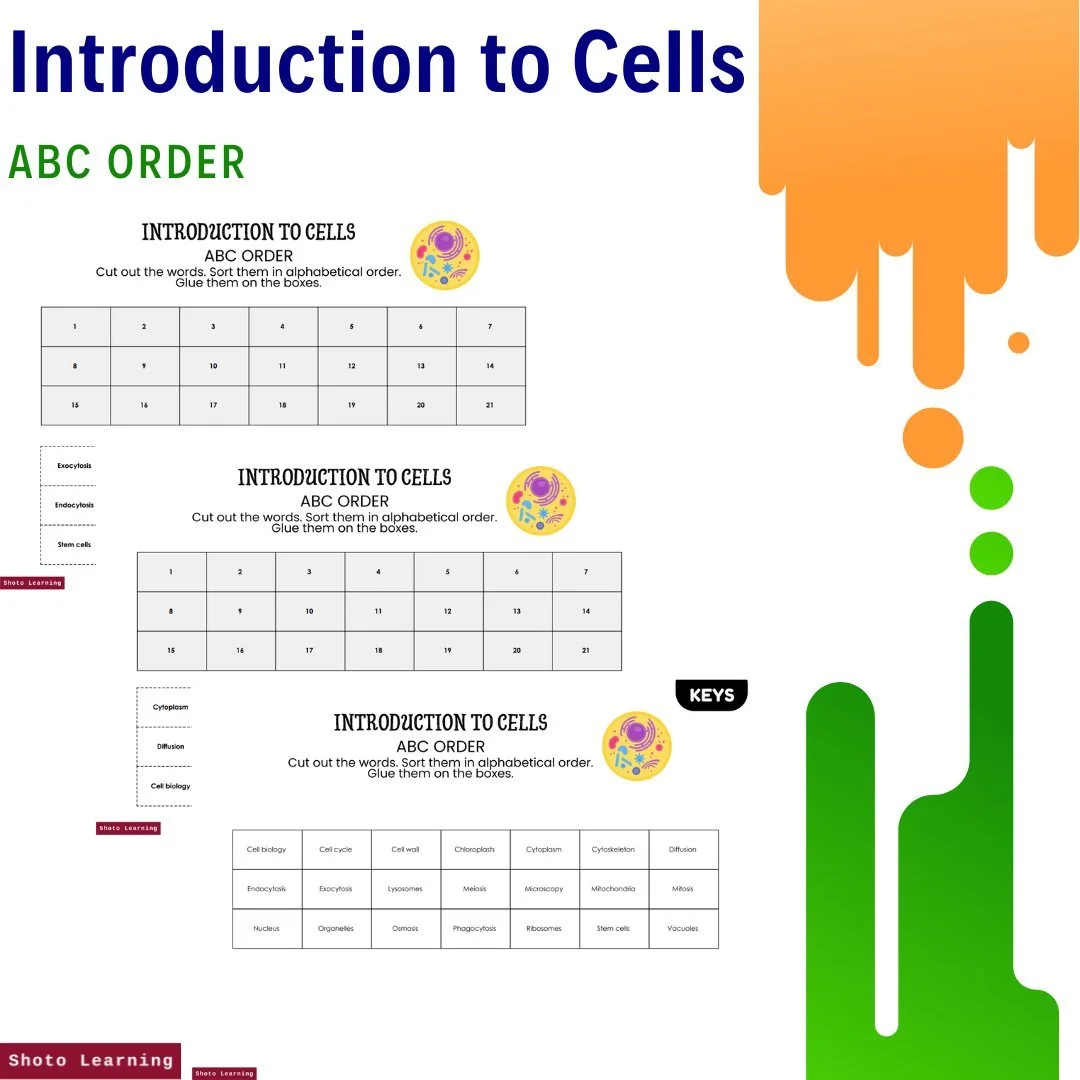
Free ABC Order: Practice alphabetizing cell biology terms with a free ABC order worksheet, offering a valuable skill-building exercise.
Free Matching: Enhance your understanding of cellular structures and functions with a free matching worksheet, providing a visual and tactile way to reinforce learning.
Free Poster: Decorate your learning space with a free poster featuring vibrant illustrations and informative content about animal cells.
Lesson Plan: Dive deep with our detailed lesson plan, complete with engaging activities and discussion topics.
Matching: Strengthen your grasp of cellular anatomy with a matching worksheet, challenging you to match organelle names with their functions.
Missing Letters: Test your knowledge with a missing letters worksheet, where you fill in the blanks to complete cell biology terms and definitions.
Multiple Choice: Assess your comprehension with 20 multiple-choice questions and answers, covering a wide range of cell biology topics.
PowerPoint: Dive into a visually captivating PowerPoint presentation on Introduction to Cells, packed with colorful graphics and concise explanations.
Questions and Answers: Explore 20 thought-provoking questions and answers about cell biology concepts, perfect for stimulating critical thinking.
Reading Comprehension: Sharpen reading skills with engaging passages, perfect for students and educators alike.
Scramble: Unscramble jumbled words related to cell biology in a challenging scramble worksheet, offering a fun and educational brain teaser.
Test (45 minutes): Challenge yourself with a 45-minute test worksheet, designed to assess your knowledge and comprehension of cell biology concepts.
True or False: Test your understanding with 20 true or false questions and answers, providing instant feedback and reinforcement of key concepts.
Word Search: Have fun while learning with a word search puzzle featuring cell biology terms, perfect for solo or group activities.
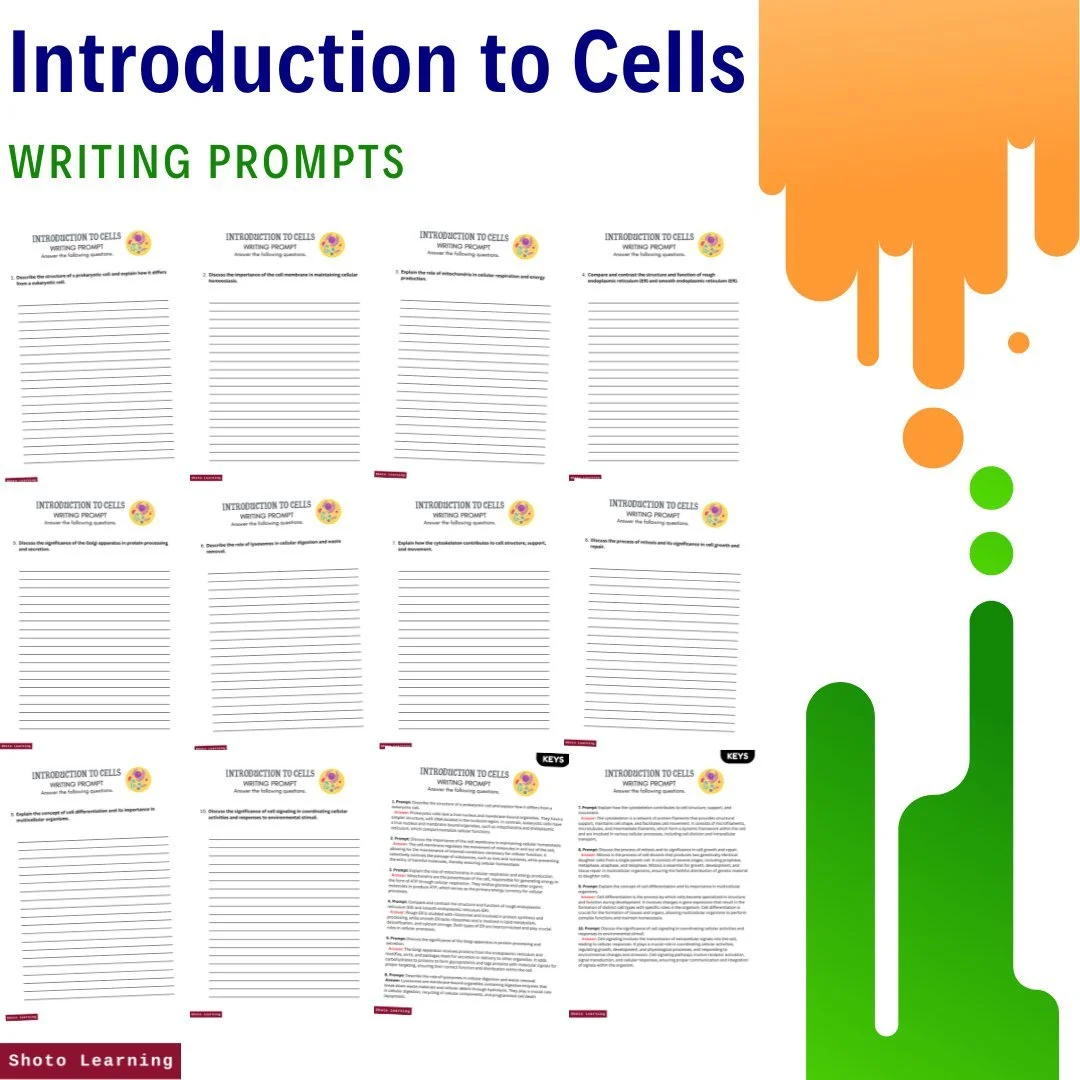
Writing Prompts: Inspire creativity and reflection with a set of writing prompts related to cell biology. Encourage students to explore their thoughts and ideas about cellular processes and functions.
Enhance your mastery of cell biology concepts and ignite your passion for learning with our comprehensive "Cell Biology Mastery Bundle." Download now and embark on an exciting exploration of the wonders of cells!
Pages: 126 pages
Order your copy today!