
Teach Kids To Compare: Long/Short, Heavy/Light, Hot/Cold With Simple Everyday Examples
Teaching kids to compare things like long and short, heavy and light, and hot and cold helps them understand the world around them. These basic concepts build a foundation for math and science skills. Using simple everyday objects, children can practice these comparisons naturally and gain confidence in measuring and describing their environment.
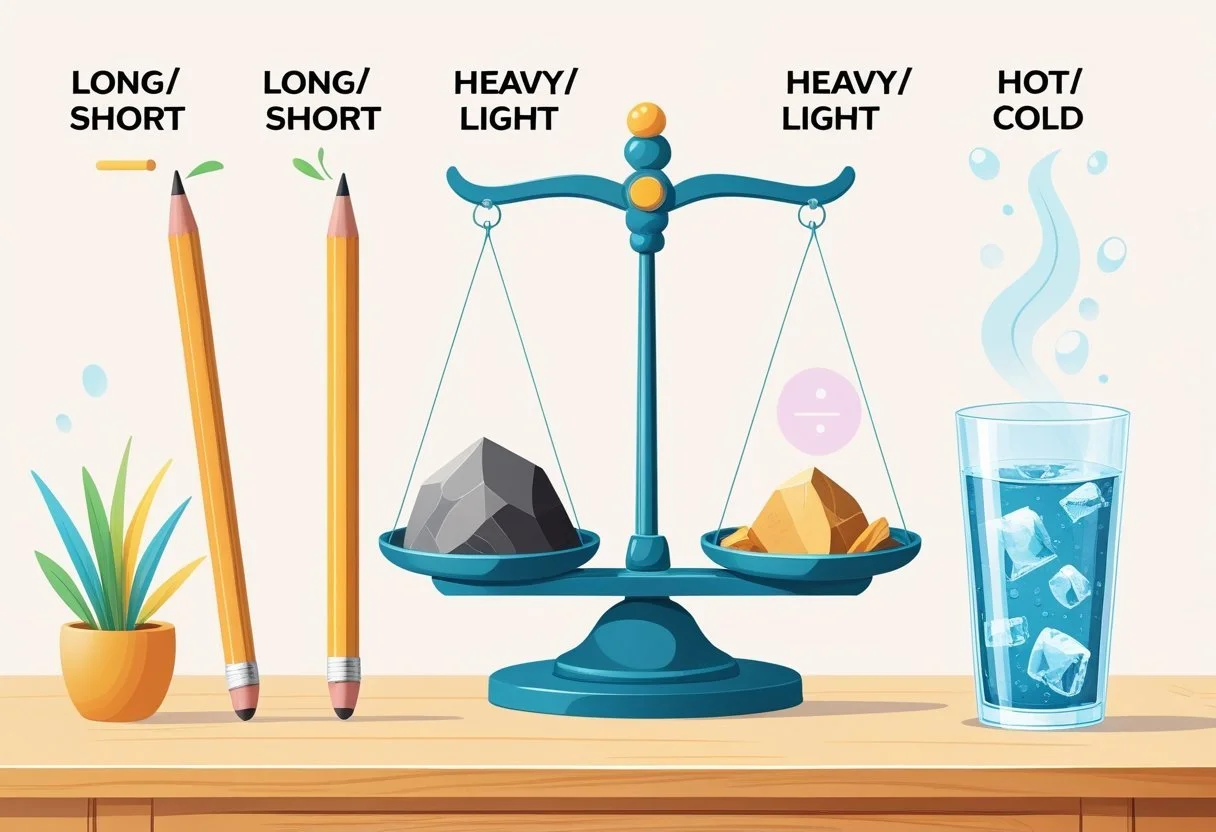
Kids learn best when they explore these ideas through hands-on activities and real-life examples. Parents and teachers can support this by using clear language such as heavier or lighter, longer or shorter, and hotter or colder. These words help kids communicate what they observe and think about differences between objects.
By encouraging practice with these concepts, children develop important thinking skills. They also become more aware of how to use measurement tools and comparison words in daily life, which prepares them for more advanced learning.
Key Takeaways
Comparing objects helps kids understand size, weight, and temperature differences.
Using clear descriptive words improves children's ability to explain and compare.
Hands-on activities make learning about measurements practical and engaging.
Key Concepts: Long/Short, Heavy/Light, Hot/Cold
Understanding how to compare objects using length, weight, and temperature helps children develop important measurement skills. These concepts relate to words children use every day and form the foundation for more advanced learning. Knowing what these terms mean, why they matter, and common mistakes helps guide teaching and learning.
Definition of Comparison Terms
Long and short describe how big or small something is in length. For example, a pencil can be long, and a crayon can be short.
Heavy and light refer to weight. An object that feels harder to lift is heavy, while one that is easy to pick up is light.
Hot and cold describe temperature. Hot things like a cup of tea feel warm to the touch, while cold things like ice feel cool.
These words help children understand everyday experiences by comparing one thing to another.
Why Learning to Compare Matters
Comparing objects is an early math and science skill. It helps children describe the world clearly using words such as taller, shorter, heavier, or lighter. This also builds their vocabulary and critical thinking.
Knowing these terms helps students follow instructions and solve simple problems like picking the longest spoon or choosing which drink is colder. It supports early measurement skills used later in school, like using rulers or thermometers.
By learning to compare, children become better observers and communicators, improving learning in many subjects.
Common Misconceptions in Comparison
Children sometimes think long always means tall, but length can be horizontal or vertical. A snake can be long but not tall.
They may also confuse heavy and big. A small rock can be heavy while a big balloon is light.
With hot and cold, children might only think about weather, missing that these terms describe many things, like food or objects.
Clear examples and practice help children avoid these mistakes and use comparison words correctly.
Teaching the Concept of Heavy and Light
Understanding weight helps children compare and sort objects by how heavy or light they are. Recognizing differences in weight builds skills in observation and classification, using real objects they can touch and move.
Explaining Weight to Children
Weight is the measure of how heavy or light something is. It can be taught by showing children objects that feel heavy and objects that feel light. Using a balance scale helps kids see which item weighs more without guessing.
Hands-on activities work best. Children pick up toys, fruits, or books, then decide if each is heavy or light. Teaching words like heavier and lighter supports their understanding. It is important to remind them that size does not always mean an object is heavy or light. A small object can be heavy, and a big one can be light.
Everyday Examples of Heavy and Light Objects
Using common items helps kids relate to the idea of weight. Heavy objects include books, bags of sugar, or a large toy. Light objects could be a feather, a crumpled piece of paper, or a small plastic cup.
Parents and teachers can ask children to sort objects into piles of heavy and light. This activity encourages them to use real examples and deepen their experience with weight.
A simple list can guide choices:
Heavy Objects: bricks, water bottles, canned food
Light Objects: cotton balls, paper clips, sponges
Developing Classification Skills
Classifying objects by weight sharpens critical thinking. Children group items as heavy or light, learning to notice small differences in weight. Introducing terms like heavier, lighter, and equal helps refine their comparisons.
Using a balance scale encourages hands-on learning. Kids observe which side tips more, confirming their guesses. They develop the ability to classify objects logically instead of by size or appearance.
Encouraging children to explain their choices builds language skills and deepens understanding of weight concepts.
Measuring and Comparing Weights
Understanding how to measure and compare weights helps children learn important skills in everyday life and science. They explore ways to find out which objects are heavier or lighter and learn about tools and units used for weighing.
Introduction to Weighing Scales
A weighing scale is a tool used to measure how heavy an object is. Scales come in different types, but their main job is to show how much something weighs.
Some scales use numbers on a screen, while others have a needle pointing to the weight. Children can use these scales to compare toys, fruits, or other objects.
Learning to read a weighing scale helps kids understand weight differences and other measurement concepts like balance and units.
Using Balance Tools
Balance tools, such as balance scales, help show weight differences clearly. They have two sides where objects are placed to see which is heavier or lighter.
If both sides go down equally, it means the weights are the same. This hands-on method makes it easy for children to see and feel the difference between heavy and light.
Balance scales are useful because they do not need batteries or power, making them simple and effective for teaching weight comparison.
Units of Measurement: Grams and Kilograms
Weight is measured in units like grams and kilograms. Grams are used for small, light objects, while kilograms measure heavier ones.
For example, a small apple might weigh about 150 grams, but a bag of rice could weigh 2 kilograms. Thinking in these units helps kids understand size and weight.
Teaching children about grams and kilograms prepares them for using scales in real life and connects their learning to everyday objects and tasks.
Comparing Lengths: Long and Short
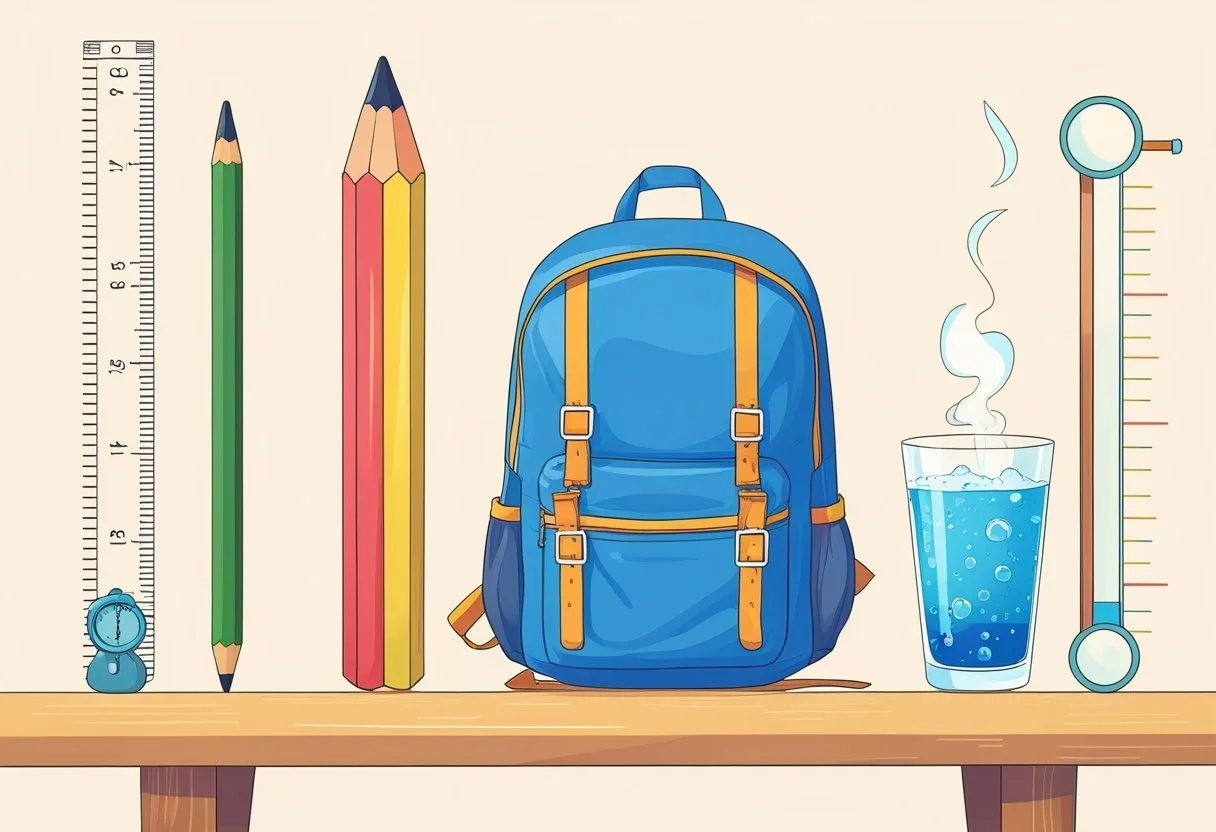
Children learn to compare lengths by seeing and feeling the difference between long and short objects. Using hands-on activities and familiar items makes it easier to understand these ideas. Clear examples and practice help build their skills.
Visual and Tactile Comparisons
Kids can understand length by looking at objects placed side by side. Seeing a pencil next to a crayon helps them spot which is longer or shorter. Holding objects also helps. When they feel the length of a string or ribbon, they connect what they see with what they touch.
Using terms like longer than and shorter than while comparing helps children use language correctly. Showing different lengths of objects like sticks, ropes, or straws reinforces the concept. Visual and tactile experiences together make the idea of length easier to grasp.
Practice with Everyday Objects
Everyday items can be great tools for comparing length. Children can compare spoons, shoes, pencils, or books. Asking questions such as “Which is longer?” or “Is this spoon shorter than the fork?” makes the activity interactive.
Parents and teachers can encourage kids to arrange several items from shortest to longest. This builds understanding of order and measurement. Drawing lines or cutting paper strips at different lengths also helps children recognize long and short visually and physically.
Examples for practice:
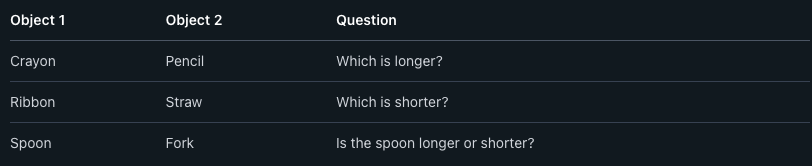
Using common objects keeps learning simple and relevant.
Understanding Temperature: Hot and Cold
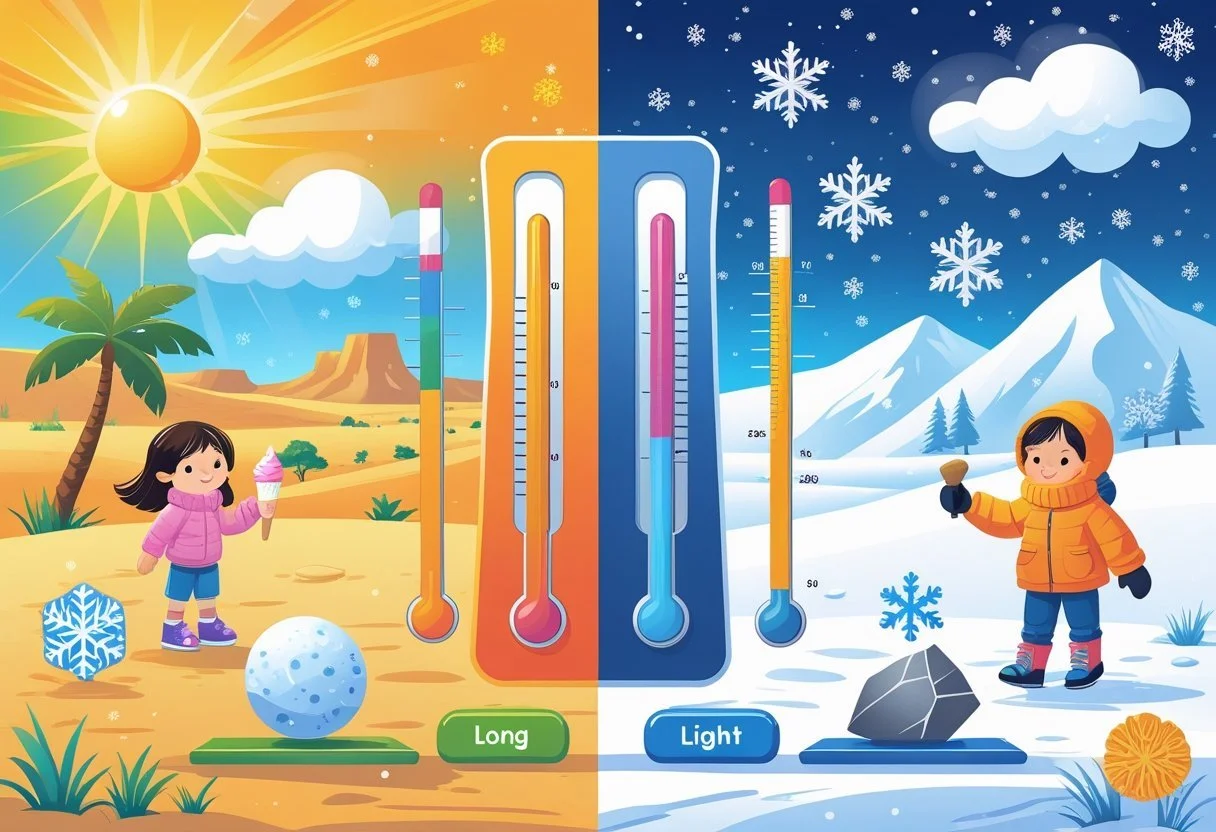
Temperature is an important part of everyday life. Kids learn to recognize and describe how things feel based on whether they are hot or cold. This skill helps them stay safe and understand the world around them.
Identifying Hot and Cold Items
Children can identify items as hot or cold by touching or observing them. Objects like ice, cold drinks, or snow feel cold to the touch. Items such as a warm cup of tea, a hot oven, or sunlight on a sunny day feel hot.
Adults often teach kids not to touch hot things like stoves to prevent burns. They also explain wearing coats in cold weather to stay warm. This early knowledge helps kids recognize temperature differences through daily experiences.
Visual clues also help with identification. Steam or glowing red surfaces usually mean something is hot. Frost or ice crystals signal cold. Using tools like thermometers allows more precise temperature measurement.
Describing Differences in Temperature
Describing temperature involves using words like hotter, colder, warm, or cool. Children learn to compare items by these terms to convey how their temperatures differ.
For example, they might say, “The sun is hotter than the snow,” or “This water is colder than the air.” These comparisons help children understand that temperature can vary and that it is relative.
Teachers and parents can encourage kids to explore temperature by comparing objects, such as hot soup versus cold juice. This practice builds vocabulary and the ability to make direct comparisons, which are core skills in learning about temperature.
Using Language: Heavier, Lighter, Heaviest, Lightest
Comparing weight is important for kids to understand size and mass differences. They learn to use words like heavier and lighter to describe objects, and heaviest and lightest to compare groups. Clear communication helps them explain what they observe in everyday life.
How to Communicate Comparisons
Children should use specific words to compare two or more objects. For two objects, words like heavier and lighter are best. For example: "This box is heavier than that one."
When comparing three or more things, the words heaviest and lightest are used. For example: "This is the heaviest book in the pile."
It helps to give clear examples using real objects. Using phrases like "heavier than," "lighter than," "the heaviest," and "the lightest" guides kids to form correct sentences about weight differences.
Practical Exercises for Comprehension
Using everyday items, adults can ask kids to compare weights. For instance, give them three objects and ask:
"Which one is heavier?"
"Which one is the lightest?"
They can also lift objects to feel the difference. Using a simple lever can show how effort changes with weight, helping kids understand the concept physically.
Making lists or tables helps organize their answers. For example:
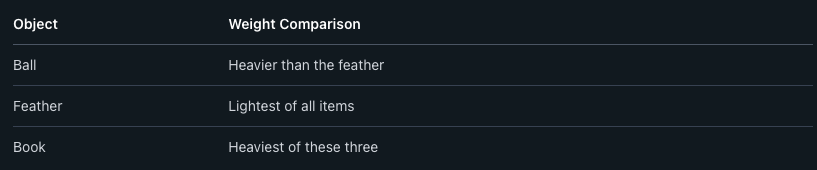
This process builds stronger understanding of heavier, lighter, heaviest, and lightest in daily situations.
Engaging Activities for Comparison Skills
Activities that use hands-on objects, simple tools, and visual aids help children learn to compare sizes, weights, and temperatures. These methods make abstract ideas like long/short and heavy/light easier to understand by involving direct experience.
Hands-On Sorting Games
Sorting games use everyday items like blocks, spoons, or toys to teach kids how to group objects by size or weight. Children can sort objects into categories such as "long vs. short" or "heavy vs. light."
This activity encourages visual and tactile exploration. Kids can hold and move the items, then decide where they belong based on comparison words.
For example, a game might involve sorting different pencils by length or grouping toys from heaviest to lightest. This hands-on approach improves observation skills and helps connect words to physical differences.
Balance Scale Experiments
Using a balance scale teaches children about weight and helps develop an intuitive sense of heavy versus light. Kids place objects on either side of the scale to see which one tips lower.
This activity shows weight differences visually and physically. Children learn that weights can be compared without exact numbers by simply observing balance.
Teachers or parents can provide pairs of items, such as a small rock and a feather, to compare. Asking questions like “Which side is heavier?” helps reinforce measurement vocabulary naturally.
Interactive Worksheets
Worksheets that include pictures and matching exercises support the practice of comparing length, weight, or temperature. These worksheets often ask children to circle the longer or heavier objects.
Some worksheets use simple illustrations where kids draw lines to match items with the correct size or weight description.
Using printable worksheets allows children to review concepts individually or in groups. These worksheets complement hands-on learning by reinforcing words like long, short, heavy, light, hot, and cold in a clear, visual way.
Applying Comparison Skills in Daily Life
Comparison skills help children make choices and solve problems by noticing differences and similarities in everyday items. These skills are used when deciding between options and when observing details to understand situations better.
Decision Making Using Comparisons
When children compare items, they learn to pick what fits best in different situations. For example, they can decide which backpack is lighter to carry or which jacket is warmer on a cold day. Comparisons like heavy versus light or hot versus cold guide practical choices.
Adults can encourage this by asking questions such as:
Which fruit is heavier, the apple or the banana?
Is this water cold enough to drink?
This helps children practice weighing options based on specific qualities. The skill of comparing strengthens their ability to judge and make clear decisions.
Problem Solving and Observation
Comparing helps children notice details important for solving problems. For instance, they might find a longer stick better for a game or a taller glass to hold more water. Observing differences in size, weight, or temperature allows them to test ideas and find solutions.
Children can improve observation by:
Checking if an object is shorter or longer than another
Feeling which object is colder or warmer
These exercises build critical thinking. Children learn to observe carefully, use comparisons, and apply what they notice to fix problems or make smart choices.
Frequently Asked Questions
Understanding size, weight, and temperature concepts helps children build basic measurement skills. Hands-on activities and simple comparisons make these ideas easier for young learners to grasp.
What activities can help children understand the concept of long versus short?
Measuring different objects like pencils, ribbons, or sticks helps children see length differences. Comparing two items and asking which is longer or shorter builds their observation skills.
Using worksheets that show pairs of items with clear size differences offers practice in recognizing long and short. Drawing or cutting shapes of various lengths can also support learning.
How can I demonstrate the difference between heavy and light objects to kids?
Let children hold and lift items with different weights, such as books and erasers. This physical experience helps them feel which objects are heavier or lighter.
Using everyday items like toys or fruit lets kids compare weights easily. Encourage them to describe objects by using words like heavy, heavier, light, and lighter.
What are effective teaching methods for explaining temperature differences, like hot and cold, to children?
Show real examples like warm water and cold water for hands-on learning. Let children touch safely warmed or cooled objects to feel the change.
Use simple language and pictures to associate hot with warmth and cold with coolness. Discuss weather changes or ice and heat in cooking to connect temperature with daily life.
What games can reinforce the understanding of physical attributes such as length and weight for young learners?
Sorting games where kids group objects by size or weight help reinforce the concepts. Matching cards with pictures of big and small or heavy and light items also work well.
Simple role-play or scavenger hunts where children find the longest or heaviest object in a room encourage active learning.
At what age should I start teaching my child about simple comparisons between objects?
Children as young as 3 or 4 can begin learning basic comparisons. Preschool and kindergarten ages are best for introducing these concepts through play and simple tasks.
Skills like identifying big versus small or heavy versus light fit well into early childhood learning activities.
How do visual aids contribute to teaching kids about basic measurement concepts?
Visual aids like pictures, charts, and worksheets clarify ideas by showing clear examples. They help children connect words like long, short, heavy, and light with what they see.
Using images of everyday objects makes learning concrete and easier to understand for young learners. Visual cues support both instruction and practice.