
How to Teach Multiplication with Visuals and Activities for Engaged Learning
Learning multiplication can be much easier and more enjoyable when students see how it works with visuals and hands-on activities. Using pictures, arrays, and real objects helps kids understand what multiplication means, making it less confusing and more memorable. These methods also allow children with different learning styles to succeed and build confidence with math.
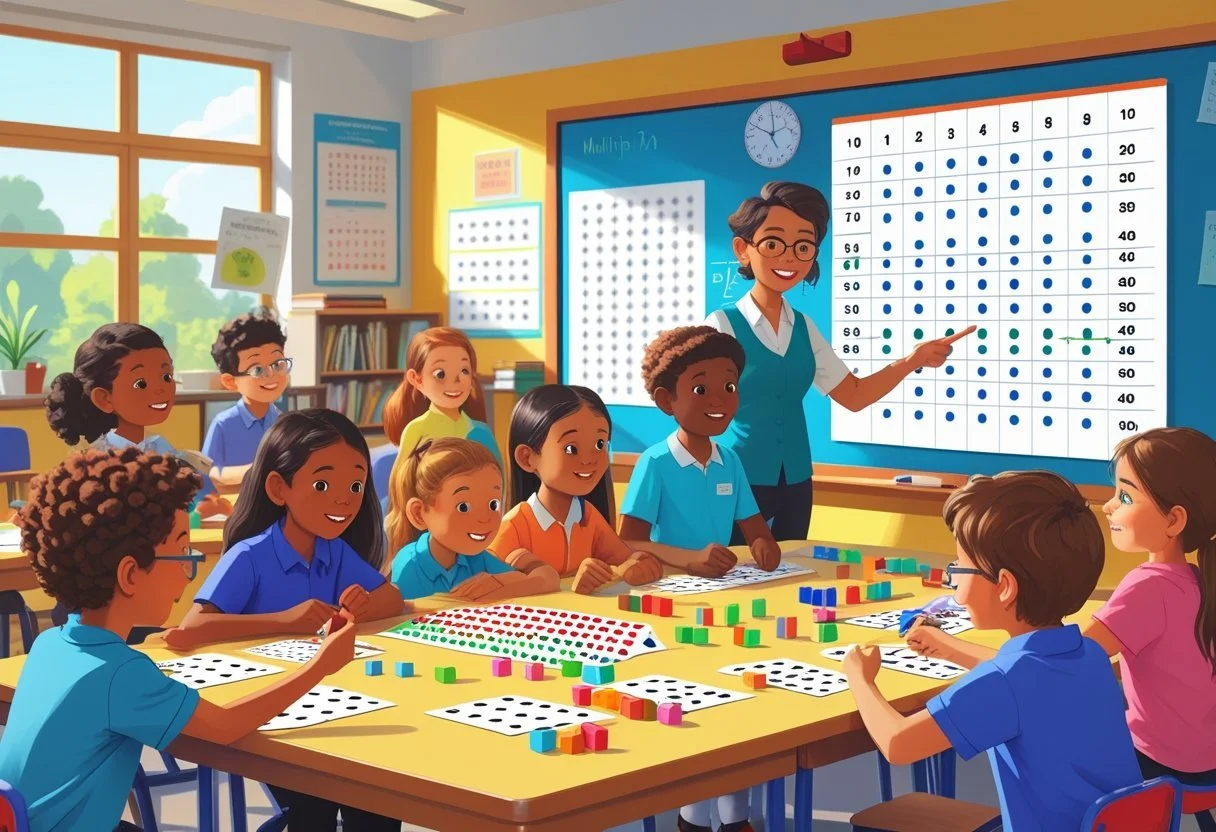
Teachers and parents can use simple materials like counters, blocks, and drawings to show how numbers connect and multiply. Games, group work, and colorful charts turn abstract math facts into something students can see and touch, helping them master multiplication facts without just relying on memorization.
Key Takeaways
Visuals and activities make multiplication easier to understand
Hands-on tools and games build math skills and confidence
Engaging lessons help students remember multiplication facts
Understanding the Foundations of Multiplication
Multiplication is a basic math skill that builds on the ideas of adding groups, recognizing patterns, and remembering facts. Being able to see how numbers connect can make multiplication easier and help students solve other math problems faster.
Explaining the Concept of Multiplication
Multiplication is about adding equal groups together. Instead of writing the same number many times as in addition, multiplication shortens that process.
For example, if a person has 3 bags and each bag holds 4 apples, they could write 4 + 4 + 4. In multiplication, this problem becomes 3 × 4, which equals 12. The numbers being multiplied are called factors and the answer is the product.
The multiplication symbol (×) shows that equal sets are being combined. Visual tools, like arrays and number lines, help students connect numbers and see patterns.
Highlighting Equal Groups and Repeated Addition
Learning that multiplication is the same as repeated addition is an important step. It means putting several equal groups together and finding their total.
For instance, 5 × 2 means five groups of two. As repeated addition, it is 2 + 2 + 2 + 2 + 2 = 10. Using blocks, counters, or pictures makes this idea easy to see. Students can also draw groups to solve the problems with less confusion.
Teachers often use activities such as grouping objects, drawing arrays, and using math games to make these ideas clear. These hands-on methods help students remember that multiplication is not just memorizing numbers, but understanding what the numbers mean.
The Role of Multiples and Multiplication Facts
Multiples are what show up when counting by the same number over and over. For example, the multiples of 3 are 3, 6, 9, 12, and so on. Recognizing patterns in multiples helps students solve multiplication problems quickly.
Multiplication facts are basic equations, such as 4 × 6 = 24, that students are expected to memorize. Practicing these facts lets students answer questions much faster. Here is a table showing some multiplication facts for quick review:
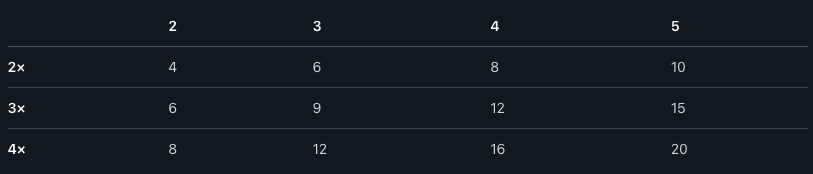
Games, flashcards, and repeated practice are useful strategies for building a strong memory of multiplication facts. A strong understanding of multiples and facts is key for more challenging math in the future.
Using Visual Models to Teach Multiplication
Visual models help students see how multiplication works by breaking problems into smaller, easier steps. They connect what students already know, such as addition, to new ideas like multiplication and equal groups.
Arrays and Grid Representations
Arrays show multiplication by arranging objects, dots, or shapes in rows and columns. Each row contains the same number of items, making it easy to see equal groups. For example, a 3 by 4 array has 3 rows of 4, showing (3 \times 4 = 12).
This method helps students understand multiplication as repeated addition. Instead of only memorizing facts, they see how answers are built.
Teachers can use real objects, blocks, or digital tools to create arrays. Drawing arrays on paper or using grid sheets gives a clear visual. Arrays are also the basis for more advanced models, like area models, which are helpful for multi-digit multiplication.
A simple table can help organize rows and columns:

Number Lines and Skip Counting
Number lines let students count by multiples to find products. They start at zero and make equal jumps, showing how multiplication is related to repeated addition.
For example, to solve (4 \times 3), a student makes four jumps of three on the number line: 0, 3, 6, 9, 12.
Skip counting is another helpful way. By counting out loud—3, 6, 9, 12—students connect multiplication with counting patterns and recognize multiples more easily.
Number lines support students who benefit from seeing steps in order and help build number sense. Both number lines and skip counting can be done with paper, dry erase boards, or even on the floor using tape.
Ten Frames and Grouping Strategies
Ten frames are simple grids with ten spaces, often used for early math skills. For multiplication, students fill several ten frames to make groups. This helps them visualize equal groups and count efficiently.
For instance, to solve (3 \times 5), a student fills three ten frames, each with five counters. Counting all filled spaces gives the answer.
Other grouping strategies use cups, beans, or discs to show equal groups. Grouping objects into sets and counting the total deepens understanding of multiplication as making and counting equal groups.
Ten frames and physical grouping tools support hands-on learning and help students move from concrete models to abstract multiplication facts. These tools are especially useful for visual learners and those just starting to learn multiplication.
Incorporating Manipulatives for Concrete Learning
Using manipulatives, such as mini erasers or counters, helps students understand multiplication in a hands-on way. By making learning concrete, students see what multiplication looks like and can connect objects to the math symbols they see.
Choosing Effective Manipulatives
The choice of manipulatives matters. Mini erasers, counters, cubes, and place value discs are popular for multiplication lessons. These tools are easy to handle and visually separate into equal groups, which matches the multiplication concept.
Teachers should look for manipulatives that are the right size for children's hands and easy to count. Colorful objects, like mini erasers, are attractive and keep students engaged. Single-color counters or linking cubes also work well in group activities or on individual desks.
Using manipulatives that match the math idea is important. For multiplying, students benefit from objects they can physically group, sort, and move. This keeps attention focused on making equal groups rather than on unnecessary decoration or distraction.
Hands-On Activities with Mini Erasers and Counters
Hands-on activities using mini erasers and counters allow students to build equal groups and arrays. For example, to model 4 x 3, a student can set out 4 groups with 3 mini erasers in each. This shows that multiplication is the same as adding equal groups.
Teachers can use these objects for math centers or small-group work. Students can work together to sort, group, or even trade counters to solve multiplication problems.
Simple activities might include:
Building arrays on ten frames
Sorting erasers by color and grouping by number
Using counters to solve word problems
Manipulatives make it possible to see the total as groups come together, rather than just as a number on a page. This builds a picture in the mind of what multiplication means.
Connecting Manipulatives to Abstract Concepts
After practicing with physical manipulatives, it is important to help students move to more abstract math symbols and ideas. Teachers can encourage students to match each group of manipulatives with a multiplication expression and then with numbers alone.
For example, after building 4 groups of 3 mini erasers, students write "4 x 3 = 12" and draw a simple representation. A table may be used to show the connection:

This process helps students see the link between the hands-on activity and the math symbols they find in textbooks. Over time, they need fewer manipulatives to solve problems and can use drawings, number sentences, or mental math with more confidence.
Engaging Multiplication Activities and Games
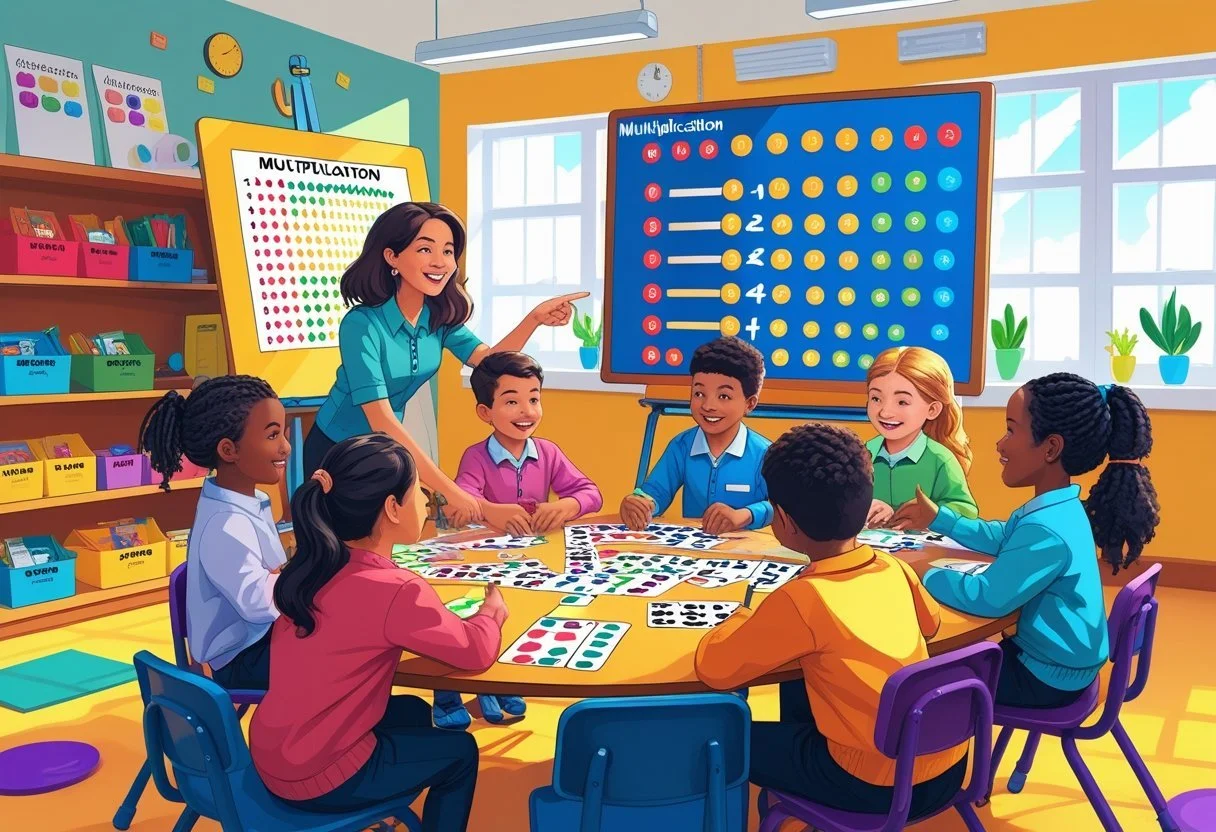
Students build a stronger understanding of multiplication when learning is hands-on and interactive. Visuals and playful activities help students connect math concepts to real-world situations and boost memory.
Creative Multiplication Activities
Hands-on activities encourage exploration and deeper understanding of multiplication. Array building is a common activity using objects like counters, blocks, or stickers to form rectangles. For example, students can arrange 3 rows of 4 objects to show that 3 × 4 = 12.
Multiplication art can turn abstract concepts into something students can see and create. Tasks like coloring multiplication mosaics allow math centers to combine number practice with creativity.
Skip counting with visuals uses number lines or bead strings to show repeated addition. Making charts or posters with multiplication facts and matching pictures can also help with practice.
In small group stations, students may work together to fill out a multiplication grid or create “times table books.” These activities use visuals to make patterns more obvious and help facts stick.
Multiplication Practice Through Games
Games make multiplication practice enjoyable and break up routine assignments. Multiplication War is a popular card game where players flip two cards and multiply the numbers; the highest product wins the round.
Multiplication Bingo can be played by calling out products and having students cover corresponding numbers on their cards. This encourages quick recall in a fun setting.
Online math centers often use interactive games that adjust to student skill level. Board games like “Race to 100” encourage repeated multiplication practice as students move forward by solving math problems.
Group competitions and flashcard races add excitement and help motivate students to master their facts. Practicing math in a game format helps students develop speed and builds confidence with multiplication.
Applying Visuals in Lesson Plans and Math Centers
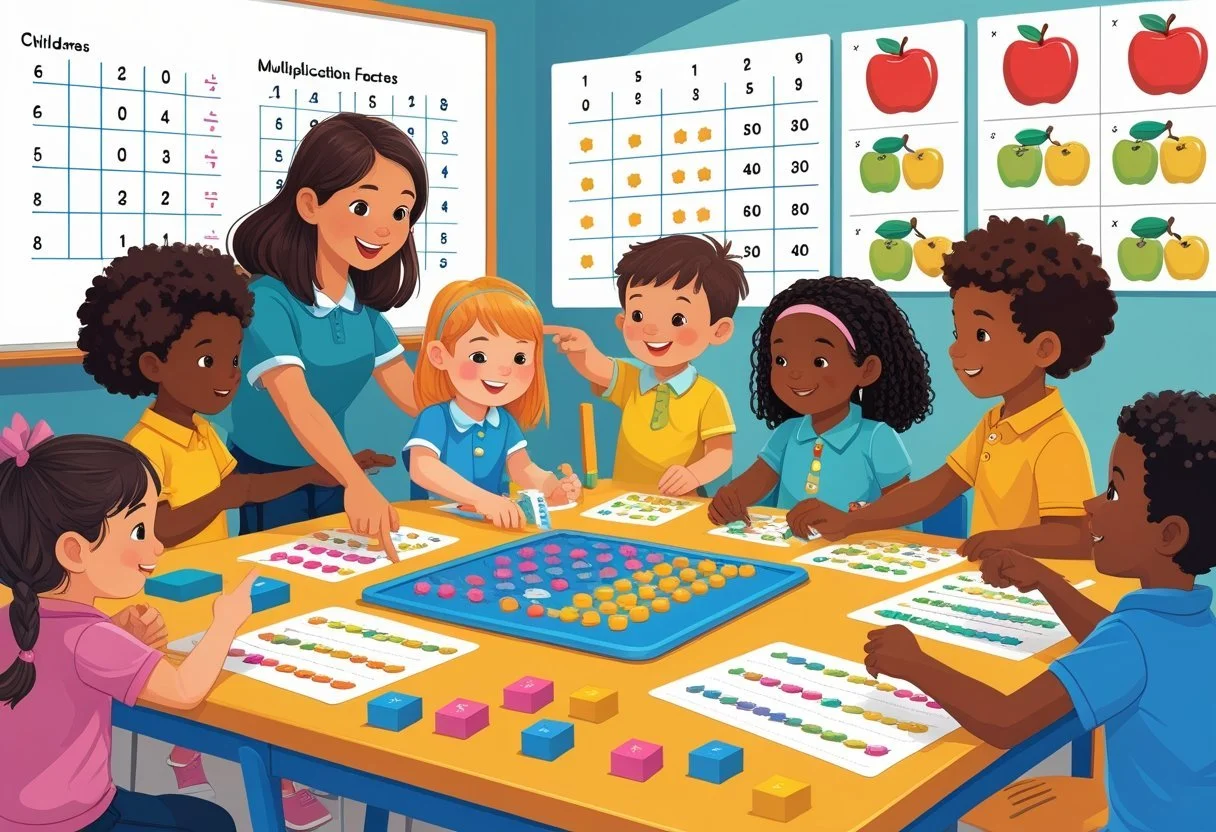
Using visuals helps students see patterns, understand relationships, and solve multiplication problems with more confidence. Math centers and hands-on activities can reinforce these concepts by offering different ways for students to practice new skills.
Designing Lesson Plans with Visual Aids
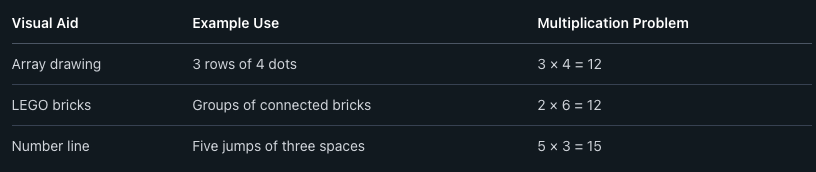
Teachers can start lesson plans by building a “visual vocabulary” for multiplication. This means showing students how arrays, area models, and number lines represent multiplication problems. Simple charts or diagrams can help students connect the numbers to real situations, like groups of objects or rows of items.
Using visual aids such as colored counters, blocks, or draw-and-label worksheets helps students grasp what it means to multiply. Teachers might display multiplication arrays on the board or use interactive whiteboards to let students move objects into groups. Visual representation supports understanding for those who struggle with just numbers.
A sample table for planning:
Integrating Task Cards and Interactive Notebooks
Task cards are small cards that present multiplication problems or prompts using pictures, word problems, or fun scenarios. These can be used during math centers, with students rotating between stations and solving different problems. Students get the chance to work independently or in small groups.
Interactive notebooks let students solve task card problems and record their thinking in a creative way. They may glue in pictures, diagrams, or foldable flaps to show how they found an answer. This not only provides meaningful practice but also builds a resource students can revisit later.
For effective use in math centers, teachers should:
Include visual cues on task cards, such as arrays or images of objects
Encourage explanations of thinking by adding reflection prompts
Mix up card styles (flip cards, matching games, puzzles) for varied practice
Combining tasks with visuals helps reinforce key multiplication strategies and keeps lesson time engaging for all learners.
Developing Multiplication Fluency and Fact Mastery
Multiplication fluency helps students solve math problems faster and with less effort. Building mastery involves both the use of helpful strategies and moving from visual supports to quick mental recall.
Strategies for Learning Multiplication Facts
Students gain multiplication fact fluency using several proven strategies. These include skip counting, making arrays, using repeated addition, and breaking down harder facts into easier ones. For example, learning that 5 × 6 is 30 can help students find 6 × 6 by adding another group of 6 to make 36.
Games and hands-on activities are highly effective. Flashcards, bingo, and multiplication war let students practice facts in fun ways. Visual tools like multiplication charts and color-coded fact tables show patterns that aid memory. Chants and songs can also help students remember tricky facts, especially those like 7 × 8 or 6 × 7 that are often missed.
Providing daily, short practice sessions keeps facts fresh. Students benefit when teachers mix quick reviews with opportunities to explain their thinking to others. Learning strategies that work for them builds confidence and supports long-term mastery.
Progressing from Visuals to Mental Math
Students start with visual aids to help them understand what multiplication means. They use objects, arrays, and grouping drawings to make connections. As they practice, they move to using pictorial models like number lines and area models.
Over time, students move from using these visuals to thinking about multiplication in their heads. Teachers can support this by asking students to explain how they arrive at answers or to use known facts to find unknown ones. For example, knowing 2 × 7 helps with 3 × 7.
To help students develop mental math, teachers can use practice drills, math games, and oral quizzes focused on accuracy and speed. Keeping track of progress with checklists or simple timed tests helps identify which facts still need work. The goal is for students to recall most basic facts quickly, without relying on visuals.
Frequently Asked Questions
Visual aids and activities can give students clear ways to understand multiplication. Teachers and parents can use simple tools and games to help learners build a stronger grasp of multiplication facts.
What are effective visual aids for teaching multiplication to 3rd graders?
Arrays using counters or blocks show how multiplication works as repeated addition. Drawing groups, using number lines, and filling in color-coded multiplication charts are helpful.
Pictures and diagrams let students see the connection between numbers. Visual models make the concept less abstract for young learners.
How can I help students who are struggling with learning multiplication?
Start with hands-on objects such as beads or blocks so students can touch and move the numbers. Slow down lessons and give extra time for practice.
Break multiplication into smaller steps like skip counting or grouping. Use simple, colorful visuals and encourage students to explain what they see.
Which hands-on activities enhance multiplication skills for 4th-grade students?
Students can build arrays with items like buttons or erasers. Playing multiplication board games helps with memorization.
Using flashcards or sorting activities gives extra practice. Math games online with visual models also keep students interested while they learn.
What are some multiplication teaching strategies for 2nd graders?
Begin with grouping real-life objects, like sets of apples or pencils. Count by twos, fives, or tens to practice skip counting before moving to multiplication.
Story problems with pictures can help students see what multiplication means. Simple songs and movement activities keep lessons engaging.
Can you suggest classroom activities that make learning multiplication fun?
Students enjoy games like bingo, memory match, or rolling dice to create multiplication facts. Team competitions for solving multiplication problems add energy to lessons.
Art activities, like making multiplication murals, combine creativity with learning. Interactive whiteboards and online apps also keep attention focused on multiplication.
How do you approach teaching multiplication to 5th graders to solidify their understanding?
Use real-life examples, such as planning a party or shopping, to show how multiplication is used every day. Encourage students to explain their thinking and share different ways to solve a problem.
Challenge students with word problems and multi-step tasks. Visual models, like area models or grids, give another way to look at more difficult multiplication.


Download this FREE Multiplication and Division Worksheet for extra math practice! This single-page printable includes 20 carefully selected problems designed to reinforce essential math skills for beginners.
Whether you're teaching at school or supporting at home, this resource is easy to implement and perfect for multiple uses.
✨ Key Features:
✅ 1 page with 20 mixed multiplication & division problems
✅ Simple layout for beginner-friendly practice
✅ Suitable for Grades 3–5
✅ Use as homework, quick grade check, workstation, or assessment
✅ Answer key included
📌 How to Use:
📚 Classwork: Use it as a quick warm-up or math center activity
🏠 Homework: Assign for extra at-home reinforcement
🧪 Assessment: Check understanding with a low-stress quiz
🔄 Review: Keep on hand for revision or fast finishers
Order your copy today!