
Creative Ideas for Teaching the Five Senses Engaging Activities for the Classroom
Kids are curious about the world around them, and learning about the five senses—sight, hearing, touch, taste, and smell—is a great way to build that curiosity. Teaching with creative activities helps students truly understand how their senses work in everyday life. Using hands-on projects, games, and experiments, lessons become memorable and keep young learners engaged.
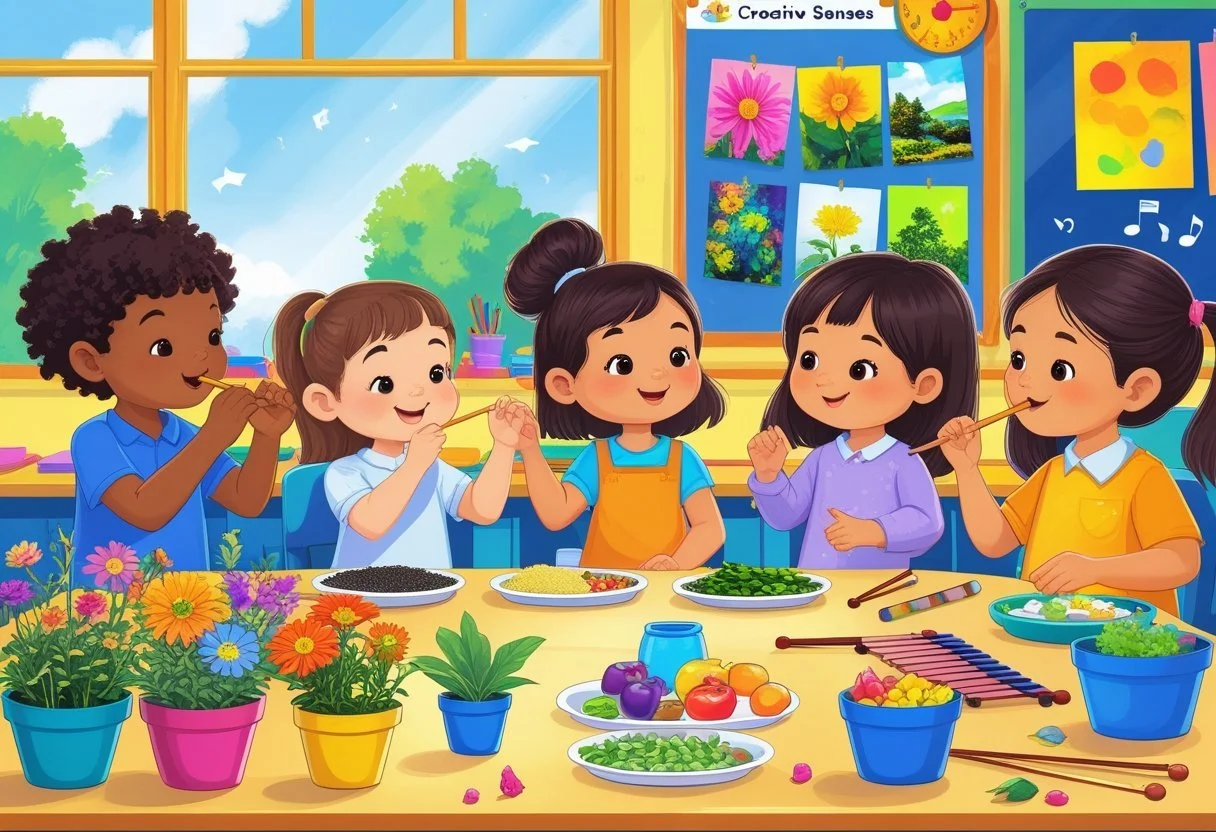
Teachers and parents can explore many simple ideas, like sensory walks, taste tests, and listening games, to introduce these concepts. These activities offer real-life connections and make learning about the five senses both fun and meaningful.
Key Takeaways
Creative lessons make the five senses easy to understand.
Hands-on activities boost interest and participation.
Each sense can be explored through simple, engaging projects.
Understanding the Five Senses
The five senses help people explore, learn, and enjoy the world. Each sense uses a special part of the body to collect information that the brain can understand and use.
What Are the Five Senses?
The five senses are sight, hearing, smell, taste, and touch. Each sense has its own organ. The eyes are used for sight, the ears for hearing, the nose for smell, the tongue for taste, and the skin for touch.
Sight helps a person see colors, shapes, and movement. Hearing allows them to notice sounds, like music or voices. Smell lets them sense things like flowers or fresh bread. Taste helps them know if food is sweet, salty, or sour. Touch allows them to feel if something is soft, rough, hot, or cold.
These senses work together. For example, eating uses taste, smell, sight, and even touch. The brain combines information from the senses to help people make choices and stay safe.
Why the Five Senses Matter in Learning
The five senses are important tools for learning. Young children use their senses to understand new ideas and experiences. When they taste food, listen to new sounds, or feel different textures, their brains grow and change.
Hands-on activities that use the senses help students stay focused. Focusing on a single sense, like just listening or just tasting, teaches concentration and builds thinking skills. Using more than one sense together can help with memory and problem-solving.
Learning with all the senses makes lessons more interesting. Students are more likely to remember what they learn when they use sight, touch, hearing, smell, and taste. Teachers can make learning stronger and more fun by including the five senses in class lessons and activities.
Creative Classroom Approaches
Teaching the five senses can be more engaging when students are part of hands-on and creative activities. Using stories and poems helps children connect personal experiences to each sense while building their vocabulary.
Interactive Lessons and Storytelling
Teachers can use interactive lessons like "mystery bags" filled with objects or foods. Students can feel, smell, or listen to the items before guessing what they are. These tasks build curiosity and strengthen observation skills.
Storytelling is another useful tool. Reading a picture book focused on the senses lets students point out when a character uses sight, touch, taste, smell, or hearing. Teachers can ask guiding questions such as:
"How do you think this food tastes?"
"What sounds do you hear in this story?"
Role-play activities work well, too. For example, students might pretend to be detectives solving a case using only their senses as clues.
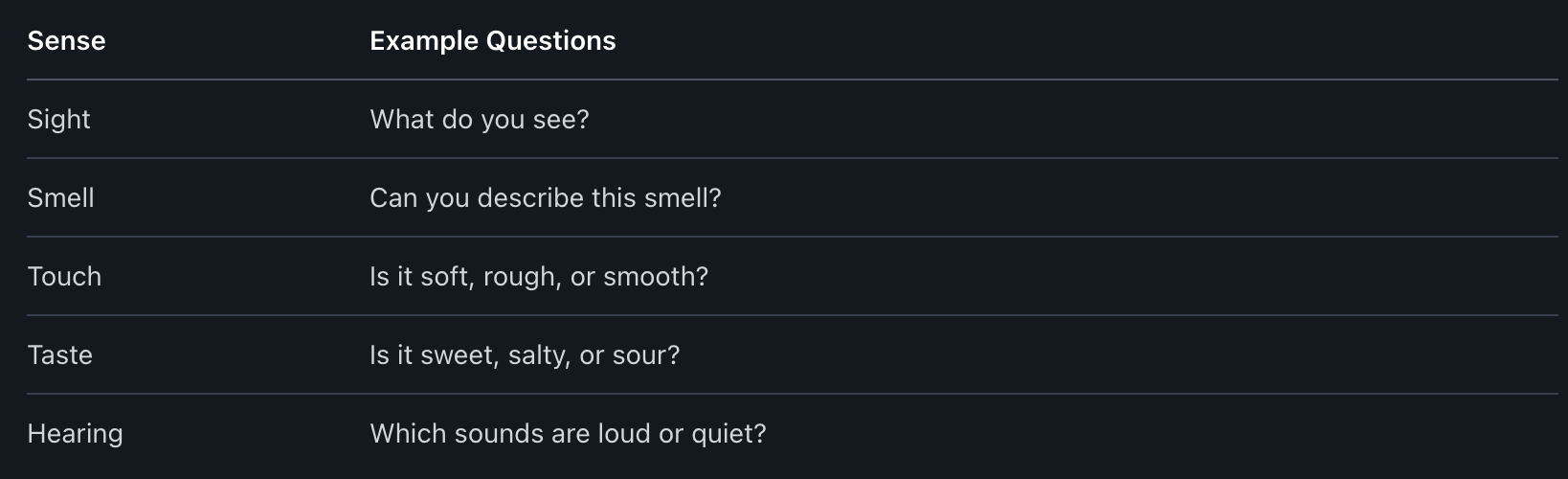
A simple table can help organize what each sense experiences during activities:
Sensory Poem Activities
Writing sensory poems helps students express how each sense works. They can start with a simple template such as:
I see…
I hear…
I smell…
I taste…
I feel…
Teachers might ask students to describe their lunch using all five senses. For younger children, group poems let everyone add a line related to a sense.
Encourage students to use descriptive words rather than just naming objects. For example, instead of "I smell pizza," use "I smell cheesy, warm pizza." This practice not only deepens understanding but also supports creativity and language growth.
Sharing poems aloud builds confidence and helps students hear how others describe the world with their senses.
Exploring the Sense of Sight
Children learn about their world through what they see. Activities for developing the sense of sight help them notice details, colors, and differences in light.
I Spy and Visual Discovery Games
Games like "I Spy" prompt children to observe their surroundings and describe objects using color, shape, and size. This builds attention to visual details and vocabulary. Spot the Difference puzzles sharpen focus as kids identify subtle contrasts between two images.
Nature walks with a scavenger hunt list—such as finding objects that are red or shaped like a circle—encourage active sight-based searching. Group activities, like matching cards or sorting items by appearance, support memory and comparison skills.
Visual memory games can be made using everyday items. For example, place a few objects on a tray, let students study them, then cover the tray and remove one item. Ask the group to identify what’s missing. These activities enhance both observation and recall using the sense of sight.
Color and Light Experiments
Simple experiments allow children to see how color and light affect what they observe. Using a prism or glass of water, they can split sunlight to create a rainbow, showing that white light is a mix of colors.
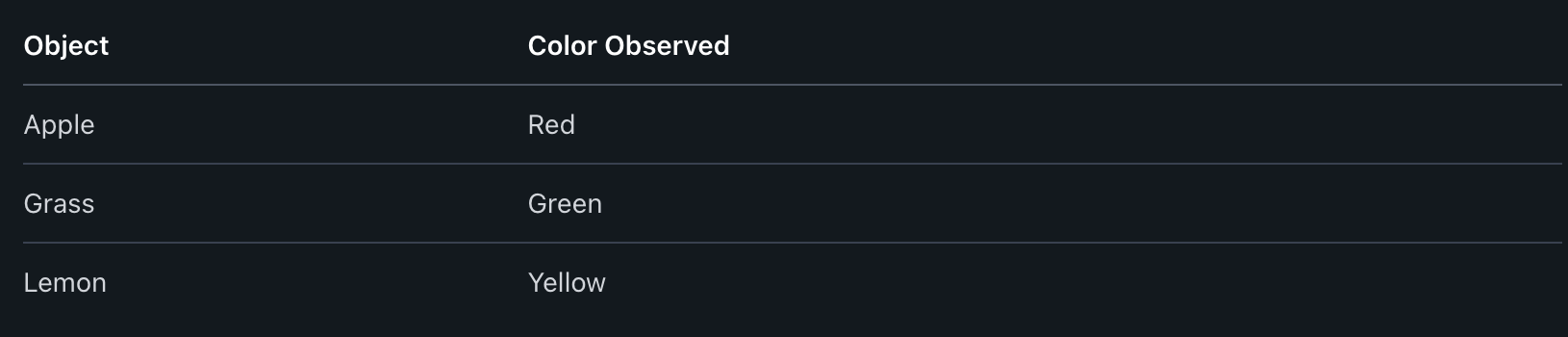
Tables using colorful objects, such as blocks or fabric squares, make discussions about primary and secondary colors engaging. A table example:
Hold items under different lighting—sunlight, lamp, or colored cellophane—to reveal how light can change the look of objects. Shadows and silhouettes can be explored by placing toys behind a flashlight. These hands-on experiences help children understand how their sense of sight works in everyday life.
Hands-On Activities for Touch
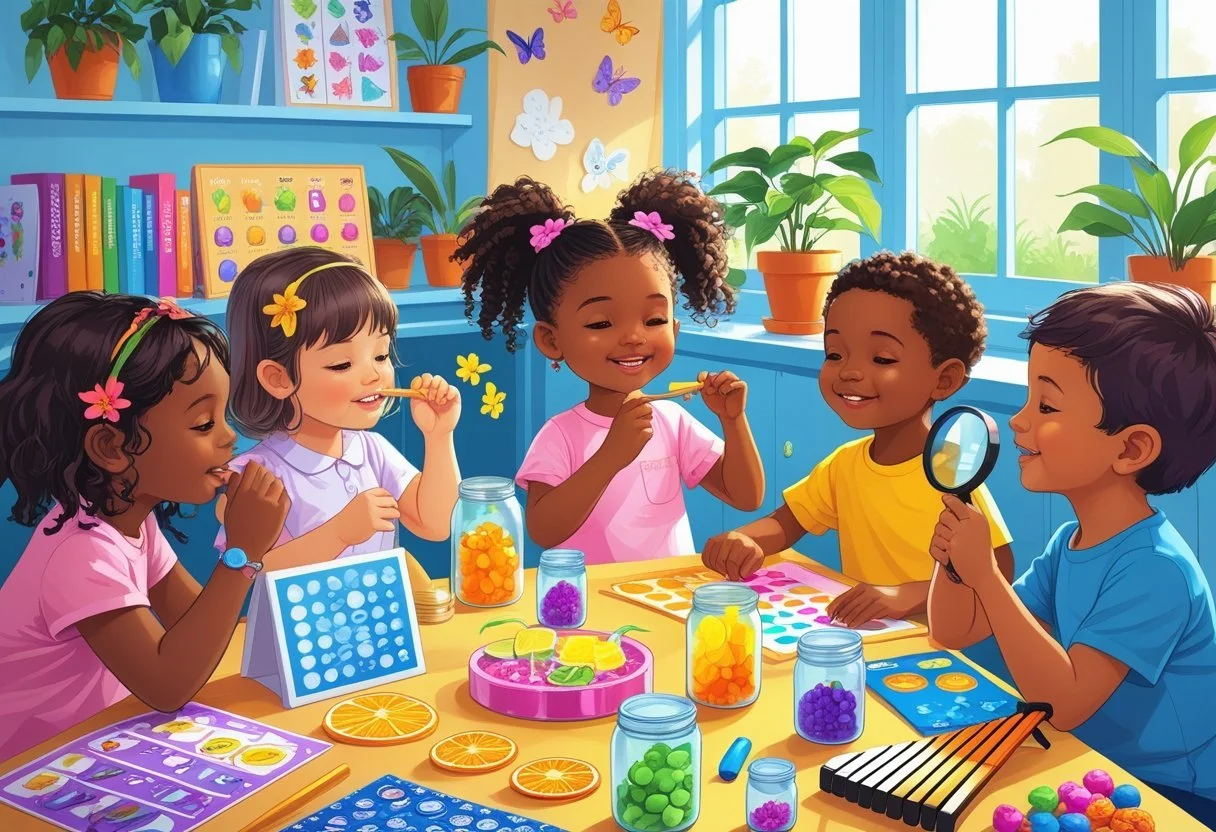
Understanding the sense of touch helps children notice differences in temperature, shape, and texture. Hands-on activities give students a chance to feel and describe different materials in an interactive way.
Texture Mapping Projects
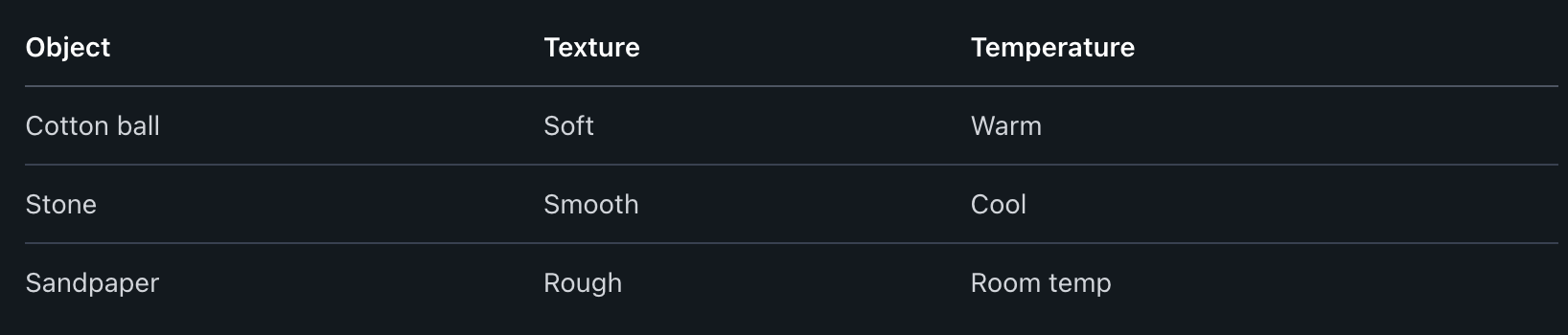
Texture mapping projects involve having students explore and describe the surfaces of different objects. Teachers can prepare a variety of items such as sandpaper, cotton balls, smooth stones, sponges, and foil.
Steps:
Place objects with different textures on a table.
Let each child pick an object and feel it with their hands.
Ask the child to use words like rough, smooth, bumpy, or soft to describe the surface.
Students can draw or trace an outline of the objects and write texture words next to each one.
Teachers can also create a “texture map” by gluing small samples of materials onto a poster board. Each section of the board shows a different texture. This visual and tactile display can hang in the classroom for students to touch and review.
Tips:
Encourage students to close their eyes when touching the objects to focus on touch.
Use a table to compare features, like the example below:
Sensory Boards and Feely Bags
Sensory boards allow kids to use their hands to explore different materials in one spot. A board or large piece of cardboard works well for this project. Attach various items, such as fabric pieces, bubble wrap, buttons, and ribbon, in separate sections.
Feely bags are another interactive way to teach touch. Fill opaque bags with objects like marbles, pinecones, or toy blocks. Let each student reach in, feel the item, and try to identify it without looking. This encourages careful attention to texture, size, and shape.
To make the activity more engaging, students can take turns describing the object’s feel to classmates. Others can guess what the item might be based only on the description.
Sensory boards and feely bags can be set up as stations for independent exploration or used in small group activities. Both options support curiosity and language development as students learn new ways to talk about the sense of touch.
Discovering the Sense of Hearing
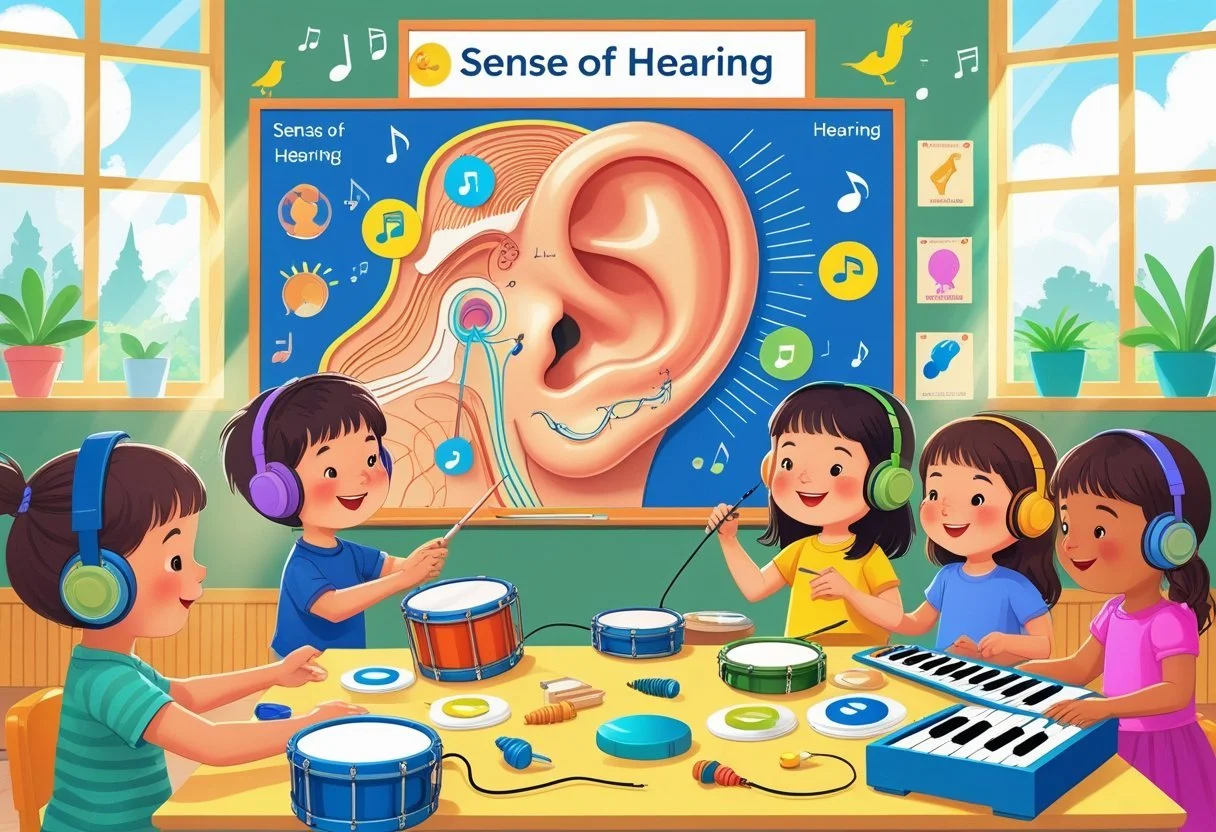
Understanding the sense of hearing can be both fun and educational for young learners. Activities that center on listening and identifying sounds help strengthen attention and auditory skills.
Homemade Instruments and Sound Recognition
Making homemade instruments encourages students to explore sounds in a hands-on way. Simple items like rice in bottles, rubber bands stretched over boxes, or spoons tapped against cups can demonstrate how everyday objects produce different noises. Encourage students to compare the pitches, volumes, and types of sounds each item makes.
A good way to focus on sound recognition is to play a "guess the sound" game. Play different recordings or produce sounds using the homemade instruments, then have students identify what they hear. Create a table to track results:

This encourages close listening and helps build vocabulary related to sound.
Listening Walks and Sound Scavenger Hunts
Listening walks get students moving and paying attention to their environment. Take a walk indoors or outdoors and ask students to quietly listen for different sounds. After a few minutes, stop and ask, "What did you hear?" Common answers might include birds, car horns, wind, or footsteps.
For a more structured activity, use a sound scavenger hunt. Give each student a short list like:
Dog barking
A bell
Footsteps
Talking
As they hear each sound, students can check it off. This practice helps students focus on individual noises, understand background sounds, and discuss experiences with peers.
Using relatable sounds makes learning about the sense of hearing memorable and practical.
Scent-Focused Learning Experiences
The sense of smell is important for exploring and understanding the world. When students use their noses, they develop observation skills, memory, and language as they describe and compare scents.
Mystery Smell Jars
Mystery smell jars help children focus only on their sense of smell by hiding the object inside a non-see-through container. Teachers or parents fill jars with everyday items such as cinnamon sticks, coffee grounds, vanilla, lemon peel, or fresh mint.
Students sniff each jar, try to guess what’s inside, and talk about what the smells remind them of. This activity encourages students to use descriptive language and associate scents with memories or experiences.
For classroom use, it’s helpful to label jars with numbers and keep a simple response sheet where students write or draw their guesses. The teacher can reveal the answers afterward, turning the activity into a fun learning moment while respecting allergies.
Scented Crafts and Scratch-and-Sniff Activities
Crafts involving smell give students a chance to combine creativity with sensory exploration. Using scented markers, stickers, or homemade dough with added spices like cinnamon or cocoa powder, students can create artwork that also engages their noses.
Making scratch-and-sniff cards is a popular project. Students glue small amounts of flavored drink mixes or gelatin powders onto paper shapes and let them dry. When scratched, the scent becomes stronger, offering an engaging way to tie smell to a lesson, story, or holiday.
Teachers can include questions, such as “What does this scent remind you of?” or “Where have you smelled this before?” This helps develop a strong vocabulary and gives students a better understanding of how the sense of smell is linked to memory and emotion.
Taste Exploration in the Classroom
Hands-on taste activities help students better understand the sense of taste. These methods make it easier for children to notice how flavors work and how taste buds identify different sensations.
Blind Taste Tests
Blind taste tests let students use only their sense of taste to identify foods. Students are blindfolded and try a variety of small food samples, such as apple slices, cheese cubes, crackers, or pieces of fruit. This helps them focus on flavor instead of appearance.
After each sample, students can record their guesses and write down if the food tastes sweet, sour, salty, bitter, or umami. Teachers can use a chart like the one below to track results:

Blind taste tests encourage careful thinking about flavor and can spark discussions on why some foods taste stronger or milder. Students will notice that some flavors, such as bitter or sour, can be easily detected, while others are less obvious.
Food Tasting Stations
Food tasting stations give students the chance to experience a wider range of flavors. In this activity, set up tables with groups of foods that represent the five main taste categories: sweet, sour, salty, bitter, and umami.
Examples include:
Sweet: Grapes, honey, or apple slices
Sour: Lemon wedges, pickles, or yogurt
Salty: Crackers or pretzels
Bitter: Dark chocolate or kale
Umami: Cheese or soy sauce
Students visit each tasting station and sample the different foods. They can use worksheets or graphic organizers to note how their tongue responds to each taste. This activity gives a clear understanding of how the sense of taste works and helps students compare how certain foods trigger different taste buds on their tongue.
Integrating All Five Senses
Effective lessons tap into multiple senses so students can connect with content on different levels. Varied activities encourage students to explore and notice the world around them using the sense of sight, sound, touch, taste, and smell.
Sensory Stations Rotation
A sensory station rotation allows students to experience each sense one at a time. Teachers can set up five tables, each focused on a different sense. For example, the sight station could include magnifying glasses and pictures with hidden details.
At the hearing station, students might listen to sound clips and guess what made each noise. The touch station can have mystery bags with objects such as sandpaper or cotton balls to feel and describe.
A taste station can offer safe samples like lemon, crackers, or chocolate for students to identify and compare flavors. For smell, jars with scents like coffee grounds or vanilla invite students to guess the smell. Rotation helps keep students engaged and gives each child hands-on opportunities to focus on one sense at a time.
Cross-Sensory Creative Projects
Cross-sensory projects encourage students to use more than one sense together. Art activities are a strong option: students might create textured collages, using rough paper or smooth fabrics, and then describe what they see and feel.
Cooking or snack-making gives students a way to experience taste, smell, touch, sight, and sometimes sound (the crunch of a cracker or the sizzle of cooking). Teachers can lead simple experiments, such as smelling flowers while observing their colors and feeling the petals.
Group storytelling can also be used—students close their eyes, listen to sounds, touch objects, and guess what’s being described or used. This approach helps learners link different senses and notice how they work together in daily life.
Frequently Asked Questions
Teaching the five senses can be engaging and hands-on for young children. There are many simple ways to introduce concepts, offer interactive activities, and find free resources for all early learning levels.
What are effective ways to introduce the concept of the five senses to preschoolers?
Preschoolers respond well to everyday examples. Teachers and parents can name each sense while using it, like smelling a flower, hearing a bell ring, tasting a lemon, touching a soft blanket, or looking at colorful pictures.
Reading picture books about the senses and discussing real-life experiences also helps children start to notice these concepts in their own lives.
Can you suggest interactive five senses activities suitable for kindergarteners?
Kindergarteners enjoy learning through play and exploration. Simple games like a “sound walk” around the classroom or outside, blindfolded taste tests, or matching scents in containers can help them connect senses to experiences.
Sorting objects by texture, color, or sound also lets them use multiple senses at once.
How can adults actively engage in learning about the five senses?
Adults can encourage children by asking questions about what they see, hear, smell, taste, or feel in daily routines. They can join sensory activities, like cooking together and talking about different tastes or exploring nature and describing what they sense.
Joining in makes learning more memorable for kids.
Where can I find free resources for teaching preschoolers about the five senses?
Many education websites offer printable worksheets, activity ideas, and lesson plans for free. Public libraries often have picture books and activity guides focused on the five senses.
Searches for “free five senses worksheets” or “five senses activities for preschoolers” provide instant access to a wide range of resources.
What are some age-appropriate five senses activities for toddlers?
Toddlers enjoy activities that are safe and easy to set up. Playing with textured toys, shaking containers with different sounds, or smelling safe kitchen items like vanilla or cinnamon are good options.
Bright pictures, soft blankets, or simple “I Spy” games with colors help toddlers explore their senses at their own pace.
How can I incorporate printable materials into five senses lessons for early childhood education?
Printable worksheets, coloring pages, and matching games can be used as hands-on activities during lessons. Children can match pictures to each sense, color objects they can taste or feel, or complete simple puzzles.
Teachers and parents can find or make printables that fit each child’s learning level and interests.


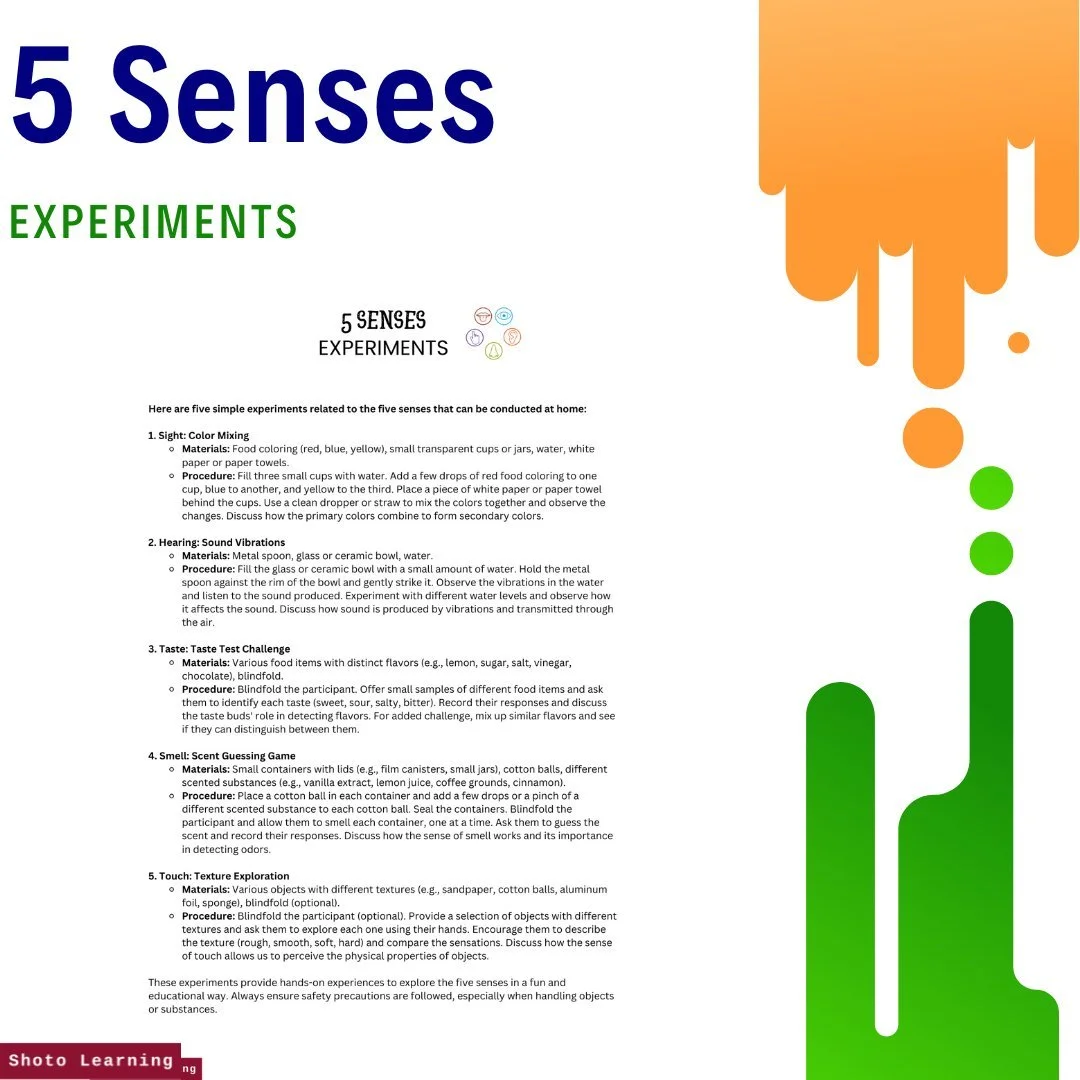


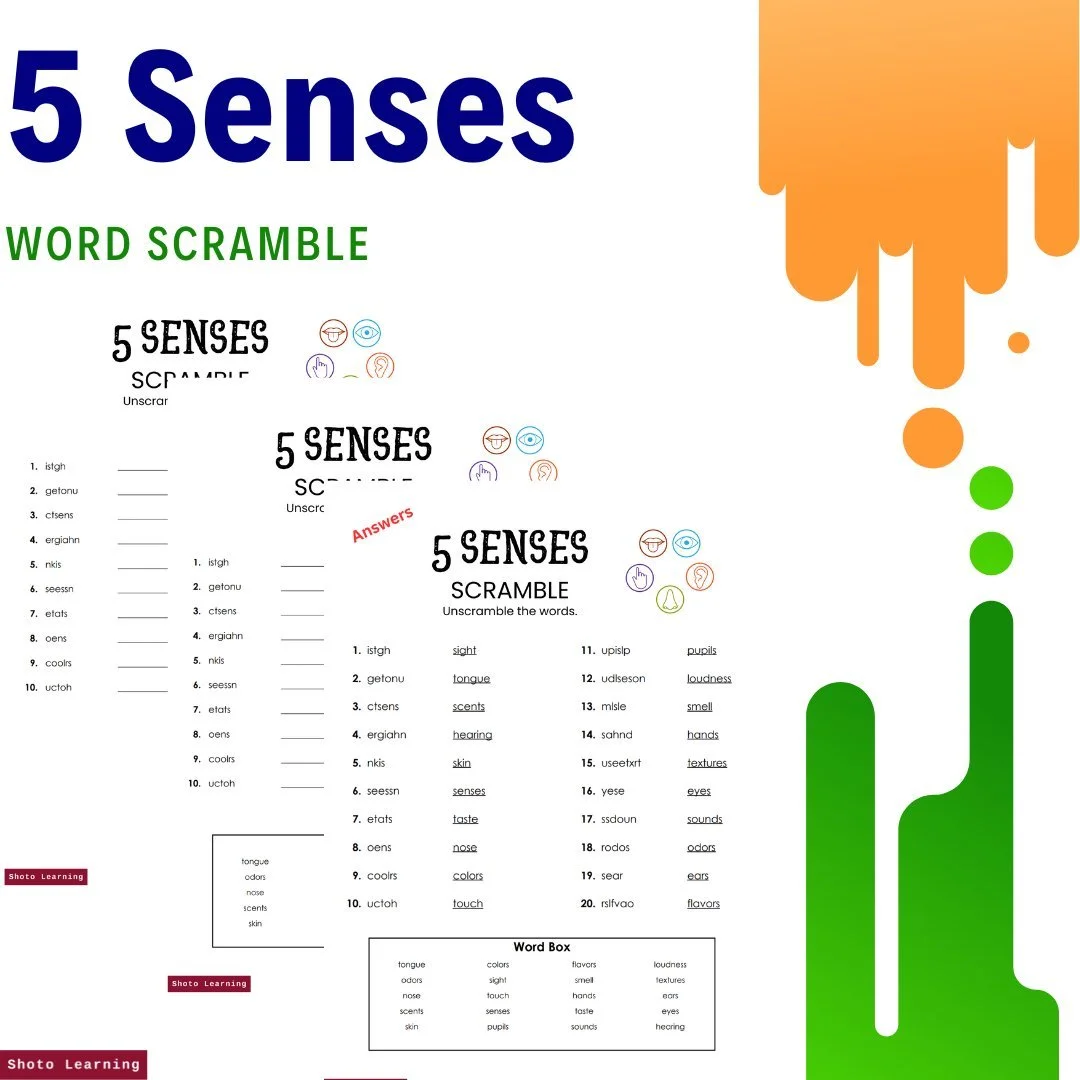


Embark on an exciting journey of sensory discovery with our "Sensory Exploration Bundle." This comprehensive collection offers a myriad of activities designed to engage learners of all ages and learning styles.
Key Features:
Diverse Activities: Enjoy a variety of engaging activities, including bingo, crossword puzzles, cryptograms, debates, fill-in-the-blank exercises, flashcards, and more.
Comprehensive Lesson Plans: Access meticulously crafted lesson plans to guide educators through each sensory exploration session, ensuring comprehensive coverage and effective learning outcomes.
Interactive Learning Tools: From matching games to missing letter puzzles, our bundle includes interactive tools that enhance retention and critical thinking skills.
Assessment Resources: Evaluate understanding with multiple-choice tests, true-or-false quizzes, and other assessment materials designed to gauge comprehension and progress.
Visual Aids: Enrich presentations and discussions with captivating PowerPoint slides, providing visual reinforcement of sensory concepts and stimulating discussion.
Creative Expression: Foster creativity with word scrambles, word searches, writing prompts, and other activities that encourage imaginative exploration of sensory experiences.
Bonus Materials: Enjoy complimentary ABC order worksheets and additional resources to supplement learning and extend the educational experience.
Whether you're a teacher looking to invigorate your lesson plans or a student eager to delve into the world of sensory perception, our "Sensory Exploration Bundle" offers a comprehensive and engaging resource for unlocking the mysteries of the five senses.
159 pages
Don't miss out, order yours today!